
.jpg)
.jpg)
.jpg)
The Department of International Relations and Diplomacy at the Faculty of Public Governance and International Studies held its annual hybrid (online and in-person) conference for the second time, from October 1 to 3, 2026. For this year’s event, subtitled “Challenges, Cooperation, and Multilateralism in a Changing Global Order” a record number of 233 abstracts were submitted by researchers, faculty members, doctoral students, and research groups from 44 countries and five continents. The conference aims to foster academic and professional dialogue on the nature of international crises, new challenges in world politics, and forms of cooperation that strengthen stability and security.
On the opening day, two timely roundtable discussions took place. The first panel, titled “Perspectives, Dynamics, and Regional Cooperation: Has the Time Come for the V4+? Perspectives from Inside and Outside” examined regional cooperation. Moderated by Iván Gyurcsik, retired ambassador and lecturer at Ludovika, the panel featured Krisztián Mészáros, State Secretary for Multilateral Affairs at the Ministry of Foreign Affairs; Michael Zimmermann, retired ambassador (Andrássy University); Jarosław Bajaczyk, director of the Polish Institute in Budapest, and Gabriel Szőke, head of the political department at the Embassy of the Slovak Republic in Budapest, agreed that regional cooperation must remain flexible and that the V4 should contribute to Europe as a whole while preserving the Central European character of the initiative. The discussion also touched on energy security, the protection of strategic infrastructure, the role of the Visegrad Fund, and the significance of the Three Seas Initiative.
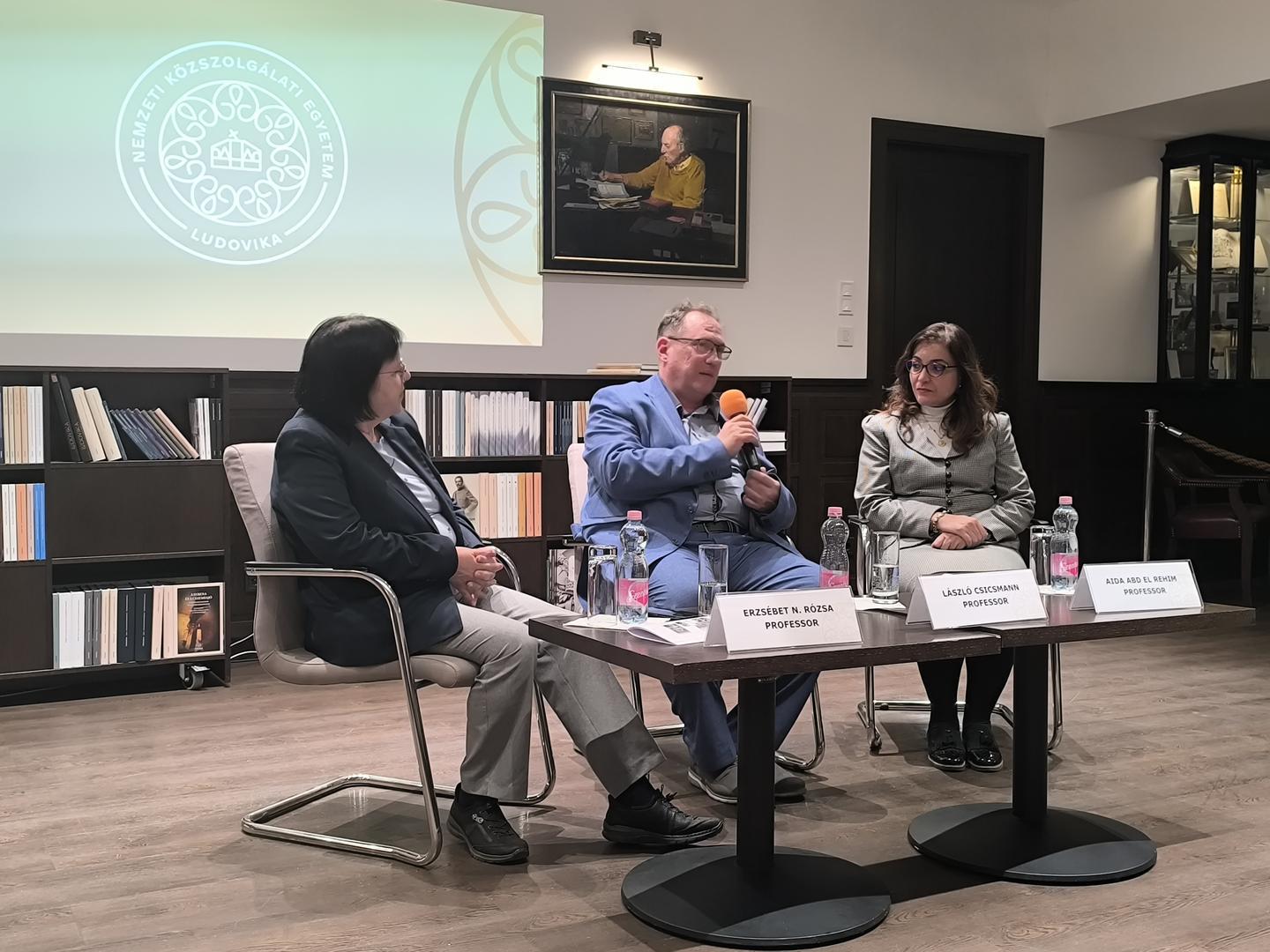
The second panel discussed Egypt’s regional role. According to Erzsébet N. Rózsa (Ludovika), the country falls into the category of a “middle power” and has developed a new national identity following the Arab Spring. László Csicsmann (BCE, Institute of Foreign Affairs) highlighted Cairo’s non-alignment and mediating role in foreign policy, which is why Egypt did not join the Mecca defense agreement signed by Saudi Arabia, Turkey, and Pakistan. Aida Abd El Rehim (Galala University) analyzed the China–Egypt strategic partnership, noting that the relationship is unbalanced because China benefits more from it.
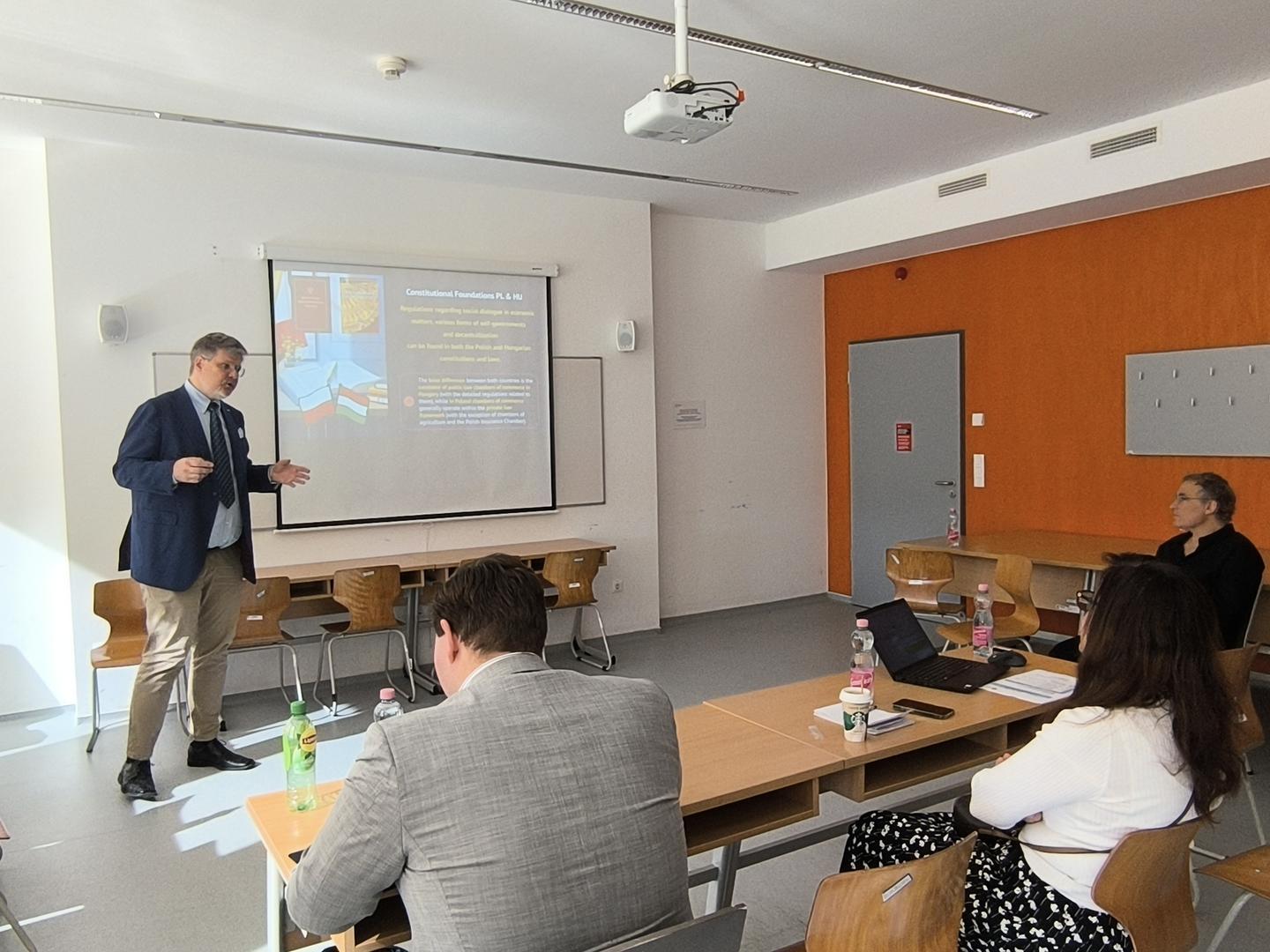
At the trilingual (English, Hungarian, and Spanish) conference, 173 presentations were delivered across 41 sessions. In addition to participants from European countries, speakers from Brazil, Chile, India, Egypt, and Sri Lanka, among others, attended the in-person portion of the conference at Ludovika. The main topic of the English-language sessions was artificial intelligence: several sessions addressed the application of AI in foreign and security policy, including the strategies middle powers can use to maintain their room for maneuver in the U.S.-China AI competition, as well as how AI is transforming diplomatic decision-making. Other sessions addressed hybrid threats, the geopolitics of critical mineral resources, the Indo-Pacific region, the Middle East and Africa, as well as the institutional transformation of Central European chambers of commerce.
The Spanish-language sessions focused on security and geopolitical challenges in Latin America and the Spanish-speaking world. Topics included the strategic competition between the United States and China in Latin America, the connection between the “Dulles Doctrine” and critical minerals, the relationship between the Lithium Triangle (Argentina, Bolivia, Chile) and the European Union, as well as the rise of the Pacific region and Latin America’s position within it. Other presentations addressed the issue of drones and new security risks, the EU’s responses to hybrid threats, organized crime, and a comparison of migration policies and securitization in Central Europe and South America. All of this clearly demonstrates that the conference serves as a bridge between the academic communities of Central Europe and Ibero-America.
The presentations were supported by more than 50 session chairs, who were selected from among faculty members, researchers, and doctoral students at Ludovika as well as numerous foreign and domestic universities. To support scholarly work, the conference offers opportunities for publication in three journals. In addition to two Hungarian publications (Pólusok, Hadtudomány), a Polish journal (Ameryka Łacińska) is accepting written versions of the conference presentations for publication.
The two main organizers of the three-day conference — Péter Krisztián Zachar, Vice-Dean for International Affairs and Head of the Department, and Gabriella Thomázy, Assistant Professor — are already preparing for the 2027 conference. The number of applications and the feedback received confirm the need for such forums, which, in addition to fostering professional discussions, also strengthen international ties and offer opportunities for deeper networking among researchers.
The detailed conference program is available here, while the abstract volume can be found here.
Text: Gabriella Thomázy
Photos: Dénes Szilágyi, Péter Zachar