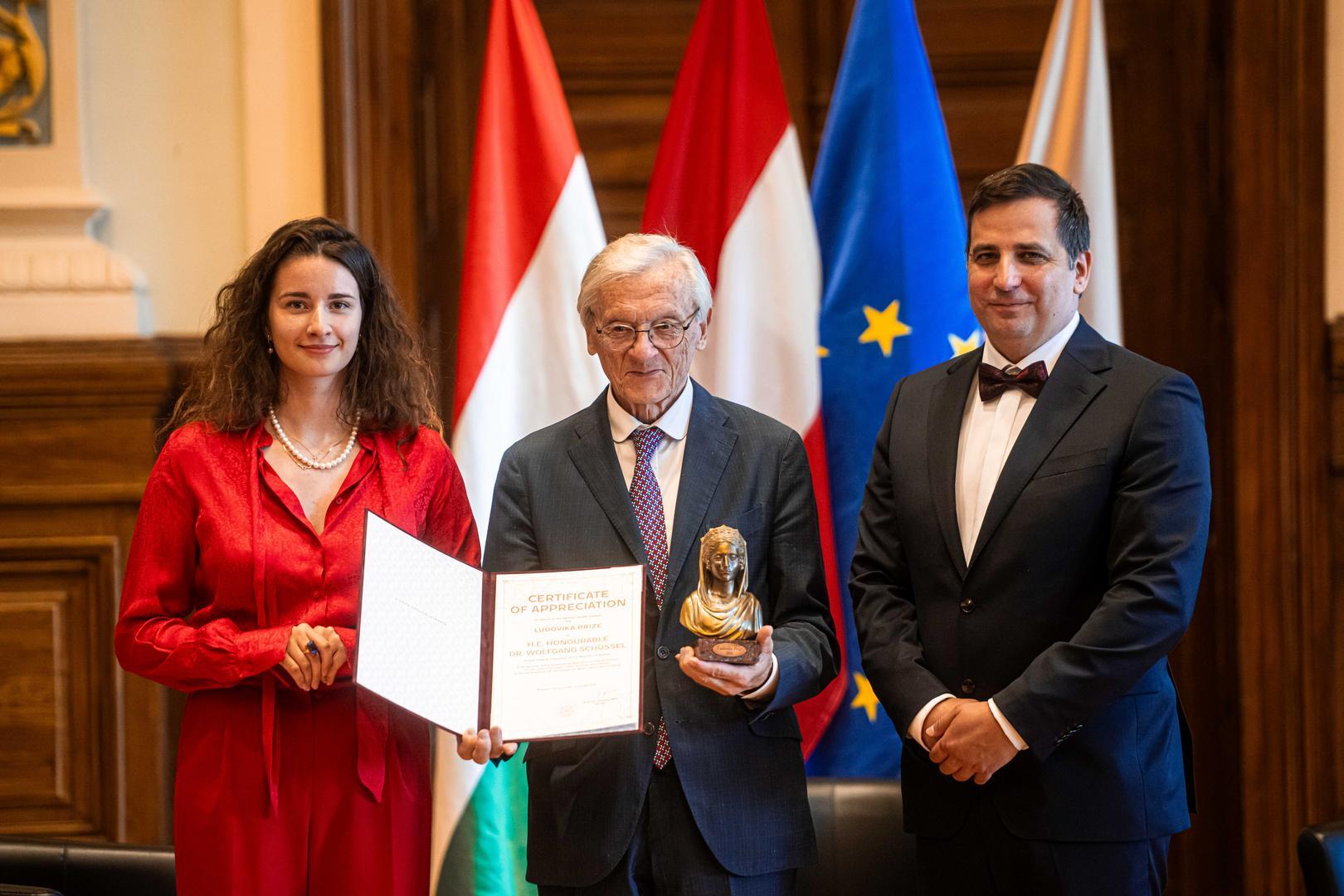
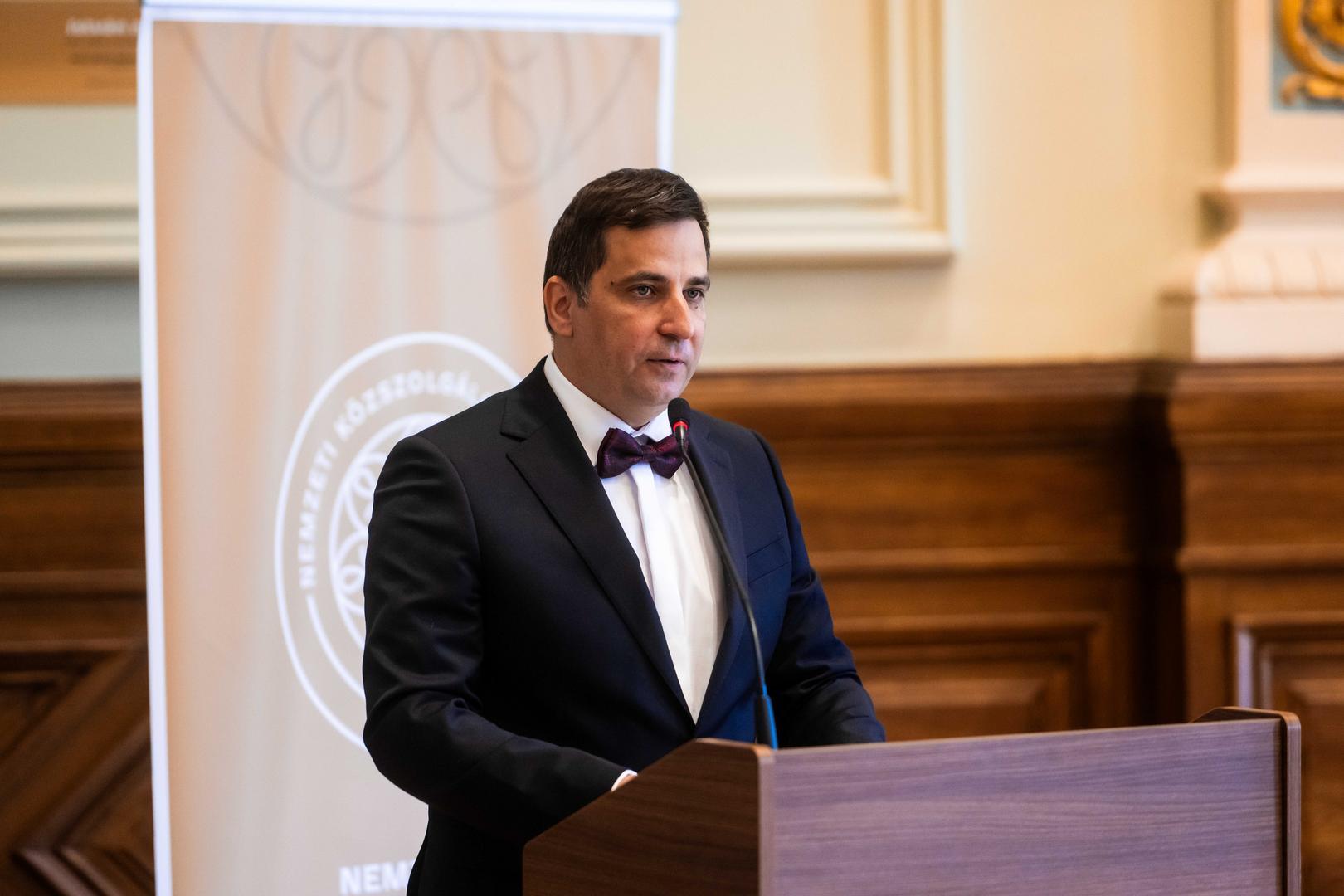
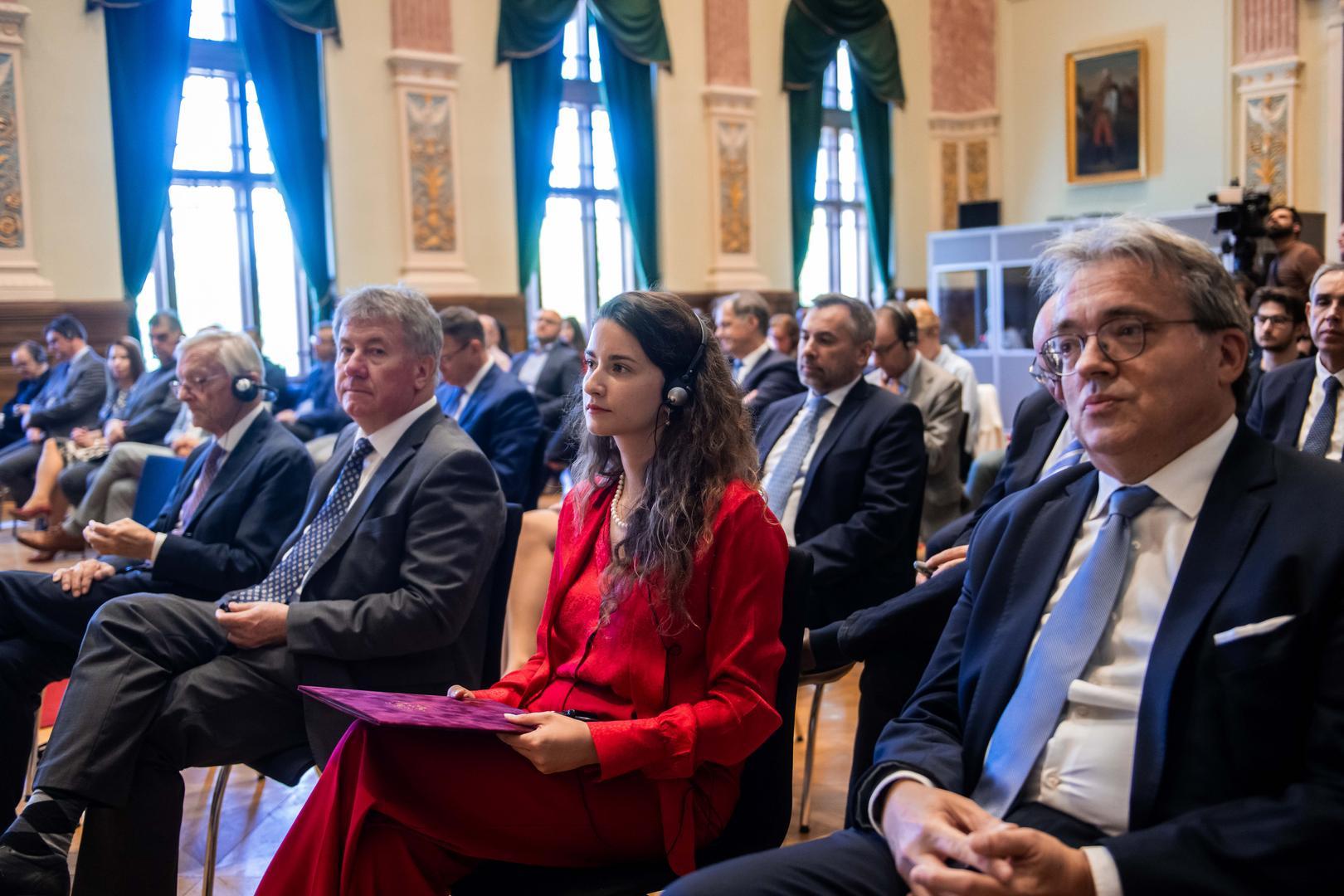
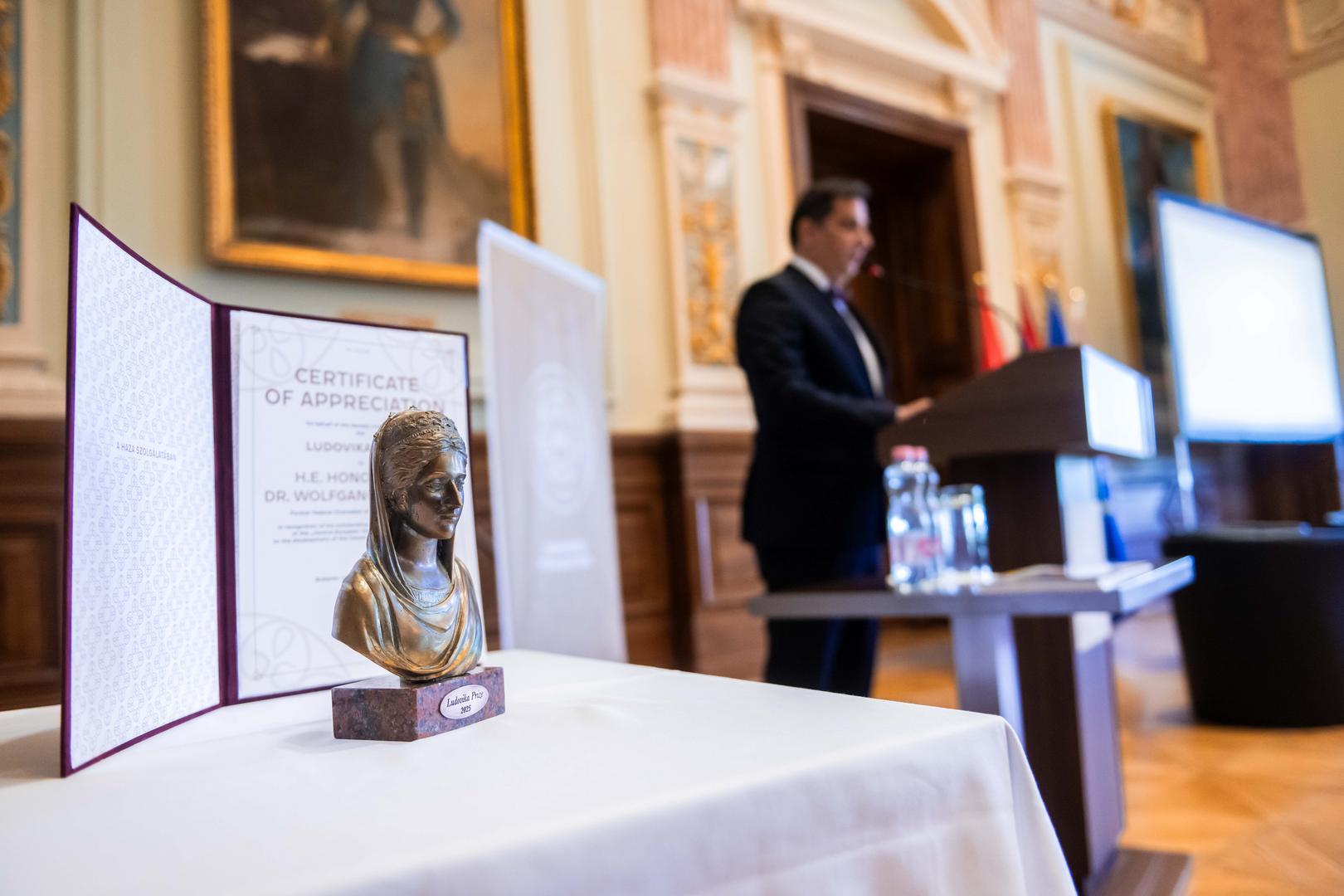
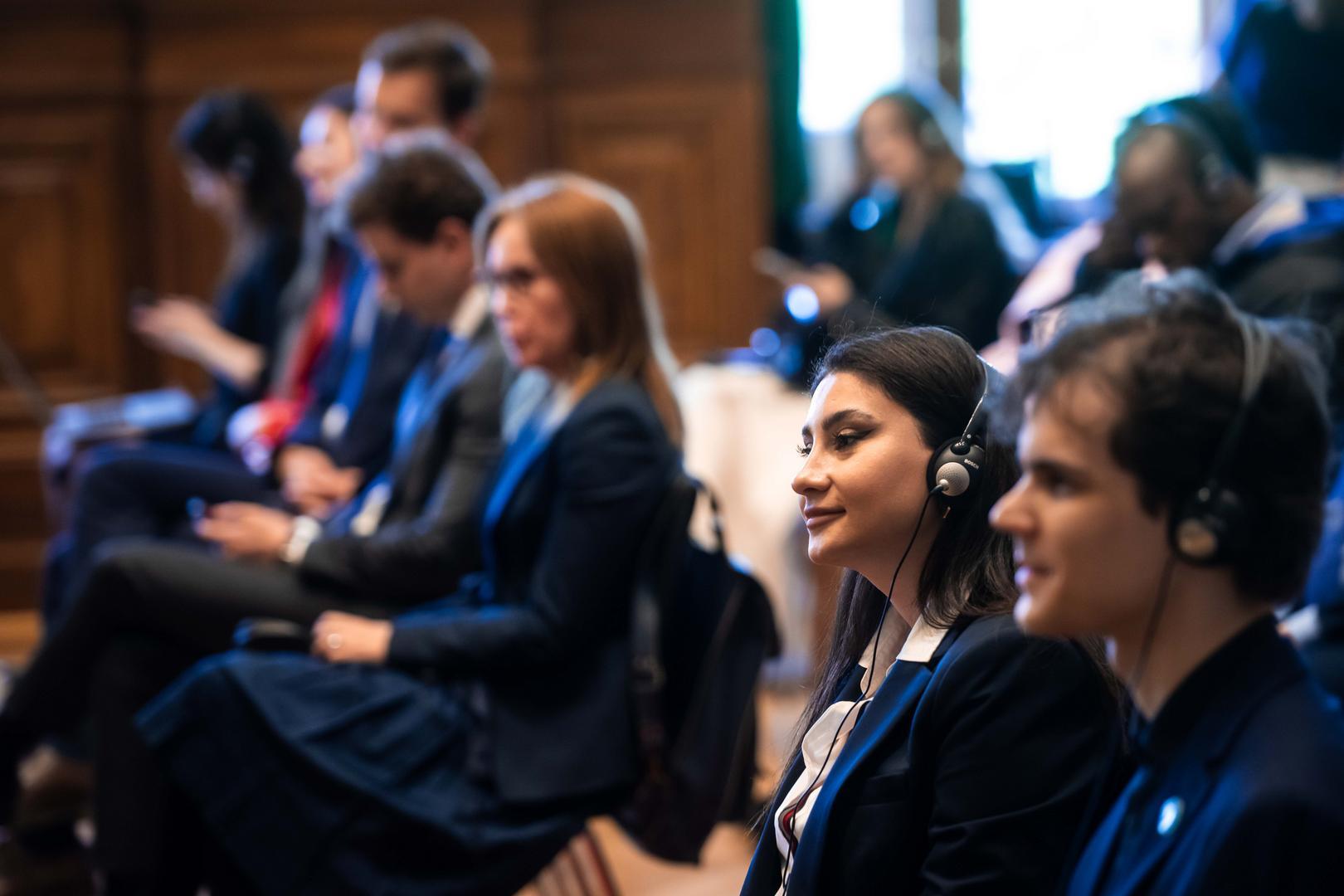
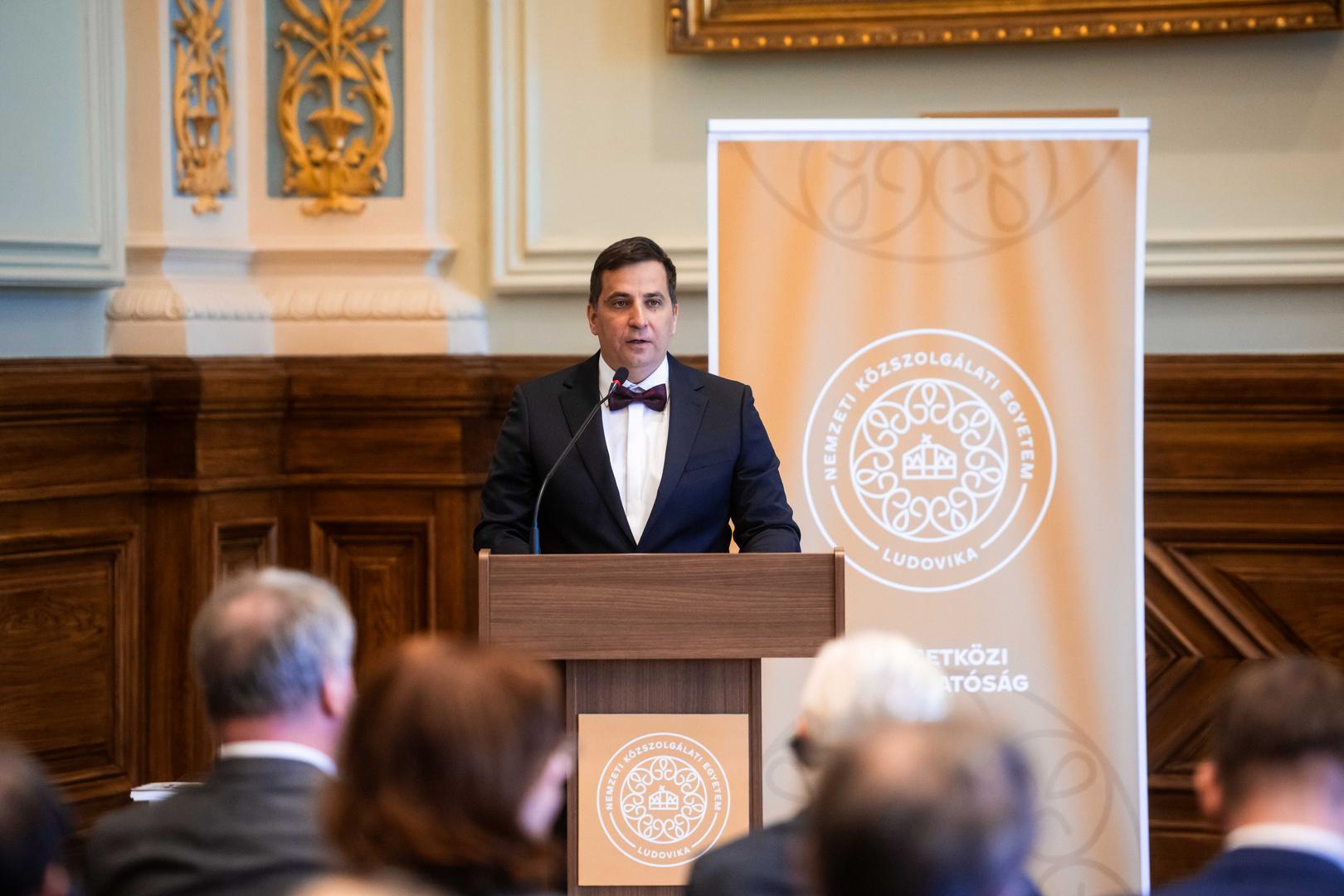
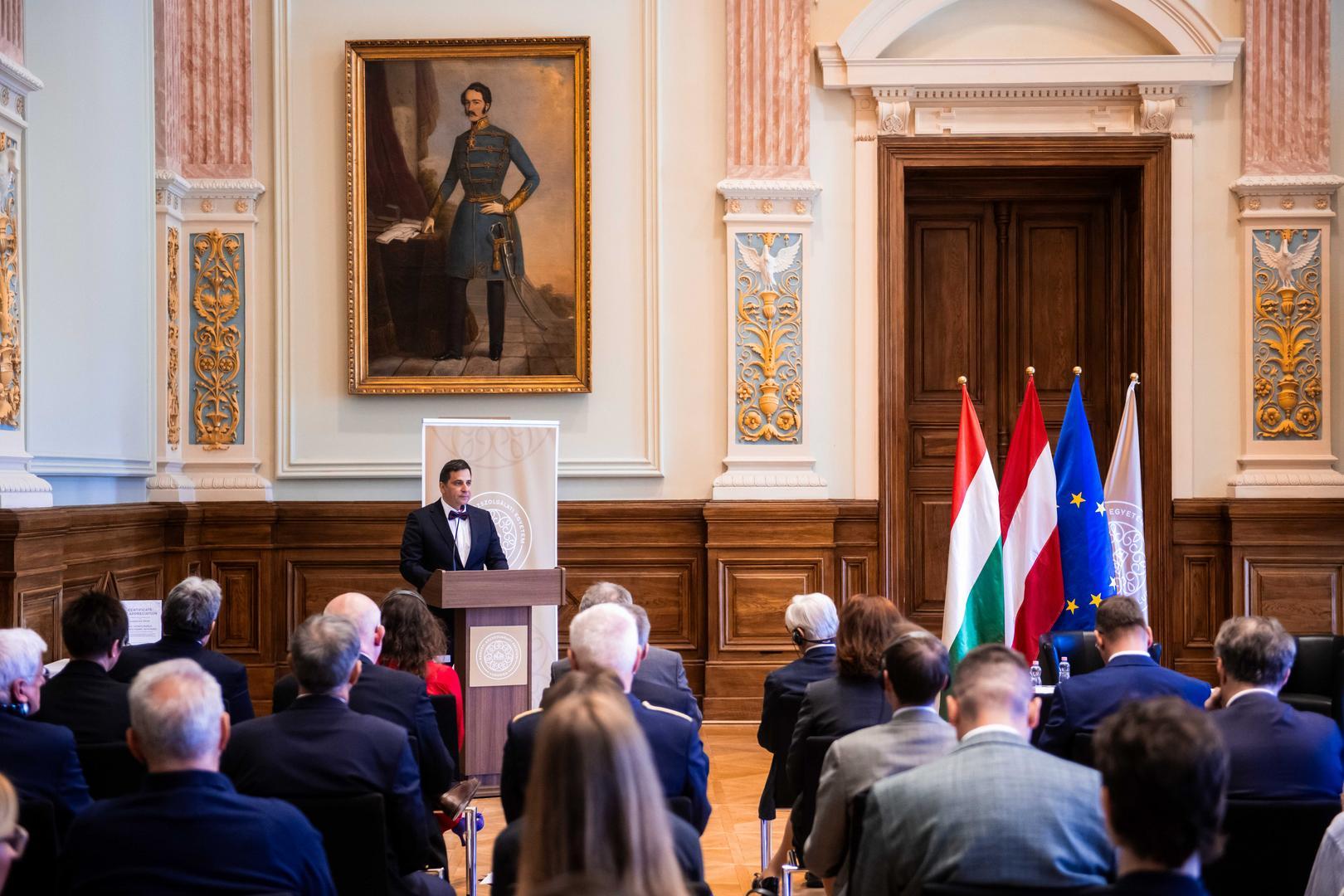
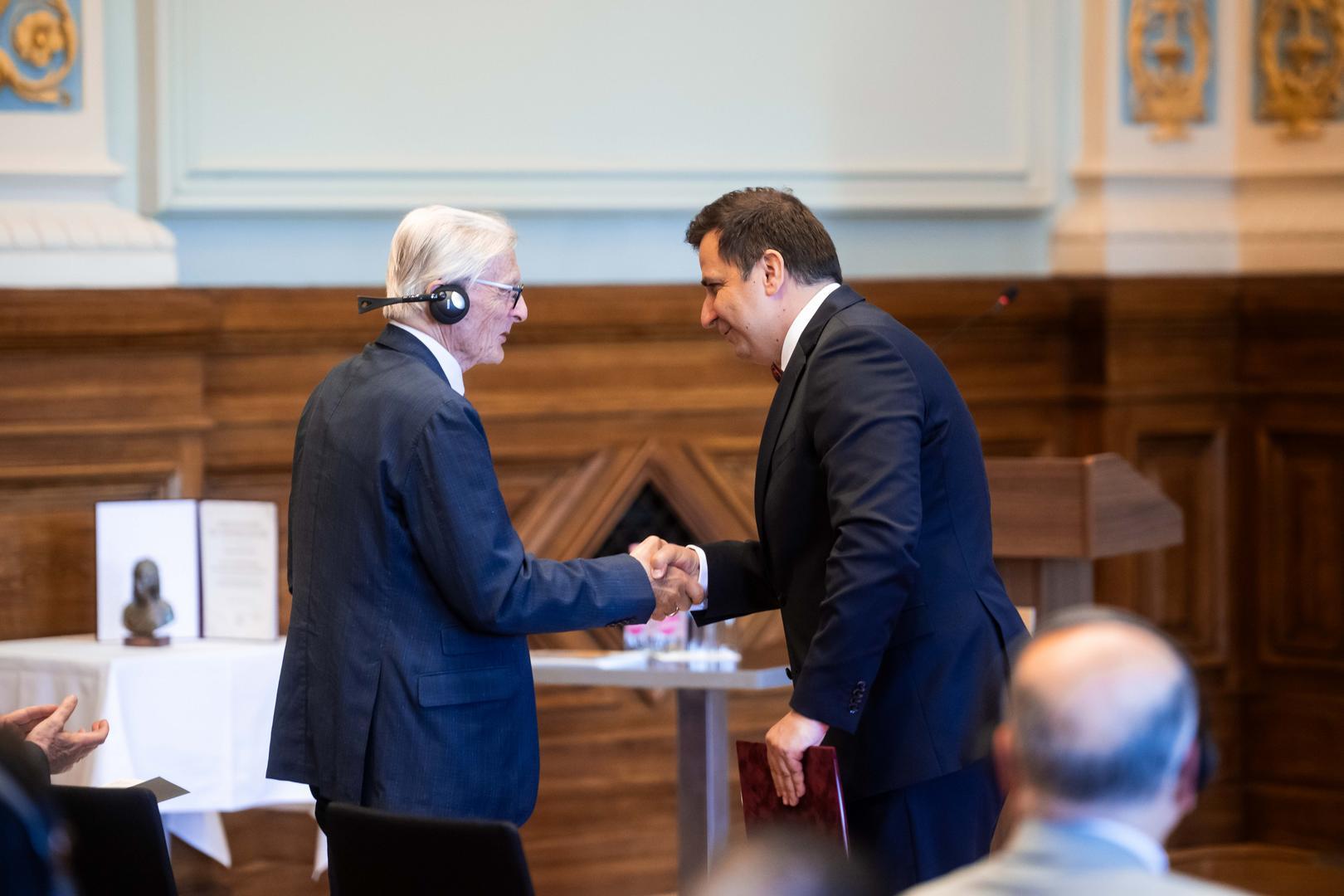
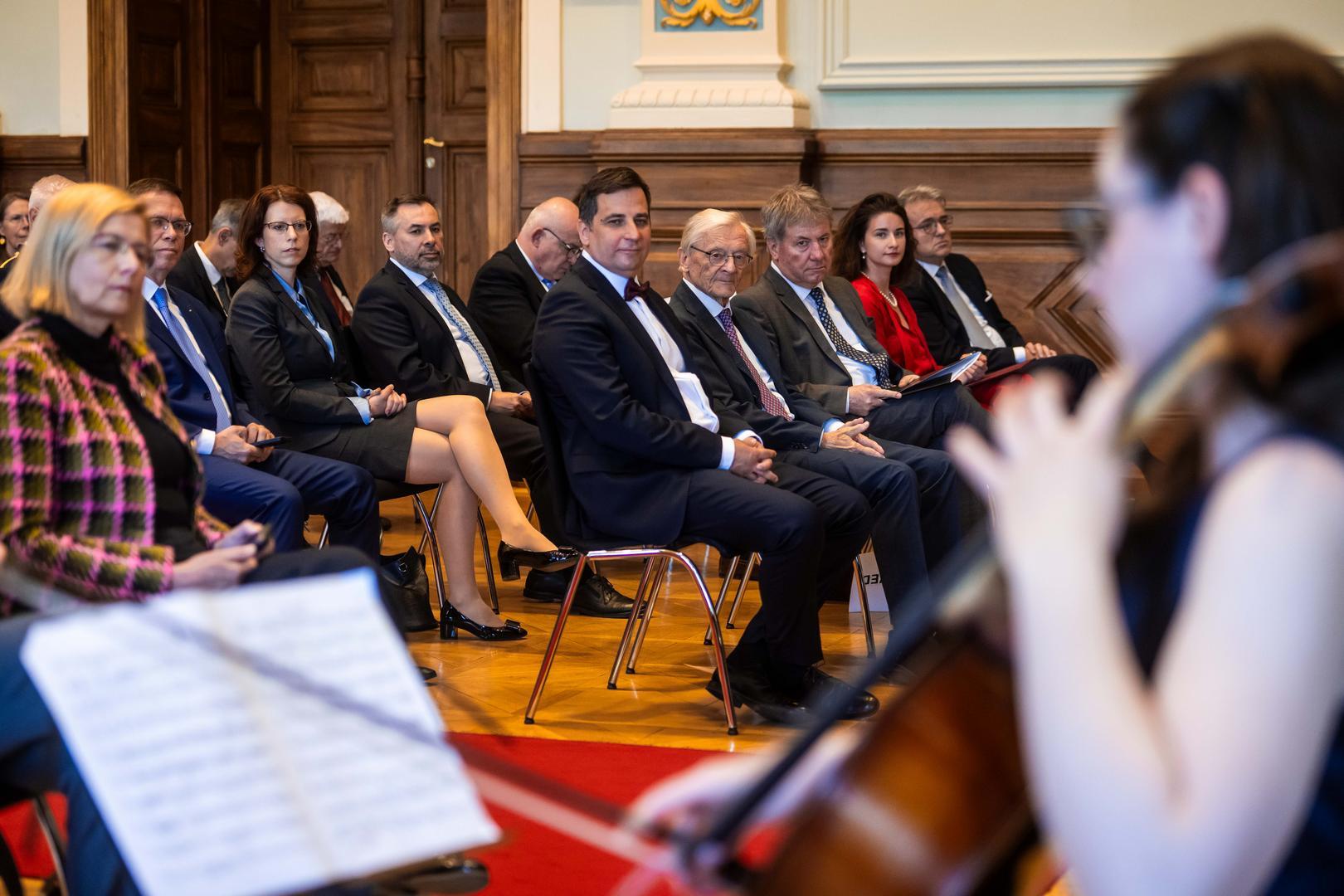
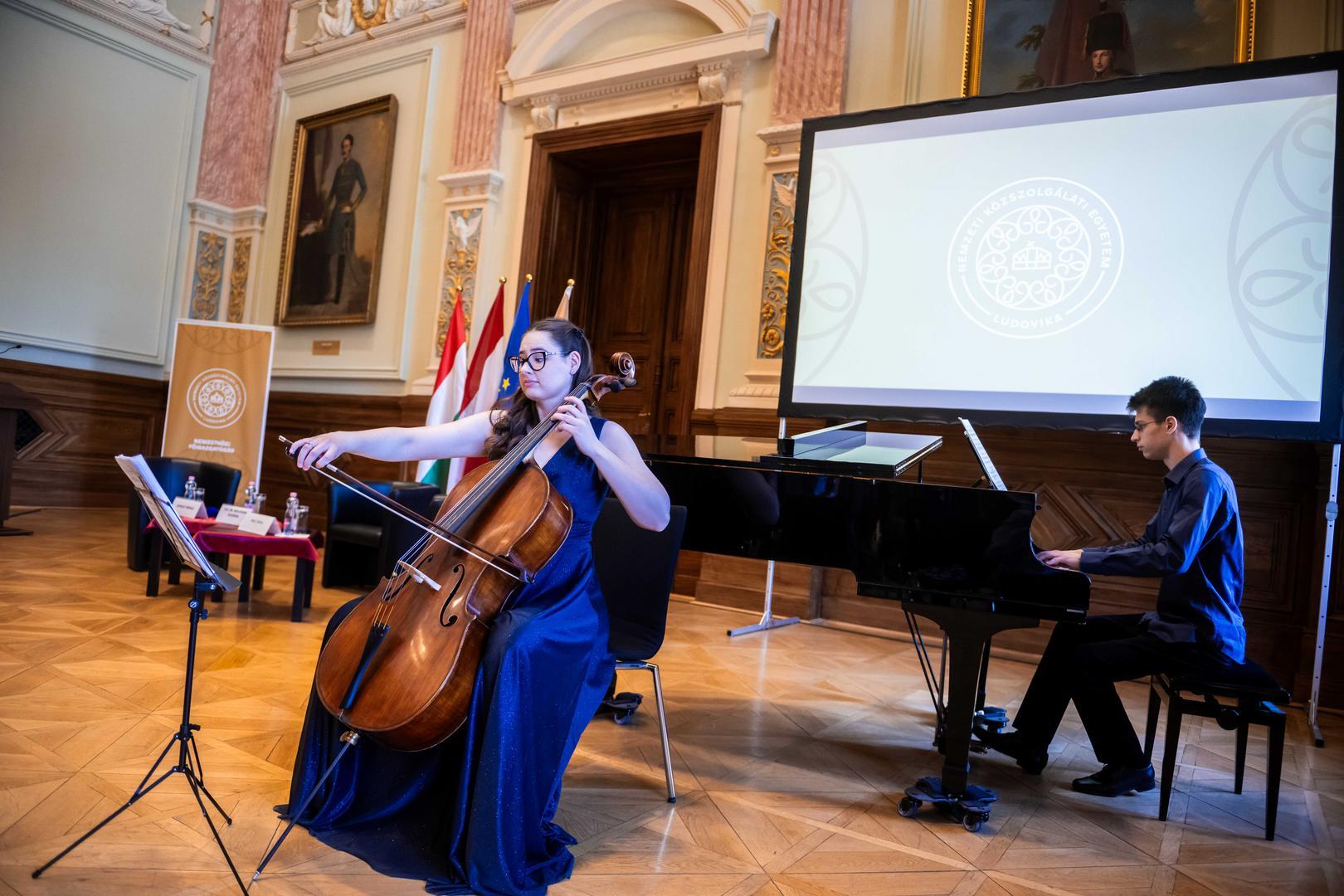
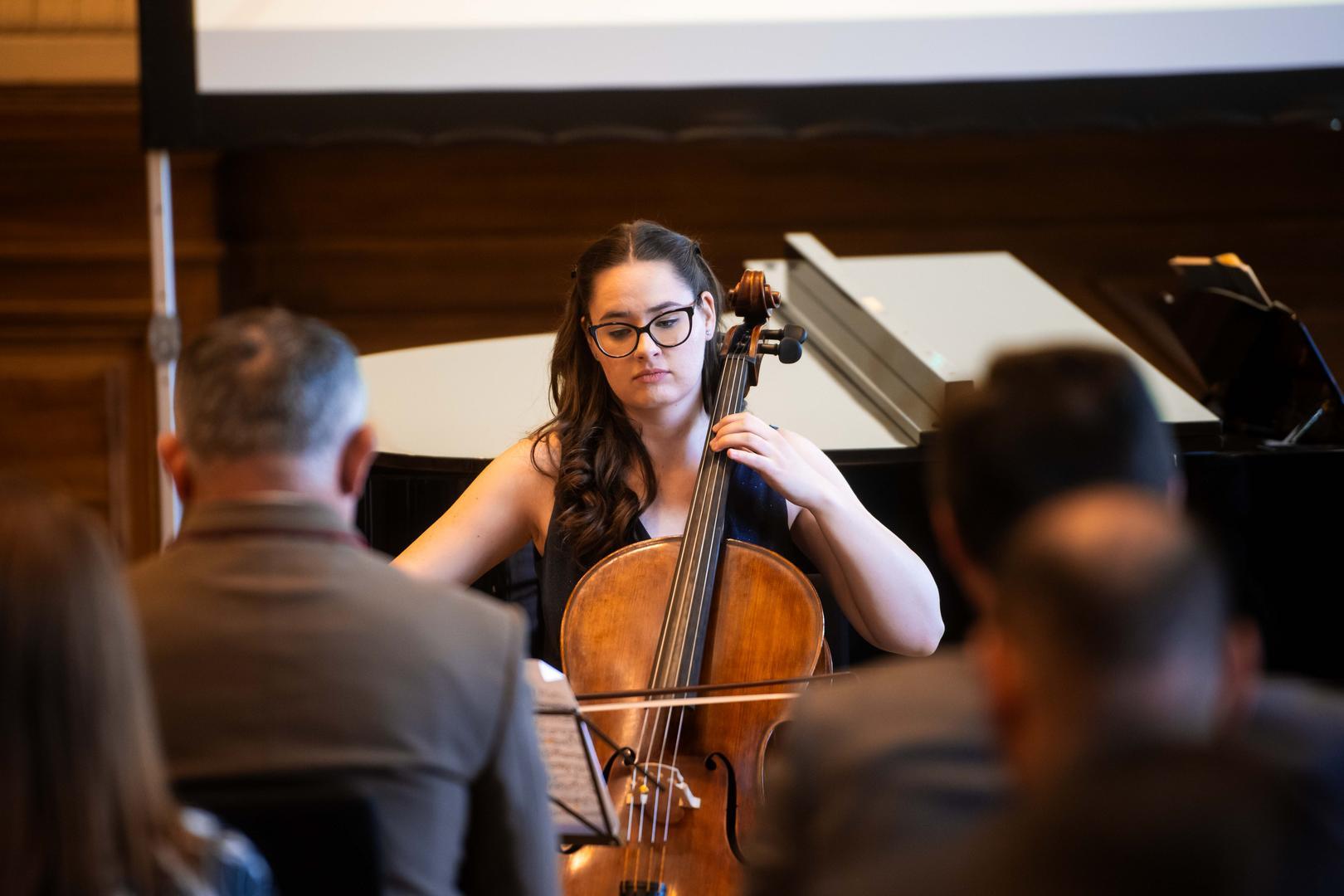
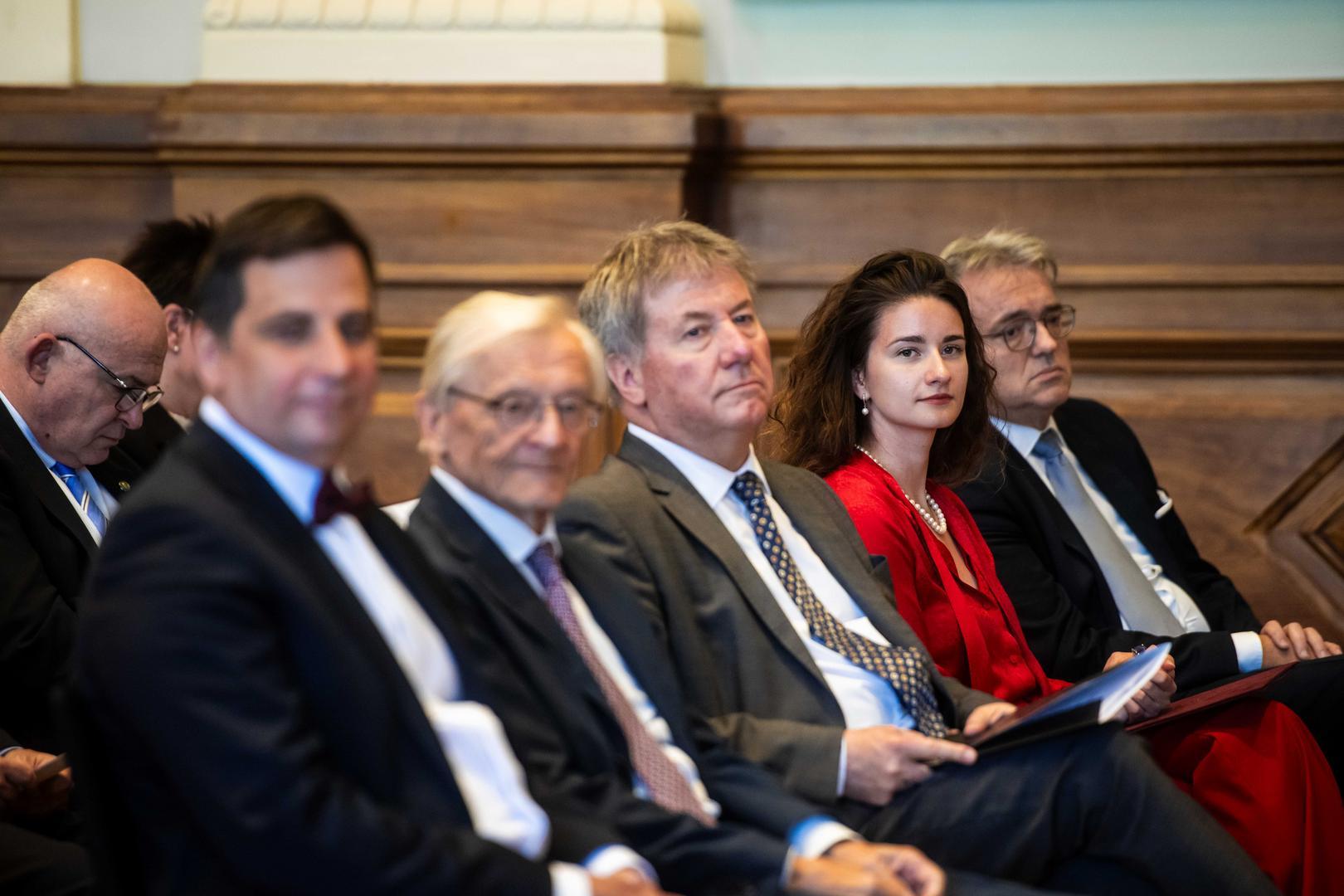
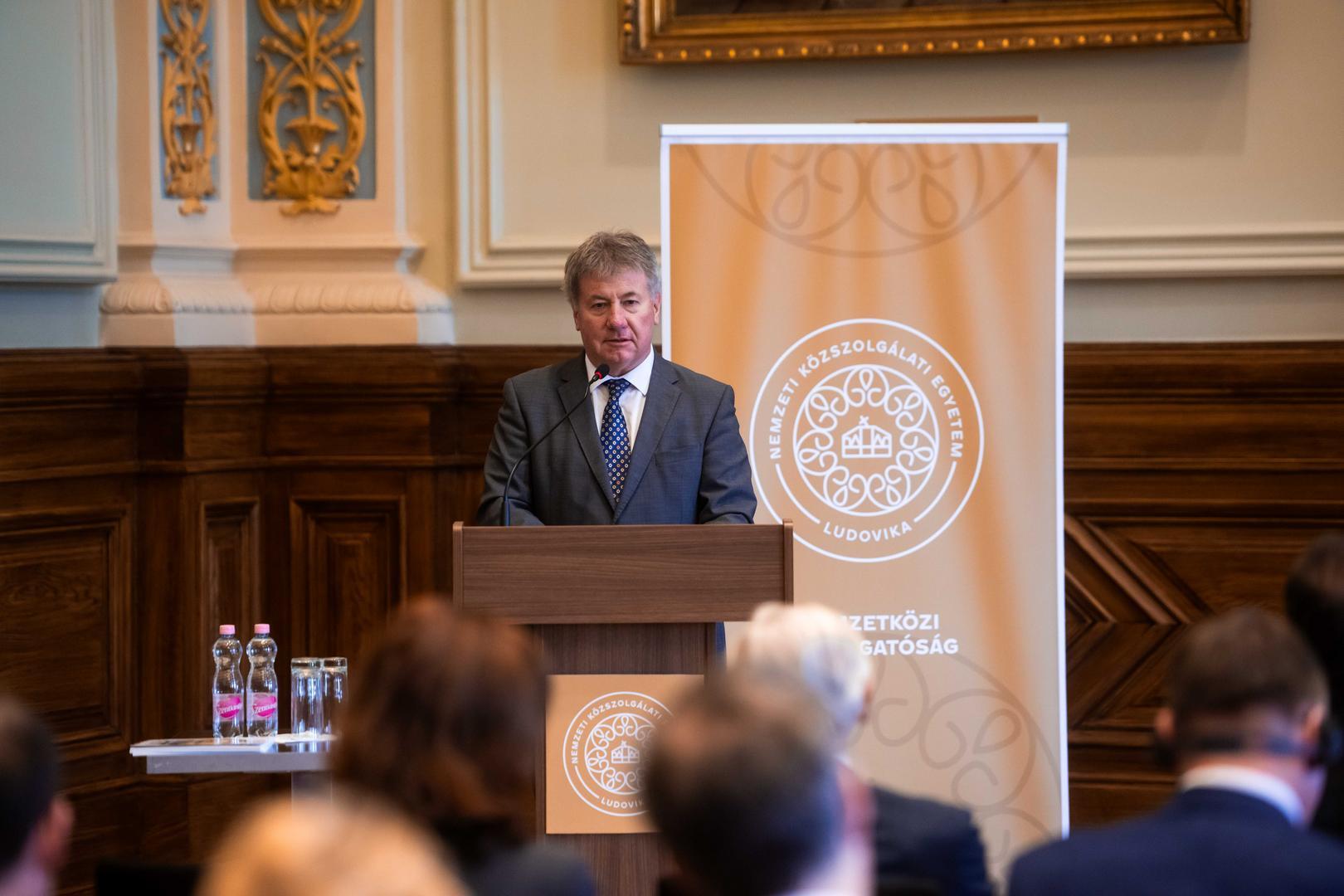
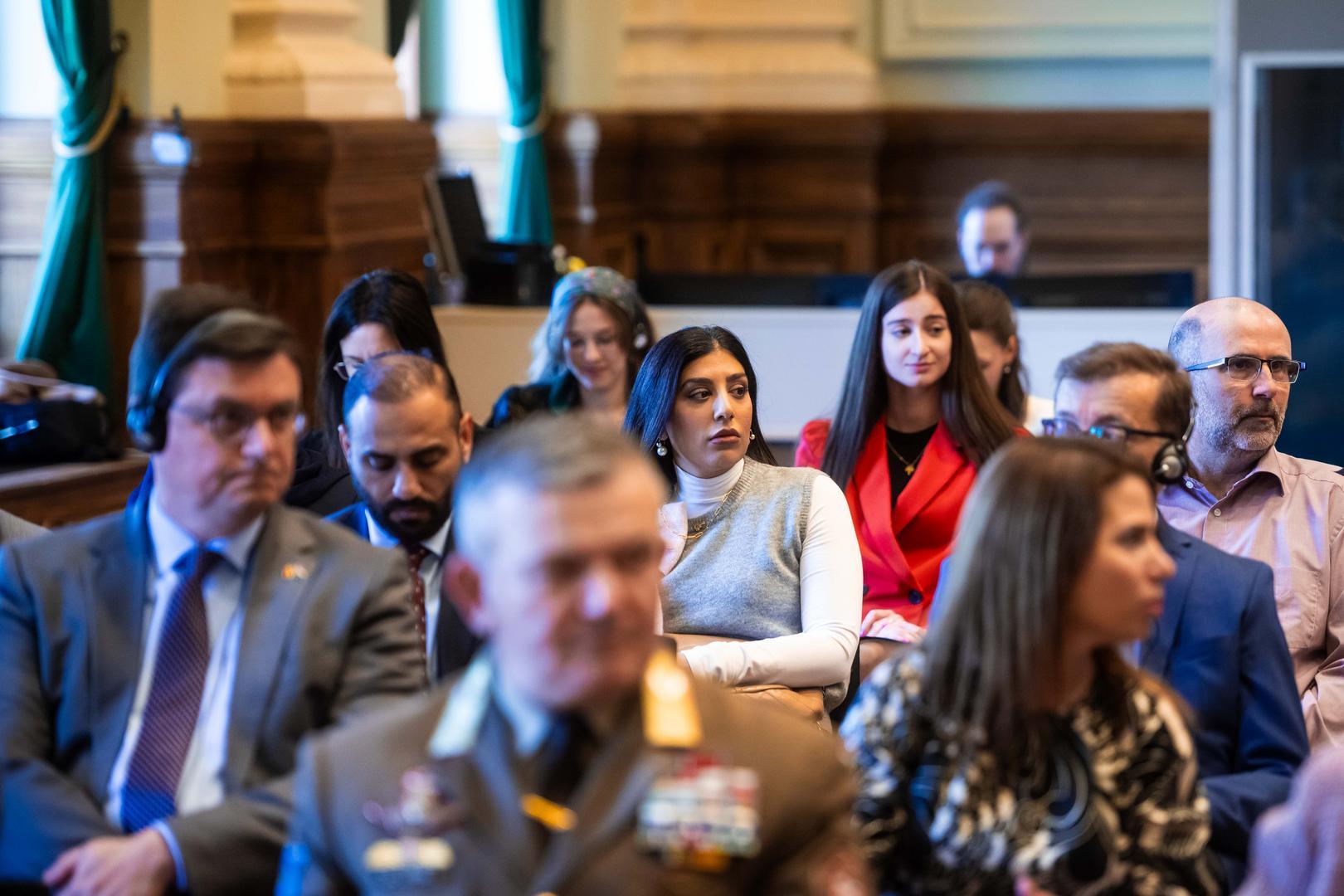
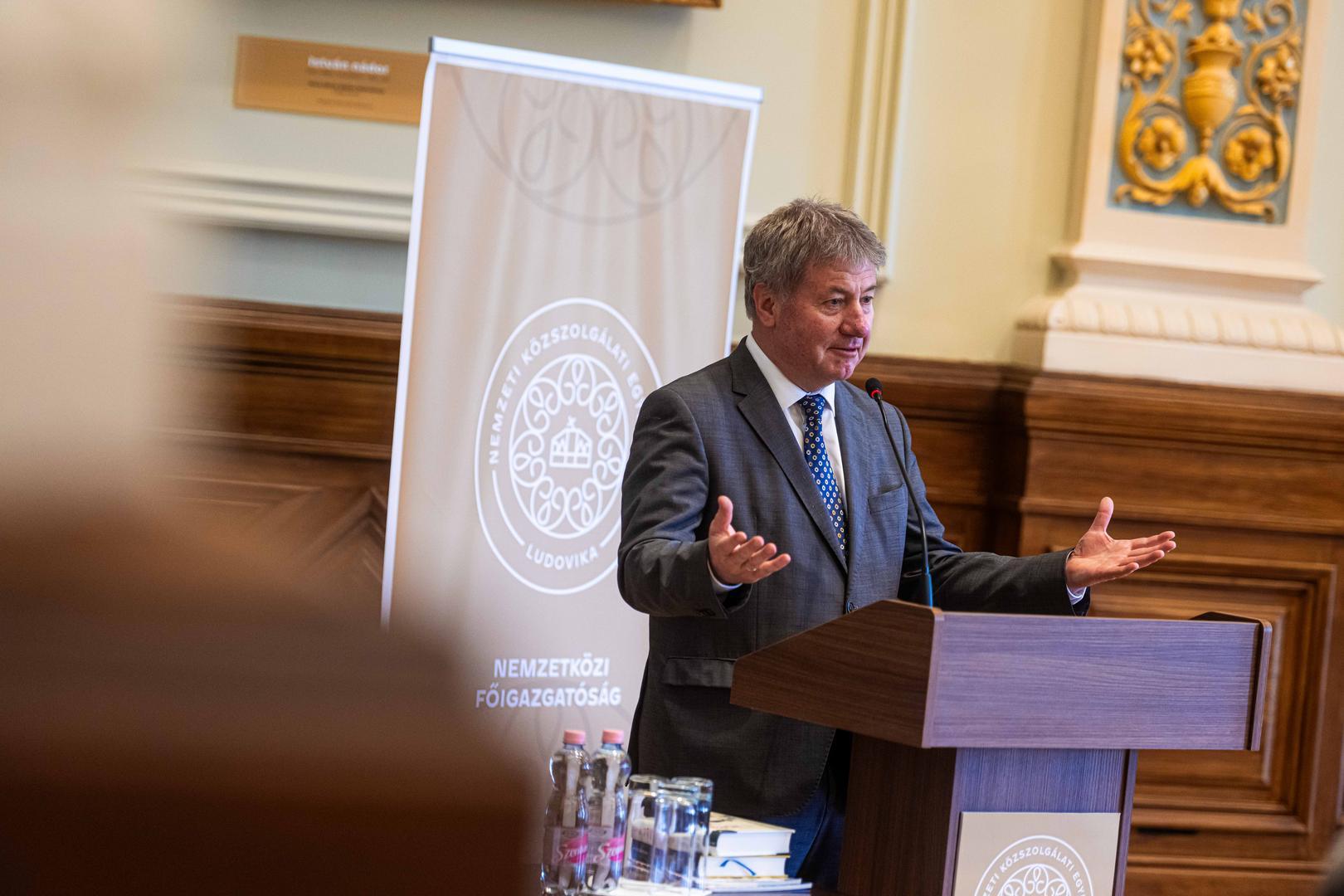
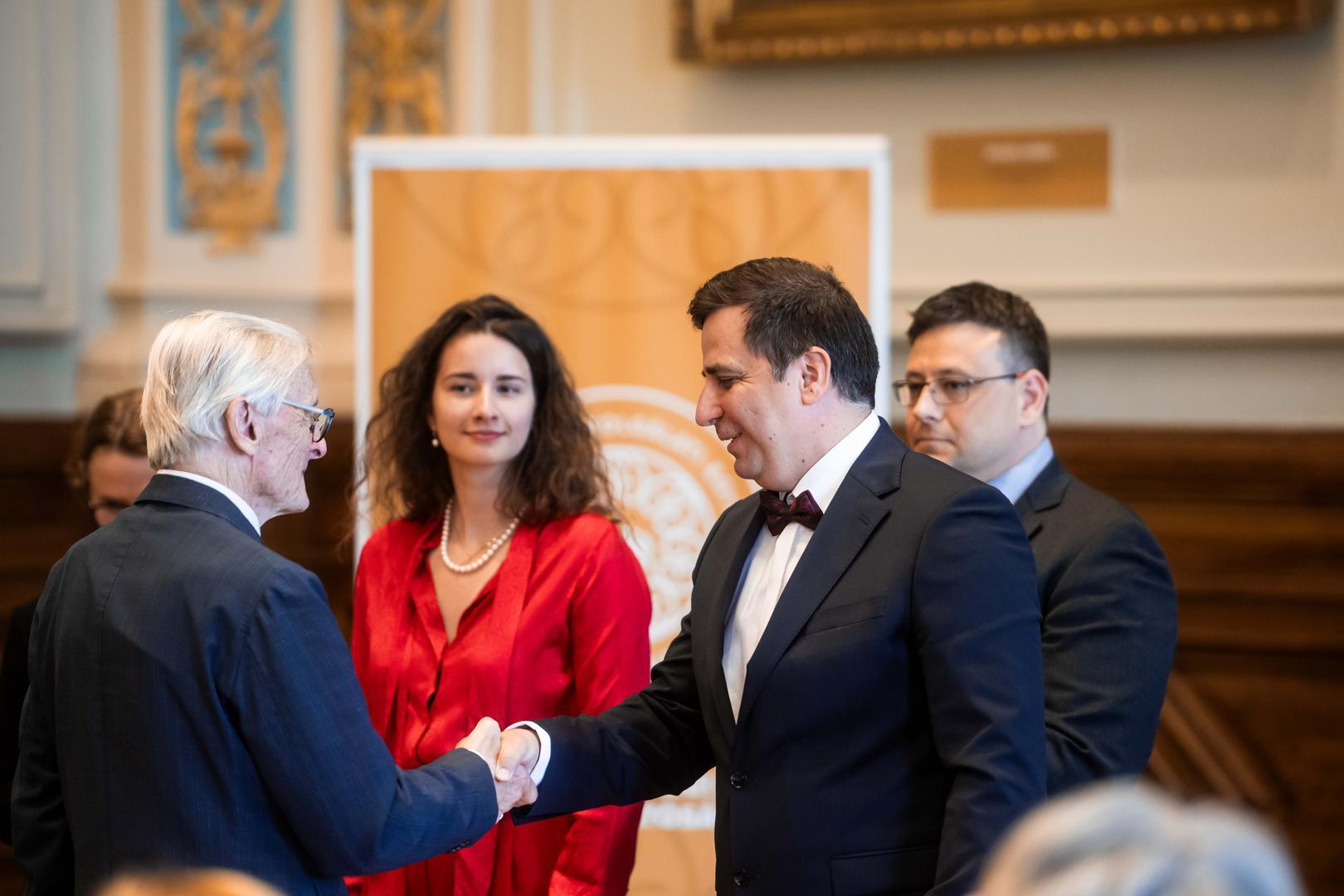
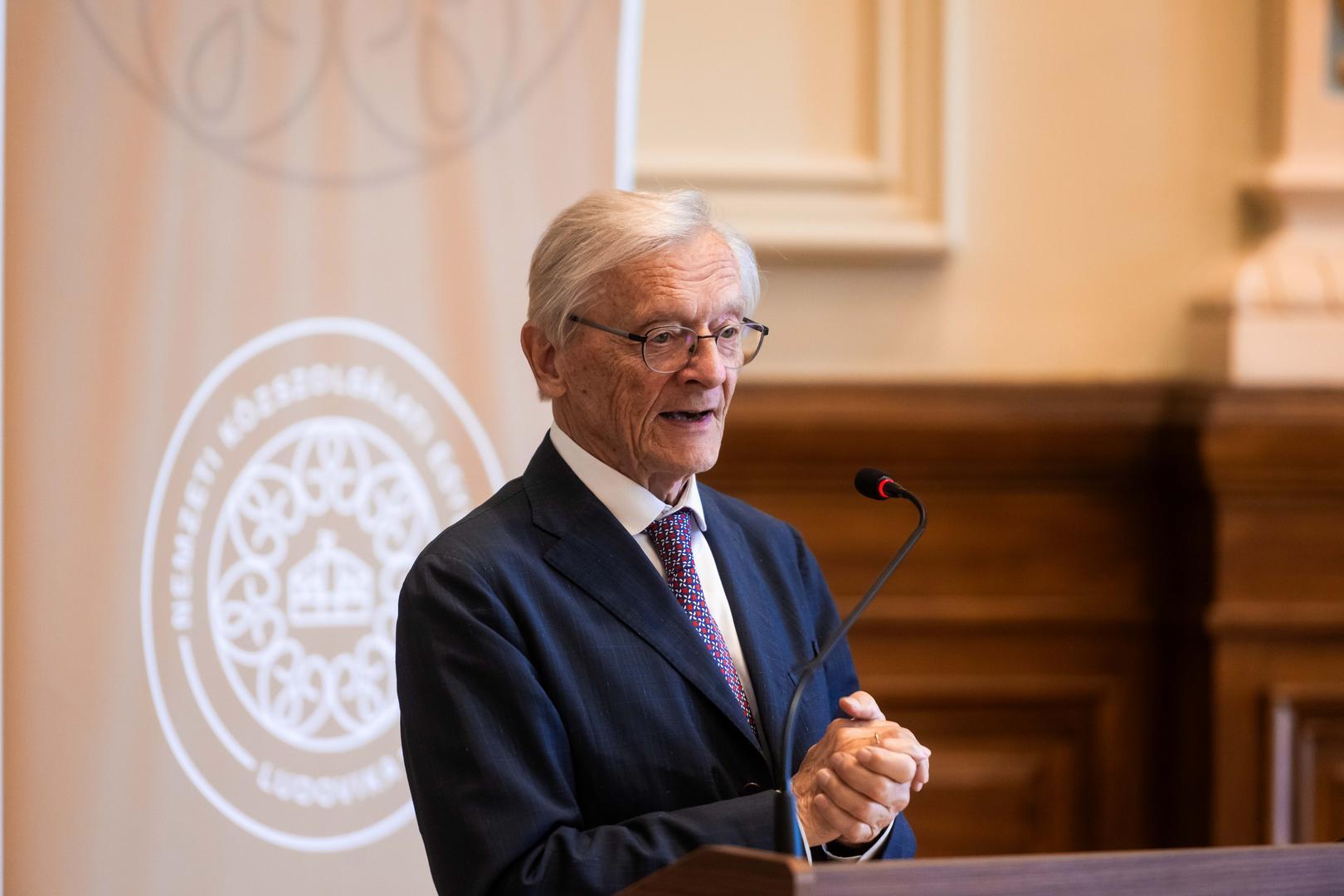
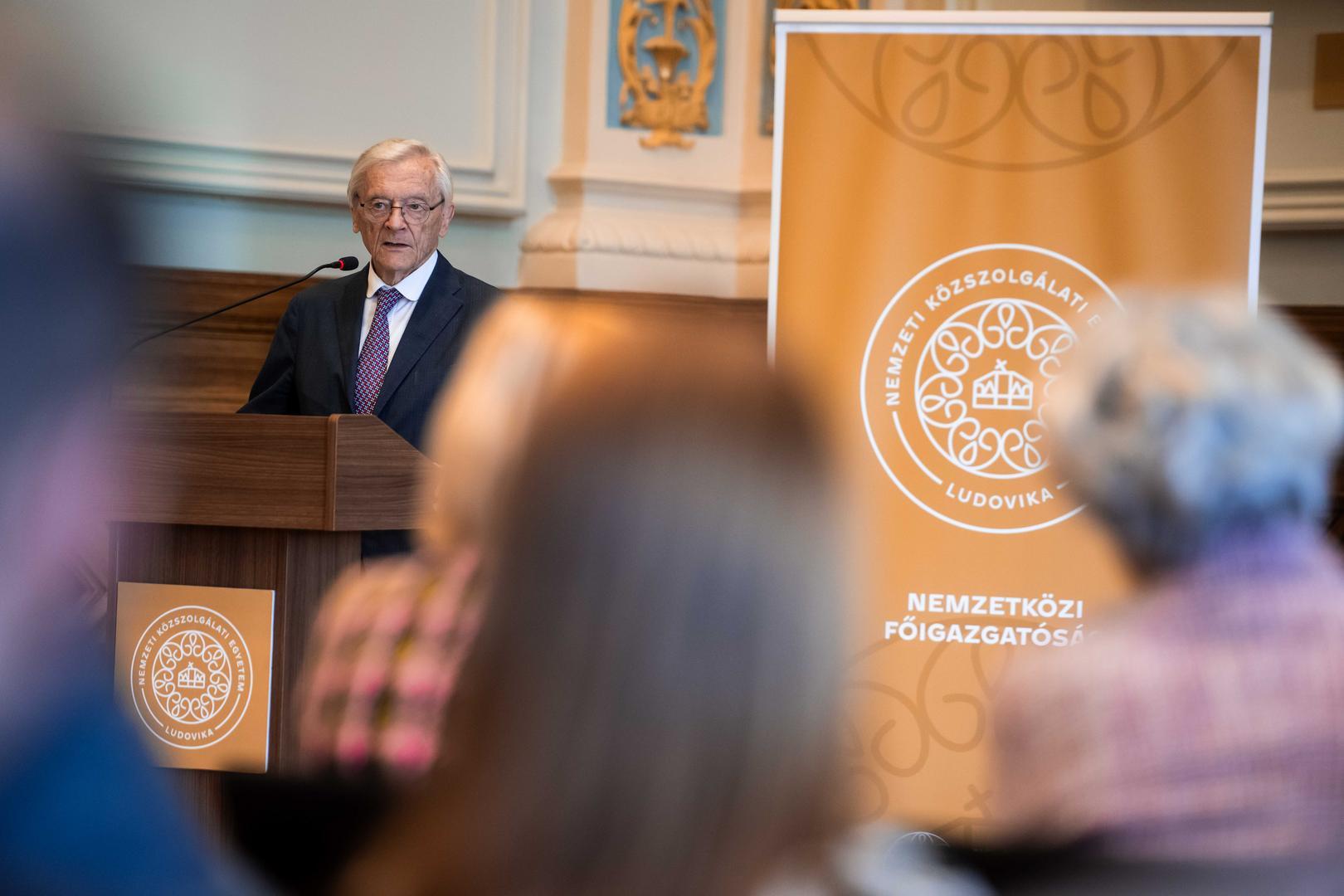
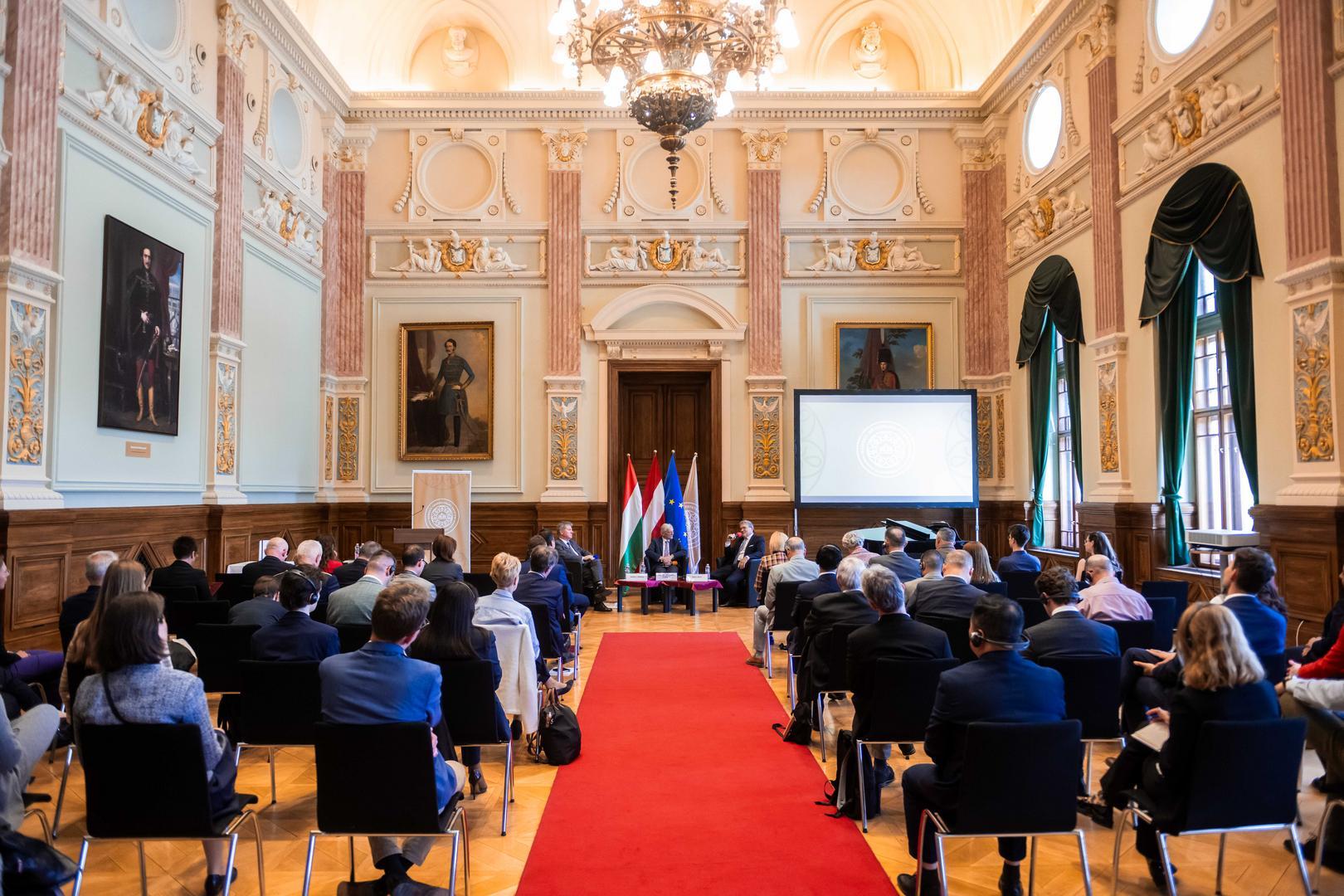
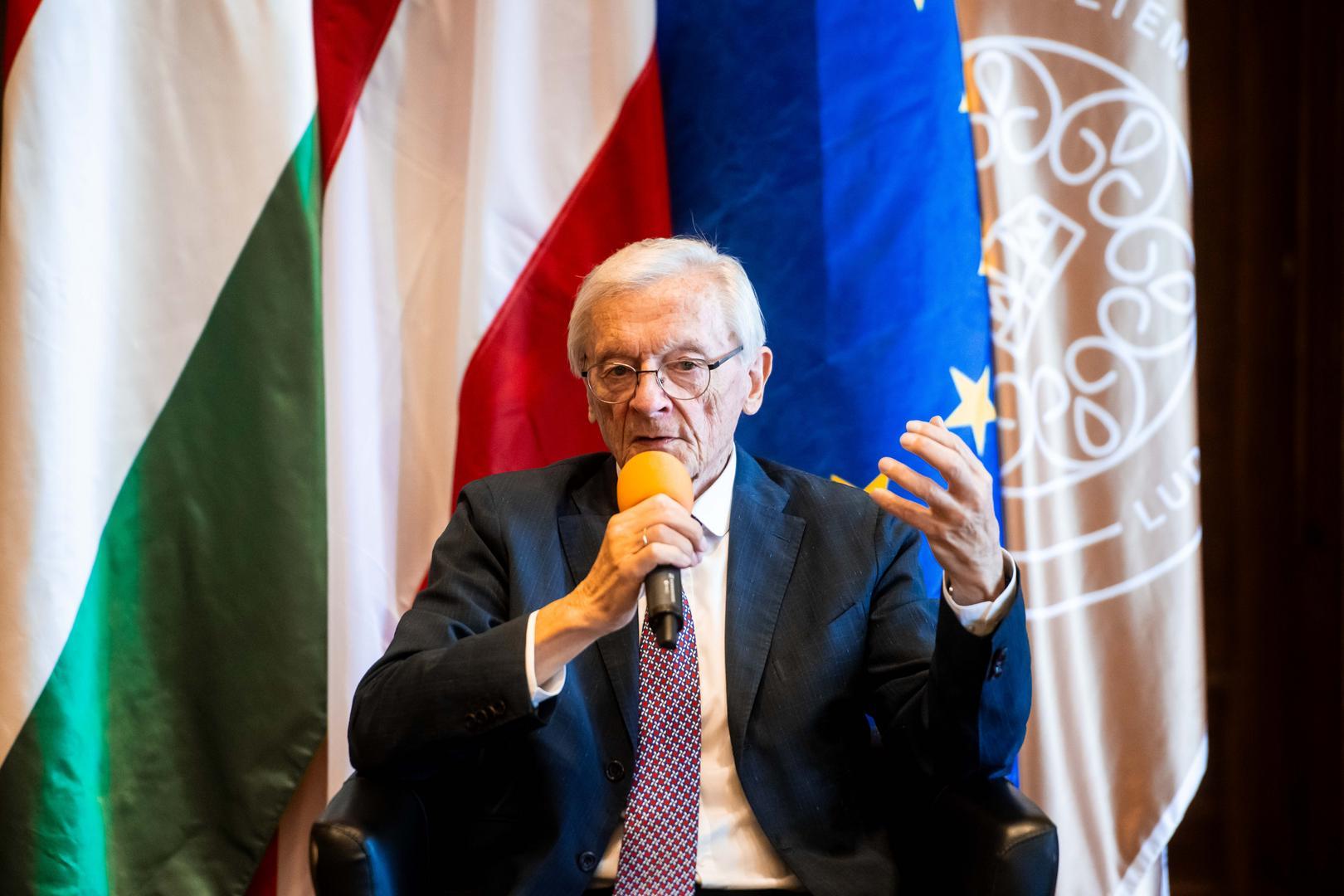
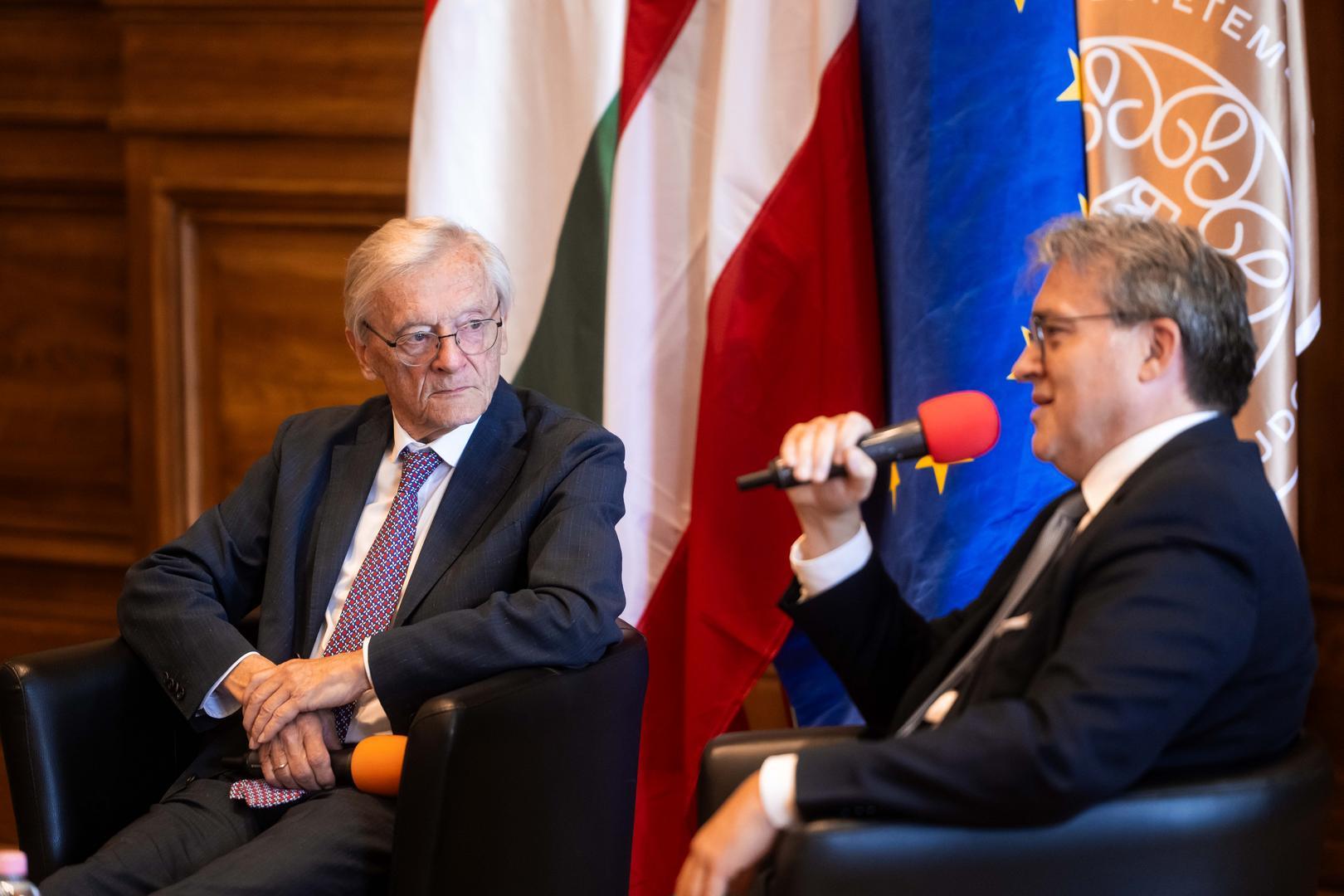
The prize-giving ceremony took place on the 13th of May at the Széchenyi Ceremonial Hall of the Ludovika University of Public Service. The Ludovika Prize was awarded to former Austrian Federal Chancellor Wolfgang Schüssel. The prize was initiated by the LUPS Senate in 2023 to honor individuals whose life achievements and work greatly support the development of the Central European idea and whose activities reflect their loyalty to Hungarian values.
By his welcoming remarks, Rector of the Ludovika University of Public Service, Gergely Deli mentioned that values like duty, discipline, devotion, solidarity, respect for knowledge, and service to the country are some of the things that Ludovika would like its students to learn. Also, the rector noted that Ludovika equally stands for public service training and academic excellence. As he explained, “For the university, international relations, public diplomacy and Hungarian and Central European representation abroad have always been of great importance.” In the view of the rector, the term Ludovika symbolizes a set of values that refer to the historical figure of Maria Ludovika, who came from Austria as an archduchess but behaved as Queen of Hungary and thought like a Central European.
The rector pointed out that Maria Ludovika had known the face of war already as a child and had played an active role later in forming state politics by funding the creation of the basis for training Hungarian officers. “Thus, the goal of the Ludovika Prize should be to honor those persons who represent commitment to the common good, responsibility, strategy, and cooperation,” stressed Deli. In his opinion, the career of Wolfgang Schüssel corresponds well to the set of values mentioned above, because during a period when Europe was being restructured and cooperation had to be established, he took on leadership responsibilities.
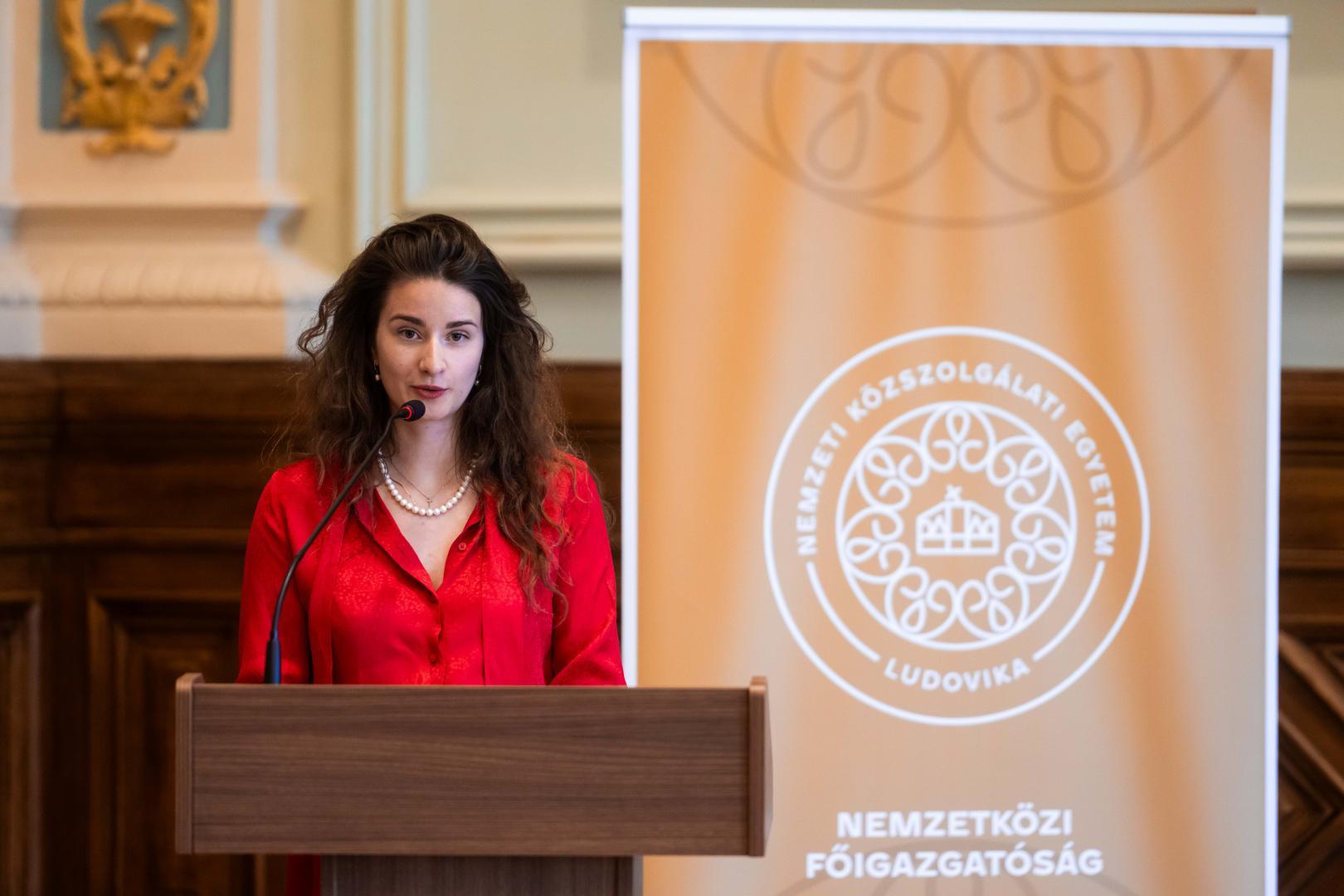
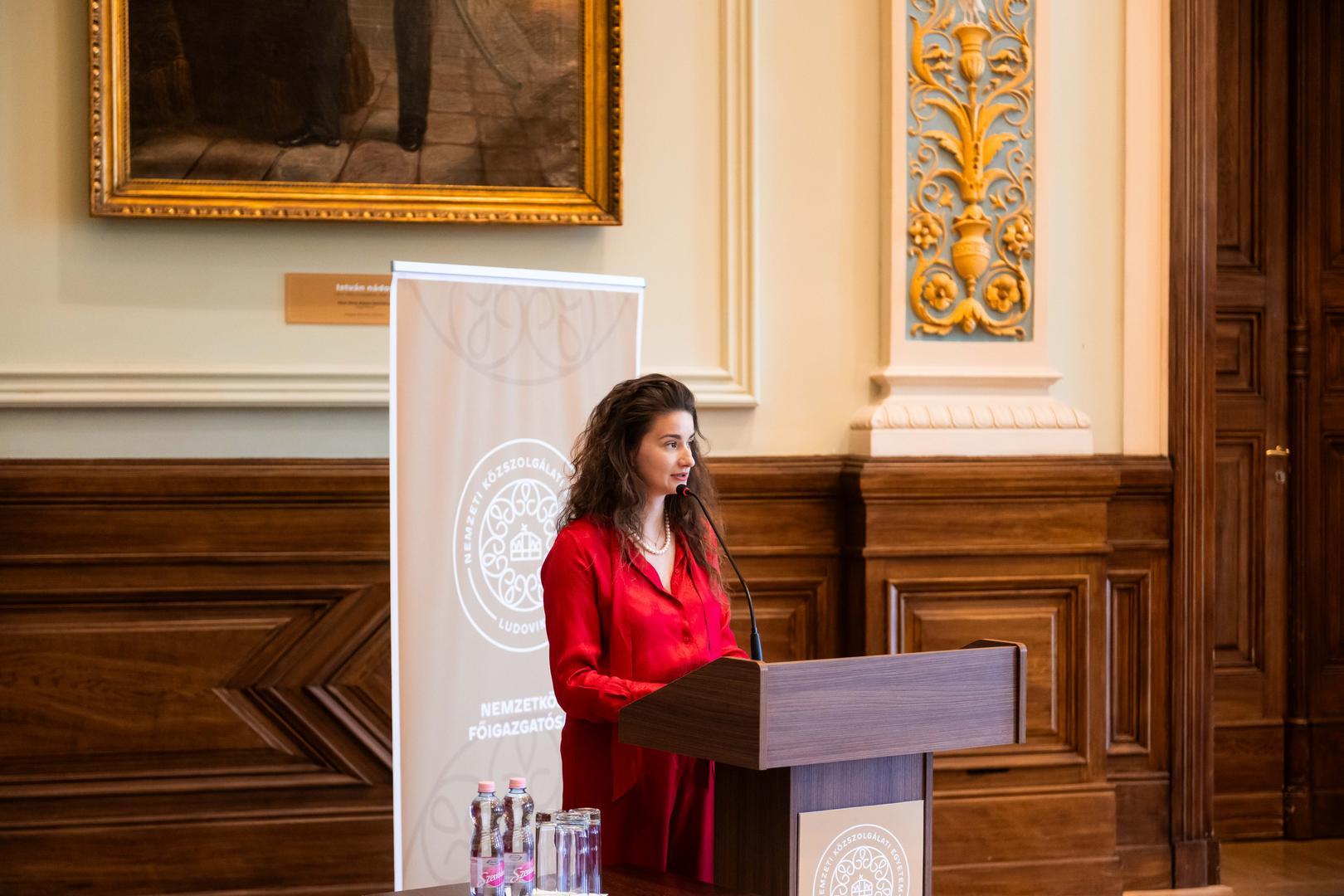
In her introductory thoughts, Liliana Śmiech, Director General for International Affairs at the Ludovika University of Public Service, she emphasized the idea that apart from being awarded in recognition of excellence, the Ludovika Prize aims at introducing examples of leaders who can illustrate the values associated with the university. For example, she described Wolfgang Schüssel as a person belonging to the history of modern Austria and a crucial episode of European politics. She referred to him as “a politician who can harmonize the idea of loyalty to the nation-state and commitment to Europe.” Addressing the Ludovika University of Public Service’s contribution to society, she drew particular attention to the necessity of training future leaders. Specifically, she said, “in an age of immediacy and uncertainty, strategic political leadership informed by a sense of history is becoming rare and thus more precious than ever before.”
In his speech, Gergely Prőhle, Programme Director of the John Lukacs Institute for Strategy and Politics, highly valued the political and ideological heritage of Wolfgang Schüssel and stressed that he was an integral part of Central Europe and has special connection with Hungary. It was especially relevant to honor him at the Ludovika University of Public Service, as the foundation itself is a perfect personification of Central European identity.
The Programme Director offered a comprehensive introduction to the professional background of Wolfgang Schüssel, including the fact that he was born in Vienna in 1945 and was a Member of the National Council of Austria for Vienna from 1979 until 2011. As a politician, he acted as the Minister of Economic Affairs, Foreign Minister, and Vice Chancellor prior to his service as Federal Chancellor of Austria from 2000 to 2007. Moreover, Prőhle mentioned the involvement of Schüssel in initiating the creation of Andrássy University Budapest along with the Hungarian government through Little Danube Summit. Another topic discussed by Prőhle was the European Voices project that seeks to provide a voice to Central Europe in Europe. For Prőhle, the importance of the journal lies in the fact that it allows the region to be present in the European foreign policy debate in its own perspective. In particular, he referred to one of the books written by the former Austrian chancellor: “Active optimism survives through its reaching out to the future in trusting expectation.” From his point of view, this statement perfectly reflects the political image of Wolfgang Schüssel, who is known for his self-confidence and optimistic views.
“The European Union should not be afraid, but rather capitalize on its strength,” declared Wolfgang Schüssel. Drawing from his personal experience, including memories associated with such events as the Hungarian Revolution in 1956 and the collapse of the Iron Curtain, as well as reflecting on the political situation today, the former Austrian chancellor shared his ideas about the future of Central Europe and Europe in general. "Hungary has always been close to my heart," declared the politician. In particular, the former Austrian chancellor stressed the deep historical and cultural connection between the two nations. In addition, the former chancellor also mentioned the ongoing war in Ukraine, the conflict in the Middle East, and the energy crisis, referring to it as the most serious energy crisis after the oil crisis of 1973. The former chancellor pointed out that now practically everything could become a tool of war: energy resources, logistics chains, and even the migration of people. That is why, he stated that nations by themselves are not able to cope with the modern problems anymore. He said that what Europe needs are unified rules, respect to the laws, and trade predictability. The biggest advantage of Europe according to the former chancellor was its way of life, rule of law, safety, and high level of education. “Our young people are our hope,” he said, underlining the fact that the current generation was better educated, more tolerant and well-informed than their predecessors ever were. The next decades would show the world plenty of discoveries in science, medicine, and technologies, according to him.
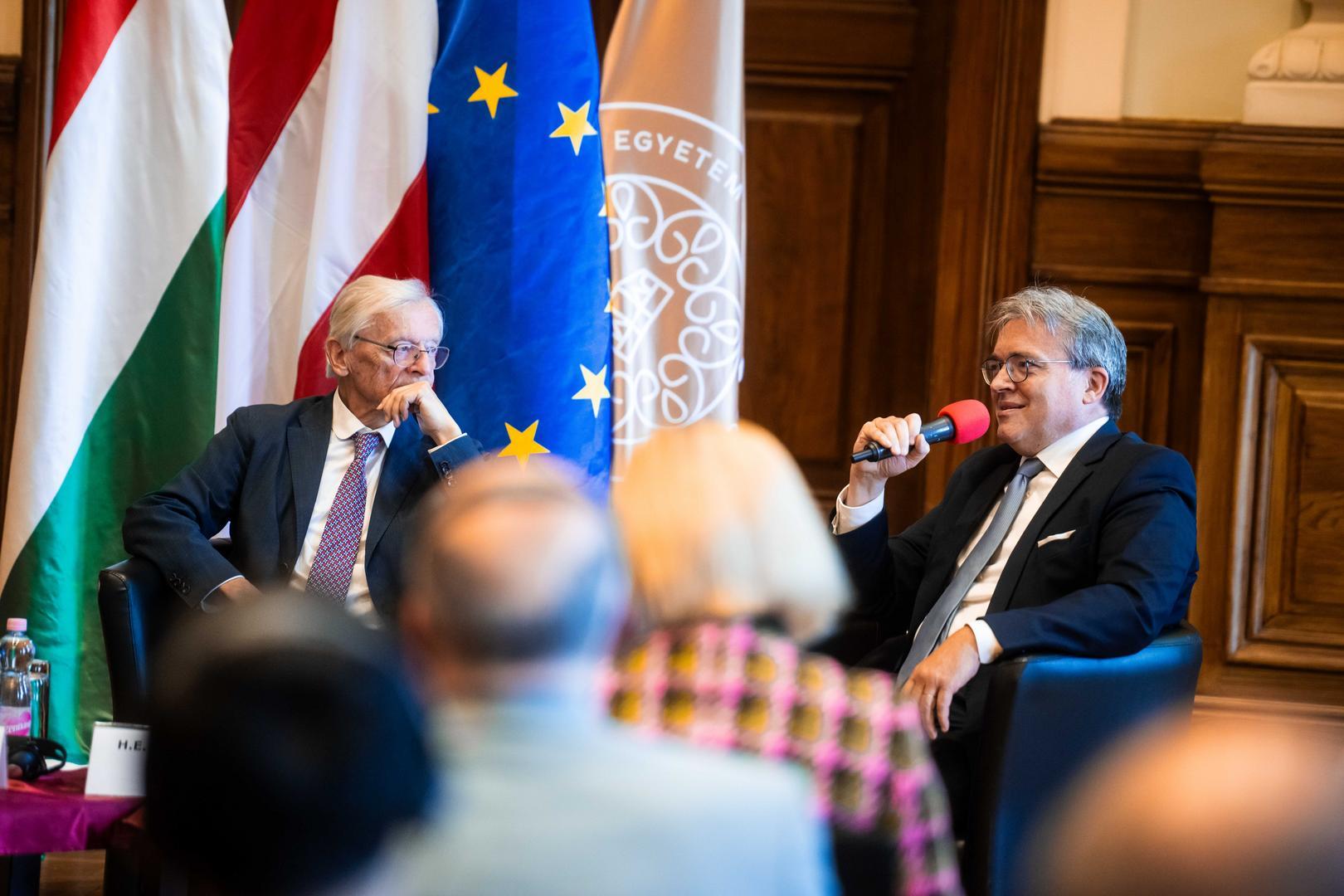
The topics of the future of the EU, Central European cooperation, and the challenges facing Europe politically were debated during the panel discussion by Wolfgang Schüssel, the former chancellor of Austria; Zsolt Bóta, Hungary’s Ministry of Foreign Affairs and a former deputy head of mission in Vienna; and Gergely Prőhle. Subsidiarity was one of the main ideas discussed during the debate. Subsidiarity implies decision-making based on efficiency, meaning decisions must be made at the level where they can best be managed. The debaters pointed out that Europe has come to an age where nation-states individually cannot provide answers to all problems. Therefore, a common strategic outlook is crucial for Europe. However, the debaters did not emphasize centralization but common sense instead. Moreover, the participants pointed out that the center of political and economic leverage in the EU moves to the east, increasing the significance of such nations as Hungary, Austria, the Czech Republic, Slovakia, and Slovenia. In addition, they said that Europe pays too much attention to its problems and confrontations, whereas it should concentrate more on what has been done thanks to cooperation among Europeans. Moreover, Wolfgang Schüssel emphasized that other partnerships, namely those with India, Indonesia, and Japan, are also essential. According to the speakers, nations from Central and Eastern Europe, thanks to their history, are particularly concerned about national sovereignty and resistant to centralism. However, at the same time, their view of the future is based on cooperation, rather than isolation, in other words, Europe that will be able to combine national identity with European cooperation.
Text: Éva Harangozó
Photo: Dénes Szilágyi