Where Water Flows, Equality Grows – World Water Day 2026 in Baja
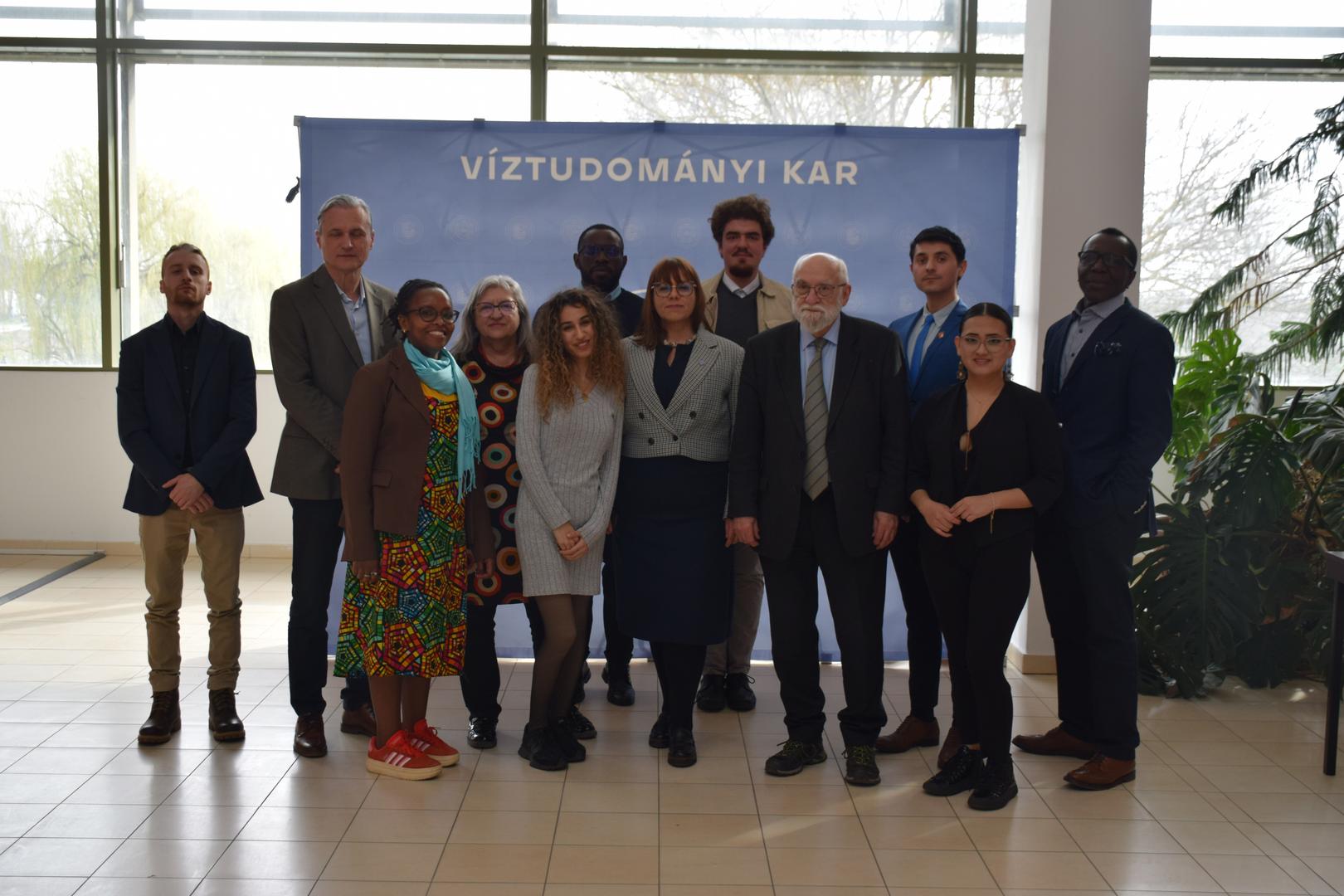
On 18 March 2026, the Faculty of Water Sciences of the Ludovika University of Public Service in Baja hosted a full-day event to mark World Water Day 2026, bringing together high school students, university students, lecturers, and professional partners. The programme focused on the relationship between water, equality, and social participation, under the motto: “Where water flows, equality grows.” A key strength of the event was its strong international dimension, with UCW playing an especially important role as both a professional partner and active contributor throughout the day.
The programme opened with keynote presentations by Katalin Czippán (LUPS FWS), who spoke about gender equality, diversity, and participation as essential dimensions of sustainable water governance, and Ágnes Kovács (LUPS FWS), who introduced the work of the UNESCO Chair in Water Conflict Management through the theme of water, peace, and equality. Rock A. Missamou (UCW) further enriched the programme with his presentation on strengthening the role of African women in water governance. UCW was also actively involved in the World Water Day High School Competition Final, with Viktória Kesztyűs and Rock A. Missamou serving on the jury, underlining the institution’s commitment to both professional dialogue and youth engagement.
In the afternoon panel discussion, “Where Water Flows, Equality Grows – Water and Equality,” several UCW participants shared their regional perspectives on access to water, water governance, and representation in decision-making. Later in the programme, Mutevu Druscilla Mwikali and Rebolledo Jana William (UCW) contributed to the session introducing the UNESCO Chair through their presentation, “Water, Peace and Equality.” Overall, World Water Day 2026 in Baja became more than a commemorative event: it created a platform for education, international dialogue, and cooperation. The broad and active involvement of UCW significantly contributed to the programme’s success and reinforced the message that the future of water governance depends on partnership, inclusion, and diverse voices.