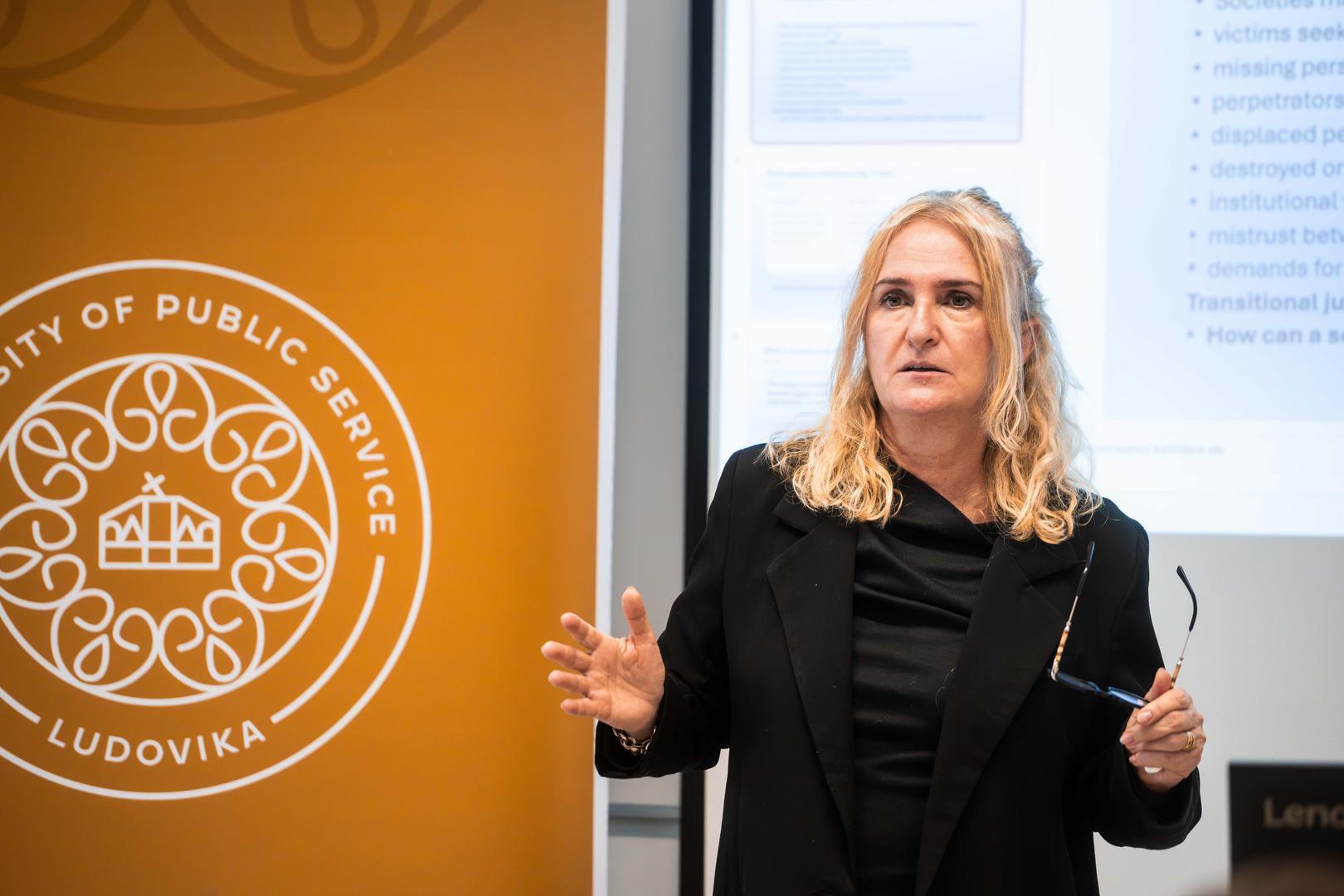
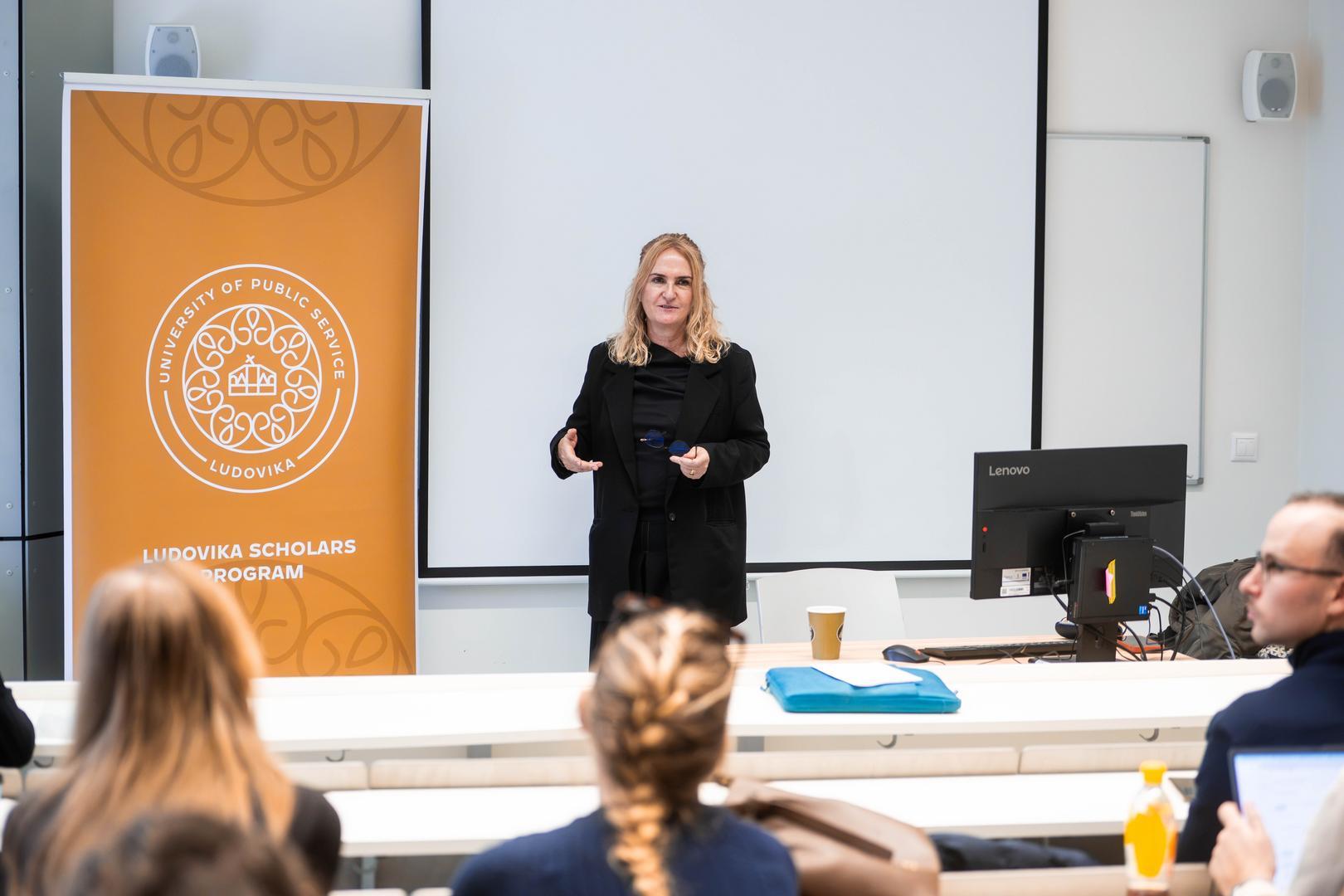
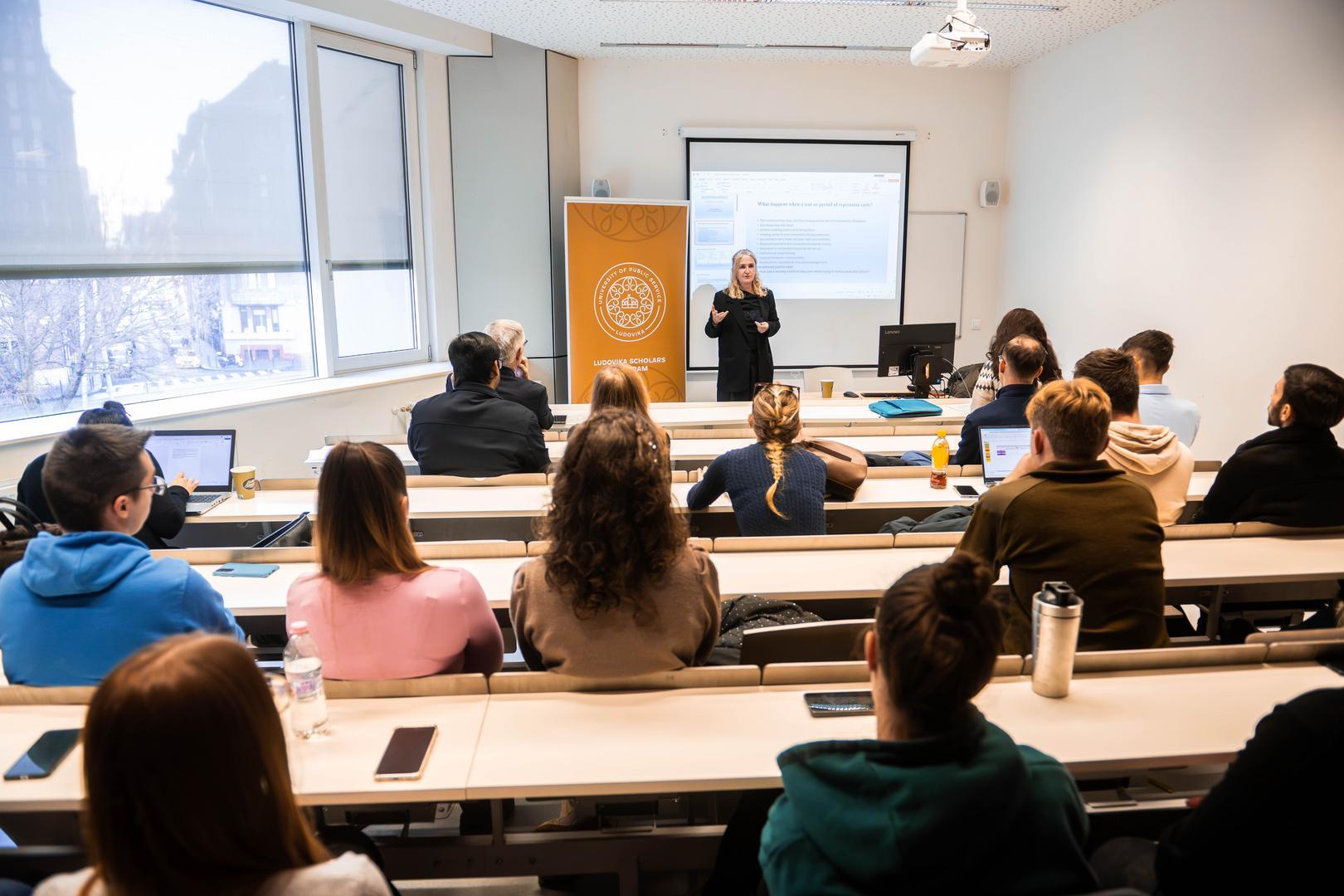
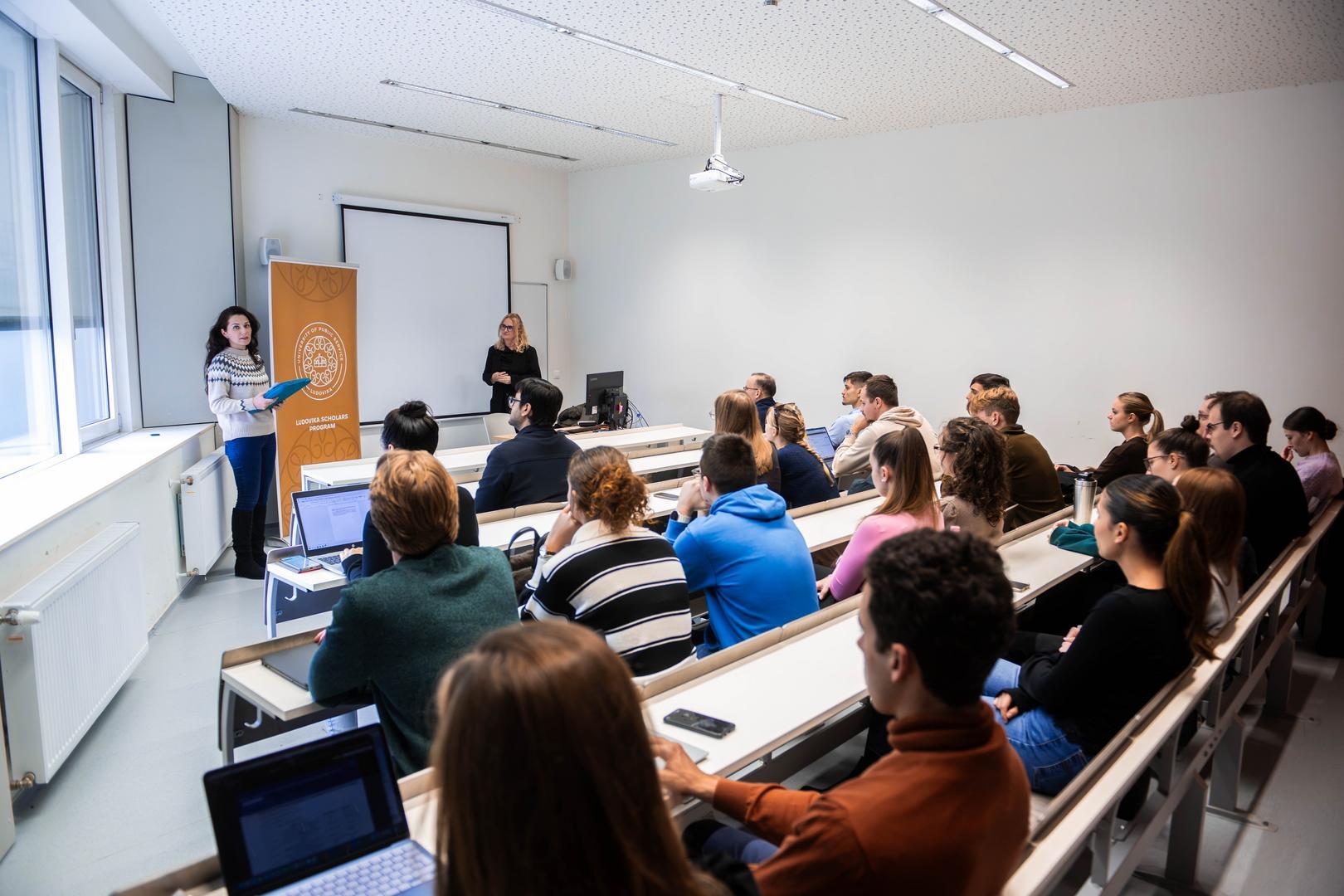
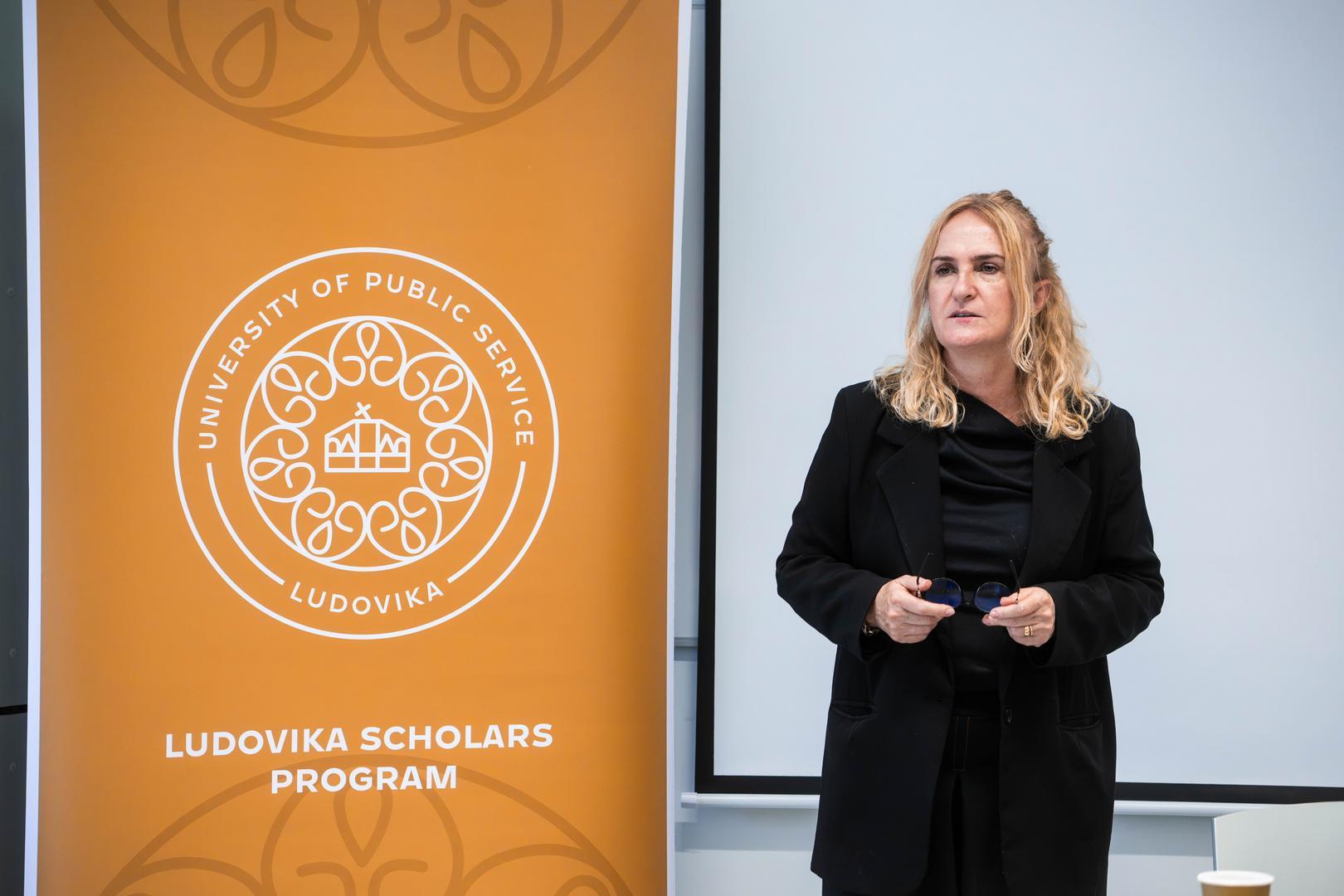
How do societies live together after a war? And can peace ever last if the past is left unexamined? These questions were at the heart of a guest lecture at the University of Public Service, as part of the Ludovika Scholars Program. Our guest was Gjylbehare Bella Murati, Professor of Law and Vice-Dean for International Affairs at the University of Pristina. Her research focuses on human rights and the rule of law, and she drew on both scholarship and personal experience to explore the lessons of transitional justice.
Professor Murati's central message was clear: building peace after war cannot mean erasing the memory of what happened. Societies, she argued, must confront human rights violations, uncover the truth and hold perpetrators accountable. Transitional justice, however, is not merely a legal matter. It is also a historical, social and political process, one that helps communities come to terms with the past and creates the conditions for peaceful coexistence.
She also reminded the audience that the suffering does not end when the fighting does. Recalling her own experience in Kosovo, she described how, during the conflict, her thoughts were consumed by survival and flight, and how she returned home only to find that she had no home to return to. Her story illustrated how deeply the consequences of war shape everyday life long after the ceasefire.
Transitional justice, Professor Murati stressed, reaches well beyond those directly harmed. It concerns relatives, the families of the missing, entire war-torn communities, and even young people who never lived through the conflict but inherit its memory through family stories. These young generations carry the weight of that past, and the traumas they absorb can be passed on to the next.
Uncovering the past is made harder by the fact that people on different sides remember the same events differently. As the professor put it, there can never be a single truth in a society; there are always different truths. Lasting peace also demands institutional reform, since the structures that functioned before or during a war often failed to meet the requirements of the rule of law.
The lecture traced the development of the field from the Nuremberg trials, which laid the groundwork for international criminal justice, to the varied approaches taken since. In South Africa, court proceedings were complemented by truth commissions. In Rwanda, the traditional community-based gacaca courts had a role, where those affected had to give an account of events before local community leaders.
For the wars in the former Yugoslavia, the creation of the International Criminal Tribunal for the former Yugoslavia (ICTY) in The Hague was a landmark. Professor Murati highlighted its contribution to international criminal law, including the development of individual criminal responsibility and the doctrine of joint criminal enterprise. Its judgments also matter for historical memory, as they establish documented facts about the past.
She noted how difficult accountability was in Bosnia after the 1995 Dayton Agreement: society remained deeply divided along political and ethnic lines, and the independence of domestic courts could not be guaranteed. Slobodan Milošević was handed over to the tribunal only in 2001, six years after Dayton. Even decades later, Bosnia has not made progress on every key issue, such as adequate reparations for war victims and the creation of a shared memory.
Looking at current conflicts, Professor Murati described Ukraine as a more encouraging example in terms of international cooperation and documentation. Modern technology allows evidence of war crimes to be collected and preserved far more effectively than in earlier conflicts. Syria, by contrast, poses different problems: alongside efforts to investigate the crimes of the former regime, the independence of the judiciary remains in question. She also warned of the risk of one-sided proceedings if the focus falls exclusively on the former regime while violations by other actors in the conflict are pushed aside.
The lecture was a thought-provoking reminder that justice, memory and peace are inseparable, and that every society must find its own way of reckoning with its past. We are grateful to Professor Murati for sharing her expertise and her story with the Ludovika community.
Text: Éva Harangozó
Photo: Dénes Szilágyi