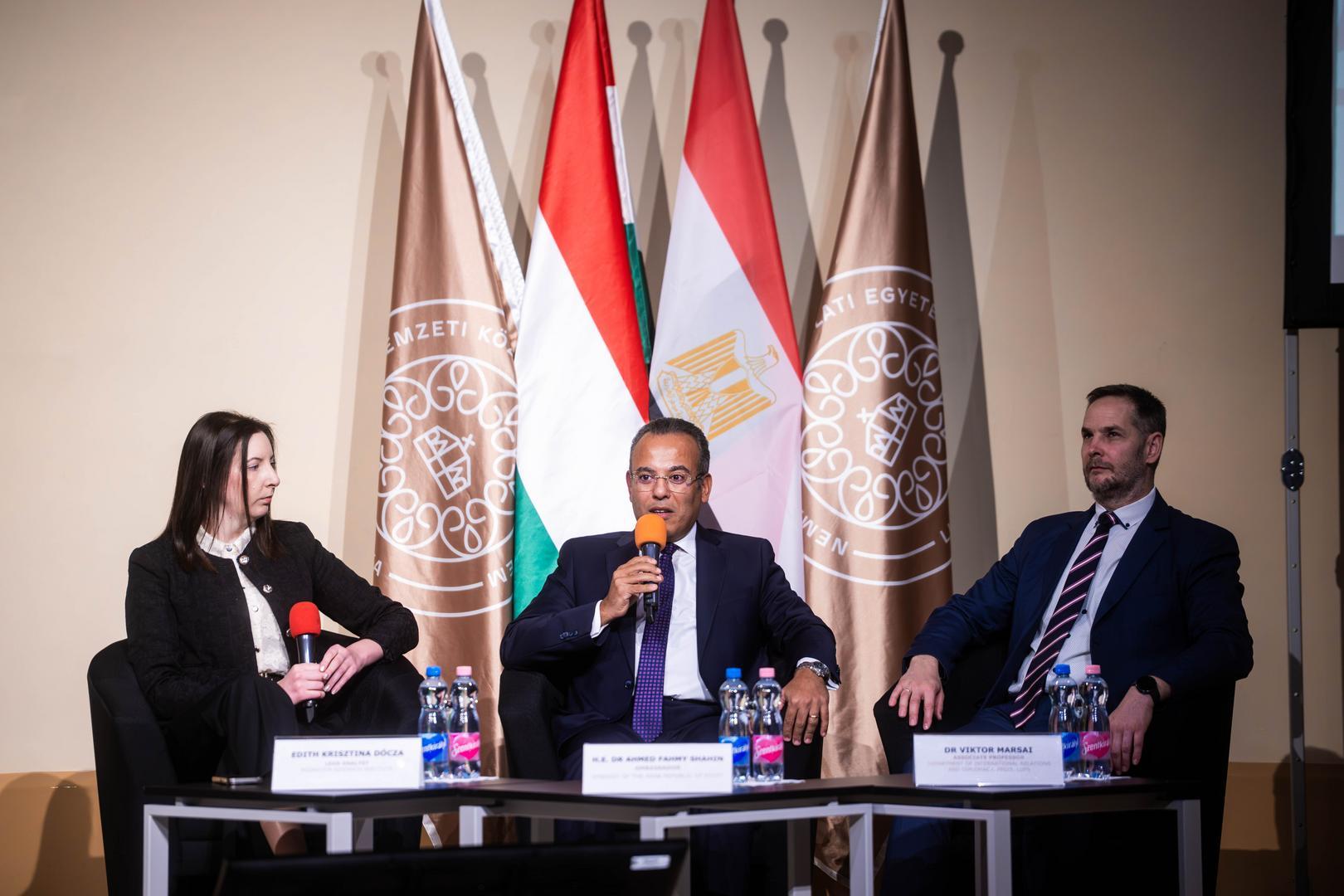
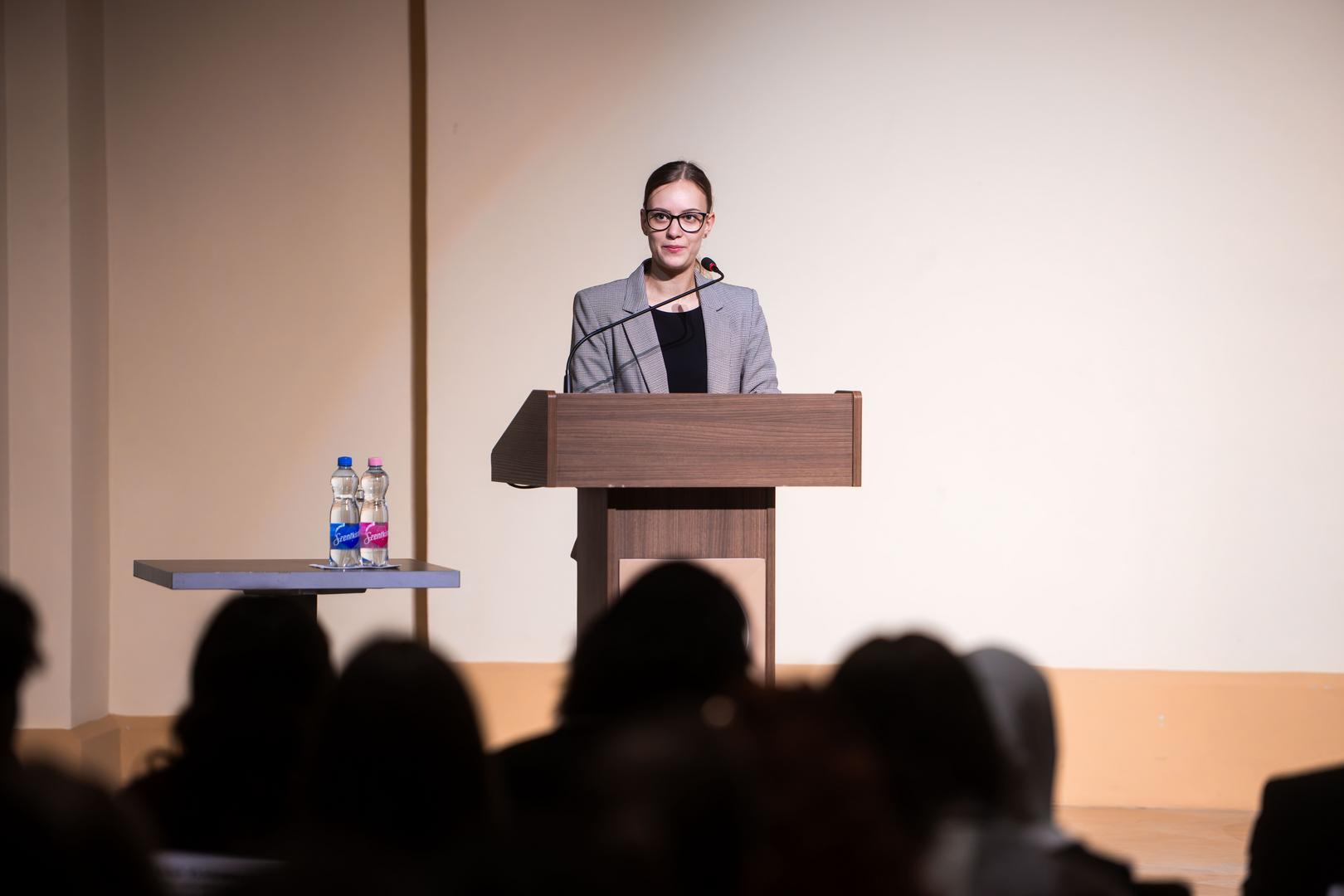
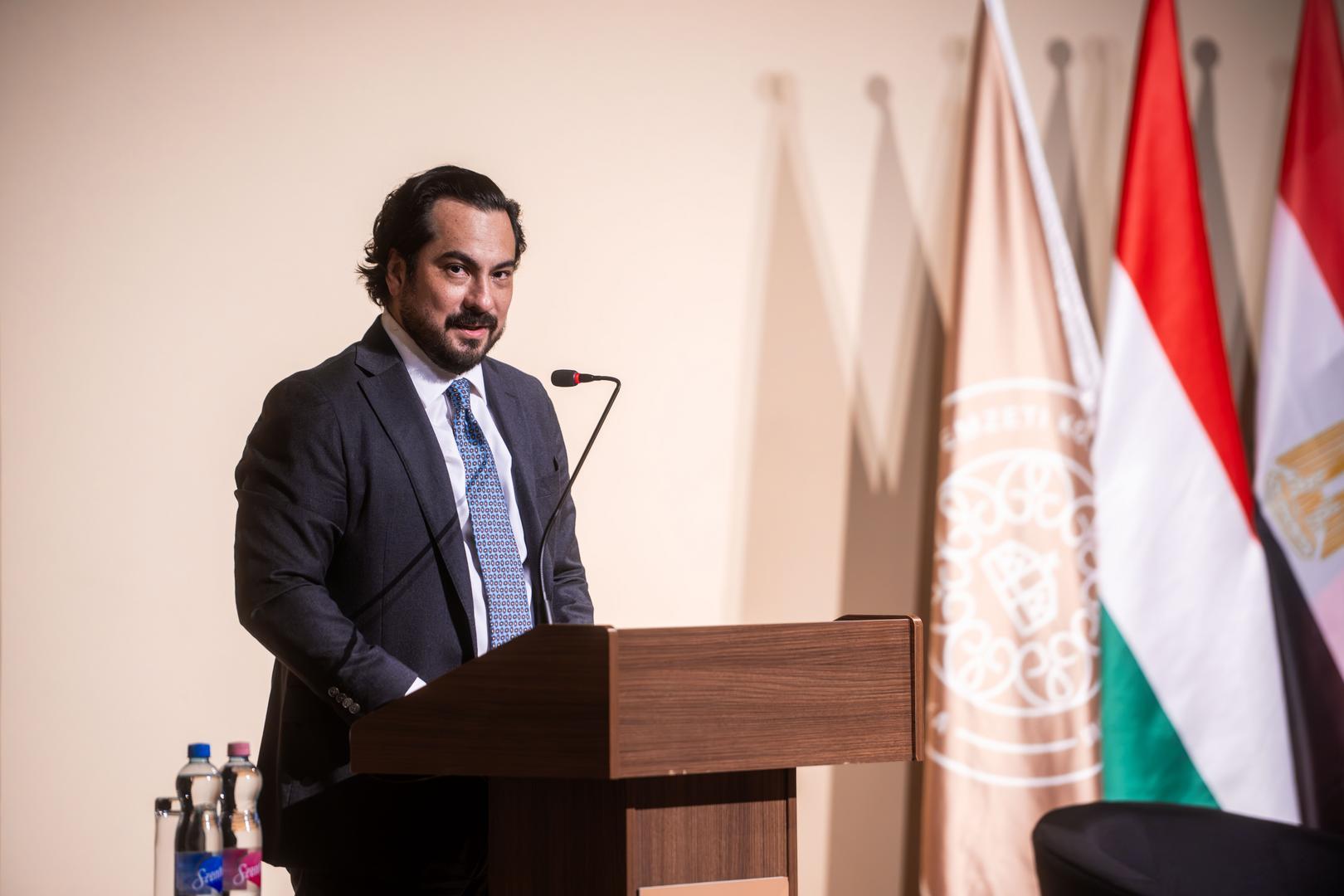
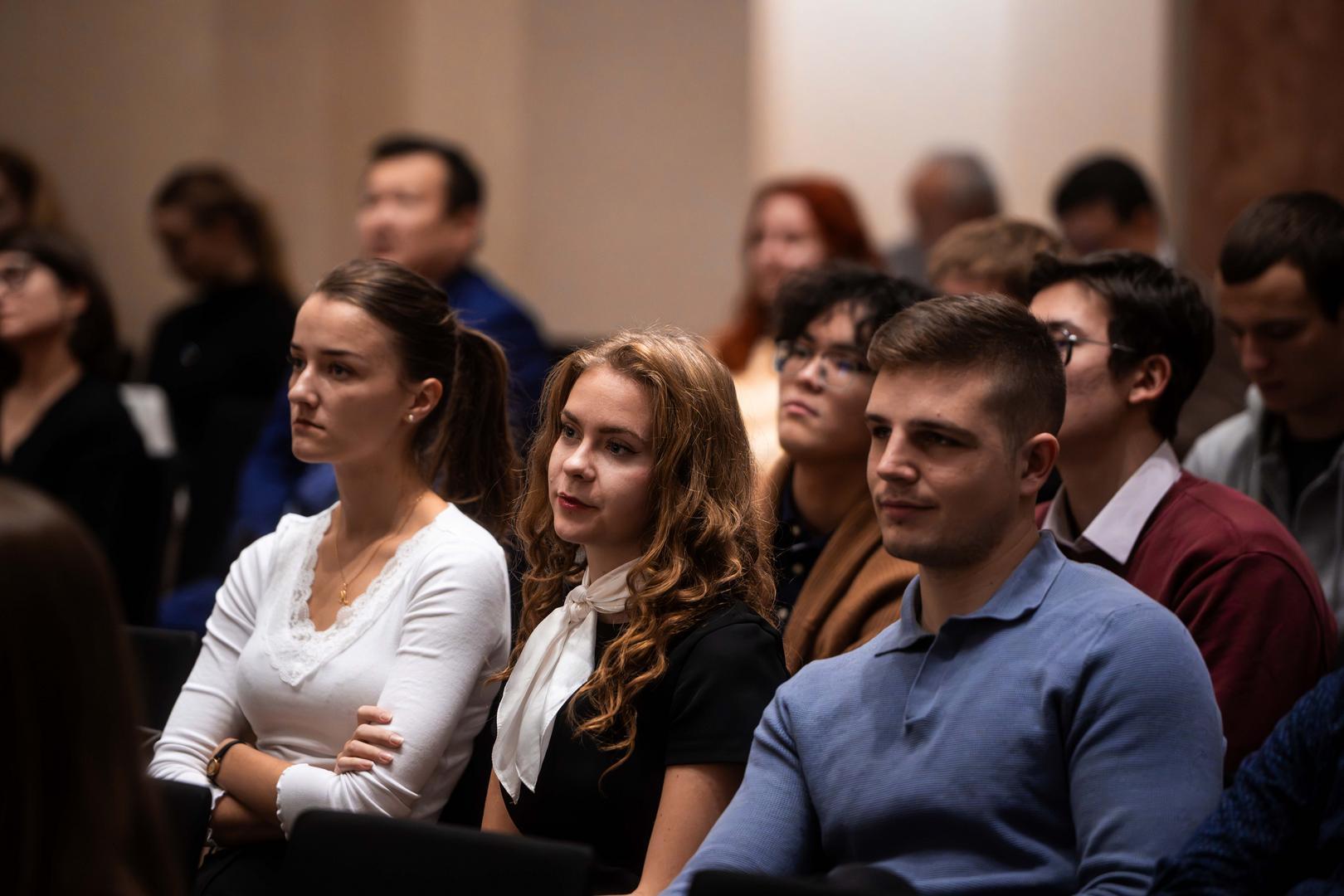
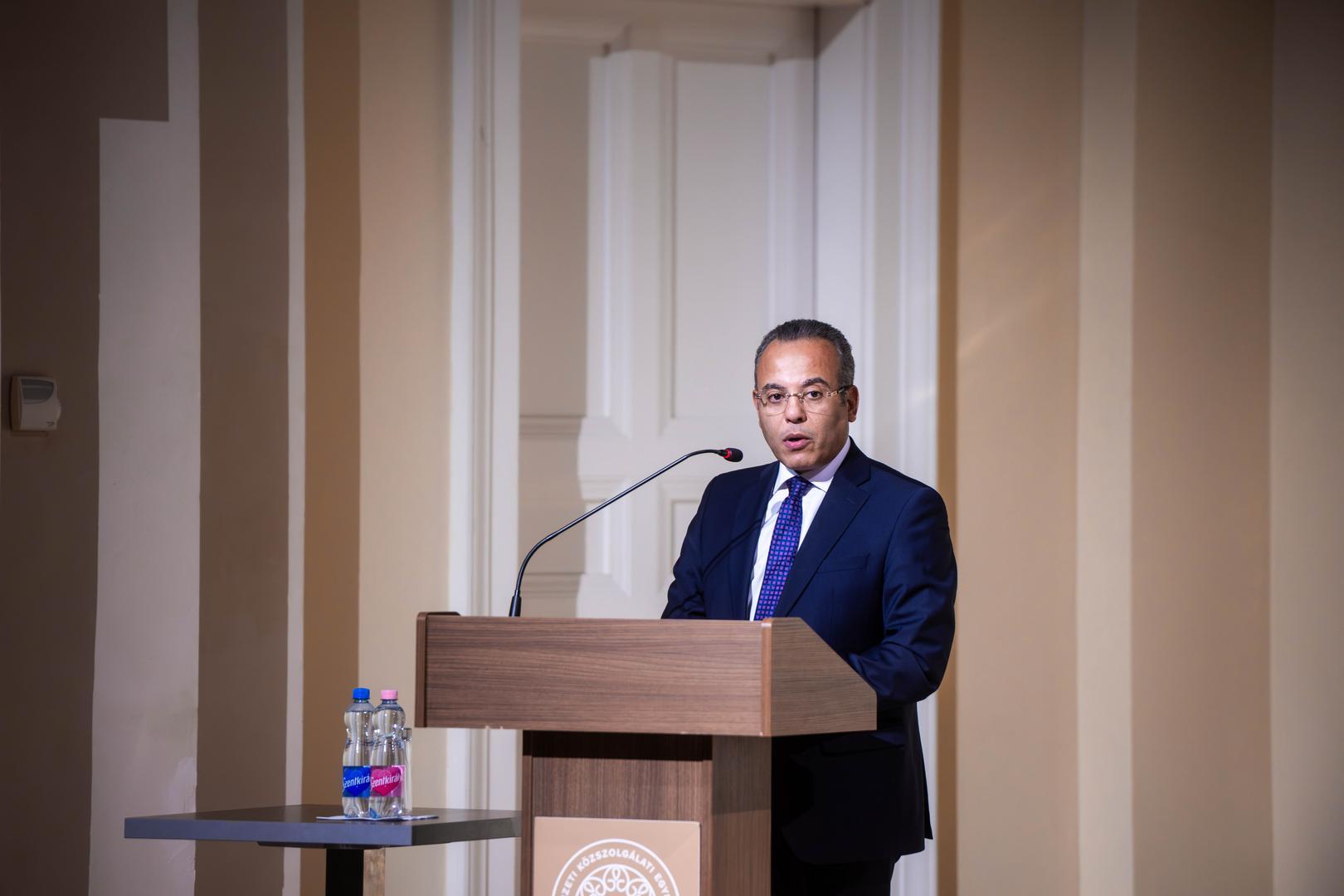
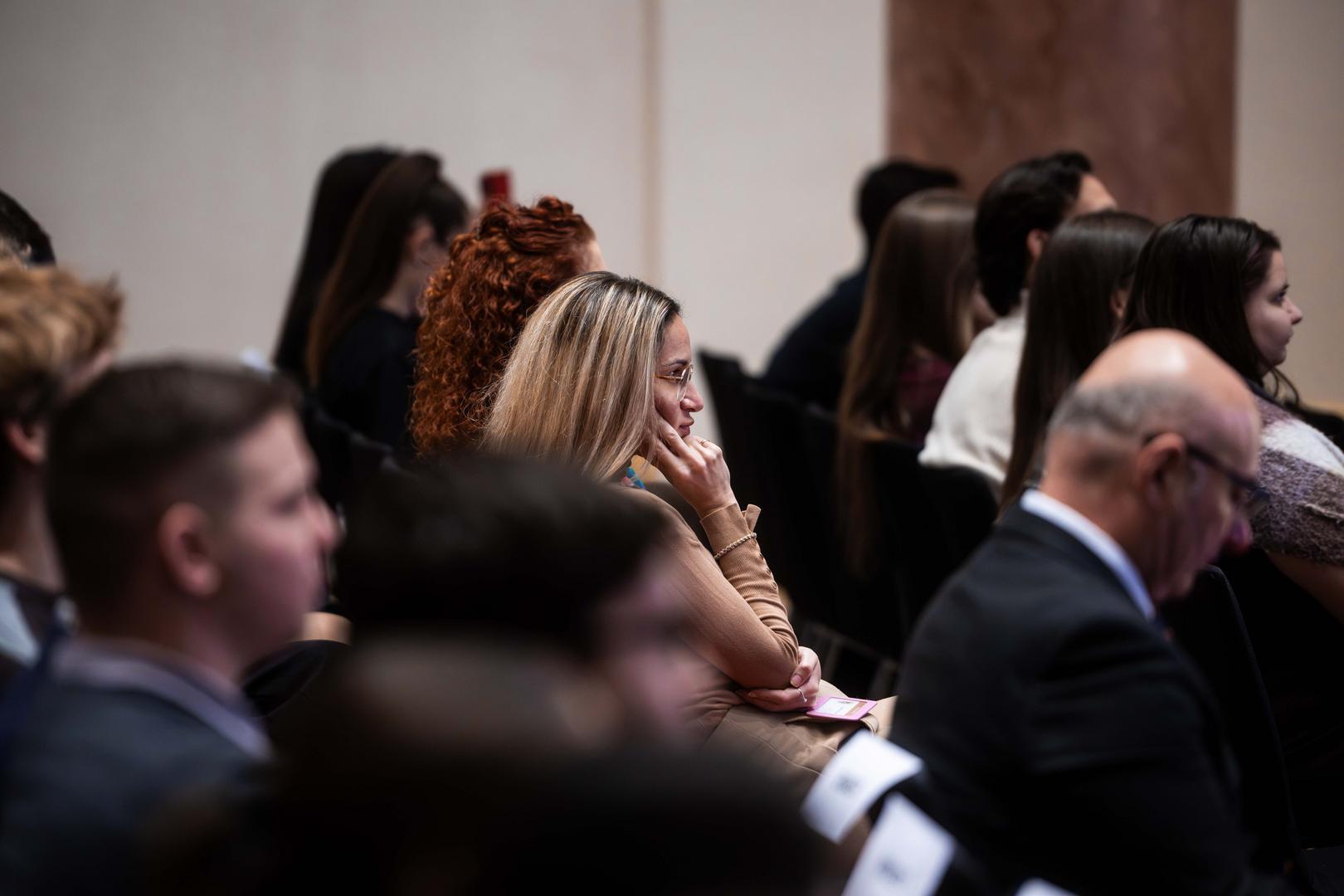
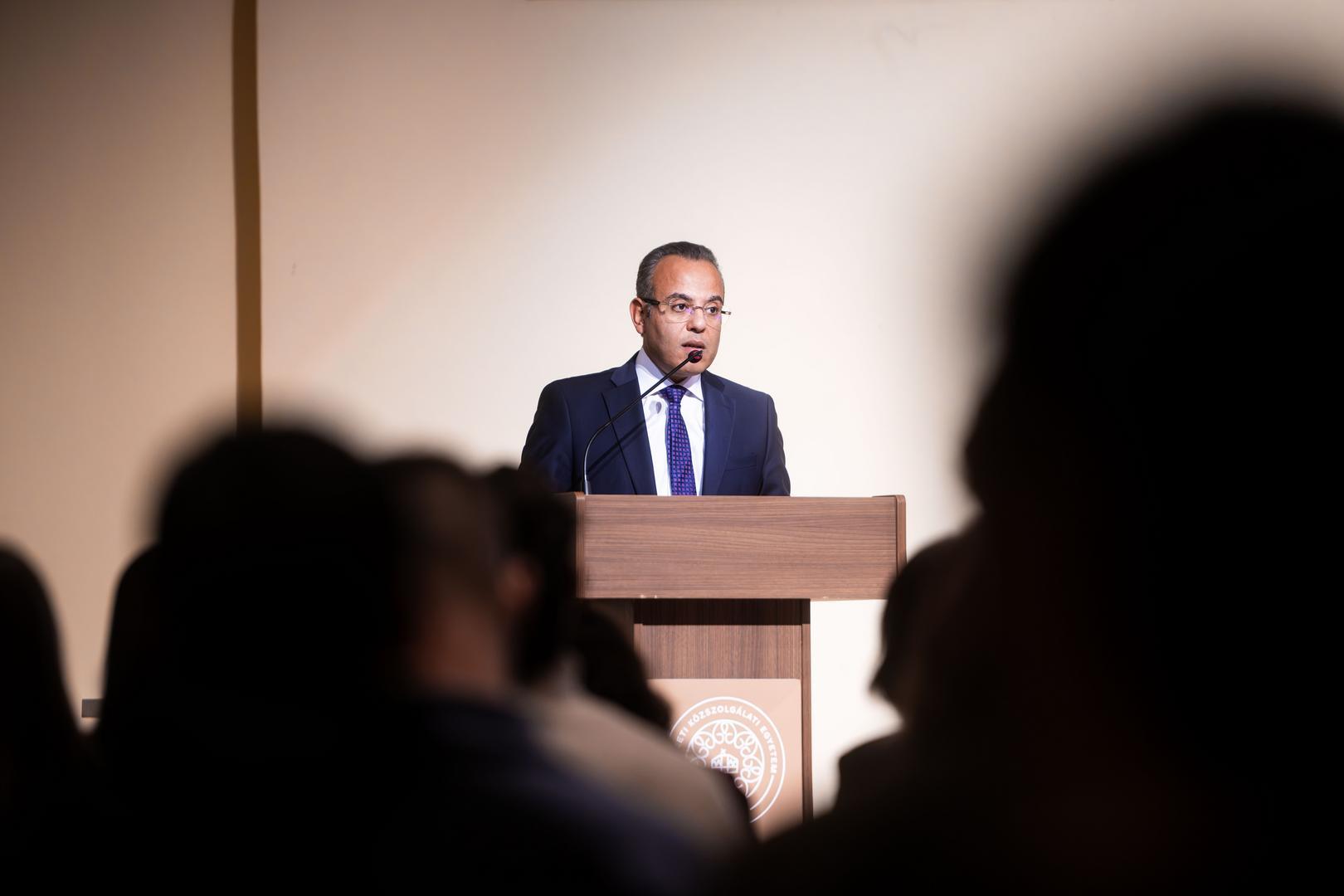
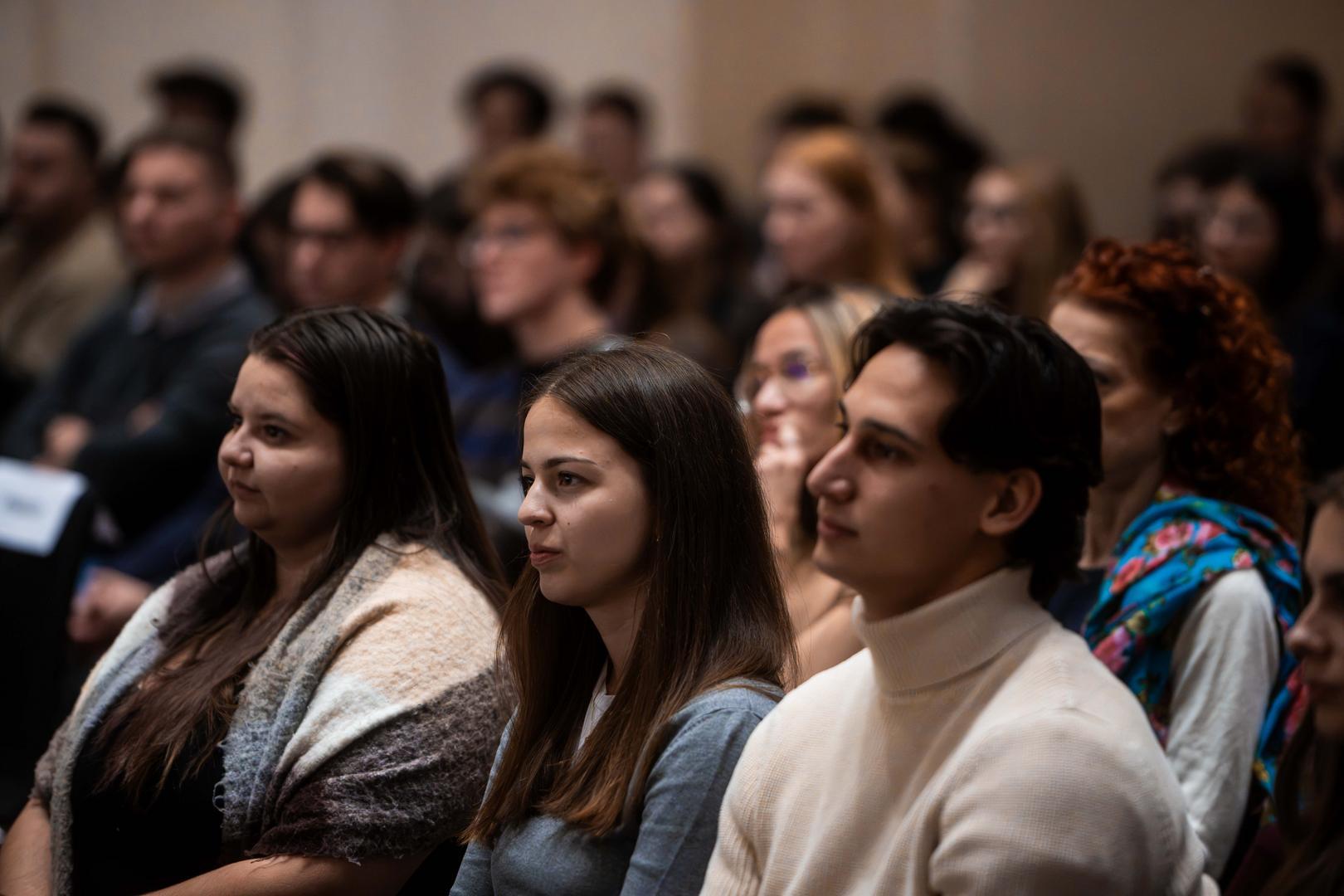
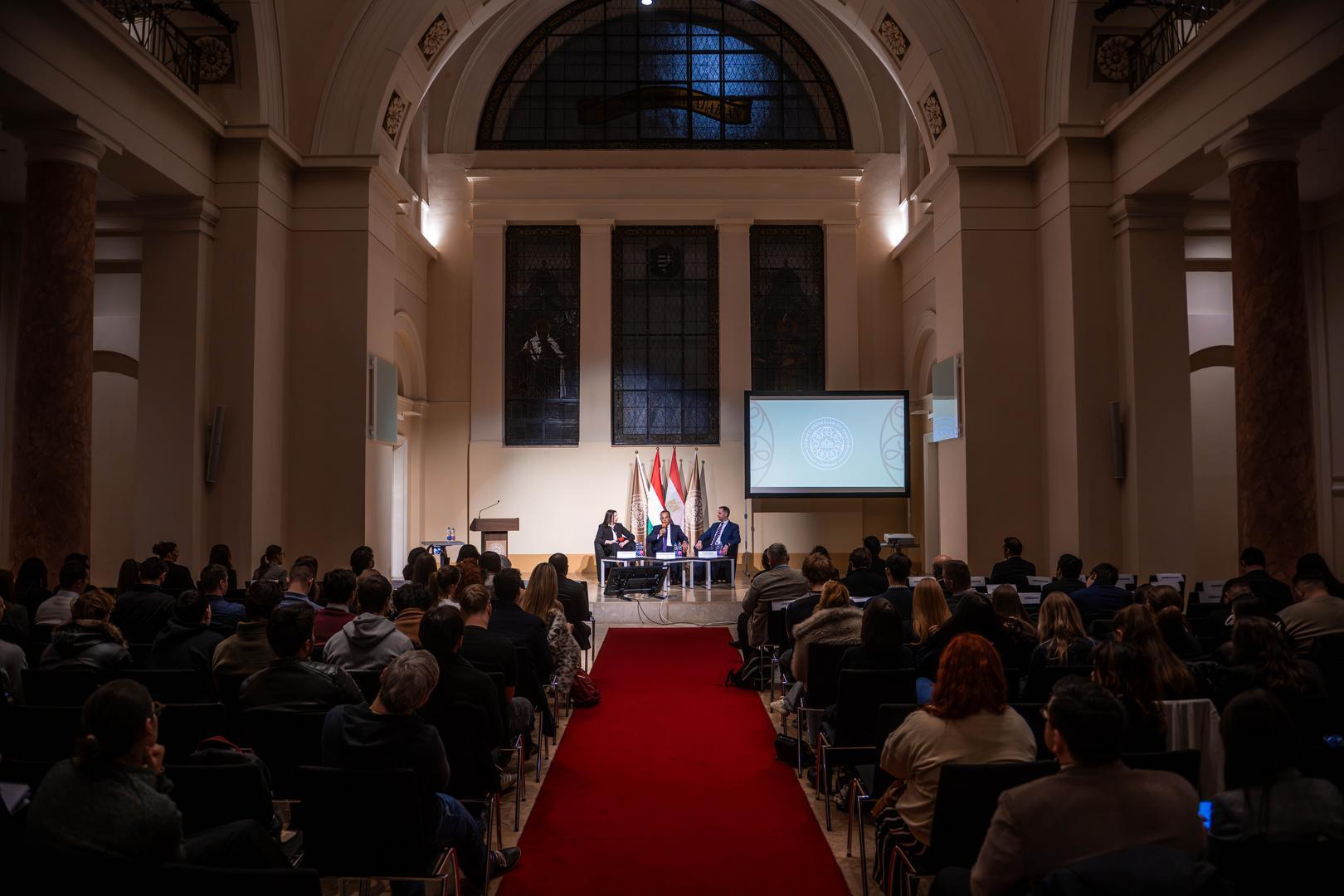
The latest event of the Ludovika Ambassadors' Forum, regularly organized by the International Office of the Ludovika University of Public Service (LUPS), was held on November 23 in the university's St. Ladislaus Chapel. The guest was Ahmed Fahmy Shahin, Ambassador of the Arab Republic of Egypt to Hungary.
Participants were welcomed by Pier Paolo Pigozzi, Vice-Rector for International Affairs at LUPS, who in his speech recalled the university's traditions, highlighting its military, law enforcement, and diplomatic training programs, as well as the institution's international network of relations. He emphasized that LUPS has also hosted Egyptian students within the framework of the Stipendium Hungaricum scholarship program and strives to expand cooperation in several areas. The Vice-Rector also drew attention to the fact that the university's cooperation with international partners and student and researcher mobility also play an important role in strengthening relations between the two countries. The Vice-Rector for International Affairs also touched upon the university's Egyptian higher education ties, recalling that representatives of LUPS previously participated in the first Egyptian–Hungarian Rectors' Forum in Cairo. He added that amidst international challenges, cooperation between the two countries increases in value, creating further opportunities for the university's lecturers and students to strengthen professional and scientific ties.
In his lecture titled Egypt in a Changing World, Ahmed Fahmy Shahin outlined the country's foreign policy aspirations and the security challenges of the region. "We need peace, stability, and security. We must create an environment that continuously favors business activity, growth, and prosperity," the Ambassador emphasized. The Ambassador addressed the Palestinian issue as well as the situation in neighboring countries, including Sudan and Libya: he stated that the conflicts carry severe humanitarian consequences and threaten the stability of the region. Egypt supports international aid delivery, while at the same time considering respect for state institutions, national sovereignty, and territorial integrity to be important. The issue of migration and refugees was also raised during the lecture. The Ambassador pointed out that Egypt hosts a significant number of foreigners, including those fleeing conflicts in the region, which poses a serious task for the country.
Speaking about bilateral relations, the Ambassador recalled that Hungarian–Egyptian diplomatic relations began in 1928, and with the approach of the 2028 centenary, the parties are also reviewing opportunities for further cooperation. Alongside economic and energy relations, Ahmed Fahmy Shahin mentioned transport, water management, agriculture, scientific cooperation, and tourism as important areas of the partnership.
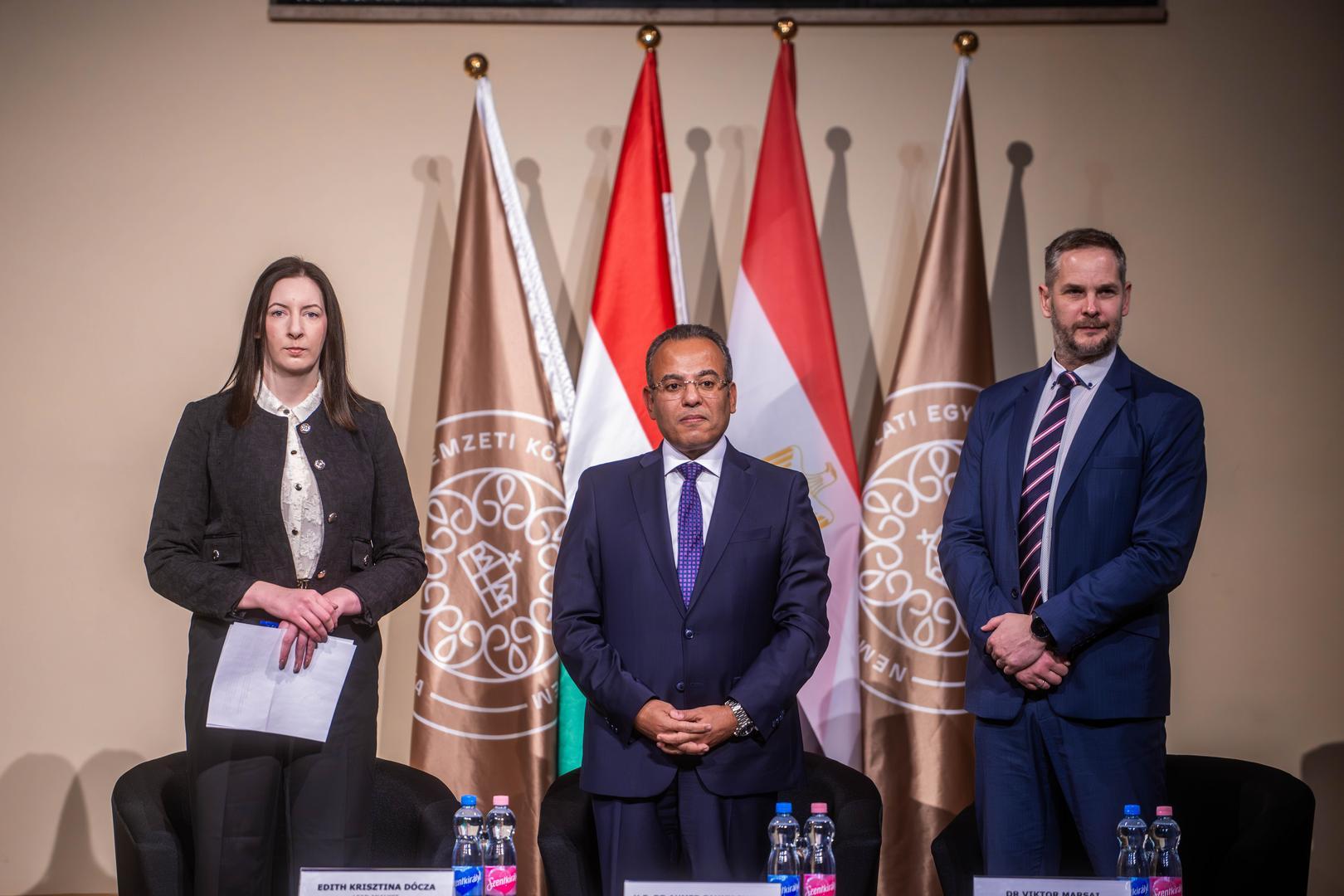
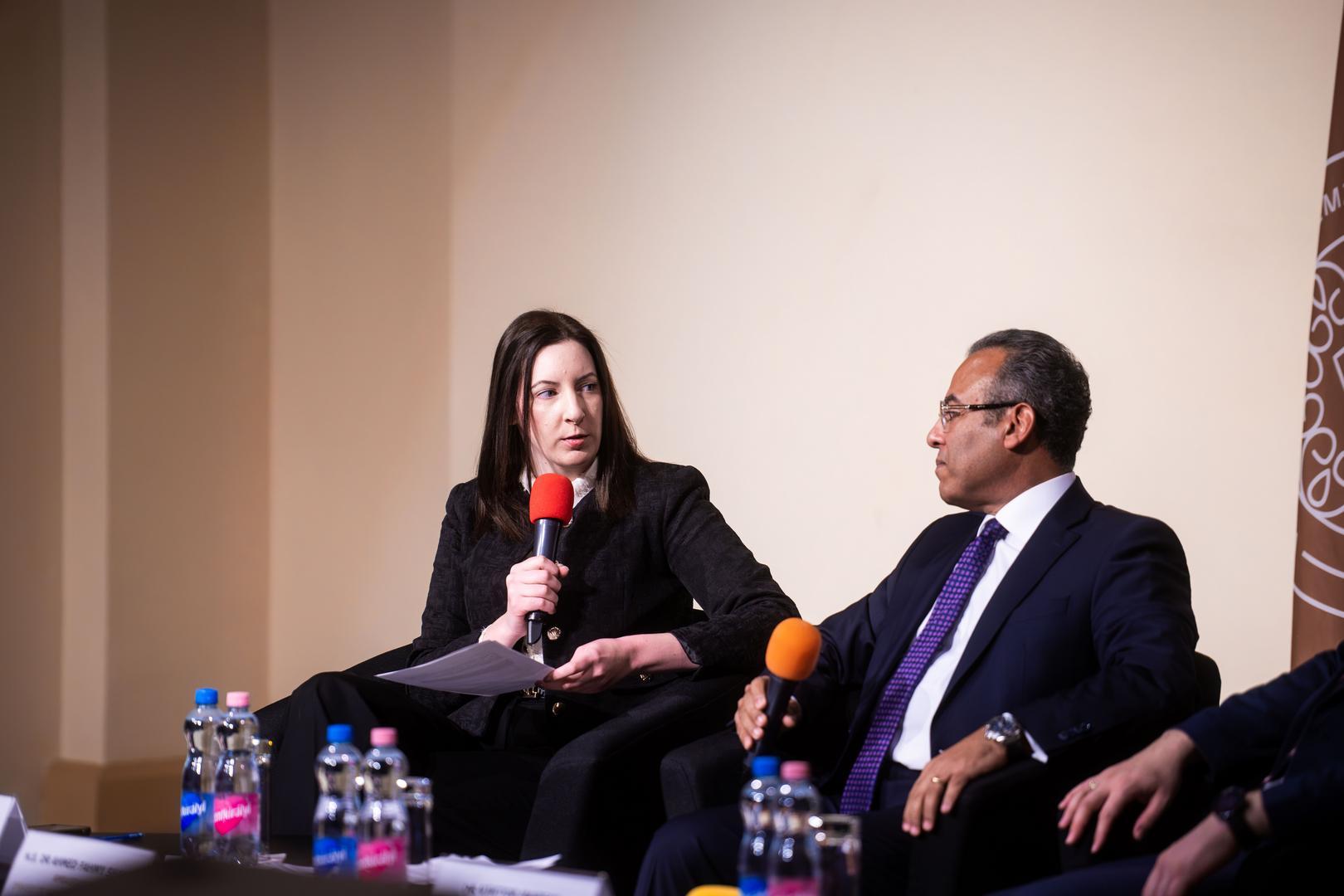
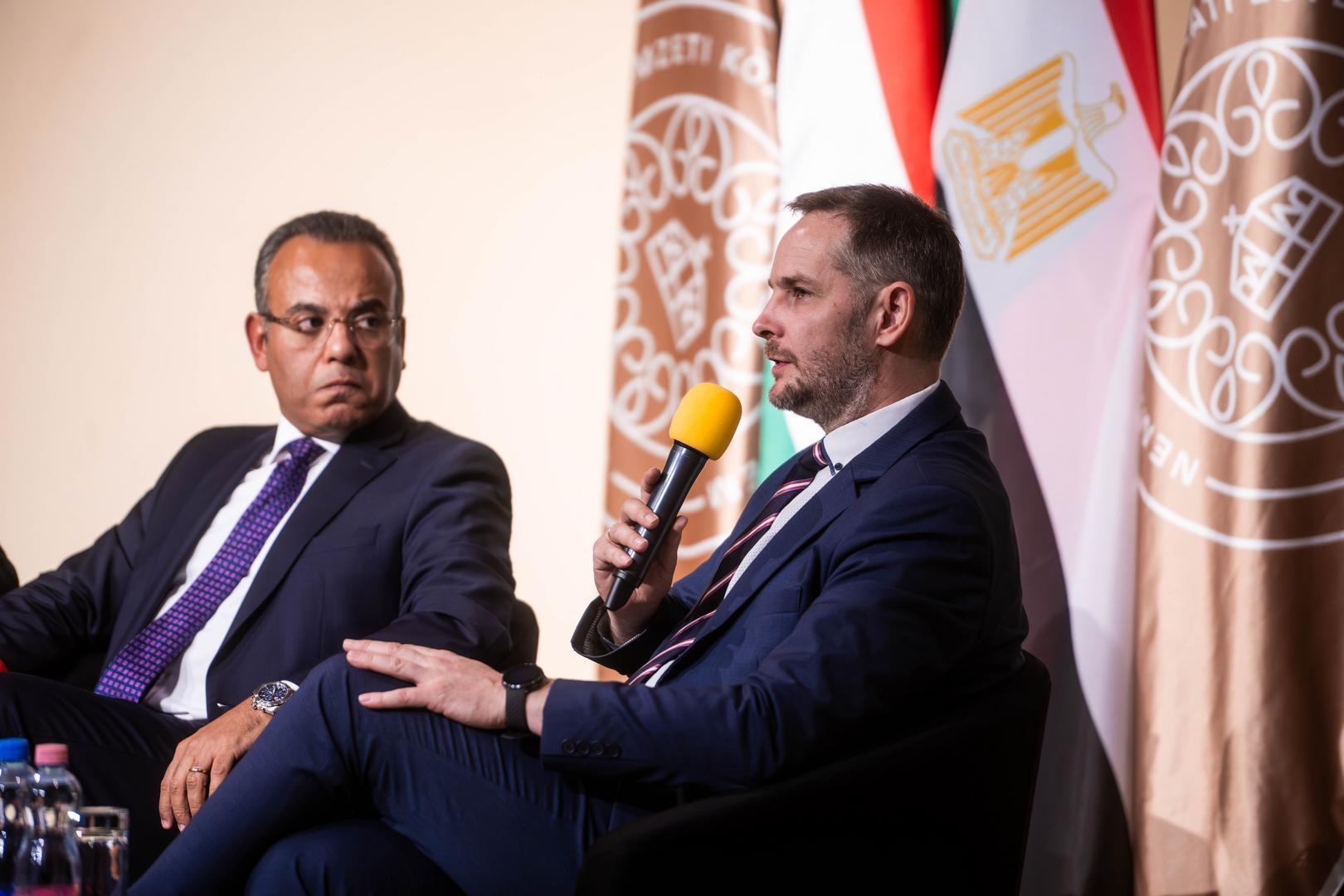
In the panel discussion following the lecture, Viktor Marsai, Associate Professor at LUPS and Director of the Migration Research Institute, participated alongside the Egyptian Ambassador, with the conversation moderated by Edith Krisztina Dócza, Senior Analyst at the Migration Research Institute and PhD student at LUPS.
The Ambassador recalled that relations between the two countries have survived numerous political and historical changes over the past nearly one hundred years: among the results of cooperation, he mentioned transport ties among others, citing as an example that more than a thousand Hungarian railway passenger coaches were delivered to Egypt. Tourism is also an important connecting link between Hungary and Egypt. During the conversation, the economic consequences of the Middle Eastern conflicts were also discussed. The Ambassador touched upon the significance of the Suez Canal, as well as the fact that the deterioration of the region's security situation and the decline in traffic passing through the canal cause a serious loss of revenue for Egypt, as the effects of the conflicts are felt equally in energy prices, freight transport, inflation, and tourism. Regarding the Russian–Ukrainian war, Ahmed Fahmy Shahin spoke about how Egypt maintains relations with both countries and supports a diplomatic solution.
Speaking about the situation of Sudanese refugees in Egypt, the Ambassador said that Egypt does not place arrivals in segregated refugee camps, but treats them as part of society and provides them with access to public services, which places a significant burden on the healthcare and education systems, housing, and the labor market. Viktor Marsai called attention to the fact that the difficulties associated with receiving refugees can particularly affect the most vulnerable groups in society: in the labor market, refugees may compete for the same jobs as local residents in more difficult circumstances, while in the area of housing, tensions can arise if a portion of the arrivals are also able to pay higher rents. At the same time, he emphasized that migration is not solely behind the economic difficulties: the decline in Suez Canal revenues, as well as rising global energy and food prices, also represent a significant burden for the country.
Text: Éva Harangozó
Photo: Dénes Szilágyi