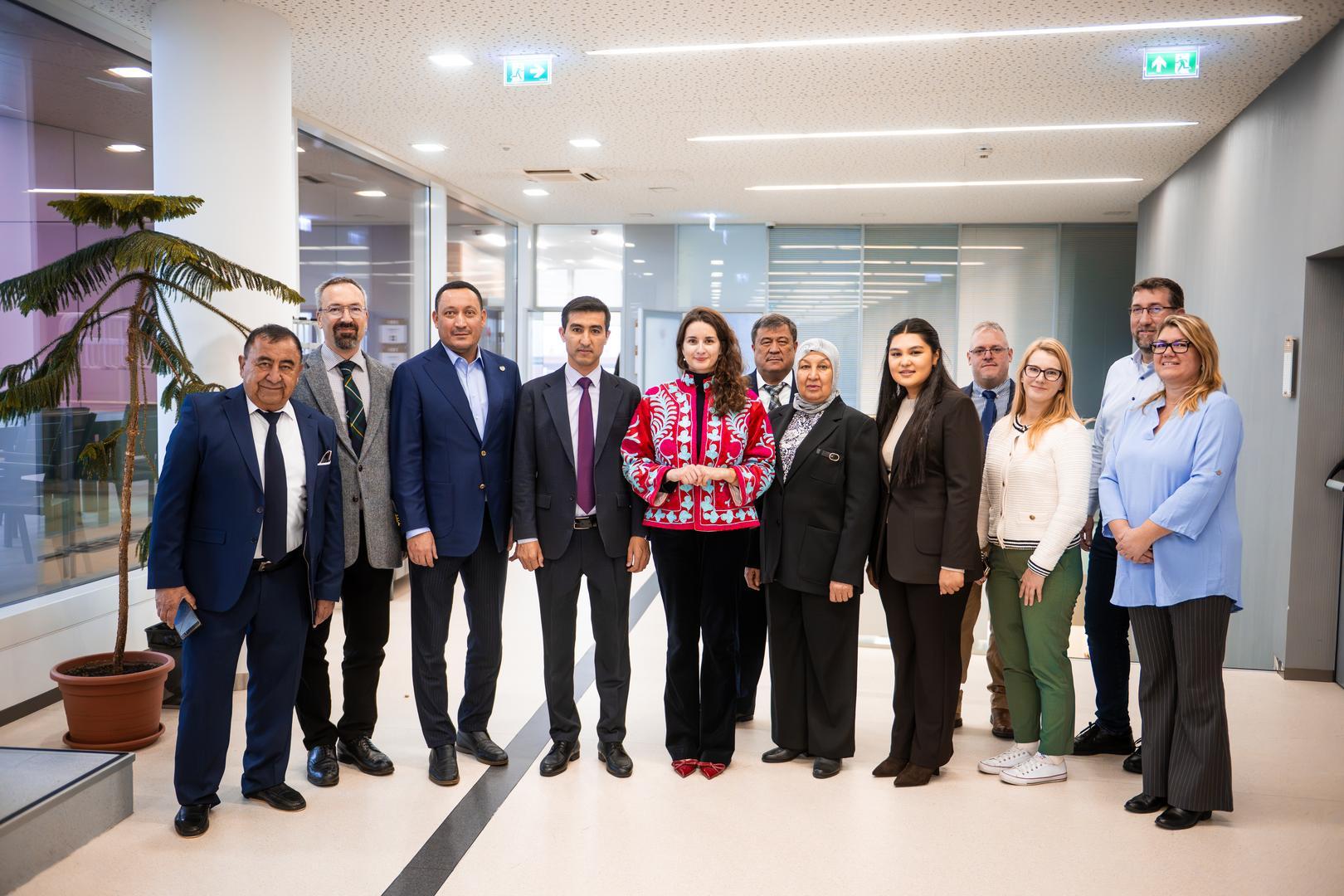








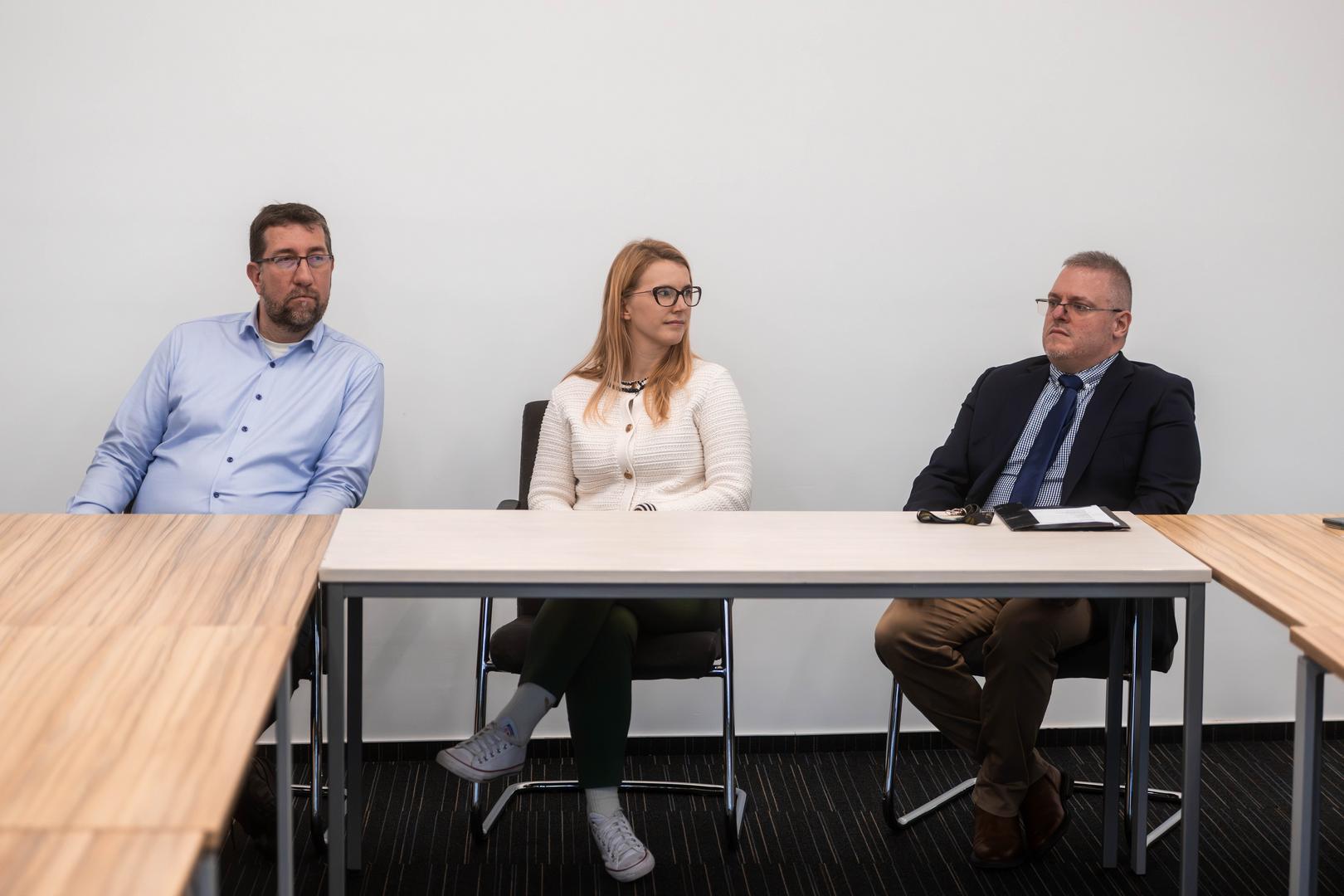
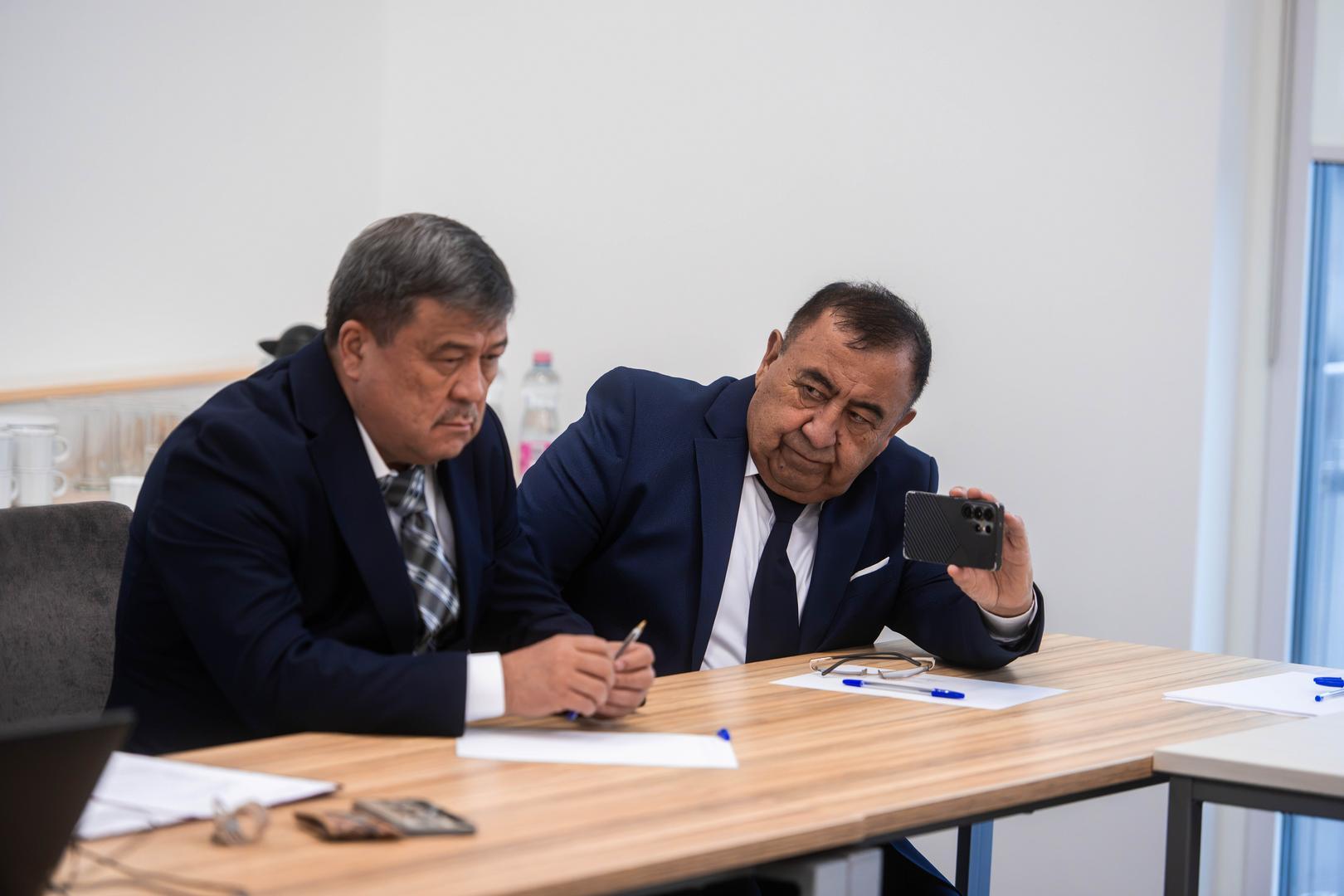

On 16 November 2026, Ludovika University of Public Service (LUPS) welcomed a delegation from the Training Institute for Lawyers under the Ministry of Justice of the Republic of Uzbekistan. Initiated by the Uzbek partner institution, the study visit aimed to give the visiting legal professionals an insight into Hungarian and European professional training practices, current developments in legal systems, and modern approaches to public administration and law enforcement. The visit also provided an opportunity to explore potential areas for future professional and institutional cooperation.
The delegation was welcomed by the Faculty of Public Governance and International Studies (FPGIS). The programme opened with an introduction to the university and the faculty. Liliana Śmiech, Director General for International Affairs, presented Ludovika's institutional profile and activities, while Noémi Farkas, Head of the International Office, introduced the faculty's academic programmes, educational activities and international engagement. Together, the presentations offered an overview of the university's operations, educational structure and role in training professionals for public service.
The professional workshop was organised in two sessions. The first focused on current challenges facing public administration, with particular attention to integrity and transparency in public institutions. Professor Márton Gellén delivered a presentation entitled Digital Governance and the Modernisation of the Hungarian Public Administration, addressing emerging issues and developments shaping modern public governance. This was followed by Péter Klotz's presentation, Protecting Public Funds and Building Trust: Integrity Management in Hungary, which explored the key features of Hungary's integrity management framework, the tools available to protect public funds, and ways of strengthening public trust in institutions. The presentations also sparked a discussion in which participants shared their experiences and perspectives on the operation and accountability of public administration institutions.
The second session turned to current issues in European law, legal education and digitalisation. In his presentation, Teaching EU Law in a Changing Global Order: Challenges of Horizontalisation and Risk Regulation, László Szegedi explored contemporary developments in European legal education and the changing context of EU law. Subsequently, József Sáfrán delivered a presentation entitled Cyber Law and the Legal Challenges of Digitalisation in Hungary, focusing on the legal implications of digital transformation and the challenges arising from technological developments. Both presentations addressed increasingly important areas that have a direct impact on legal professionals and public institutions alike.
The workshop concluded with an informal professional discussion, giving participants the opportunity to reflect on the topics raised during the presentations and exchange further insights. The meeting helped strengthen professional dialogue between Hungarian and Uzbek experts while opening up new possibilities for future cooperation between the institutions.