


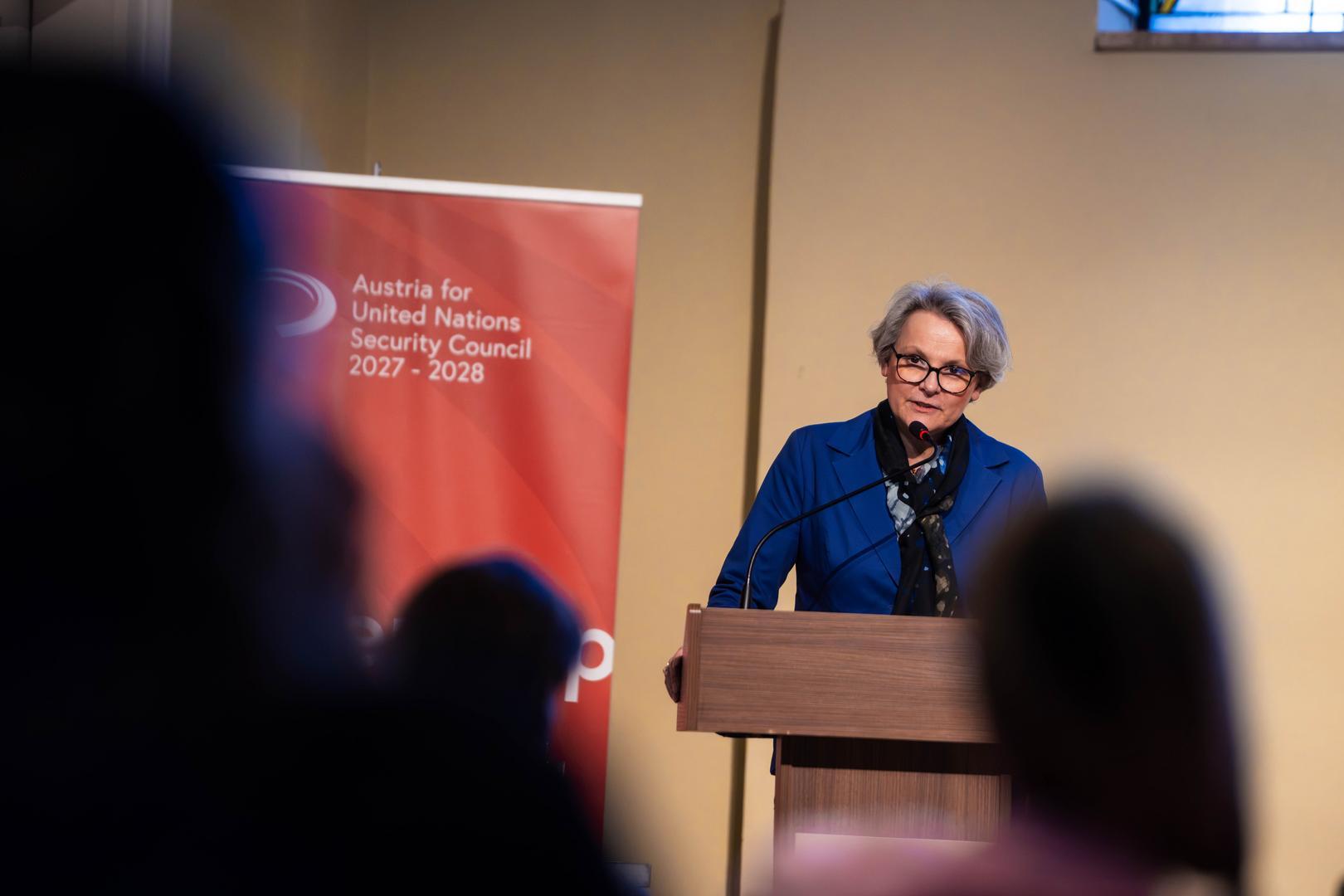
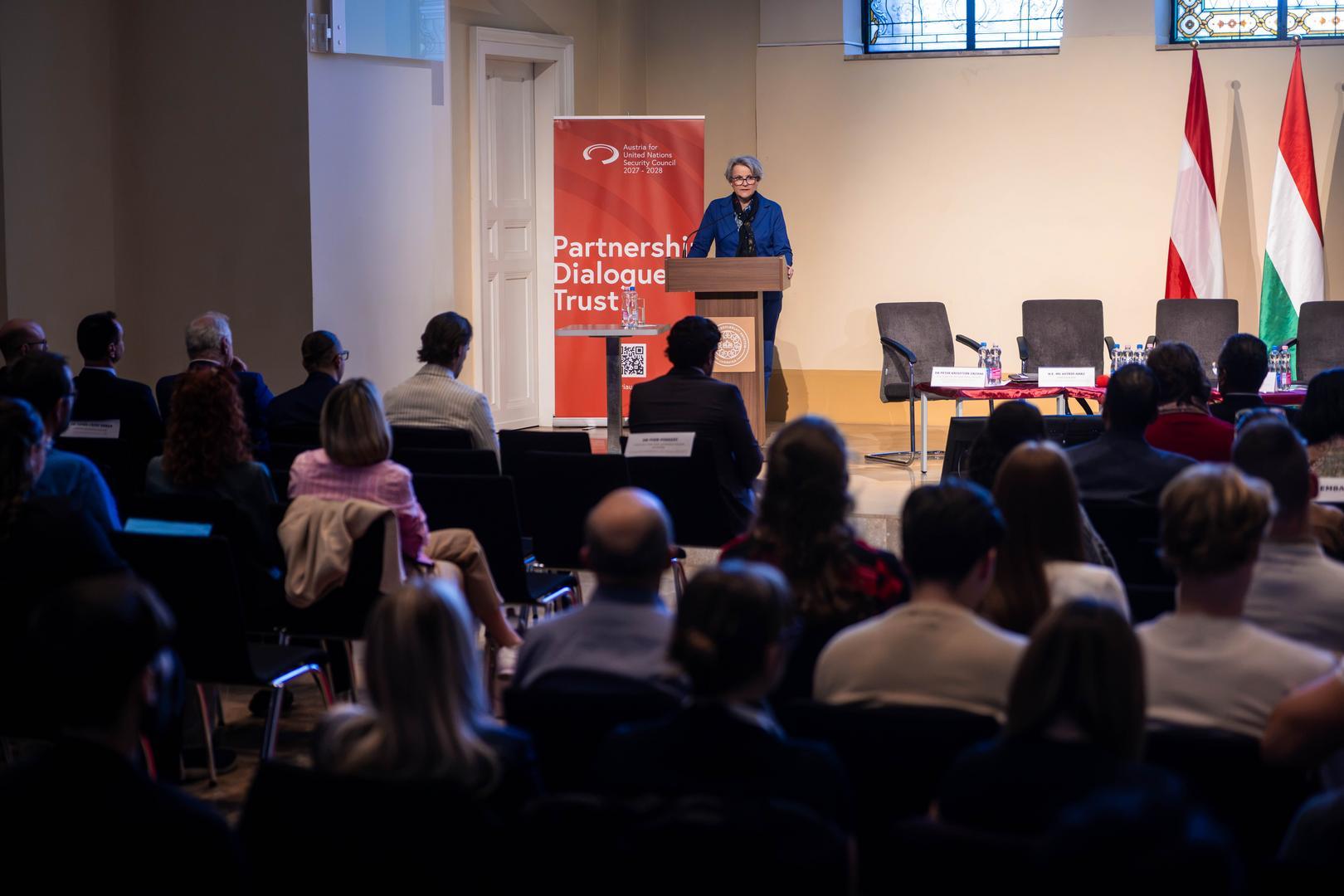
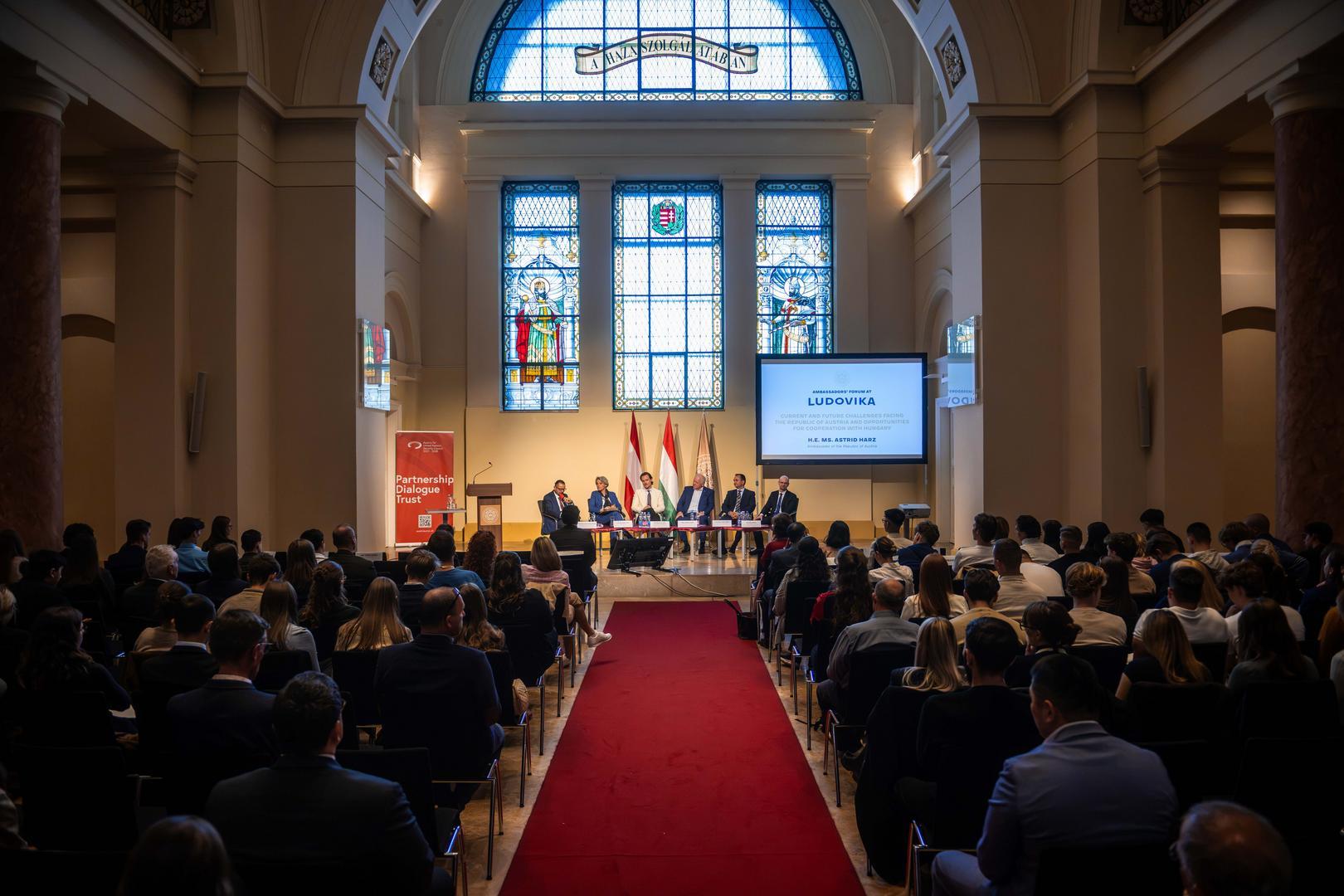
The latest event in the Ludovika Ambassadors’ Forum, organised regularly by the International Office of the Ludovika University of Public Service (LUPS), took place on 12 October in the St Ladislaus Chapel. The guest on this occasion was Austria’s Ambassador to Budapest, Astrid Harz.
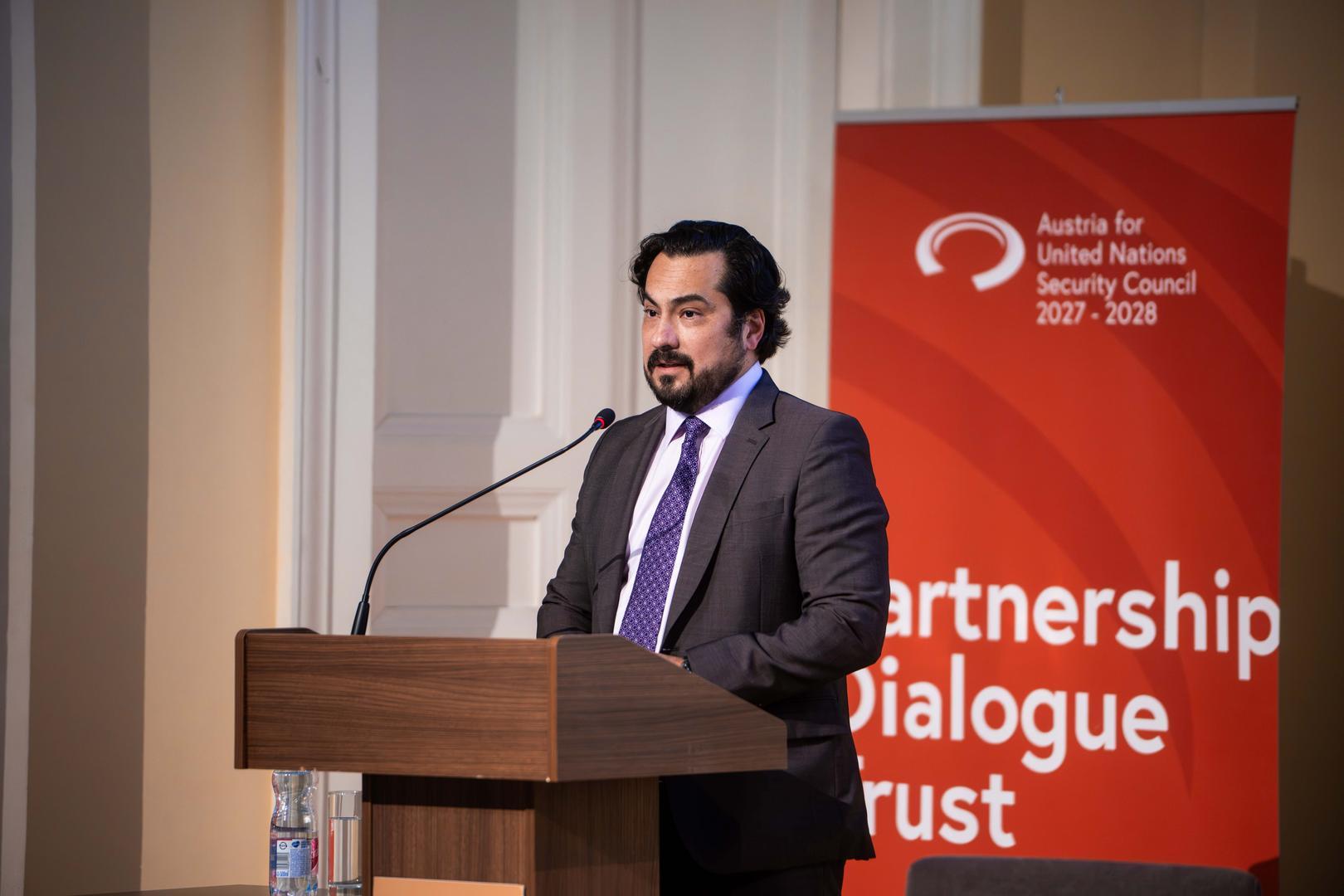
“Austria and Hungary are both facing the transformation of public service roles and challenges relating to competitiveness; this is precisely why it is worth learning about our neighbour’s responses,” emphasised Pier Paolo Pigozzi, LUPS’s Vice-Rector for International Affairs, in his welcoming address. He added that the last time the forum hosted a guest was in 2018, when the then Austrian ambassador attended. Speaking of their shared history, the Vice-Rector recalled that the two countries had long lived under a common crown, and that the border had been the scene of several life-changing events: in 1956, Austria opened its border to fleeing Hungarians, and then in 1989, at the Pan-European Picnic, hundreds more people were once again able to leave Hungary freely.
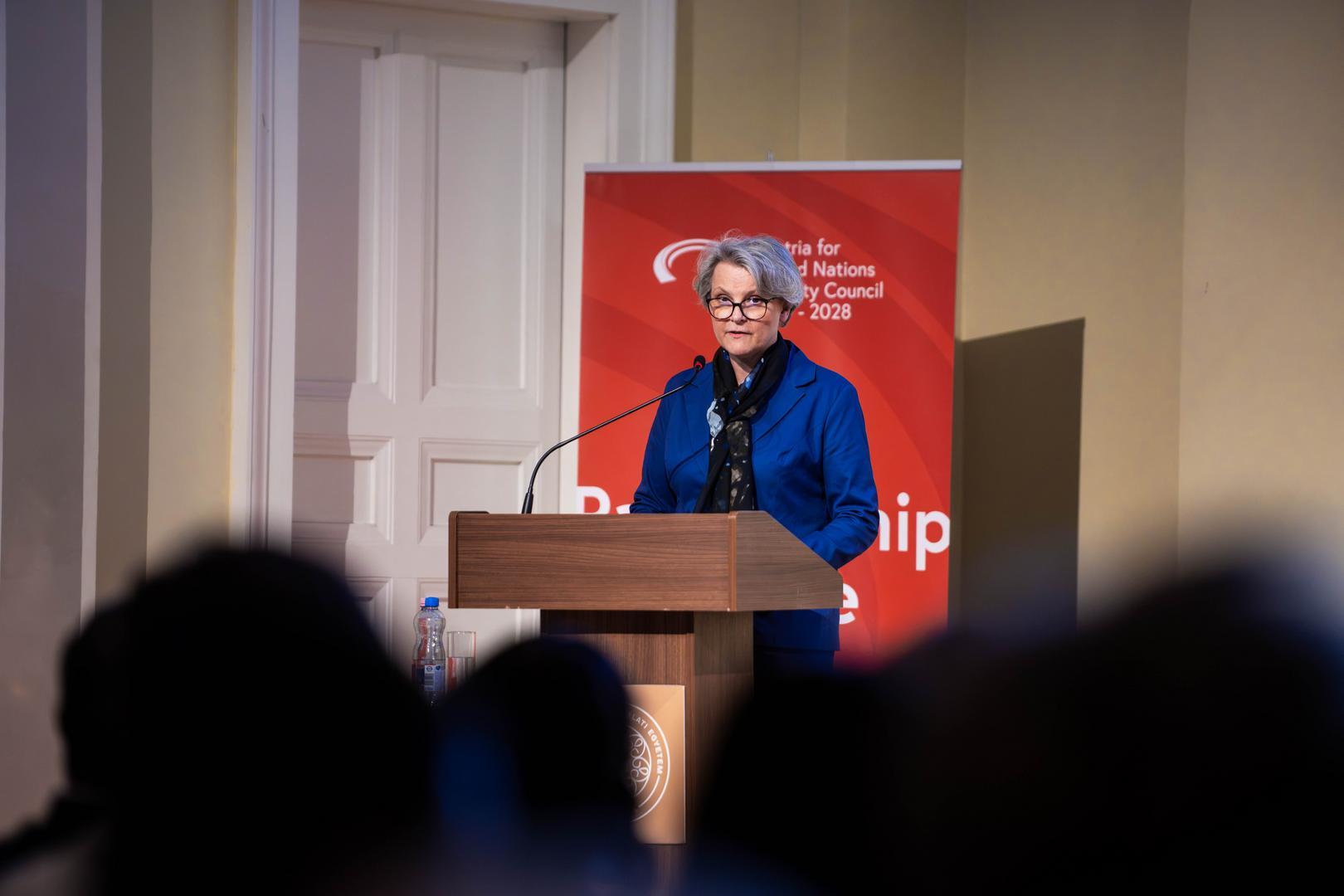
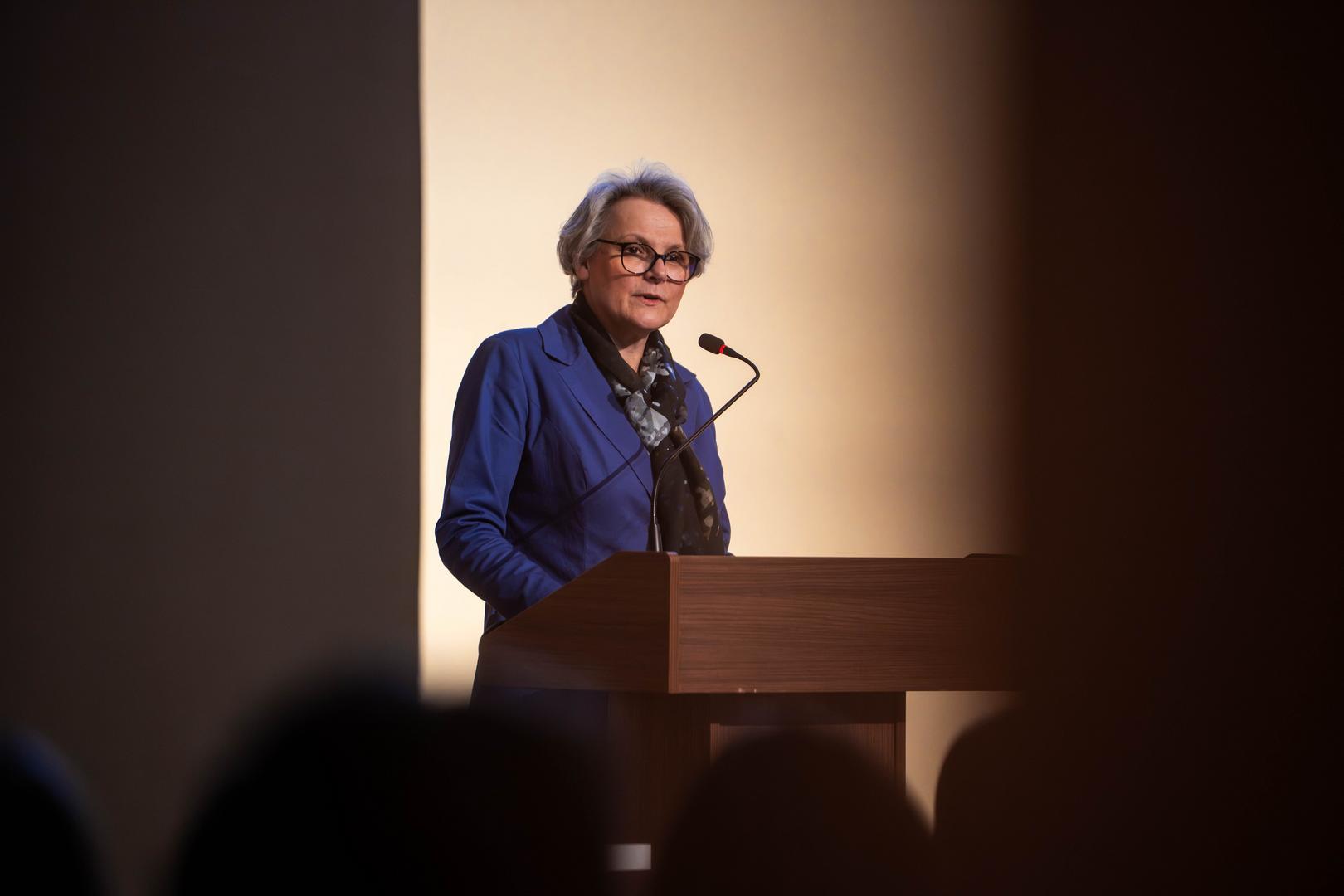
Since the Covid pandemic, both countries have been hit by multiple crises, yet they face the same challenges in many areas – as highlighted by Her Excellency Astrid Harz, Ambassador of the Republic of Austria to Budapest, in her presentation entitled ‘Current and Future Challenges Facing Austria and Opportunities for Cooperation with Hungary’. Austria is Hungary’s second-largest investor and fourth-largest trading partner, and economic ties are growing stronger. Hungary has adopted two Austrian initiatives aimed at reducing bureaucracy, which is an important step for the EU’s competitiveness.
According to the Ambassador, a hybrid war is being waged against both Austria and Hungary; it is therefore of paramount importance to combat FIMI (an acronym meaning ‘foreign information manipulation and interference’) and to strengthen media literacy and critical thinking. Today’s threats affect both external and internal security, and no single state can withstand them alone. This requires cooperation, information-sharing and trust.
She cited Operation Fox as an example, an initiative that monitors the Budapest–Vienna human trafficking route. Military cooperation between the two countries, including joint military exercises and the annual meeting of defence ministers, also strengthens the partnership. Sabotage and disinformation aim to divide society and influence decision-making. According to the Ambassador, defence against such threats is not censorship, but rather protects the integrity of the information space. This integrity is vital to a vibrant democratic culture and enables citizens to make informed and independent decisions free from interference.
A crucial area is education: in Austria, the subject “Media and Democracy” is introduced into high school curricula. And although a number of tools is available on the European level, we are not yet making sufficient use of them. Vienna is therefore initiating an international conference on countering FIMI involving decision-makers and is counting on the Hungarian support.
Austria got elected as a non-permanent member to the UN Security Council for the 2027–28 term for the fourth time. Austria wishes to act as a reliable partner and a bridge-builder. It supports EU enlargement, particularly in the Western Balkans, while focusing on the rule of law.
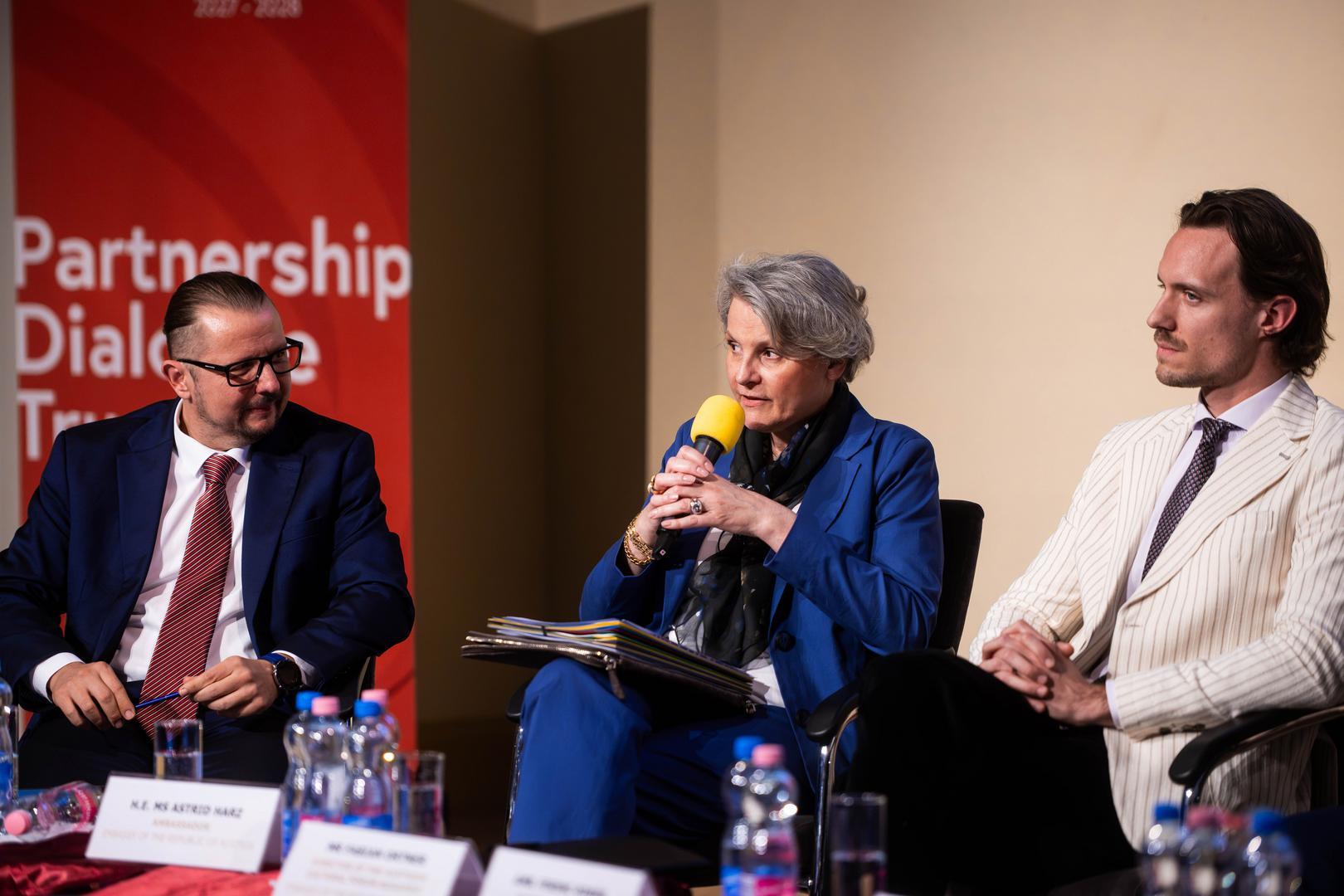
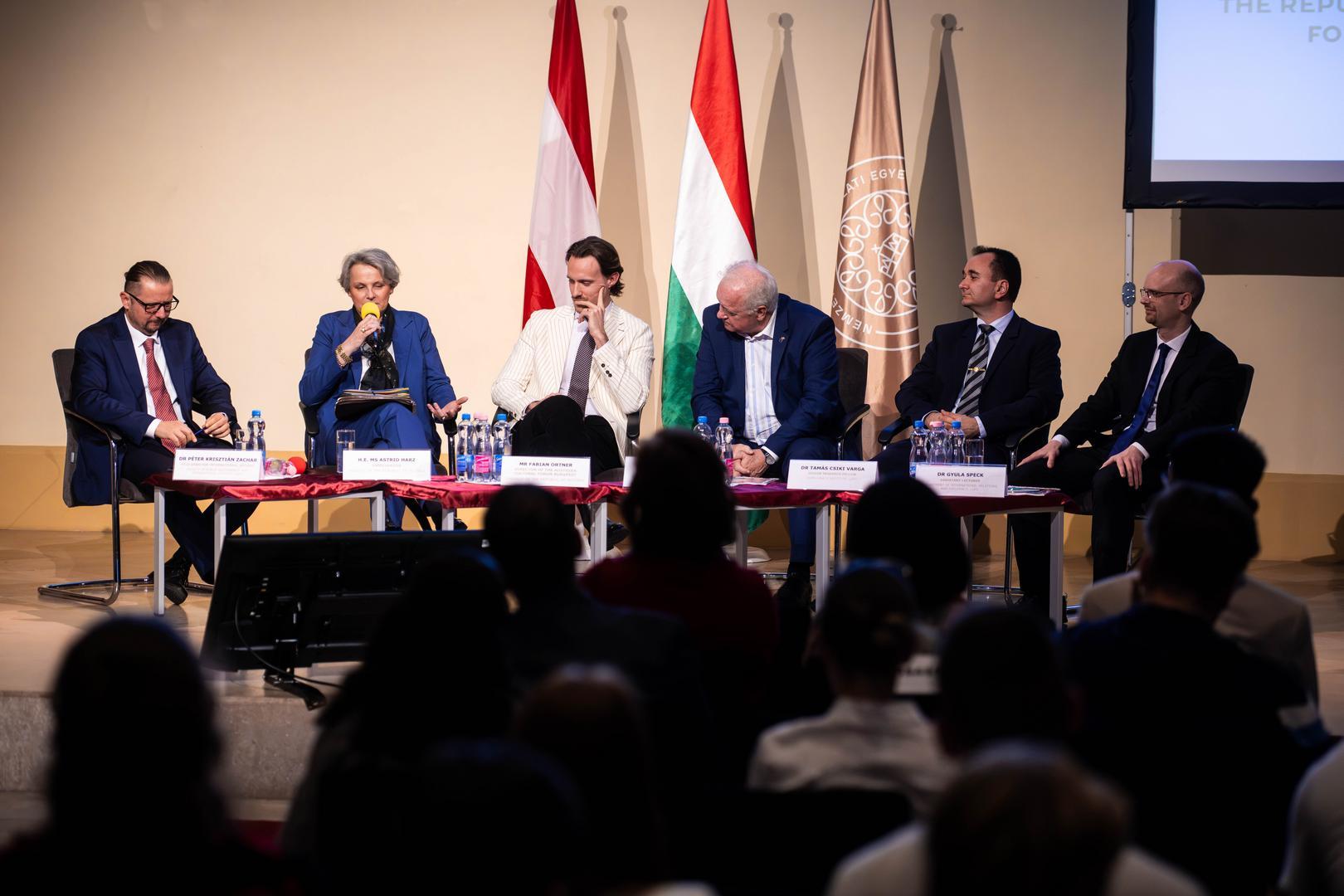
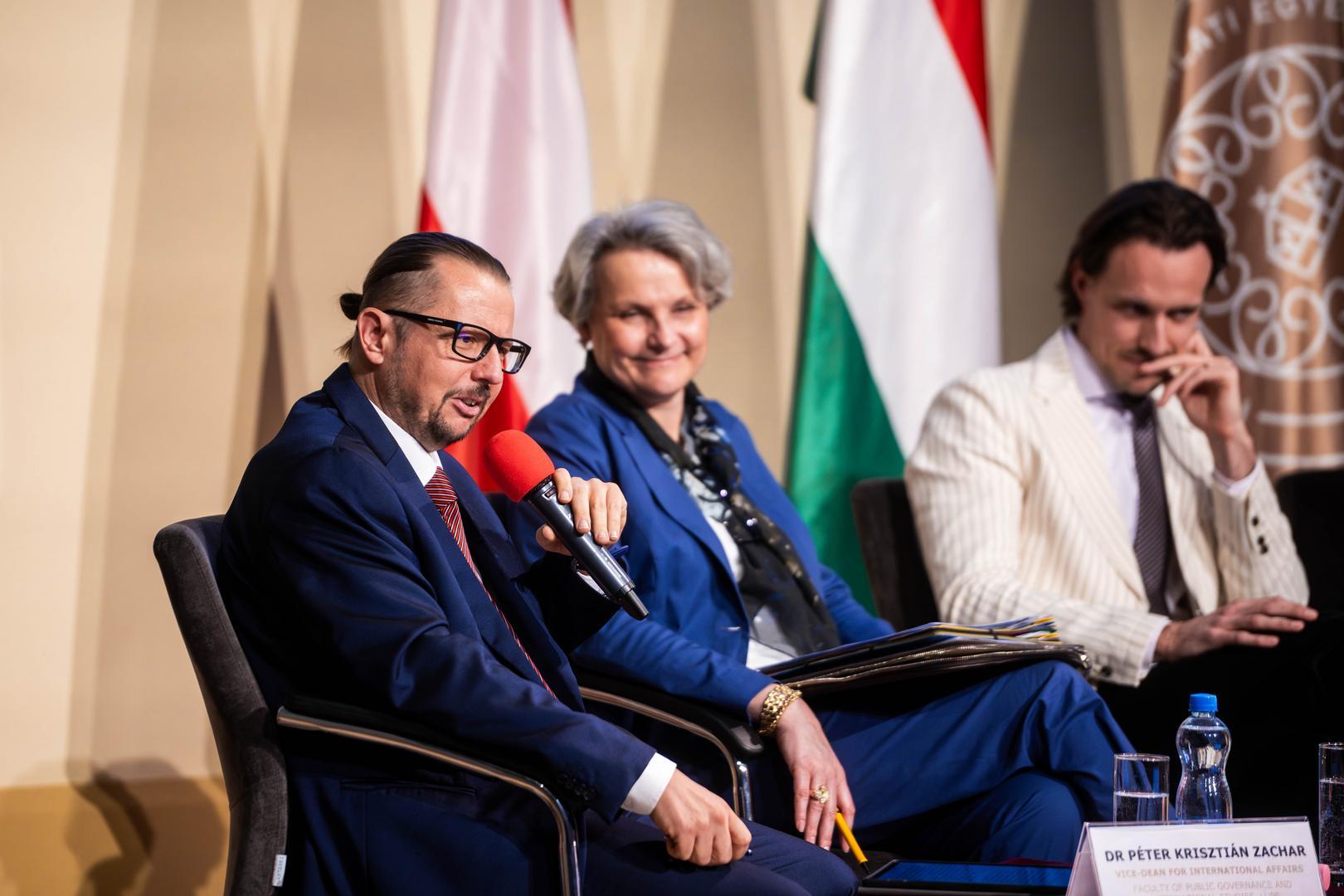
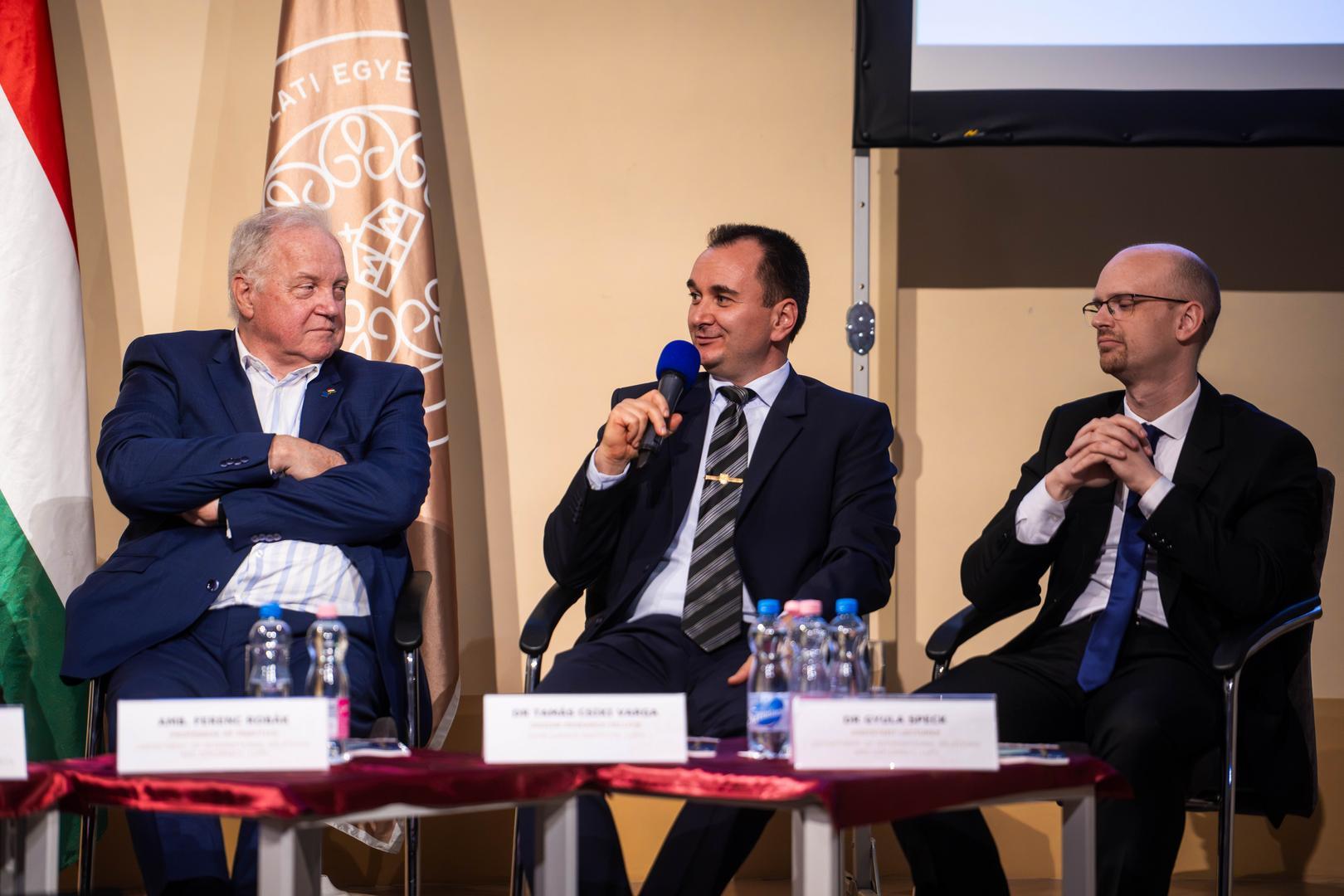
The round-table discussion following the lecture was moderated by Péter Krisztián Zachar, Vice Dean for International Affairs at the Faculty of Public Governance and International Studies (FPGIS) of the LUPS and habilitated associate professor at the Department of International Relations and Diplomacy (DIRD) of the FPGIS. Alongside the Ambassador, his discussion partners included Fabian Ortner, Director of the Austrian Cultural Forum in Budapest; Ferenc Robák, retired Ambassador and honorary associate professor at the DIRD; Tamás Csiki Varga, senior research fellow at the John Lukacs Institute of the Eötvös József Research Centre at LUPS; and Gyula Speck, a lecturer at the DIRD.
Speaking about diplomacy as practised by small states, Astrid Harz emphasised that, in the absence of economic or military power, a wide range of relationships and respect for international law form the foundation. If international law comes under pressure, this puts small countries at a disadvantage, as it is precisely this that enables them to assert their interests. The essence of diplomacy lies in dialogue and coalition-building, as virtually no state can achieve anything on its own.
According to Tamás Csiki Varga, the concept of neutrality has now been transformed: the Cold War has ended, and Finland and Sweden abandoned their neutrality following the Russian–Ukrainian war. The Ambassador added that Austrian neutrality is explicitly military in nature, not ideologically. According to Gyula Speck, Austria can be a reliable partner for small and medium-sized states in a fragmented international arena, as it is capable of putting important issues on the agenda, such as the question of autonomous weapons.
With regard to the fight against FIMI, it was noted by Director Fabian Ortner that ‘disinformation’ is difficult to grasp, since it ranges from hybrid threats to smear campaigns. The most powerful instrument in countering disinformation, according to Director Ortner, is to strengthen media literacy. This is why the Austrian Cultural Forum Budapest in its programming has put great emphasis on promoting media literacy and countering disinformation in an interdisciplinary way, linking exhibitions to academic discussions and offering its venue as a safe space for open dialogue with the public. According to Tamás Csiki Varga, FIMI undermines the credibility of democratic institutions, and we can learn from Austria’s educational approach. In this context, Ferenc Robák emphasized the importance of regional cooperation and cultural exchanges.
Text: Tibor Sarnyai
Photo: Dénes Szilágyi