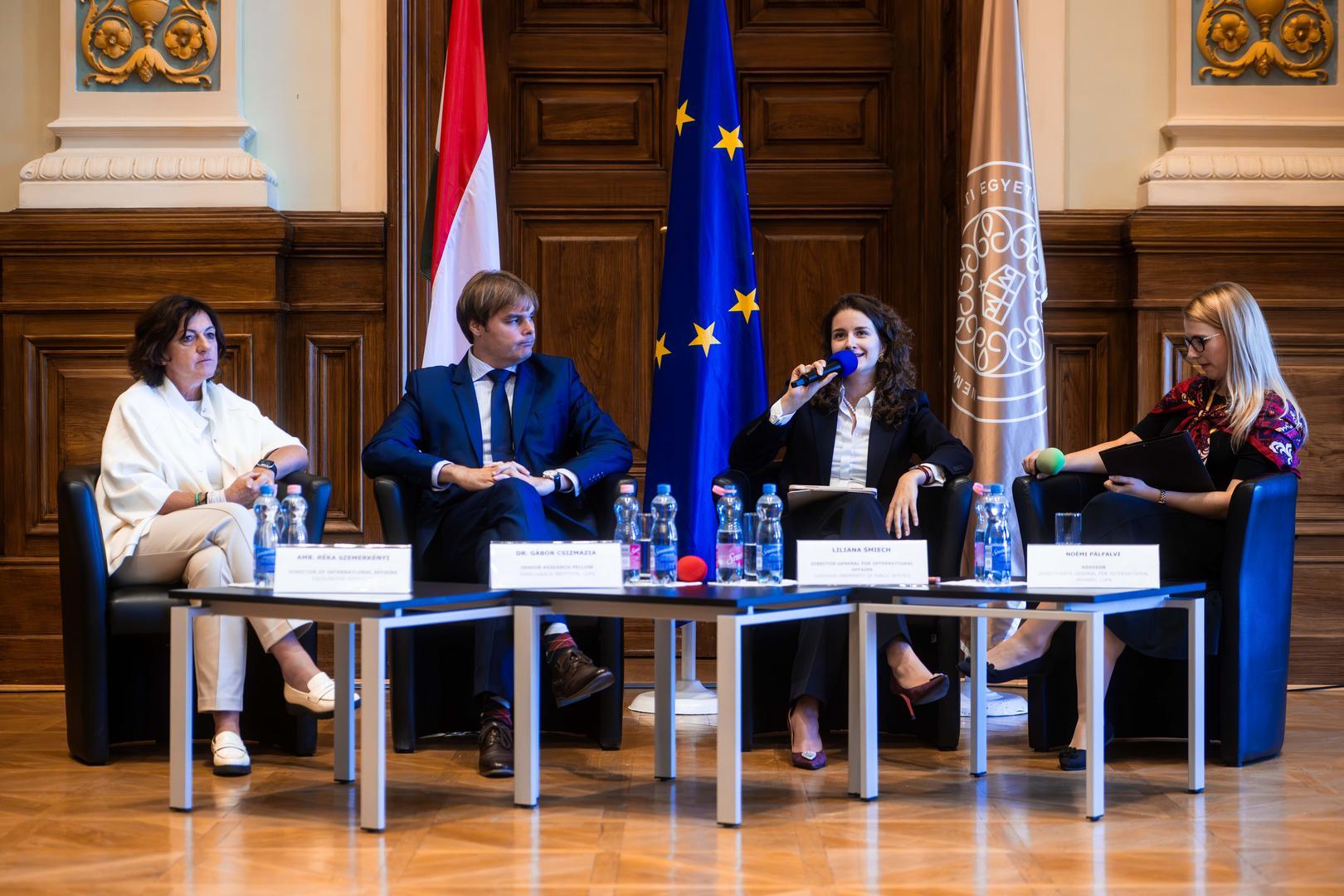
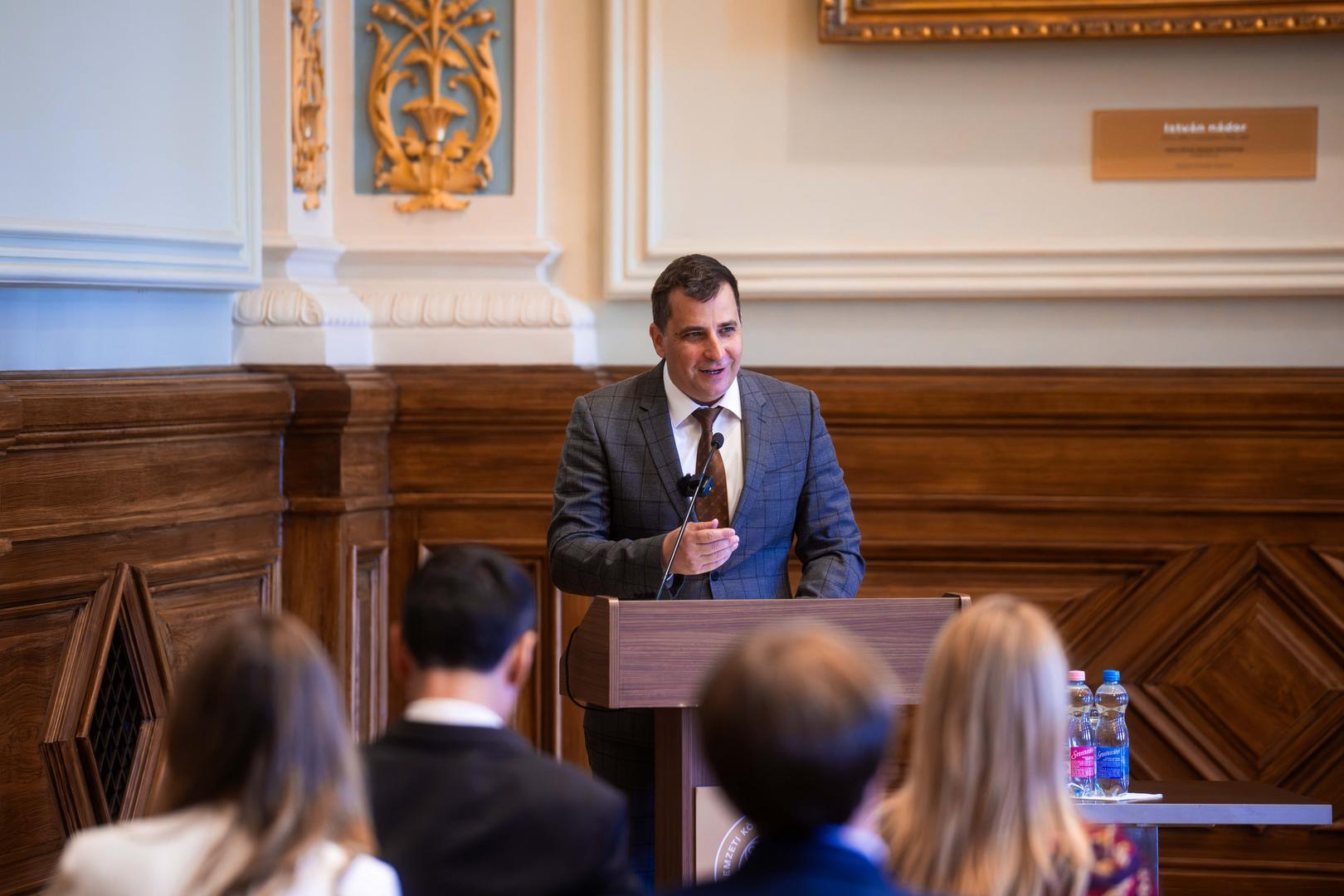
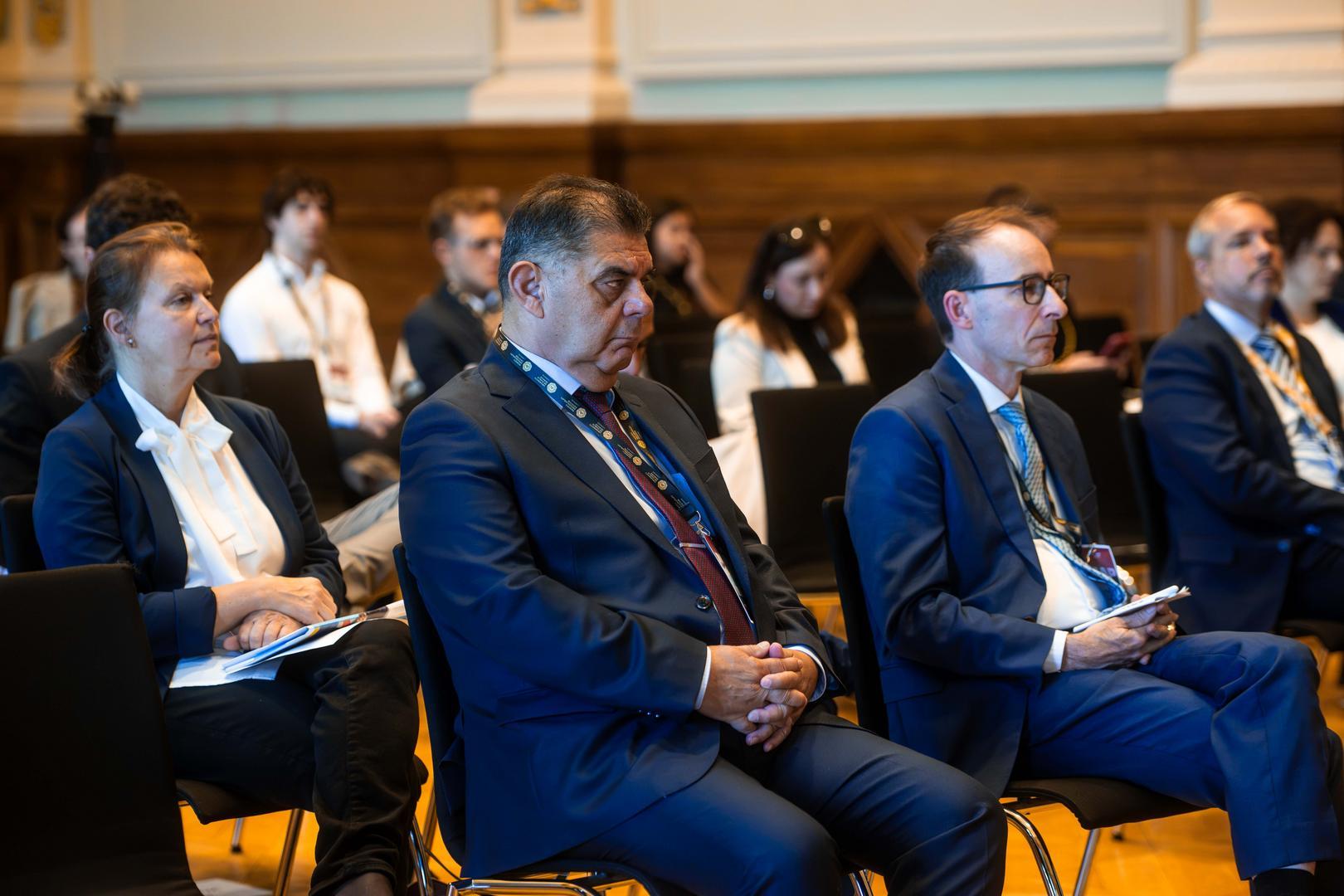
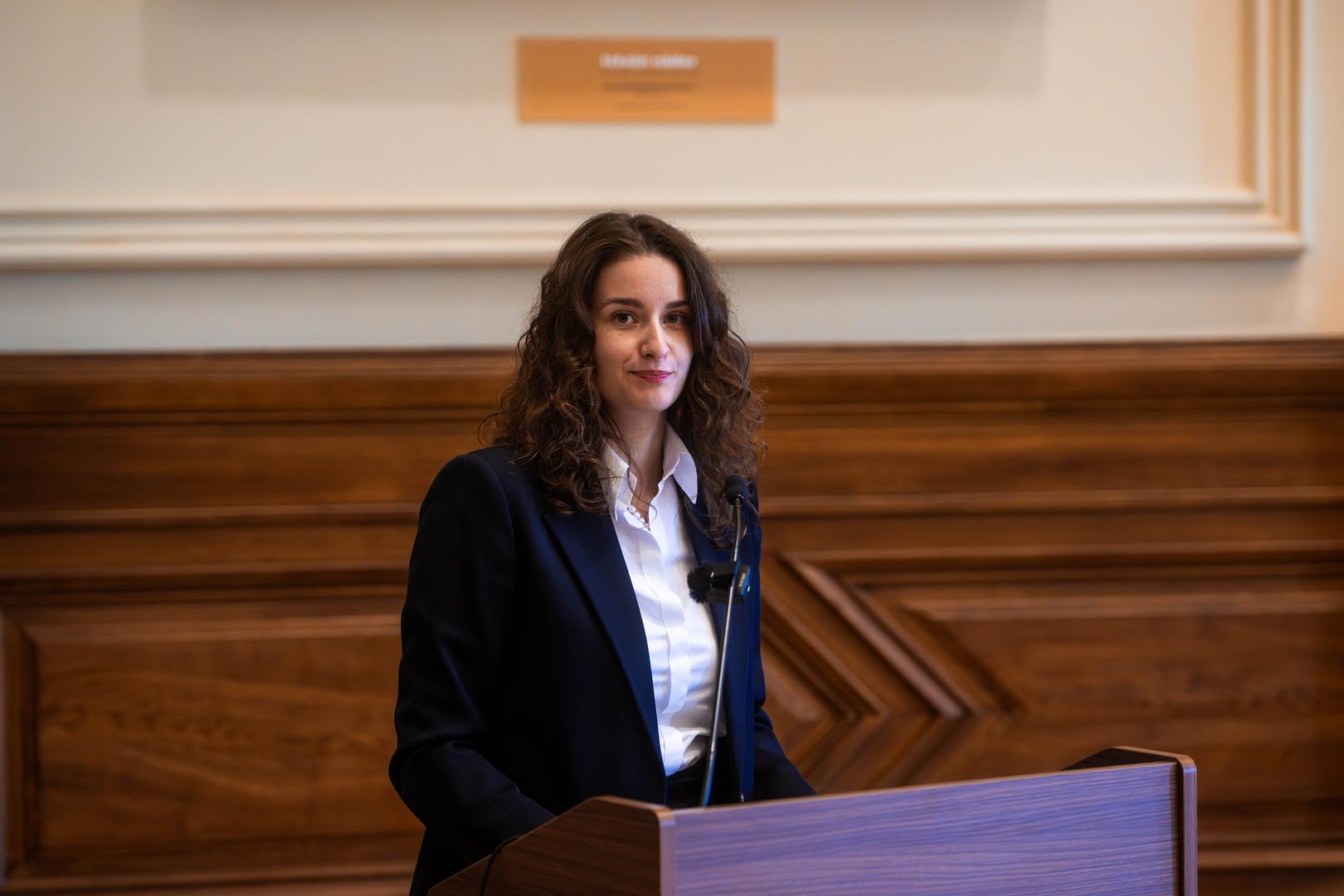
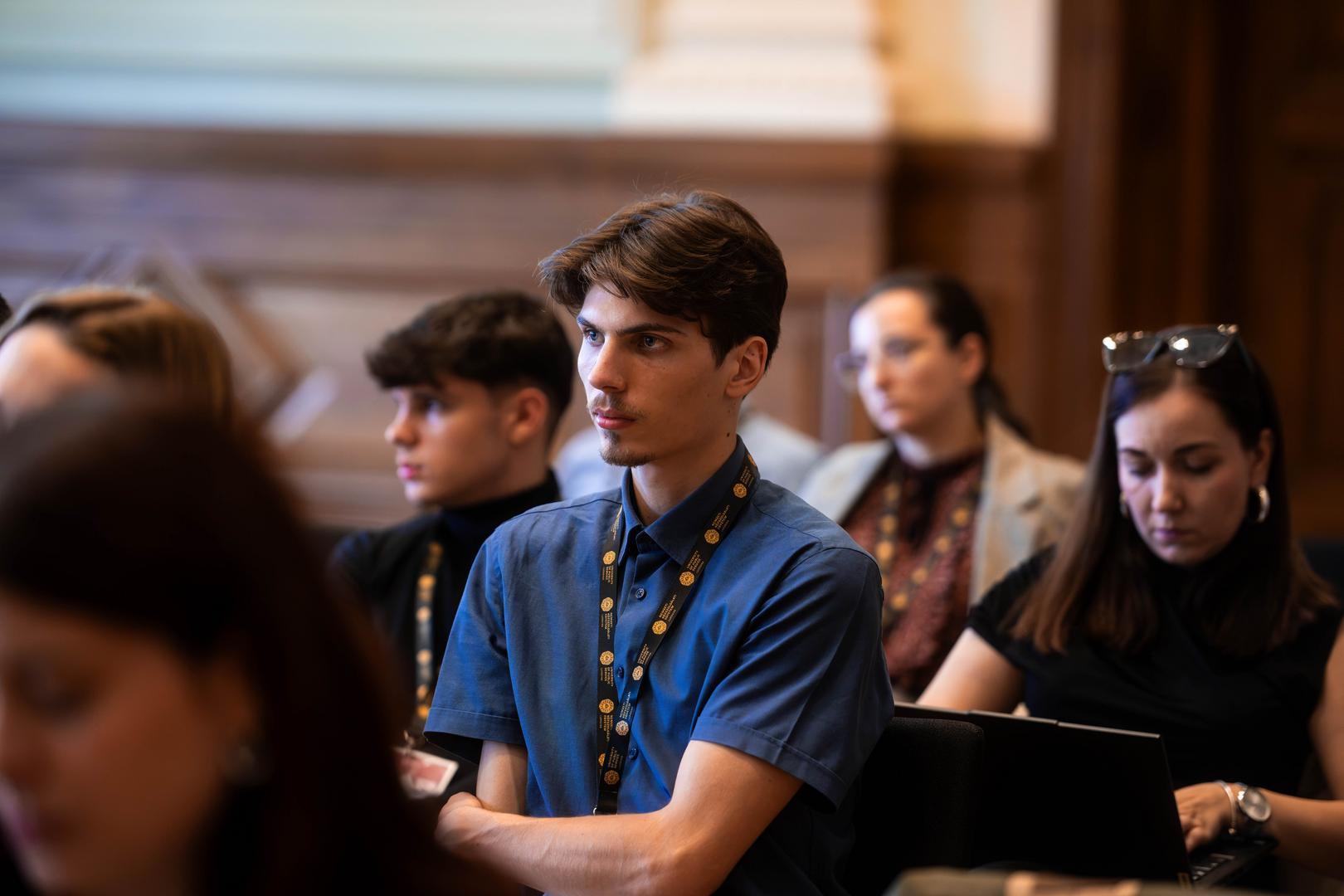
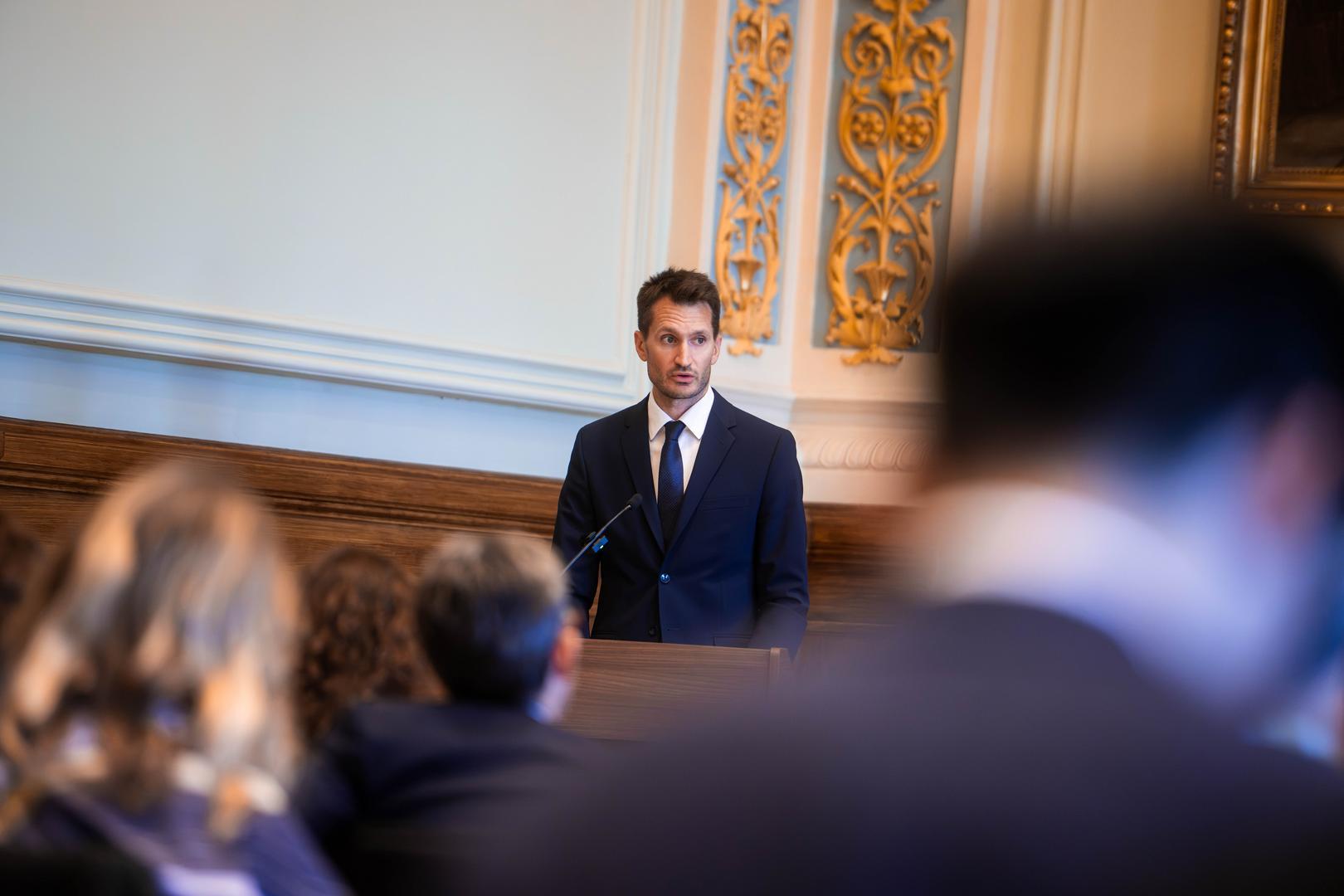
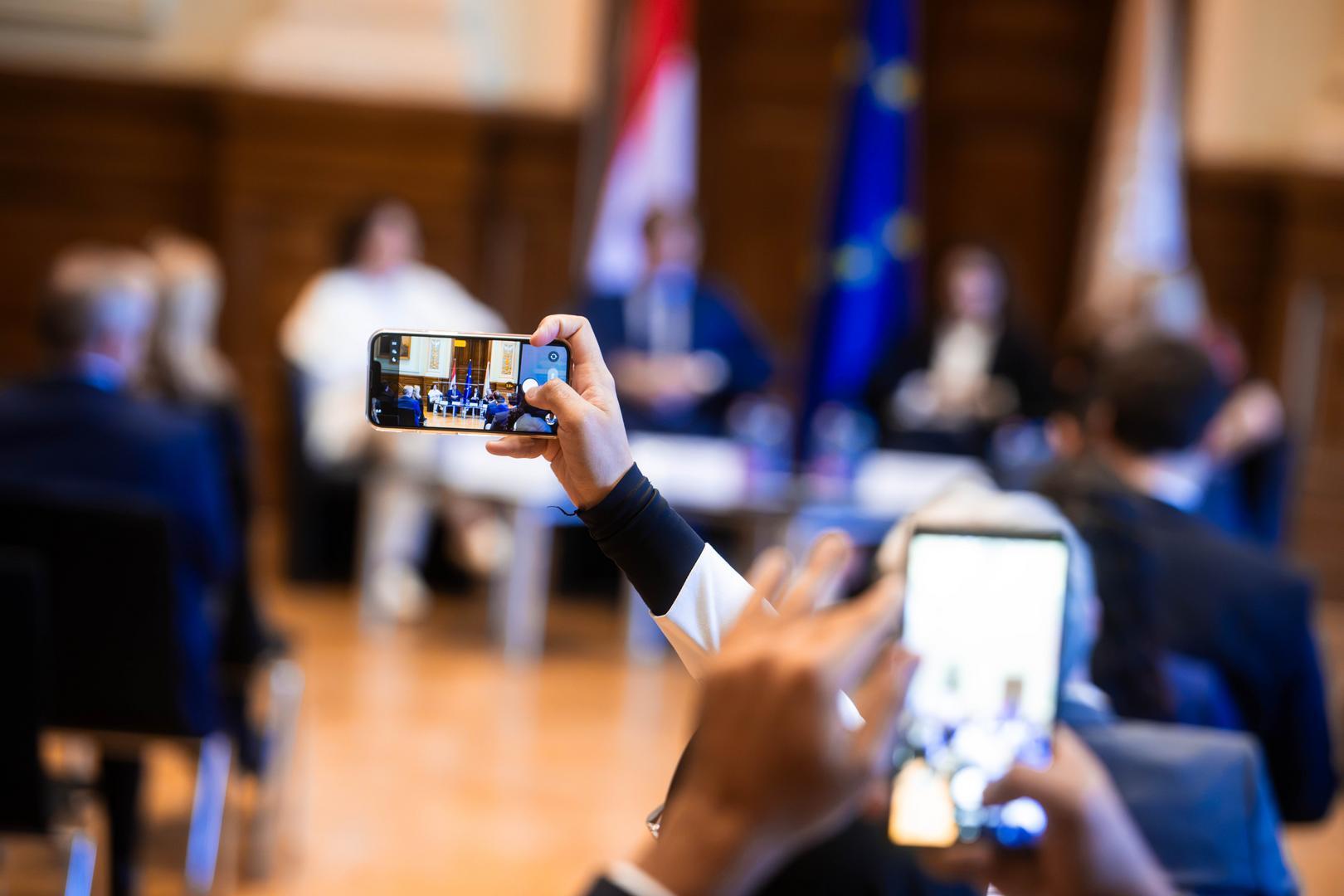
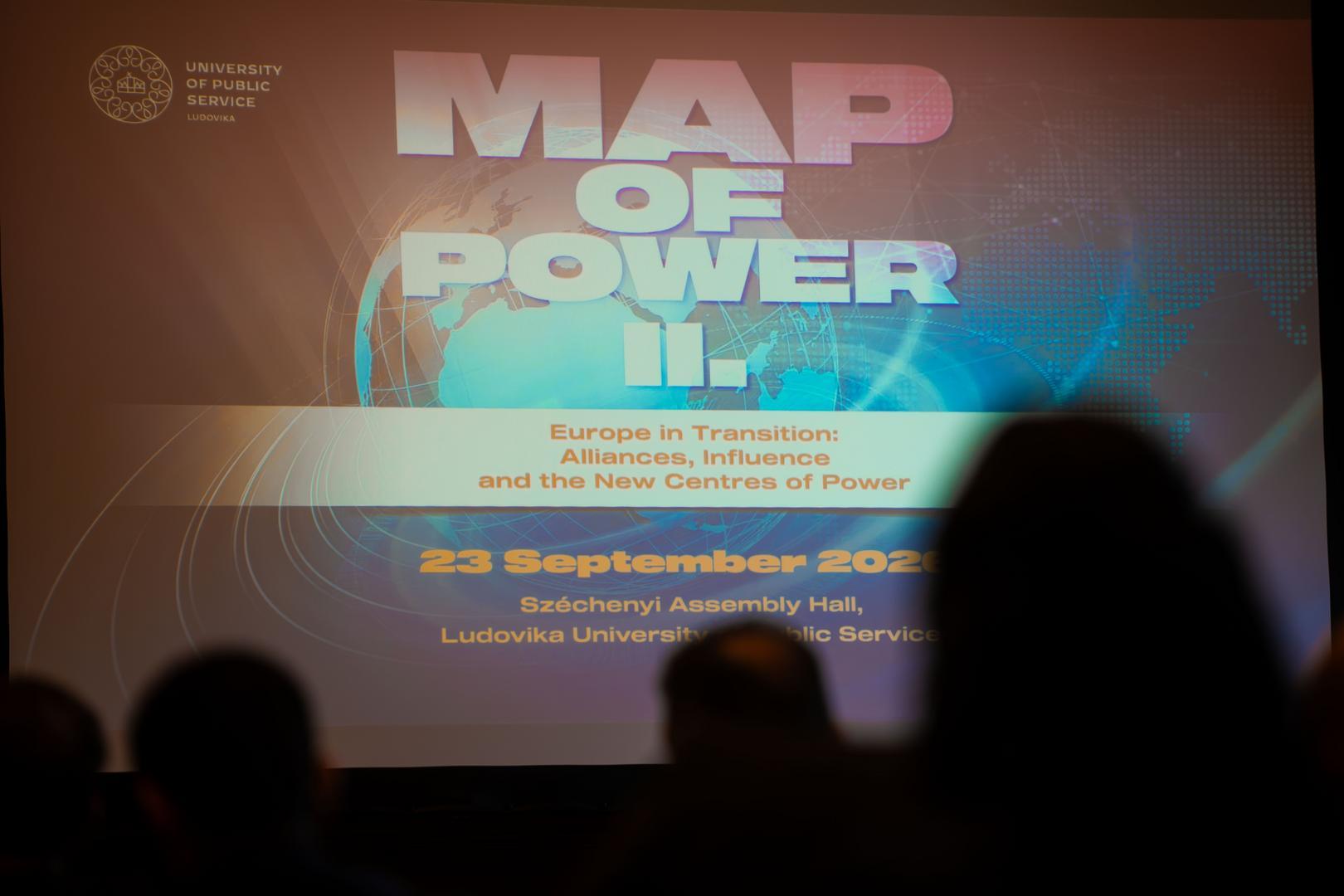
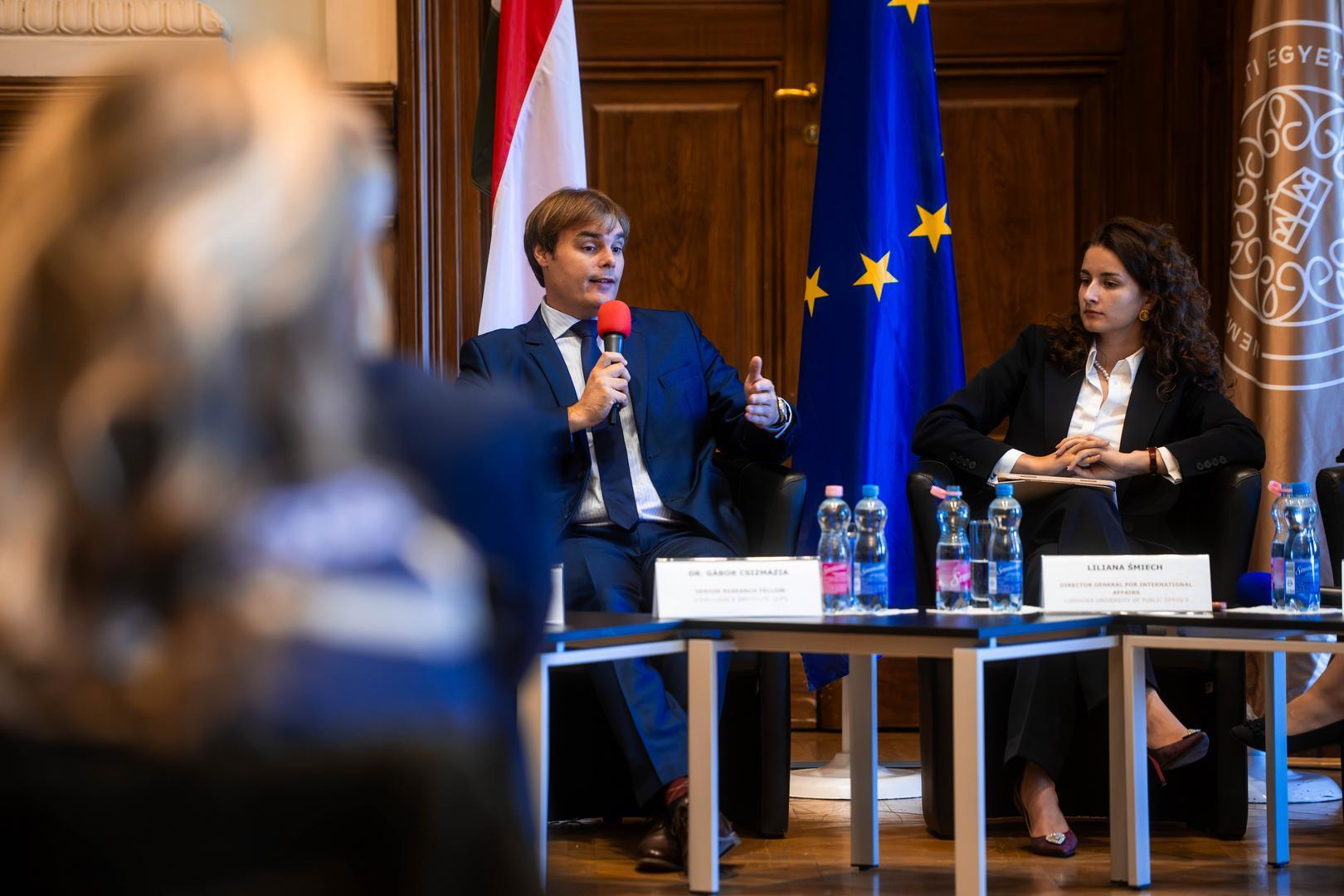
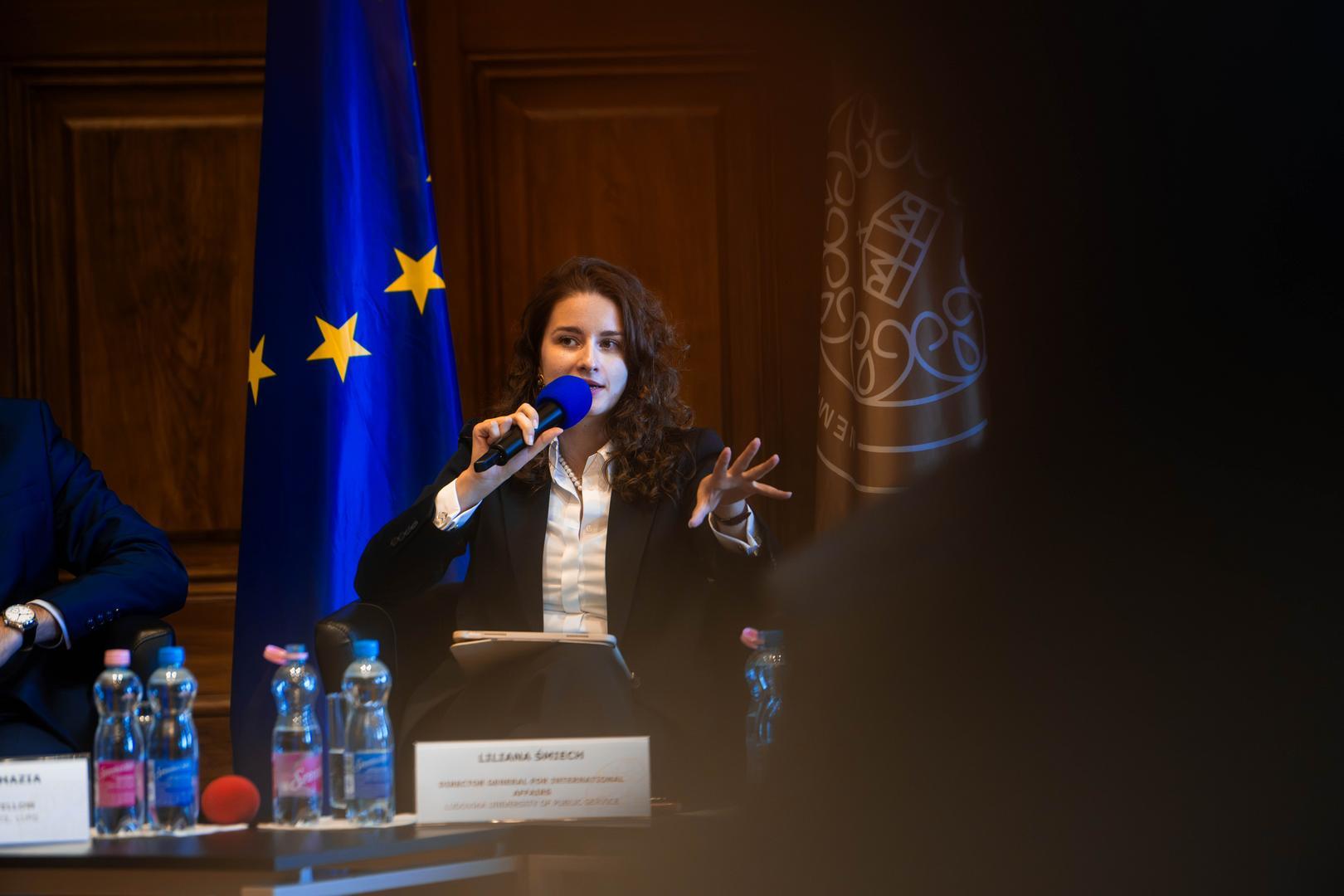
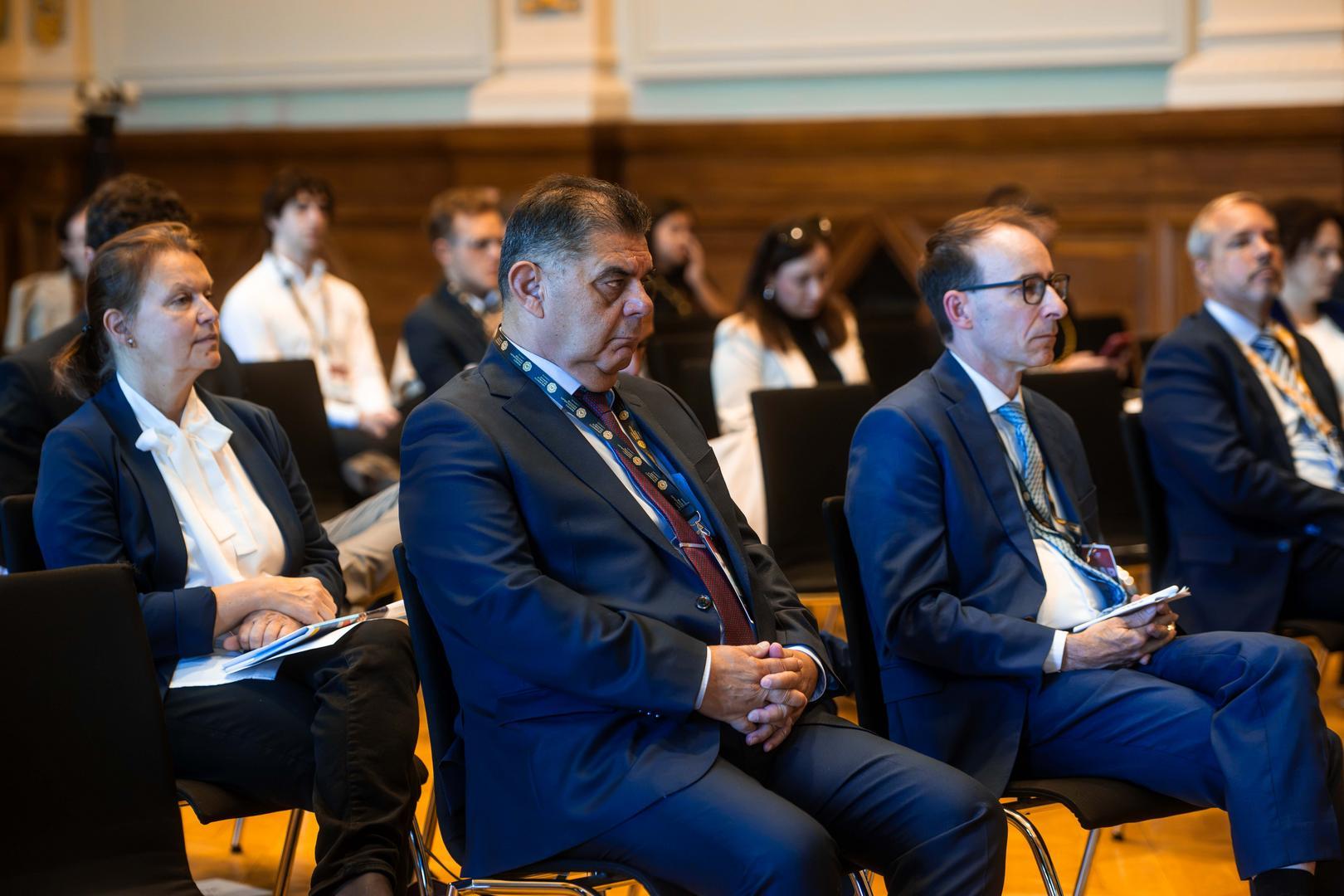
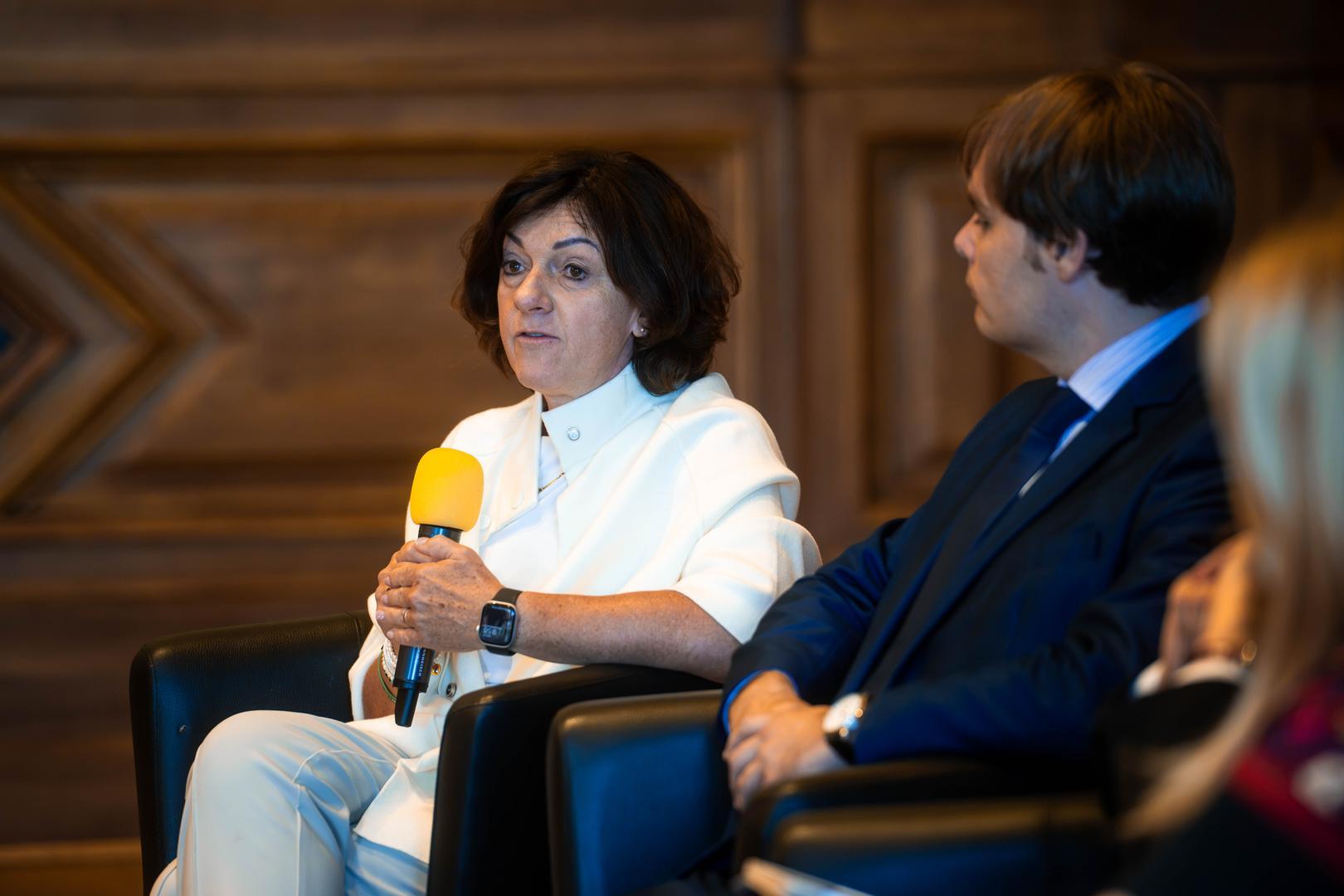
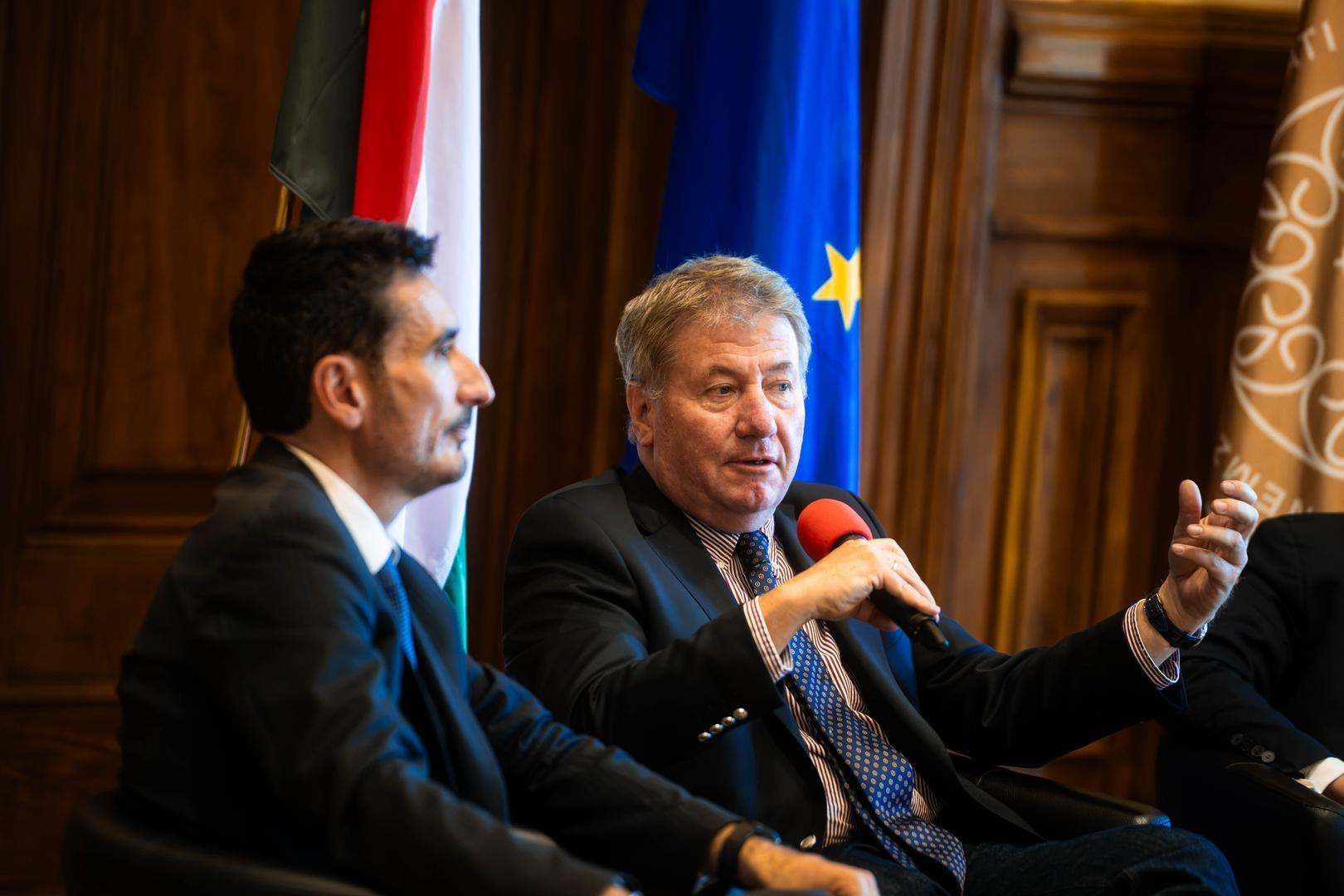
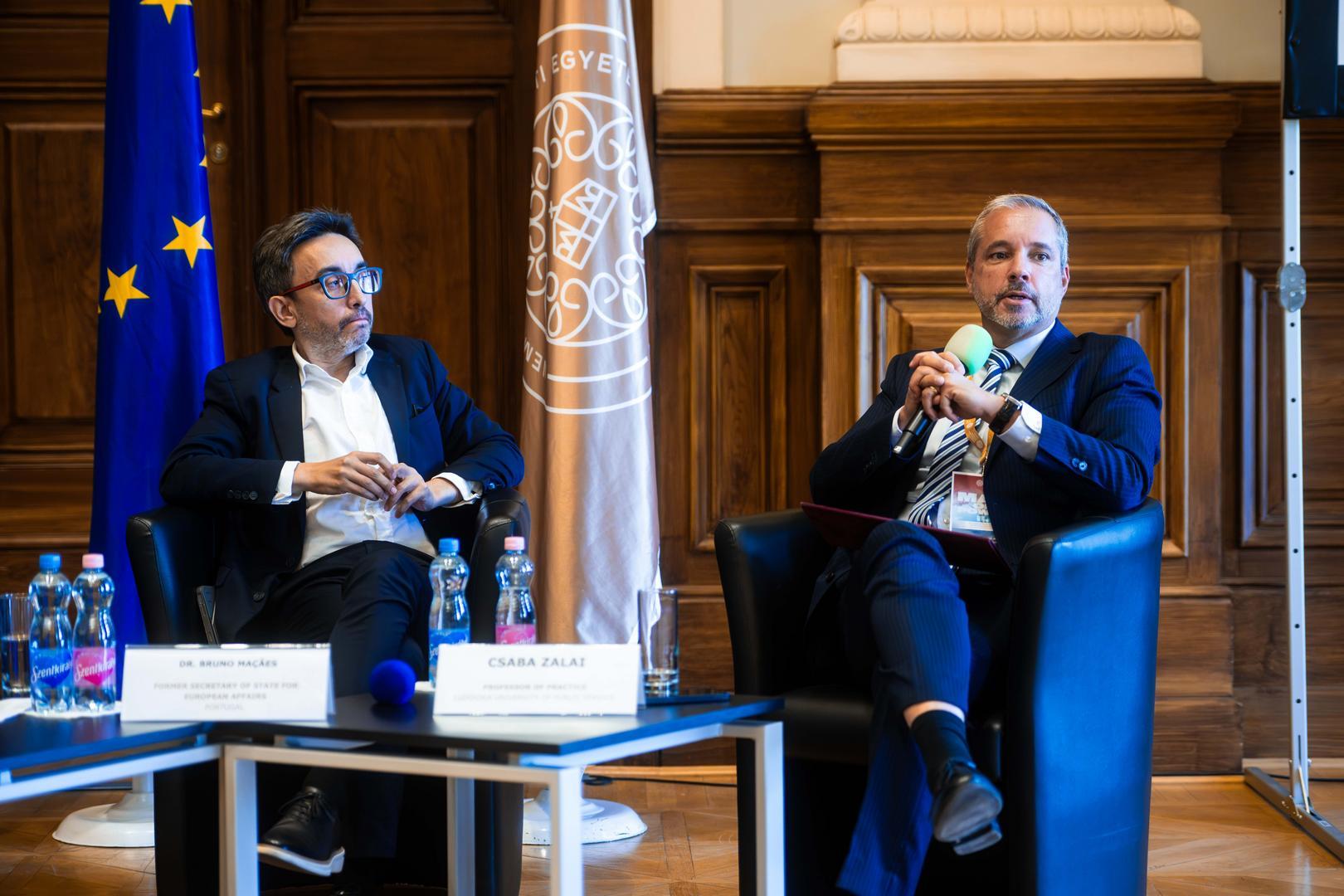
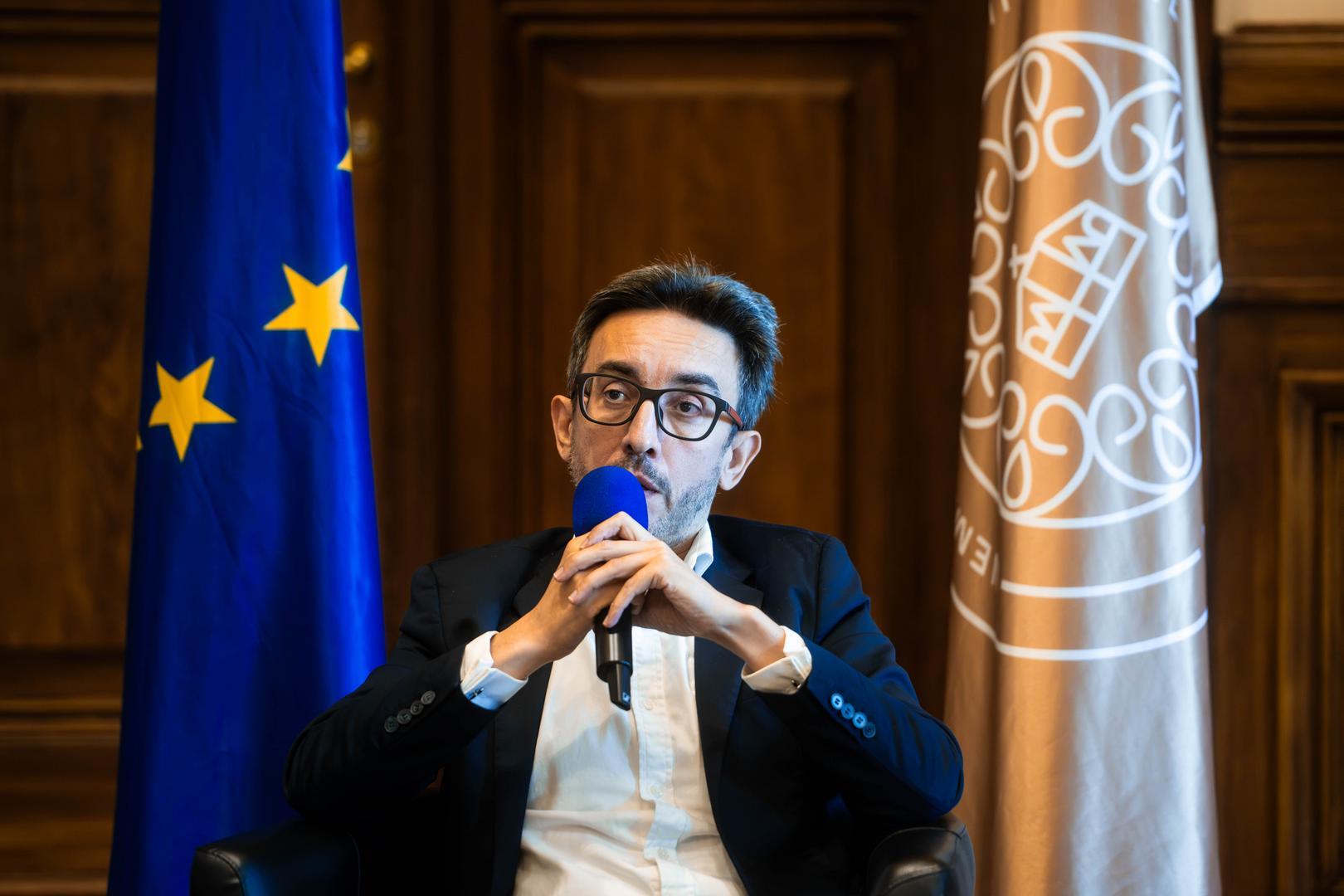
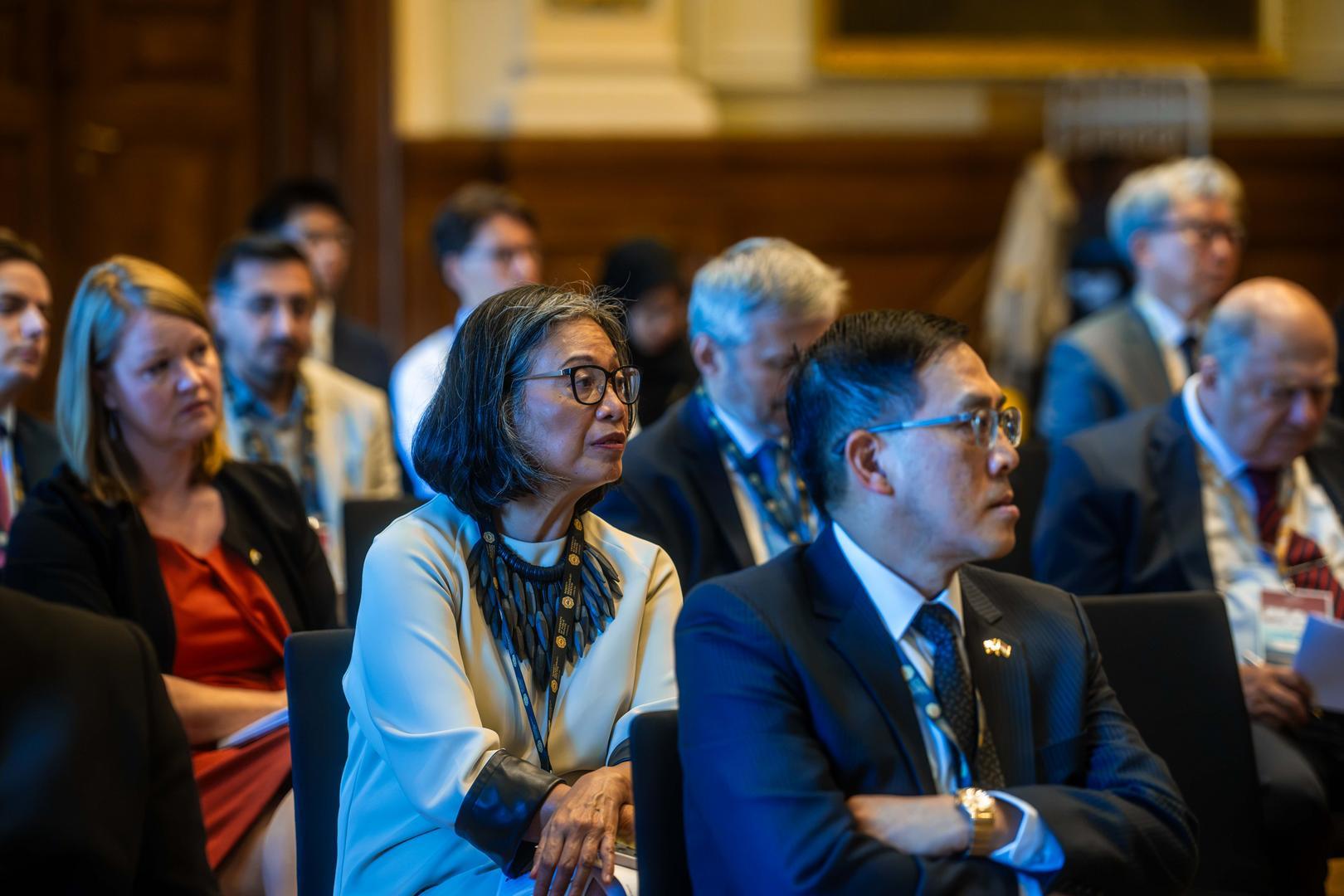
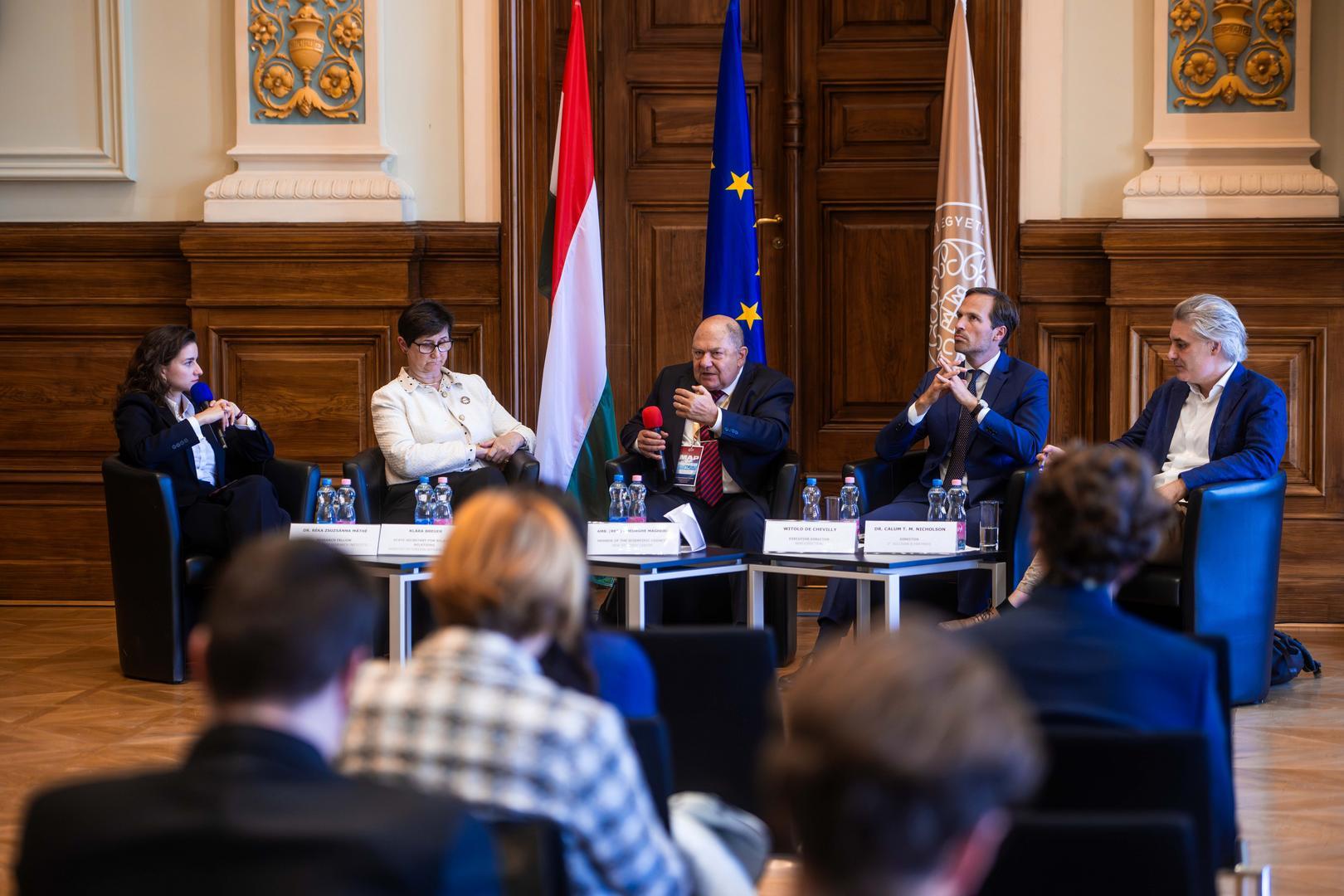
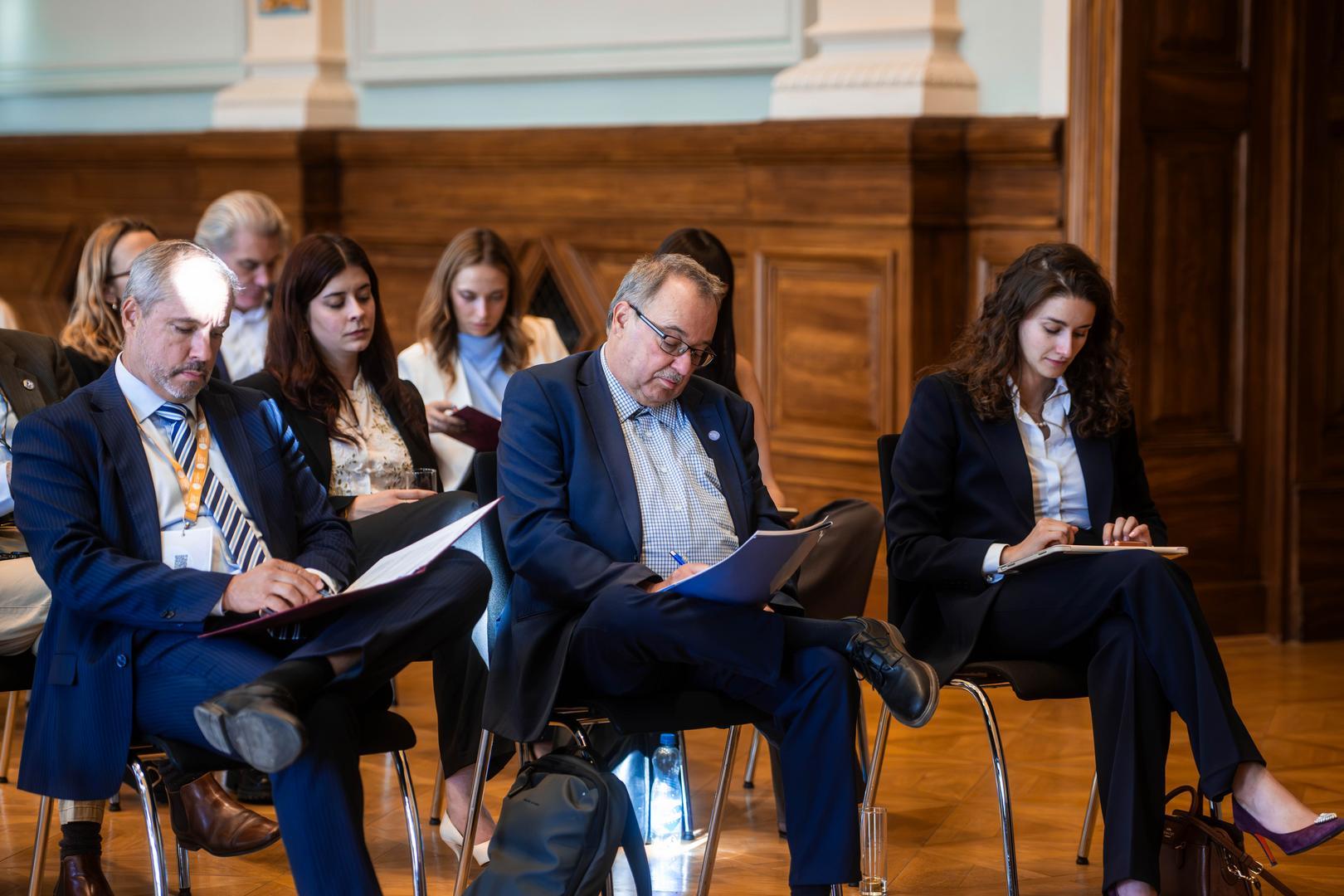
On 23 September, the Directorate General for International Affairs of Ludovika University of Public Service hosted the Map of Power conference for the second time in the University’s Széchenyi Ceremonial Hall. Entitled Europe in Transition: Alliances, Influence and the New Centres of Power, the English-language conference brought together Hungarian and international speakers to discuss geopolitical change, the evolving relationship between Europe and the United States, and the security and economic challenges facing the continent.
In his opening address, Rector Gergely Deli pointed out that Europe had taken its security for granted for decades, raising the question of whether it has retained the ability to provide adequate political and economic responses to the challenges of a changing world. According to the Rector, one of the key questions for transatlantic relations is how long the United States will remain committed to guaranteeing Europe’s security, and how quickly NATO’s European member states will recognise that they must do more to strengthen their own defence.
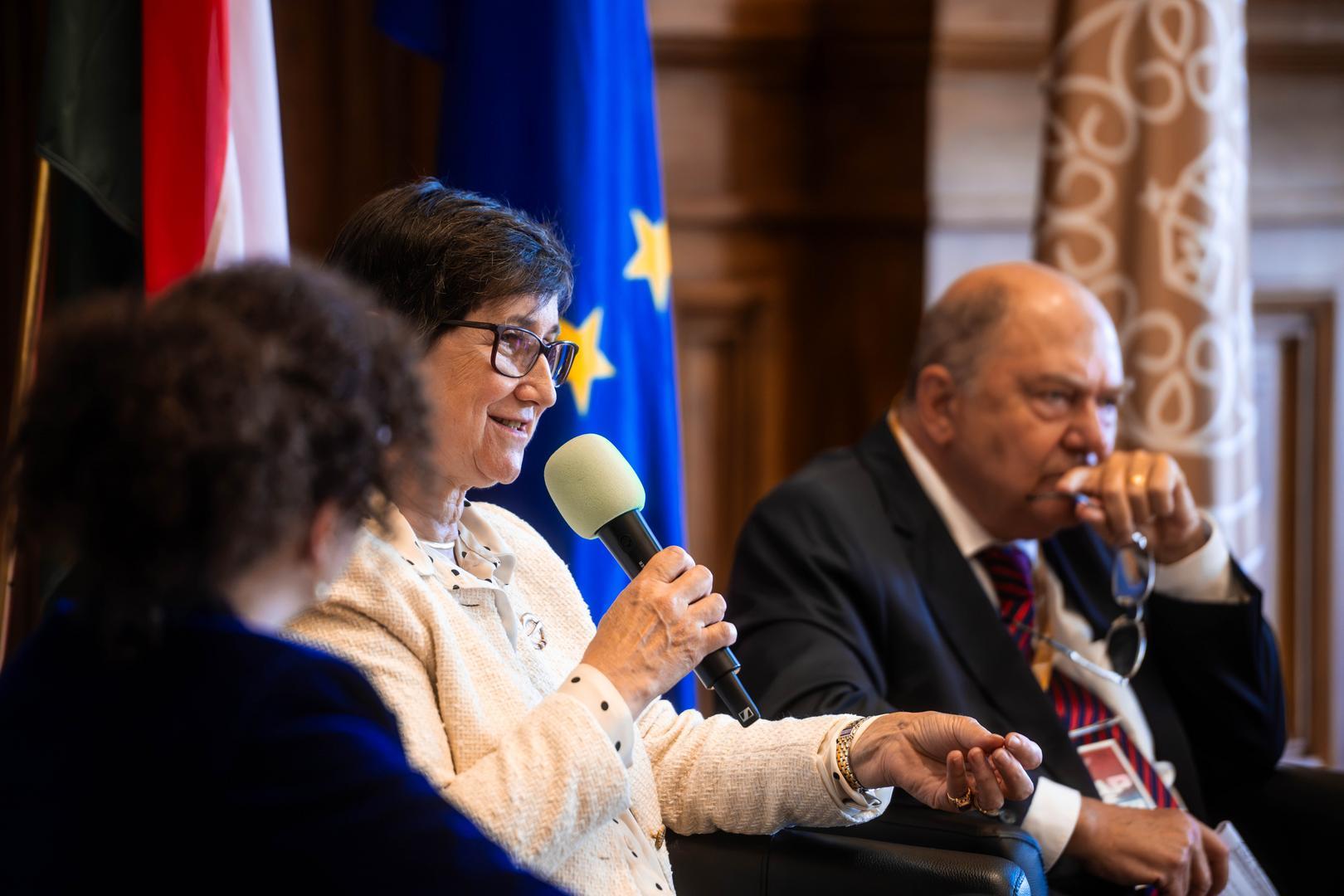
In her welcome remarks, Liliana Śmiech, the University’s Director General for International Affairs, recalled that in October 1944, during a meeting, British Prime Minister Winston Churchill handed Stalin a piece of paper on which he had handwritten a country-by-country percentage division of spheres of influence in Eastern Europe. While this reflected how international politics was conducted in the past, she noted that centres of power and spheres of influence continue to exist today, and that the Baltic and Black Sea regions, situated on the edge of the Western sphere of interest, are playing an increasingly important role.
In the conference’s opening keynote, László Antal Kürtös, Parliamentary State Secretary and Deputy Minister at the Ministry of Defence, spoke of what he described as dangerous times, as the world order is undergoing a structural transformation in which previous assumptions about security and stability appear to be fading. He argued that the great powers have entered a new arms race to preserve their spheres of influence, that “the use of hard power has become constant”, and that the war in Ukraine demonstrates that Russia “will pose a long-term threat to Euro-Atlantic security”.
Referring to Darwin’s famous observation, László Antal Kürtös argued that in this new environment, “it is not the strongest who survives, but the one best able to adapt”. According to him, NATO will remain the cornerstone of European security, but Europe must take greater responsibility for its own defence. This requires the modernisation of military capabilities and a renewed approach to transatlantic cooperation. He also referred to the financial plan put forward by the Hungarian Government in June to meet the defence commitments agreed at the NATO Summit in The Hague.
At the conference’s first panel discussion, which examined the changing relationship between the European Union and the United States, Réka Szemerkényi, former Ambassador of Hungary to the United States, stated that Europe has reached a crossroads and has finally recognised it. In her view, the situation requires the EU to reach an understanding with the United States on issues including the pace of defence capability development. The current Director of International Affairs at the Equilibrium Institute also noted that Europeans have grown accustomed to living in peace, while today’s challenges increasingly require strategic thinking.
Gábor Csizmazia found it striking that Ursula von der Leyen, President of the European Commission, had barely addressed transatlantic relations in her State of the Union address a week earlier, despite their significance. The Senior Research Fellow at the University’s John Lukacs Institute noted that the United States will hold midterm congressional elections in November. He highlighted that major debates are expected in Congress over the defence budget and the scope of presidential authority in foreign policy, developments that could also affect US policy towards Russia and the Middle East. For Europe, he added, an important question is whether the United States moves towards greater isolationism or continues to prioritise partnership with Europe.
Liliana Śmiech described von der Leyen’s speech as a relatively good assessment of the EU’s current situation, while noting that it did not set out concrete future measures in the area of security policy. According to the University’s Director General for International Affairs, one thing remains certain: Europe’s security will continue to depend on NATO. She also argued that, before shifting its attention towards partnerships with Canada or other countries, the EU should devote greater attention to the enlargement processes already underway, particularly those involving the Western Balkans, Moldova and Ukraine.
There are also new realities in Europe. Sweden and Finland have joined NATO, while Poland and the Baltic states have made significant investments in defence, visibly strengthening NATO’s eastern flank, Réka Szemerkényi emphasised. In her view, alongside developing conventional military capabilities, the EU should also prioritise the protection of critical infrastructure, noting that “Russia is carrying out four times as many cyberattacks against European infrastructure as it did four or five years ago”, before the war in Ukraine. The former ambassador argued that Europe’s stability depends on whether NATO’s European member states meet the Alliance’s capability development requirements, and that the success of transatlantic cooperation also depends on their ability to address the challenges posed by Russia and China.
The second panel focused on the fragility of the European economy and the challenges surrounding its competitiveness. The discussion began from the premise that, despite its economic weight, Europe has struggled to translate this strength into comparable strategic influence over global political developments.
“The biggest problem is not overregulation, but European economic policy itself,” stated Portugal’s former Minister for European Affairs. Bruno Maçães argued that one of the main disadvantages of European economic governance compared with China and the United States is that “we do not think about the economy strategically”. He stressed that Europe’s competitiveness problems are not new and have long been at the root of many of the continent’s economic difficulties. In his view, part of the solution lies in revitalising the German economy, traditionally regarded as the engine of the European economy.
Gergely Prőhle argued that Europe should return to one of the guiding principles of the EU’s founding fathers: subsidiarity. In his view, competitiveness appears very different at the local and national levels than it does from the perspective of regulation designed at the European level.
According to Guillaume Klossa, President of the French think tank EuropaNova, those responsible for steering the European economy have made a number of mistakes, including in harnessing artificial intelligence and in designing competitiveness-related regulation. He argued that the resulting disappointment has created unrealistic expectations about the prospects for economic change and has contributed, among other factors, to growing support for political movements on both the far right and the far left.
“Voters want to see leaders who represent their interests,” Gergely Prőhle countered, arguing that people have become dissatisfied with established political elites because the EU is not delivering sufficient results and Europe’s future currently appears uncertain. Rather than constantly focusing on political extremes, he argued, leaders should concentrate on governing and pursuing responsible policies, particularly given the strength of Europe’s institutions and control mechanisms. “The EU’s competitiveness depends on the extent to which subsidiarity prevails in the economy,” the programme director reiterated.
The third round table of the Map of Power II conference focused on the growing importance of the Baltic and Black Sea regions and the role of regional cooperation formats in Central and Eastern Europe.
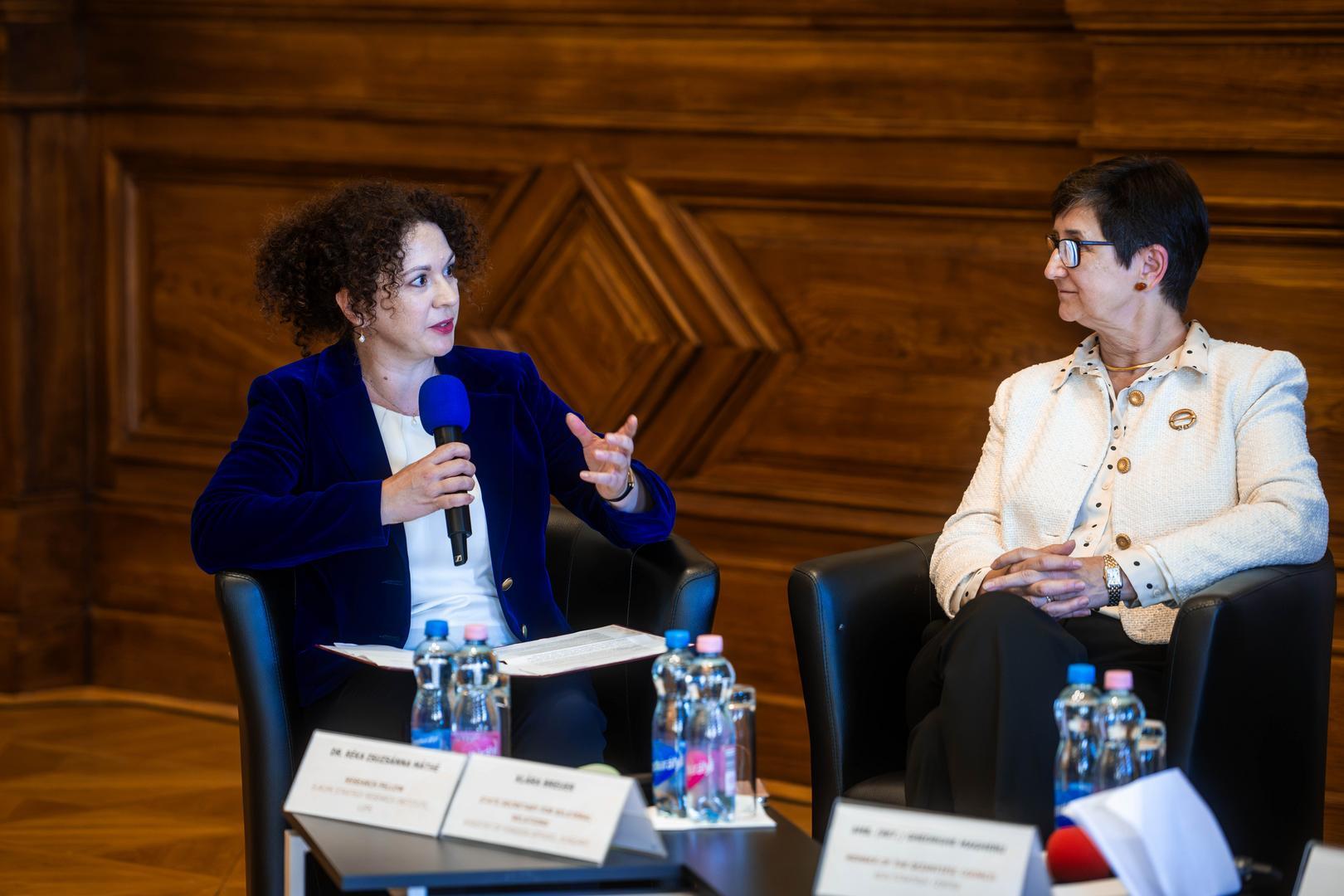
Klára Breuer, State Secretary for Bilateral Relations at the Ministry of Foreign Affairs, first addressed the well-established frameworks for cooperation in Central and Eastern Europe. She described the Visegrád Cooperation as an “old and well-proven format”, while also arguing that Eastern European initiatives still do not receive sufficient recognition within the EU. She noted that Hungary’s main alliance and cooperation frameworks have long been clear, with the country firmly embedded in NATO and the European Union. While in 1990 everyone was looking towards the West, she said, in 2026 greater connectivity between the East and the South is increasingly important.
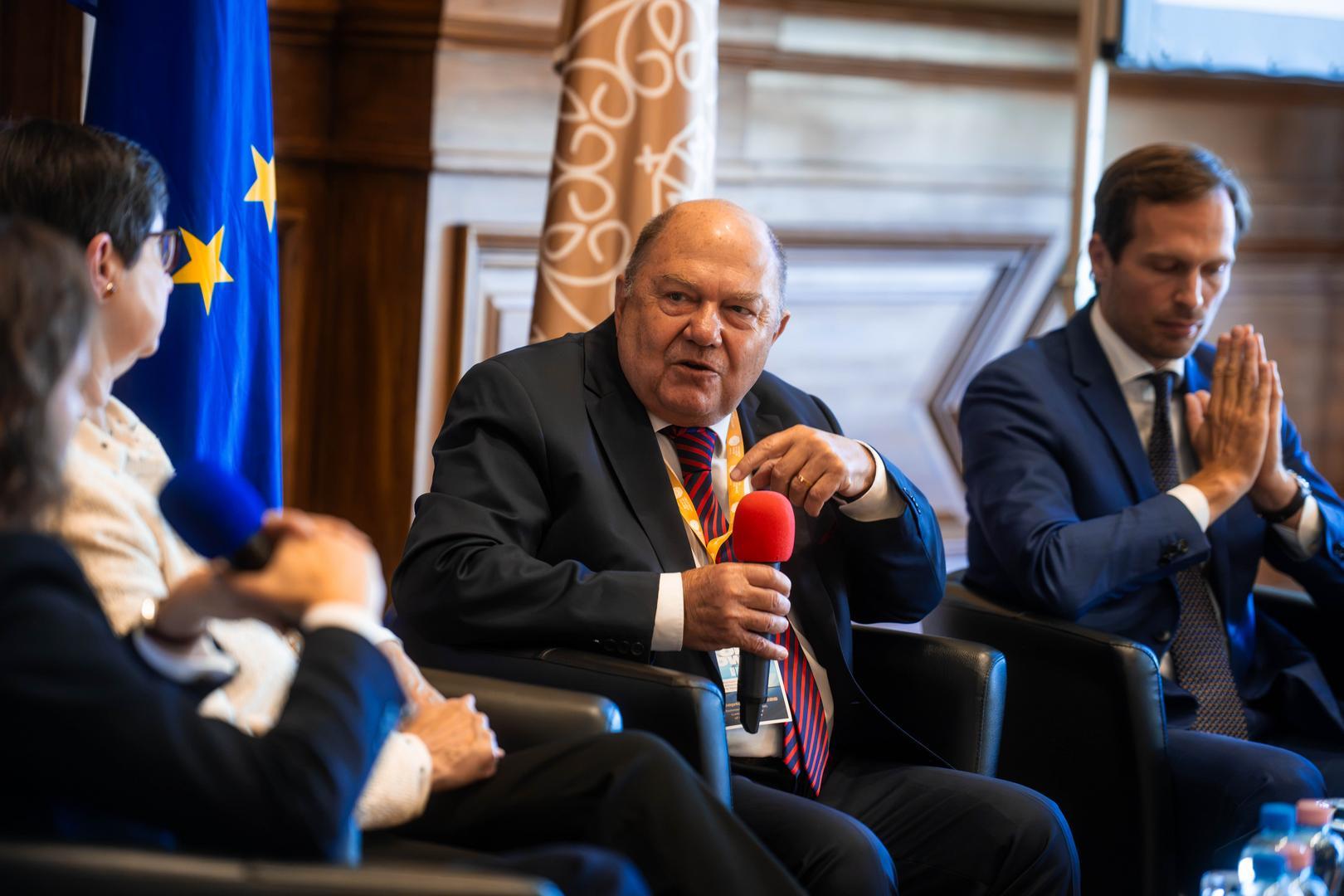
Gheorghe Magheru, former Romanian Ambassador and member of the Scientific Council of the New Strategy Center, agreed on the importance of regional cooperation. He noted that a range of cooperation formats emerged during the 1990s, including cooperation among South Slavic states that sought to move beyond the traumas of the Yugoslav wars. For Romania, he said, the Bucharest Nine initiative has been particularly important. He noted that the United States initially supported the format in connection with energy cooperation, while it subsequently gained increasing security and military relevance by connecting the V4 countries and the Baltic states with Romania and Bulgaria on the Black Sea.
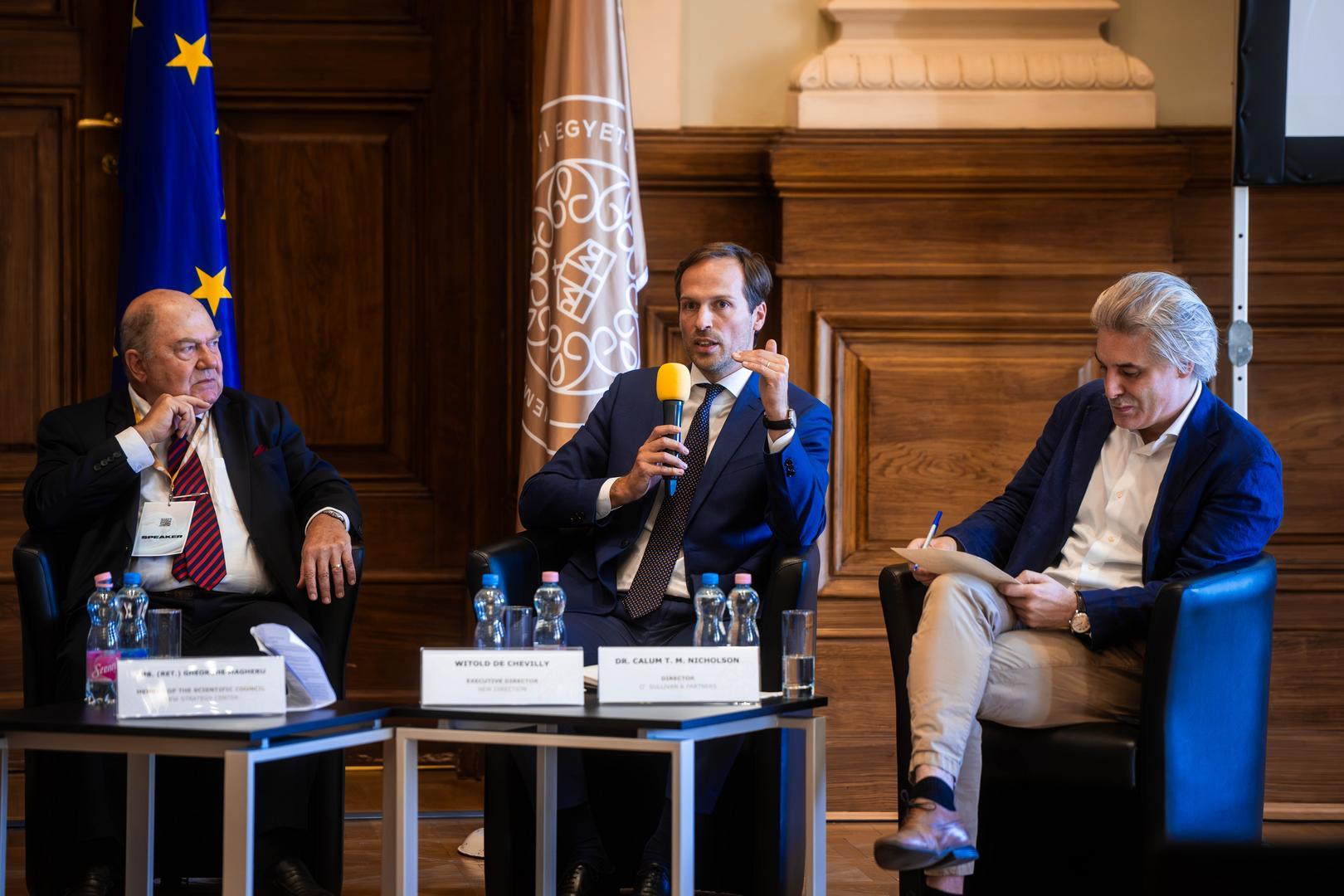
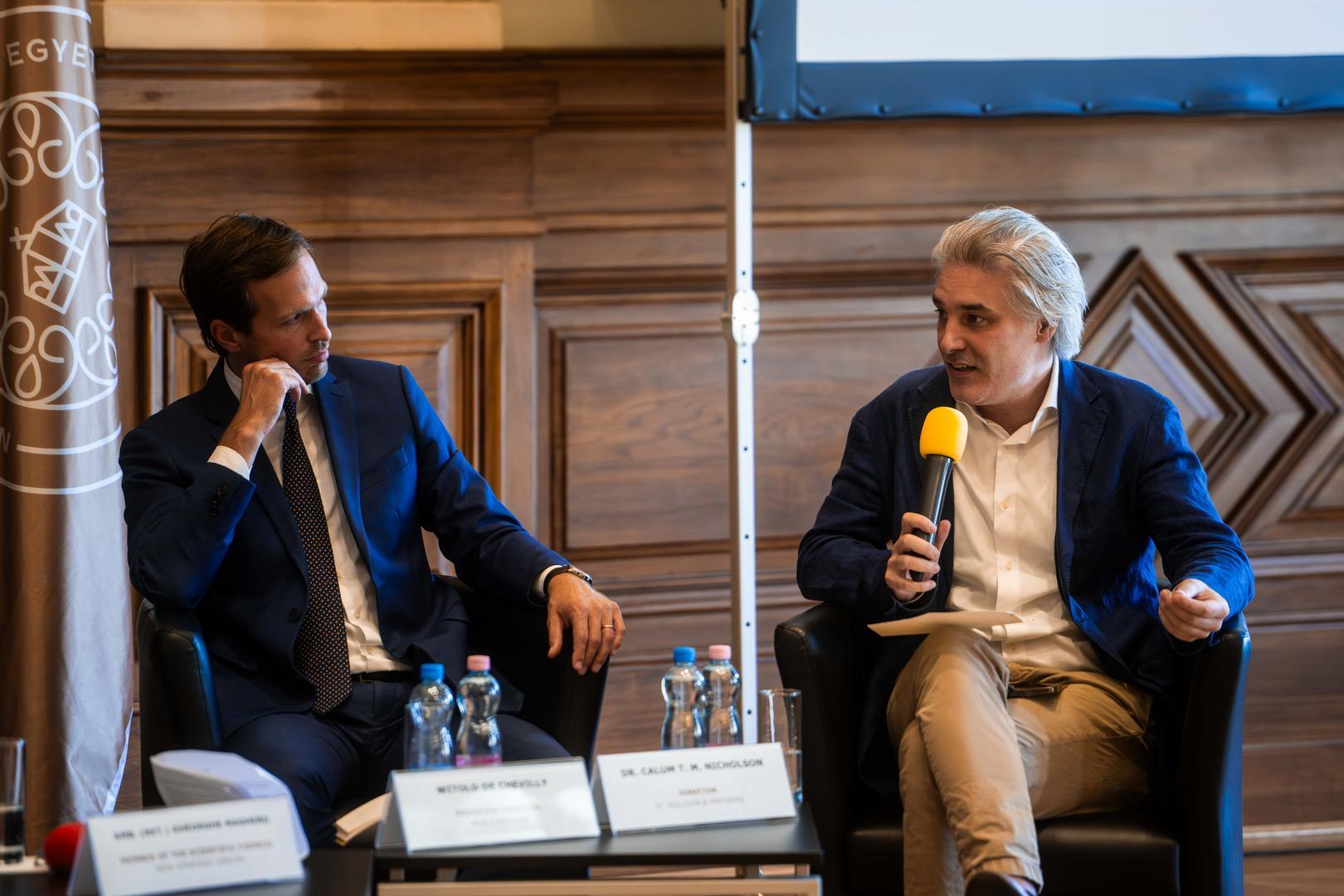
Among the many existing cooperation formats, the key question is which ones actually work, argued Witold de Chevilly, Executive Director of the conservative think tank New Direction. In his view, greater compromise within these frameworks is likely to become necessary. He also described the accession of Sweden and Finland to NATO as an important turning point and stressed the need to strengthen Europe’s own defence capabilities and defence industry. Buying American or South Korean military technology, he argued, is not the same as developing Europe’s own capabilities.
Similarly, Calum T. Nicholson argued that the key issue is not the number of cooperation formats but their effectiveness and capacity to act. The Director of O’Sullivan & Partners pointed out that many European states do not treat national security as a sufficient priority, whereas countries in Eastern Europe tend to respond more quickly and sensitively to security challenges because of their proximity to Russia. According to Nicholson, Poland is to Eastern Europe what China is to the Far East: the region’s heavyweight. He also viewed the rapprochement between the EU and Canada as largely symbolic, arguing that it reflected Canada’s desire to reduce its dependence on the United States.
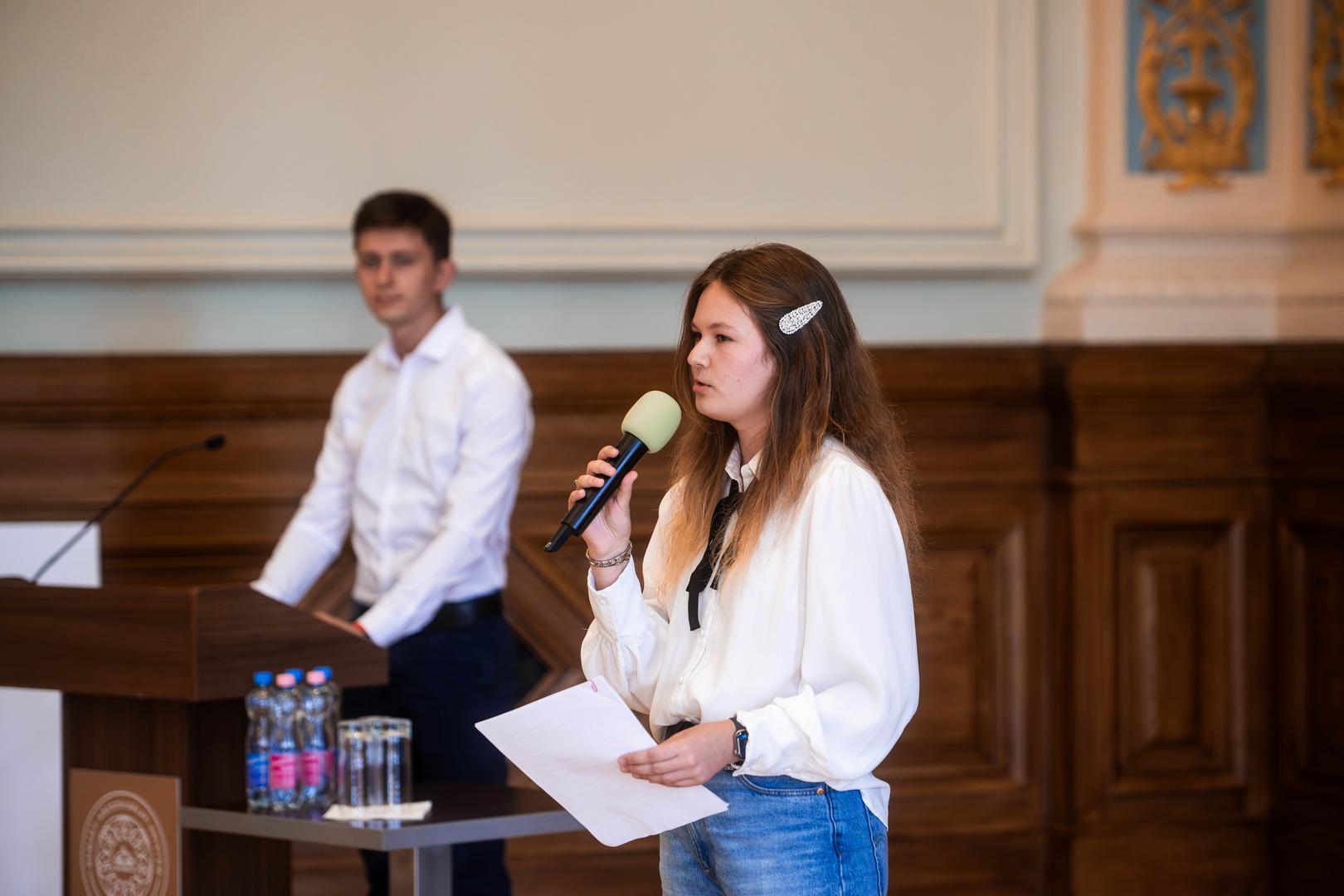
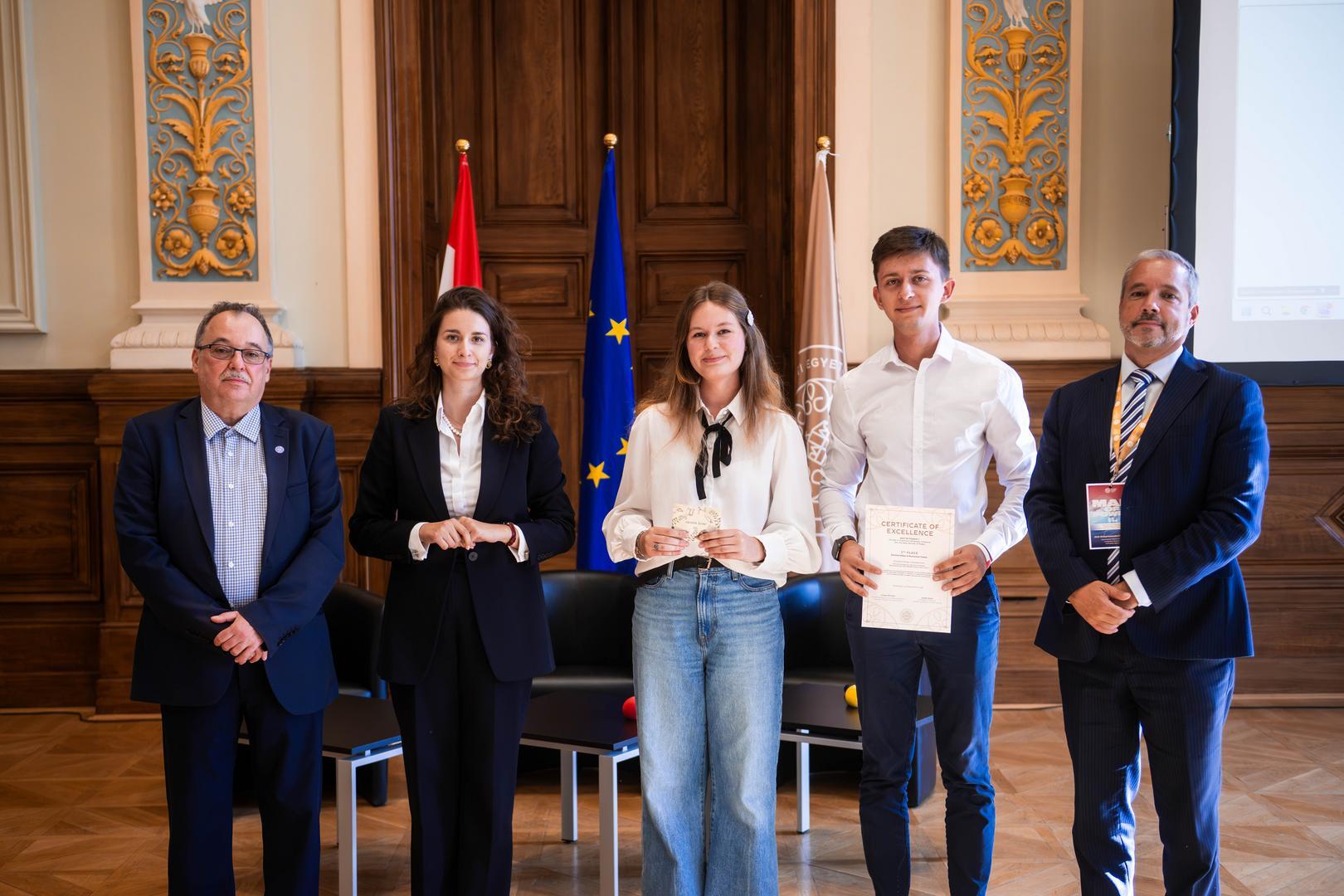
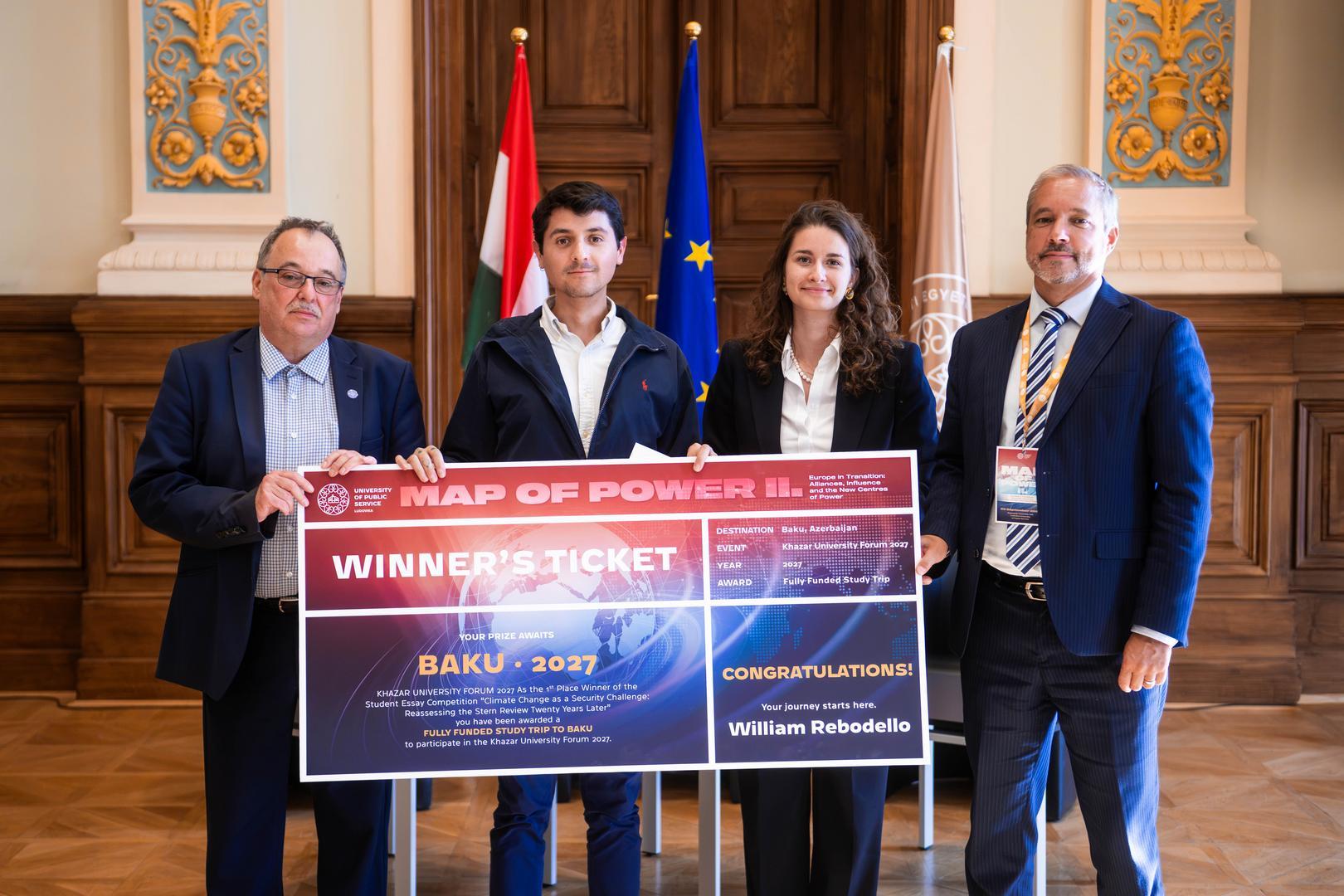
Wednesday’s conference concluded with an awards ceremony. To mark the 20th anniversary of the publication of the Stern Review, which examined the economic implications of climate change, the University launched an essay competition for students. The authors of the three best essays presented their work to the audience. Based on the decision of a three-member jury composed of Aleksandra Palkova, Tamás Pálvölgyi and Csaba Zalai, the competition was won by William Rebodello, a former student of the Budapest University of Technology and Economics (BME).
Text in Hungarian: Tamás Maráczi
Translation: Ákos Pásztor
Photo: Dénes Szilágyi