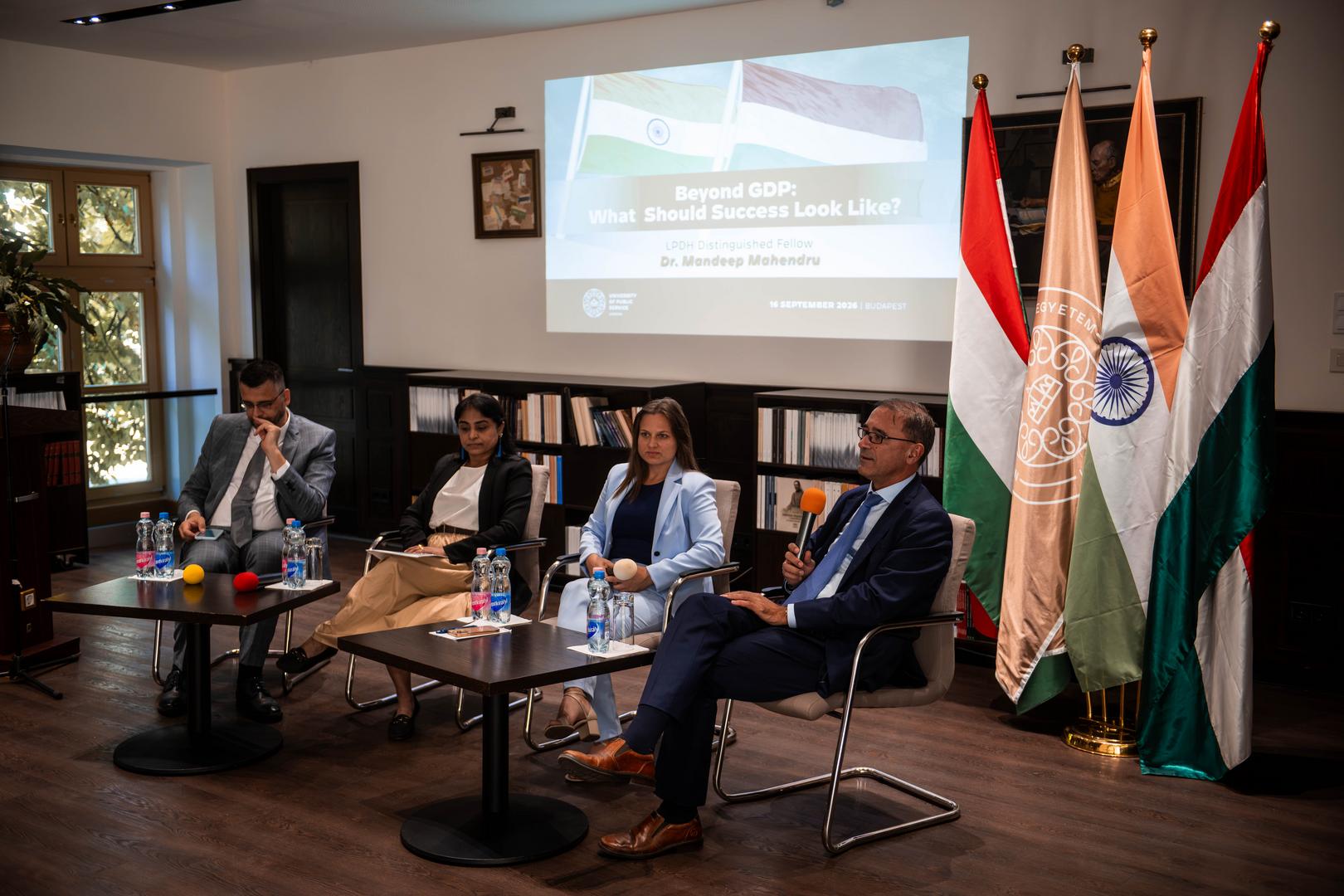
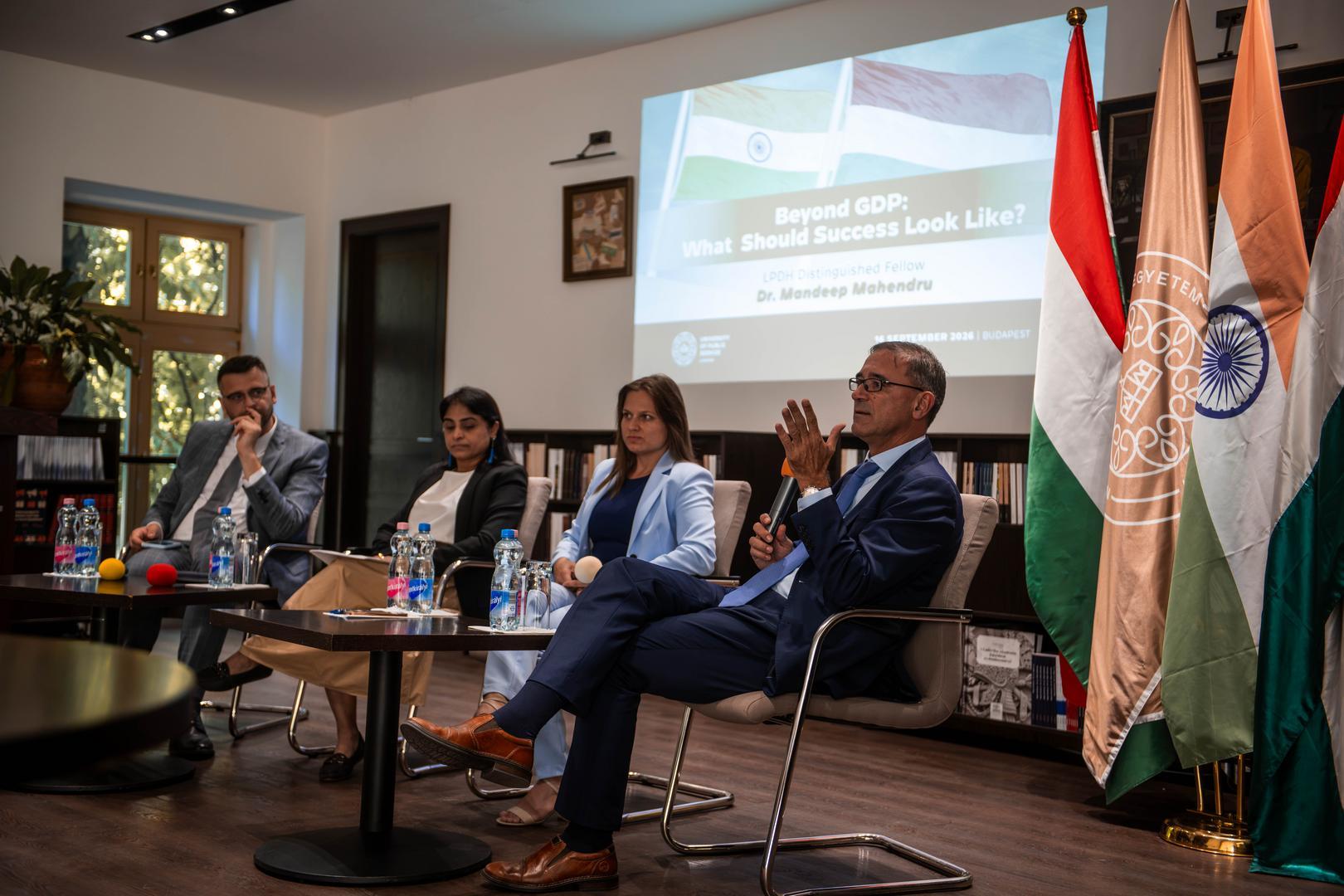


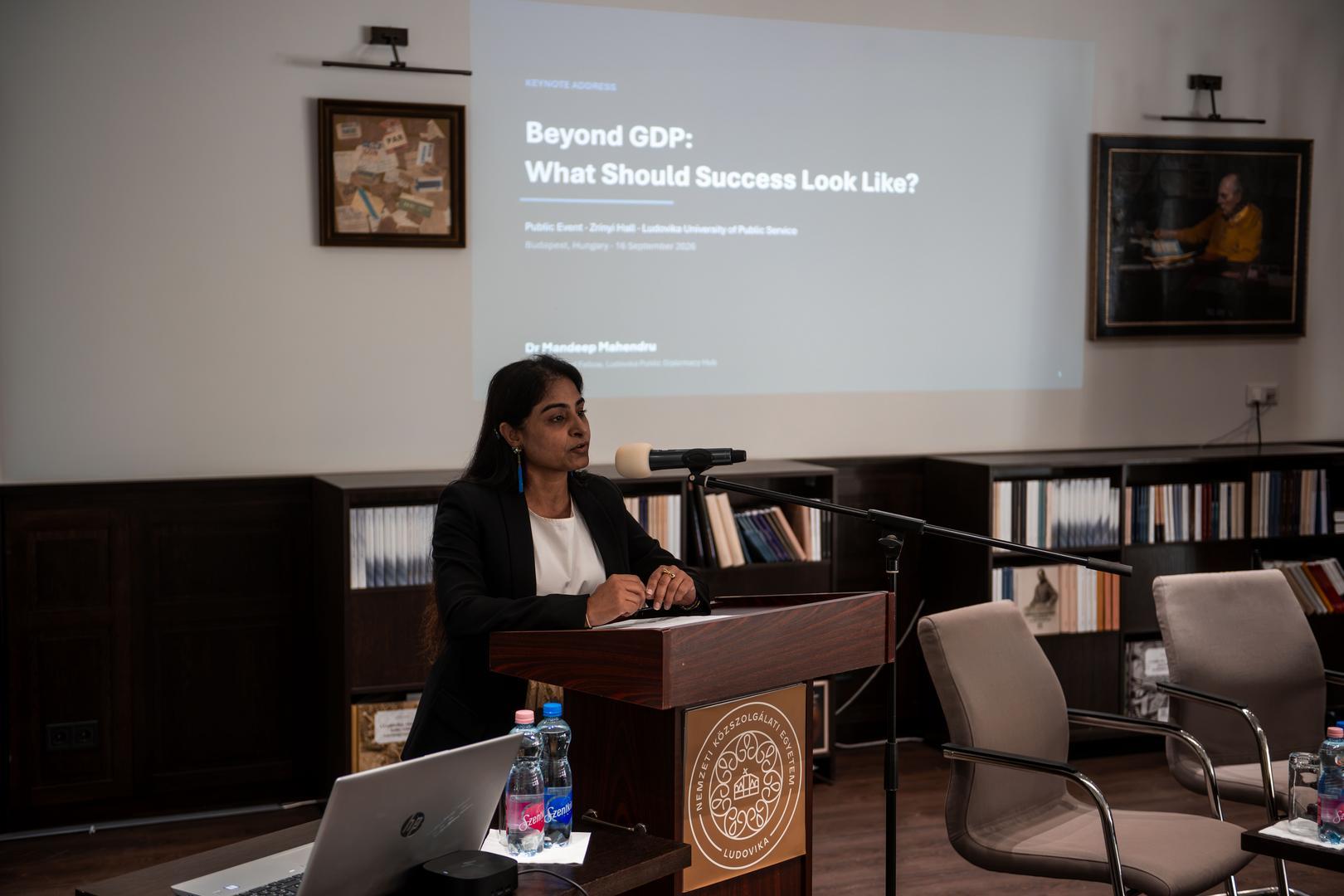
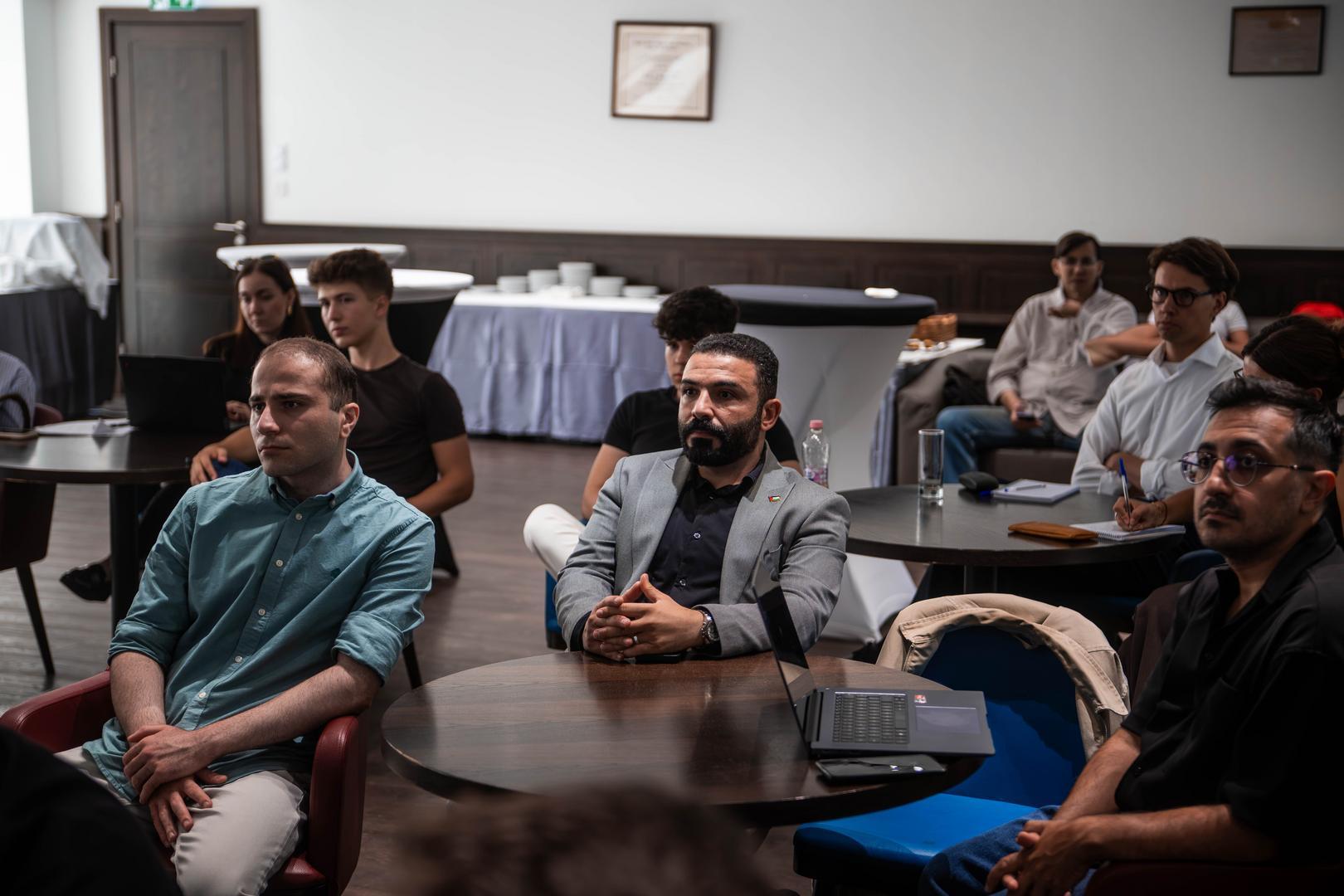
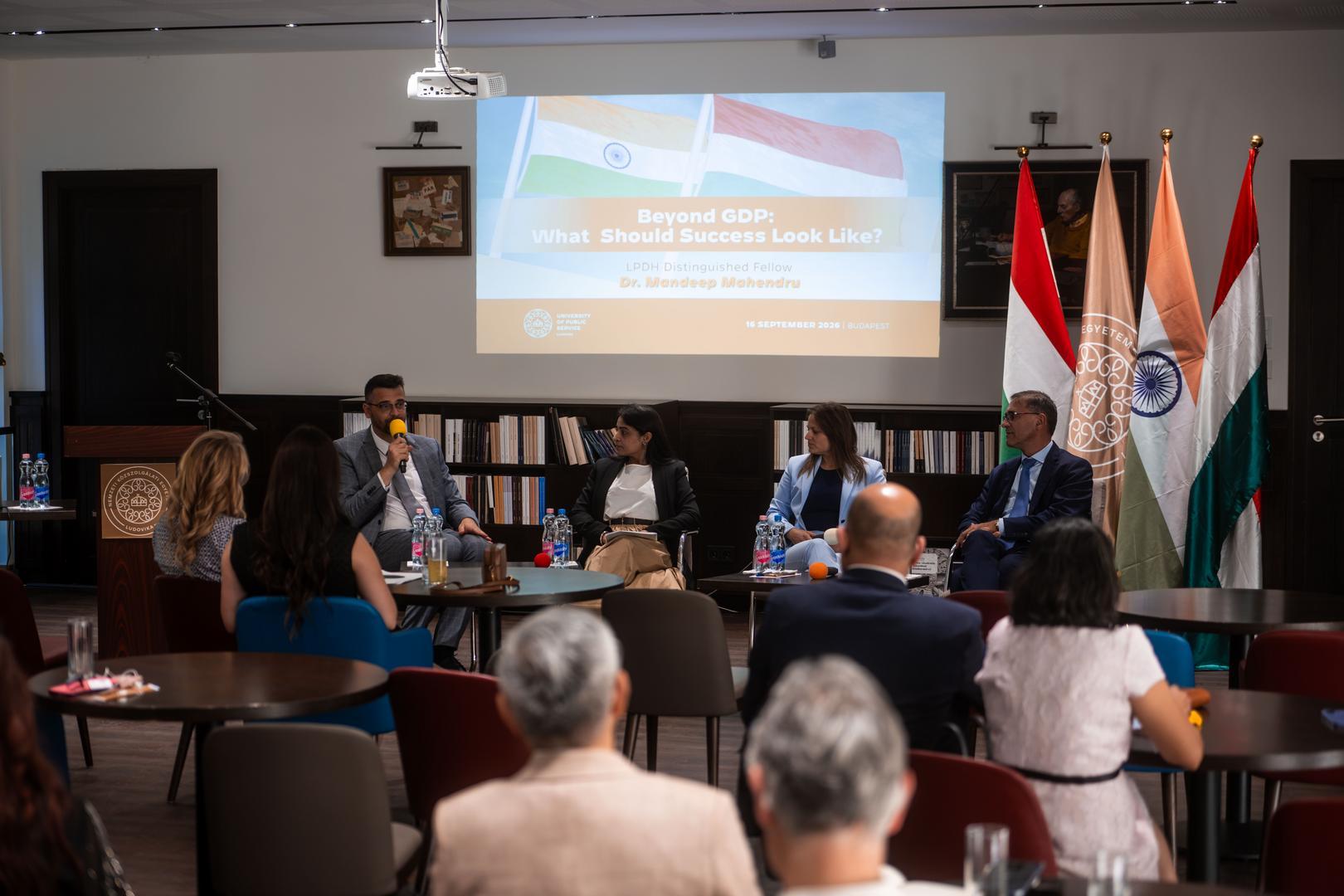
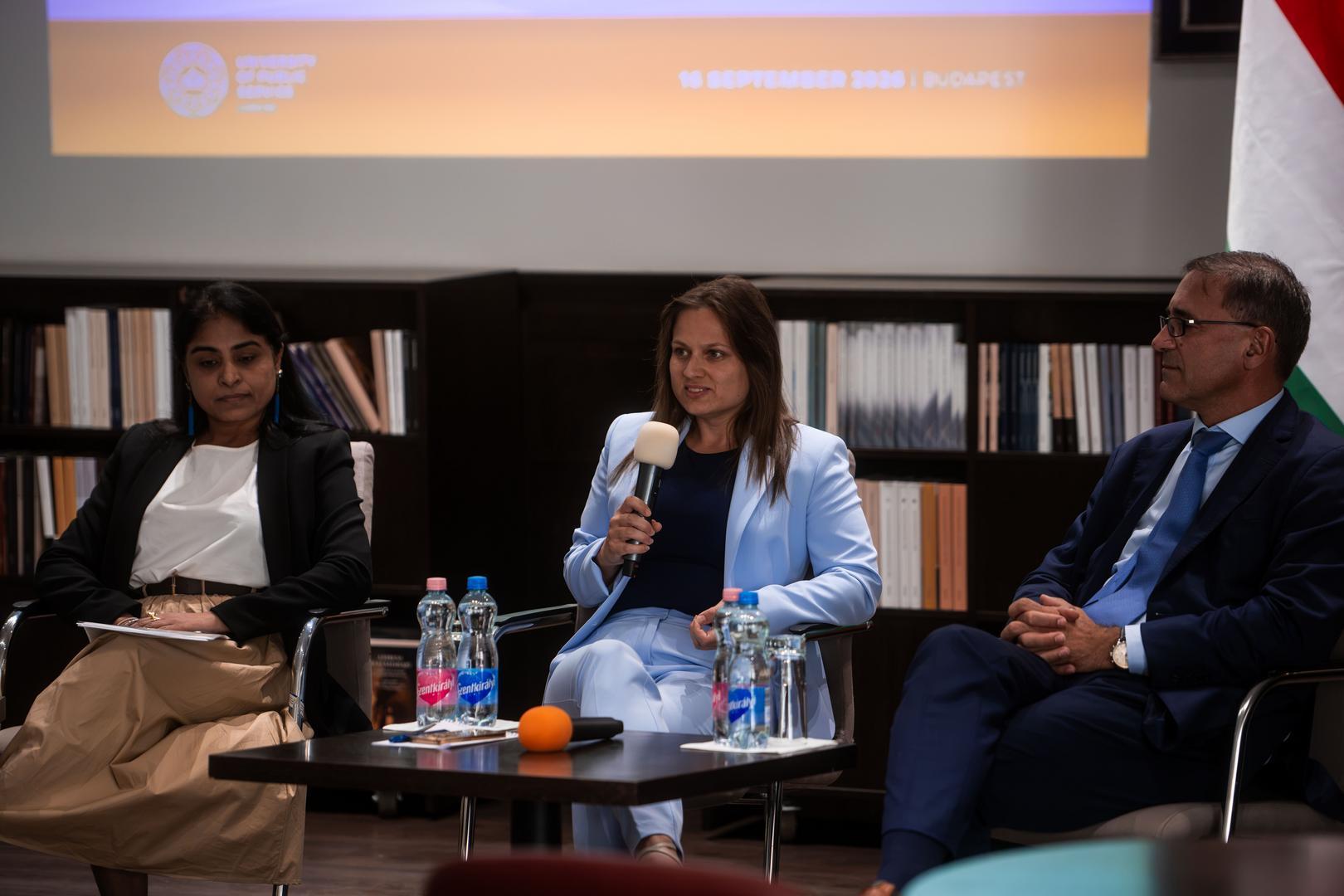

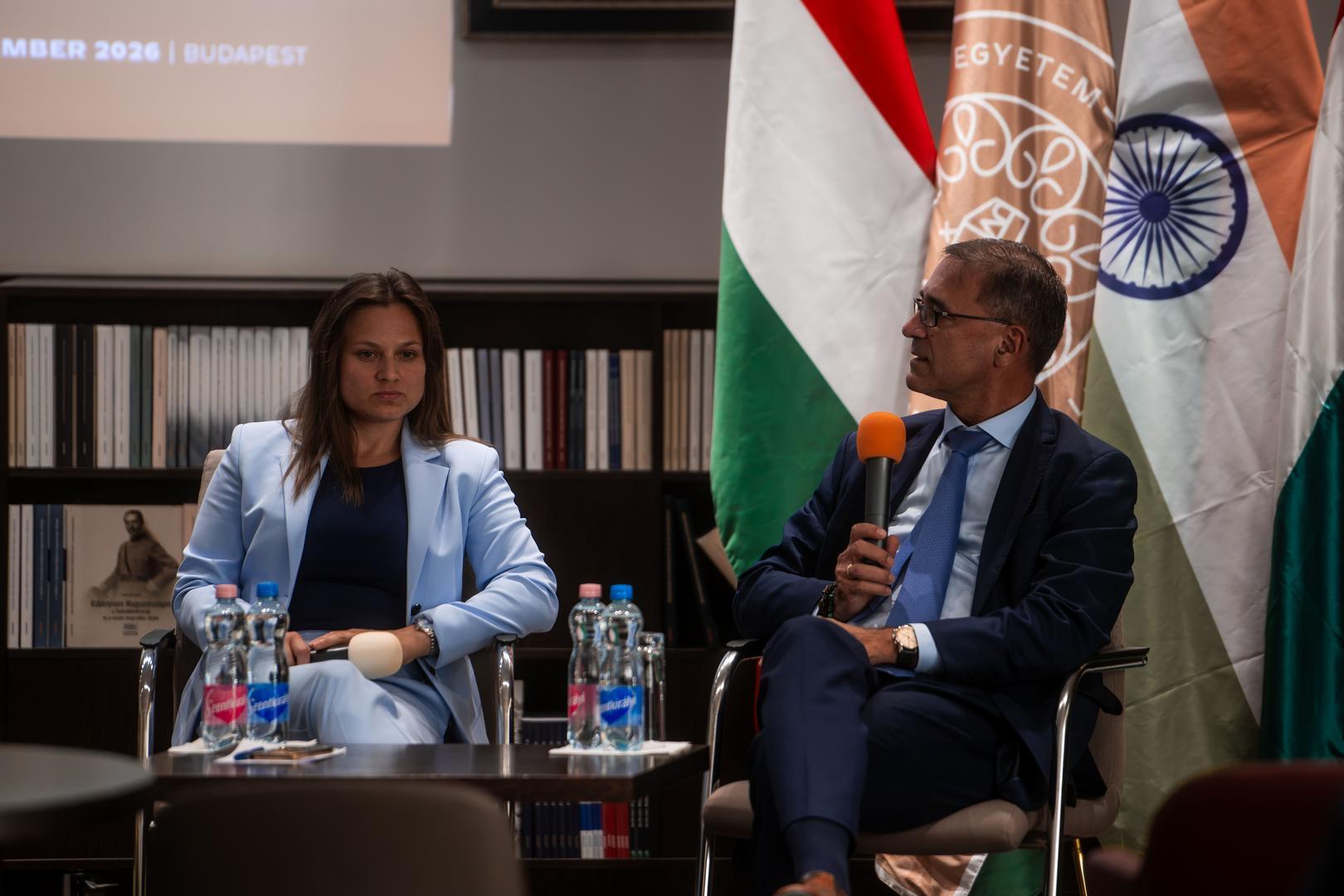
A roundtable discussion entitled “Beyond GDP: What Should Success Look Like?” was organized by the Directorate General for International Affairs of Ludovika University of Public Service (LUPS) on September 16 at the John Lukacs Lounge.
On behalf of the Directorate General for International Affairs, Ms Noémi Pálfalvi welcomed the audience and introduced the topic, drawing attention to the ongoing debate surrounding the role and limitations of GDP.
According to Ms Pálfalvi, although GDP is not a perfect measure, it is unlikely to be replaced by another single metric in the near future. Instead, analysts are more likely to take additional factors into account alongside it in order to gain a more complete picture of economic performance.
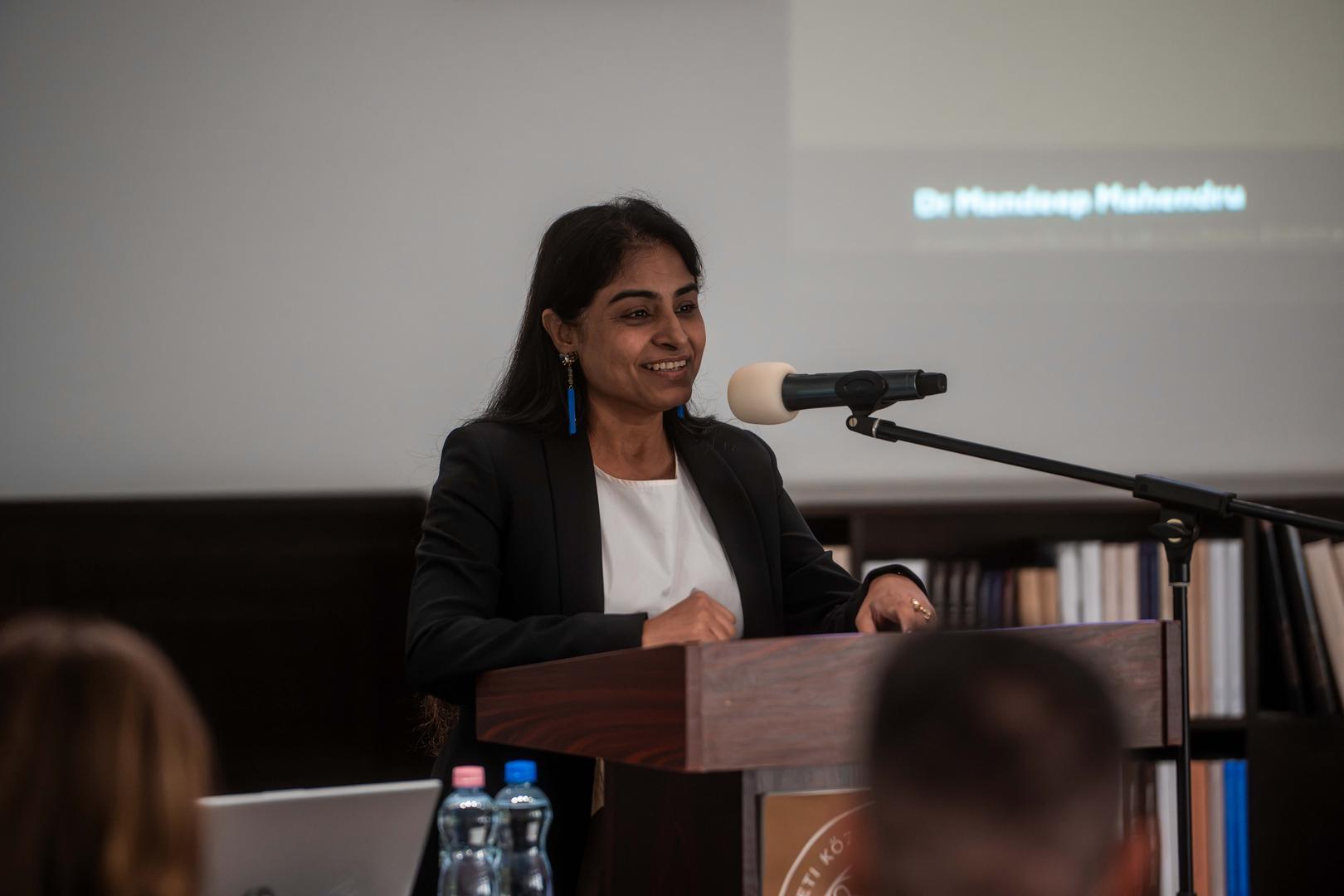
Dr Mandeep Mahendru, Distinguished Fellow of the Ludovika Public Diplomacy Hub, highlighted that GDP provides information about economic output — the total value of goods and services produced in a given country over a given period — but that this figure alone cannot reflect the broader condition or well-being of an economy and society.
Dr Mahendru argued that when assessing national economies, analysts should not rely on a single universal formula. A more nuanced approach will increasingly be needed. She proposed a multi-factor framework in which indicators such as unemployment, quality of life and changes in the economic position of different social groups are considered alongside economic output. Such an approach, she argued, could provide a much more comprehensive picture of the economy under examination.
Responding to the opening presentation, Vivien Czeczeli, Researcher at the Economy and Competitiveness Research Institute at Ludovika University of Public Service, agreed that GDP remains an important and useful indicator, but one that requires additional context. She recalled that GDP was introduced as an economic metric in the 1930s, following the Great Depression, and proved to be an effective tool. Nevertheless, it is not designed to capture the full complexity of economic and social development.
She referred to Japan as one example. Investments and construction activity do not automatically mean that an economy has advanced: reconstruction following a natural disaster may increase measured economic activity, but much of that activity simply restores what had previously been destroyed rather than creating a higher level of prosperity.
She also cited the United States. While American companies are highly competitive and the country's economic model supports strong corporate performance, access to healthcare remains uneven and demanding working conditions can affect people's family lives. In other words, strong economic performance does not necessarily translate directly into improvements in everyday quality of life. Similarly, a favourable GDP figure does not by itself indicate how prosperity is distributed across the population.
According to Vivien Czeczeli, other indicators also matter when assessing a country's performance, including life expectancy, as well as the availability of natural resources and how effectively they are used. She noted that economies can produce strong macroeconomic or industrial figures while those indicators reveal relatively little about issues such as equality before the law, quality of life or individual freedom.
Dr Mahendru agreed that economic prosperity and individual well-being should not automatically be treated as the same thing. She noted that political and social conditions can also play an important role in determining how people perceive their quality of life.
At a key point in the discussion, moderator Márk Vargha, Advisor to the Directorate General for International Affairs, posed the central question: is there a universal definition of national or international economic success?
According to István Máté-Tóth, Deputy CEO of the Budapest Stock Exchange (BÉT), there is no single universal definition. Countries differ in their cultural characteristics, economic structures and development capacities. Prosperity can therefore be measured in different ways, and the relationship between these indicators is inherently complex.
Vivien Czeczeli similarly argued that every country has a different set of expectations and development priorities, making direct comparisons difficult. She cited Singapore as an example: the Southeast Asian city-state has invested heavily in areas such as public safety, education and trade development, following a model that differs substantially from those of many other economies.
According to Vivien Czeczeli, the future is also becoming increasingly difficult to predict as artificial intelligence transforms economies and plays an expanding role in economic growth.
“AI companies are generating enormous revenues, and their services have a major impact on society. But precisely because of this, they should also bear greater responsibility in shaping our shared future,” she stated.
In his closing remarks, István Máté-Tóth illustrated some of the differences between the European and American economic models. In the United States, a significant proportion of household savings is invested through capital markets, giving the stock market a particularly important role in financing companies and economic growth. Europeans, by comparison, invest a much smaller proportion of their savings in shares.
He noted that, unlike the United States, Europe does not have a fully unified capital market of comparable scale. Greater integration, he argued, could help European companies access capital more effectively and strengthen the continent's ability to develop globally competitive, knowledge-based companies.
According to the Deputy CEO of the Budapest Stock Exchange, the current fragmentation of European capital markets limits their efficiency. A significant share of European savings and spending on digital services ultimately flows towards American companies, while Europe continues to face challenges related to competitiveness and economic performance.