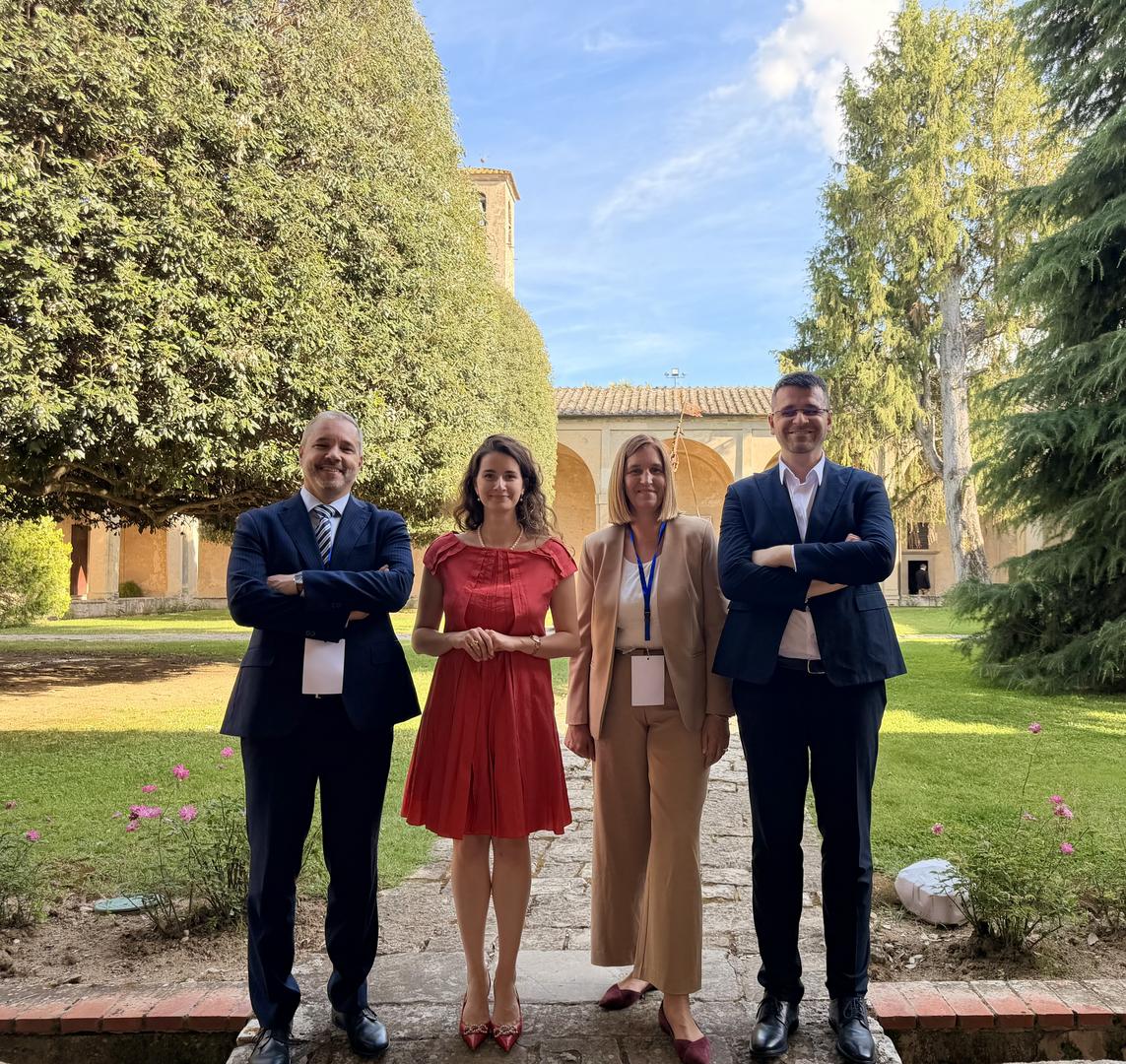
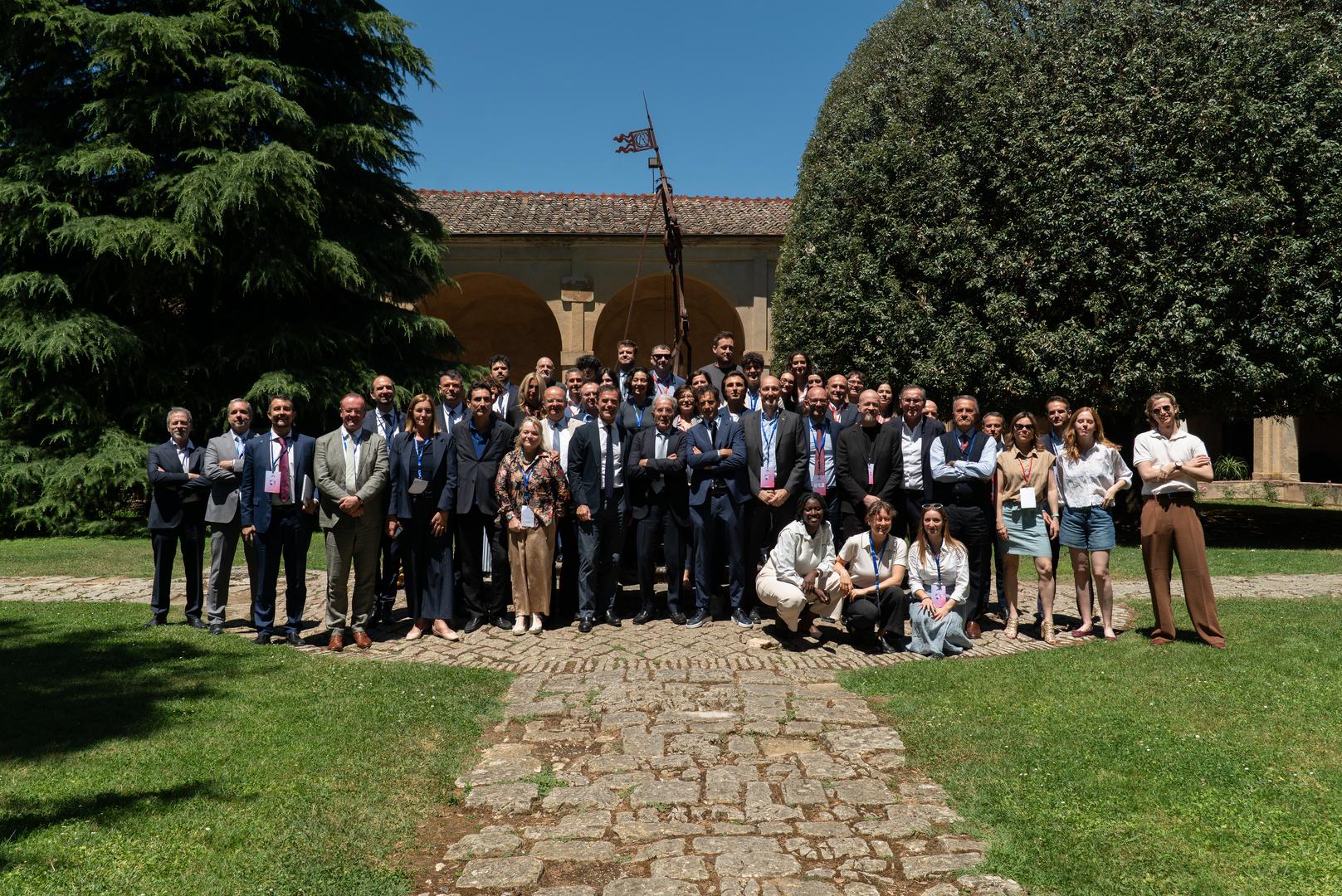
Between 11–13 June 2026, Ludovika University of Public Service (LUPS) participated in the Seventh Siena Conference on the Europe of the Future, hosted at the historic Certosa di Pontignano Monastery near Siena, Italy. Convened by Vision Think Tank in cooperation with the European University Institute, the University of Siena, LUISS University, Bocconi University and LUPS, the conference brought together around one hundred participants from academia, the private sector, think tanks, European institutions and public life. Distinguished speakers included former Italian Prime Ministers Romano Prodi and Paolo Gentiloni, as well as senior European policymakers, academics and experts from across Europe and beyond. The event aimed to develop concrete, cross-disciplinary proposals to strengthen Europe’s resilience in defence, energy, digital autonomy, demography and institutional reform, culminating in the drafting of the “Pontignano Manifesto”.
The conference opened on 11 June with a high-level plenary discussion on Europe’s future in a rapidly changing geopolitical environment. Representing Ludovika University, Director General for International Affairs Liliana Śmiech participated as an invited discussant alongside leading European academics and policy experts, contributing to the debate on how Europe can respond to contemporary political, economic and security challenges.
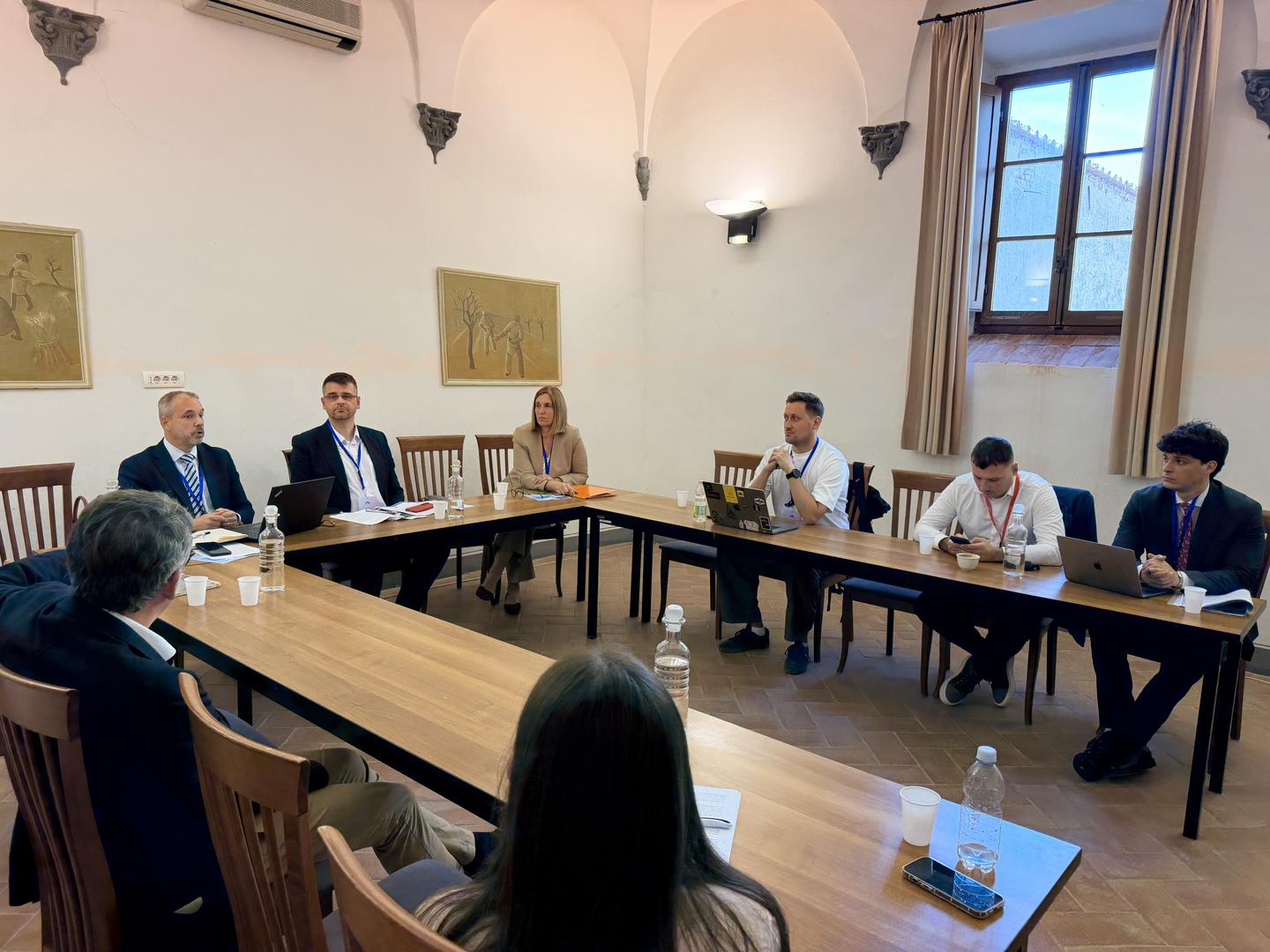
Later that afternoon, Ludovika University led one of the conference’s four flagship Problem Setting/Solving Groups (PSSGs), dedicated to European defence. Professor Anna Molnár, Head of the Department of International Security Studies, and Professor of Practice Csaba Zalai, Head of the International Organisations Research Group, introduced the concept paper How Much Does Defending Ourselves Really Cost? A Strategy to Efficiently Build the Strength We Need: Lessons from Poland, Hungary, Ukraine and Beyond. The paper explored how Europe can strengthen its defence capabilities while maintaining economic competitiveness and social investment priorities, drawing on experiences from Central and Eastern Europe and Ukraine.
The discussion brought together participants from several European countries as well as Ukrainian experts representing the defence innovation sector. Liliana Śmiech contributed to the exchange as a participant in the working group, while Márk Vargha, Advisor at the Directorate General for International Affairs, served as Chair of the session, guiding the debate and helping structure the recommendations that would later feed into the Pontignano Manifesto.
On 12 June, Ludovika University representatives played visible roles in several plenary sessions addressing Europe’s key strategic priorities.
In the morning, Liliana Śmiech chaired the plenary session on European energy independence and the acceleration of the energy transition. The discussion brought together policymakers, energy-sector leaders and researchers to examine how energy policy can strengthen Europe’s competitiveness, resilience and strategic autonomy.
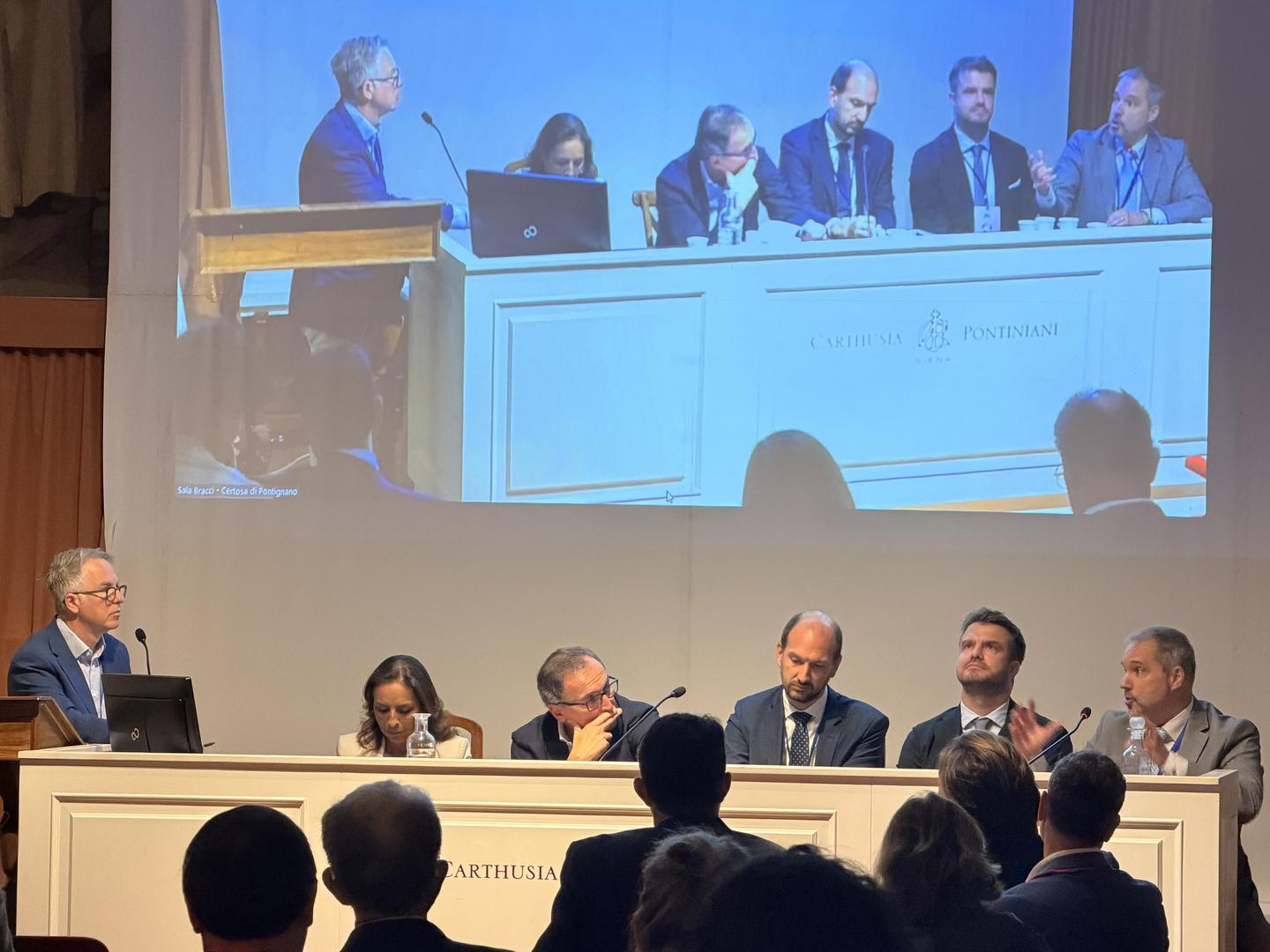
Later that morning, Csaba Zalai participated as a discussant in the plenary session “New Priorities for the EU Budget: Redesign Cohesion Policies around Social Infrastructure and Demography”, following a keynote address by Raffaele Fitto, Executive Vice-President of the European Commission. In his intervention, Zalai highlighted the strategic implications of demographic decline, regional disparities and population mobility for Europe’s long-term competitiveness and cohesion. He argued that demographic considerations should be more systematically integrated into the next Multiannual Financial Framework and future cohesion policies.
In the afternoon, Professor Anna Molnár joined the high-level panel discussion “A European Security Council for a European Security Strategy”, where European and Ukrainian experts debated institutional options for strengthening the European Union’s strategic capacity and improving decision-making in the fields of defence, security and crisis management. Discussions focused on the possible establishment of a permanent European Security Council and its potential contribution to a more coherent European security architecture.
The final day of the conference, held in Siena’s Santa Maria della Scala complex, was dedicated to presenting the outcomes of the working groups and the draft Pontignano Manifesto to a wider audience, including students, media representatives and members of the public.
As rapporteurs and representatives of the European Defence working group, Professors Molnár and Zalai presented the group’s conclusions during the plenary discussion on Europe’s strategic trade-offs. The recommendations emphasised the importance of maintaining a strong transatlantic alliance while reducing critical dependencies, strengthening the European pillar within NATO, promoting flexible security cooperation formats, enhancing Europe’s defence industrial base and ensuring that increased defence expenditure translates into deployable capabilities.
Overall, the conference provided an excellent opportunity to showcase Ludovika University’s expertise, contribute to high-level European policy debates and strengthen its network of international partnerships. Through the active involvement of its academic experts and international affairs leadership, LUPS played a visible role in shaping discussions on the future of European security, energy policy, demographic resilience and institutional reform. The conference also demonstrated the growing international profile of the University and the value of its engagement in multidisciplinary policy dialogues at the European level.