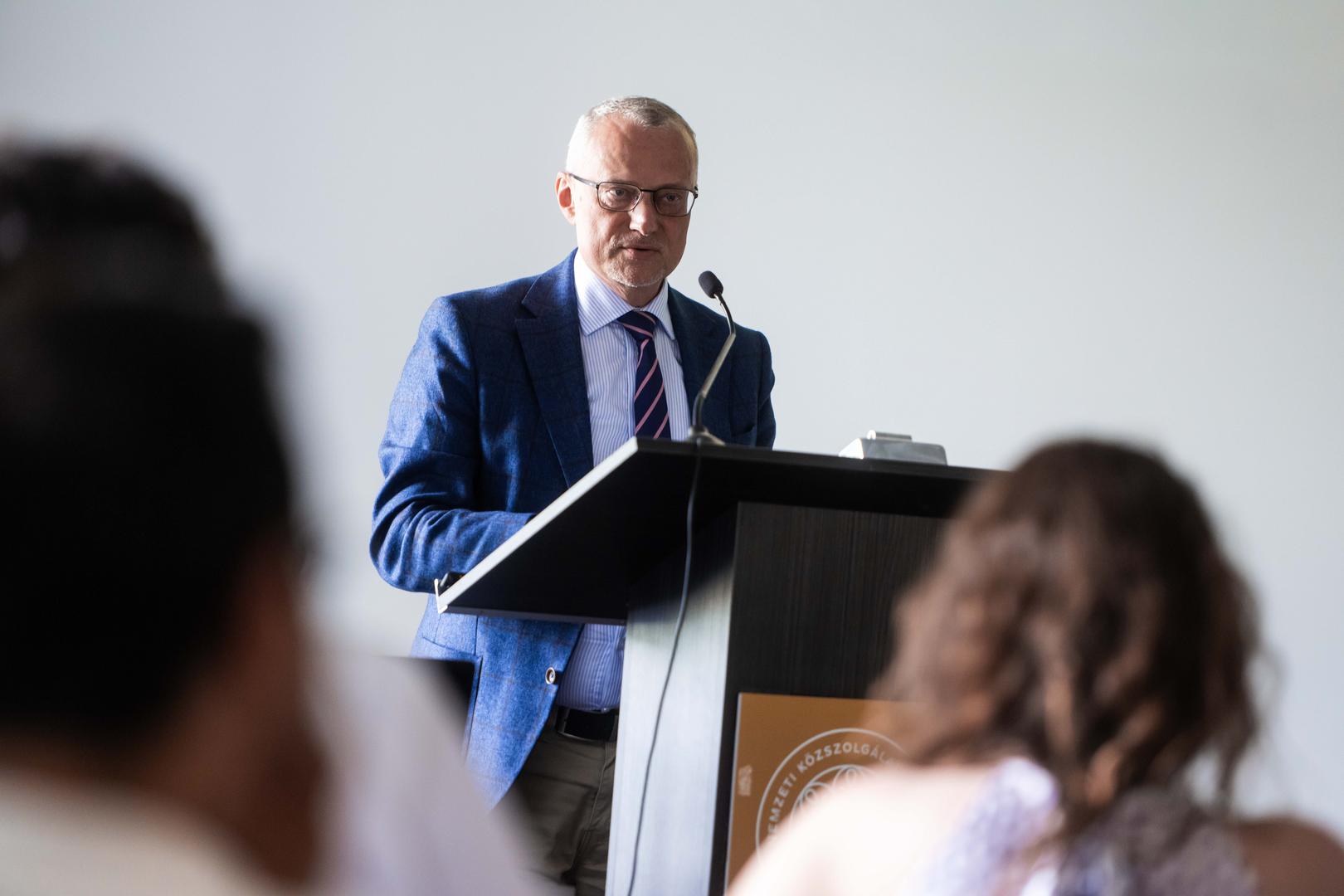
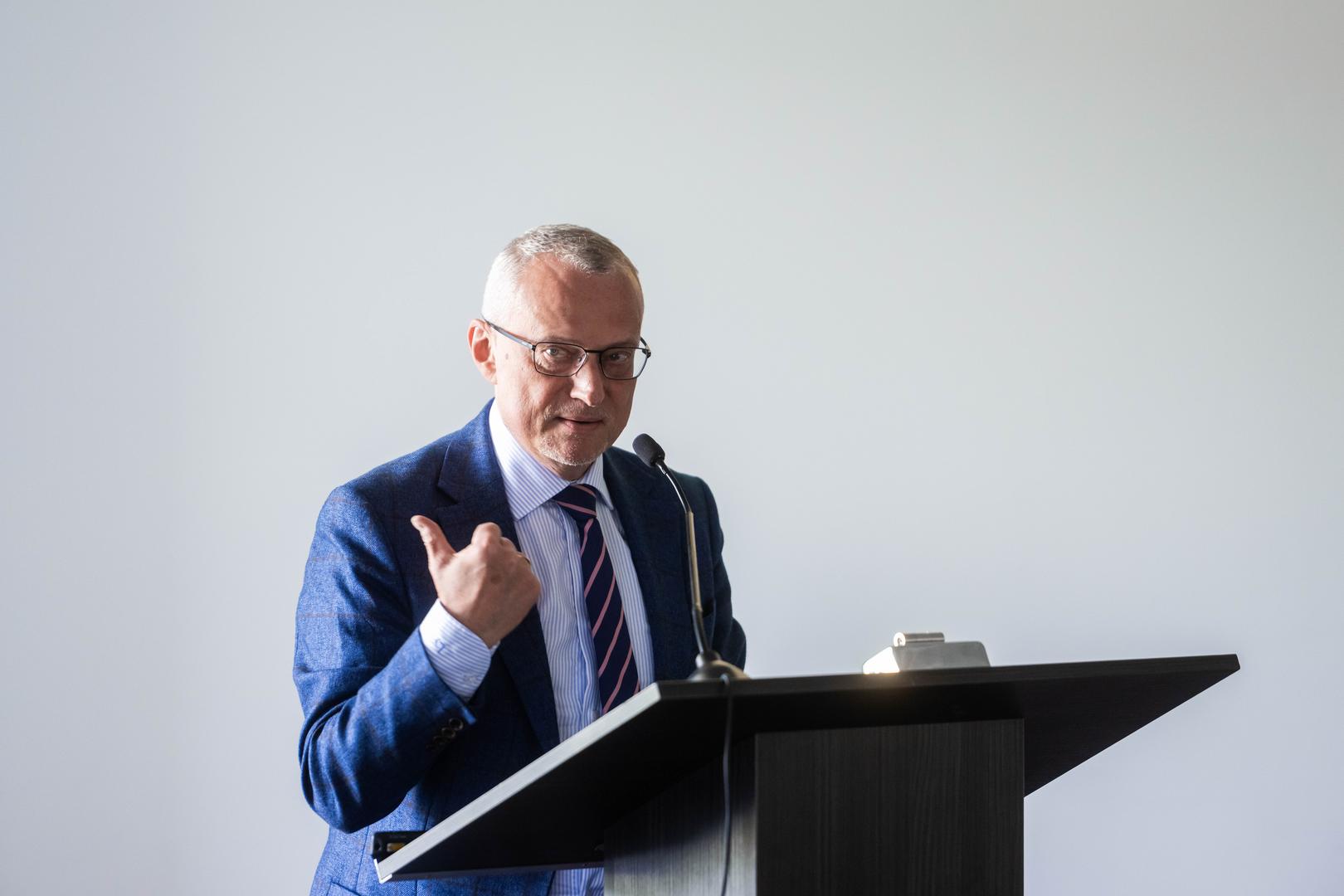




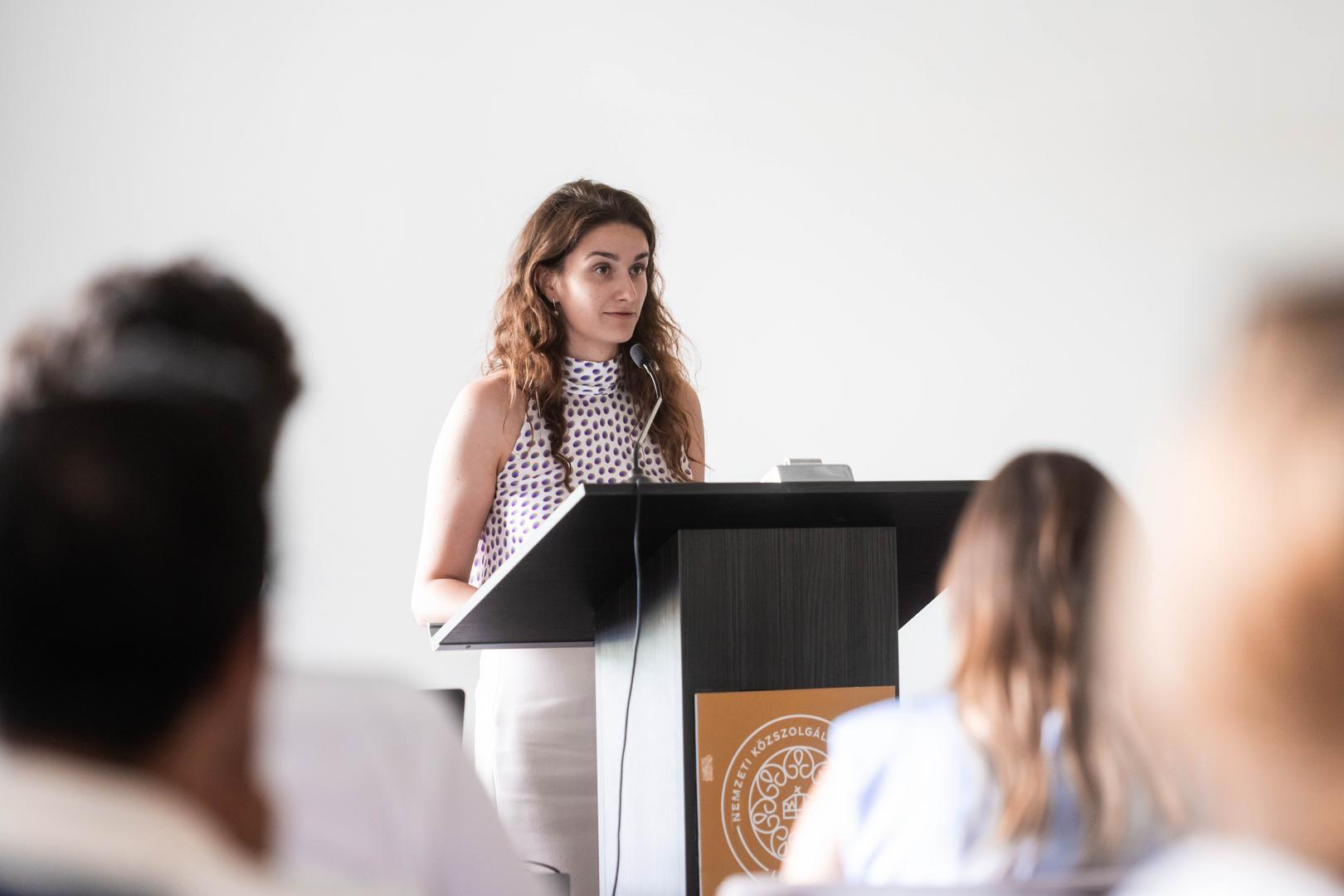

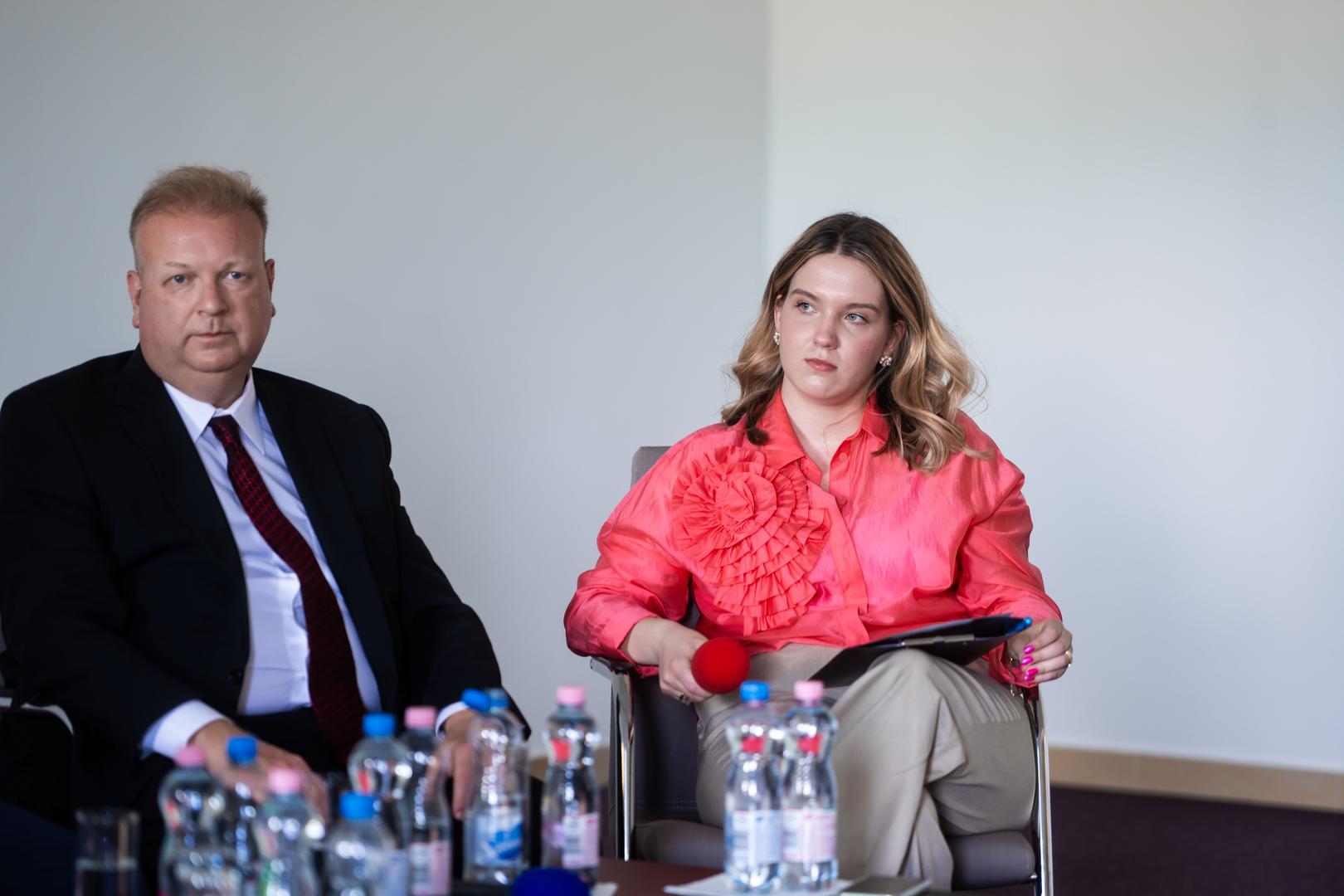
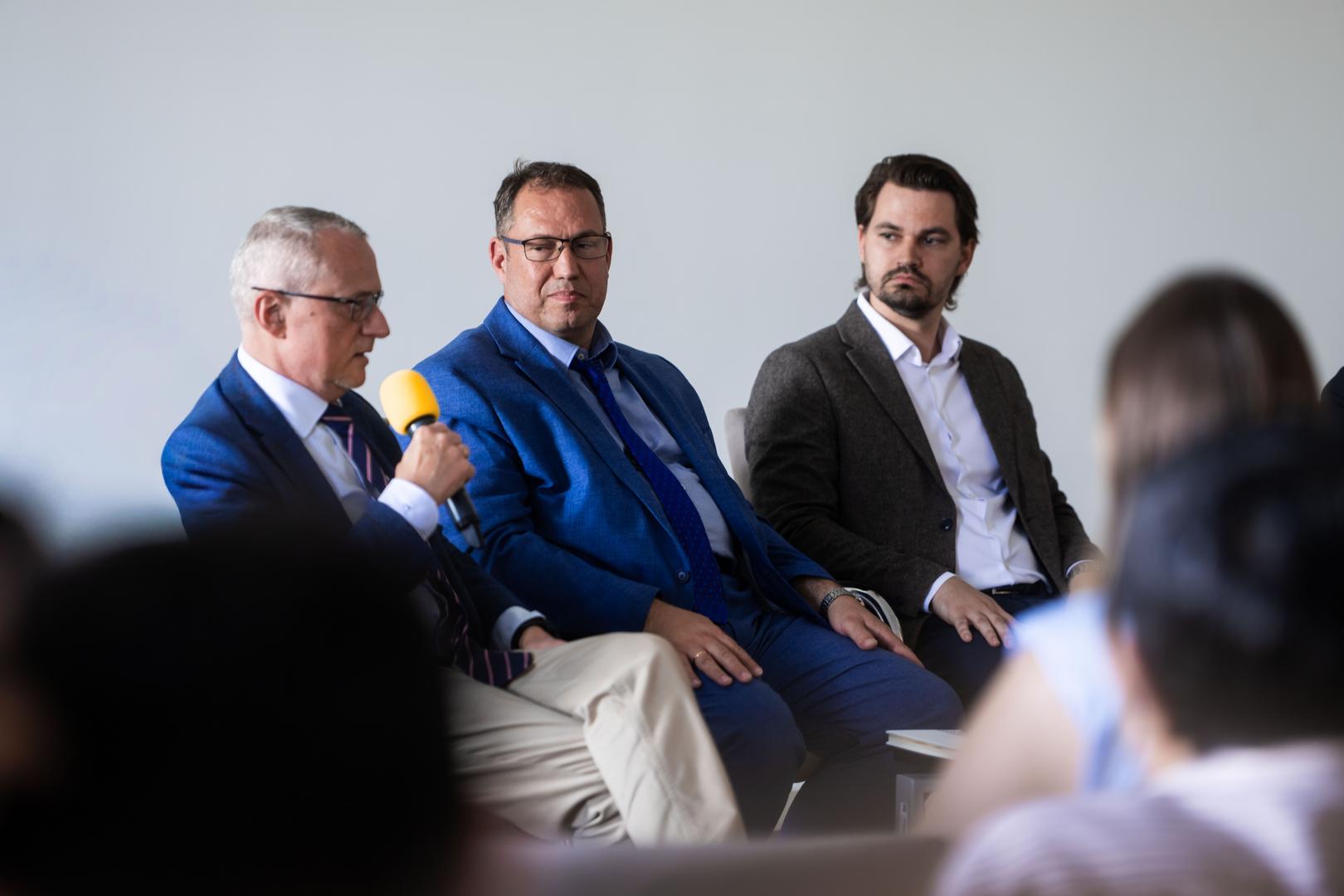
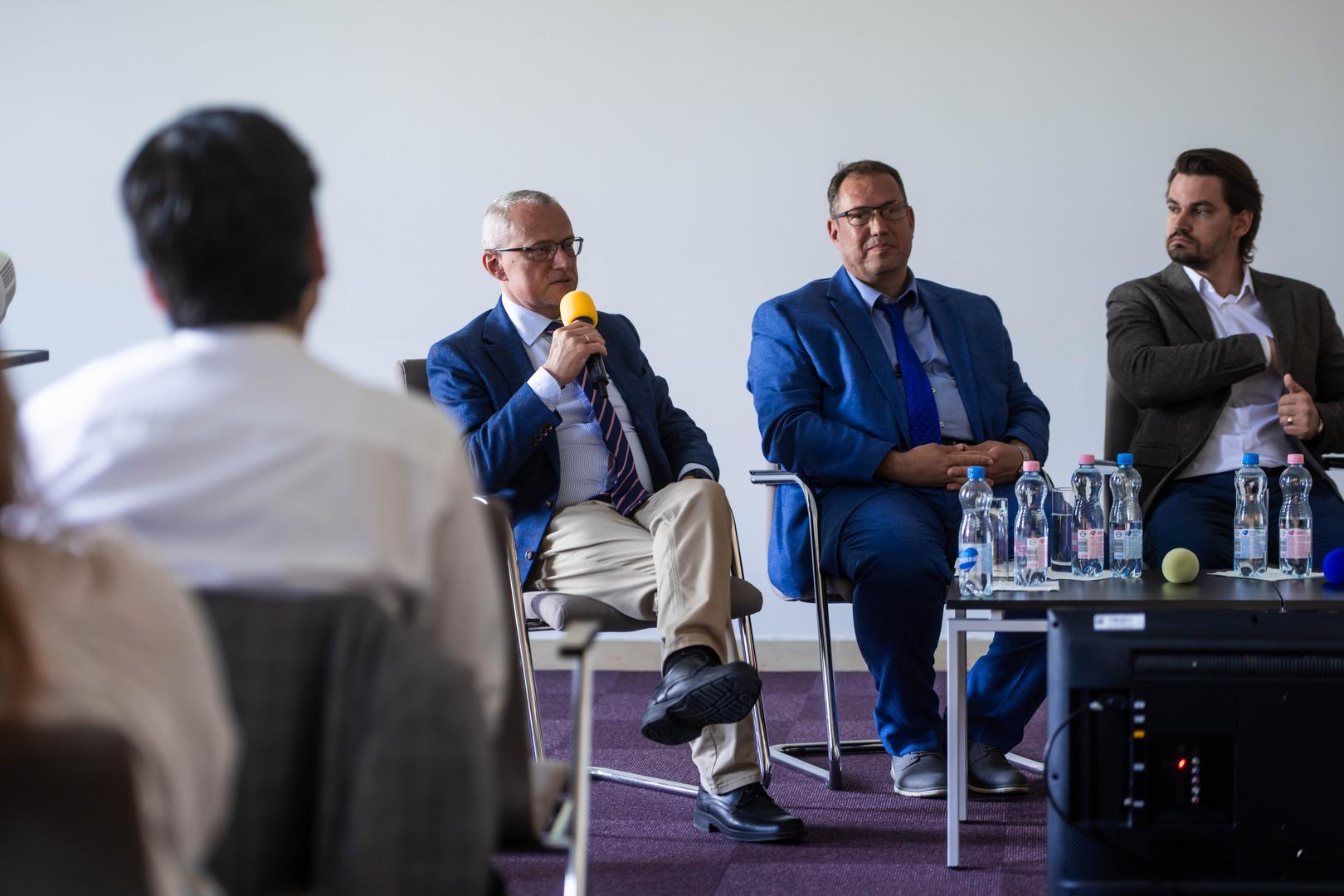
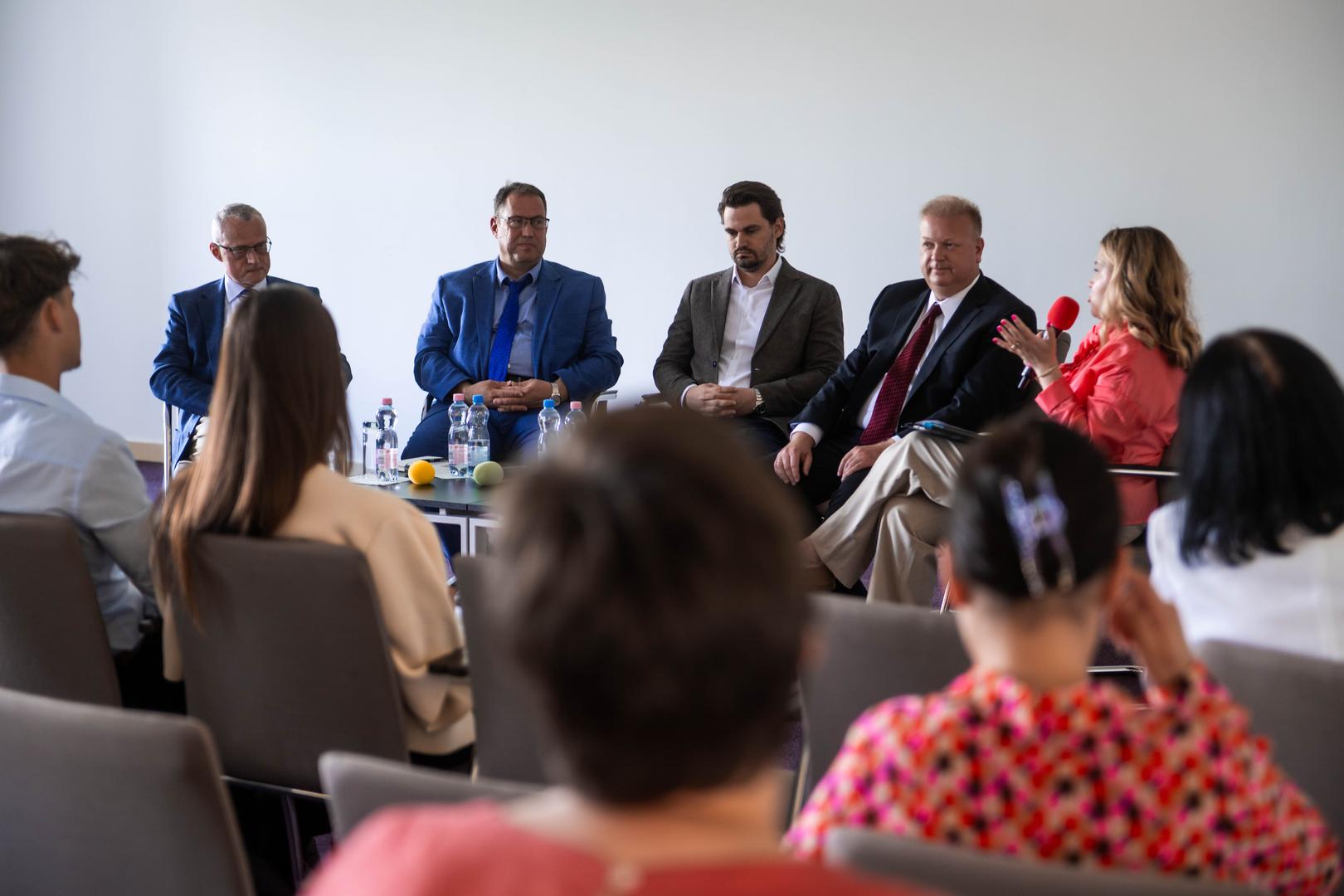
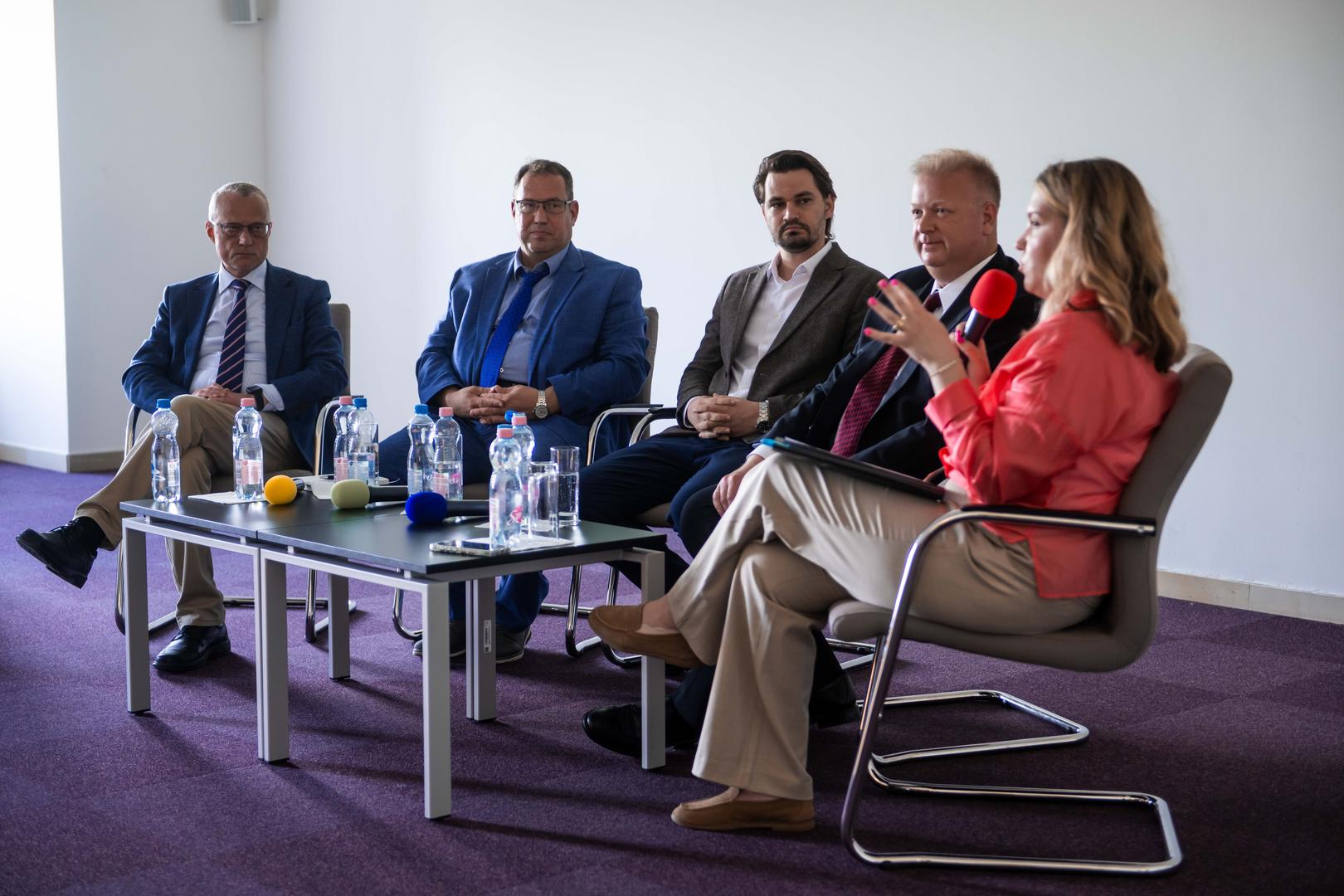
Impact on Europe of the war in Iran was the subject matter discussed at War in Iran – Strategic Shockwaves: Implications for Europe conference organized by the Directorate General For International Affairs of the Ludovika University of Public Service (LUPS) on the 9th of June. Representatives from diplomacy and research institutes analyzed the implications of the ongoing war on Europe with special attention to the European Union and transatlantic relations.
Opening remarks were delivered by Liliana Śmiech, Director General for International Affairs at the Ludovika University of Public Service. It was stressed that even though the war between the US, Israel, and Iran is taking place far from Hungarian borders, its impact is clearly observable in Europe. Safety of shipping through the Strait of Hormuz is one of the critical aspects of the world economy and any interruptions in oil supply have immediate effect on European markets and supply chains, consequently on the everyday life of the European people. Being an open export economy, Hungary is vulnerable to changes in international security and economic environment.
Erzsébet N. Rózsa, a professor at Ludovika University of Public Service, examined the development of relationships between EU and Iran. In 2015, an agreement was reached regarding Iran's nuclear power, which became one of Europe's diplomatic successes; here the EU showed itself as an effective mediator in resolving problems. But during the last decade, the Union has been slowly losing its reputation towards Teheran because it failed to fulfill its obligations, concerning the economic assistance and easing of sanctions set in the agreement.
One of the key negative effects brought by the ongoing conflict is that the level of international trust becomes worse. If the state engages in negotiations but at the same time faces military actions, such practices may destroy all trust to diplomatic methods in the future. According to Erzsébet N. Rózsa, the European Union has not managed to reach a consensus on the settlement of the dispute. Some countries support the interests of Israel, and others insist on reaching an agreement by negotiation.
While only about 12% of the EU oil importations come from the Persian Gulf area, the role of the region as the source of Liquefied Natural Gas is considerably greater, and the transportation of other key materials may also suffer. As a consequence, the war may have repercussions on economic relations with Europe, tourism, air transport, and enterprises belonging to European companies in the region.
Speaking from his experience as a polish Ambassador to Washington and Tel Aviv as well as currently being a distinguished fellow of the Ludovika Public Diplomacy Hub, Marek Magierowski emphasized that the exceptionally strong strategic partnership between the USA and Israel was the key reason for starting the war. On the other hand, he stated that recent times had started to weaken this previously unbreakable relationship between these two countries.
One of the main problems of the war is the lack of a political strategy for actions undertaken. Even though much military success was won at the very beginning of the war, the course of events are turning into a long and hard-to-handle fight. As Magierowski highlighted, lack of clarity regarding what happens after a military operation is carried out is one of the most common mistakes of U.S. foreign policy.
Throughout the panel discussion, participants discussed the present status of the ongoing war as well as its possible future scenarios. According to the views expressed by Prof. Dr. László Csicsmann from Corvinus University of Budapest, the primary goal of both the USA and Israel was engaging in a war with Iran by creating a new regional order in which Iranian influence would be greatly diminished. The Middle East is a region characterized by unpredictability and rivalries between regional powers.
In the view of Dávid Nagy, Researcher from Oeconomus Economic Research Foundation, regime change was indeed an option when the war broke out, but recent trends demonstrate that the significance of the Iranian Revolutionary Guard is on the rise. In the long run, this might further increase the level of uncertainty in the region.
Paul du Quenoy, founder of the Palm Beach Freedom Institute, had another point of view in regard to this issue, believing that the objectives of this confrontation were rather obvious: the demolition of Iran’s nuclear program and limitation of the strategic freedom of action of the regime of Iran. In his belief, the confrontation is far from being over, and US is still ready to apply serious military pressure.
It was noted by the experts that one of the key features of the global nature of the conflict is represented by the Strait of Hormuz. A significant portion of the world’s oil transportation takes place through this waterway, which means that any uncertainties in regard to its stability affect energy prices around the world and international trade. The instability of the region emphasizes not only Europe’s but also the global economy’s vulnerability at the same time. The war waged by Iran, thus, goes way beyond the region. In their view, the crucial issue is whether an additional escalation of the warfare can still be hindered.
Text: Orsolya Jancsó
Photos: Dénes Szilágyi