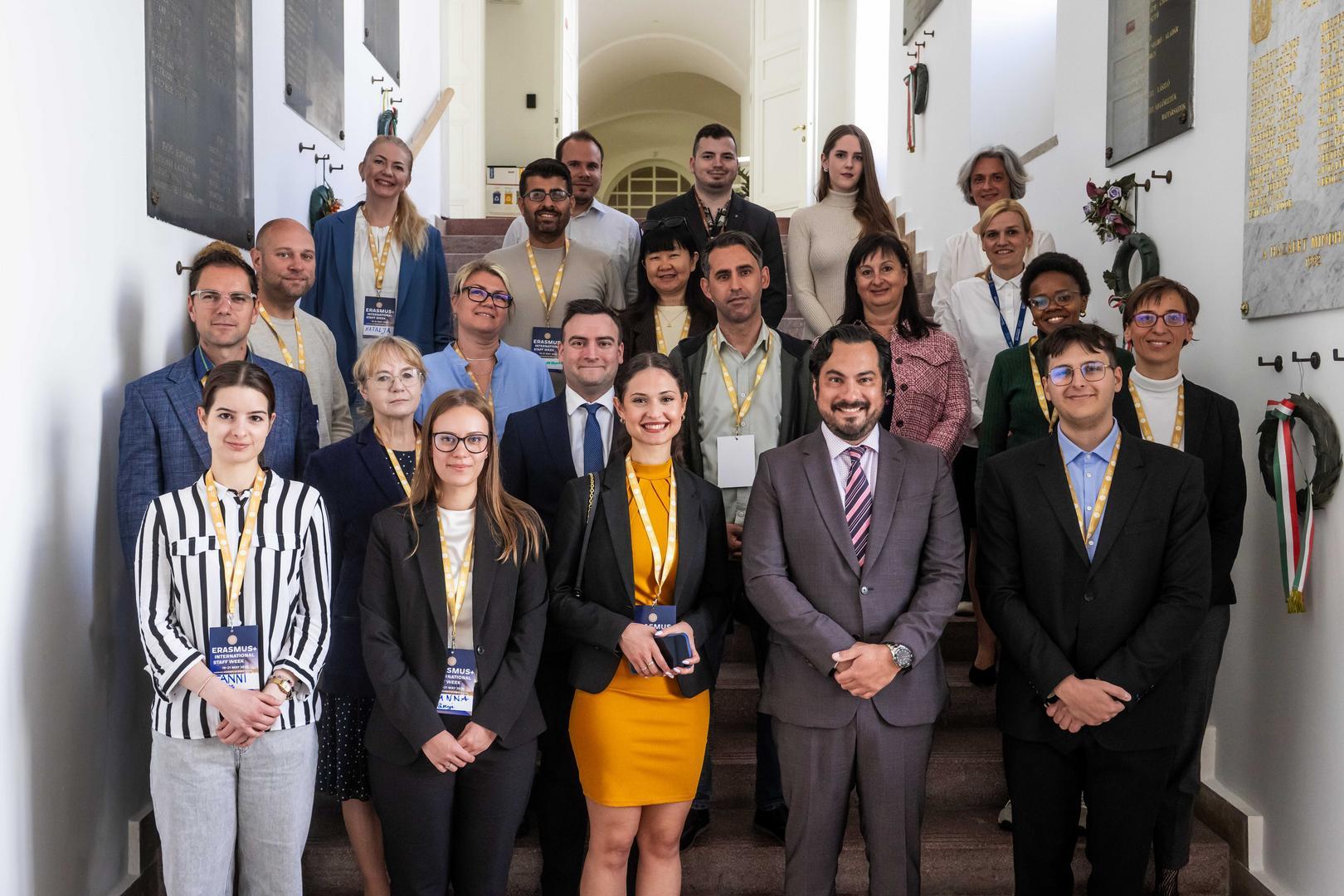
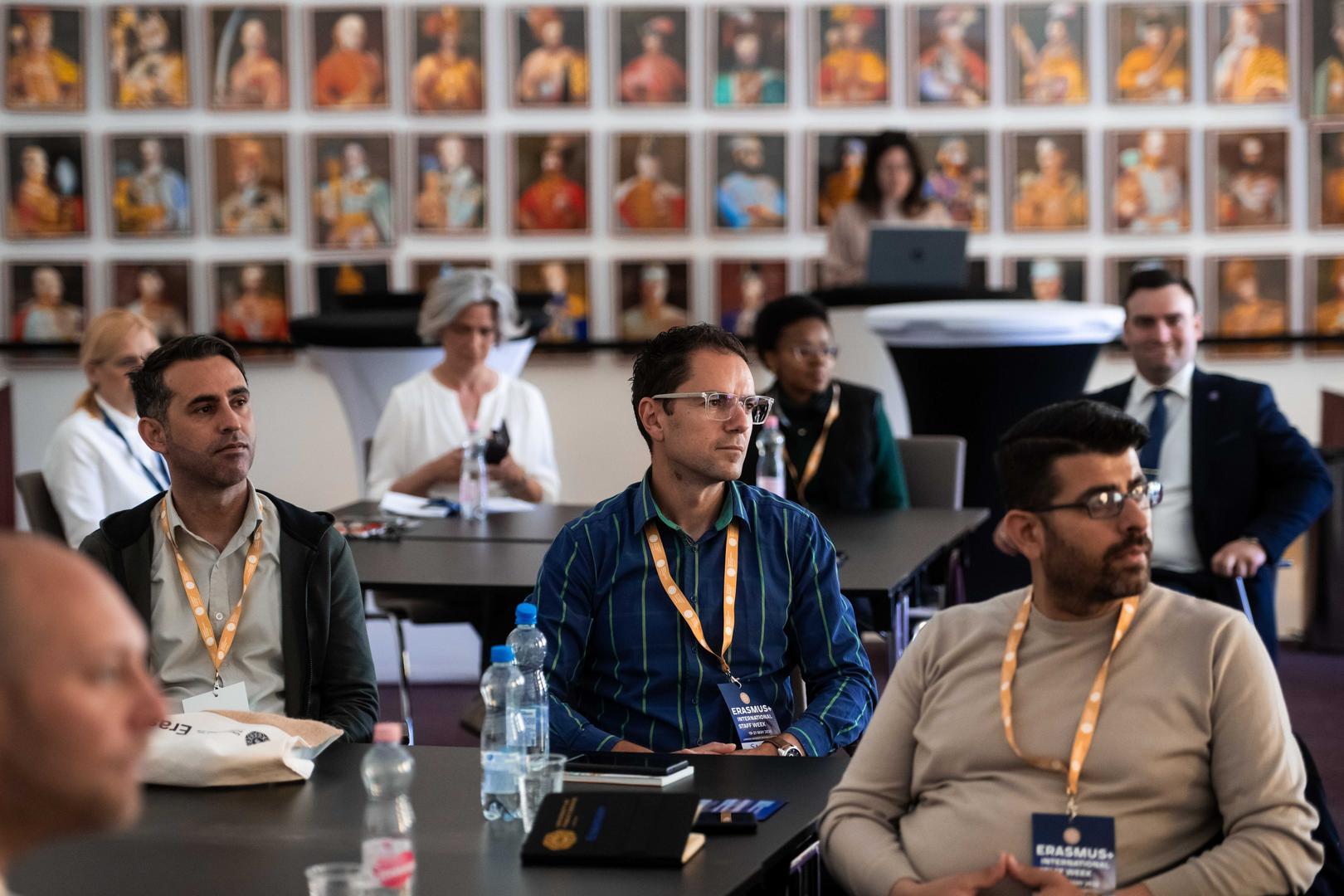
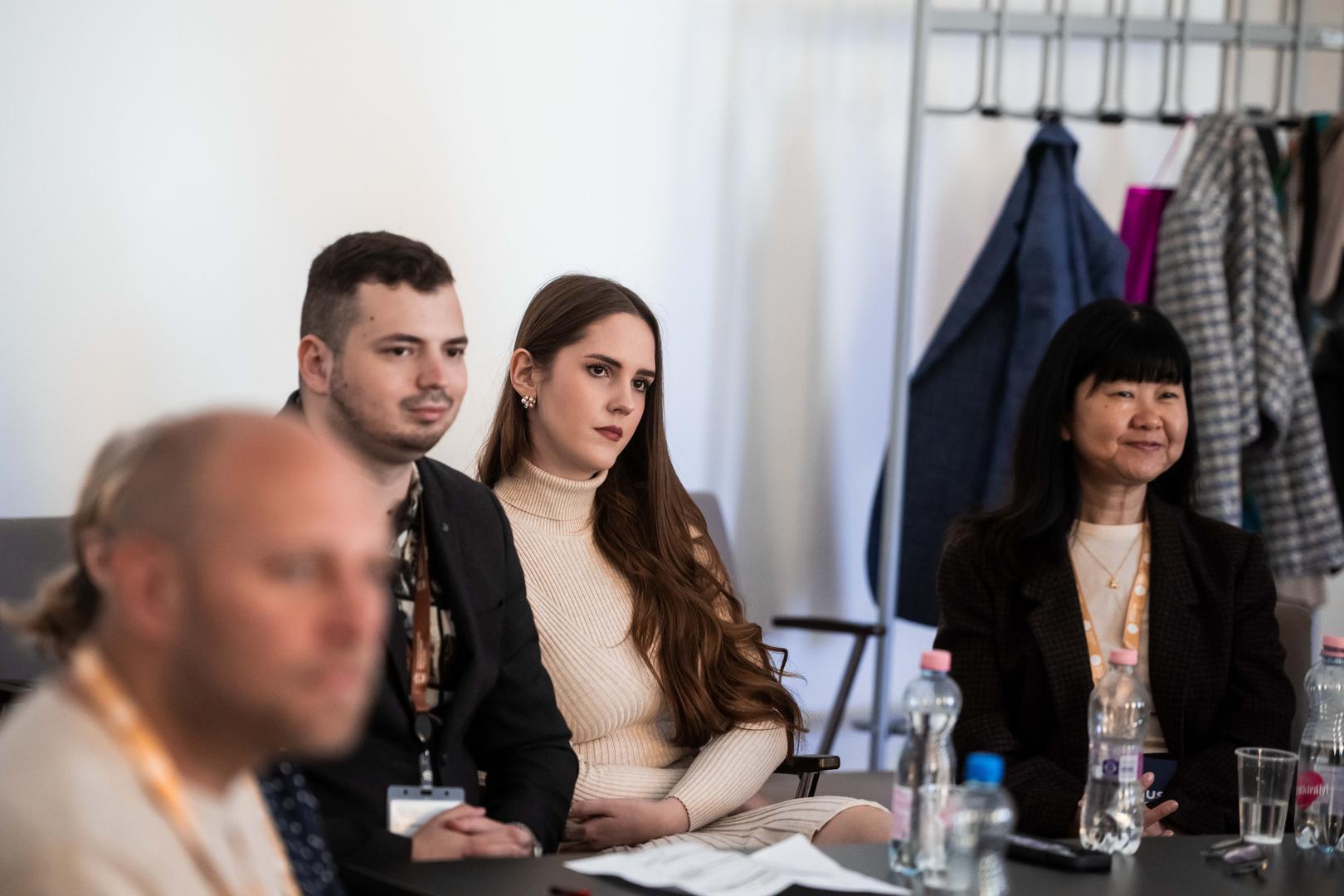
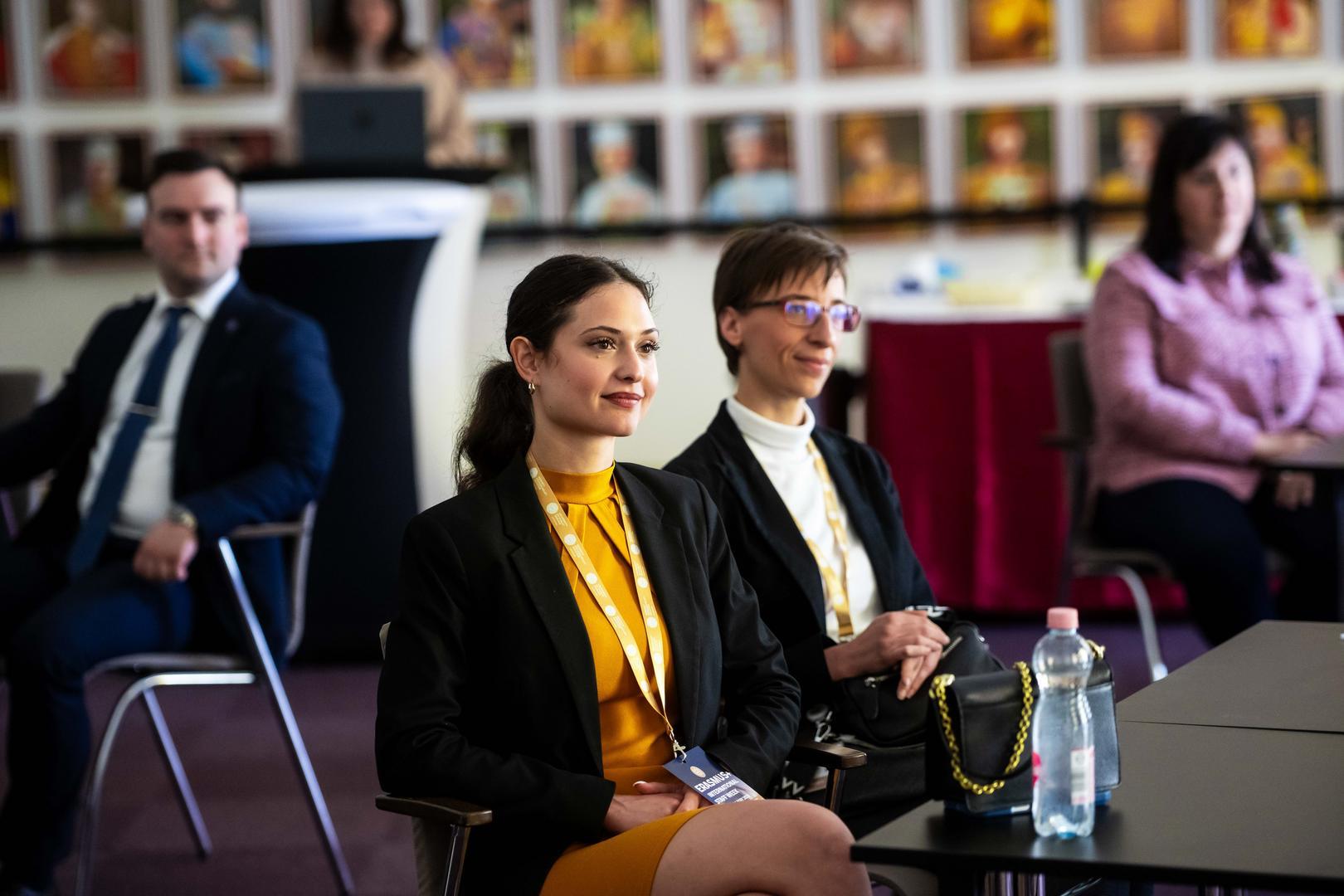
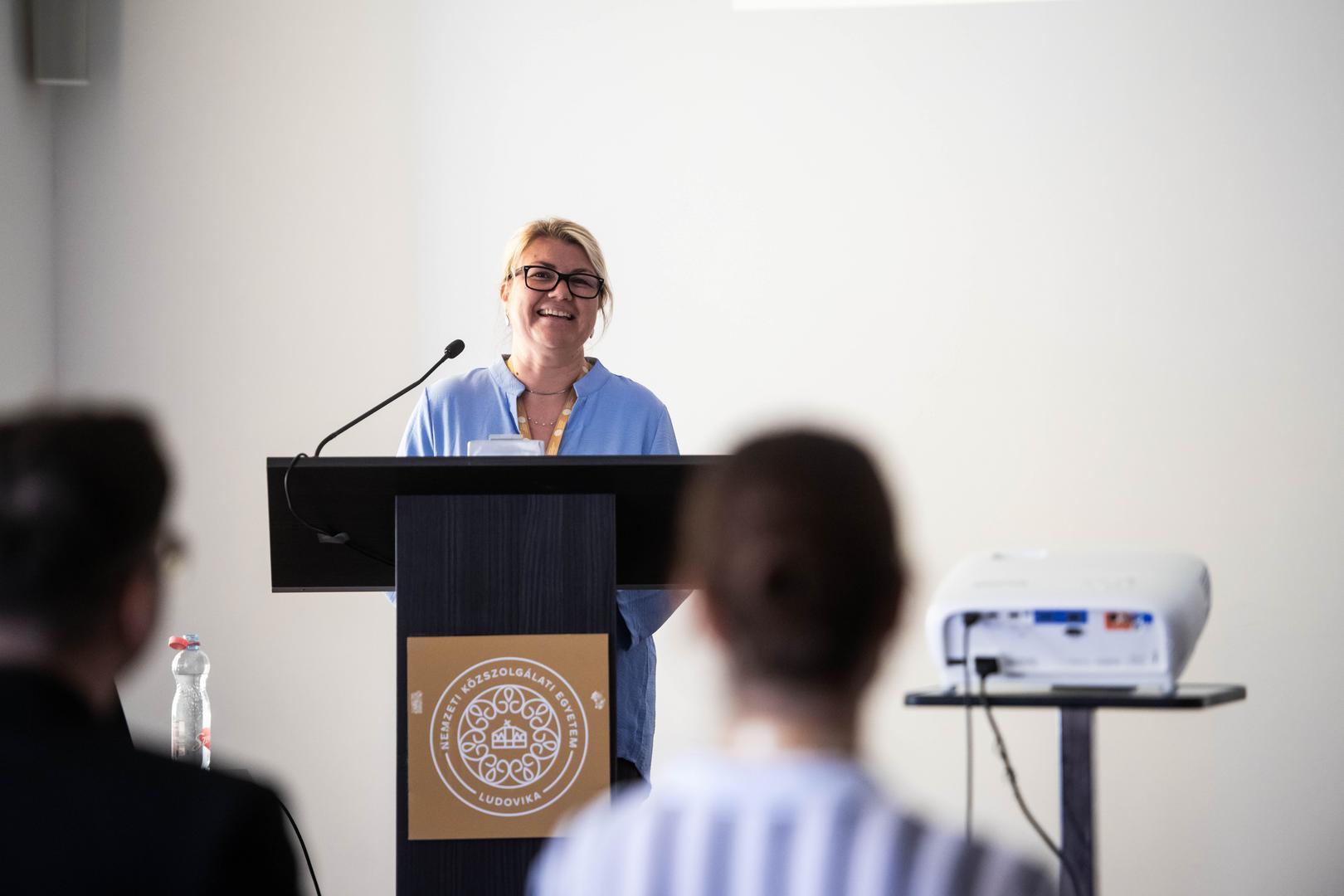
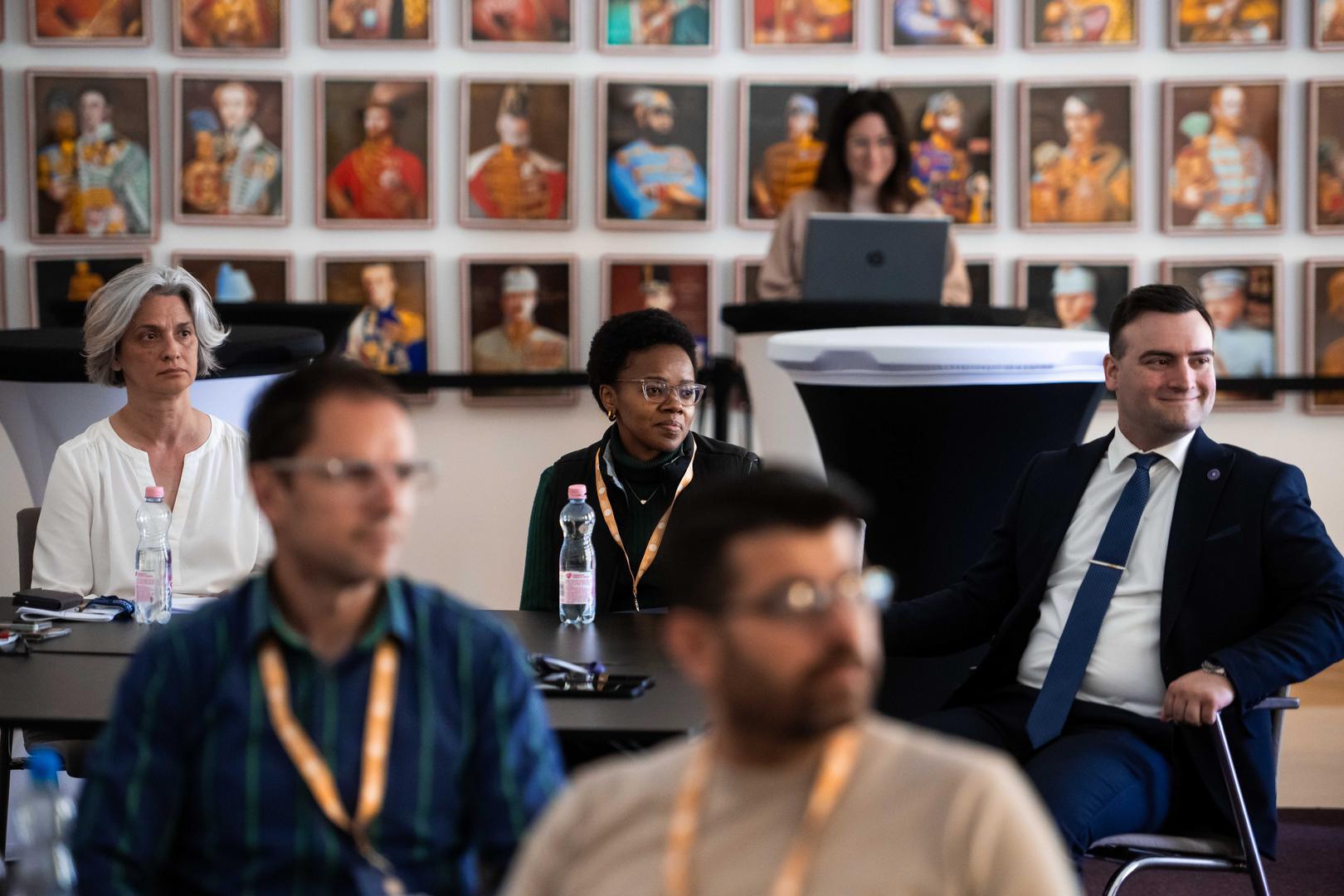
The International Office of the Ludovika University of Public Service organized its now traditional Erasmus Staff Week program series between May 19 and 21. During the three-day event, participants received a comprehensive overview of the university’s operations, met faculty coordinators, and learned about the structure and educational opportunities of the various faculties.
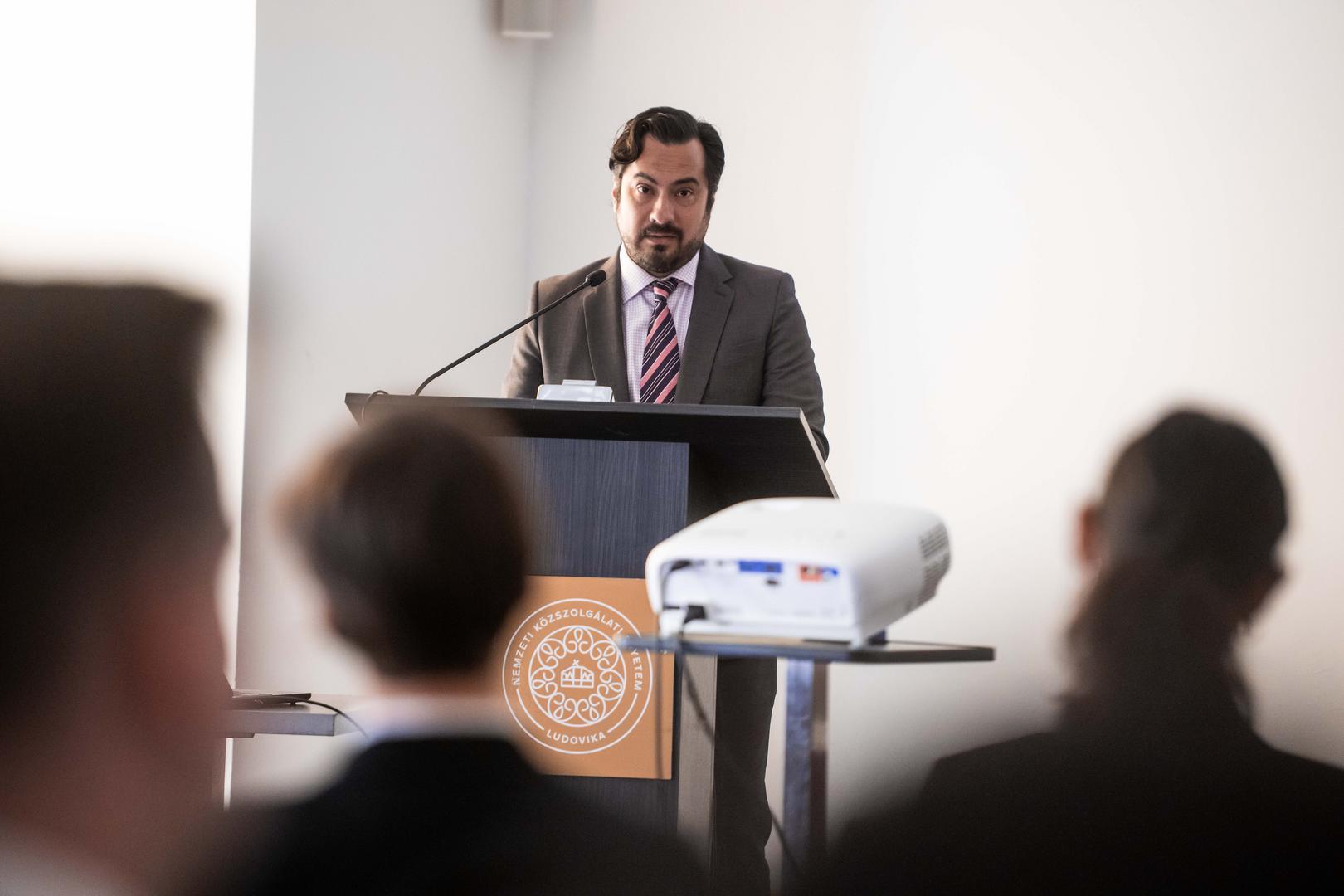
On May 19, the opening day of the program, the official opening ceremony was held in the university’s Zrínyi Hall, where Pier Paolo Pigozzi, Vice Rector for International Affairs at the university, welcomed guests arriving from, among others, Belgium, China, Kenya, Lithuania, North Macedonia, Poland, and Türkiye. As he stated, the event was much more than a simple professional program. “This week is about building connections,” he said, adding that the rapid changes in higher education, digitalization, and the challenges of internationalization can only be addressed effectively through cooperation. He encouraged participants to take advantage of every opportunity for professional dialogue, share their experiences, ask questions, and seek new forms of collaboration. In his speech, the Vice Rector also emphasized the university’s interdisciplinary approach. “Innovation and progress truly emerge when different perspectives meet,” said Pier Paolo Pigozzi. In closing, he wished all participants a productive and inspiring week.
Several faculties of the university also introduced themselves during the opening session. First, Noémi Farkas, Head of the International Office of the Faculty of Public Governance and International Studies, welcomed the participants. She recalled that the institution’s roots date back to 1808, while the modern Ludovika University of Public Service was established 15 years ago through the merger of several institutions. As she explained, the university combines rich traditions with modern, practice-oriented education. She highlighted that the institution’s core values include civic ethos, professional expertise, international openness, and patriotism. Referring to the current international situation, she spoke about the rapidly changing world. “Growing tensions, security challenges, economic uncertainty, and technological transformation are shaping everyday life and higher education alike,” the speaker noted, emphasizing that understanding these challenges requires openness and international dialogue. She explained that the faculty offers Hungarian- and English-language programs in areas including public administration, diplomacy, international relations, and cybersecurity. The programs aim to provide students with competitive knowledge that can be utilized in both domestic and international public administration, as well as within the institutions of the European Union. She also stressed the importance of practical training: not only academic experts, but also leaders from public administration and diplomacy participate in teaching. The faculty currently operates with 16 independent departments dealing with the key issues of public administration, economics, media, and international relations.
Lieutenant Zsolt Gábor Andrékó, staff member of the Scientific and International Department of the Faculty of Law Enforcement, explained the structure of the Hungarian law enforcement system, including the police, counter-terrorism services, disaster management, the penitentiary system, and customs authorities. He emphasized that student training is extremely rigorous: applicants undergo both physical and psychological aptitude assessments. “Students must not only acquire professional knowledge, but also learn to make decisions under stress, say no, and lawfully enforce their measures,” he highlighted. He pointed out that students hold a dual status: they are simultaneously university students and members of law enforcement agencies. Accordingly, they already participate in real assignments during their studies. He also addressed the faculty’s international relations, emphasizing that the goal is to strengthen the international standards of law enforcement education.
Ágota Somogyi and Norbert Liba, staff members of the International Office of the Faculty of Military Science and Officer Training, introduced the faculty’s operations and educational system. They explained that the faculty holds a unique role in Hungary, as it is the only institution that provides bachelor’s, master’s, and doctoral education for military officers. They also spoke about the Szolnok campus, where state aviation training takes place. Throughout the training phases, students study military leadership, logistics, military technology, and various specializations. Research conducted at the faculty focuses on areas such as security policy, drone technology, information systems, and environmental security.
Katalin Almási-Tóth, Erasmus coordinator of the István Nemeskürty Faculty of Teacher Training, spoke about the faculty’s mission to educate teachers who are capable of navigating the challenges of modern society and education. As she stated, “teaching is a mission and a public service.” The faculty offers practice-oriented training, where students gain experience in kindergartens, primary schools, and secondary schools from their very first academic year with the support of mentors. She also introduced the institution’s eight departments, which cover subjects such as Hungarian language and literature, history, geography, natural sciences, as well as English and German language education. She explained that the university also cooperates with several teacher-training institutions beyond Hungary’s borders to facilitate professional exchange and develop innovative teaching methods. At the end of the presentation, participants were encouraged to make the most of networking opportunities.
During the International Staff Week, not only professional work and the exchange of experiences were emphasized, but also opportunities to expand international networks. Representatives of partner institutions participated in several workshops between May 19 and 21. At the beginning of the event, an introductory “ice-breaker” training session was organized, providing a solid foundation for the later professional work. The central topic of the workshop held on the second day focused on student motivation in encouraging participation in the Erasmus+ program. Alongside the professional programs, special attention was devoted to presenting Hungarian culture and Budapest. Participants had the opportunity to visit the city’s main landmarks, including the Hungarian Parliament Building, and become acquainted with specialties of Hungarian cuisine. On the final day of the program, participants had the opportunity to meet representatives of all university faculties through short, ten-minute personal discussions, primarily focusing on faculty-specific professional topics and exploring potential areas for future cooperation.
Text: Éva Harangozó and International Office
Photo: Dénes Szilágyi