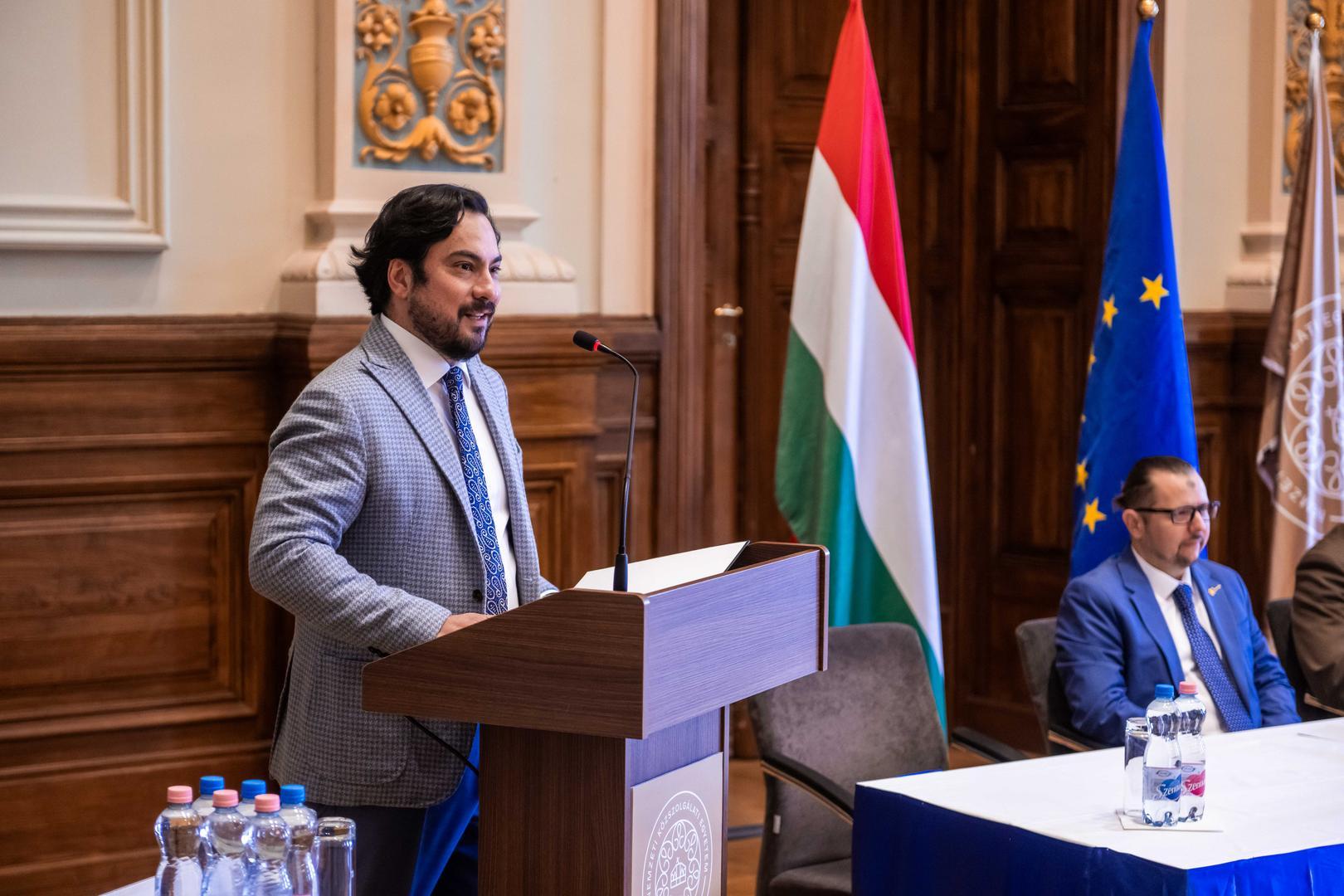
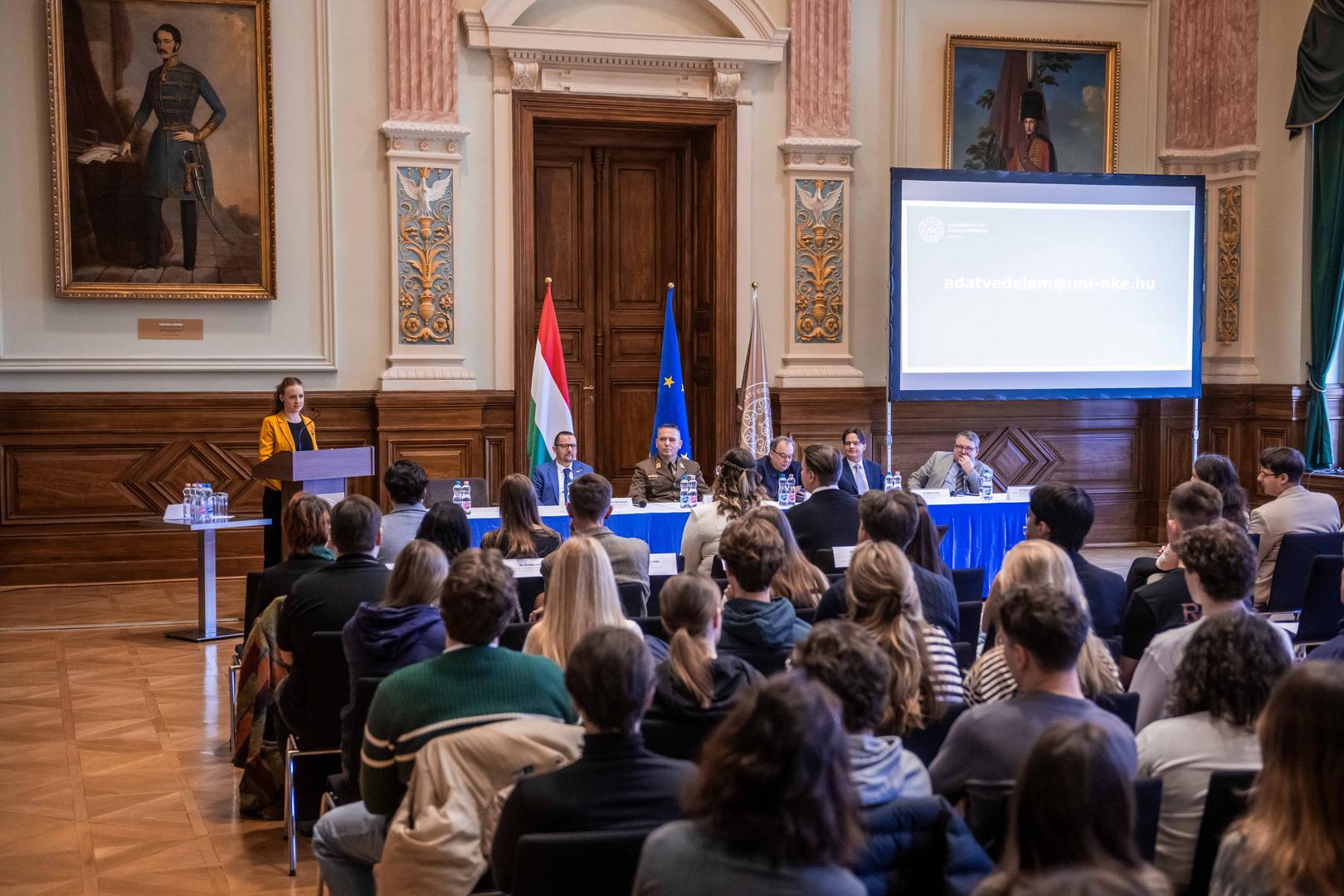
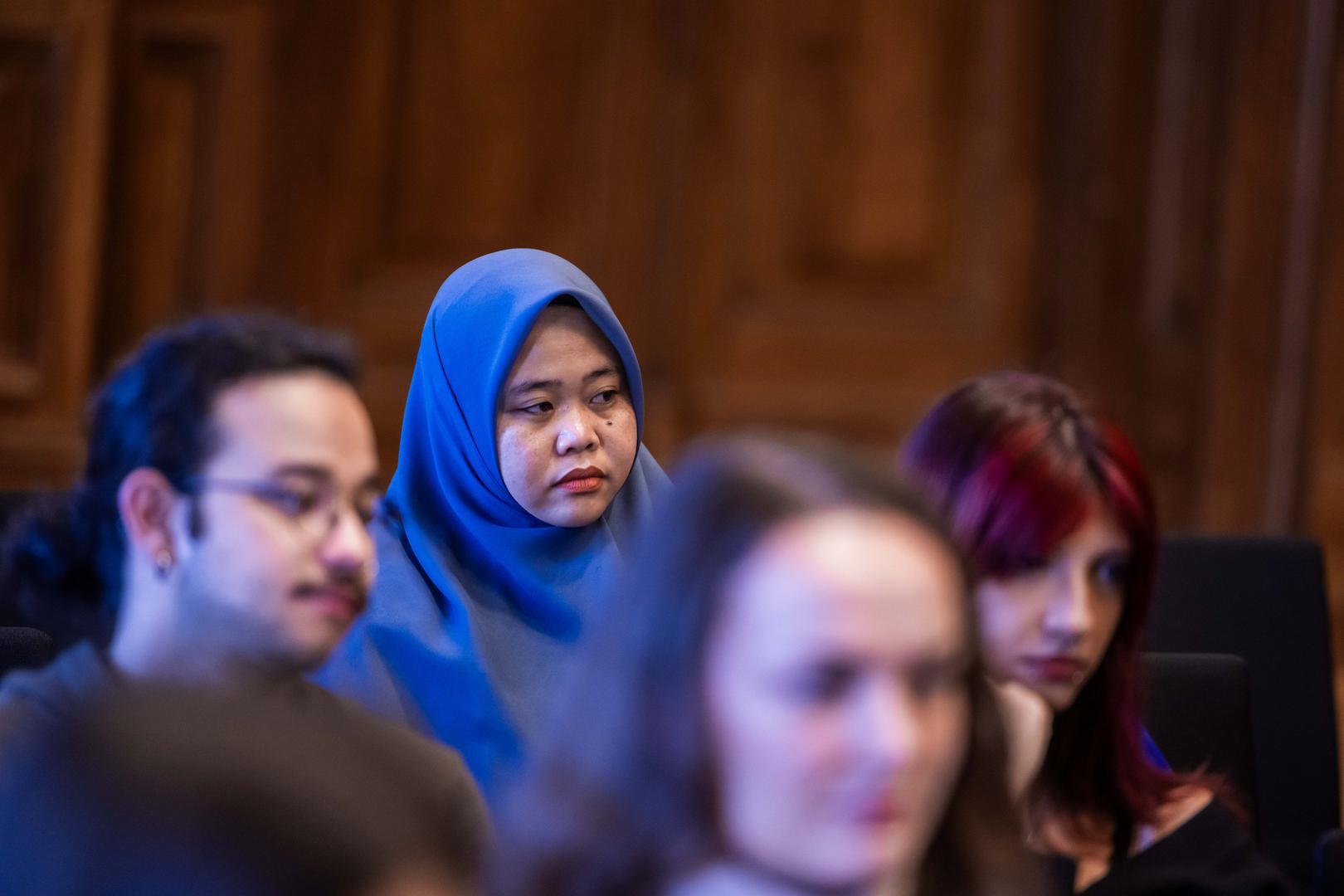
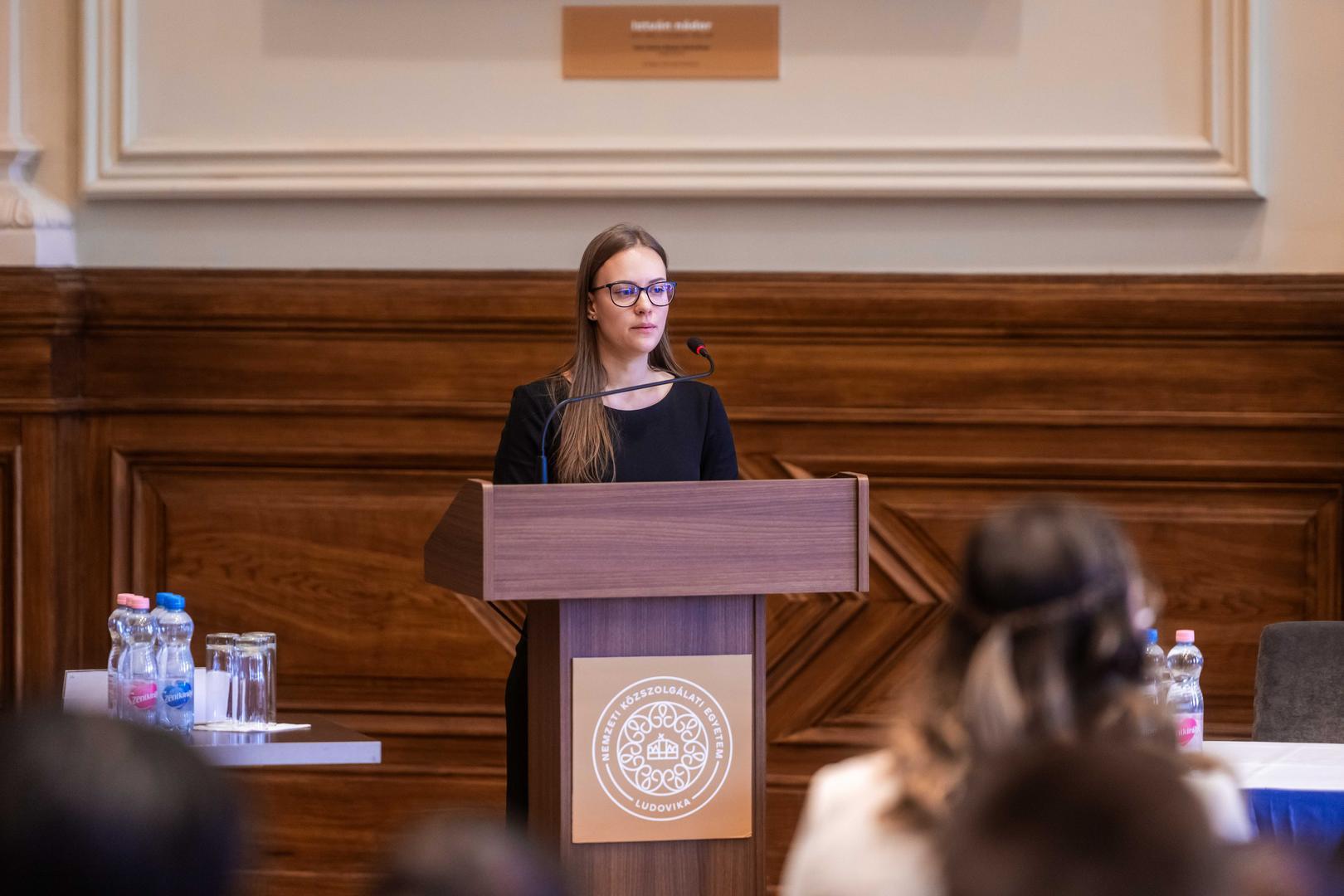
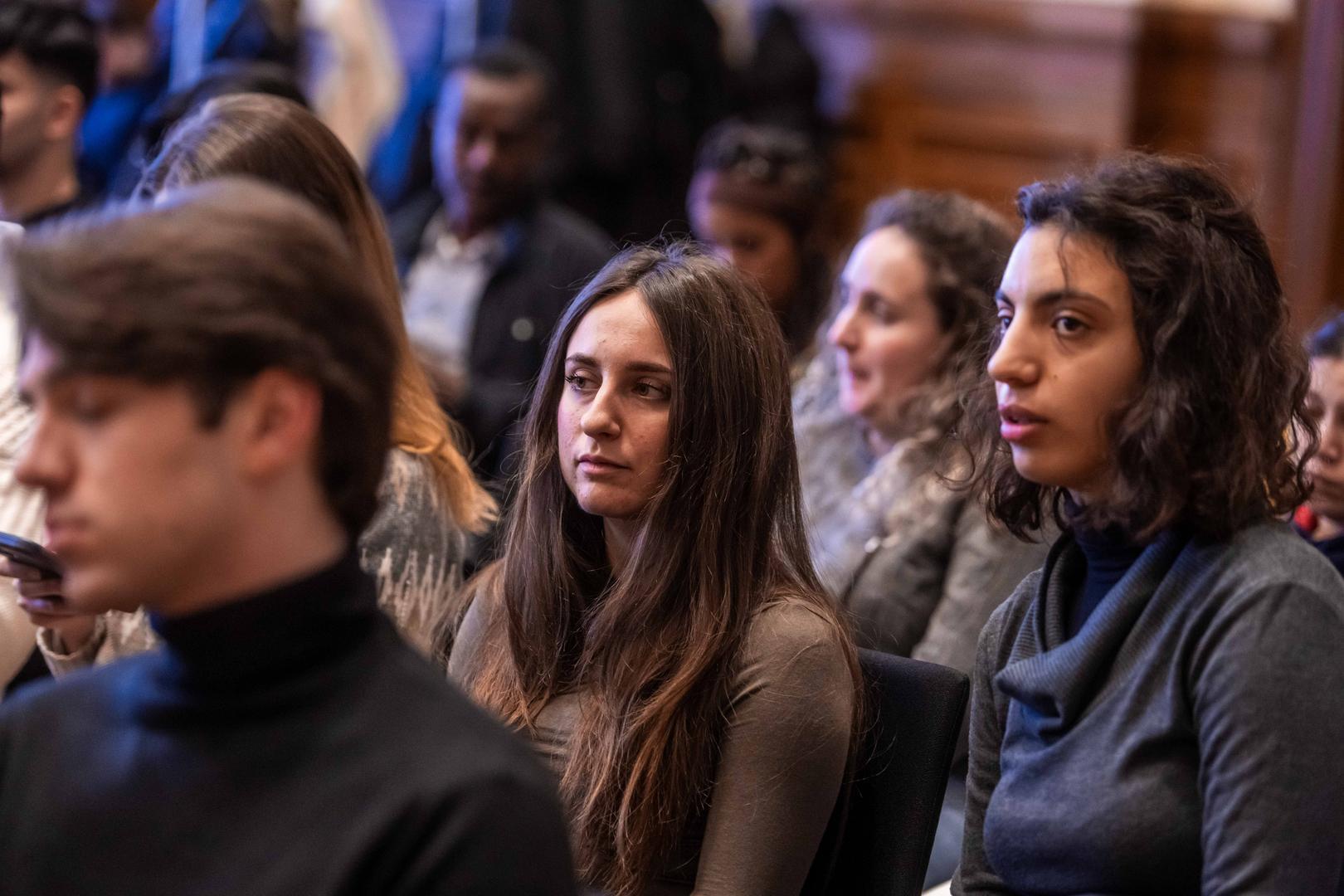
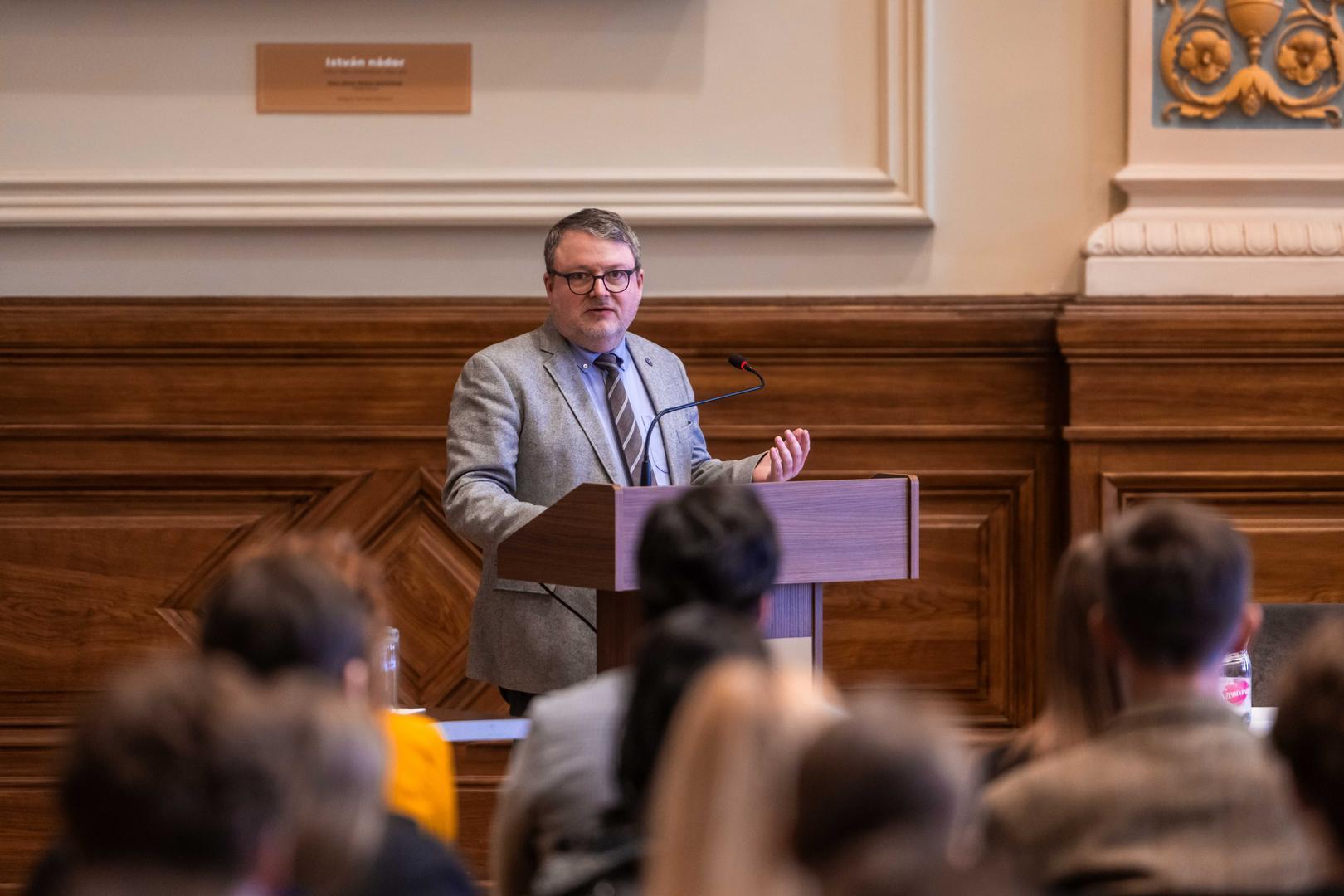
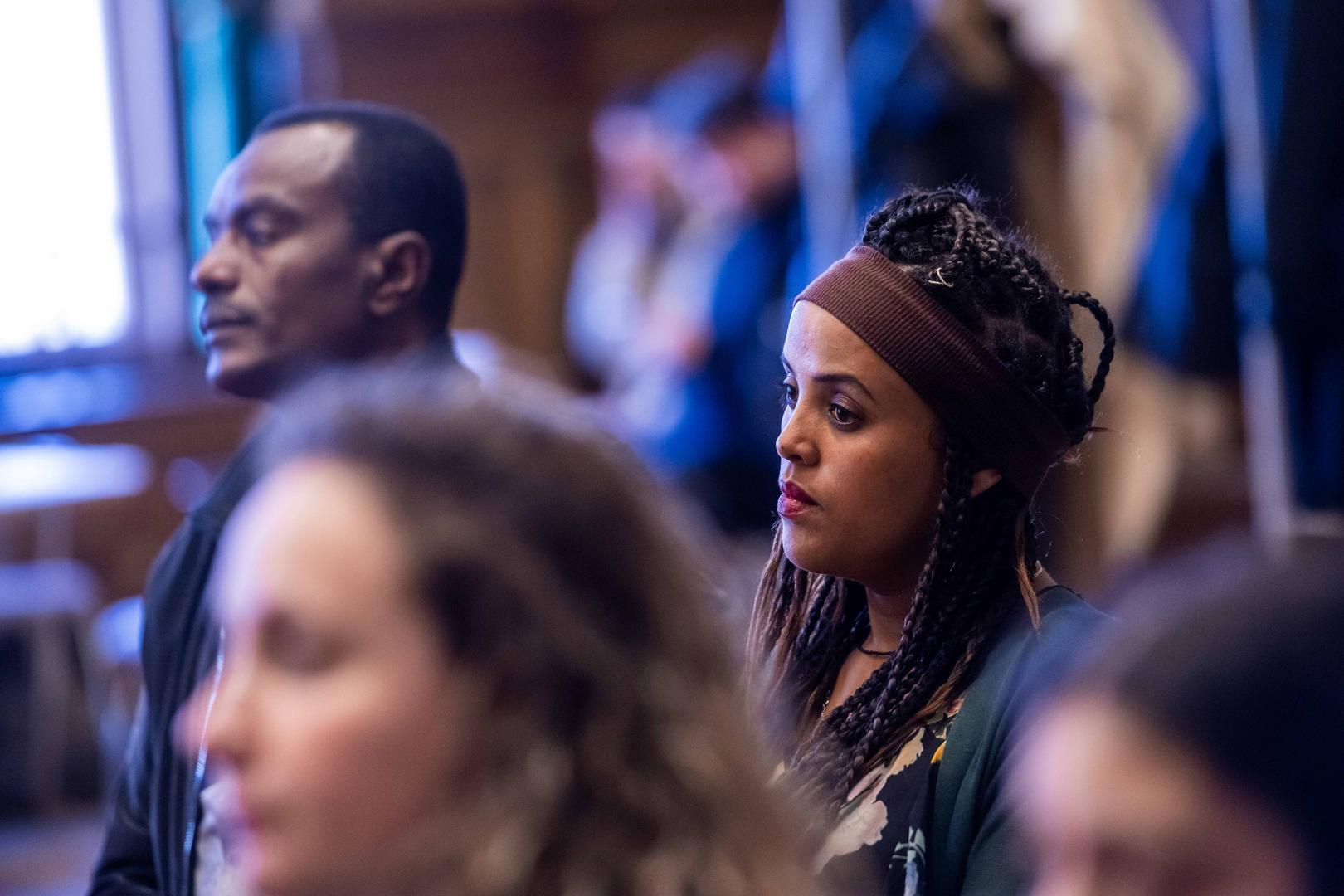
The Ludovika University of Public Service (LUPS) organized an opening ceremony for international students (Erasmus+ International Welcome Day) on February 18 in the university’s Széchenyi Ceremonial Hall. During the event, the LUPS faculties and available courses were presented, and the international students studying here were also able to learn about the activities of the Student Union and the Erasmus Student Network (ESN).
“Our university plays a unique role in cultivating public service values,” emphasized Pier Paolo Pigozzi, Vice-Rector for International Affairs, who in his welcome speech also highlighted that Hungary simultaneously preserves its national identity and is open to foreigners. He spoke about the relationship-oriented approach of Christian culture as well: “Christianity is not merely tradition or art, but a living relationship with God and with each other.” Finally, he emphasized the long-term importance of human relationships and international friendships.
Panna Ványi, Head of LUPS International Office, in her welcome introduced the support team that assists students with their everyday matters. As she said, the office consists of five departments, which work closely together to support international students.
Csaba Zágon, Head of the Scientific and International Department at LUPS Faculty of Law Enforcement (FLE), presented the specifics of uniformed training. As he put it, the faculty trains professionals for multiple law enforcement sectors. He then presented in detail the training structure and student diversity. Finally, he confirmed the importance of academic and administrative support.
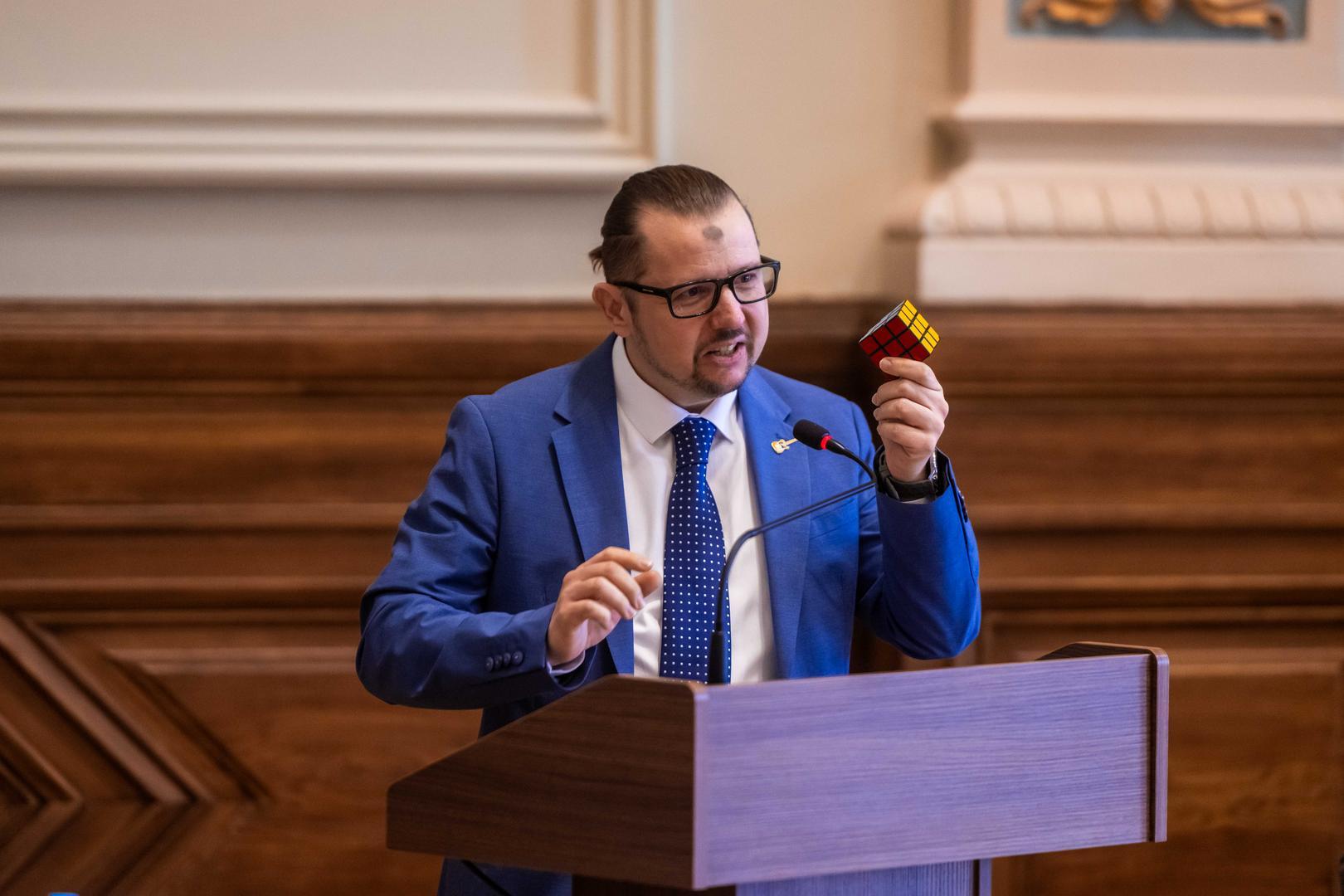
Péter Krisztián Zachar, Vice Dean for International Affairs at the Faculty of Public Governance and International Studies (FPGIS), used the example of the Rubik’s Cube to introduce Hungary and the complexity of governance. According to him, small countries like ours cannot afford the luxury of not understanding systems. He summarized the faculty’s educational philosophy as follows: “We don’t teach comfortable topics, but war, energy, sovereignty, migration, power.” In closing, he emphasized the importance of complex thinking: “Strategy is the essence of international relations.”
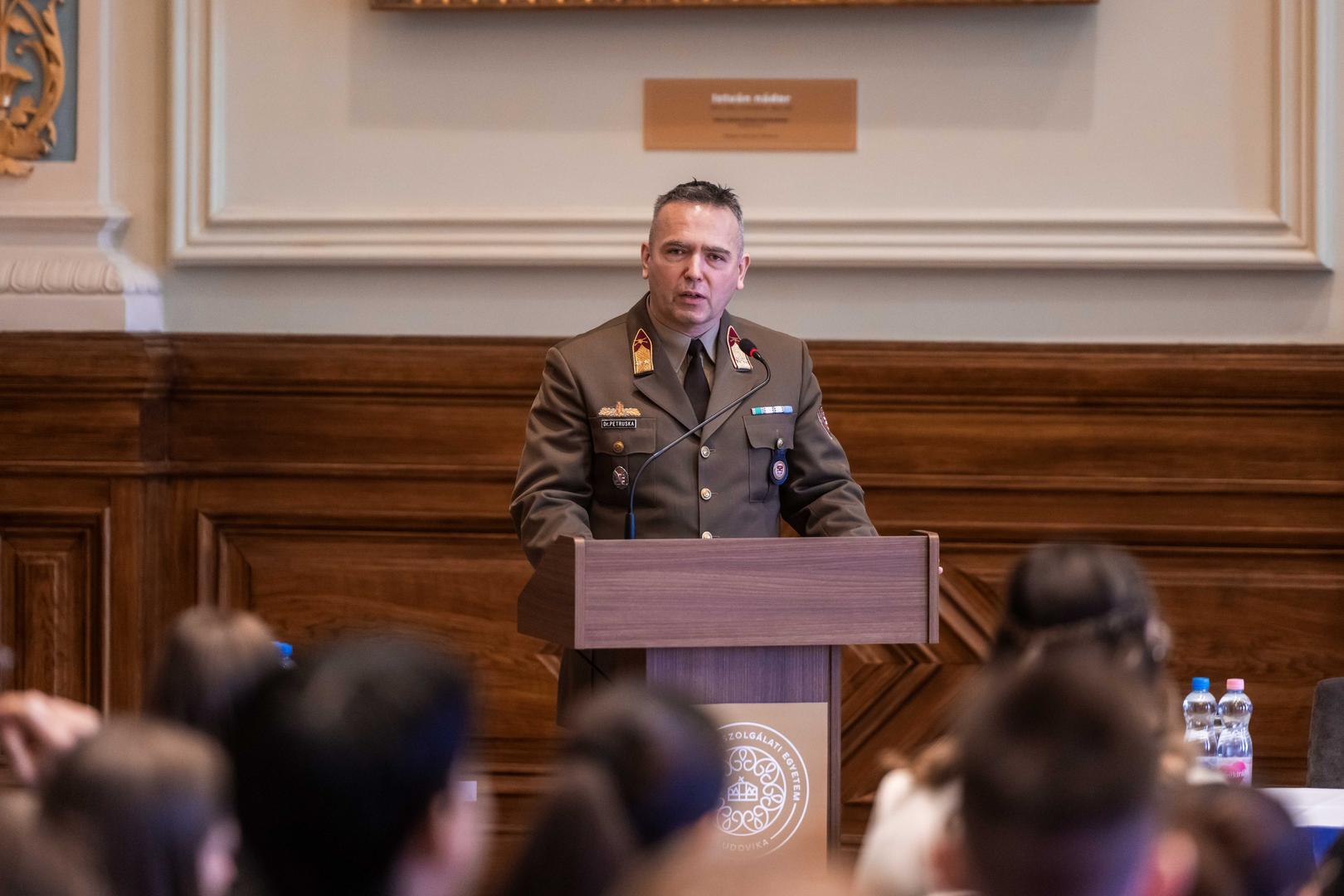
Ferenc Petruska, Vice Dean for International Affairs at the Faculty of Military Science and Officer Training (FMSOT), stated that today soldiers already work together with civilians, law enforcement, and intelligence. He highlighted the role of hybrid threats and cognitive warfare. He emphasized the value-based nature of the training and then detailed the officer training system: FMSOT hosts the only military training in Hungary, which has a tradition of more than 200 years, with bachelor’s, master’s, and doctoral programs also available, and the curriculum is coordinated with the Ministry of Defence.
Tamás Pálvölgyi, Vice Dean for International and Strategic Affairs at the Faculty of Water Sciences (FWS), described the professional foundations of the faculty as follows: “In water management education, we are Hungary’s oldest higher education institution, where sustainability, climate change, and biodiversity are our fundamental pillars, and where students can choose among four master’s programs and seven specializations.” The courses cover topics such as water policy, flood protection, and water-related conflicts. He highlighted international collaborations and campus life.
Gábor Kovács, Vice Dean for Academic Affairs at the István Nemeskürty Faculty for Teacher Training (INFTT), said in his speech that the university’s youngest faculty launched numerous new bachelor’s and master’s programs within one year. As he put it: “This is an unprecedented achievement in Hungarian higher education.” In his speech, Gábor Kovács emphasized that teaching also means knowledge transfer, personality development, and value transmission.
After the faculty presentations, Bálint Koós, Deputy International President of the Student Union, presented the functioning and role of the organization, placing special emphasis on the support of international students. As he said: “Our most important task is representing students, both Hungarian and international.” He explained that, among other things, they also deal with dormitory issues, scholarships, and student rights protection. Míra Batki, President of the Erasmus Student Network (ESN), emphasized the community-building role of the network, detailing the ESN activities, such as organizing healthcare support, cultural, and language programs. Finally, Cakra Diaz introduced the operation of the Stipendium Hungaricum mentor network: “This is a nationwide network present at every Hungarian university, where mentors assist with everyday matters.”
Text: Éva Harangozó
Photo: Dénes Szilágyi