Women, Water, and Survival: The Hidden Burden in Gaza
Water has been recognized by the world as one of the basic human rights, which is essential for life, health, and dignity. There have always been international agreements, policies and conferences that emphasize the need to ensure access to safe water for everyone. But is the world really capable of providing this right today on an equal basis? Do women enjoy full access to this right or do they bear a disproportionate burden when times of crisis arise?
What does water insecurity truly mean when even the most basic acts of hygiene become a daily struggle?
(S.A), a married woman and mother of two from Jabalia in northern Gaza, was forced to flee to the south during the war. She now lives in a tent, where access to water is extremely limited. Due to the long distances to water points, she can only collect small amounts of water. She carefully rations it—prioritizing drinking water and even reusing bathing water for washing dishes.
Her suffering intensifies during menstruation, as the lack of water and hygiene forces her at times to take medication to delay her period. Occasionally, she must go to other shelters just to be able to bathe. As a mother of a breastfeeding infant, she is also forced to clean her child using tissues and scented wipes instead of water, which has led to recurring skin problems. Her experience reflects how water scarcity is not only a matter of access, but of dignity, health, and survival.
Water security refers to reliable access to sufficient quantities of safe water to support health, livelihoods, and well-being.
The current conflict in the Gaza Strip has exacerbated an already weak water situation. Although the problem of the water crisis affects the entire population, women tend to face greater burdens due to their physiological needs and the traditional role of managing water at home. The gendered dimensions of water insecurity demonstrate that women bear a disproportionate share of the burden during humanitarian crises.
Gaza was in a dire water crisis even before the current war situation. The Palestinian Central Bureau of Statistics (PCBS) and the Palestinian Water Authority (PWA) indicate that most of the groundwater in the coastal aquifer of Gaza is unsuitable for drinking (PCBS & PWA, 2023). As a result, many households rely on limited municipal supply, small-scale desalination, or purchased water.
In fact, the water crisis in Gaza is not a new phenomenon caused by the situation of war but a long-standing structural issue. According to Mohammad Musleh, who led the Al-Maghazi Municipality, before the war, nearly 97 percent of the water in Gaza was not suitable for drinking (in terms of salinity and nitrates as the main water quality indicators) (Al-Resalah, 2026).
Humanitarian accounts show that much of Gaza’s water and sanitation infrastructure has been destroyed or damaged during the conflict, leading to scarcity (Oxfam, 2025).
According to recent reports, 80-90 percent of water and sanitation systems such as wells, pipelines, pumping stations, and treatment systems are destroyed or damaged (Al Jazeera, 2026). This has severely reduced water supply and according to current calculations, most individuals in Gaza receive less than 15–20 liters of water per person per day, far below the 50–100 liters per day recommended by the WHO (Al Jazeera, 2026).
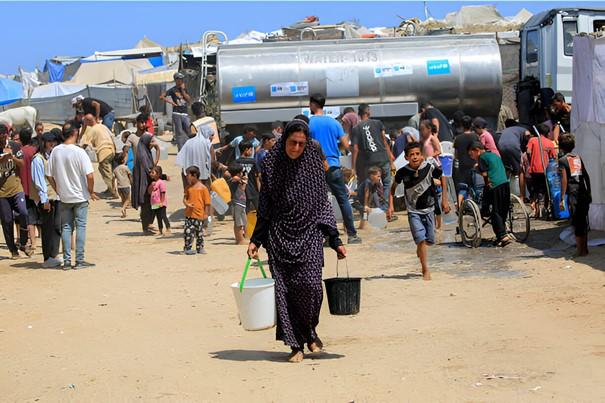
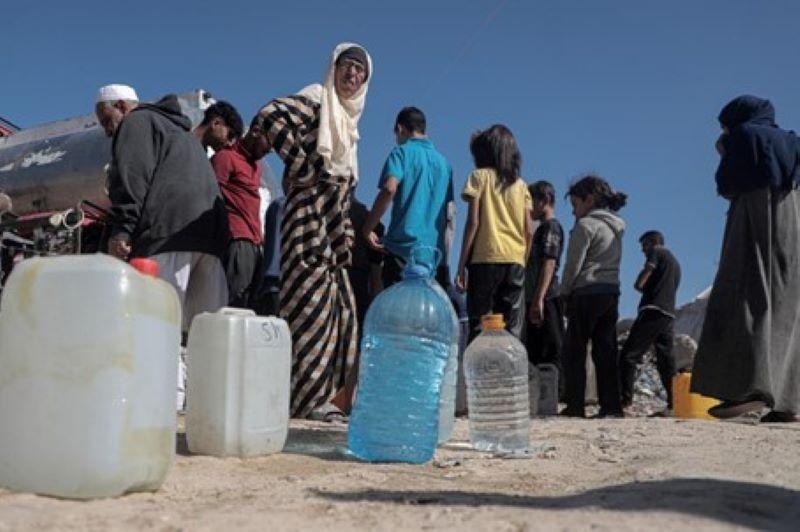
This water scarcity places a disproportionate burden on women. Household water-related chores —such as cooking, cleaning, laundry, and childcare — are primarily the responsibility of women. In times of water shortage, women are often tasked with finding and transport water to their households.
Humanitarian reports note that women wait in long queues at water distribution points or walk long distances to obtain limited amounts of water. These tasks require significant time and physical effort, especially in situations of displacement and insecurity (OCHA, 2025).
Women also have physiological needs that increase the importance of access to clean water. Menstrual hygiene management, pregnancy, breastfeeding, and postnatal care all require sufficient water. These needs become more difficult to meet when clean water is scarce, potentially affecting women’s health, well-being, and dignity (UN Women, 2024; WHO & UNICEF, 2023).
Water scarcity can also be problematic in overcrowded shelters or other temporary living situations, where maintaining basic hygiene, such as bathing and washing clothes, is challenging. These conditions affect not only physical health but also lead to psychological stress and a lower quality of life, making it a human rights issue that disproportionately impacts women.
The water crisis in Gaza illustrates how conflict amplifies existing vulnerabilities in the region and creates additional humanitarian challenges. Although water scarcity affects the entire population, women are frequently overburdened by both caregiving responsibilities and specific physiological needs.
Understanding these gendered effects is essential for developing effective humanitarian interventions and water governance mechanisms. Water security is also linked to human rights, human dignity, and social well-being; therefore, protecting water infrastructure and ensuring equal access to safe water should be a priority in conflict settings.
Text: Rama Khalil