Water and Equality: The Unseen Struggle Behind Global Conflicts
Preparing for World Water Day in 2026 and having just passed International Women’s Day at the beginning of March, it is the perfect time to raise the topic of ‘Water and Equality’. In today's world, marked by international tensions and escalating conflicts, we might ask: why is it so important to talk about issues of water and equality? My goal is to reveal at least some aspects of the answer here. First of all, if we look around the world in 2026, we unfortunately see drastic restrictions on women's rights in many places. We see these setbacks not only in areas facing severe, systemic human rights crises, but increasingly within the borders of major regional and global economies across Europe, Asia, and the Middle East.
On the other hand, while these high-profile, geopolitical rollbacks of women’s rights rightfully dominate global news, there is a quieter, more pervasive struggle unfolding every day in the background. It doesn't always make the front pages, yet it directly dictates the freedom, education, and futures of millions of women and girls. I am talking about the daily reality of water access.
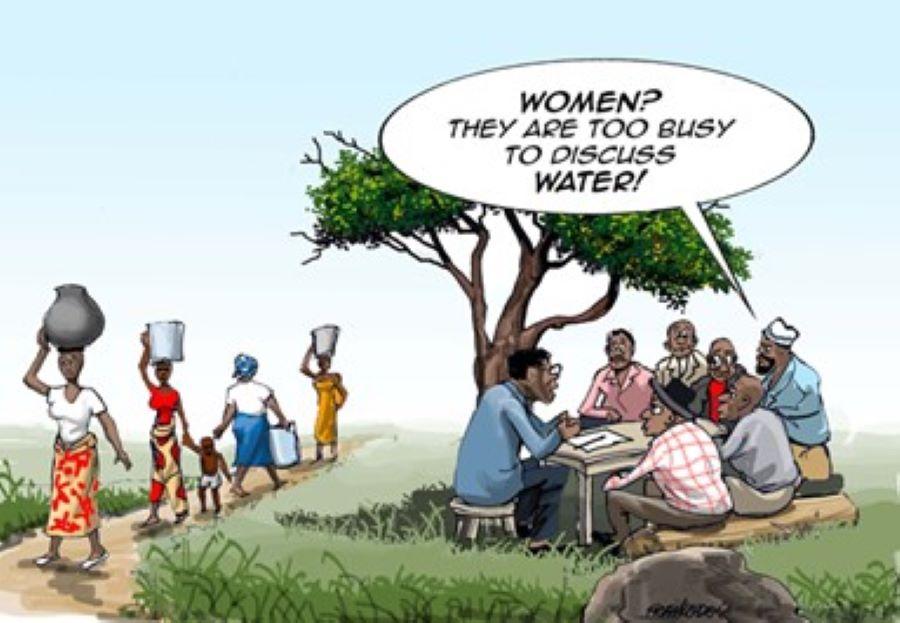
When fundamental rights are restricted on a national scale, it often mirrors the deeply rooted, systemic inequalities at the household level. This brings us to a glaring paradox at the heart of the global water crisis. At the micro-level, women are the primary experts and managers of this resource. Globally, in 80% of households without water on the premises, it is women and girls who carry the physical and time burden—spending an estimated 200 million hours every single day collecting and rationing it for their families. They are the unpaid guardians of survival.
Yet, when we move from the village well to the decision-making tables—where the actual decisions about policies, budgets, and infrastructure are made—these women disappear. A report by the World Bank further highlights this, finding that women make up only 18% of the global water utility workforce, and a mere 23% of its engineers and managers. At the very top, research from the International Union for Conservation of Nature (IUCN) notes that women hold only 15% of senior leadership positions in environmental sectors worldwide.
To understand why women are missing from these boardrooms and ministries, we must look at why they are absent from classroom. In the developing world, the answer is tied to "time poverty." According to UNICEF, every hour a girl spends walking to a distant well and carrying heavy containers back home is an hour stolen from her education. A young girl cannot focus on mathematics or science if her day begins and ends with an exhausting trek for basic survival needs.
Furthermore, when schools lack adequate Water, Sanitation, and Hygiene (WASH) facilities, the impact is highly gendered. Millions of teenage girls are forced to miss school during their menstrual cycles simply because there is no clean water or safe, private toilet available.
This daily household burden disrupts the educational pipeline. We must ask ourselves: if a girl is forced to drop out of school at age thirteen because she spends her days fetching water, how can she ever become a hydrologist, a civil engineer, or an environmental minister?
However, the exclusion of women from water governance is not solely a problem of the developing world. Even in fully industrialized nations where water flows freely from a tap, boardroom in water utilities and ministries remain heavily male-dominated. For decades, the technical qualifications required to reach these governance positions—such as hydrology, civil engineering, and large-scale infrastructure planning—have been perceived as traditional "men's jobs."
Women in developed countries may not be carrying heavy jerrycans, but they still face invisible barriers: systemic biases, a historical lack of female mentorship in STEM (Science, Technology, Engineering, and Mathematics) fields, and corporate cultures that historically favour men for leadership roles in public works and environmental management. Whether it is an issue of physical time poverty in the Global South or deeply rooted professional stereotypes in the Global North, the result is the same: the global water sector is missing half of its potential talent.
So, why is it so important to talk about water and equality amidst global conflicts? Because we cannot authentically advocate for women's political rights and social empowerment on the world stage if we do not first address the systemic barriers holding them back. We cannot solve a global climate and water crisis while systematically excluding the very experts who manage it on the ground every day.
Whether it means building a working water tap in a rural community to free a girl's time for school or breaking the glass ceiling for a female hydrologist in a modern utility company, water equality is fundamental. It is not just about infrastructure or hiring quotas; it is the crucial first step toward genuine, lasting equality
Text: Viktória Kesztyűs