The Weight of Water: A Woman’s Memory of Scarcity
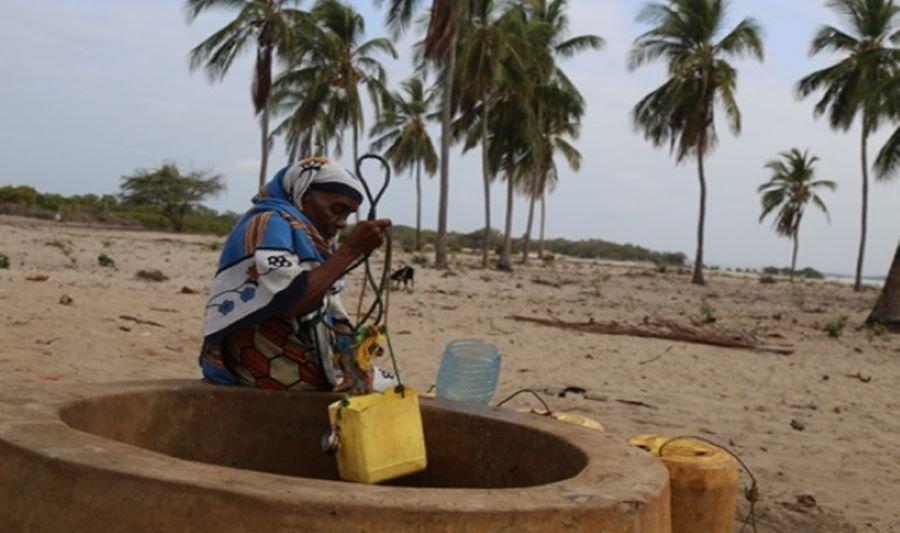
When I think of home, Kwale County on the Kenyan coast, the first images that come to mind are the red soil, tall coconut trees swaying in the heat, scattered shrubs, and long dusty paths. But what I remember most vividly is the absence of water.
In Kwale, water was not simply a resource. It was a privilege. Many mornings began with the same question: Where will we find water today? Sometimes we planned to collect water from a spring that had been dug weeks or months before. But just as often, someone would return with the news we dreaded: the spring had dried up. We would have to search elsewhere.
The springs we relied on were shared by everyone - people, livestock, and wild animals alike. They were small lifelines scattered across a dry landscape.
From a young age, collecting water was part of daily life. The younger children carried two 5-liter jerricans, one in each hand. The older ones carried 20-liter jerricans. Boys balanced them on their shoulders, while women and girls tied a rope around the container so it could rest against their backs during the long walk home. We sealed the corks tightly with nylon so the precious water would not spill along the way.
To draw water from the springs, we used a calabash, a dried fruit with a hard shell that had been cut in half. It served as a scoop, dipping into shallow pools of muddy water.
The journeys to collect water were never easy. The path was long and often uphill, the sun relentless. Some days brought an additional danger: safari ants, which built their colonies close to water sources. They moved silently across the ground, and by the time you noticed them crawling up your legs, it was already too late. Their bites were painful and unforgettable.
When we finally returned home, the water had to last. It was used sparingly for: cooking, washing clothes, cleaning utensils, and bathing. Every drop mattered because once the containers were empty, it meant another long journey back to the spring. Water determined the rhythm of our lives.
Later, I attended a boarding secondary school in Kitui County, another region defined by dryness. Kitui experienced the extremes of nature: heavy rains during the wet season and severe drought during the dry months.
The school had a large storage tank near the entrance of the school compound that collected rainwater. When the water level dropped too low, we developed creative ways to reach it. I vividly remember tying my orange bucket to the end of a rope and throwing it deep into the tank so that it could sink fully and fill before I slowly pulled it back up.
Water was one of the most valuable possessions a student could have. Buckets filled with water were hidden under beds and secured with padlocks to prevent theft. Protecting your water supply was as important as protecting your books or school uniform.
Even then, sharing was inevitable. At the showers, girls without water often stood outside asking to borrow some. We used to joke that by the end, they sometimes used more water than the person they borrowed from. Humor became a way to cope with the constant shortage.
Sometimes, there was simply not enough water for a proper bath. We learned to sponge bathe using as little as one liter of water.
The last time I remember doing this was during my final examination year in 2008. That season brought one of the worst droughts we had experienced. The situation became so severe that the school administration considered sending students to the nearest river to fetch water.
Drinking water was even more worrying. The water we consumed was often brown with suspended soil. To make it clearer, the school used alum (aluminum sulfate), a chemical that binds soil particles together so they sink to the bottom. While this helped settle the mud, it was the only treatment method used. Additionally, the water was acidic. As a result, many students, including myself, frequently fell ill. I suffered from amoeba infections several times.
Even our agriculture classes reflected the harsh reality of water scarcity. For our final agriculture exam, we were required to plant and grow a crop. The options included crops like carrots and onions. Because of the drought, most of us chose onions; they required less water than carrots.
Even preparing the soil was a challenge. The ground was dry, hard, and compact. We used a jembe, a traditional hand-held hoe common in East Africa, to break the soil and prepare the land.
Watering the crops required determination. Our garden plots were located downhill, at the far end of the dormitory grounds, while the concrete water tank stood near the entrance of the school compound. Each watering session required three or four trips carrying a 20-liter jerrican down the hill. Each step reminded us how precious water truly was.
After growing up in places where water defined daily survival, moving to Nairobi felt like entering a different world. There were occasional shortages, of course, but they were manageable. You learned to adapt doing laundry on days when water was available, storing extra when you could.
Yet even in the city, the memory of scarcity never left me. My siblings once pointed out something about me that I had never fully noticed before. Whenever they told me that we were moving to a new house, my first question was always the same: “Does the place have a borehole?” Only later did I realize what that question revealed. Growing up without reliable access to water leaves a mark that follows you long after the drought ends.
Looking back, I now understand that the story of water scarcity is also a story about women. In many communities, it is women and girls who carry the responsibility of collecting water for their households. It is women who walk the long distances, balance the heavy containers, and carefully ration the water once it reaches home.
These daily journeys often go unseen and uncounted. Yet they shape childhoods, education, health, and opportunity. My own experiences growing up have taught me to never take water for granted. Because there is a profound difference between two situations:
Waking up and deciding not to shower. And waking up to find that there is not a single drop of water available to shower with. One is a choice. The other is a reality millions of women live with every day. And that reality carries a weight heavier than the jerricans we once carried home.
Text: Druscilla Mutevu