The Ludovika University of Public Service hosted its Map of Power conference on March 31, 2026, to explore emerging geopolitical challenges and the shifting dynamics of the global order. Organized by the Ludovika University of Public Service’s Directorate General for International Affairs, the event aimed not to simply describe geopolitics but instead examine the underlying logic of power transformations in the 21st century. Discussions were approached from Hungarian perspective, with particular attention to foreign policy, energy security, geopolitical competition, and Europe’s evolving power structures.
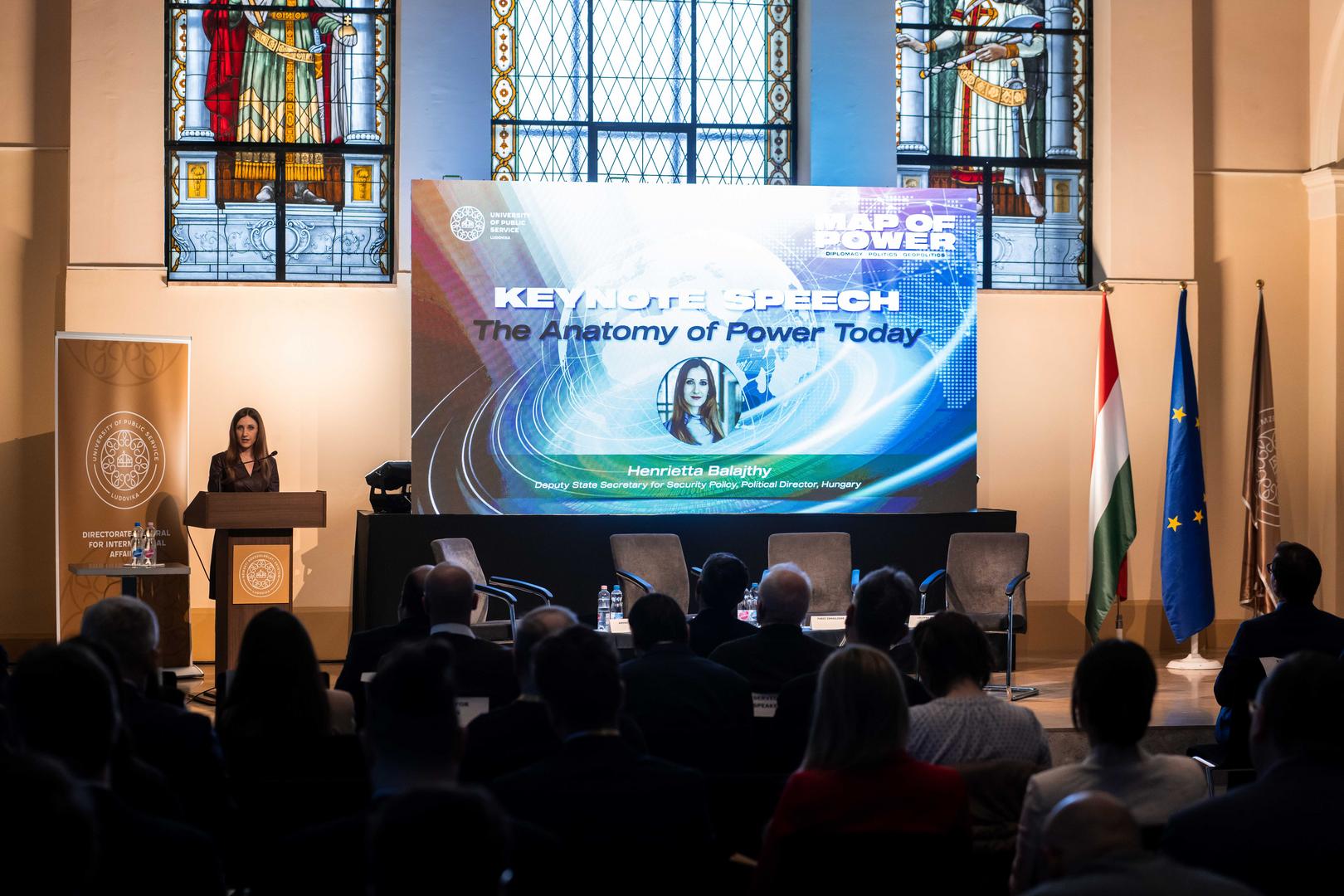
In her opening remarks, Henrietta Balajthy, Deputy State Secretary for Security Policy, highlighted the profound impact of the ongoing Russian invasion of Ukraine. She noted that, 35 years after the communist system fall, Hungary and Europe face renewed insecurity, which deeply shakes our sense of safety. According to her, Europe’s decreasing influence over the Ukrainian peace process indicates shifting centers of power. She also pointed out the internal tensions within the European Union, where regulatory frameworks on democracy and social issues coexist with a decline in solidarity among member states towards the leadership of the EU.
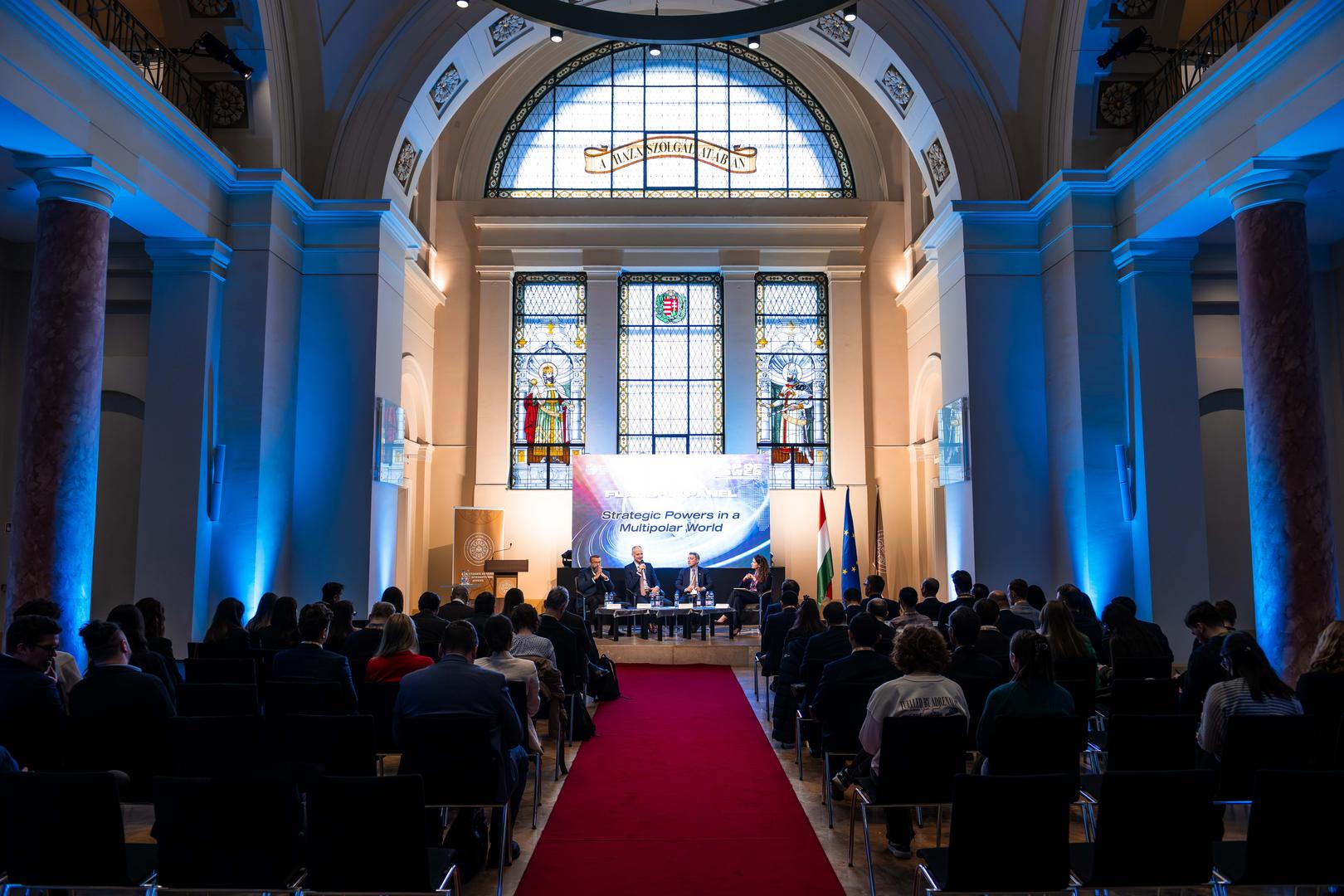
The Flagship Panel, titled “Strategic Powers in a Multipolar World”, examined how power is defined and exercised. Liliana Śmiech, Director General for International Affairs, raised the question of whether influence or self-positioning better reflects power. Amine Laghidi, President of International Mining and Energy Congress, approached the topic from an economic and organizational perspective, while Márton Ugrósdy, Deputy State Secretary, Prime Minister’s Cabinet Office, emphasized the protection of national sovereignty. Fariz Ismailzade, Member of the Azerbaijani Parliament, underscored how smaller states like Azerbaijan can exercise influence through strategic positioning, particularly in energy connectivity, security and East–West cooperation. Looking ahead, participants agreed that international relations will become increasingly complex. Countries such as Hungary and Azerbaijan will need to navigate through political and economic pressure coming from major global powers.
In the Fireside Chat titled, “Europe Between Empire and Sovereignty”, Calum T. Nicholson, Director of Research of Danube Institute, explored how perceptions of power are shaped by structural biases and privileges, arguing that liberal systems are currently struggling. Albert Świdziński, Director of Analysis, Strategy&Future Institute, complemented those thoughts with a historical point of view by discussing territorial disputes and border tensions, particularly those linked to Ukraine, while also referencing to expansive impacts of Brexit and transatlantic relations.
The panel “Who Actually Holds Power in Europe Today?” was moderated by Márk Vargha, Advisor at the Directorate General for International Affairs. Speakers included Boglárka Ballester-Bólya, Ministerial Commissioner at the Ministry for European Affairs, who expressed Hungary’s cautious stance on EU expansion and deeper integration, and Francesco Grillo, Director of Vision Think Tank, who emphasized the importance of cooperation in addressing shared challenges, particularly energy security.
Later sessions turned to the cultural and structural dimensions of power. In “Fireside Chat II”, John Hutchinson, Author, Professor of London School of Economics and Balázs Tárnok, Director of John Lukacs Institute, examined how war shapes national identity, memory, and authority.
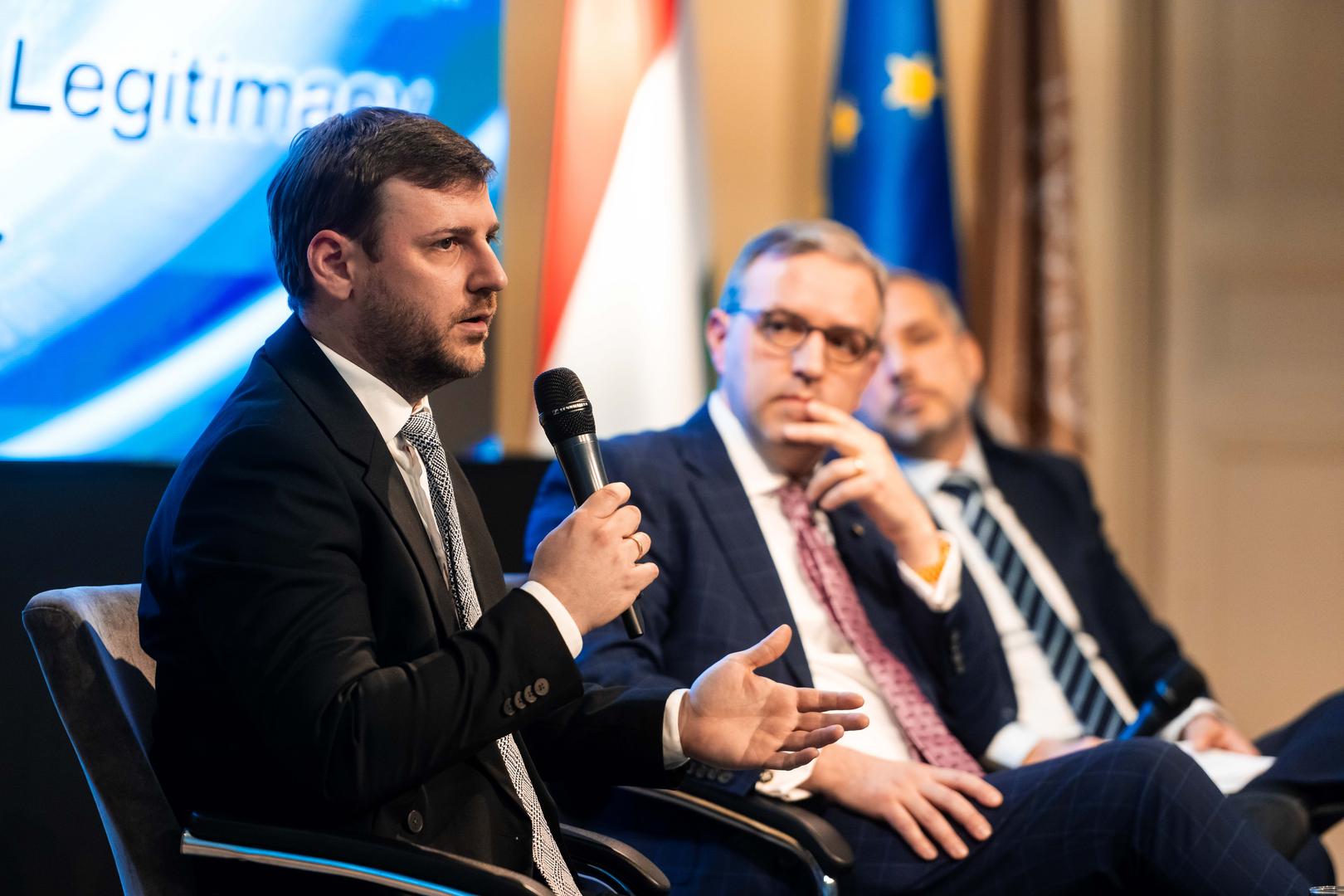
The final “Strategy Lab” panel brought together diverse perspectives: Csaba Gondola, Secretary of State for Circular Economy and Climate Policy, discussed resources and sustainability, Gladden J. Pappin, President of the Hungarian Institute for International Affairs, focused on narratives, institutions and legitimacy, and Csaba Zalai, Professor of Ludovika University of Public Service analysed military power.
Overall, the conference highlighted that power in today’s world is no longer defined solely by traditional parameters such as military strength or economic size. Instead, it is increasingly shaped by adaptability, strategic positioning, cooperation, and the ability to interpret complex global processes. From a Hungarian viewpoint, the discussions underscored the importance of maintaining sovereignty while actively engaging in regional and global partnerships. As the international system continues to evolve toward a more multipolar structure, understanding these shifting dynamics will be essential for navigating through the uncertainties of the coming decade.
Text: Orsolya Jancsó
Photos: Dénes Szilágyi