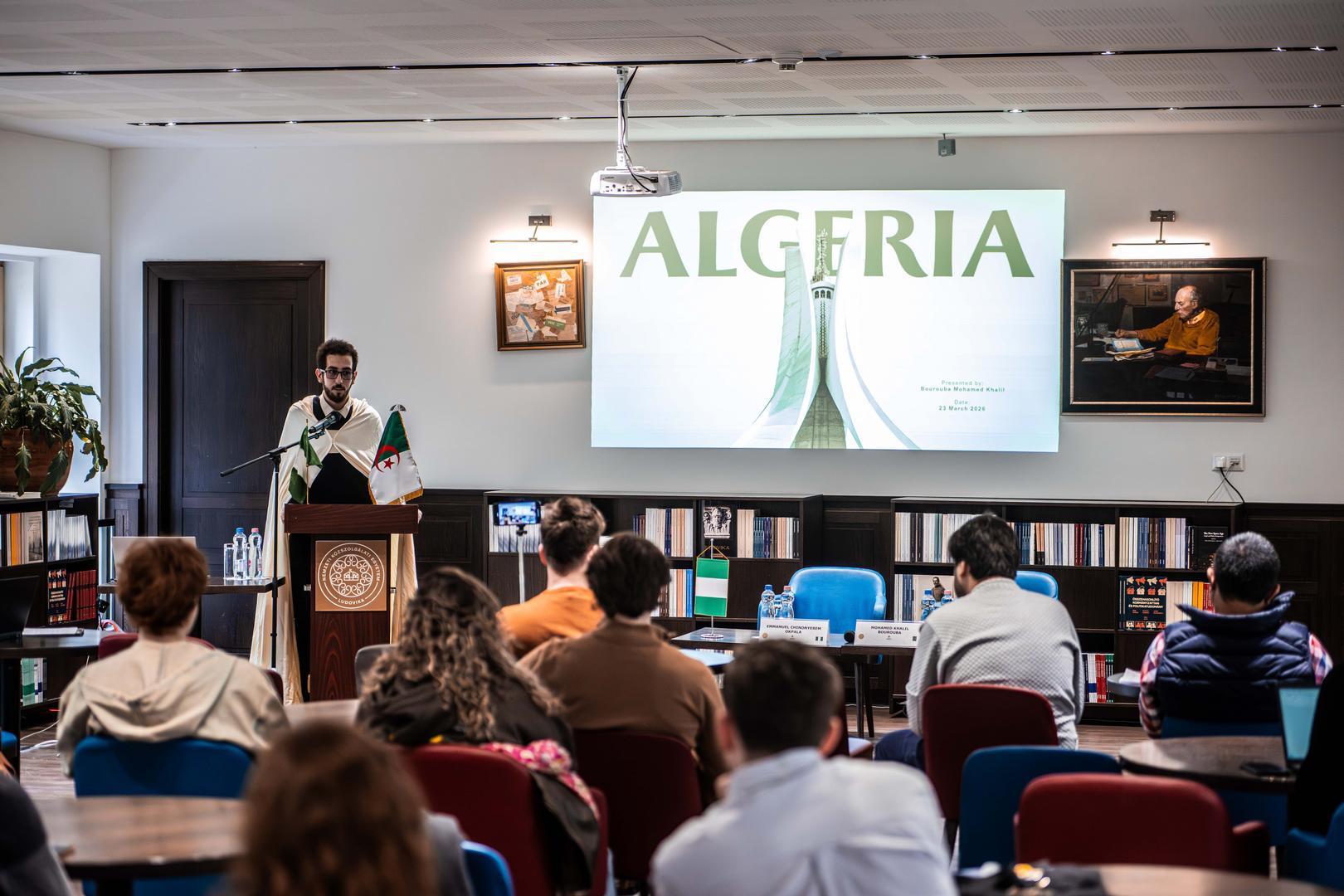
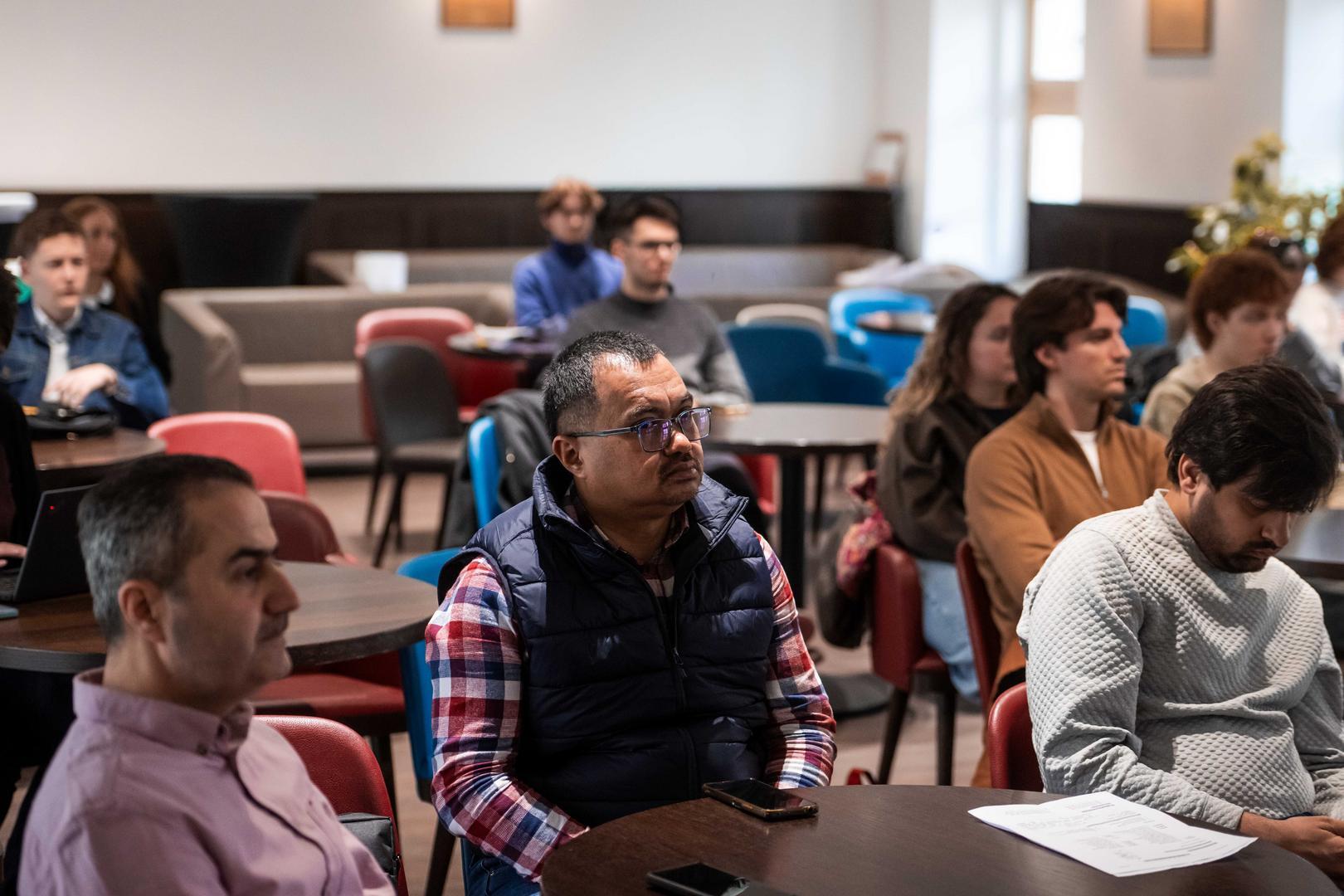
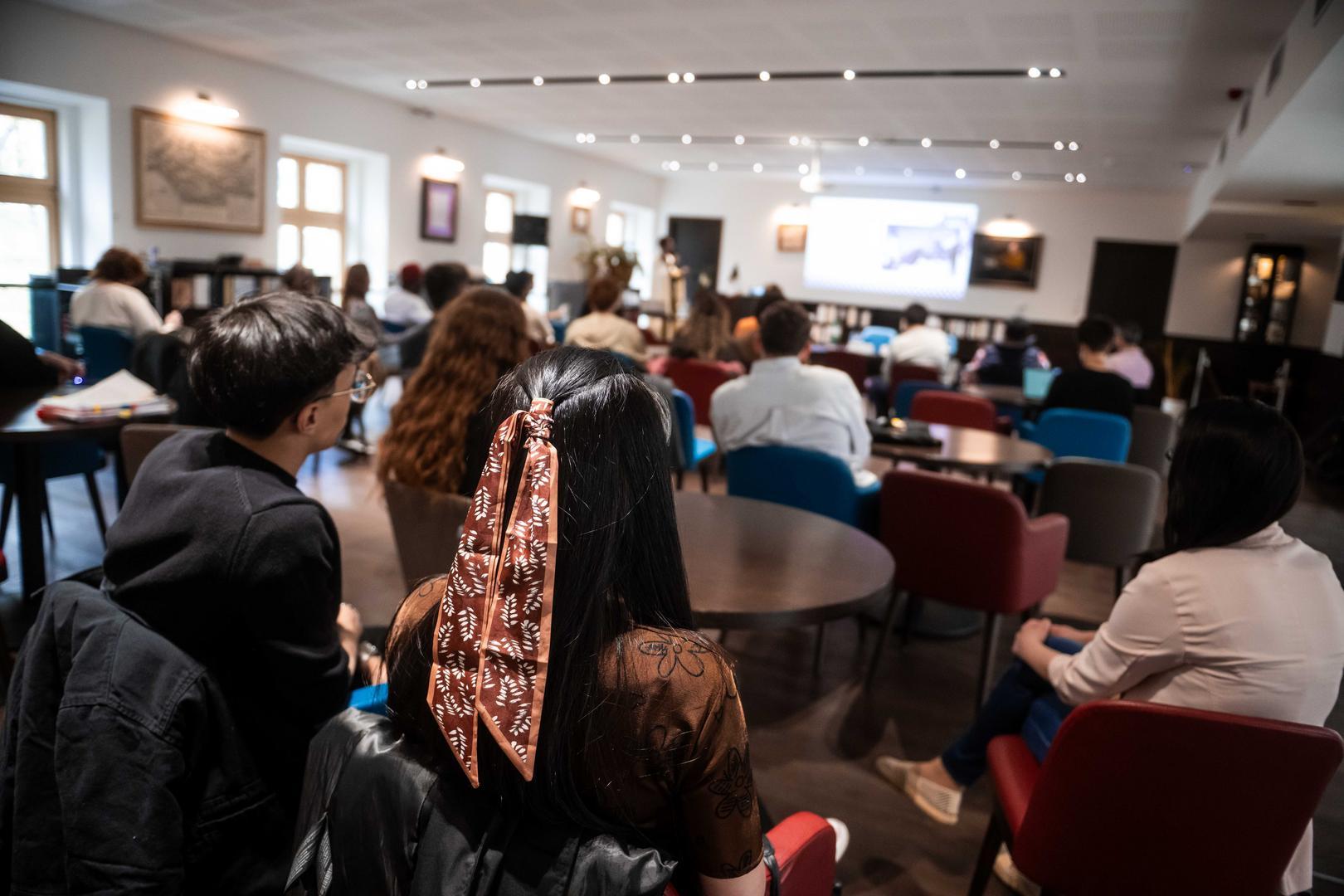
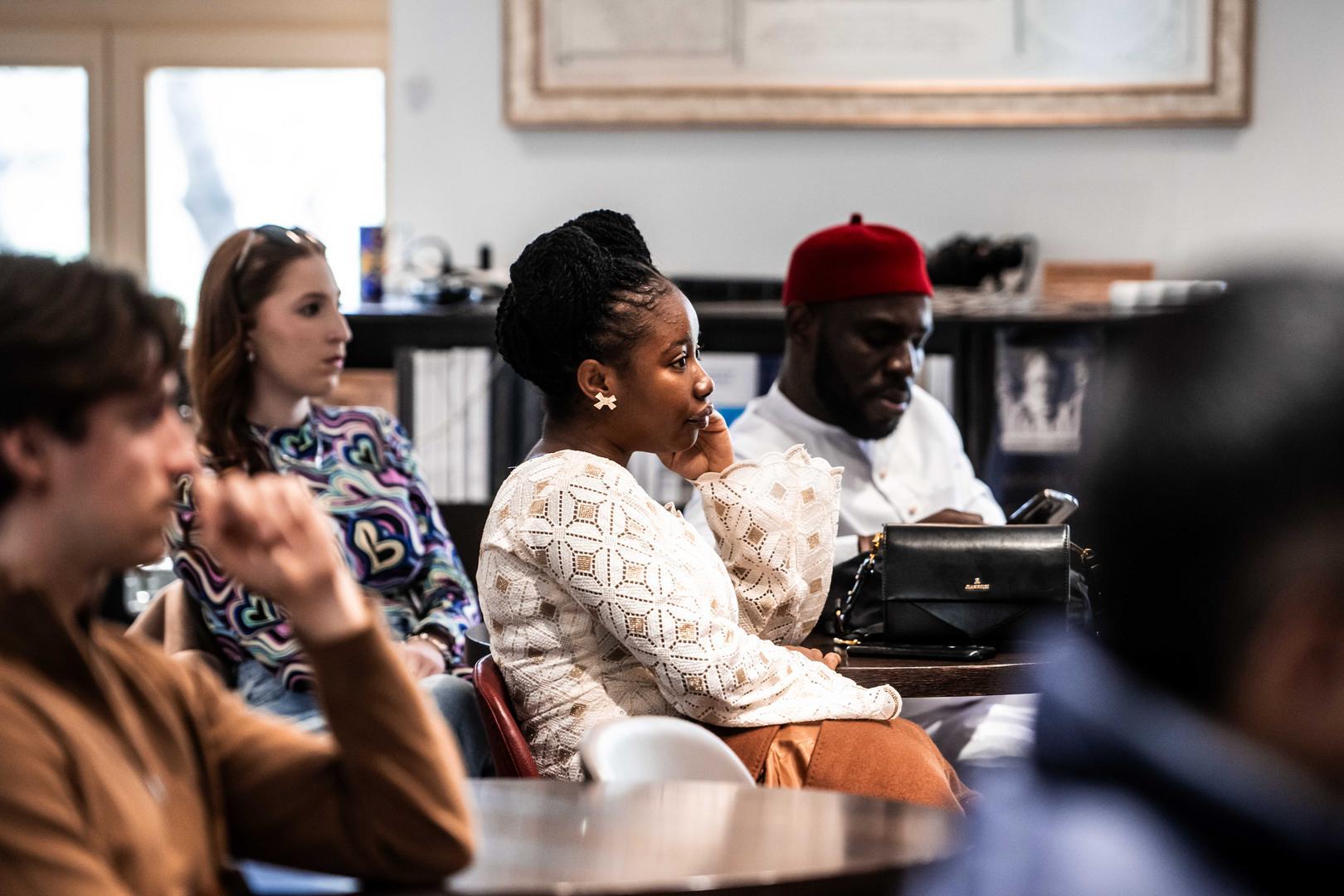
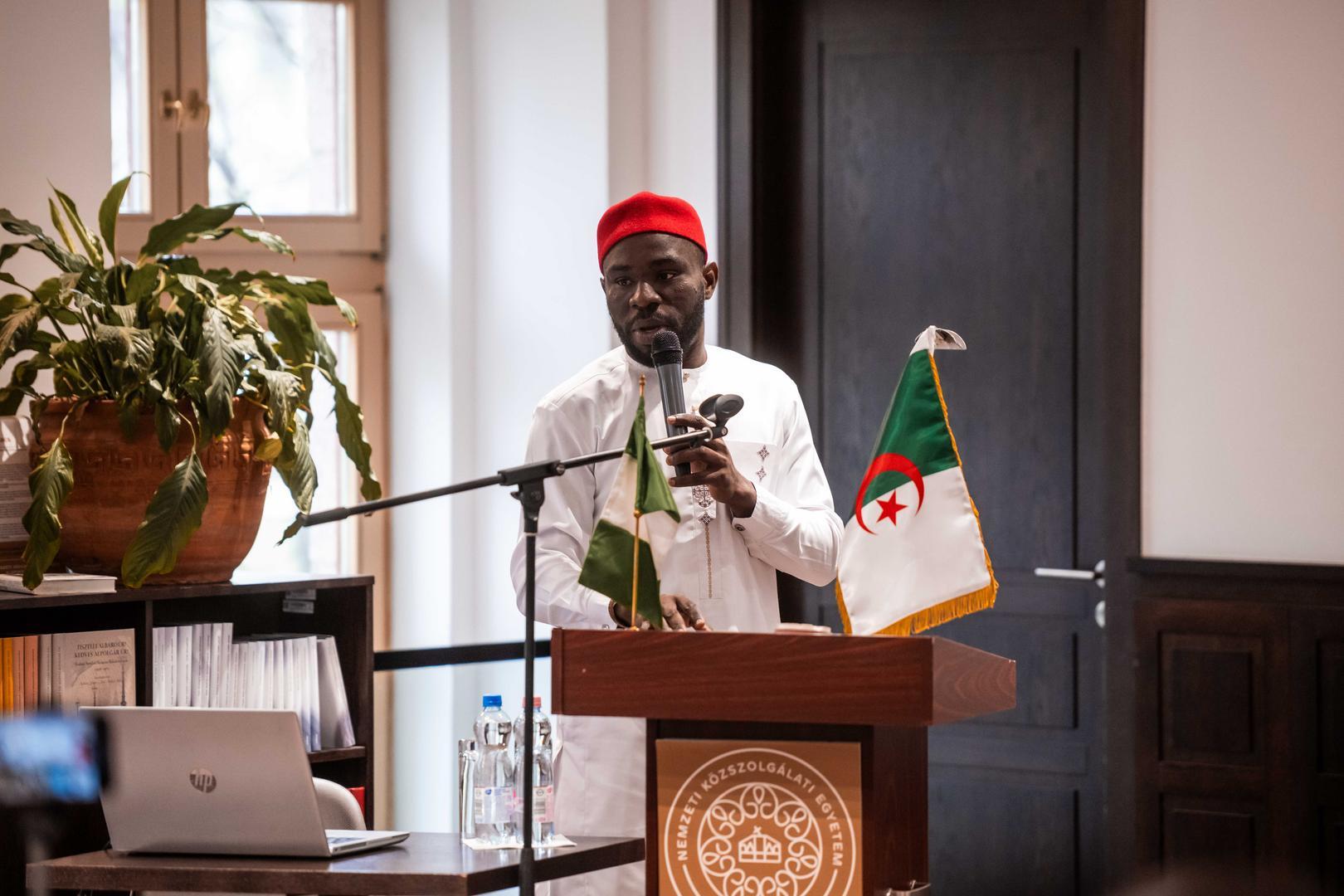
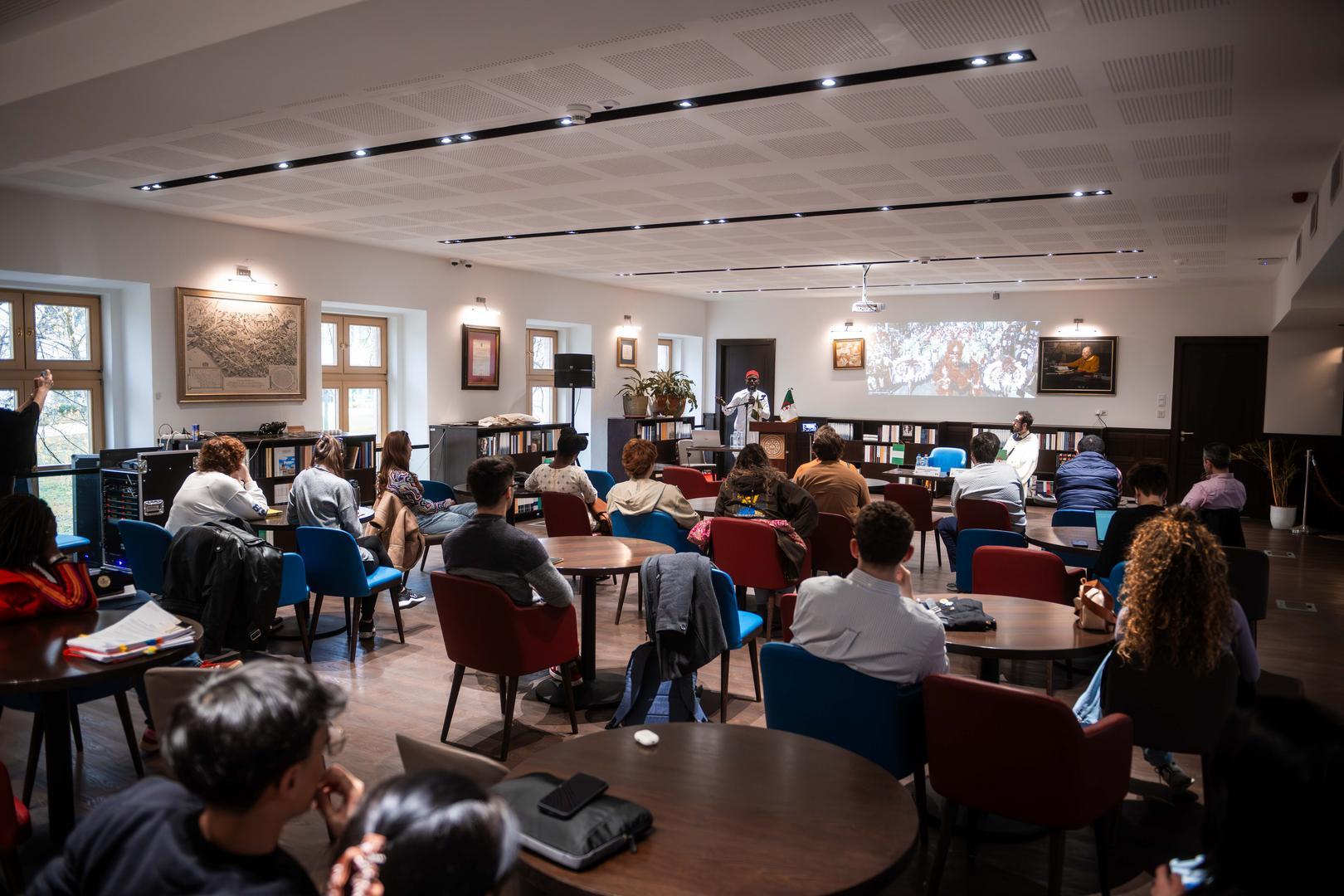
The International Office of the Ludovika University of Public Service (LUPS) is establishing a tradition by organizing the Stipendium Hungaricum Intercultural Workshops, which provide international scholarship students with an opportunity to present their own cultures, histories, and traditions to the local community, said Eszter Agapé Szkárosi, staff member of the LUPS Ludovika Welcome Center Department, at the event held on 23 March in the university’s John Lukacs Lounge.
The series of events goes beyond mere curiosity; it aims to promote a conscious learning process where students can understand the world through each other’s perspectives with active attention and openness. The skills acquired here—such as empathy, adaptability, and cultural sensitivity—are essential not only during university years but also for future professional careers in global cooperation. The goal is for every international student to feel at home within the university community and to build bridges between different cultures, in this instance through presentations on Algeria and Nigeria.
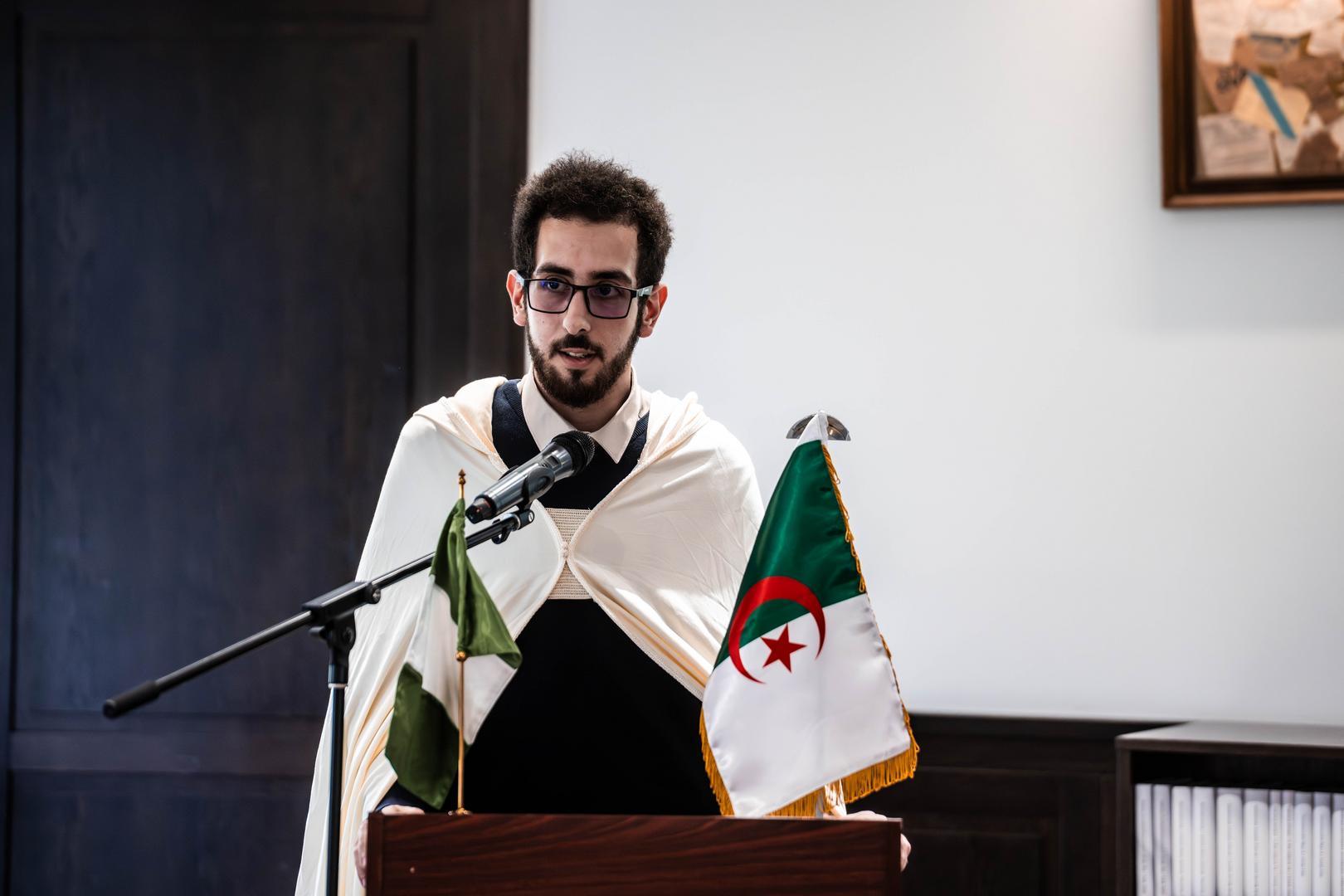
The first speaker at the event was Mohamed Khalil Bourouba, a cybersecurity master’s student at LUPS, who introduced the audience to Algeria’s rich heritage. In his presentation, he emphasized that his country is abundant not only in landscapes but also in historical monuments, bearing traces of Byzantine, Roman, and Ottoman civilizations. Algerian people are characterized by hospitality, kindness, and resilience in difficult times; family and community play a central role, and personal relationships are guided by deep trust and respect. Demographically, the country is very young, with most citizens between 15 and 64 years of age, and ethnically it is marked by the intertwining of indigenous Berber and Arab roots.
It was noted that Algeria’s international role is defined by a policy of neutrality and balanced relations with various nations, whether in the Arab world, Europe, or the United States. The country actively participates in the United Nations, striving, among other goals, to protect human rights and foster cultural exchange. Algeria’s historical richness is reflected in the fact that it has had eleven different capitals over time, including the Roman-era Serta (modern Constantine) and the current center, Algiers. Evidence of human presence dates back 2.4 million years, which scientists consider the world’s second-oldest site of its kind, and the Tassili n’Ajjer rock paintings are part of the UNESCO World Heritage.
Throughout history, Algeria experienced multiple conquests—from the Phoenicians to the Romans, Byzantines, and Ottoman rule—during which it enjoyed a degree of autonomy. Modern Algerian identity was significantly shaped by the 132-year struggle against French colonization, during which Amir Abdulad became a national icon of resistance. Algeria finally gained independence on 5 July 1962.
The country has also produced many notable figures in modern science. Engineer Belgacem Haba holds hundreds of patents and contributed to the development of the PlayStation, while physicist Dr. Noureddine Melikechi is part of NASA’s Mars research team. Other prominent researchers include archaeologist Professor Mohamed Sahnouni, renewable energy expert Amina Hellal, and Fazia Amokrane Nait Mohamed, who conducts medical research at Harvard University.
Sports play a central role in Algerian culture, particularly football, which is described as being “in the blood” of the people. The country has produced world-famous footballers such as Riyad Mahrez, Premier League champion, and Rabah Madjer, who scored a legendary back-heel goal in the UEFA Champions League. Algeria’s Olympic history began with Mustapha Moussa, who won the country’s first medal in boxing in 1984. Subsequent Olympic golds include Hassiba Boulmerka in the 1500 meters, followed by Noureddine Morceli and Taoufik Makhloufi, while Kaylia Nemour won Algeria’s first Olympic gymnastics gold on the African continent. Students also learned about Algeria’s authentic cuisine and traditional clothing.
Next, Emmanuel Chinonyerem Okpala, a Nigerian student in International Water Policy and Water Diplomacy at LUPS, gave a detailed presentation on his home country, often referred to as the “Giant of Africa.” He explained that this nickname was not given by Nigerians themselves but by neighboring countries and the international community, reflecting Nigeria’s vast size, population, and economic potential.
With a population of over 230 million, Nigeria represents roughly one-fifth of Africa’s population. To illustrate, the country’s territory is ten times larger than Hungary, and its population is twenty-five times greater. While the capital is now Abuja, the former center Lagos remains the country’s most important economic and cultural hub. Pre-colonial history saw the flourishing of sophisticated empires such as Kanem-Bornu and the Benin Empire, the latter of which built the famous Benin Wall, a 16,000-kilometer-long defensive system noted by the Guinness World Records as larger than the Great Wall of China.
As a specialist in hydrology and water policy, Chinonyerem highlighted the importance of the Niger and Benue rivers. He also pointed out the deep spiritual connection to water in Nigerian culture, where many communities regard rivers as deities, paradoxically supporting environmental and water conservation efforts. Among the natural landmarks he noted is the Zuma Rock, featured on the 100-naira note, surrounded by legends including that its “face” watches and speaks. He also mentioned the Yankari National Park and Lekki Conservation Centre in Lagos.
Nigeria’s economy is driven mainly by oil and agriculture, but Lagos has become a major technology hub, home to successful startups such as Paystack and Flutterwave. The country benefits from a very young population, with 70% under the age of 30. Nigeria is home to Aliko Dangote, the world’s richest Black person, and Ngozi Okonjo-Iweala, Director-General of the World Trade Organization (WTO).
Culturally and socially, Nigeria is extremely diverse, with over 250 ethnic groups and 500 languages. Communication is facilitated by English and the local “pidgin” language, a creole variant of English. The three most prominent ethnic groups are Igbo, Yoruba, and Hausa-Fulani. Chinonyerem emphasized the vibrancy and zest for life of Nigerians, exemplified by grand festivals like the Calabar Carnival. The country’s global cultural influence is also evident through literary figures such as Nobel laureate Wole Soyinka, Chinua Achebe, and Chimamanda Ngozi Adichie, as well as musicians like Burna Boy and Davido.
Sports are a national passion in Nigeria, especially football, but the country also boasts global stars such as NBA player Giannis Antetokounmpo and UFC champion Israel Adesanya. Chinonyerem concluded that Nigeria’s true beauty lies in its unity and happiness, despite its immense size and incredible diversity.
Text: Zsófia Sallai
Photos: Dénes Szilágyi