Beyond Participation: Women’s Knowledge and the Future of Water Governance in the Andes
I would like to begin this short article with a question that should remain in your mind as you read: who produces knowledge, and who makes decisions about water?
In the previous issue of the UNESCO Chair Newsletter, I outlined an ecofeminist and territorial framework. In this second instalment, I want to go one step further: to show that the problem is not only the political exclusion of women, but also the exclusion of certain kinds of knowledge about water.
In water governance, there is a very clear tendency: water is mostly managed through hydraulic, engineering, and technocratic models. Flow rates are measured, river basins are modelled, irrigation efficiency is calculated. All of this is important, of course. But water also has an everyday dimension that rarely appears in these models: who collects it, who protects it, and who is the first to notice when it becomes contaminated.
In many Andean communities, this daily relationship with water is largely sustained by women. Not only because they carry out domestic work such as washing, cooking, and caregiving but also because they participate in small yet crucial productive activities, such as maintaining family gardens, managingirrigation canals, caring for animals, and collecting medicinal plants. This constant interaction produces what social scientists call situated knowledge: forms of knowledge built through direct experience with the territory. (G&D, 2025)
This is where a central problem of governance emerges. Water institutions; ministries, hydraulic agencies, basin councils, usually recognize only formal technical knowledge. When this happens, a kind of “institutional blindness” emerges, because decisions about water management are made without considering the information held by those who interact with water every day. (Boelens, 2015)
A very clear example can be seen in traditional irrigation systems in the Andes. In many communities, there are collective rules regarding water distribution, canal maintenance, and the protection of water sources. These rules do not only regulate water use; they also organize community cooperation. However, when states introduce hydraulic projects or centralized management schemes, these local systems are often ignored or replaced. The result is paradoxical: policies designed to improve water management end up weakening community institutions that have functioned for generations. (Trawick, 2003)
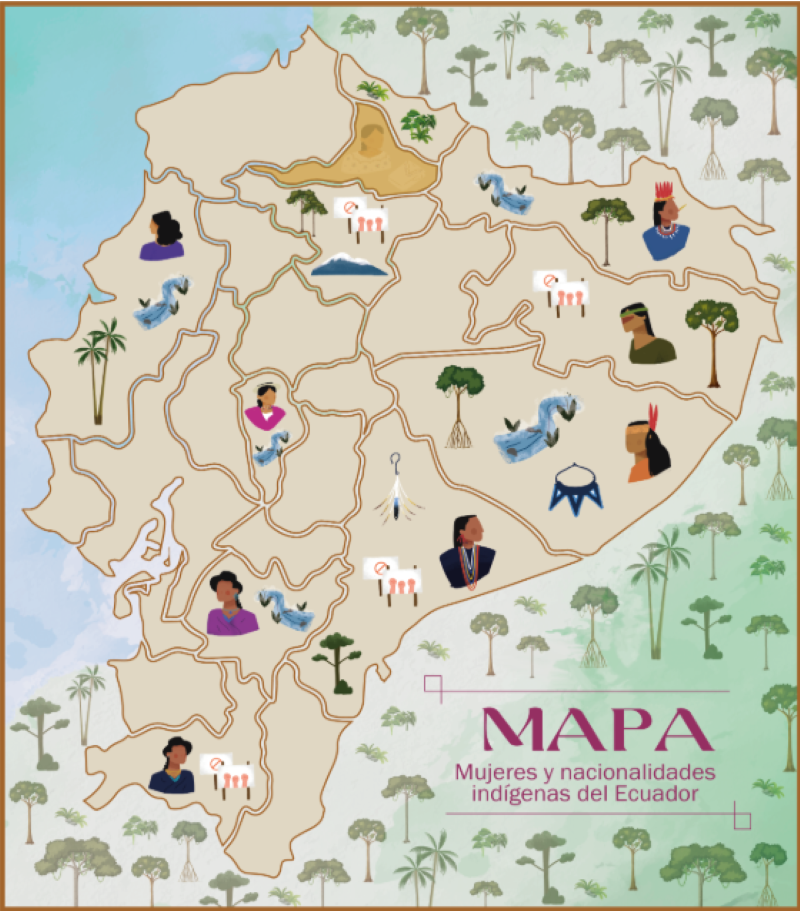
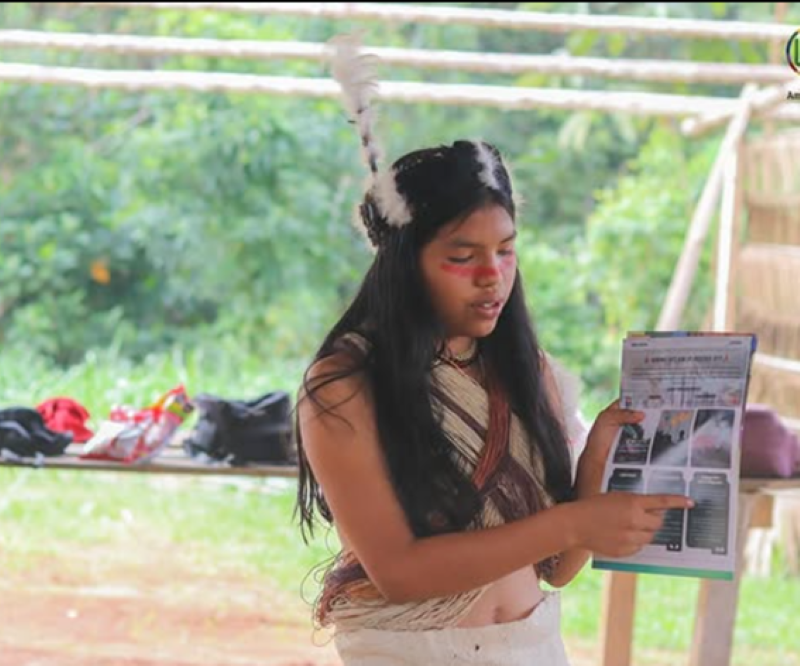
This is where women’s knowledge becomes particularly relevant. They often identify changes in water quality, the availability of sources, or the health of crops long before these changes appear in official indicators. In other words, they act as social sensors of the territory. In several Andean countries, women have created resistance and water-protection groups such as Saramanta Warmikuna, RENAMAT and Guerreras por la Amazonía. These groups are formed by women who fight for the recognition of ancestral knowledge and fair access to water. (Ayala, 2026)
For this reason, speaking about the future of water governance requires going beyond the simple idea of participation. It is not enough to include women in meetings or committees if decision-making structures continue to privilege only formal technical expertise. What is at stake is something deeper: which kinds of knowledge are considered legitimate when managing water.
Several studies on community governance show that the most resilient systems tend to combine multiple forms of knowledge. Scientific models can provide tools to understand complex hydrological processes, while local knowledge offers detailed information about ecological dynamics, agricultural cycles, and social relations within the community. When these forms of knowledge are able to dialogue rather than compete, water policies tend to become more adaptive and sustainable. (Hoogesteger & Verzijl, 2015)
In the Andes, recognizing women’s territorial knowledge could significantly strengthen strategies for the protection of water sources, watershed management, and agroecological production. It would also allow us to connect two debates that are often treated separately: water governance and food sovereignty. After all, peasant agriculture depends directly on healthy water systems, and many of the practices that sustain this agriculture are linked to networks of water care that are largely maintained by women. (Puleo, 2011)
The challenge is not only to increase women’s representation in water institutions, but also to transform the way these institutions understand knowledge and territorial management. Incorporating women’s experiences and knowledge is not only a matter of social justice; it is also a condition for designing water policies that are more effective and sensitive to local realities. In previous research on Indigenous women and their political participation, I was able to observe firsthand how their knowledge is often infantilized and treated in a paternalistic manner, within a broader dynamic of patriarchal entanglement, a pattern that I now see operating again at the intersection of water and politics.
Ultimately, the future of water governance in the Andes will depend on our ability to recognize that territories are not managed only from laboratories, ministerial offices, or hydrological models. They are also managed in the fields, kitchens, irrigation canals, and mountains where communities interact with water every day. There, far from technical discourses, a fundamental kind of knowledge is produced - knowledge that helps us understand how water circulates and how life around it can be sustained.
Text: Melany Chango