The Ludovika Scholars Program continues this spring with a strong international lineup at our university. Between April 20 and 24, Ludovika – University of Public Service is hosting six distinguished guest professors from Albania, Bosnia and Herzegovina, Croatia, Montenegro, Romania, and Serbia.
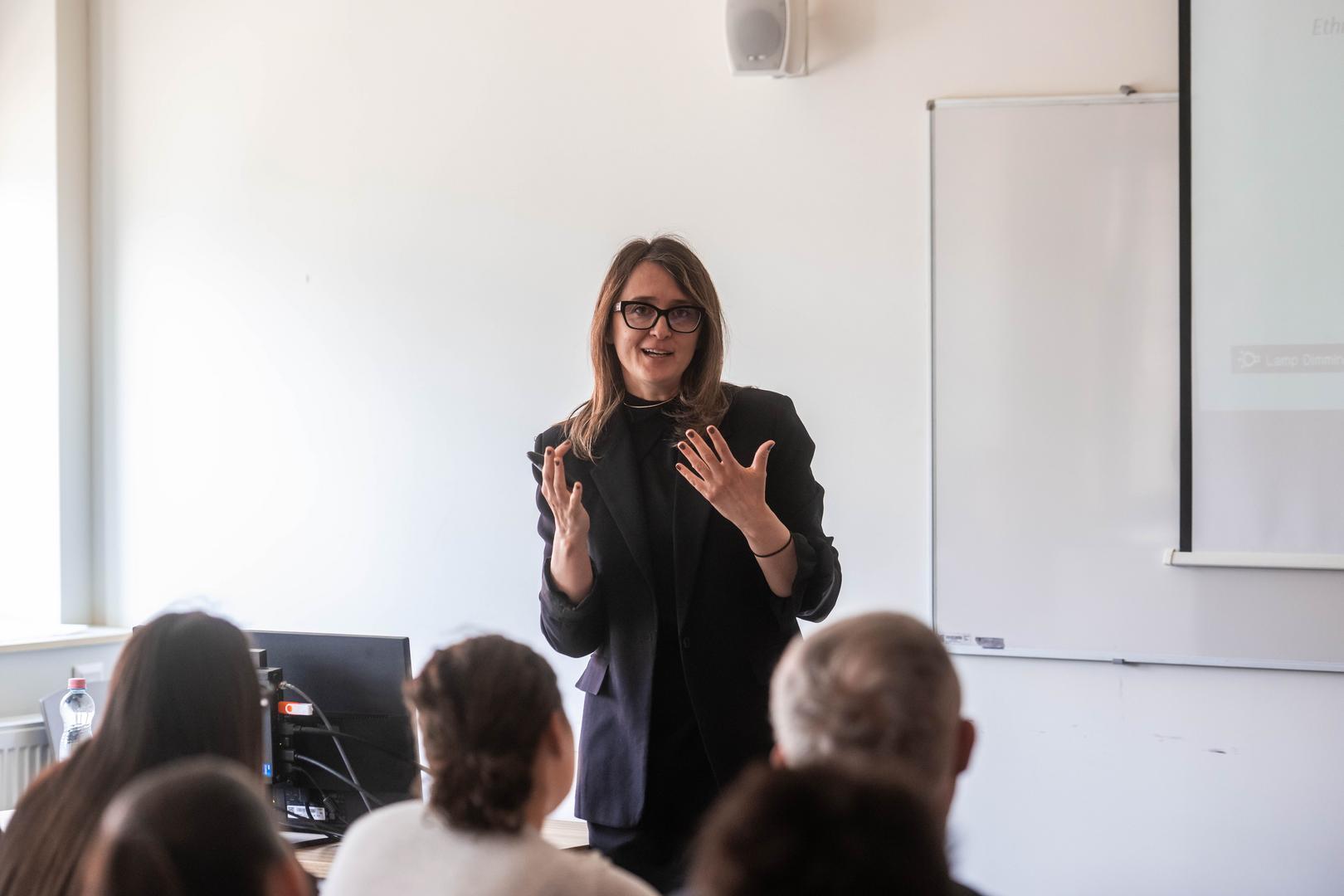
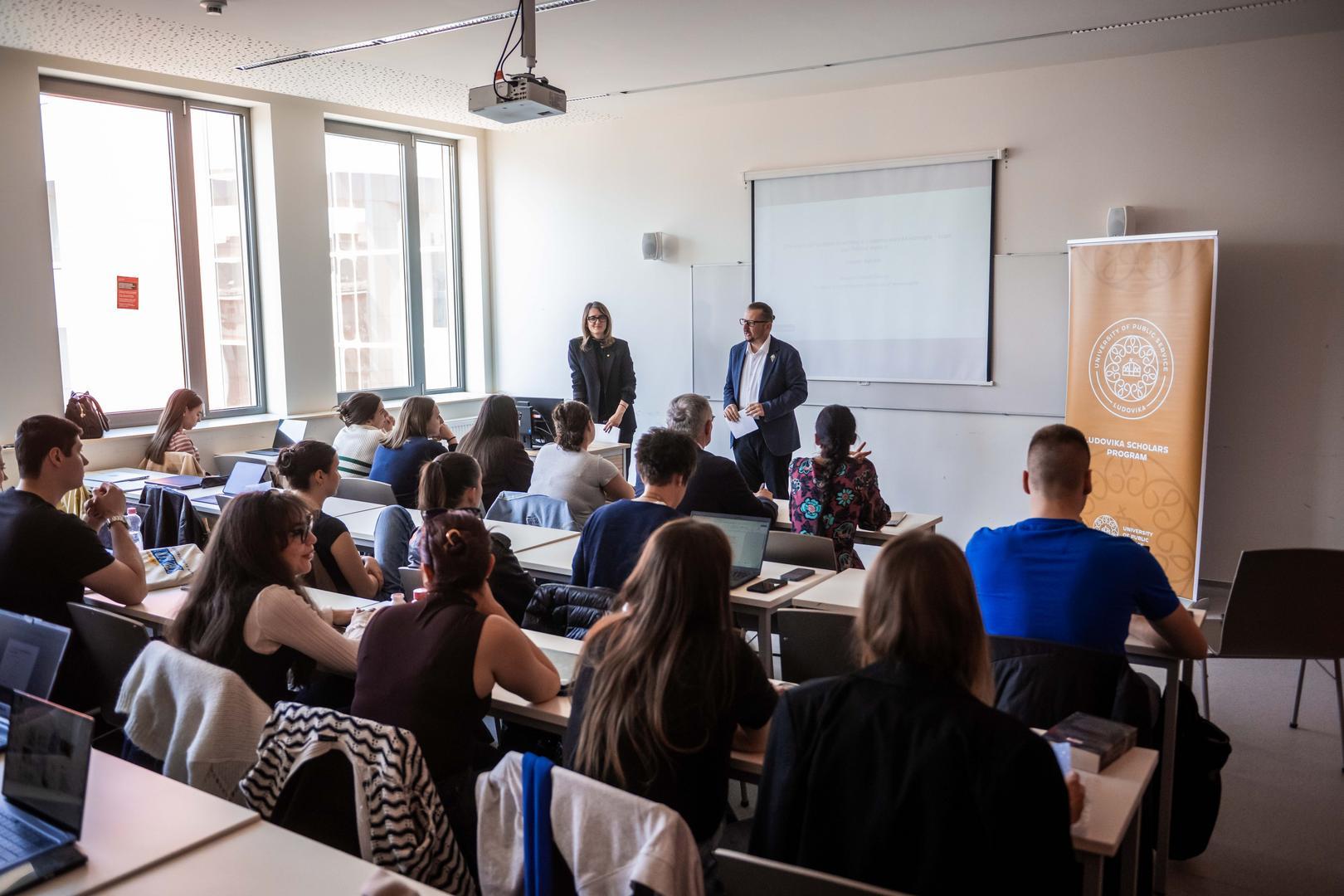
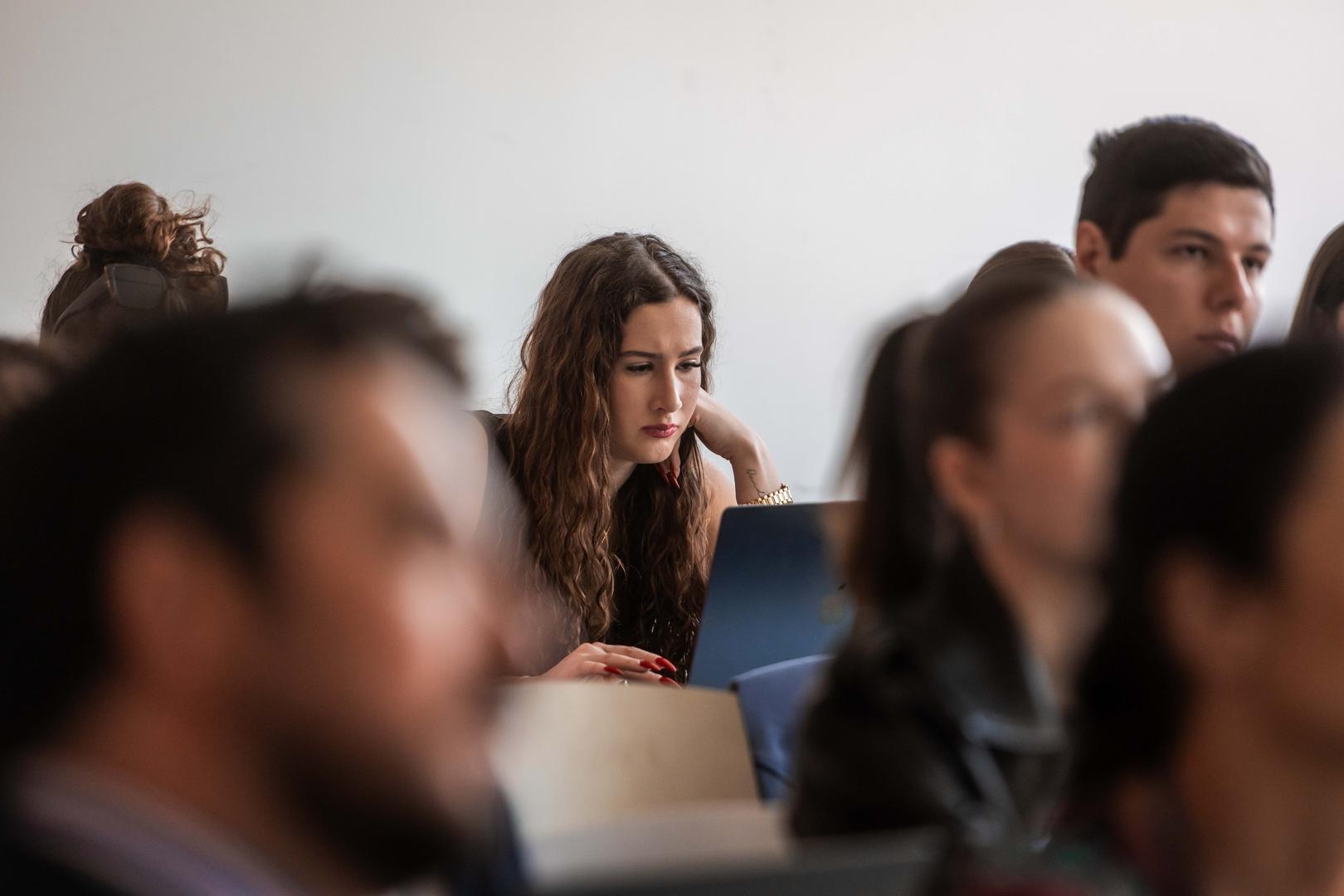
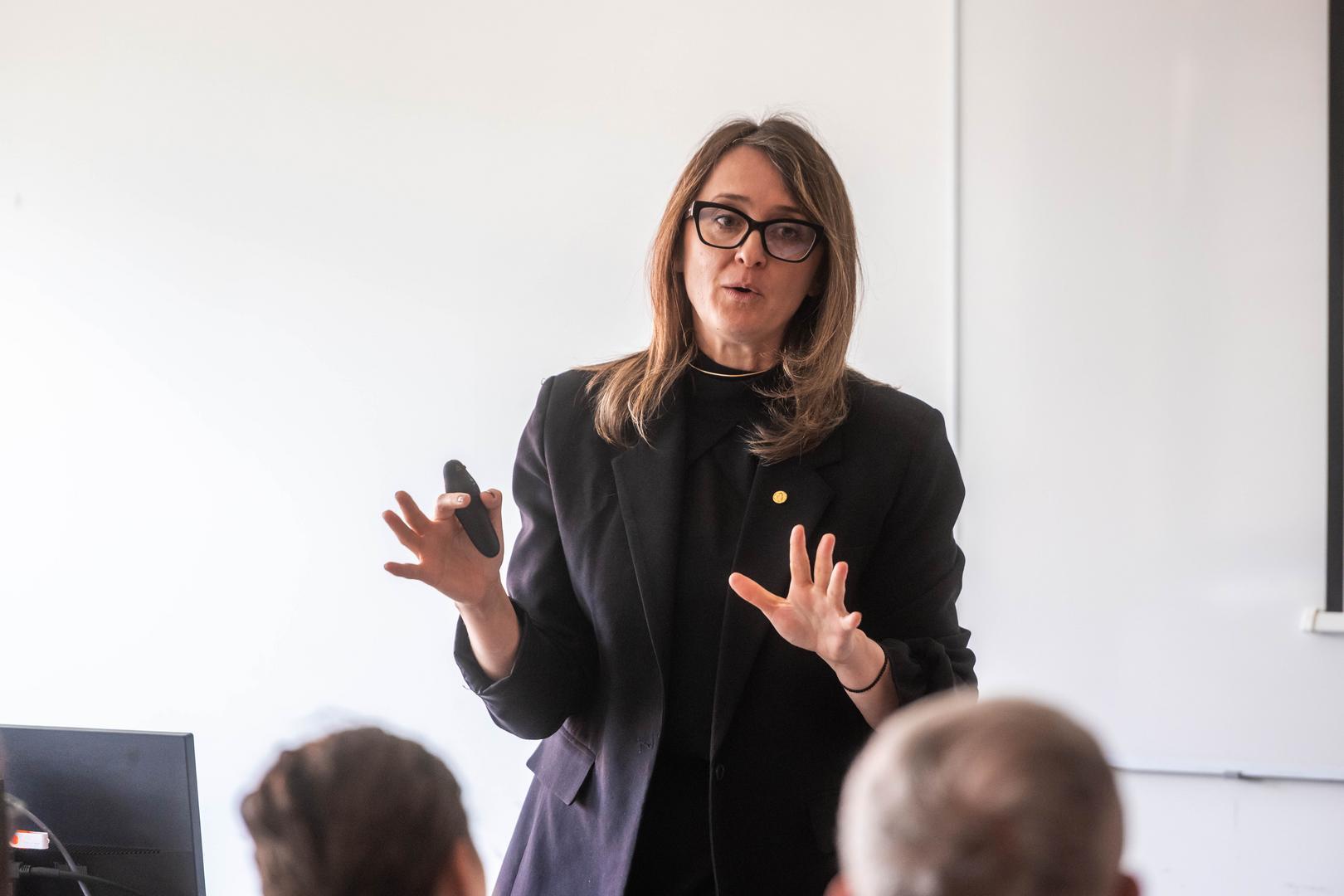
On April 22, Danijela Vuković-Ćalasan, associate professor at the Faculty of Political Science of the University of Montenegro, offered an in-depth look into the ethnocultural diversity and social dynamics of Montenegro for interested students and faculty members.
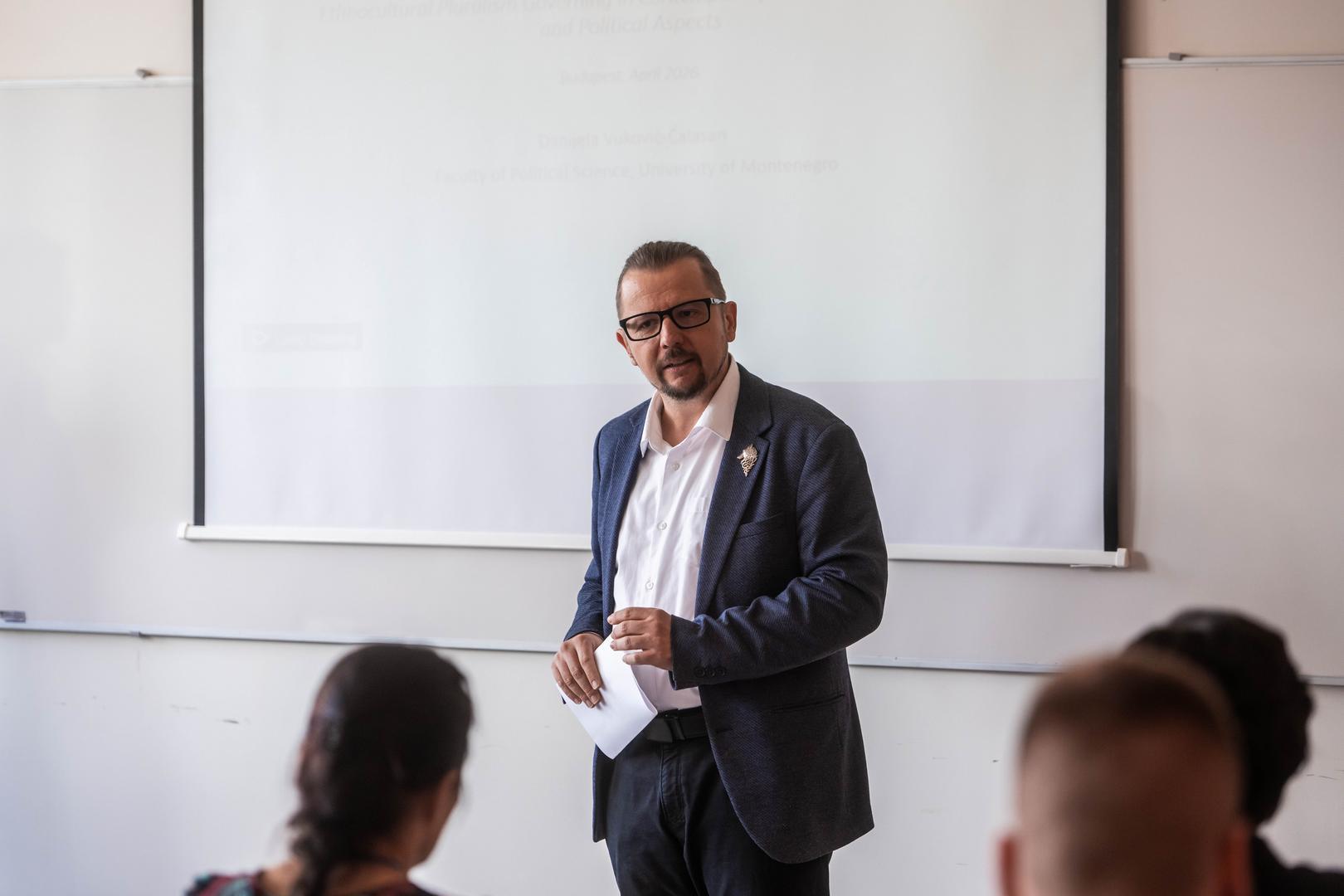
In his opening remarks, Péter Krisztián Zachar, Vice-Dean for International Affairs at the Faculty of Public Governance and International Studies welcomed the strong interest in the lecture and highlighted the Ludovika Scholars Program as one of the university’s key international initiatives, focusing on specialized academic fields. Introducing the speaker, he emphasized Dr. Vuković-Ćalasan’s extensive expertise in social cohesion and minority rights, gained through her work with organizations such as the United Nations and the Council of Europe.
In her introduction, professor Vuković-Ćalasan pointed out that contemporary societies are increasingly shaped by globalization, leading to growing diversity and further pluralization. Her interactive lecture explored how ethnocultural pluralism varies across countries, both in form and intensity, and how its management is closely linked to maintaining social cohesion. She also highlighted the politicization of culture, a process that has been evolving since the 1960s.
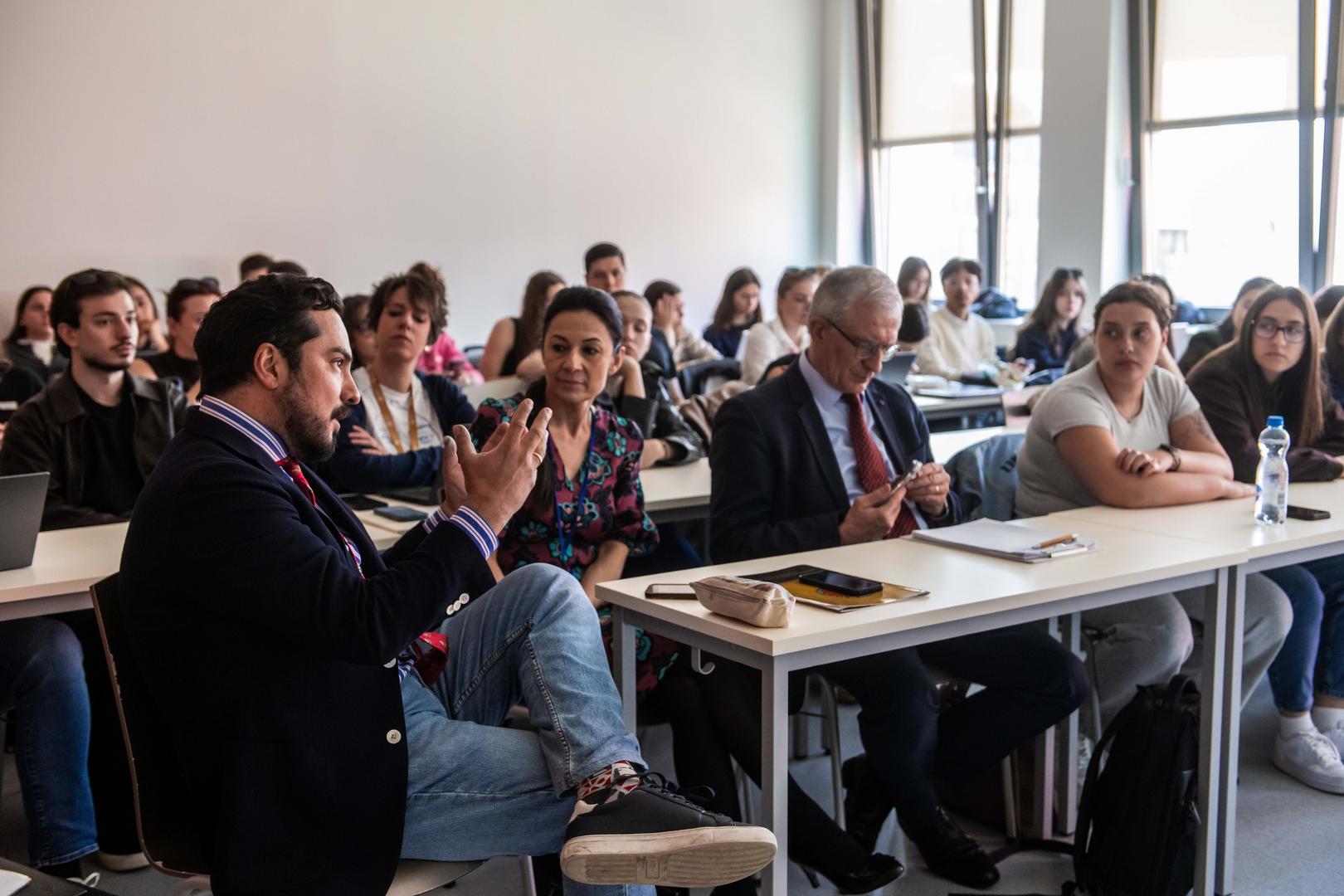
The discussion was enriched by the contribution of Pier Paolo Pigozzi, Vice-Rector for International Affairs, who connected the topic to his human rights course. He raised the idea of a “healthy tension” between the universality of human rights and the specificities of cultural pluralism. Referring to Article 1 of the International Covenant on Civil and Political Rights, which enshrines the right of peoples to self-determination, he posed a critical question: at what point does this tension become problematic or even dangerous?
In response, Dr. Vuković-Ćalasan explained that in Montenegro, minority rights are primarily framed as individual rights, but their application is deeply influenced by political culture and historical context. She highlighted the country’s unique demographic situation, where no single cultural group forms an absolute majority, with Montenegrins making up only around 41 percent of the population. This creates ongoing challenges in building a shared political identity. She also noted how globalization has introduced new layers to society, including Russian migrants and foreign workers in tourism, further complicating the dynamics of a small state with a population of under half a million.
The Hungarian minority model also entered the conversation when former ambassador Iván Gyurcsík shared national experiences. He explained that since the 1993 minority law, Hungary has followed the principle of free identity choice, ensuring the right of individuals to preserve their identity. He also outlined the system of minority self-governments based on a recognized list of nationalities. In contrast, Montenegro’s approach relies on open census categories, where identity choices are often politicized. Reflecting on this, Dr. Vuković-Ćalasan noted that census processes in Montenegro have become so politicized that some individuals have even identified themselves as “extraterrestrials” in protest, while political parties actively use ethnic affiliation as a tool for gaining votes.
According to the professor, the current multicultural model does not ensure real equality of opportunity for all groups, particularly for Roma and Egyptian communities. While some minorities, such as the Croatian community, benefit from preferential electoral thresholds, others do not receive similar support or affirmative measures.
The role of history education and reconciliation also emerged as a key theme. Drawing on her own family background marked by trauma, including a World War II massacre in her village that claimed 600 lives, Dr. Vuković-Ćalasan emphasized that genuine reconciliation requires understanding the “pain of the other.” She argued for the use of educational materials that present multiple perspectives on shared history, as a way to strengthen social cohesion.
Towards the end of the discussion, Pier Paolo Pigozzi raised a final question: should maintaining pluralism be seen as a permanent goal, or rather as an ongoing struggle on the path toward national unity? In her closing remarks, Dr. Vuković-Ćalasan underlined that for Montenegro, European Union accession, supported by over 70 percent of the population, represents not only a political objective but also a key guarantee of social stability and a counterbalance to external ethnonationalist pressures.
Text: Zsófia Sallai
Photo: Dénes Szilágyi