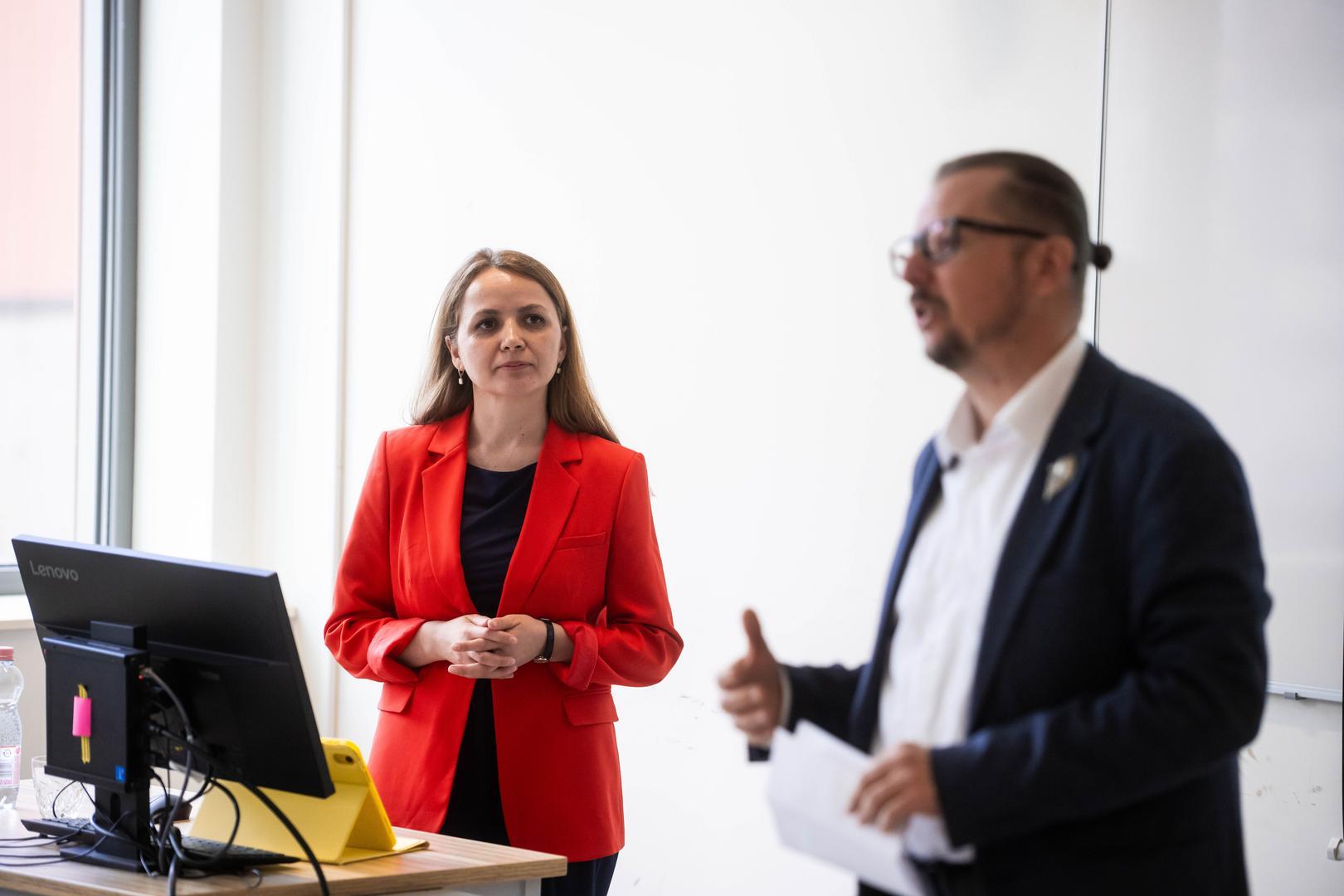
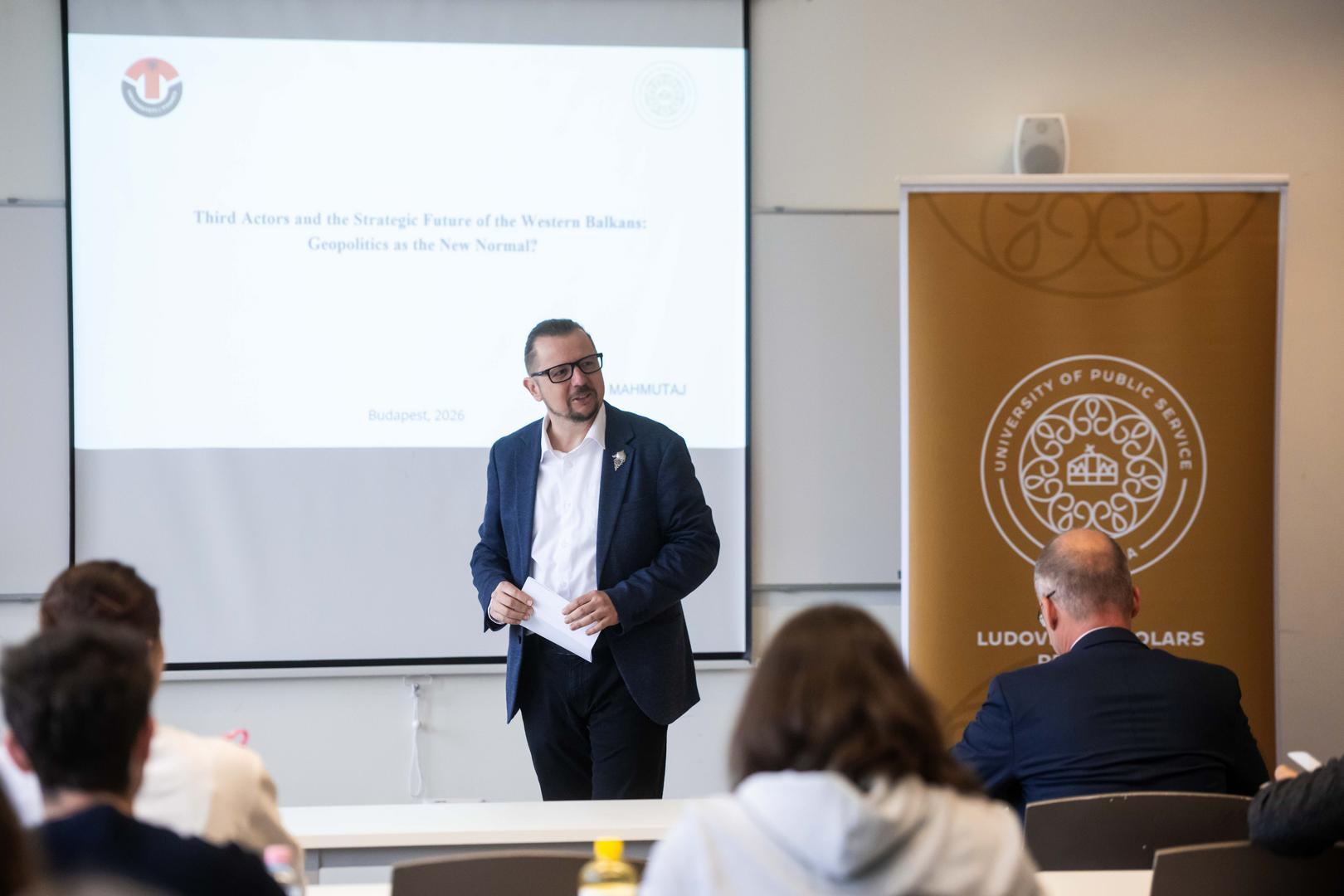
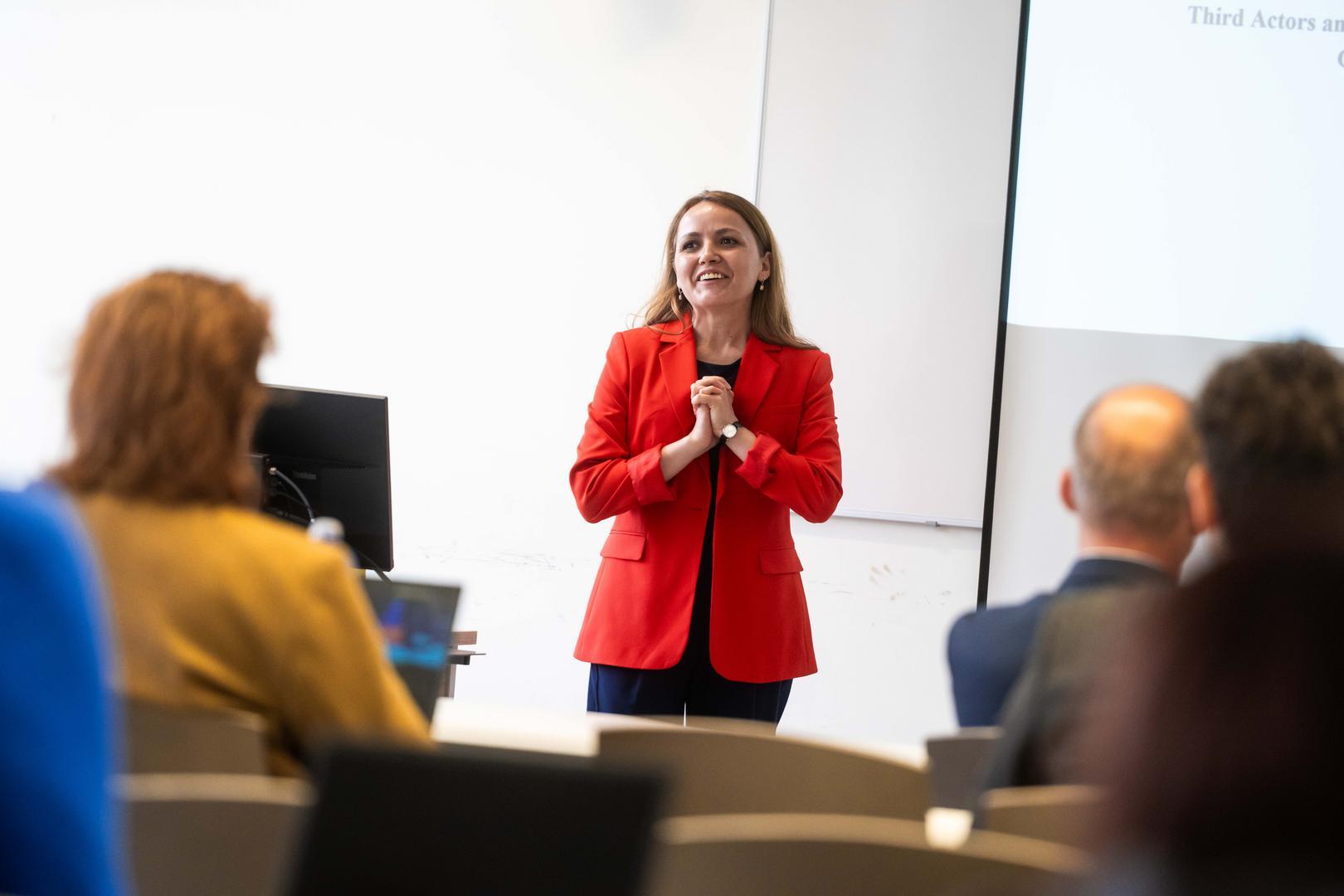
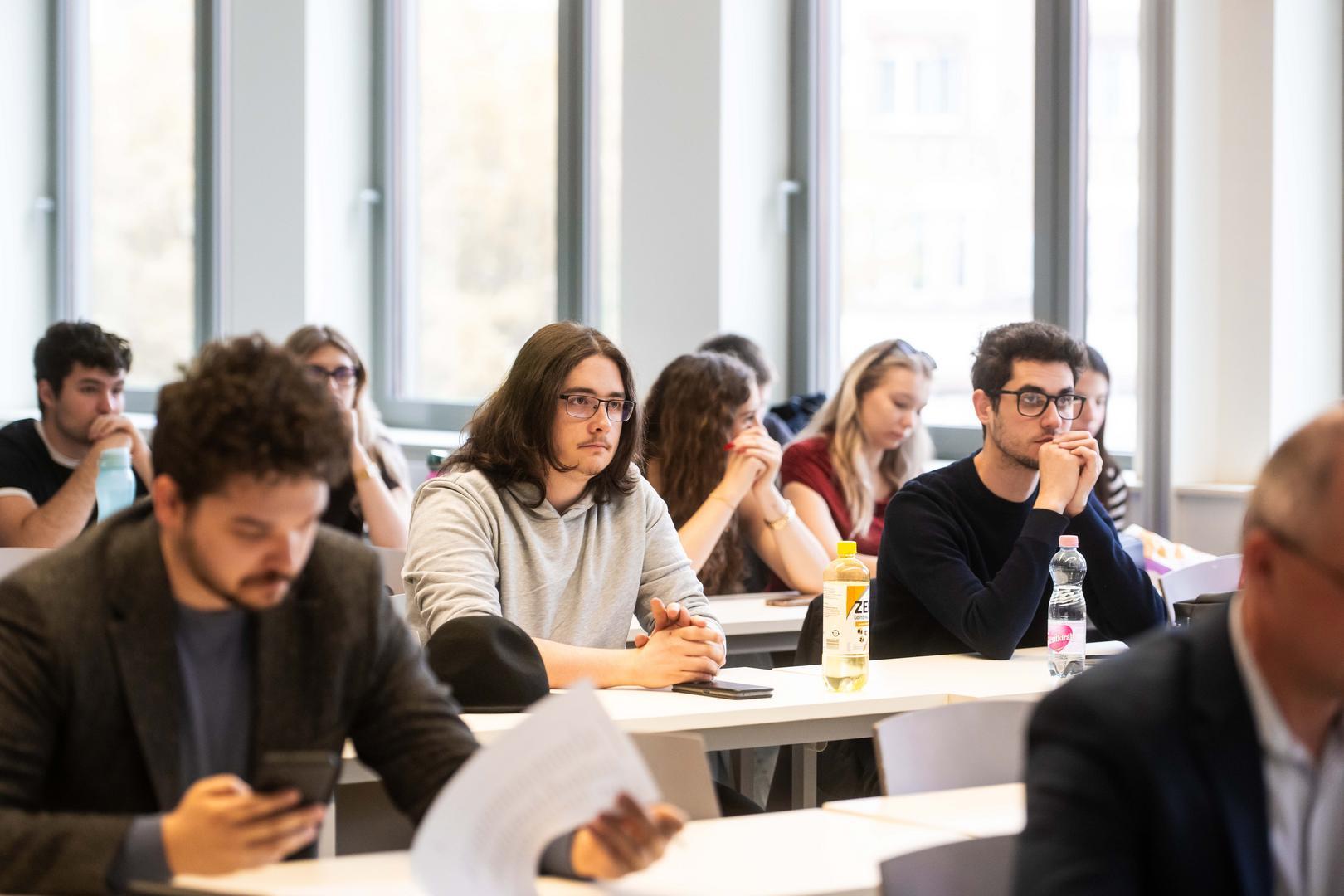
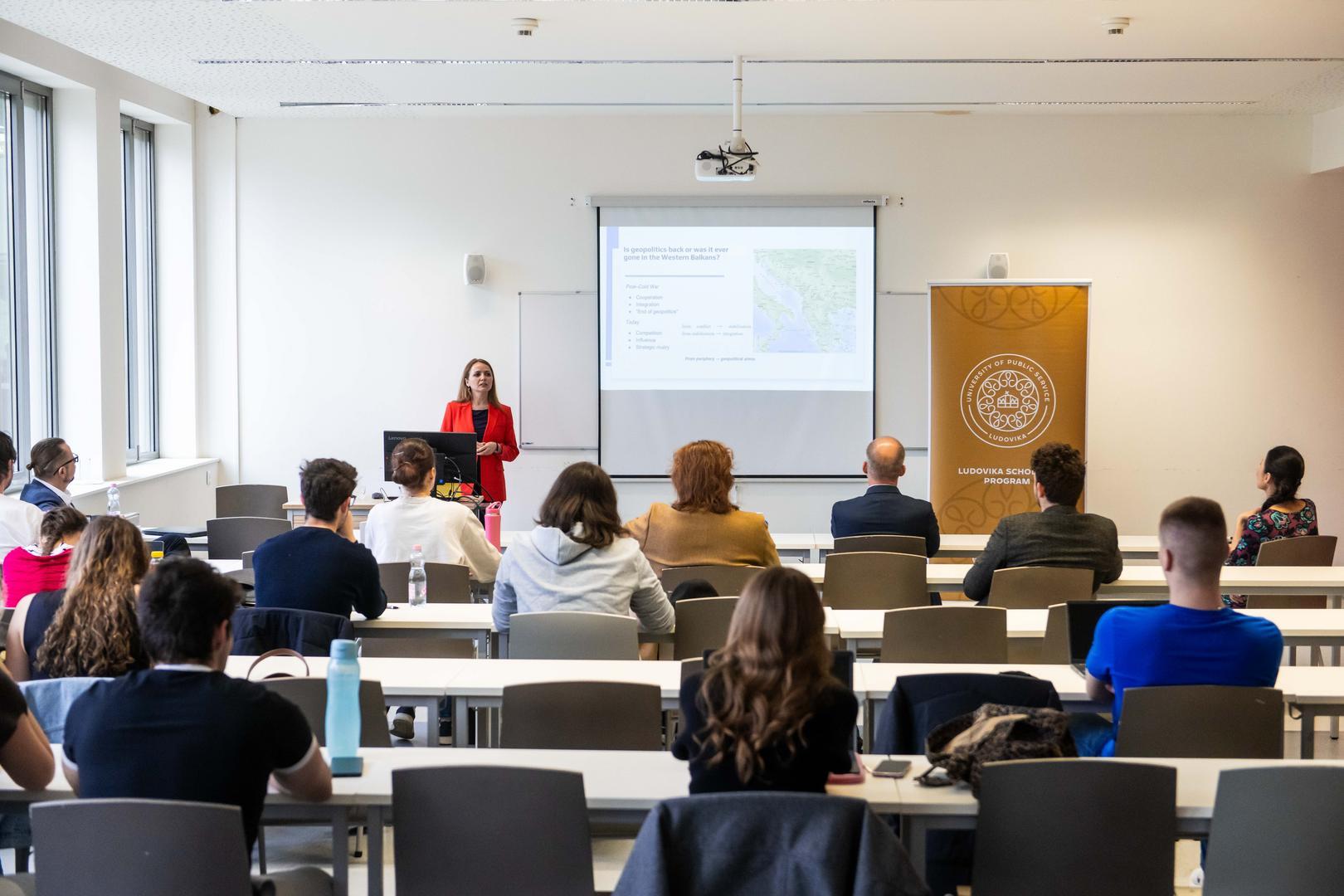
Geopolitics took center stage at Ludovika on April 22, as Dr. Noela Mahmutaj, senior researcher at the Institute of European Studies of the University of Tirana, delivered a public lecture titled “Third Parties and the Strategic Future of the Western Balkans: Is Geopolitics the New Normal?” as part of the Ludovika Scholars Program.
The Albanian guest speaker was introduced by Péter Krisztián Zachar, Vice-Dean for International Affairs at the Faculty of Public Governance and International Studies, who highlighted the Ludovika Scholars Program as one of the university’s flagship international initiatives. Bringing researchers to Budapest from regions stretching from the Baltics to the Balkans, and from the Czech Republic to Azerbaijan, the program aims to deepen strategic understanding of Central Europe through diverse academic perspectives.
In her lecture, Dr. Mahmutaj argued that the post-Cold War optimism of integration in the Western Balkans has gradually been replaced by the logic of great power competition. Today, the region functions as a geopolitical arena, where Euro-Atlantic integration and external influence-building are unfolding simultaneously.
She pointed out that different global actors pursue distinct strategies in the region. China primarily expands its influence through infrastructure investments, while also laying the groundwork for a longer-term political presence. Russia, on the other hand, achieves its goals with relatively low levels of investment by building effective narratives. Türkiye appears as a soft power actor, relying on historical ties and pragmatic cooperation, often taking on a mediating role in the region.
At the end of her lecture, Dr. Noela Mahmutaj outlined three possible scenarios for the future of the Western Balkans. The first is the deepening of EU-integration through reforms and legal harmonization. The second is a model of multiple alignment with the great powers based on balancing strategies. The third is the persistence of fragmentation, where ongoing geopolitical competition further deepens divisions within the region.
Text: Tibor Sarnyai
Photo: Dénes Szilágyi