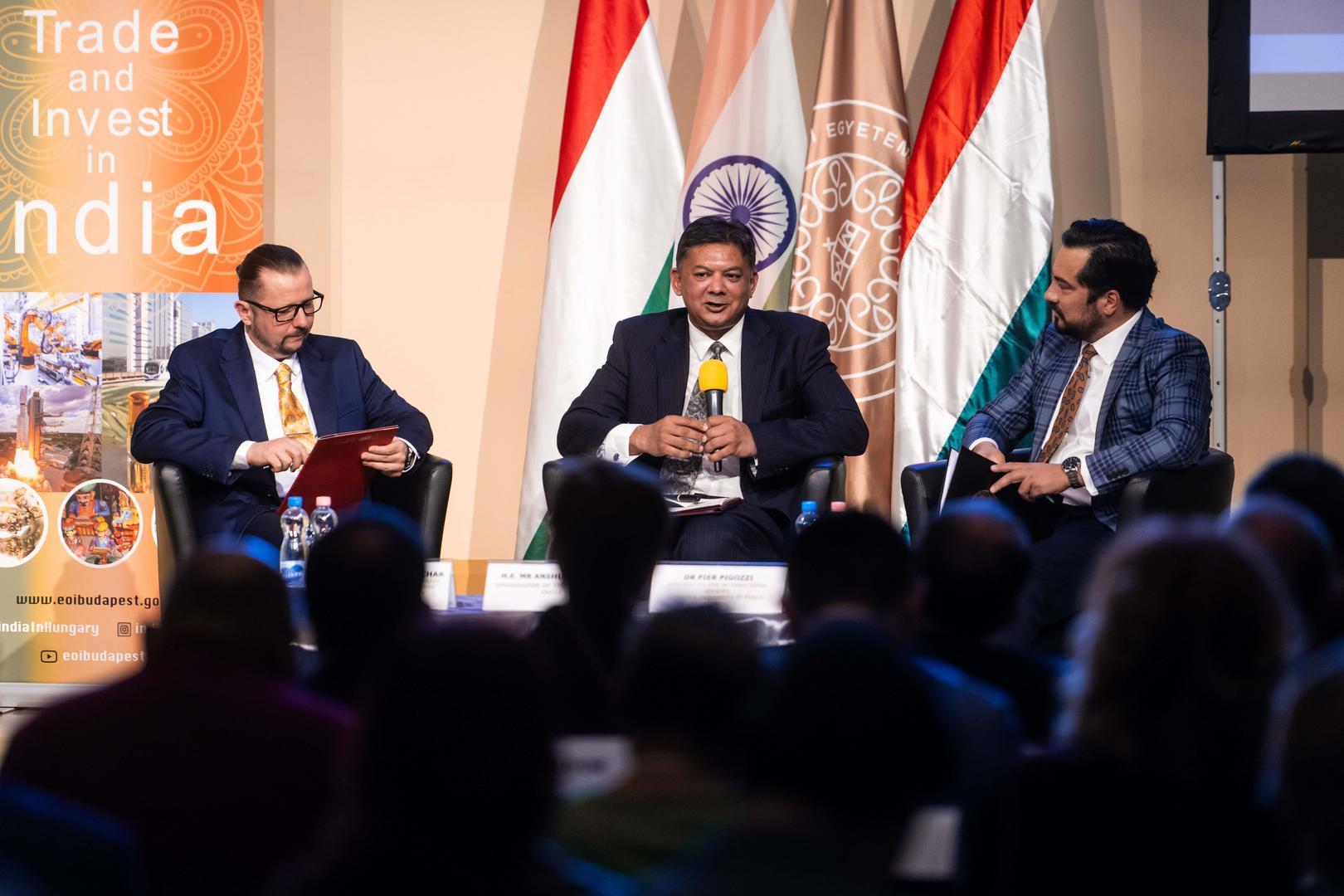


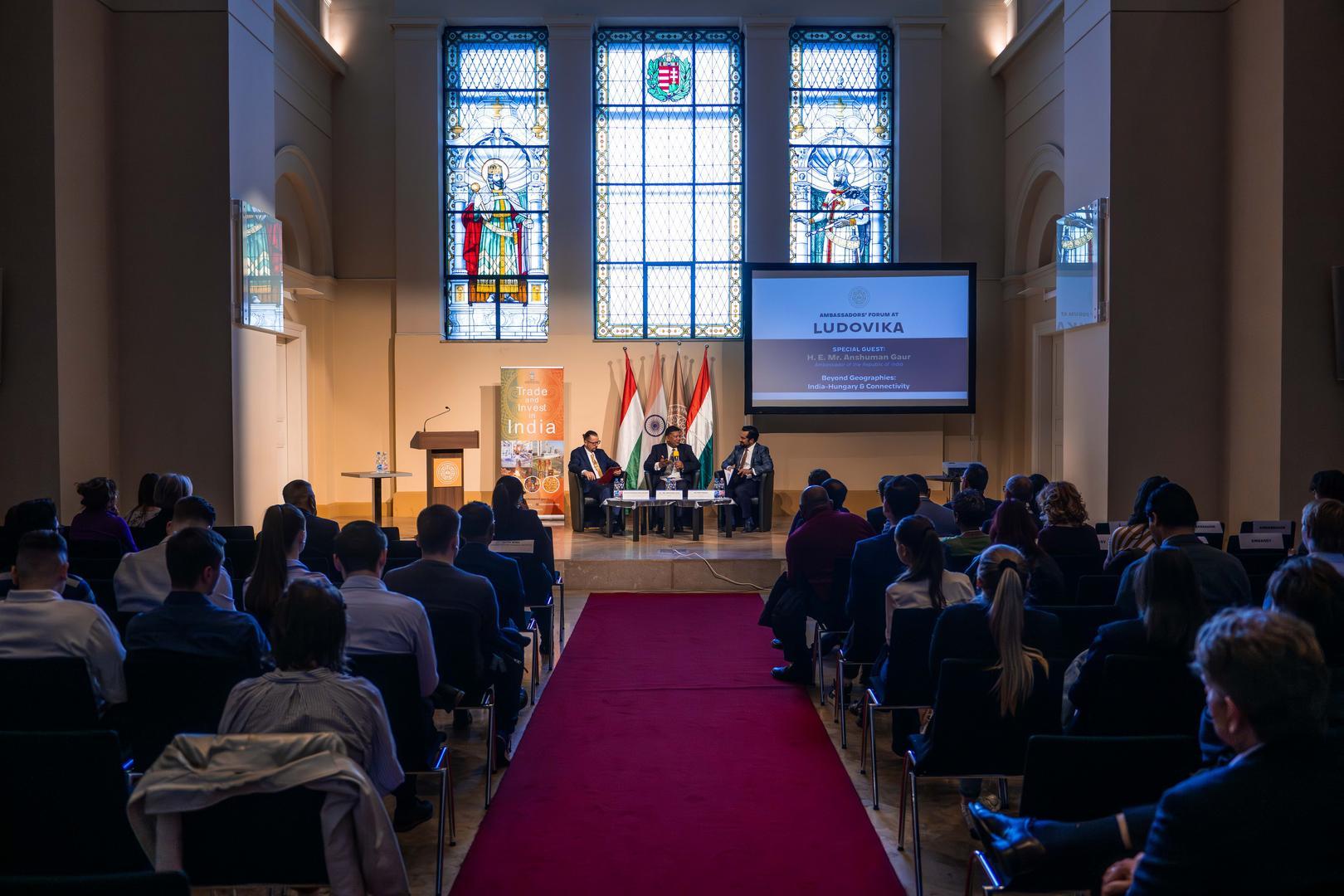

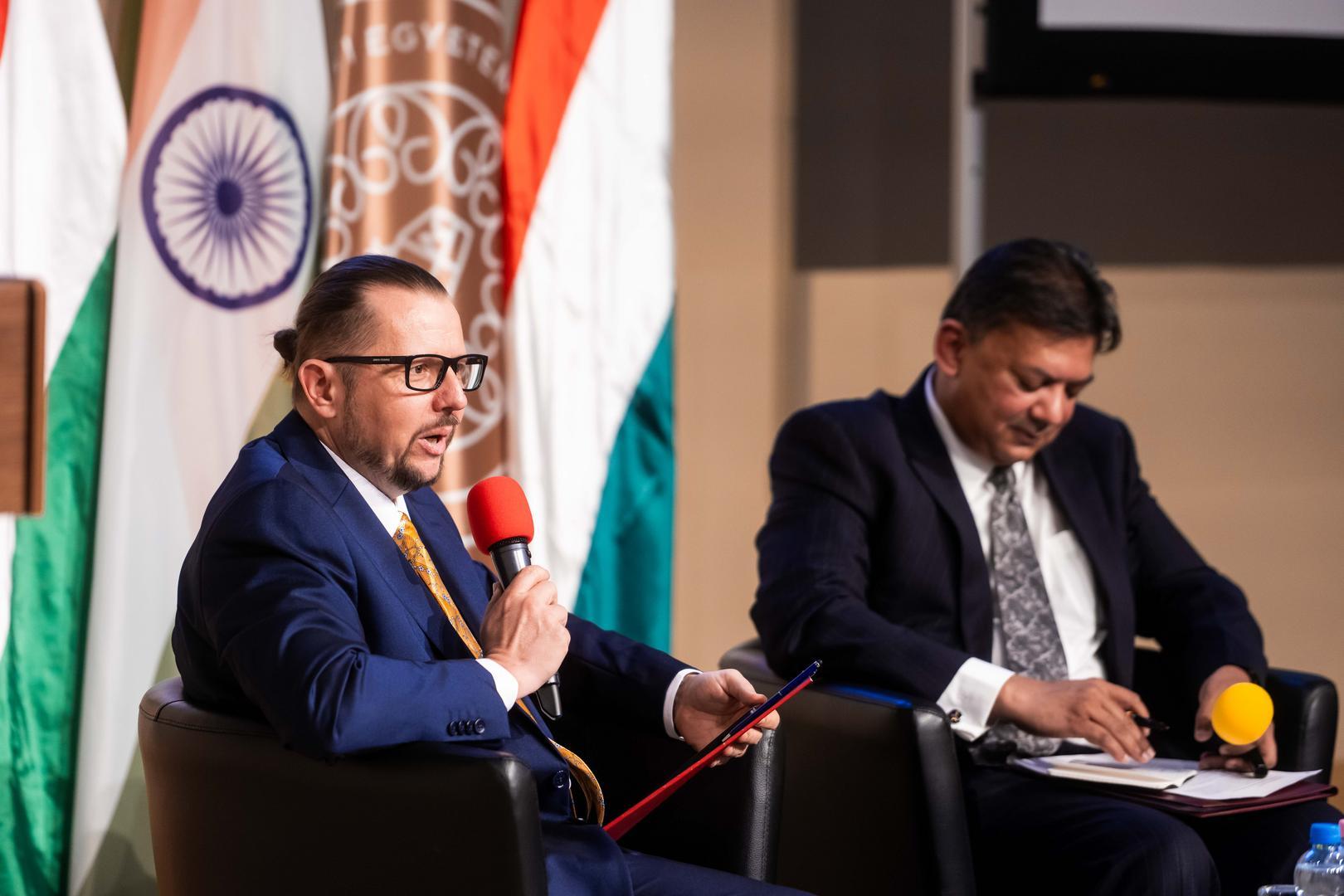
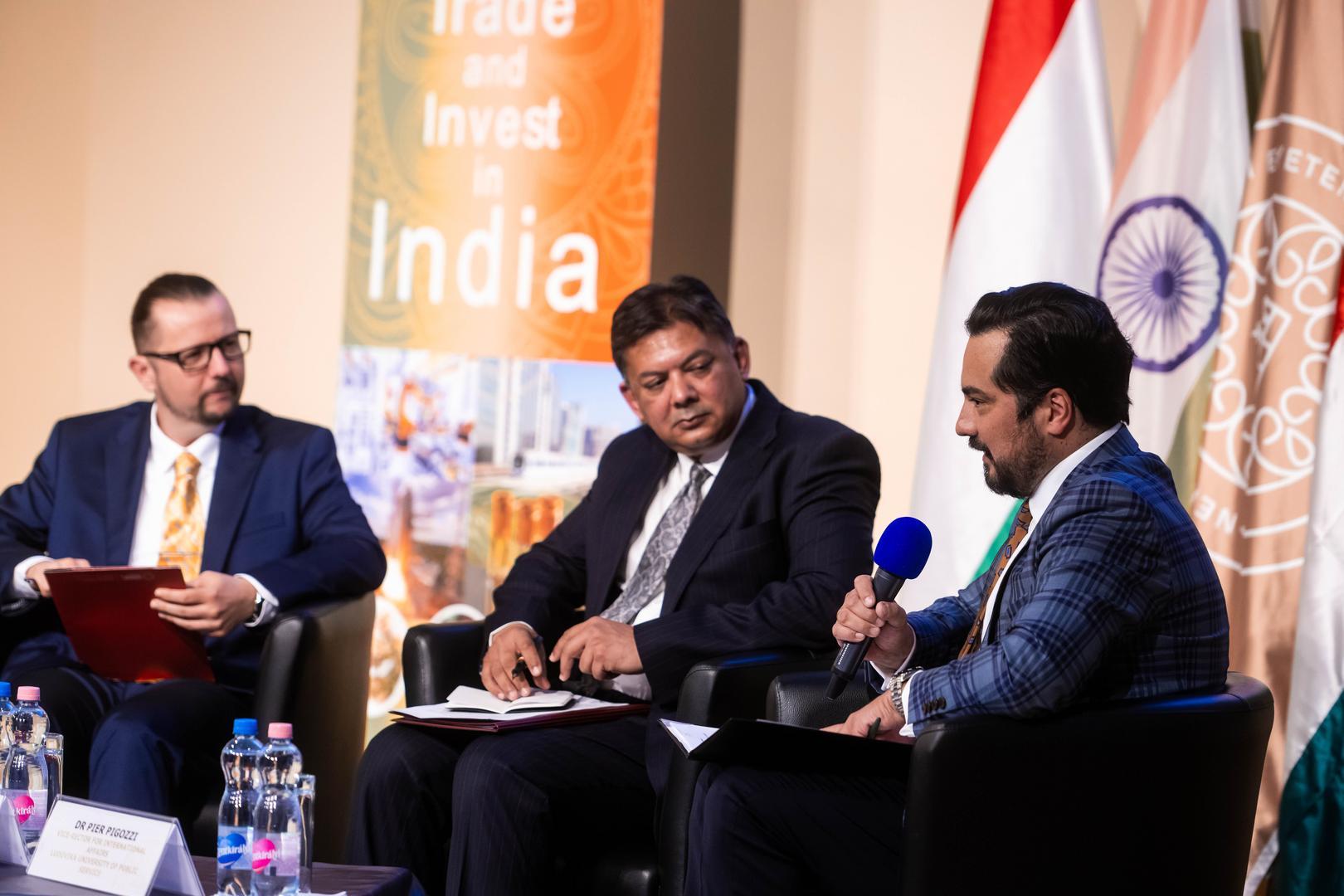

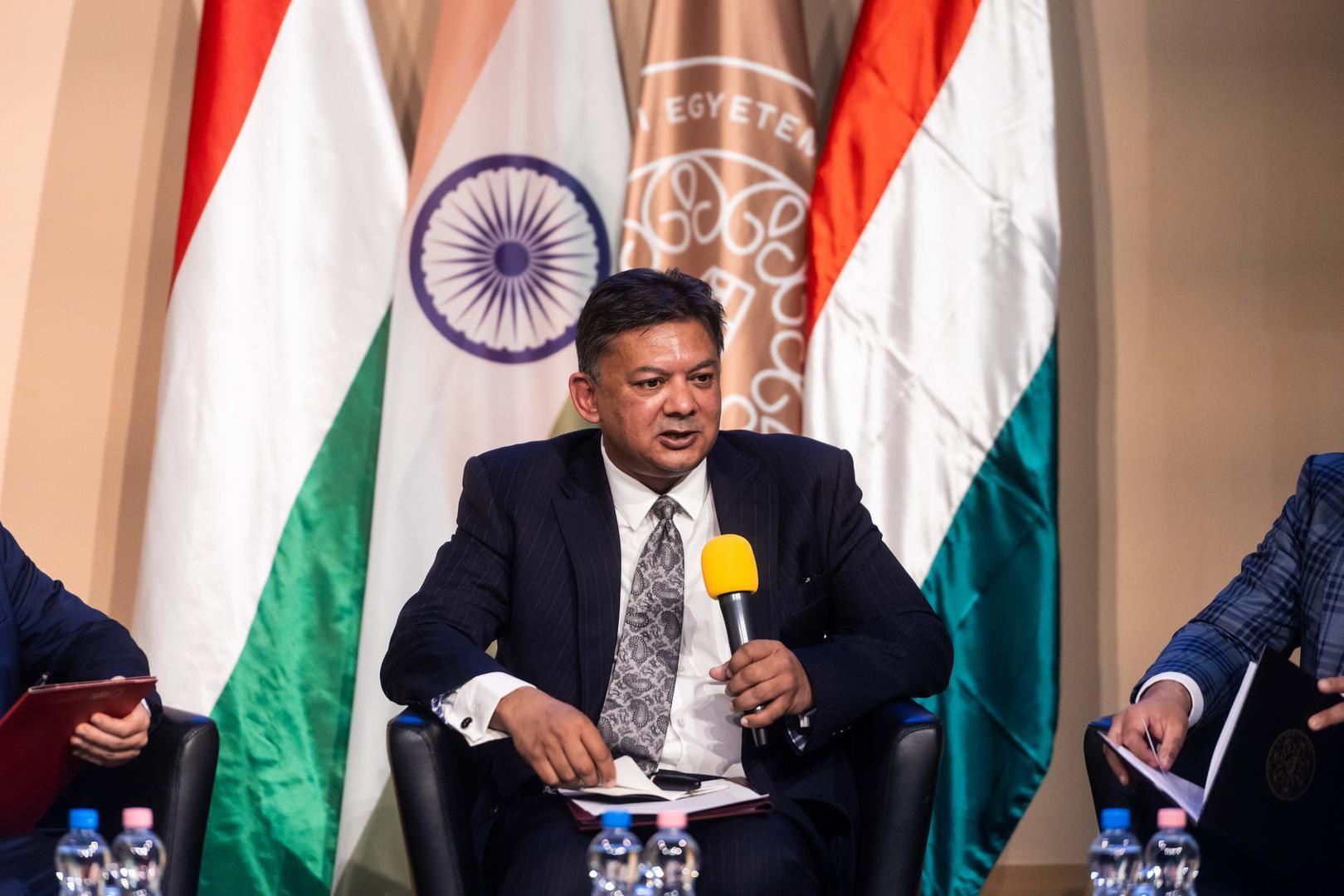
The International Office of the Ludovika University of Public Service (LUPS) hosted the latest event of the Ludovika Ambassadors’ Forum on April 23 at the Ludovika Campus, focusing on India’s global role and the future of India–Hungary relations. The forum aimed to provide insights—through both diplomatic and academic perspectives—into the connections required in a rapidly changing world order, with the participation of Anshuman Gaur, Ambassador of India to Hungary.
The event was opened by Pier Paolo Pigozzi, Vice-Rector for International Affairs at LUPS. In his welcome speech, he emphasized that strengthening international relations and expanding academic cooperation are key strategic priorities of the university. As part of this mission, the institution operates numerous mobility and partnership programs and actively seeks to provide a platform for dialogue between countries. He also highlighted the development of India–Hungary relations, which have expanded significantly over recent decades.
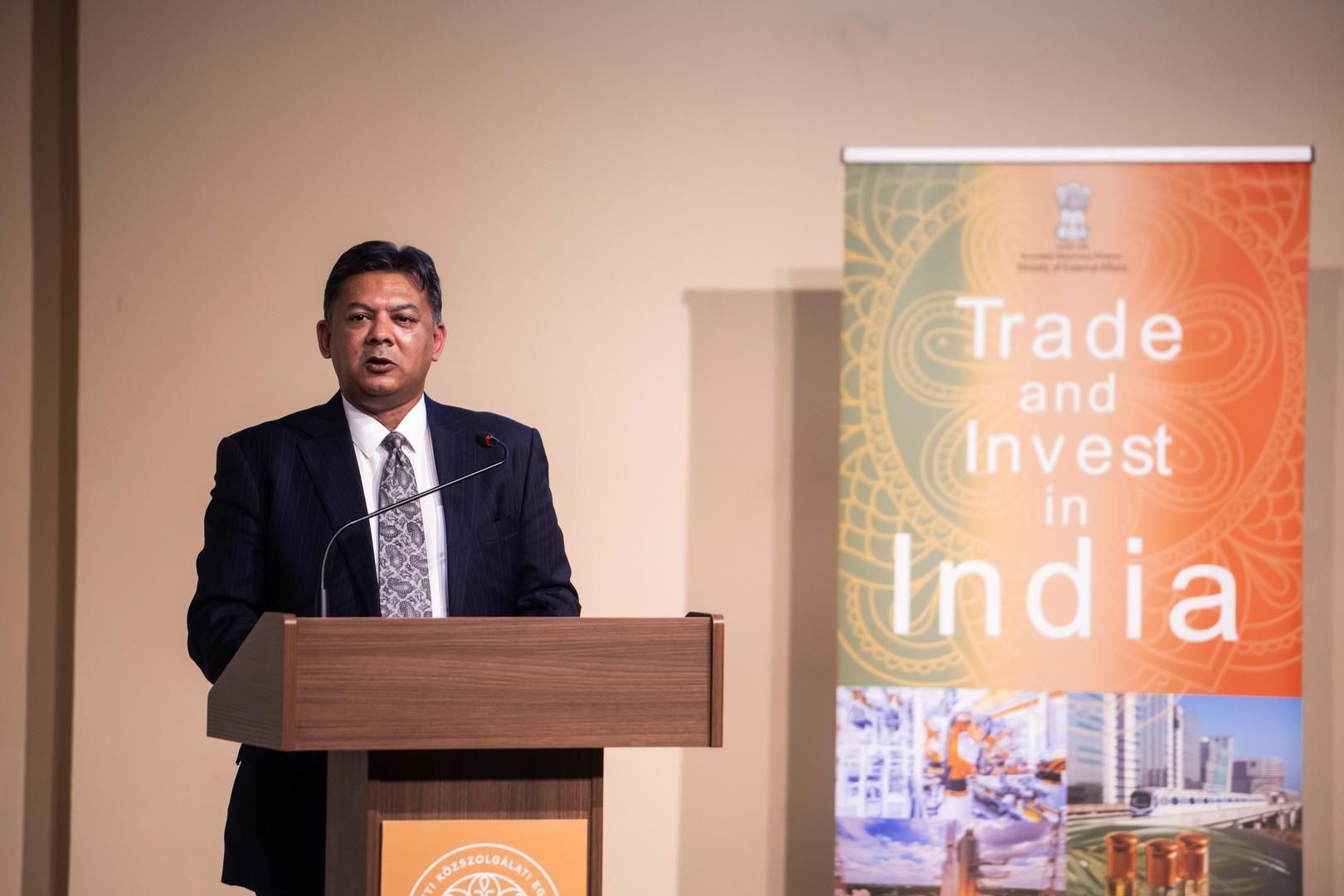
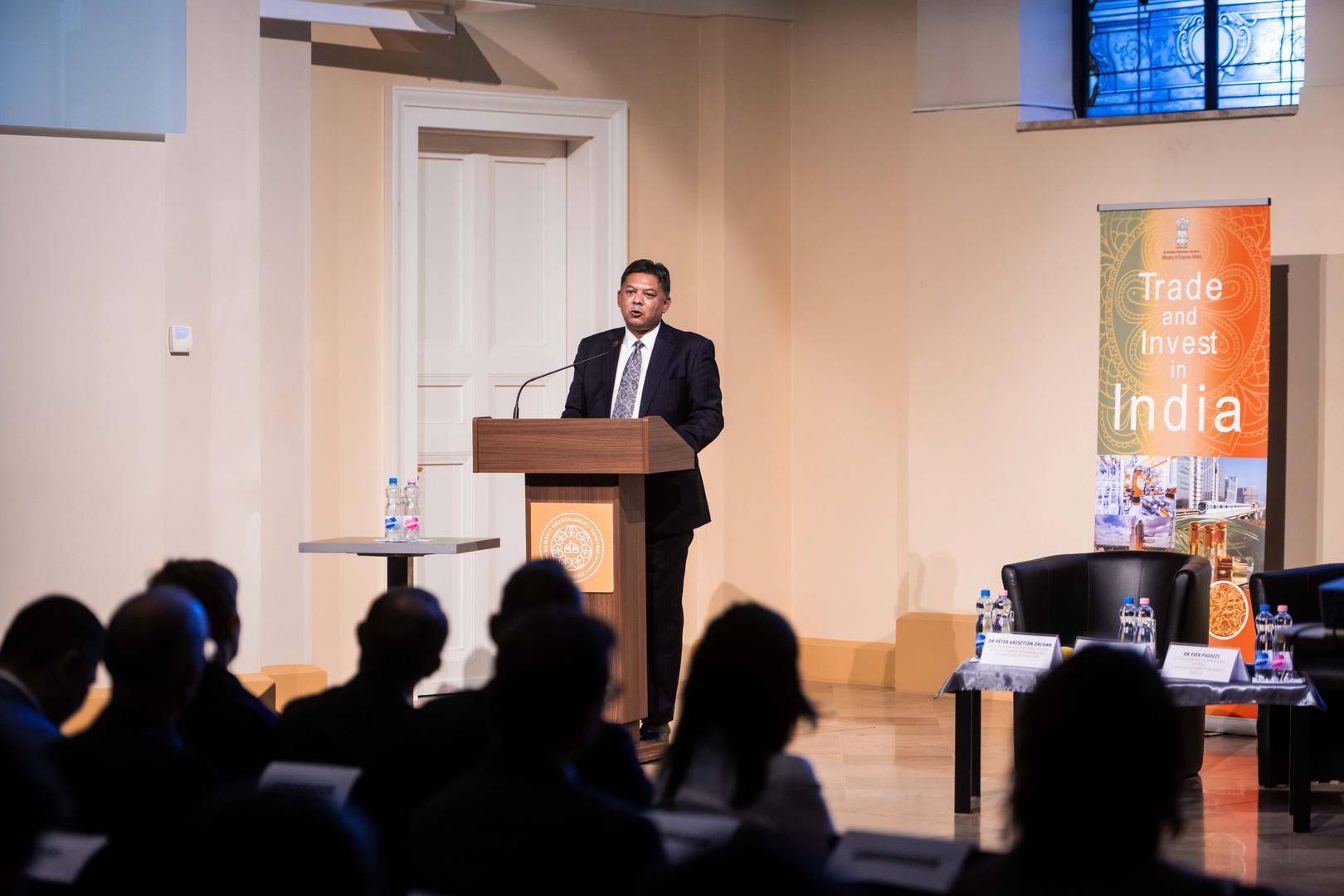
As the keynote speaker, Anshuman Gaur placed the concept of connectivity at the center of his presentation, describing it as a fundamental driver of global development. In the modern world, connectivity plays a defining role across economic, digital, and cultural dimensions, collectively shaping the future of international relations and ushering in a new era of strategic cooperation between nations.
The ambassador provided a detailed overview of India’s development trajectory, emphasizing the importance of openness, partnership, sustainability, and cooperation with Europe. According to him, three key factors—democracy, demography, and digitalization—form the foundation of India’s growth. India’s democratic system serves as a driver of economic development, as social participation and institutional stability create a predictable long-term environment. As a result, India is now one of the fastest-growing economies in the world, supported by a young and well-educated population that provides strong innovation and labor market potential.
Digitalization, as the third pillar, connects these elements by enabling more efficient public services and broader inclusion in economic processes. For this reason, India places particular emphasis on scientific and technological education, the development of digital infrastructure, and improving the efficiency of public services.
The lecture was followed by a panel discussion moderated by Pier Paolo Pigozzi, featuring Anshuman Gaur and Péter Krisztián Zachar, Vice-Dean for International Affairs at LUPS. The discussion focused on the transformation of global power structures and India’s role in the emerging multipolar world order.
One of the central themes of the discussion was the transformation of the global order. Pigozzi asked how India interprets the current transition from a previously unipolar system to a more complex, multi-centered international structure. In response, Gaur emphasized that for India, development and democracy are mutually reinforcing. In a country of such scale, sustainable economic growth can only be achieved through institutional stability, social participation, and the inclusion of broad segments of society.
According to Péter Krisztián Zachar, from a Central European perspective, India is a particularly interesting partner because it does not think in terms of bloc formation, but rather in terms of connectivity and balance. He argued that India’s example shows that stability in the international system does not necessarily come from aligning with a single dominant power, but from building relationships in multiple directions across various fields. For Central Europe, India is becoming an increasingly important partner, particularly in areas such as energy, education, and technological cooperation.
The issue of values was also a key topic during the panel. The ambassador emphasized that social welfare and justice are at the core of India’s political thinking, linking these principles to the country’s constitutional traditions and the state’s responsibility to improve citizens’ quality of life and ensure access to opportunities. Zachar noted that Europe could also learn from India’s experience, particularly in how a highly diverse society can simultaneously maintain political stability, democratic governance, and rapid modernization.
The discussion also addressed India’s federal system, in which states enjoy significant autonomy in various policy areas, while the central government is responsible for foreign policy and defense. According to Zachar, this model may also offer useful reference points for Central Europe, particularly in terms of state capacity, digital infrastructure, and targeted welfare policies.
Closely related to this was the issue of digital access and data as a public service, where Gaur emphasized that one of the guiding principles of India’s digital development is social justice, with systems designed to reach even the most marginalized groups. As examples, he mentioned programs related to bank account access, mobile connectivity, and digital identification, which enable the state to reach citizens more directly and efficiently.
Text: Orsolya Jancsó
Photo: Dénes Szilágyi