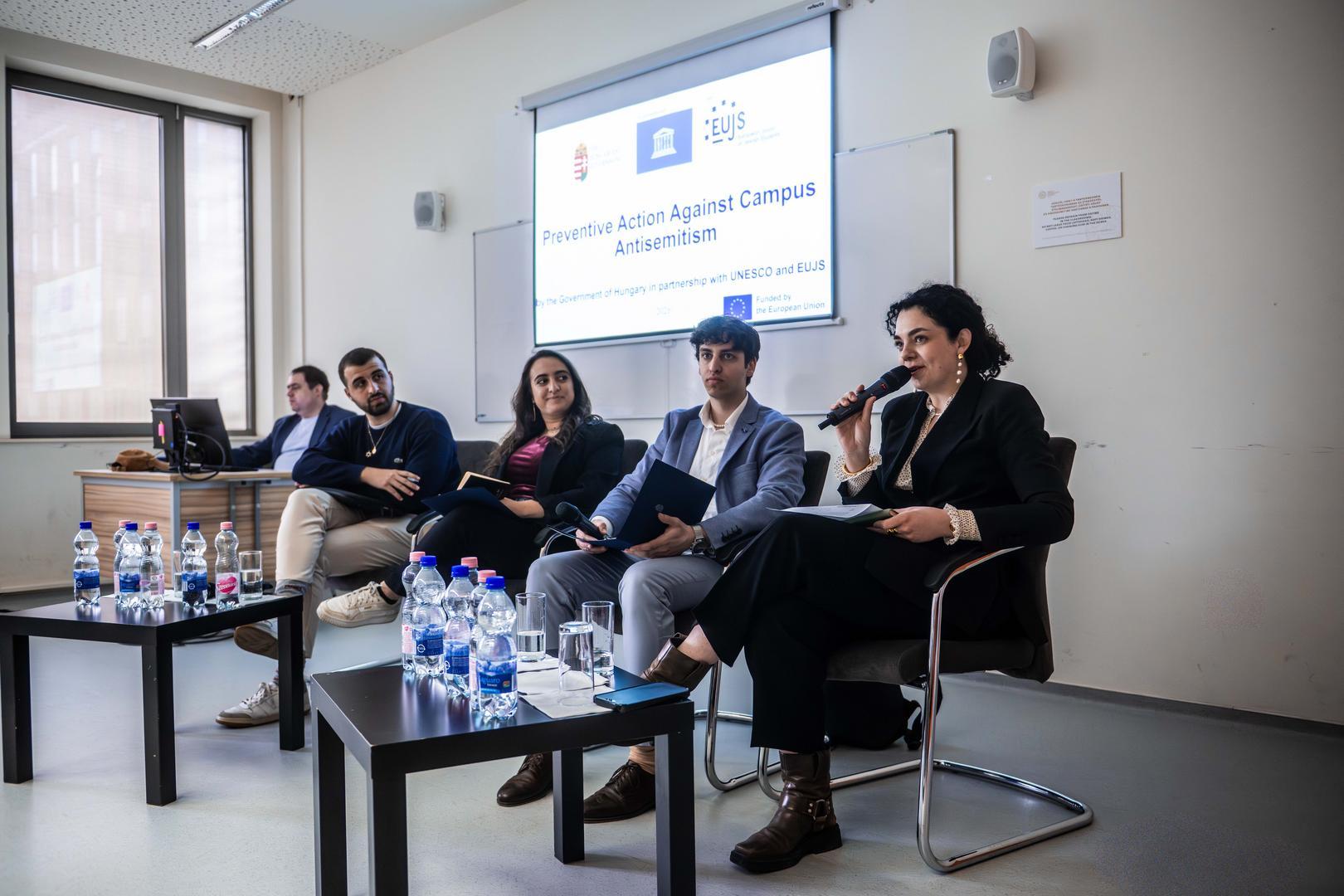
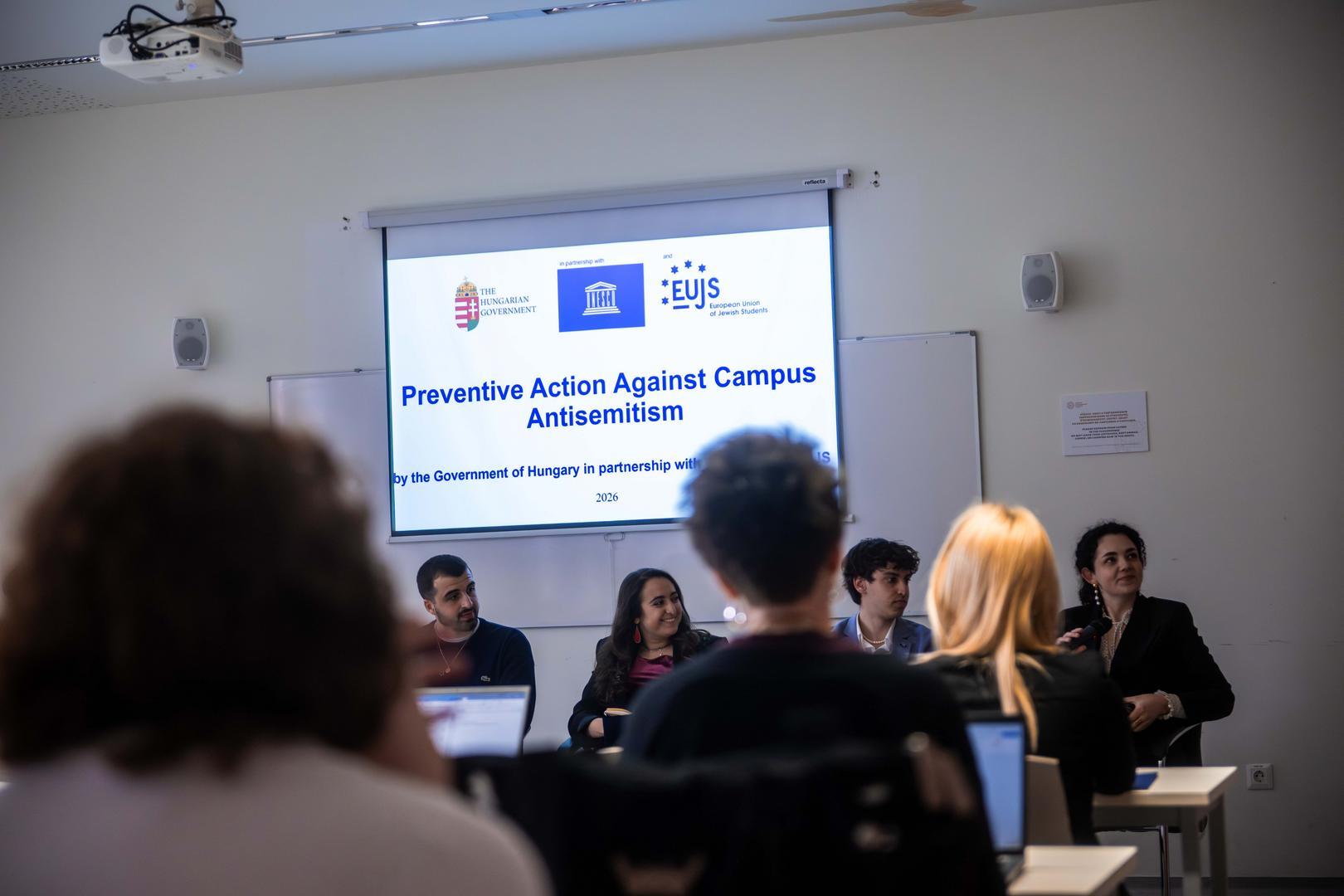
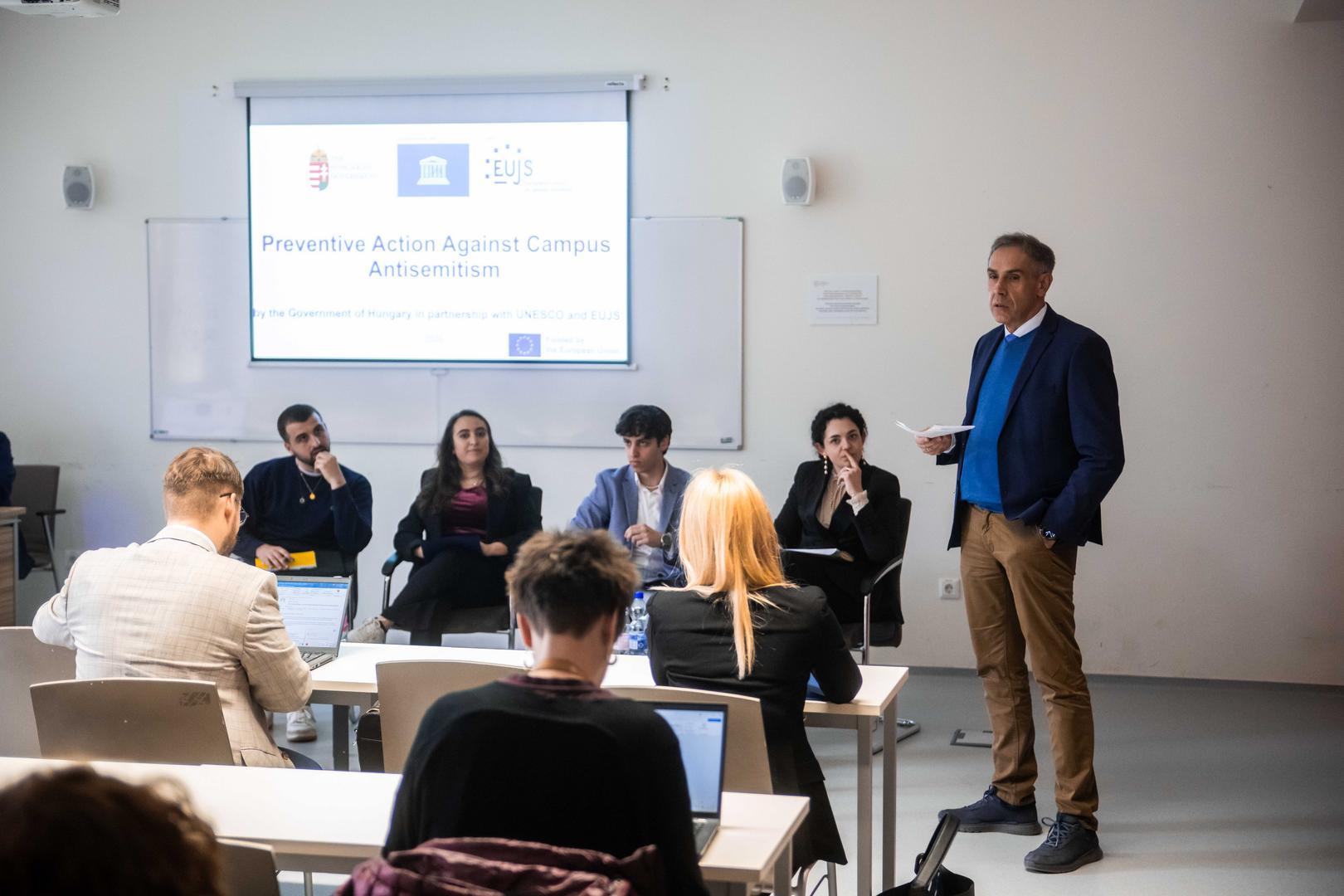
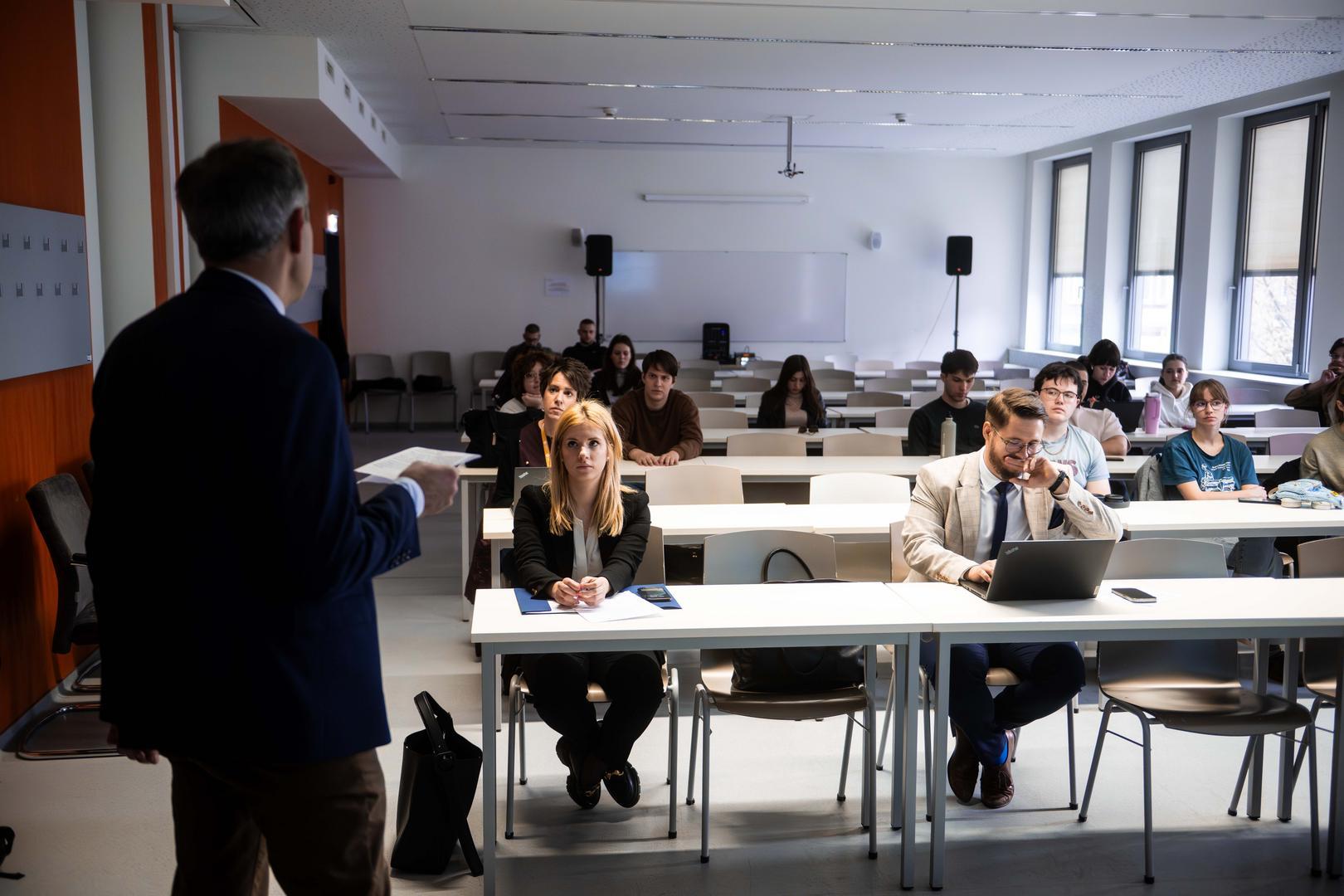
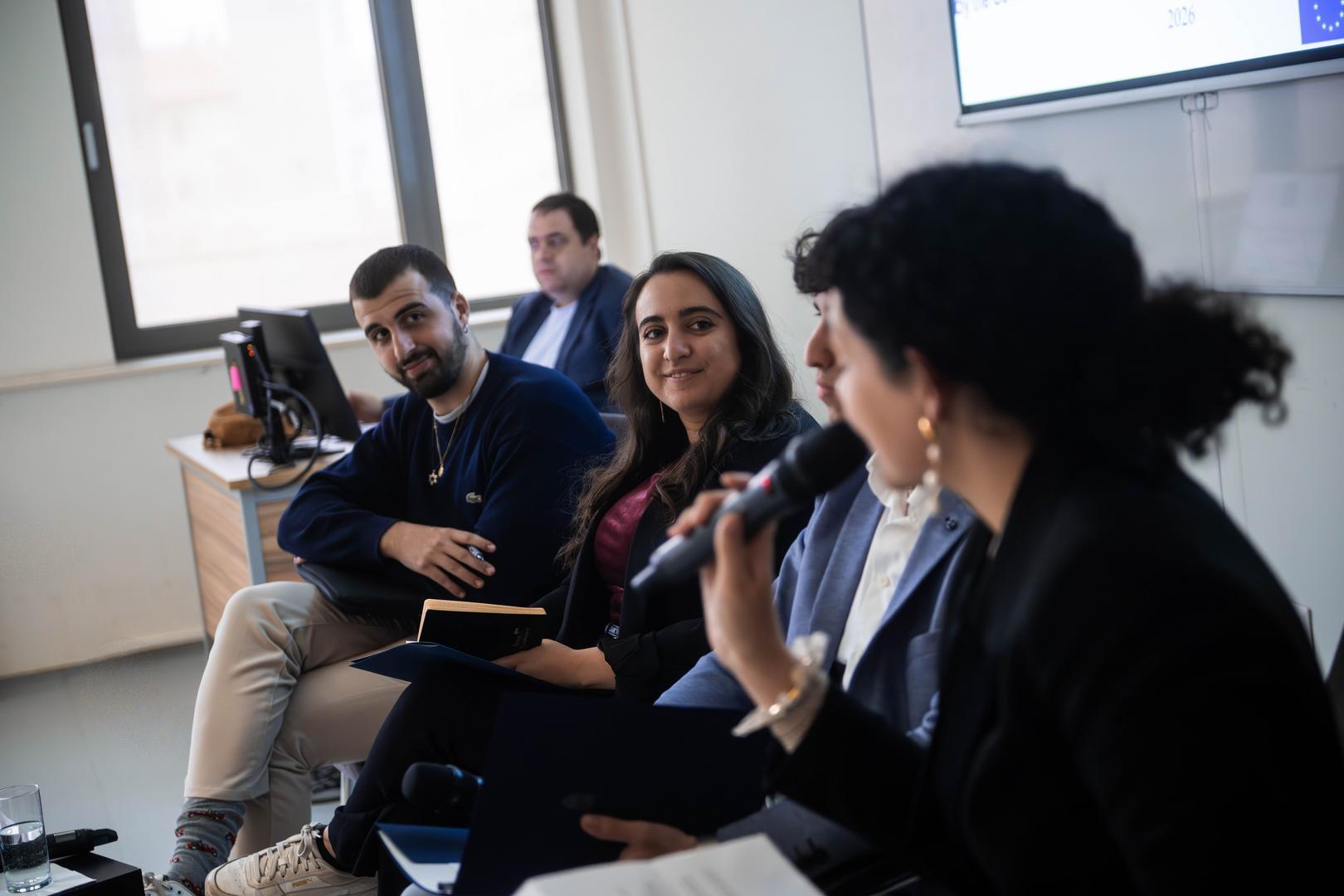
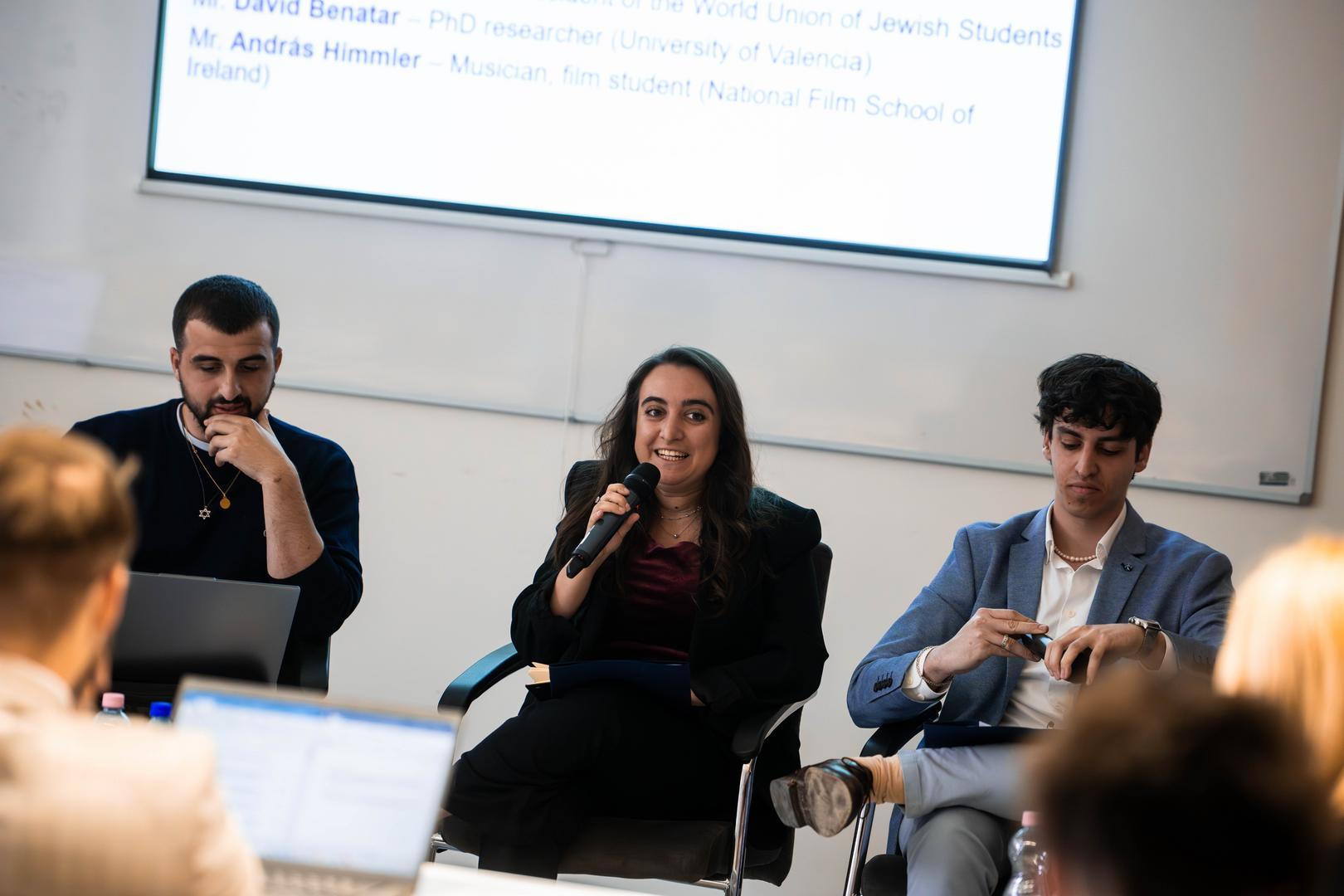
The Ministry for European Union Affairs, UNESCO, and the European Union of Jewish Students (EUJS) jointly organized the roundtable discussion held on March 23 at the Ludovika University of Public Service (LUPS). Hungarian and international students shared their thoughts on how antisemitism appears on university campuses and where the line lies between freedom of expression and hate speech.
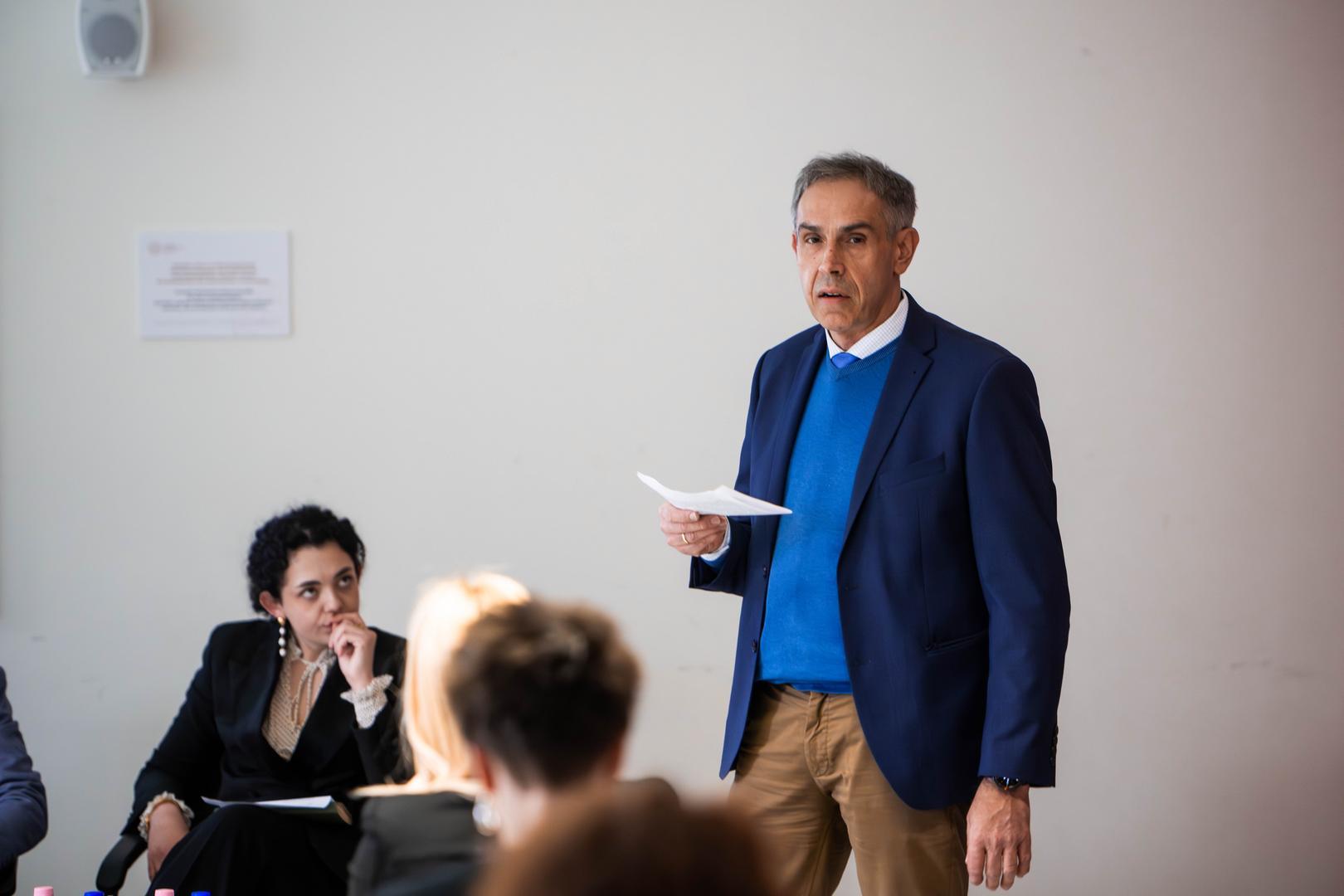
László Szegedi, Vice-Rector for Education at LUPS, opened the event by stating that the massacre committed by Hamas on October 7, 2023 was an unacceptable act of terror, which was followed by a concerning moral decline at many Western universities. While in numerous institutions political activism overshadowed the safety of Jewish students, Hungary appears as an island of common sense and security, where zero tolerance toward antisemitism is upheld. He stressed that future police officers, military officers, and public servants studying at LUPS bear a heightened responsibility to protect the safety of citizens—regardless of origin or religion—preventing hatred and radicalization from infiltrating communities.
As part of the program, participants watched an educational film produced by UNESCO illustrating the contemporary impact of antisemitism in Europe, helping to clarify the concept more precisely. In this context, one panelist compared antisemitism to a dormant virus—sometimes more visible, sometimes more hidden throughout history, but always present, and currently in a phase of resurgence. It was noted that, according to a British report, 20 percent of non-Jewish students would not willingly share a room with a Jewish peer, and globally 38 percent of Jewish students feel compelled to hide their identity on campus. Panelists also described unprecedented levels of aggression in Australia, including attacks on synagogues and a terror incident last December in which twelve people were killed.
One participant shared personal experiences from Spanish universities, describing a highly politicized atmosphere. She explained that due to her Jewish background, she was frequently labeled a “fascist,” and former friends cut ties with her. She recalled a shocking incident when a classmate was assigned an exam on Yom Kippur; although the professor eventually allowed a make-up exam, he decorated the classroom with Palestinian flags to “welcome” the only Jewish student. She added that researching contemporary antisemitism in Spain can jeopardize an academic career, as the subject of modern Jewish life is seen as “uncomfortable” in academic circles.
Another panelist reported that in Irish universities, students have very limited knowledge of the Holocaust, which makes radicalization easier—unlike in Hungary, where appropriate education forms an emotional barrier against hatred. He also mentioned that student organizations often hosted “Free Palestine breaks” during classes, disregarding the feelings of Jewish students.
Regarding the events of October 7, speakers noted that the tragedy resurfaced not only political tensions but deeply personal traumas, shaking the sense of security among young European Jews. For many, the healing process began only months later, driven by an internal necessity—yet the effects of the war have deeply permeated their private lives.
One contributor described experiencing months of insomnia, perceiving the events of October 2023 as “trauma layered upon trauma,” as three of her grandparents were Holocaust survivors. This generational inheritance intensified everyday fear. Participants also mentioned that even during a friendly Shabbat dinner, guests instinctively watched the door, fearing someone might burst in with a weapon—a fear that now follows them into cinemas or concerts.
Spanish accounts reinforced this picture. According to a report from Madrid, daily reality for Jewish students now involves schools surrounded by police cars and continuous security in front of synagogues. The speakers emphasized that healing requires Jewish life to return to public spaces. In Madrid, the once-popular “Hanukkah in the Streets” celebration has not been permitted since October 7. They described living in a state of abnormality, where people speak quietly about Jewish topics or avoid using Hebrew in public—something that should never become “normal.”
Another panelist recalled the internal struggle he faced while organizing a memorial event in Dublin shortly after a cinema attack. He admitted the thought crossed his mind: “What if I don’t make it home alive?” Ultimately, he decided that giving in to fear would hand victory to the attackers. He stressed that while professional security teams and detailed planning have sadly become essential, communities must show they refuse to be intimidated. By contrast, he cited Budapest as a positive example, where public outdoor celebrations were still possible in December—even if the “what if something happens?” fear lingered in many minds.
Participants also reflected on past interfaith dialogue efforts. They felt earlier models partly failed because they focused on superficial similarities—such as dietary rules or monotheism—while avoiding the difficult political or identity-related issues that genuinely shape Jewish experiences. Their hope is for a renewed dialogue that addresses these tensions more honestly. They highlighted that these personal stories are not merely internal matters of the Jewish community but experiences that shape their daily lives as European citizens and students.
The speakers agreed that the most painful aspects are the passivity of the “silent majority” and the loss of friends. They recalled an incident in Turin where participants of an anti-antisemitism conference were physically assaulted and silenced. They emphasized the importance of reporting incidents, safeguarding safe spaces on campus, and fostering a proud and positive Jewish identity. While Jewish communities often “close ranks” as a survival mechanism, the ultimate goal must be the restoration of democratic dialogue.
The closing message of the event stressed that universities must remain safe spaces where, despite differences of opinion, dialogue remains respectful and democratic.
After the panel, participants watched a film depicting contemporary Jewish life in various countries, followed by a Q&A session. Finally, the audience could share reflections through a questionnaire accessible via QR code, helping evaluate the impact of the event.
Text: Zsófia Sallai
Photo: Dénes Szilágyi