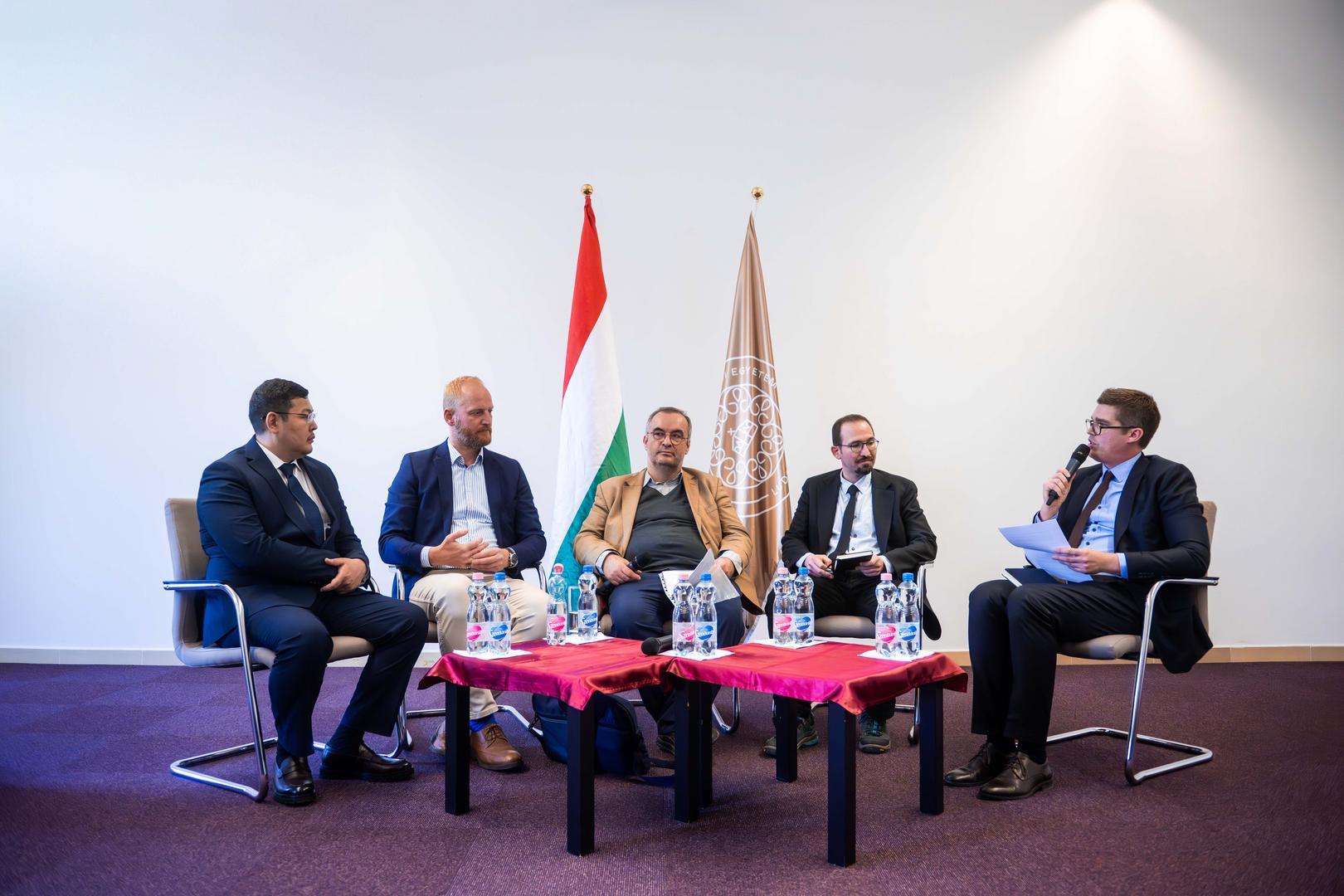
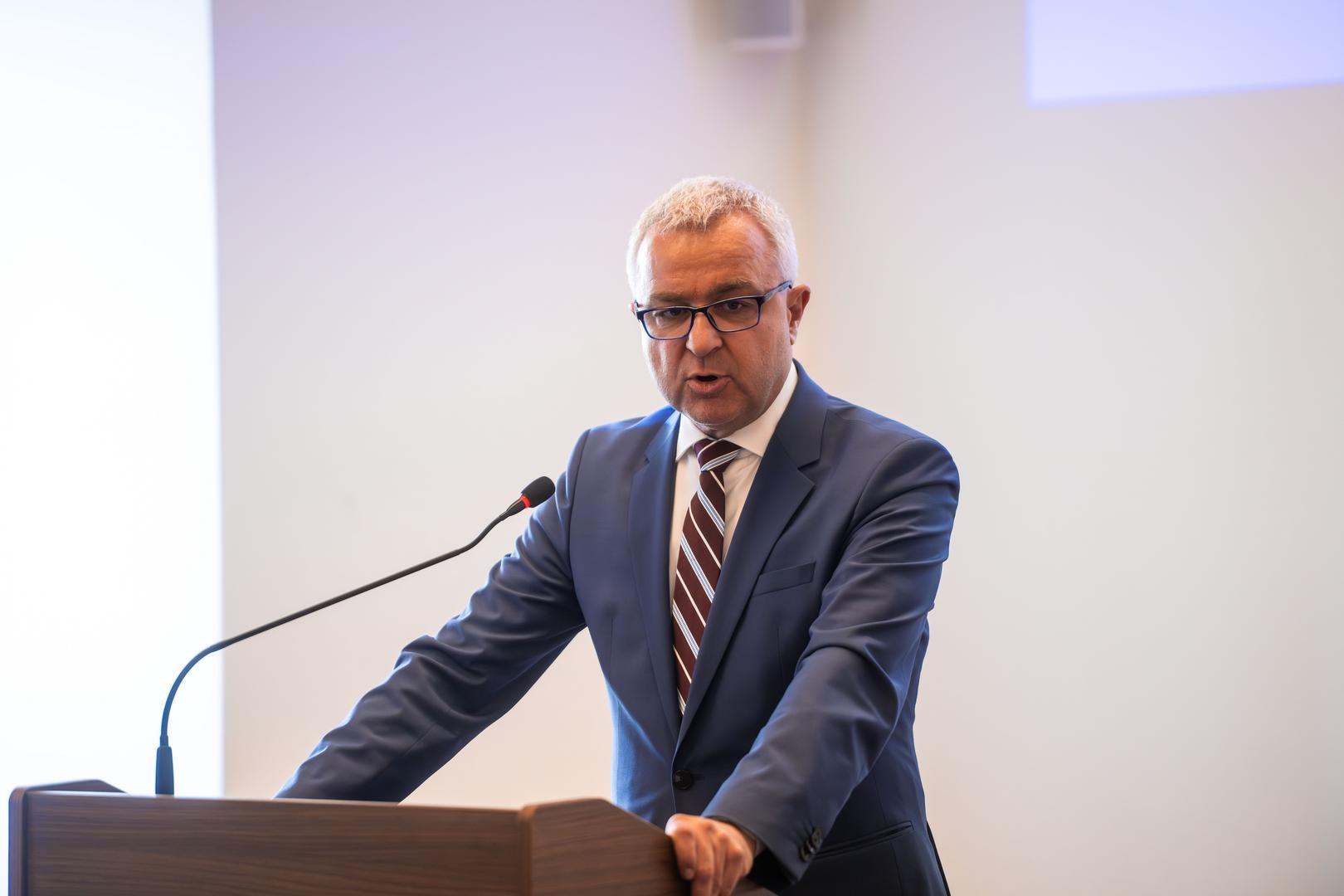
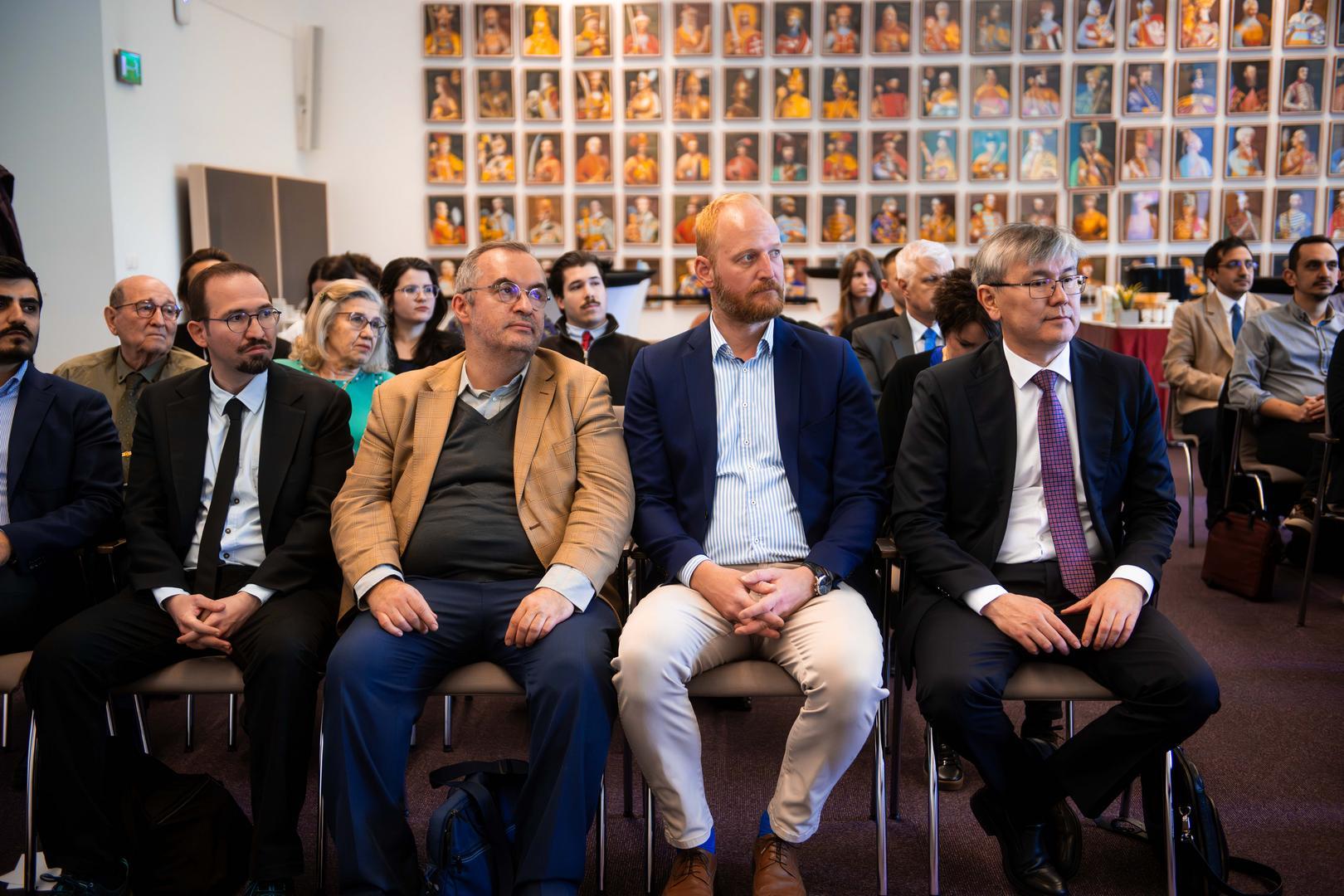
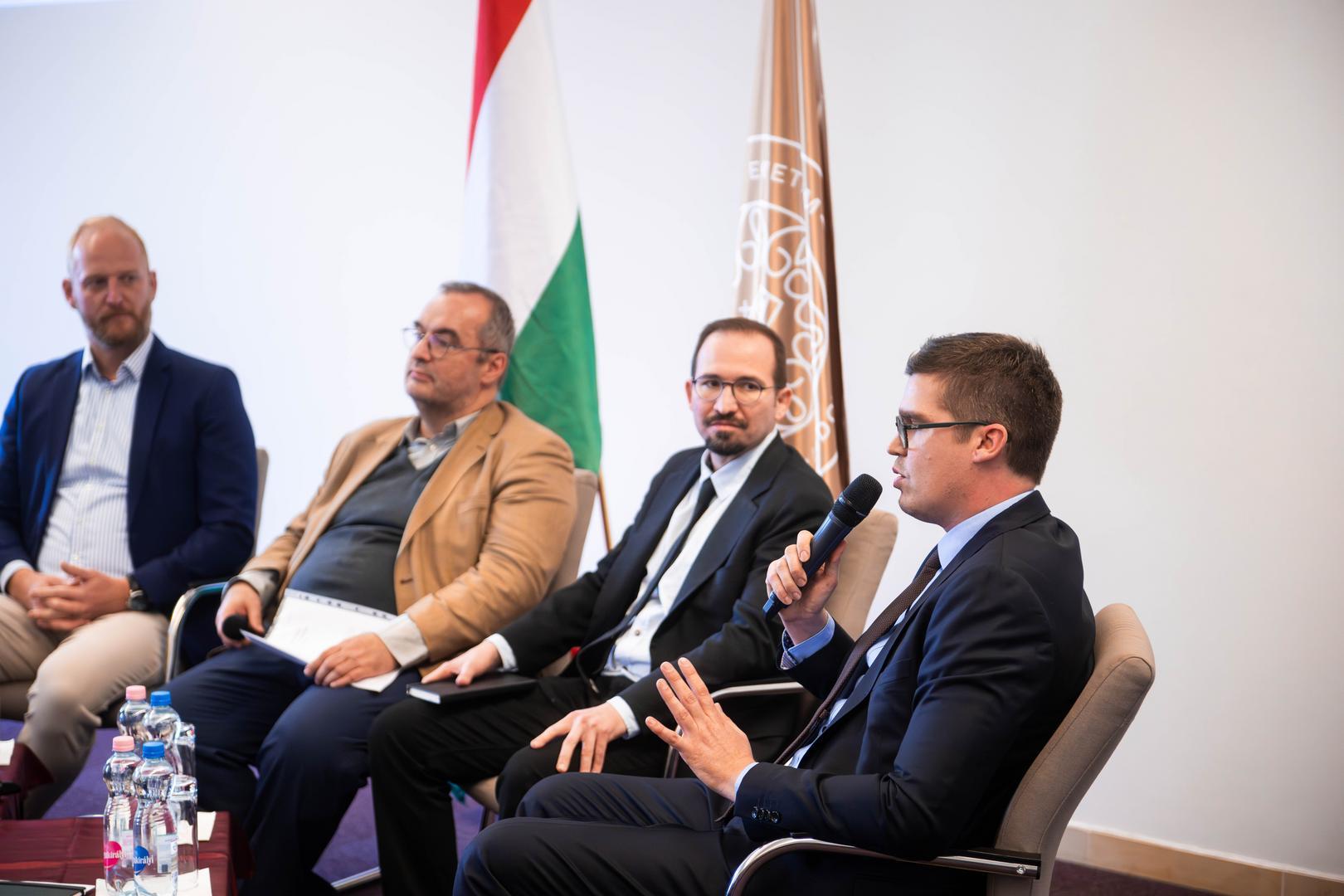
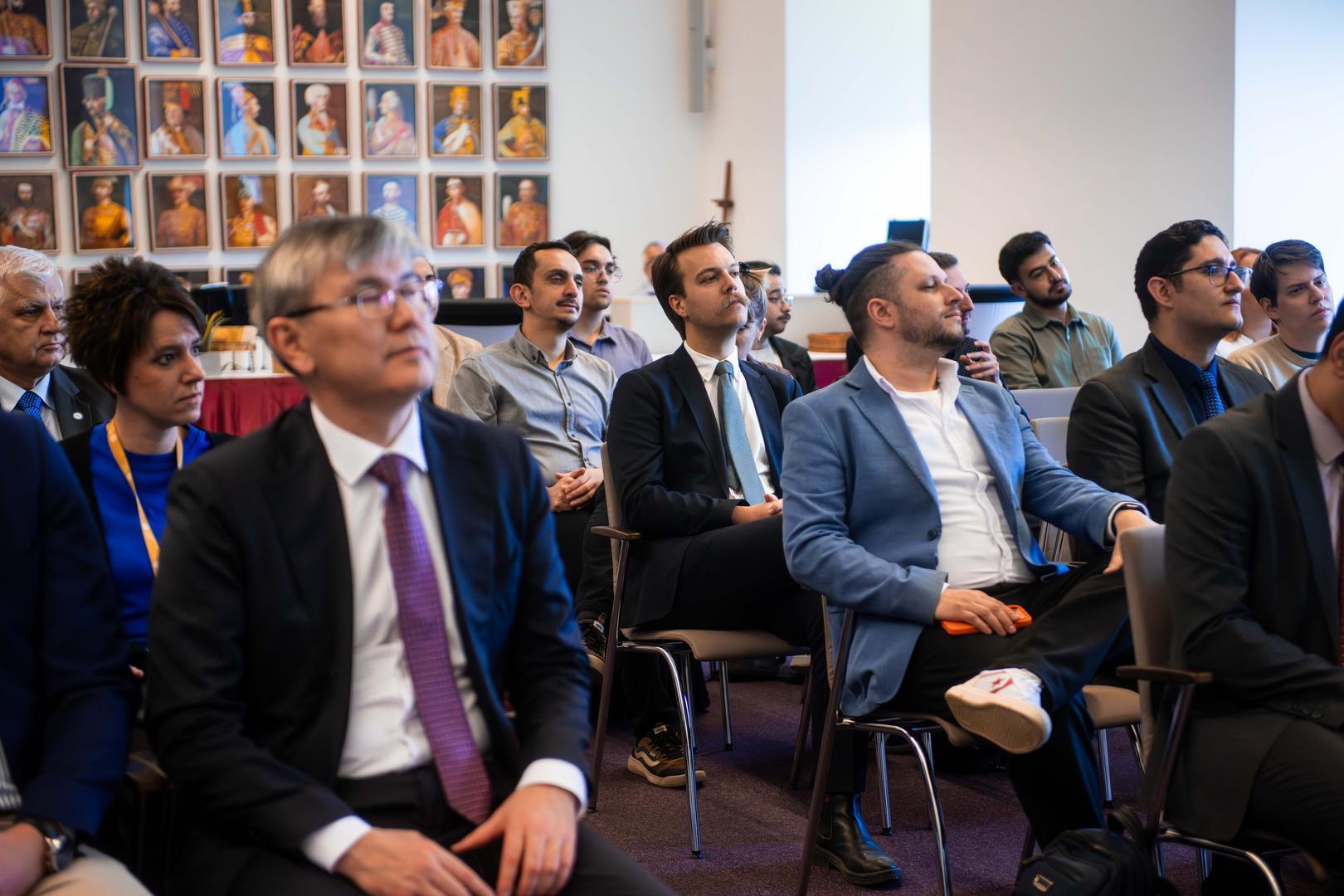
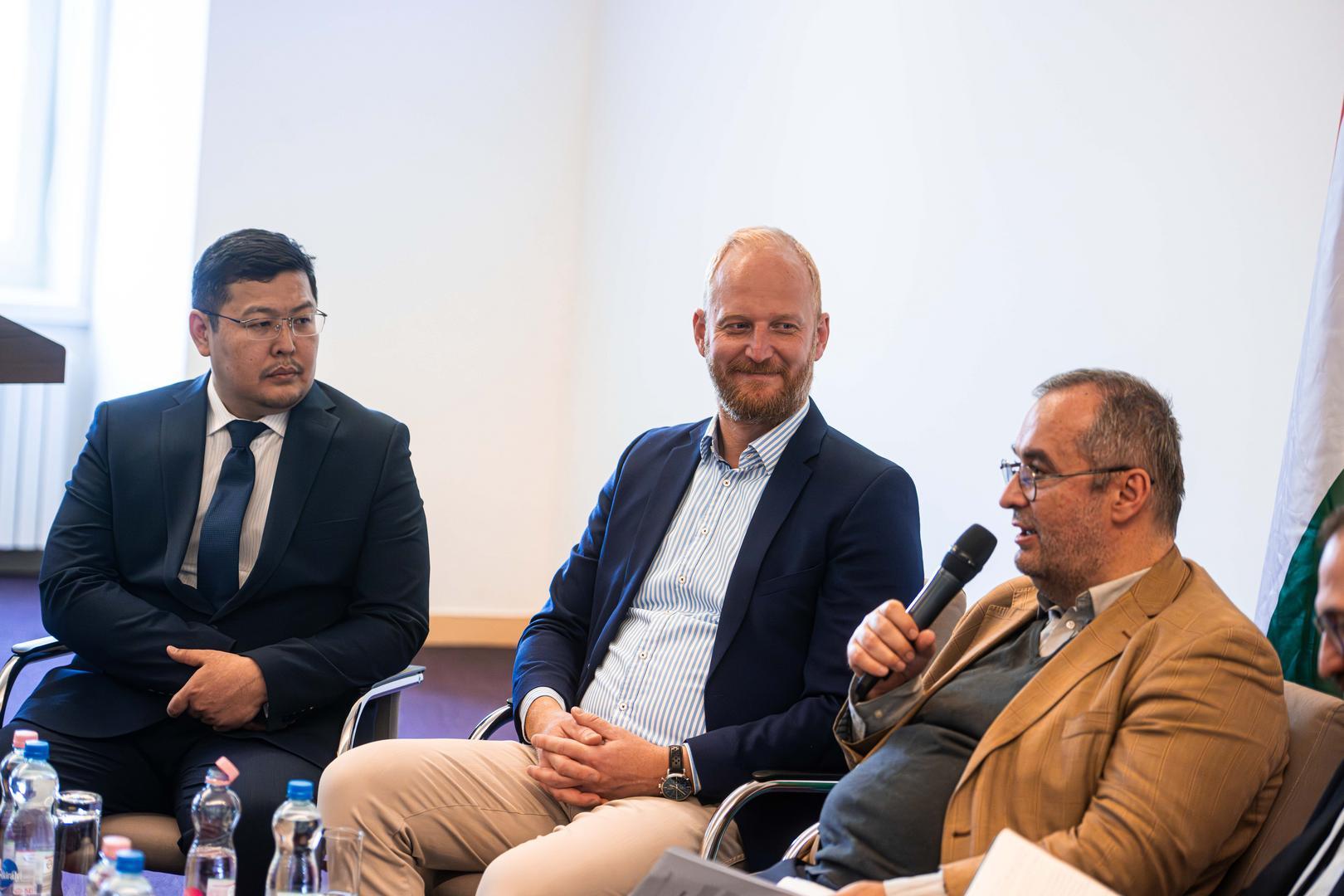
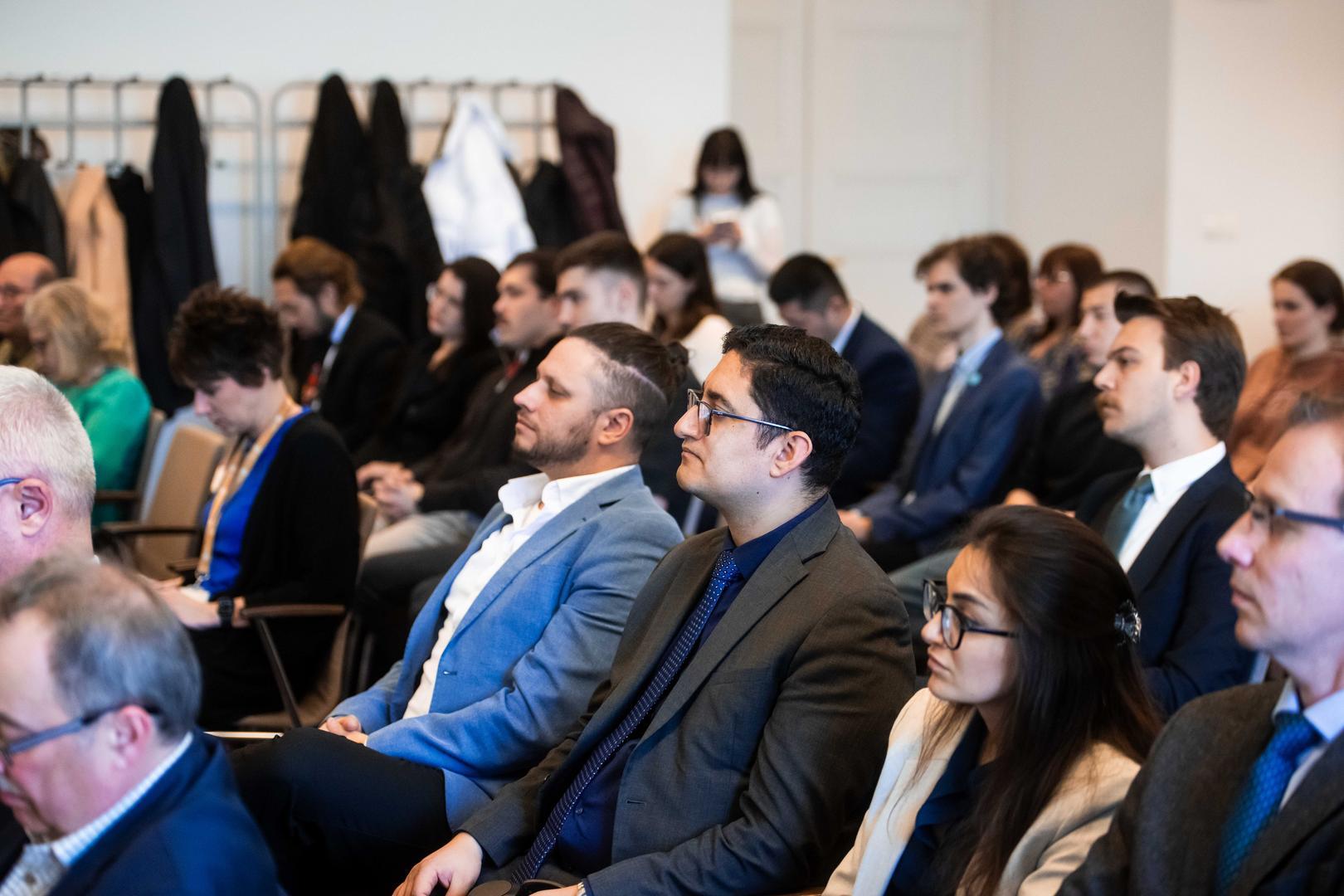
At the latest event of the Ludovika Turkic Dialogues series organized by the International Directorate of the Ludovika University of Public Service (LUPS), experts discussed the history and contemporary interpretation of Turanism at an event titled “Turanism in the Past and Nowadays Hungarian Aspects of the Cooperation Between the Turkic Nations.” The event took place on March 11 in the Zrínyi Hall of the LUPS Main Building.
Participants presented how this political and cultural idea developed and how it is interpreted today, with particular attention to Hungarian aspects and relations with Turkic peoples. They also discussed the role Turanism plays in modern Hungarian identity and how Hungary and Hungarians are currently perceived in Turkey and Central Asia.
The central theme of the conference was the concept of Turanism, which emerged in the second half of the 19th century, when European nations were searching for deeper historical roots. Hungarian researchers and explorers began turning eastward following Western scholarly models in order to understand the circumstances of Hungarian ethnogenesis and its linguistic, historical, and archaeological aspects. It was emphasized during the presentations that in Hungary Turanism largely remained an intellectual and cultural idea, closely connected to Hungarian self-identity. Although elements of Turanist thinking are still present in Hungarian intellectual life today, emphasizing Eastern origins never became an official political doctrine.
Maintaining and expanding relations with Turkic peoples has gained renewed importance in recent years, as Central Asia and Turkey have become increasingly significant actors in global politics and regional affairs.
“Geographically we belong to Central Europe, but due to our historical experiences and intellectual traditions we often call ourselves the westernmost Asians,” said László Vasa, head of the Ludovika Center For Turkic Studies, in his opening remarks. He added that this dual perspective shapes how Hungarians view the broader Eurasian region. Modern relations today are characterized not by political projects but by partnerships, academic exchange programs, and growing diplomatic and economic cooperation. Universities play a key role in this process, since academic dialogue allows historical ideas to be critically examined while creating new frameworks for future cooperation. Through student and faculty exchange programs, relations between peoples also become closer. Although Turanism as a 19th-century concept largely belongs to the past, dialogue between Hungary and the Turkic nations remains an integral part of the present and future, Vasa emphasized.
Following the opening remarks, a panel discussion took place with the participation of Miklós Sárközy, Iranist, historian, and university professor; Gábor Fodor, Turkologist and historian and research fellow at the ELTE Institute of Historical Research; Emre Saral, historian and associate professor at Hacettepe University; and Nurtas Abdimominov, lecturer at the International Information Technological University. The discussion was moderated by historian and Turkologist Péter Kövecsi-Oláh, advisor to the LCTS.
In the first part of the discussion, Miklós Sárközy explained the etymological origins of the word “Turan.” He noted that the term first appeared in inscriptions of the Sasanian Empire in the 3rd century, for example in the texts of King Shapur I. Interestingly, the term originally did not refer to Central Asia but to border regions located in the southern part of present-day Pakistan. Its meaning shifted northward around the 10th century; in the Persian literary masterpiece The Book of Kings (Shahnameh), the lands beyond the Oxus River inhabited by Turkic tribes were already referred to as Turan. From a linguistic perspective, the word originally may have meant “the land of enemies” or a kind of frontier region from the viewpoint of the Iranian state.
Emre Saral discussed the political development of Pan-Turkism. He mentioned that the scientific definition of the concept is attributed to the German scholar Max Müller, while Ármin Vámbéry framed it within an ideological context. He highlighted the role of Yusuf Akçura, who in his early-20th-century work “Three Types of Policy” proposed Turkism as an ideological alternative to Ottomanism and Pan-Islamism, suggesting it as a way for the Ottoman Empire to survive in its contemporary form.
Regarding Hungarian aspects, Gábor Fodor and Miklós Sárközy emphasized the influence of 19th-century nationalisms. Ármin Vámbéry’s 1882 work on the origin of the Hungarians sparked a major scientific debate between proponents of Turkic and Ugric linguistic relationships. During this period, Hungarians who felt isolated among Slavic and Germanic peoples often looked to Turkic peoples as potential cultural and political allies or “brothers.”
Nurtas Abdimominov spoke about the significance of Turanism in Central Asia, stressing that in the early 20th century the idea served as a political ideology against Russian colonialism, especially among the Alash intelligentsia. Although suppressed during the Soviet era, Turanism gained new meaning after 1991. Today it is no longer seen as a political movement but rather as a “civilizational bridge” supporting economic and cultural cooperation between nations.
Later in the discussion, participants also analyzed the ethnic composition of Iran and the intellectual history of Turkish–Hungarian relations. It was noted that about 43 percent of Iran’s 90 million inhabitants are not of Persian origin, many living in peripheral regions of the country, making questions of national identity and ethnic or political movements particularly sensitive. Sárközy pointed out that although the term “Turan” is accepted in traditional literary language, Pan-Turkism as a political ideology is viewed with suspicion in Iran. In this context even the legacy of Ármin Vámbéry is mixed: while his role in attracting Western interest is acknowledged, some of his views are criticized in Iran, and certain works of his have faced restrictions due to political reasons, especially because of his critiques of Shiite Islam.
According to the participants of the roundtable discussion, the perception and role of Turanism have changed significantly throughout history, shifting from scholarly Orientalism to political ideology, and more recently toward a modern civilizational framework. Miklós Sárközy and Gábor Fodor described World War I, and particularly the Treaty of Trianon, as a turning point, when the idea emerged that “Eastern brothers” might bring liberation and help Hungary regain lost territories. During this period, scientific and non-scientific Turanian movements diverged, with the latter increasingly intertwined with right-wing political movements. After World War II, the communist regime banned Turanian associations, not necessarily because of their ideas but due to the anti-communist stance of their members and the movement’s right-wing connections. During this time the idea survived mainly among Hungarian émigré communities in North and South America, where many publications appeared about the supposed Hittite or other exotic origins of the Hungarians.
After the political transition of 1989–1990, Turanism re-entered Hungarian public discourse and often became associated with radical right-wing movements. According to Gábor Fodor, social groups receptive to Turanist ideas may constitute up to 15% of the Hungarian population. Interest in Eastern connections and the strengthening of Hungary’s ties with the East is often expressed through events such as the Kurultáj or other large cultural gatherings. At the same time, the modern discourse is strongly influenced by social media, whose mobilizing power helps neo-Turanist circles but often leads to emotion-based interpretations and exaggerations, making fact-based dialogue more difficult.
The Kazakh expert emphasized that in the future Turanism may best be interpreted as a “civilizational category.” This model would focus on shared intellectual heritage, cultural exchange, and scientific cooperation. Important elements could include academic collaboration, networks of cultural centers, and youth exchange programs.
Text:Zsófia Sallai
Photos: Dénes Szilágyi