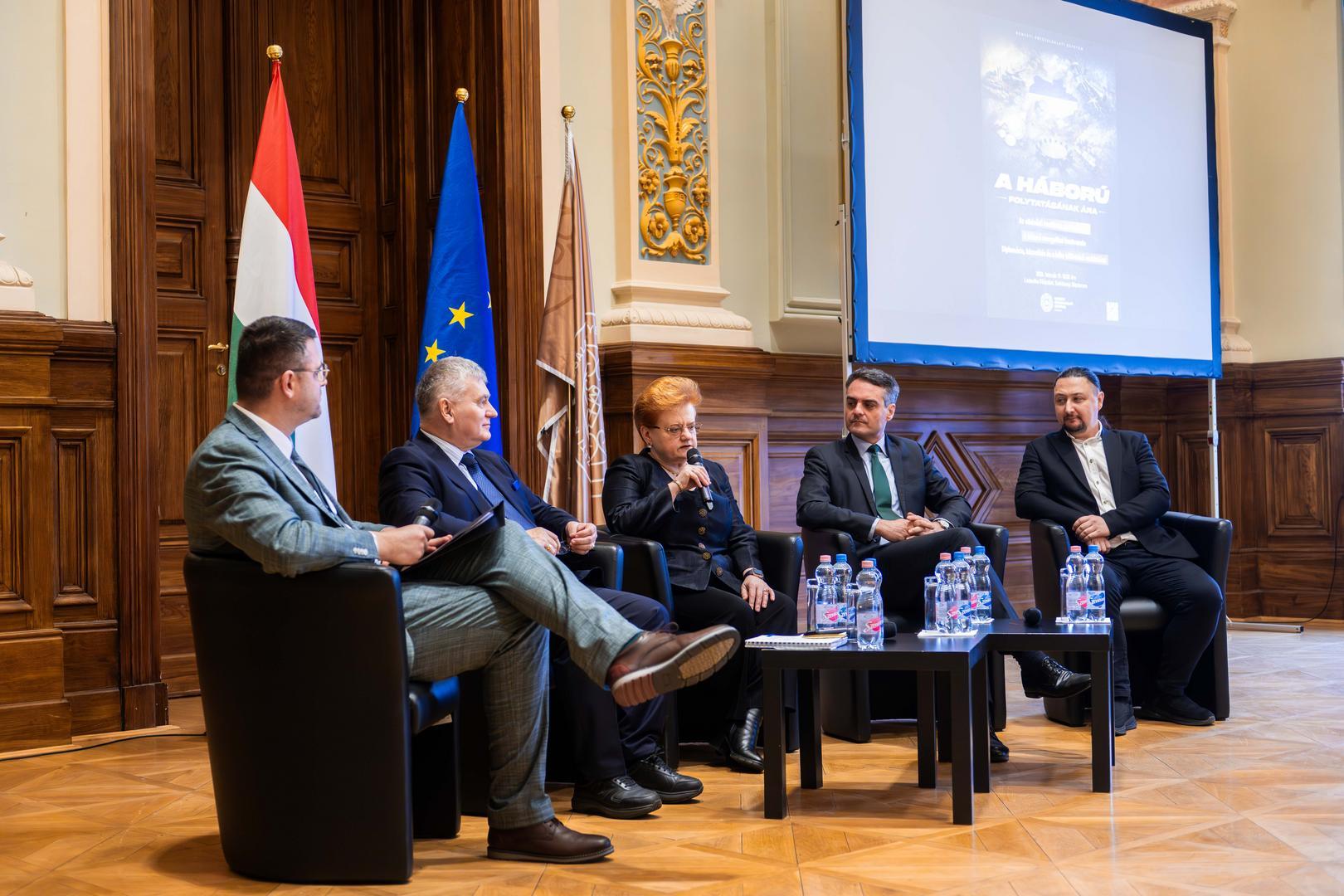
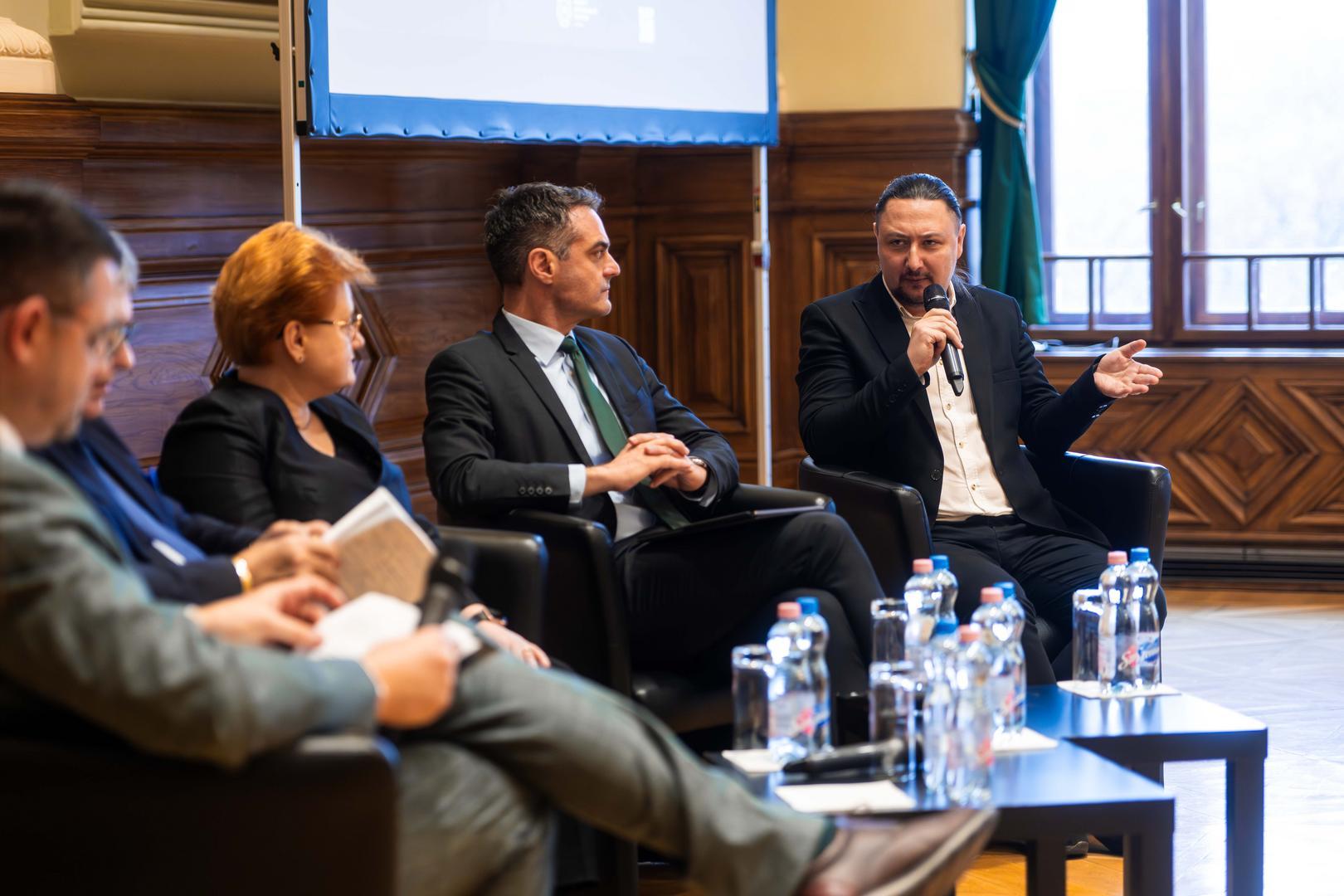
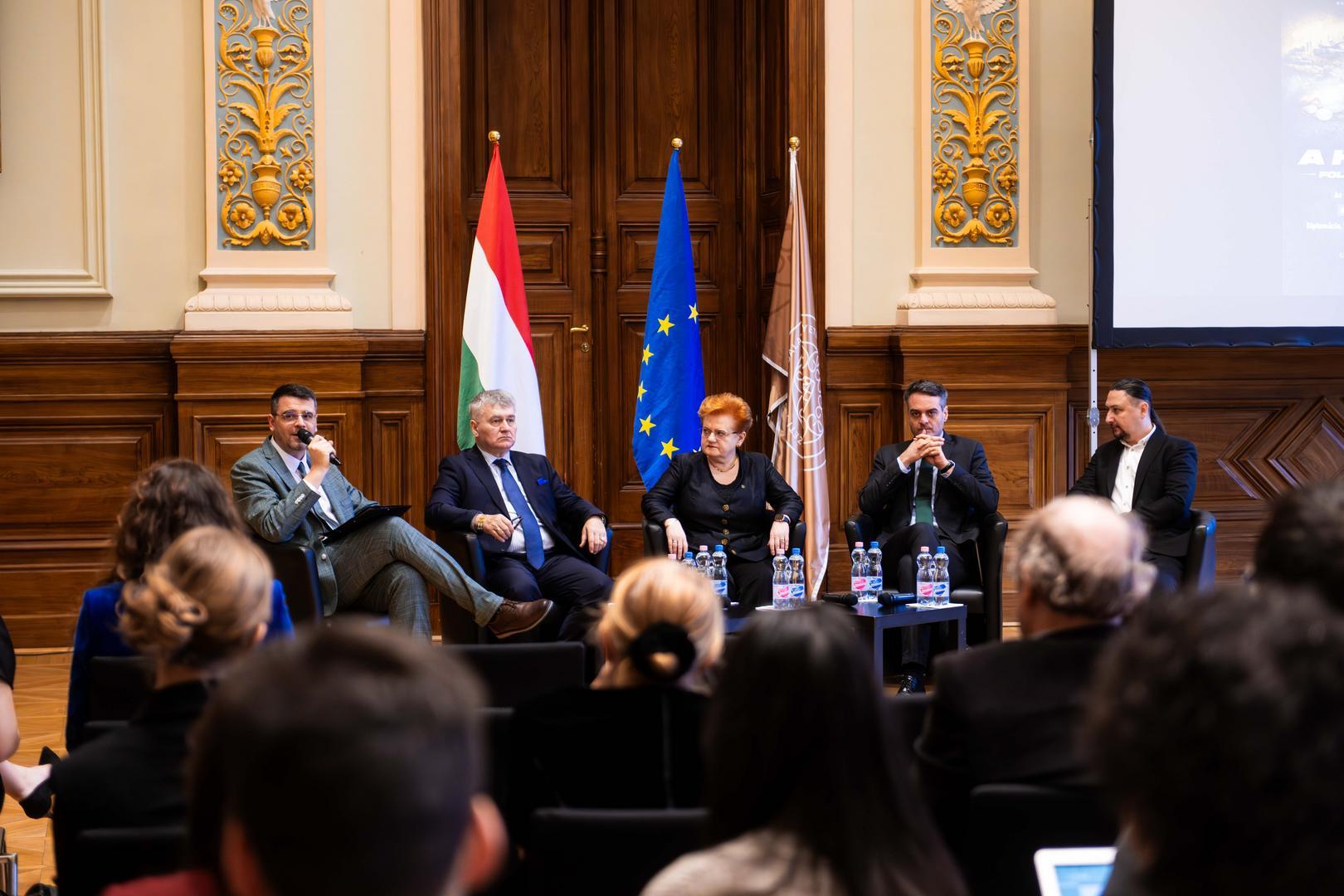
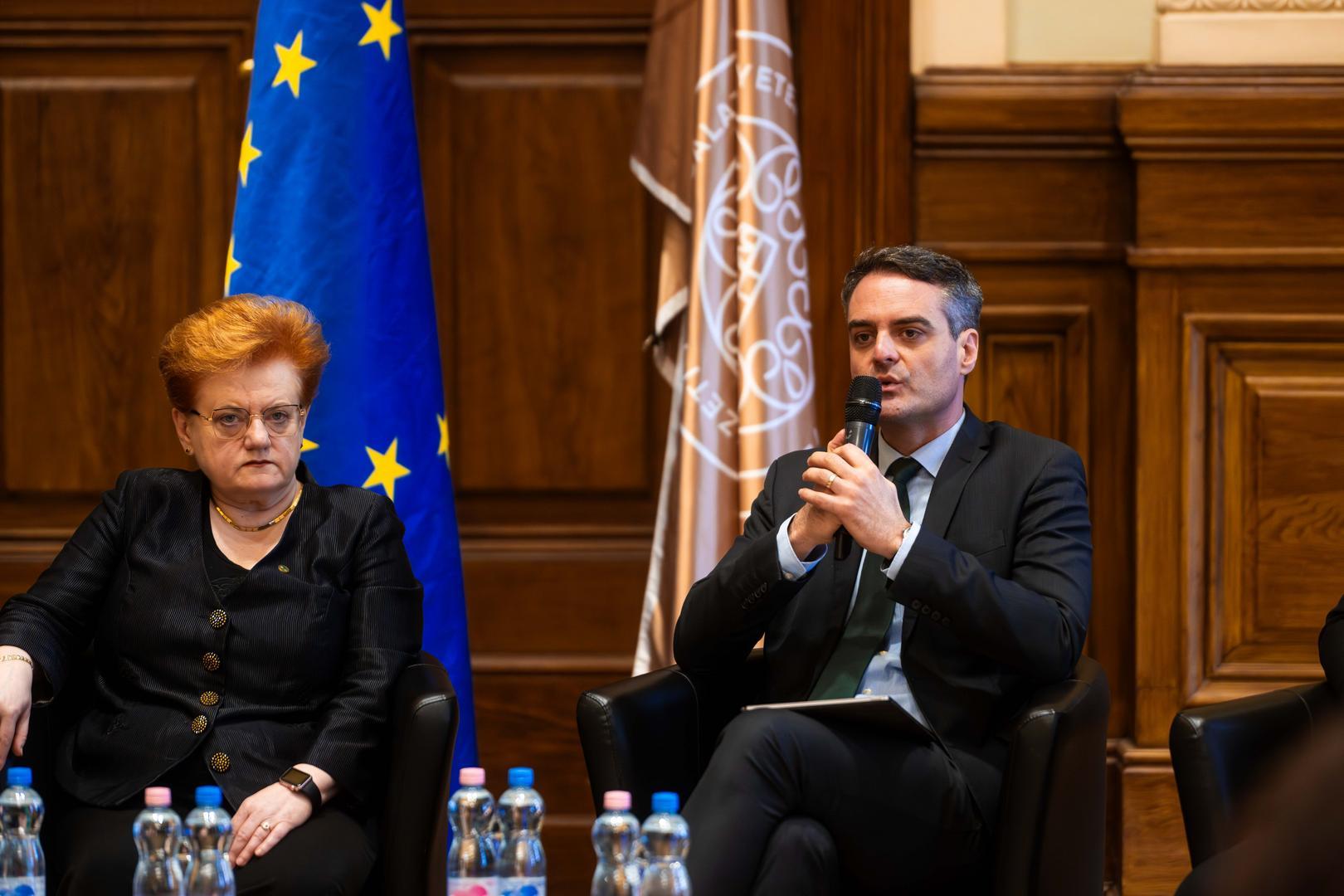
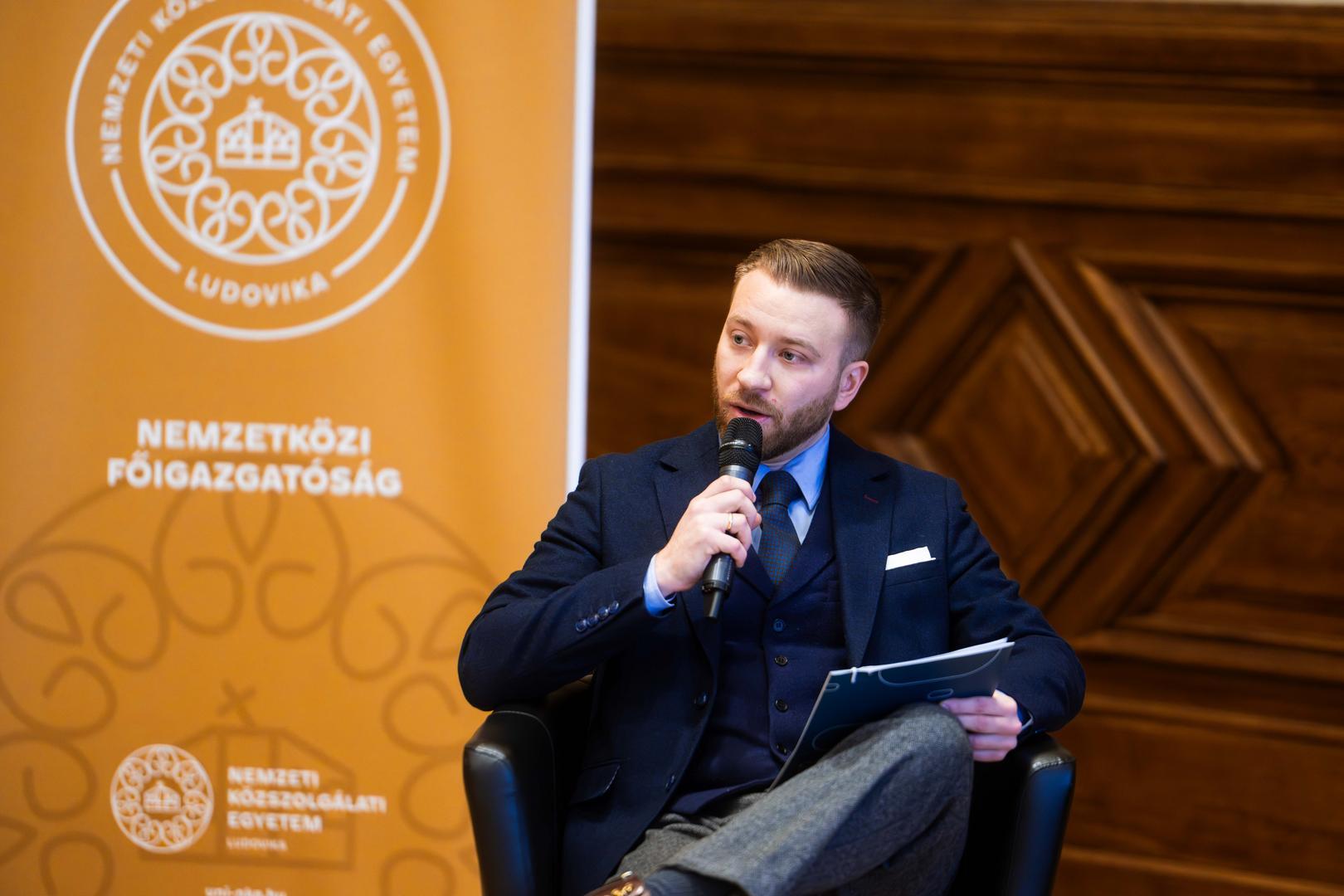
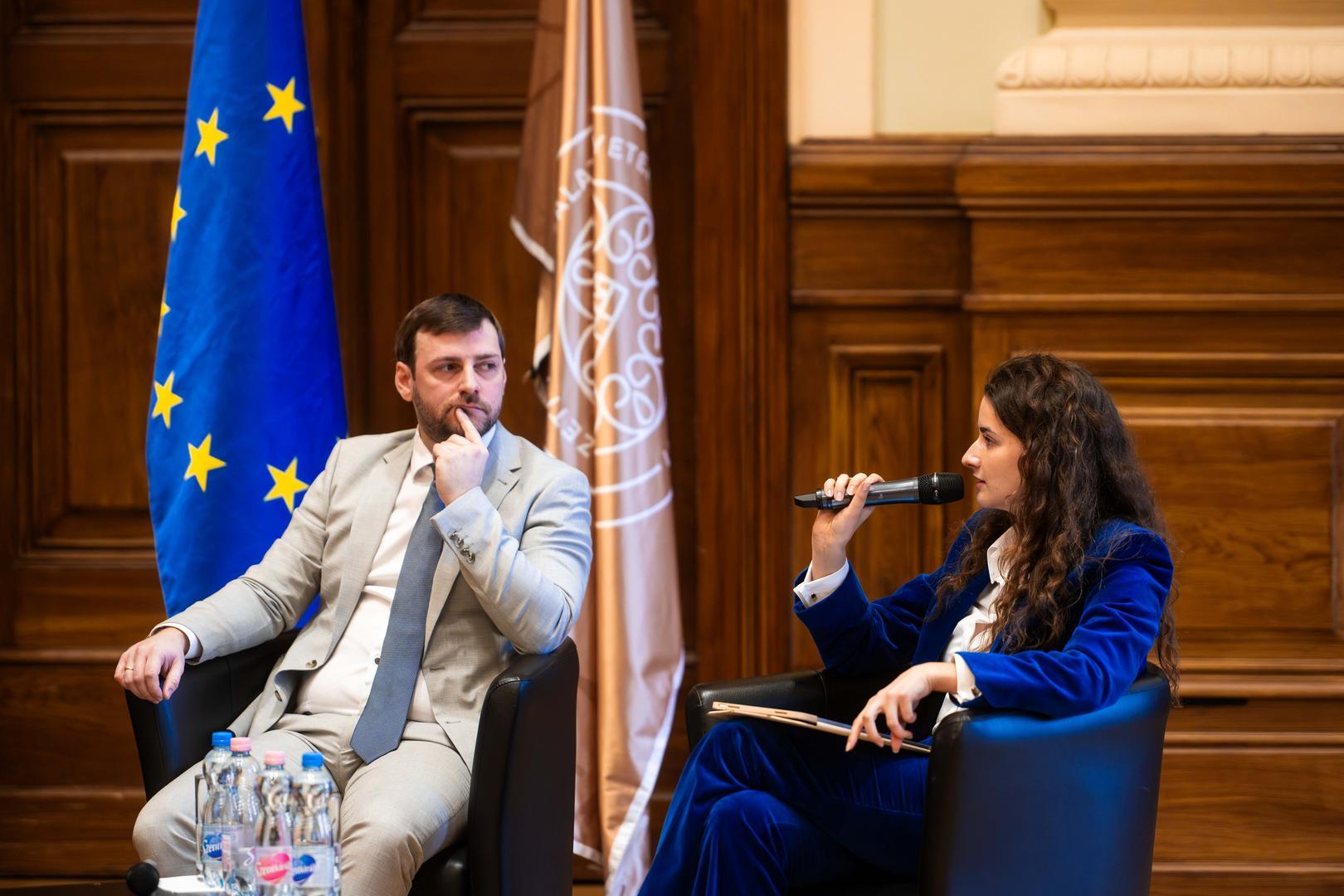
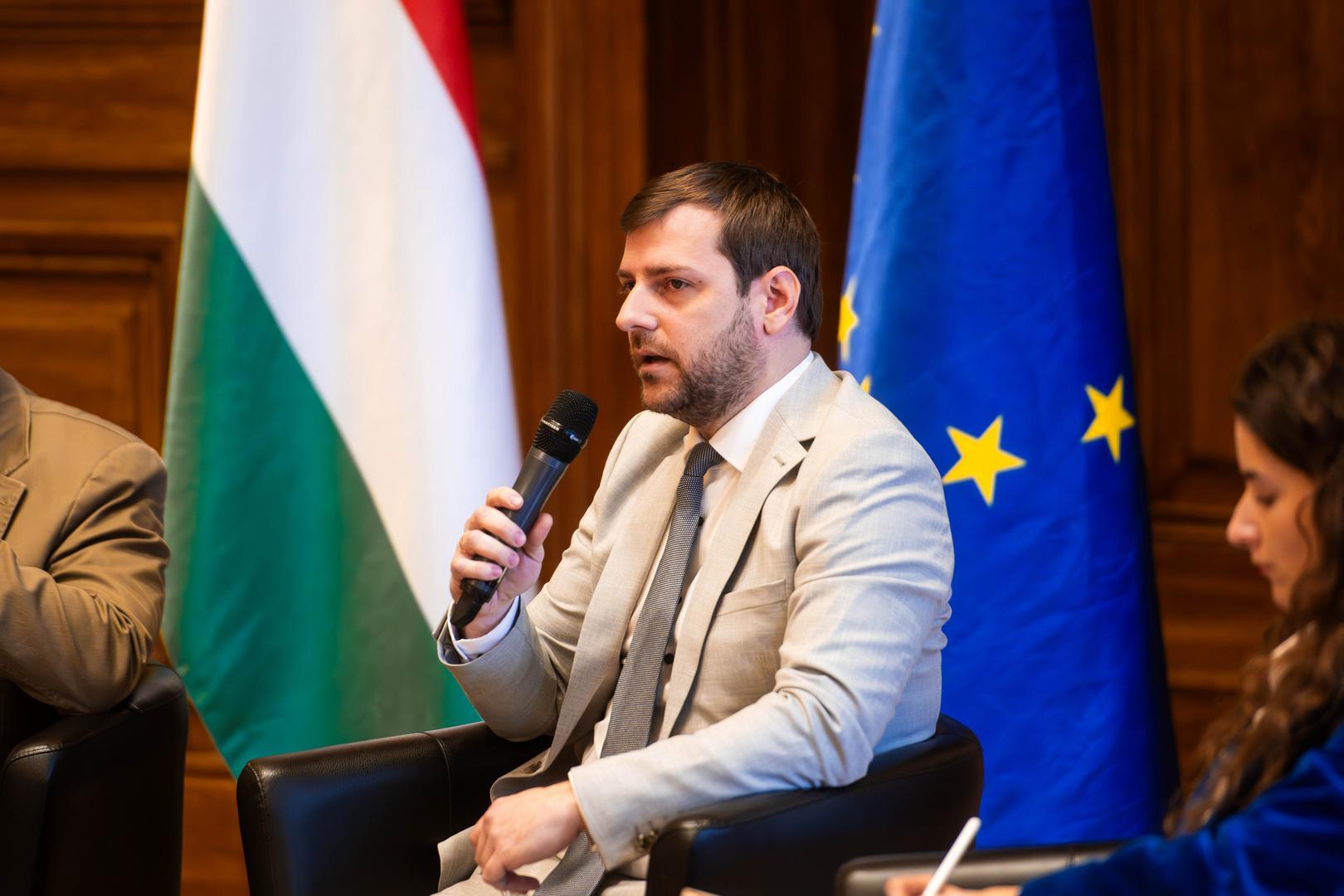
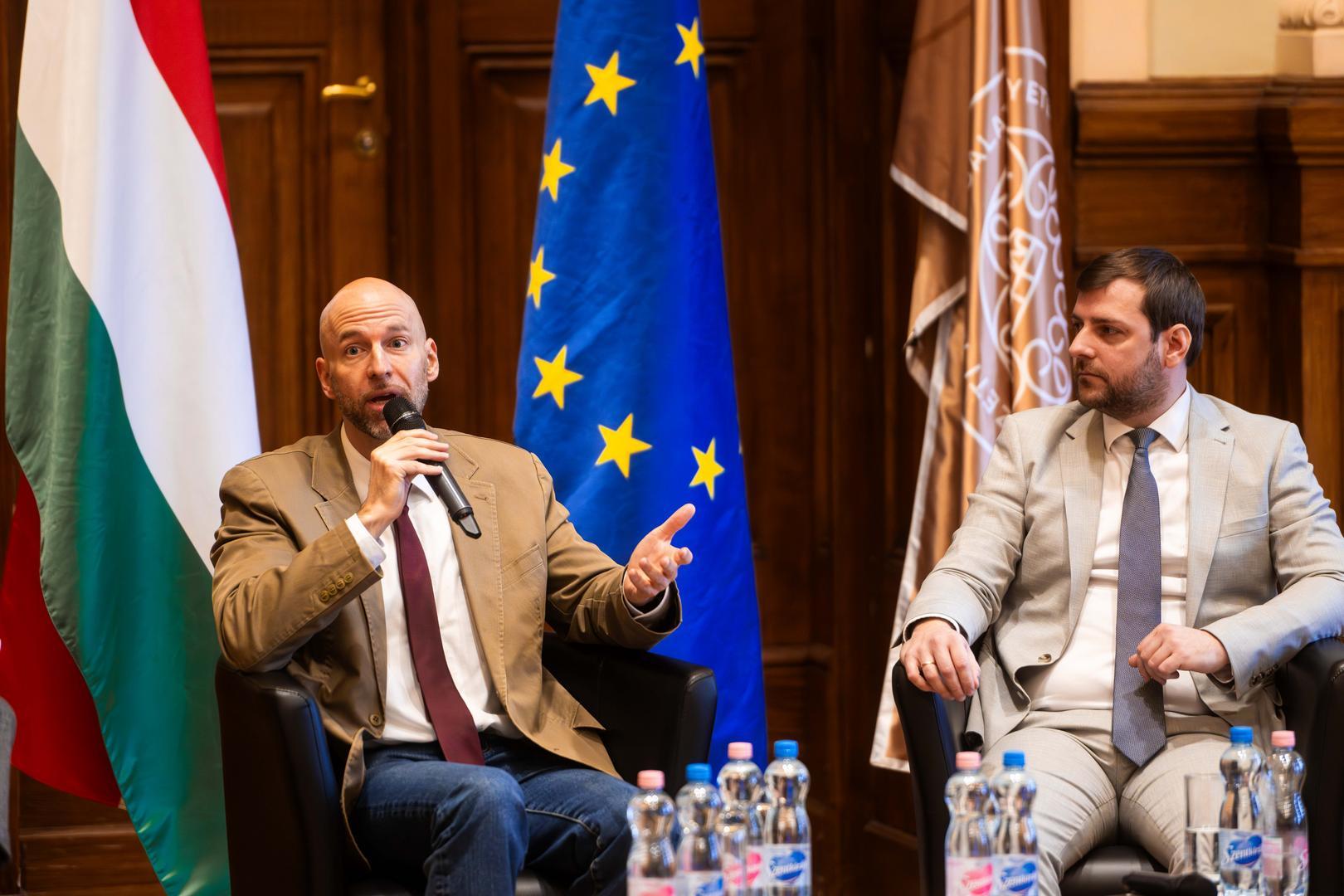
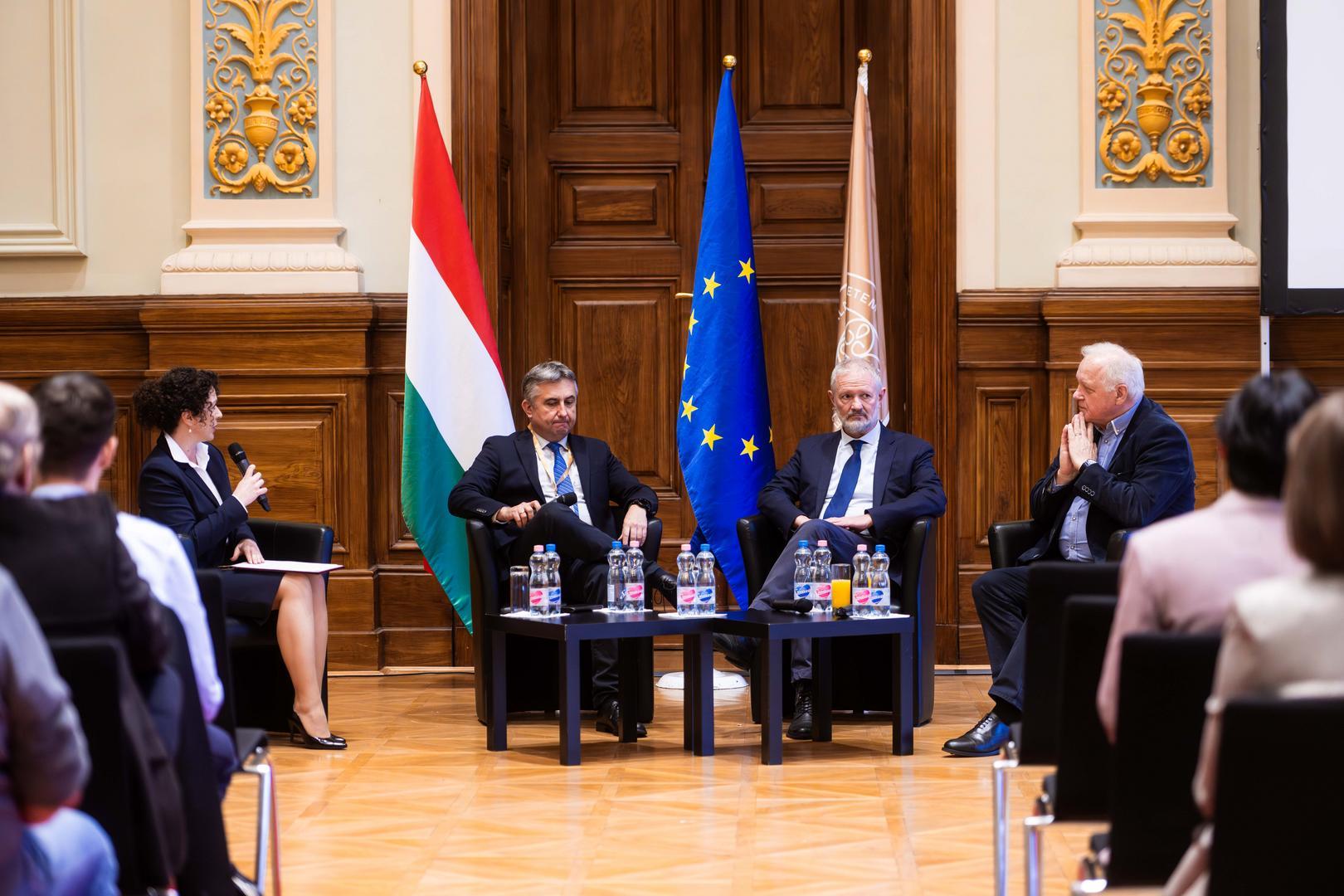
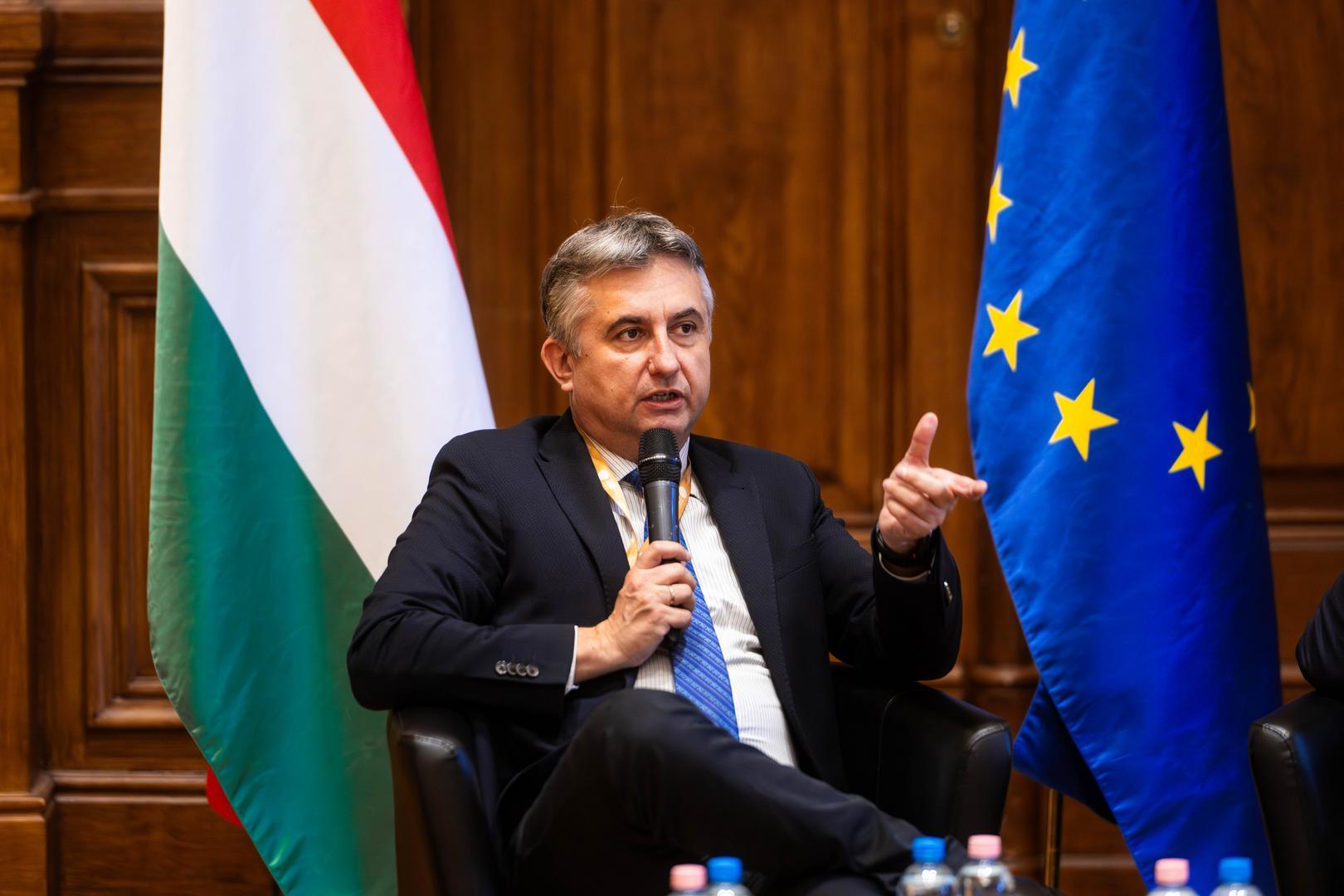
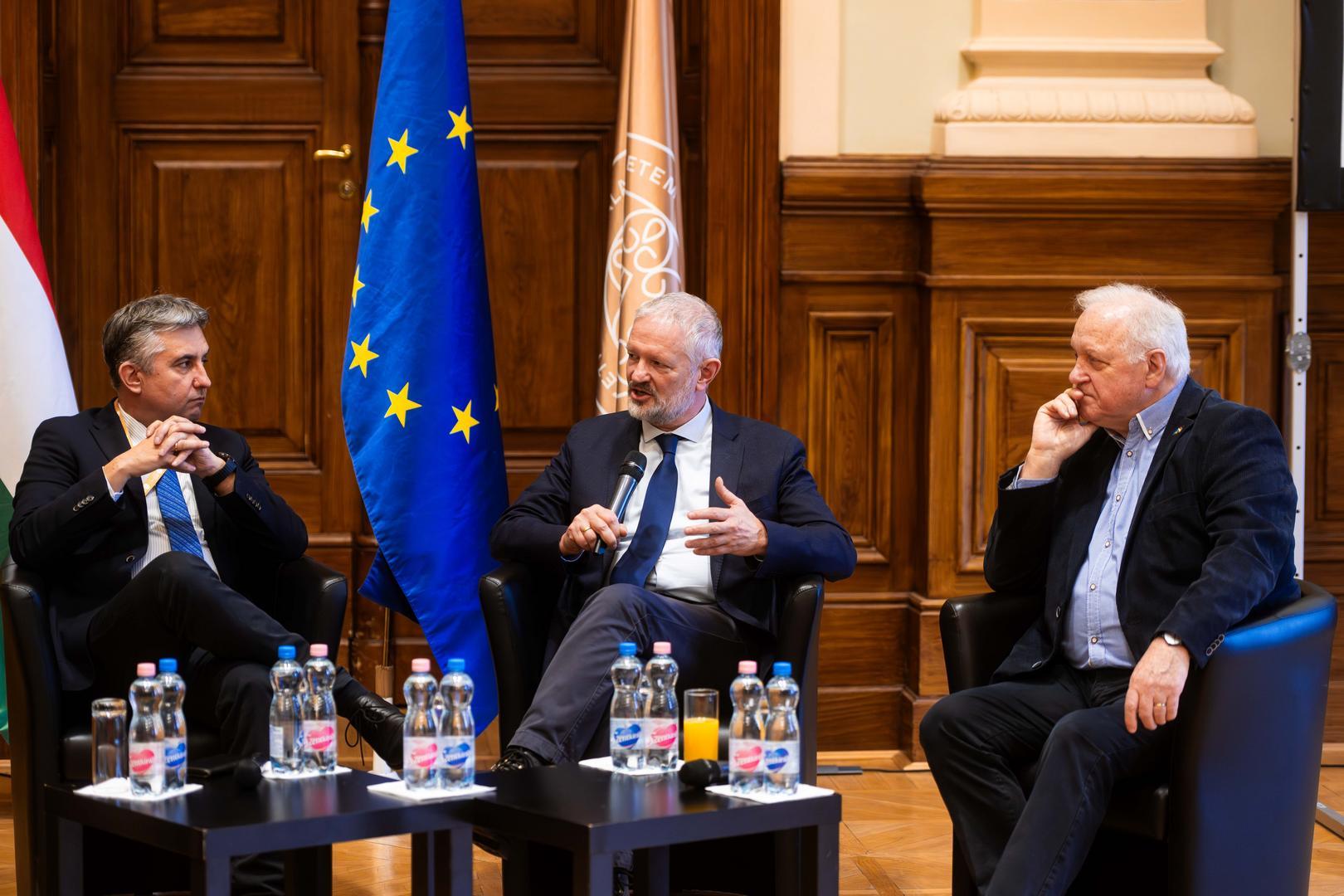
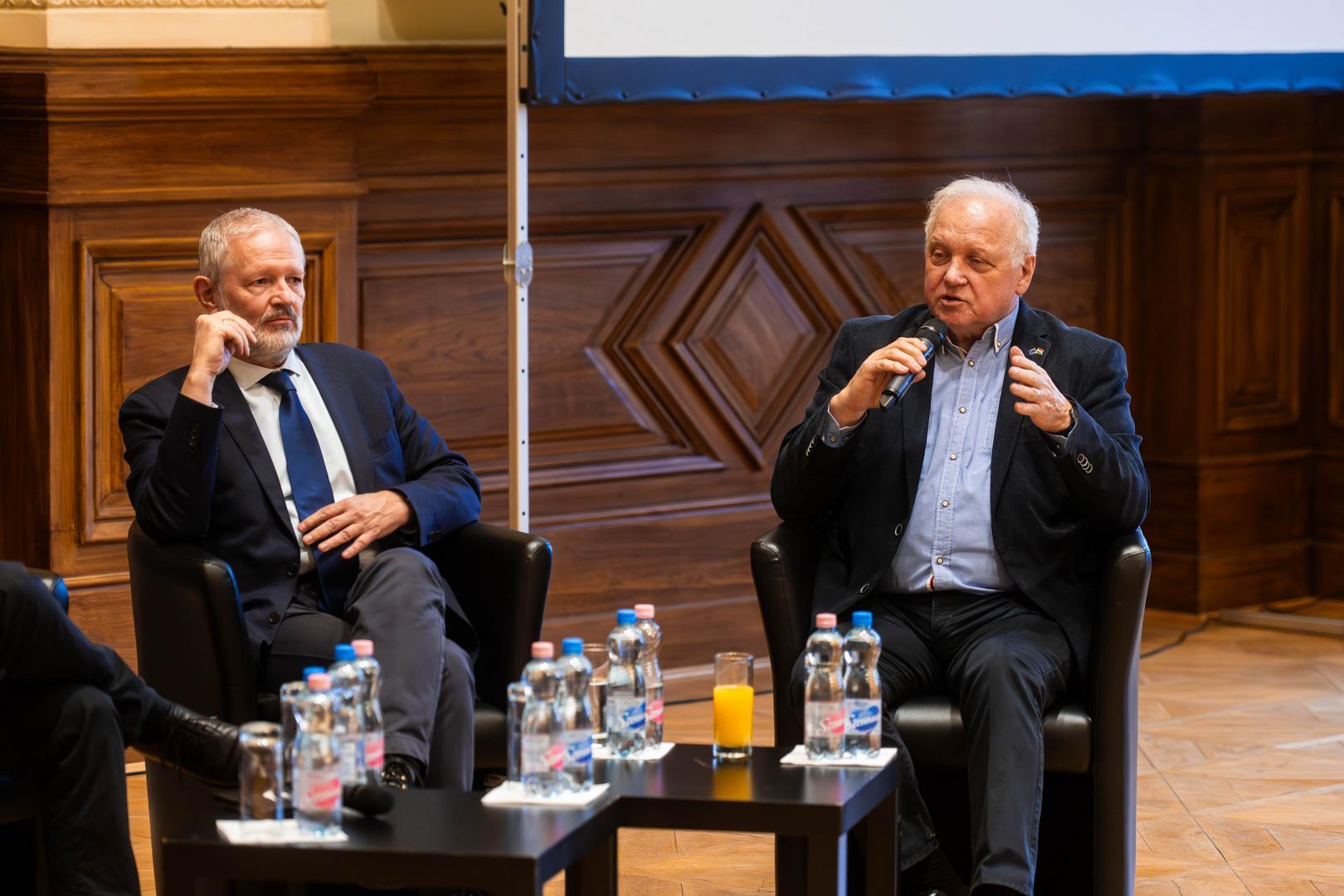
Under the above title, the Directorate General for International Affairs of the Ludovika University of Public Service (LUPS) organized three consecutive professional and academic panel discussions on 19th of February in the Széchenyi Hall of the Ludovika Main Building.
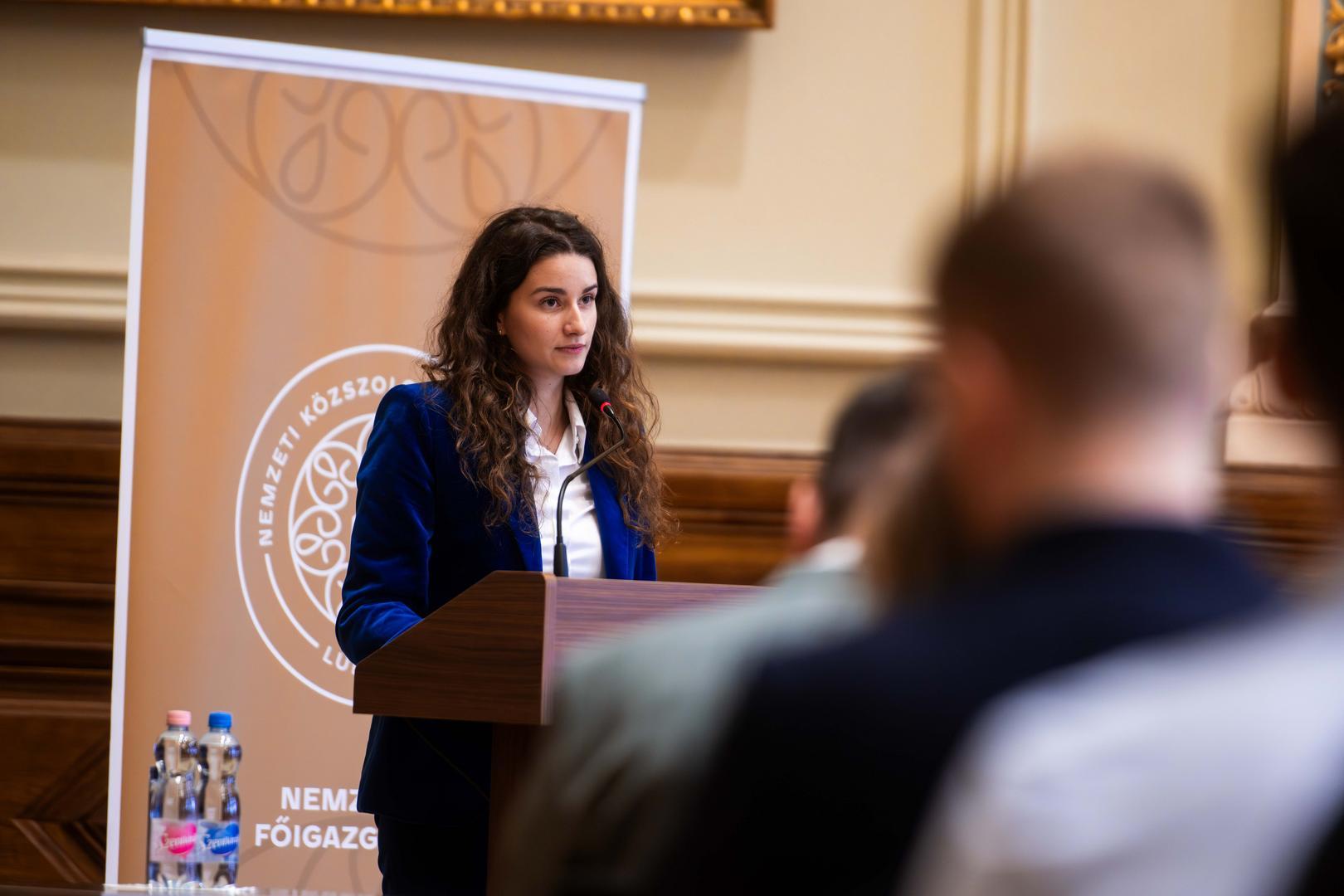
The war in Ukraine has now entered a prolonged and exhausting phase: what initially seemed to be a temporary geopolitical crisis has become a lasting, structural challenge for Europe, emphasized Liliana Śmiech, Director General for International Affairs at LUPS, in her opening remarks. Wars always entail significant economic burdens, and protracted conflicts in particular profoundly reshape state budgets and national priorities, increase public debt, and test the resilience of societies. Beyond the economic impacts, the tragic human losses of war must not be forgotten, making responsible and thoughtful discourse essential. It is not only the immediate dynamics of the war that must be examined, but also its long-term economic and social costs. The longer the war lasts, the more its consequences accumulate in households, energy markets, industrial production, and social cohesion. In recent years, many European countries have experienced inflationary pressure, energy insecurity, and fiscal tensions. Social solidarity is important, but perseverance is equally indispensable. The Director General highlighted that when assessing strategic decisions, long-term sustainability is a key consideration. In the twenty-first century, endurance can be measured in economic capacity, energy security, and political stability. A university committed to public service bears the responsibility to engage in dialogue on these issues with realism and intellectual integrity.
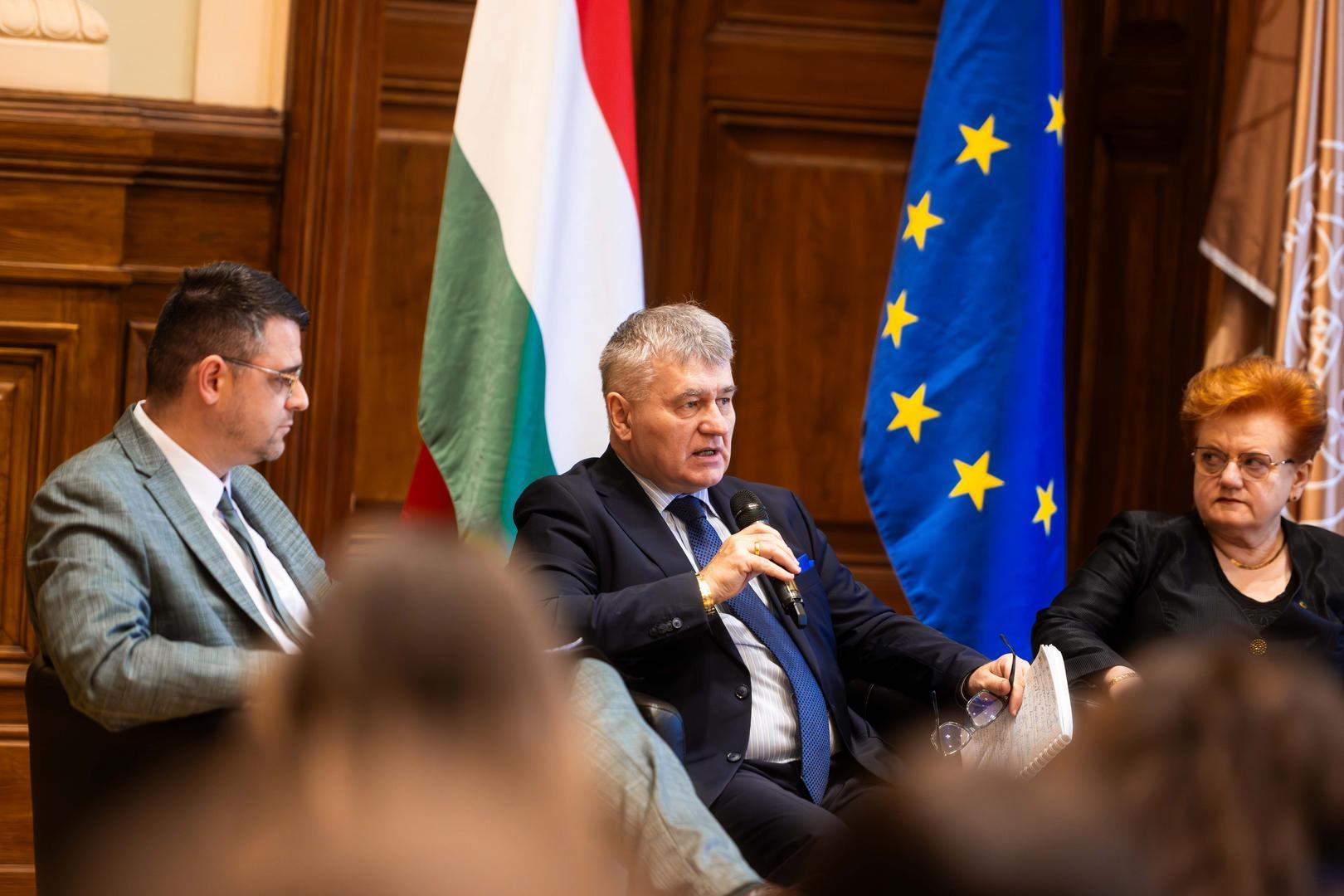
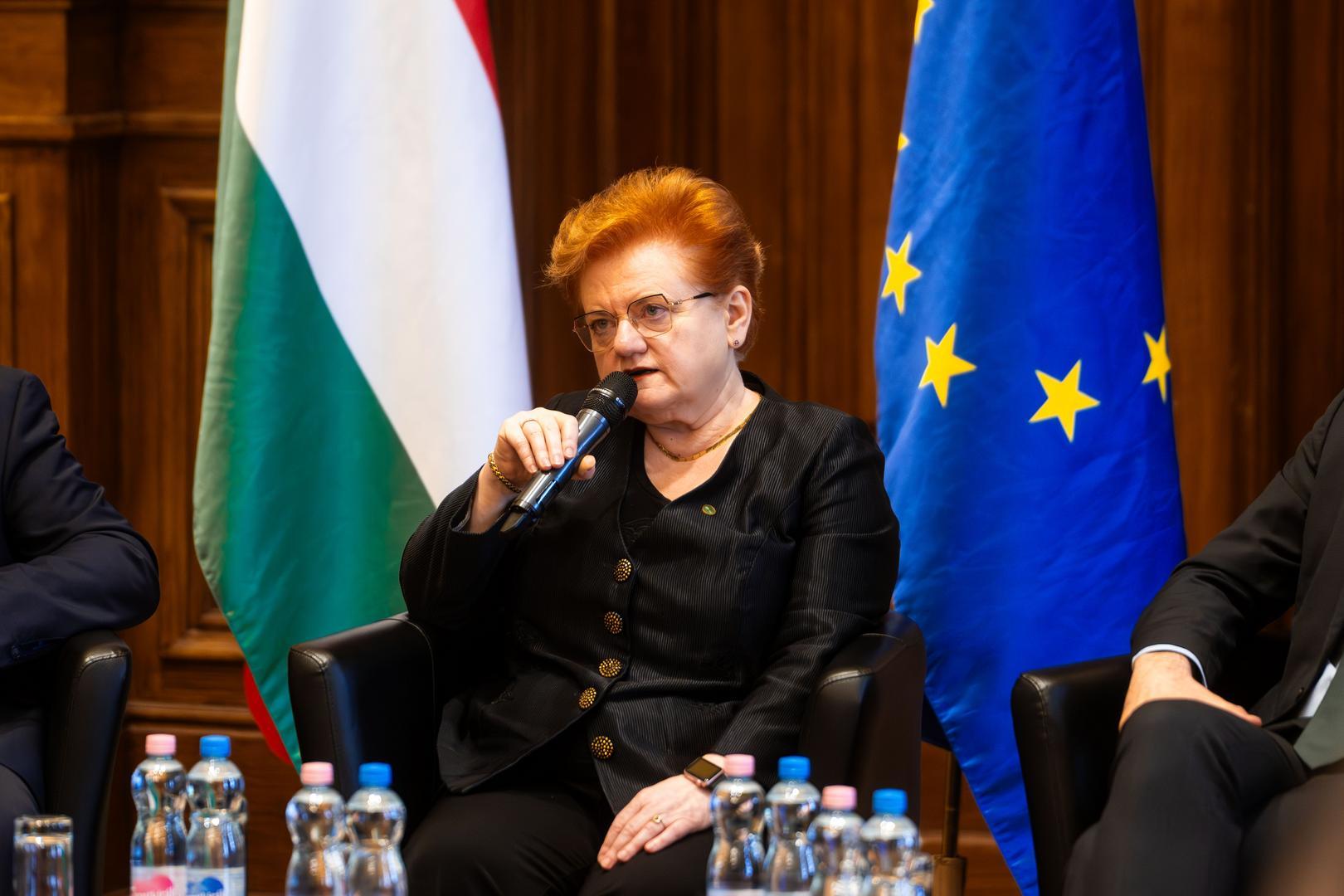
The first panel discussion, titled The Economics of a Protracted Conflict, was moderated by Márk Vargha, Head of the Public Policy Group at the Energy Strategy Institute. The discussion featured Piroska Szalai, Chief Ministerial Advisor; Csaba Lentner, Head of Department at LUPS and Professor at the Faculty of Public Governance and International Studies; Sándor Seremet, Senior Research Fellow at the Hungarian Institute of International Affairs (HIIA); and Szabolcs Pásztor, Associate Professor at FPGIS. They examined the economic and labor market consequences of sustaining the war.
The second discussion, titled The Energy Frontline of the War, was moderated by Mátyás Vajda, energy expert at the Danube Institute. Participants included Liliana Śmiech, Director General for International Affairs at LUPS; Csaba Gondola, State Secretary for Circular Economy and Climate Policy at the Ministry of Energy; and Ralph Schoellhammer, Head of the Workshop on Theoretical and Historical Approaches to International Relations at the Mathias Corvinus Collegium. The panel focused on how energy security can be maintained during wartime and what role Hungary plays in this context.
Finally, the last panel discussion, titled Diplomacy, Mediation, and the Various Instruments of Peace, was moderated by Réka Zsuzsánna Máthé, Research Fellow at the Europe Strategy Research Institute of the Eötvös József Research Centre (EJRC) at LUPS. The discussion addressed how conflicts come to an end and why some do not. Panel participants included Attila Demkó, Research Fellow at the John Lukacs Institute of the EJRC at LUPS and Head of the Strategic Futures Research Program; Péter Siklósi, Research Group Coordinator and Senior Research Fellow at HIIA; and Ferenc Robák, former ambassador and Honorary Associate Professor at LUPS.
More detailed coverage of the event’s topics is available in a multi-part article series on the university’s scientific portal, ludovika.hu.
Text: Tibor Sarnyai
Photography: Dénes Szilágyi