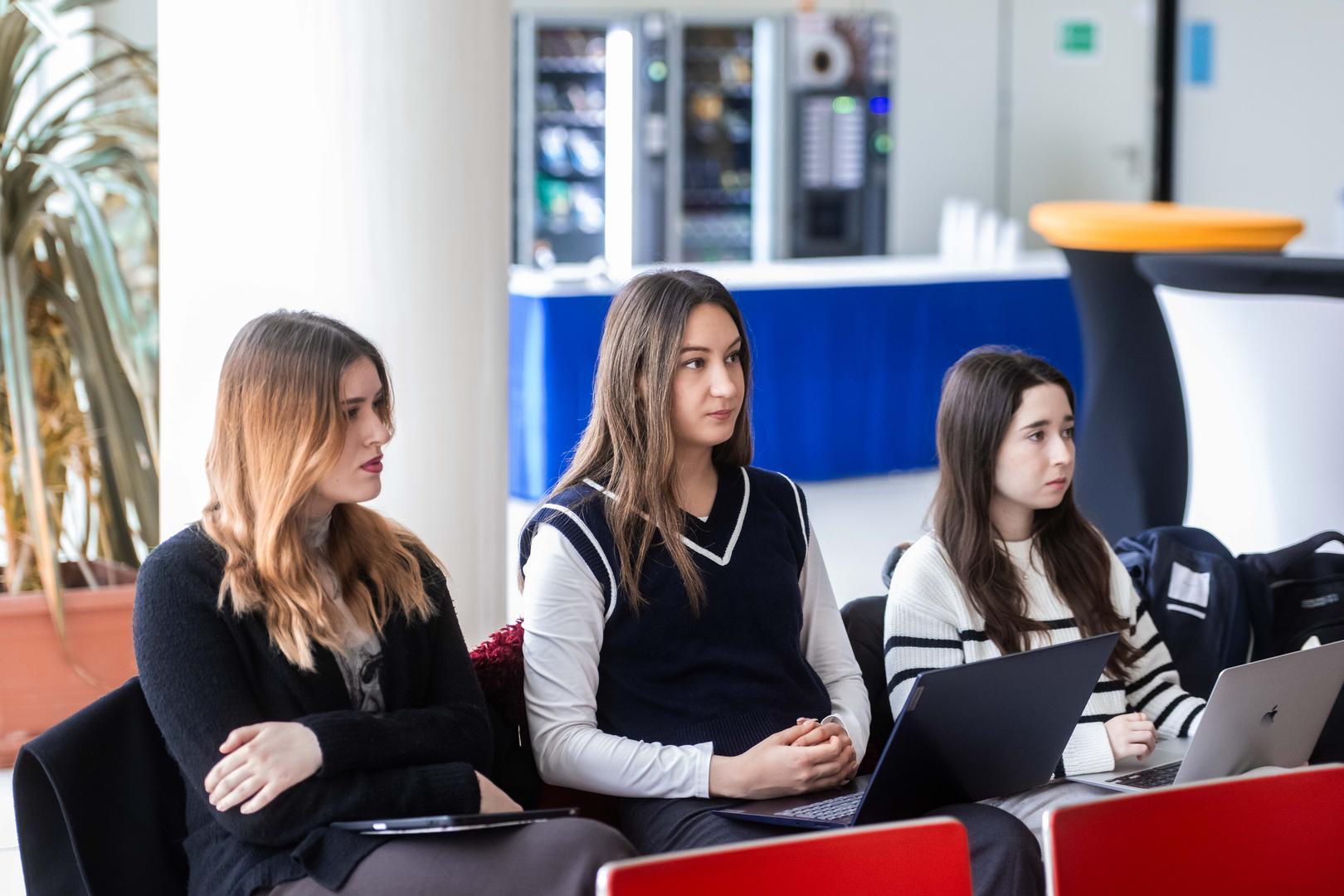
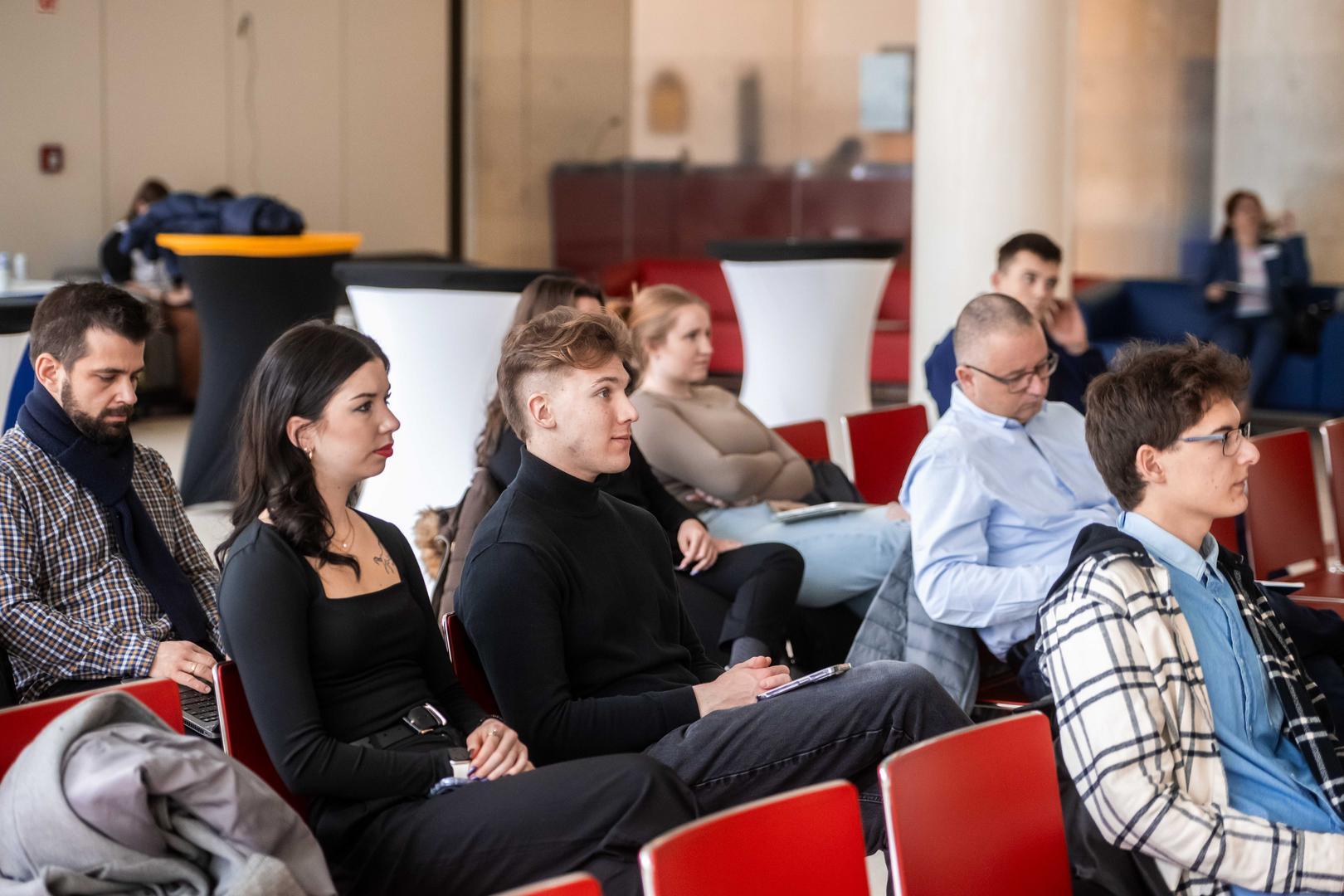
Students of the Ludovika University of Public Service (LUPS) can travel abroad with the Erasmus+ program with support of up to €850 per month. At the institution’s detailed briefing held on February 16 by the International Office, it was announced that applications for the advertised study and traineeship mobilities could be submitted until February 20.
The event was opened by Panna Ványi, the institution’s Erasmus+ coordinator and head of the International Office, and Ákos Kripkó, the central coordinator responsible for student mobility. The speakers emphasized that the aim is to fully prepare students for the application process and the subsequent administration.
Students can choose from several types of mobility. In addition to traditional semester-long study mobilities and traineeships, Blended Intensive Programmes (BIP) have also appeared. Their special feature is that they consist of a virtual phase and only a five-day physical stay abroad, making international experience accessible even for those who cannot spend an entire semester abroad.
While study mobility is limited to more than 250 partner institutions of the university (and students may apply only to the partners of their own faculty), traineeships offer much greater freedom. Thanks to a special 20% framework, students can also travel to countries outside the European Union, including the United Kingdom, Switzerland, Uzbekistan, Kazakhstan, Azerbaijan and Georgia.
One of the most important parts of the briefing was the presentation of financial frameworks. The base amount for study mobility to Western European countries is €600 per month. This is supplemented by an equal-opportunities grant that can add another €250 per month, meaning students’ monthly allowance may reach €850.
Ákos Kripkó highlighted that about 80% of students apply for this additional support and 99% of them receive it, as the criteria are extremely broad. The payment system provides security for those travelling abroad: 90% of the full scholarship is transferred before departure. The remaining 10% is paid after the mobility period is completed and the administration is finalized.
Applications are submitted through the Erasmus application portal, where Hungarian students must use the Hungarian-language interface. A successful application requires an online faculty-level motivational interview and a language placement test (if the student does not have an appropriate language certificate). During the stay abroad, students must complete at least 12 credits, of which 10 must be recognized by the home institution. Coordinators warned that if the 12-credit requirement is not met, students may be required to repay the scholarship.
To close the mobility period, several documents must be submitted: proof of the exact duration of the stay abroad (as support is granted only for days physically spent abroad); the learning agreement; a short online questionnaire essential for project evaluation; and a photo report on experiences gained abroad.
Panna Ványi presented Erasmus+ mobility opportunities outside Europe, distinguishing two main project types. The KA131 project allows up to 20% of the total budget to be used for outgoing mobilities to specific non-EU countries — for example the United Kingdom, Switzerland, Kazakhstan or Georgia. In this format, students can participate in traineeships and staff can take part in training.
The other option is the KA171 International Credit Mobility Programme (ICM), a separate project implemented exclusively with designated partner institutions. In the spring 2026 application period, the ICM framework offers only staff mobility (for teaching or training), while student study mobility within this project is rare. Available quotas affect countries such as Azerbaijan, Egypt, South Africa, India, China, Canada and the United States.
Applicants may apply to both projects within the same period, but only one application can be submitted within a single project. The International Office is responsible for the administration of the process.
Eszter Sándor-Sugár, the central Erasmus+ coordinator responsible for staff mobility, spoke about submitting a successful application. An application becomes truly convincing if its content fits the applicant’s job role precisely, actively contributes to the university’s internationalisation strategy, and is carefully thought through and concise.
At the event, the International Committee of the University Student Union introduced itself, and LUPS' five faculties presented their mobility opportunities.
The current application period closes on February 20, and applicants are expected to be notified of the results within five weeks. Coordinators recommend that students contact faculty coordinators or the International Office with any questions.
Text: Zsófia Sallai
Photo: Dénes Szilágyi