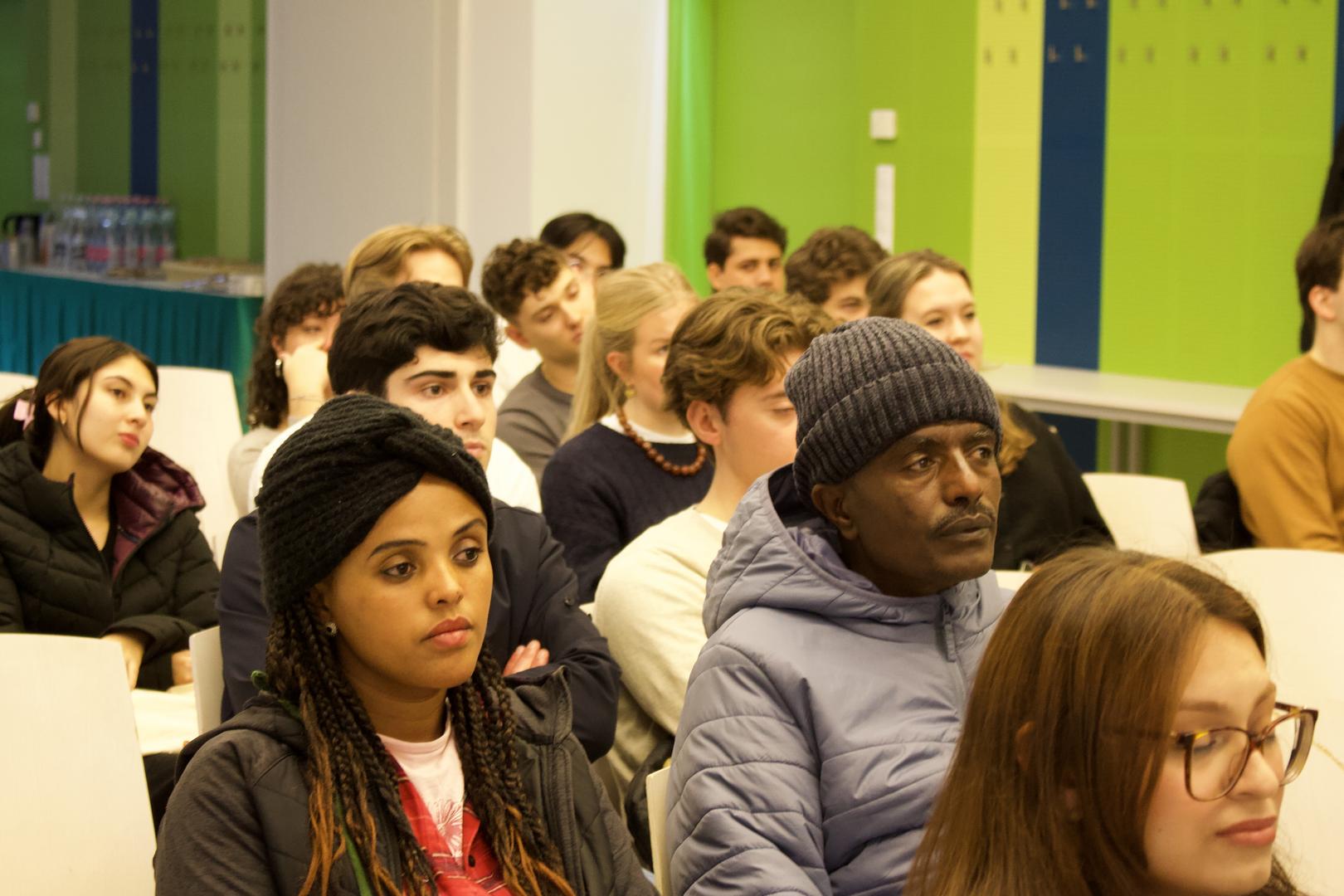
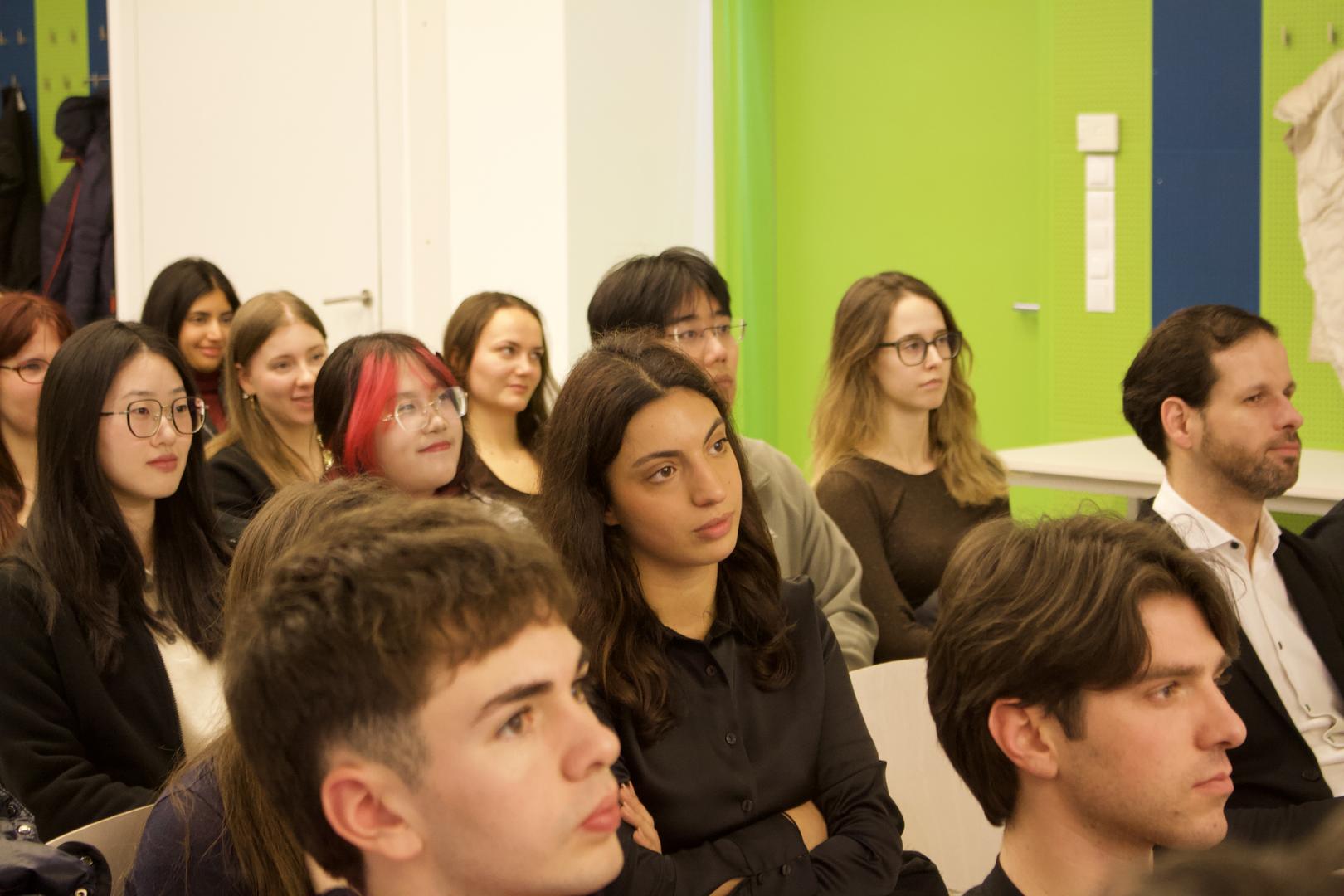
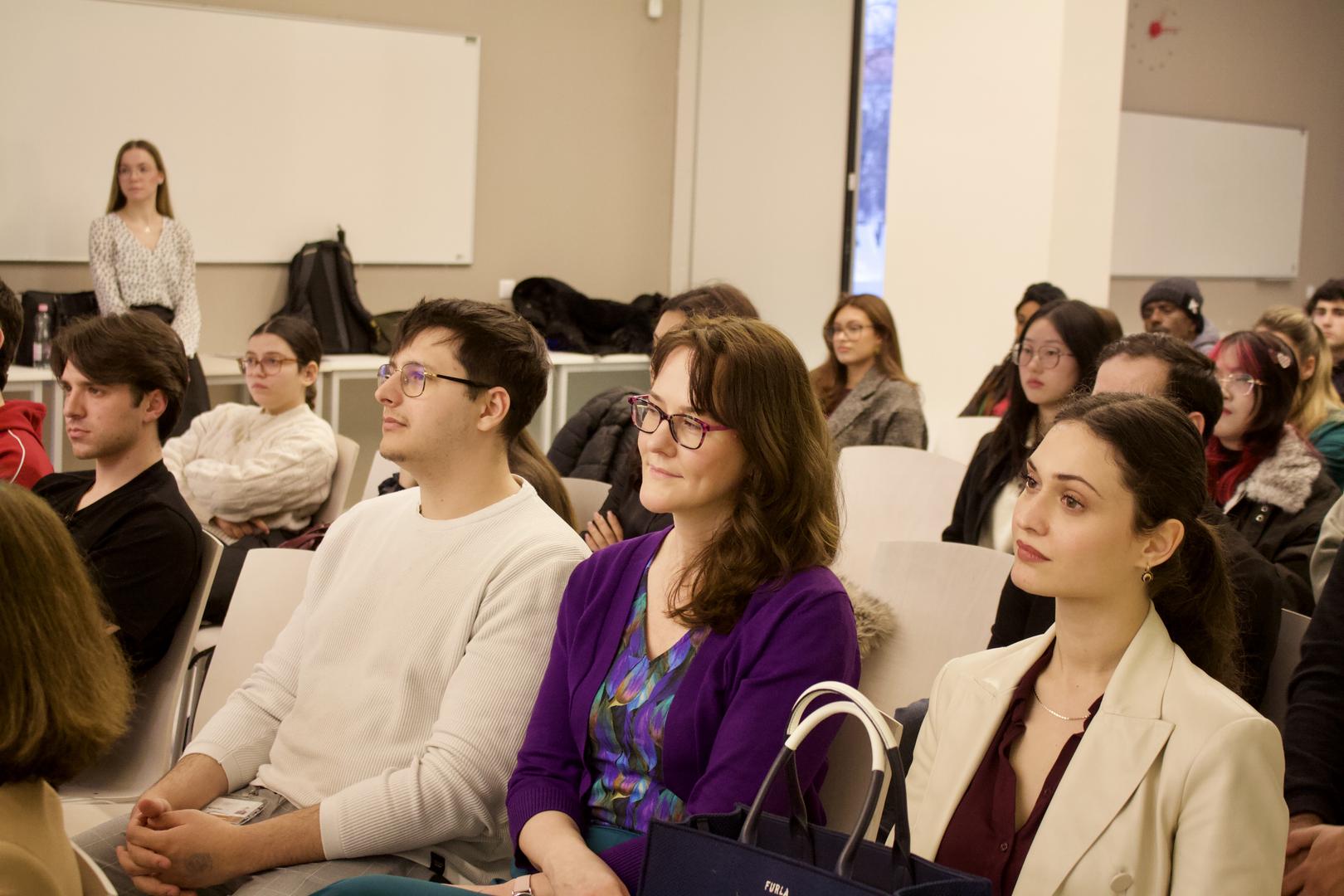
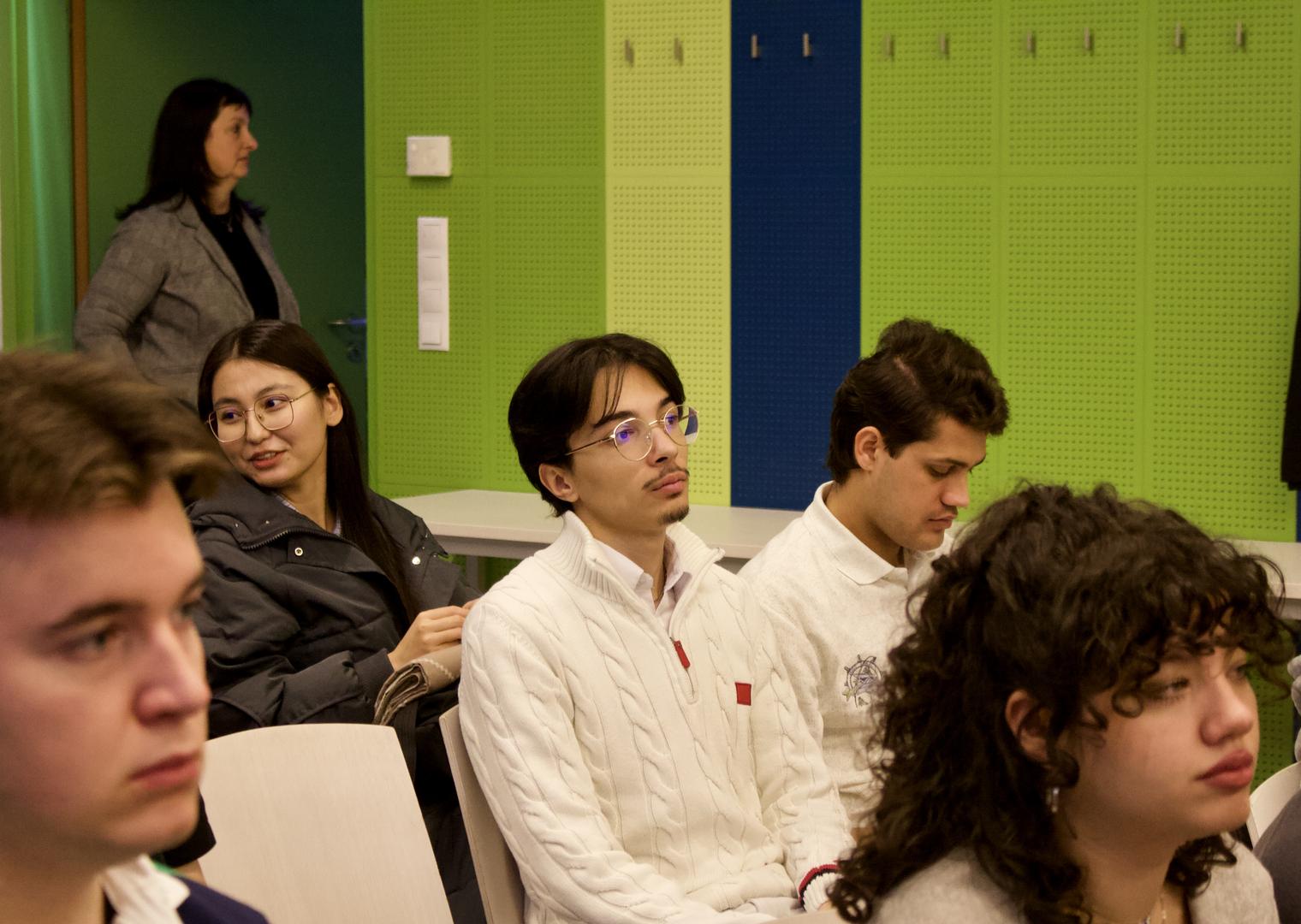
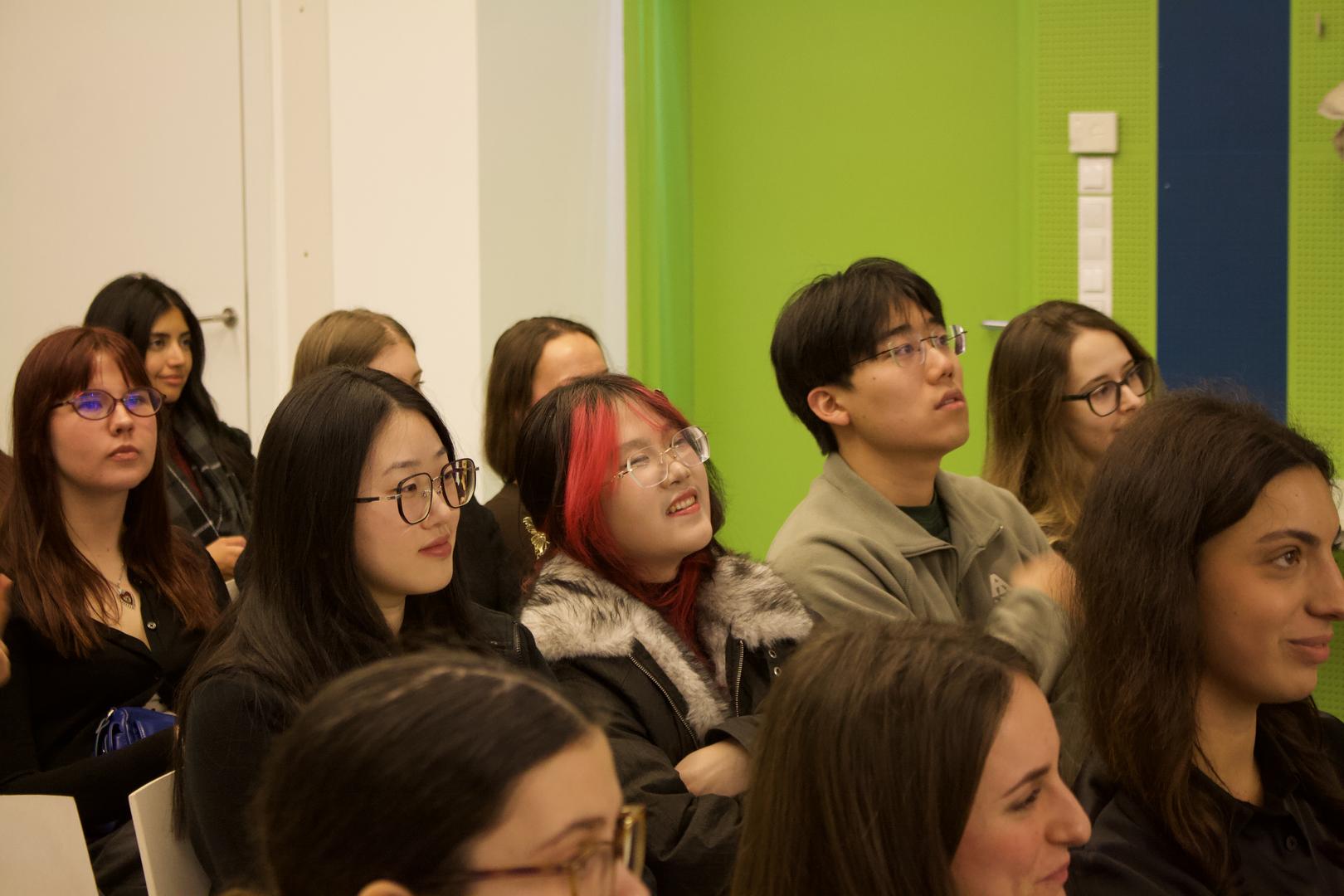
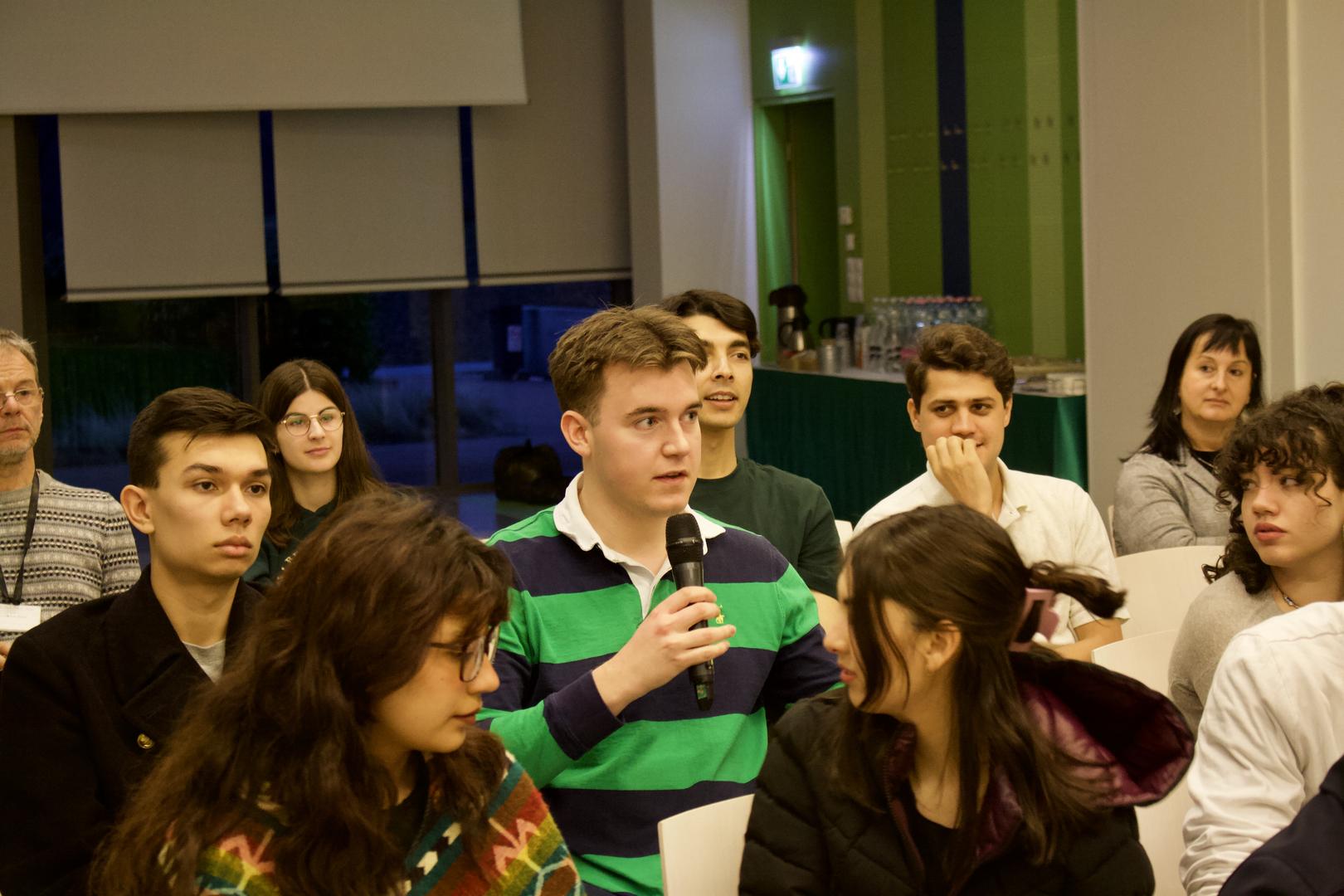
On 9 February 2026, the Faculty of Public Governance and International Studies warmly welcomed its incoming international students at the Orczy Dormitory during the semester’s Orientation Day. More than 70 Erasmus and Stipendium Hungaricum students gathered to officially begin their academic journey at Ludovika University of Public Service and to become part of its vibrant international community.
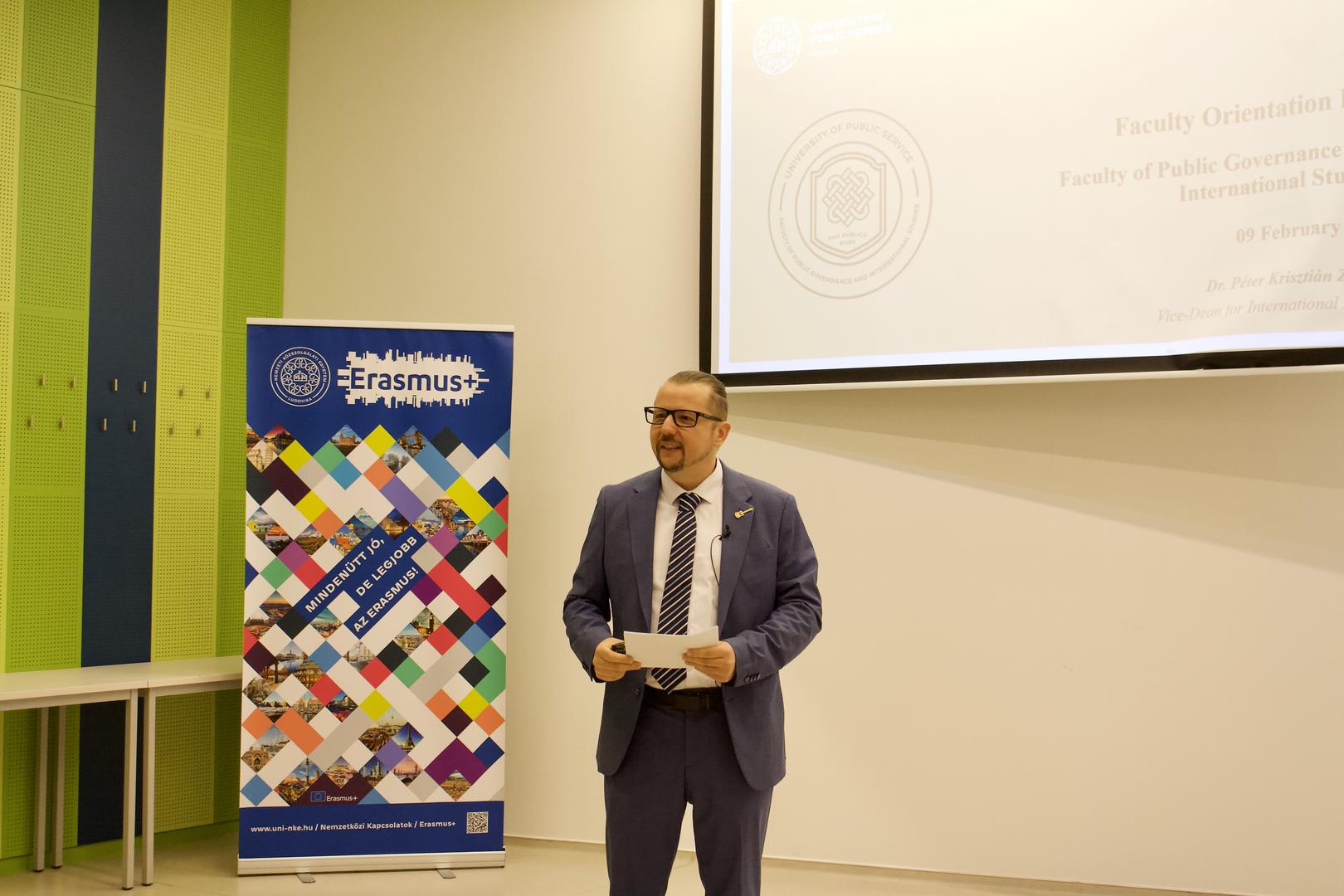
’Welcome to our university and to the amazing city of Budapest!’ – with these words, students were greeted by Péter Krisztián Zachar, Vice-Dean for International Affairs at the Faculty into what promises to be an exciting and memorable chapter of their lives. As he highlighted during his speech, the Erasmus and the Stipendium Hungaricum programmes are far more than mobility opportunities: they often mark the moment when students realise that Hungary, Europe – and the world – is larger, more complex, and more fascinating than they had previously envisioned.
The welcoming addresses also reflected on the rapidly changing global environment. Europe today faces geopolitical tensions, security concerns, economic uncertainty, technological transformation, and profound social change. These challenges shape international relations, public policy, higher education, and the responsibilities of future professionals. Understanding them requires openness, dialogue, and the ability to connect perspectives across borders – values that lie at the heart of Ludovika’s academic mission.
Despite global uncertainties, Hungary continues to offer a calm, stable, and welcoming environment at the heart of Europe, the Vice-Dean emphasised. Ludovika University strongly believes in connectivity between disciplines, cultures, countries, and people. By creating space for shared learning and genuine encounters, the university aims not only to deepen students’ academic knowledge, but also to strengthen their belief in cooperation as a meaningful response to an increasingly complex world.
During the academic part of the programme, students were introduced to the Faculty (FPGIS) and its wide range of educational opportunities.
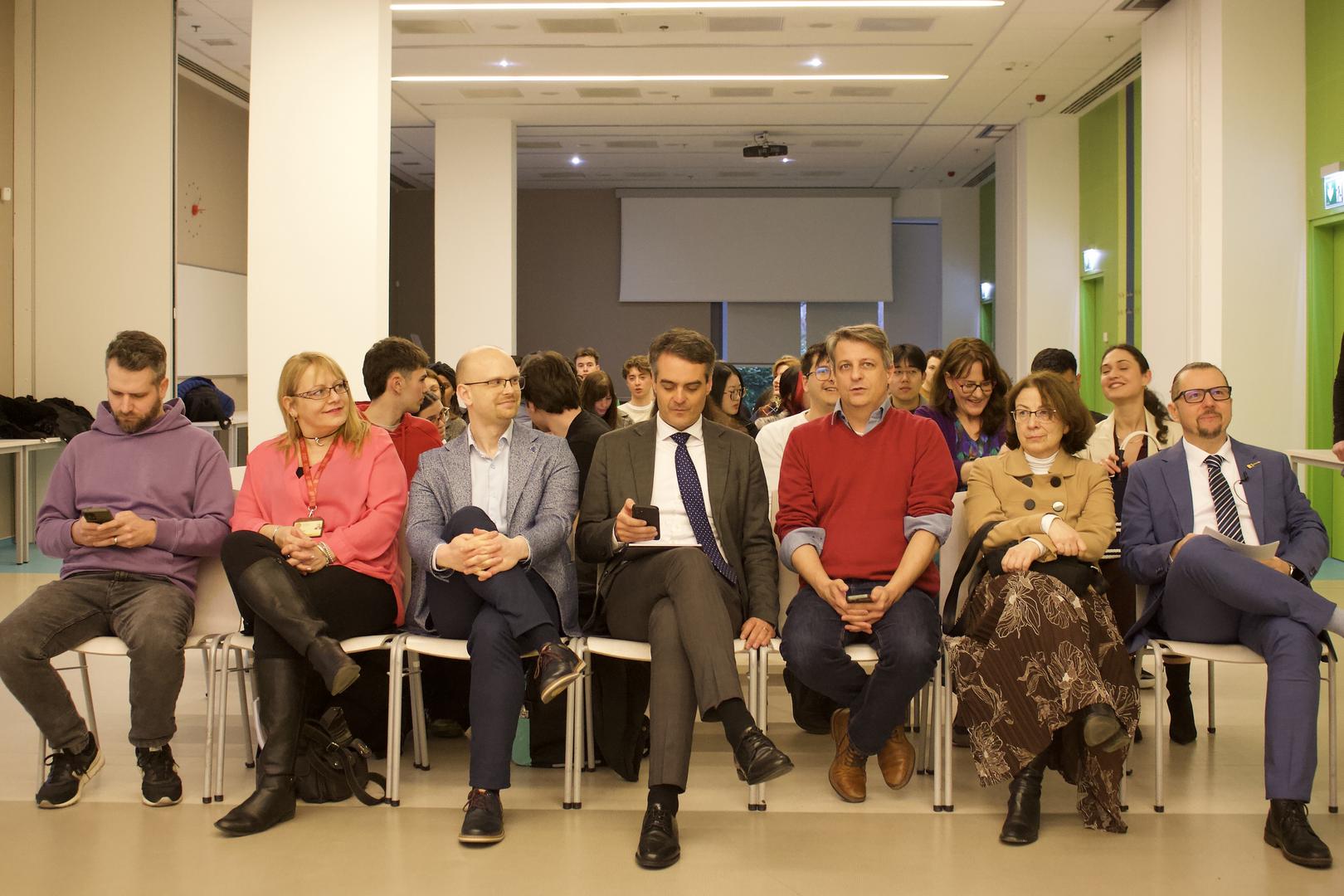
Following the Vice-Dean’s remarks, faculty members from several departments took an active role in introducing their academic fields, sharing insights into their teaching and research activities, and engaging directly with the participants. Zsuzsanna Kondor presented the work of the Department of Public Finance, while Szabolcs Pásztor highlighted key areas of the Department of Economics and International Economics. Gyula Speck offered an overview of the Department of International Relations and Diplomacy, Miklós Szirbik introduced the Department of European Public and Private Law, and Edit Kajtár showcased the focus areas and research of the Department of Human Resources, bringing about an open and inclusive academic setting that supported dialogue and a sense of academic community.
The programme then continued with practical information essential for everyday university life. Zsombor Artner, Erasmus student coordinator, introduced himself and outlined key points of student support. The colleagues from the Registrar’s Office – Gergő Drahota and Szilvia Almási – presented important administrative processes, while Zsanett Kovács, representative of the Faculty Students’ Union for International Affairs and the Erasmus Student Network (ESN), gave an overview of the student communities and social programmes designed to help international students feel at home.
Beyond academic life, Budapest itself was highlighted as an integral part of the Erasmus experience. The Danube, flowing through the heart of the city, has long connected East and West, cultures and political traditions. Landmarks such as the Chain Bridge symbolise dialogue and connectivity – much like the Erasmus programme. From historic architecture and museums to thermal baths and lively ruin bars, the city offers endless opportunities for exploration, reflection, and fun. At the same time students were also encouraged to enjoy the unique atmosphere of the Ludovika Campus. With the Orczy Park, the setting offers a rare balance of intellectual focus and space to breathe.
The Orientation Day concluded with an open Q&A session, followed by informal conversations over coffee and pastries, allowing students to meet professors, coordinators, and fellow students in a relaxed setting.
As emphasised in the Vice-Dean’s closing remarks, Ludovika University is a community built on dialogue, curiosity, and shared responsibility. Students were encouraged to ask questions, exchange ideas, and share their reflections – because universities grow when students are engaged and brave enough to challenge them.
Once again, Ludovika University of Public Service warmly welcomes its international students to Budapest. The coming months promise academic growth, cultural discovery, meaningful connections, and memories that will last long after the semester ends. Budapest is ready – and so is Ludovika.
Text: FPGIS International Division
Photo: András Szabó, FPGIS