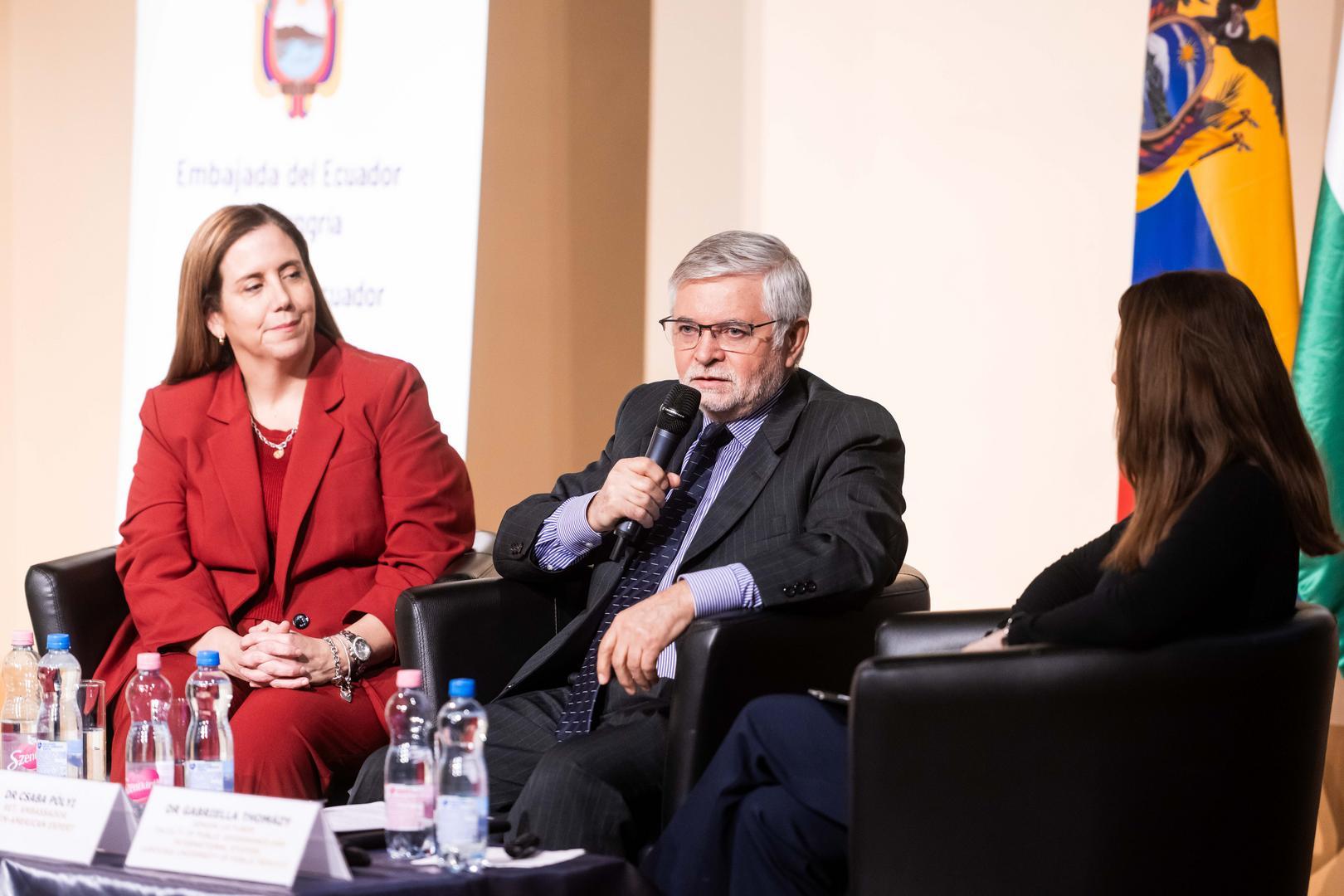
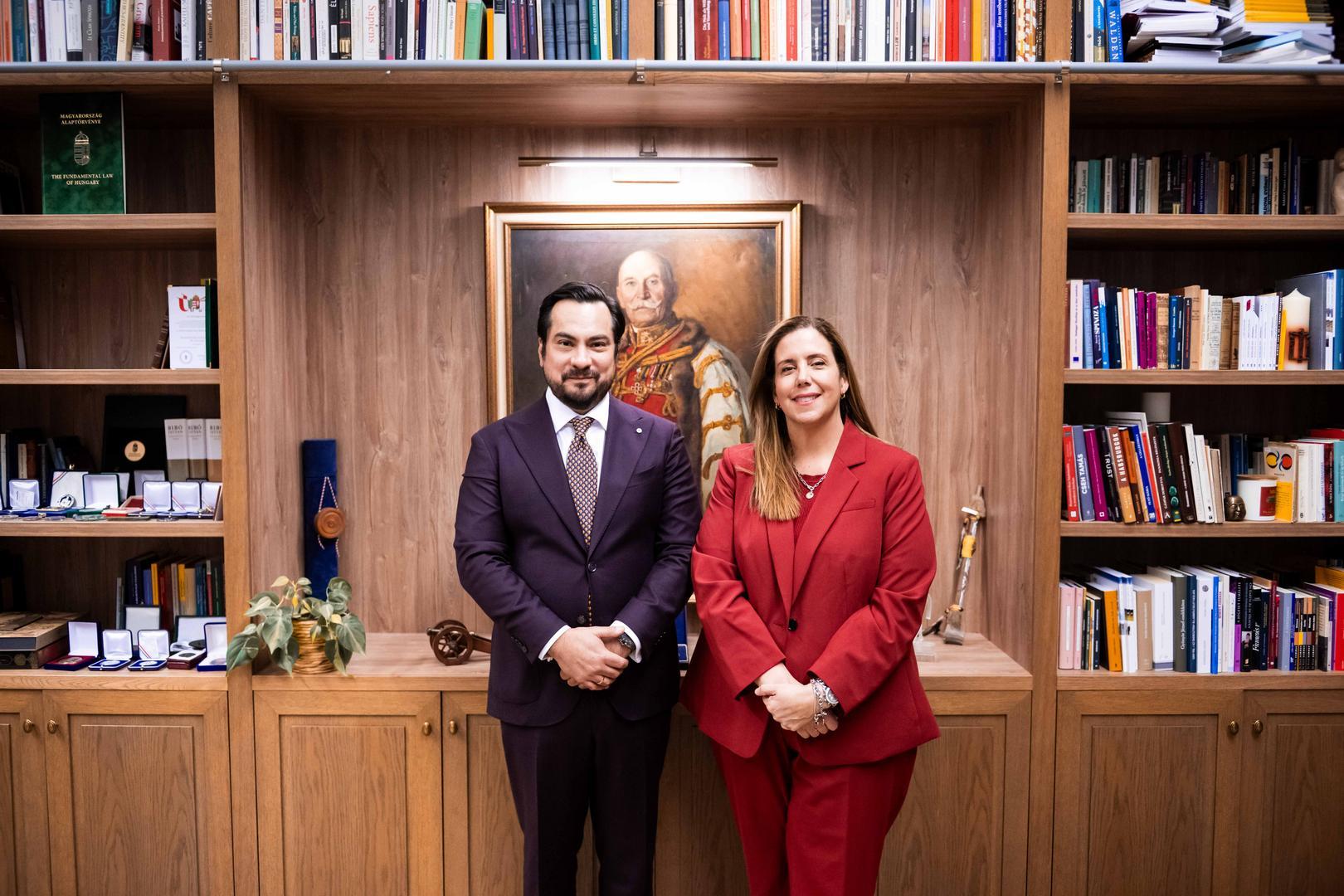
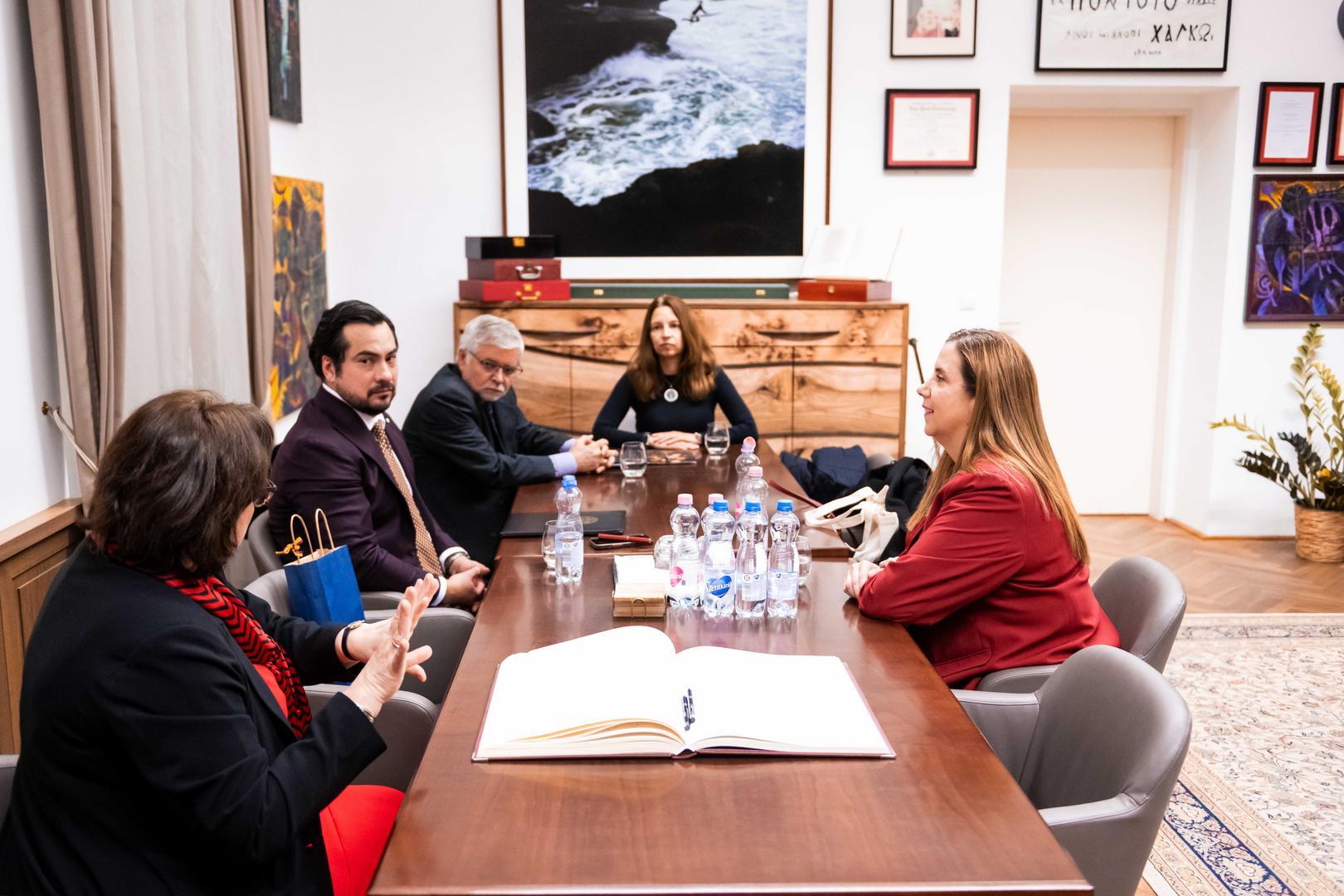
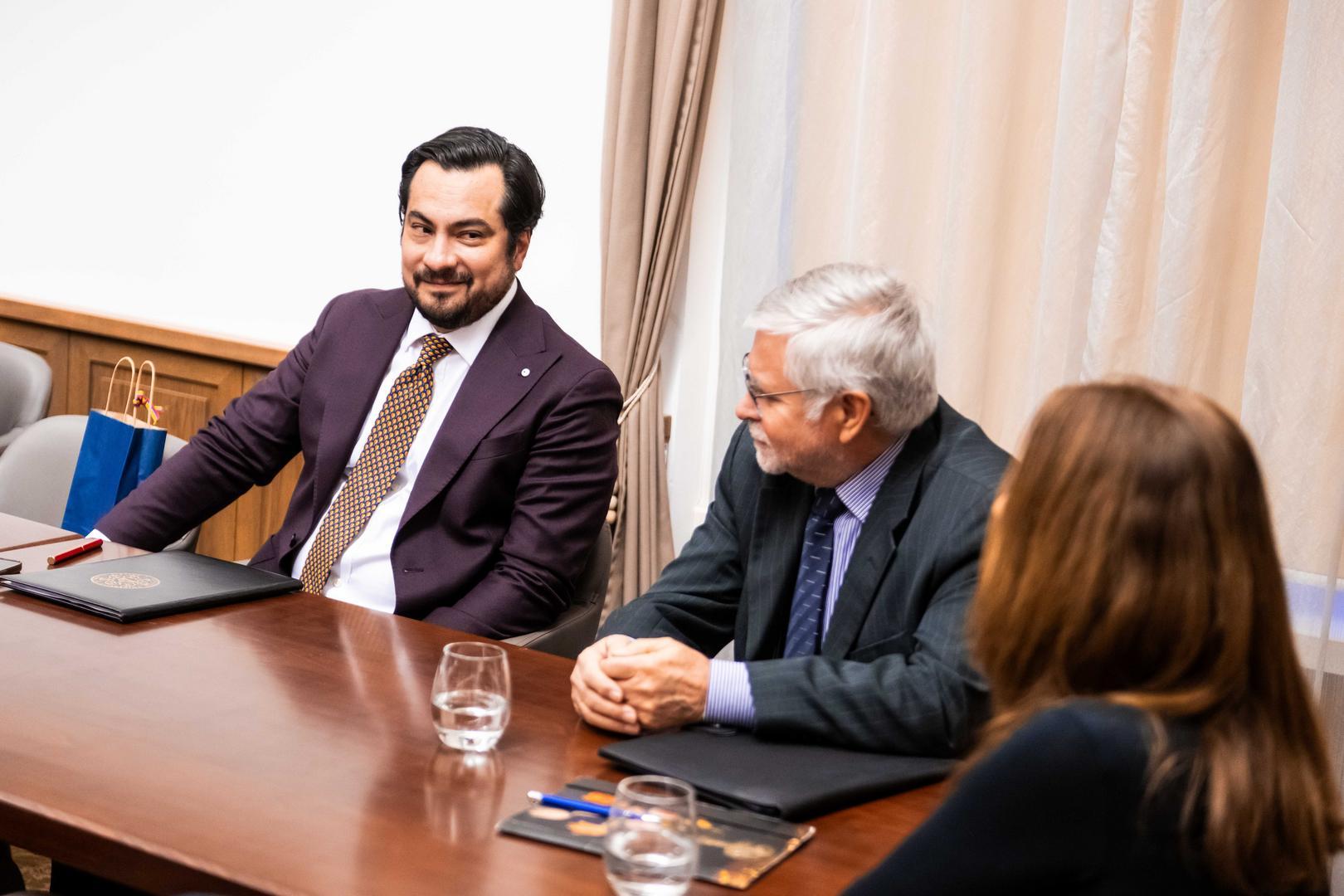
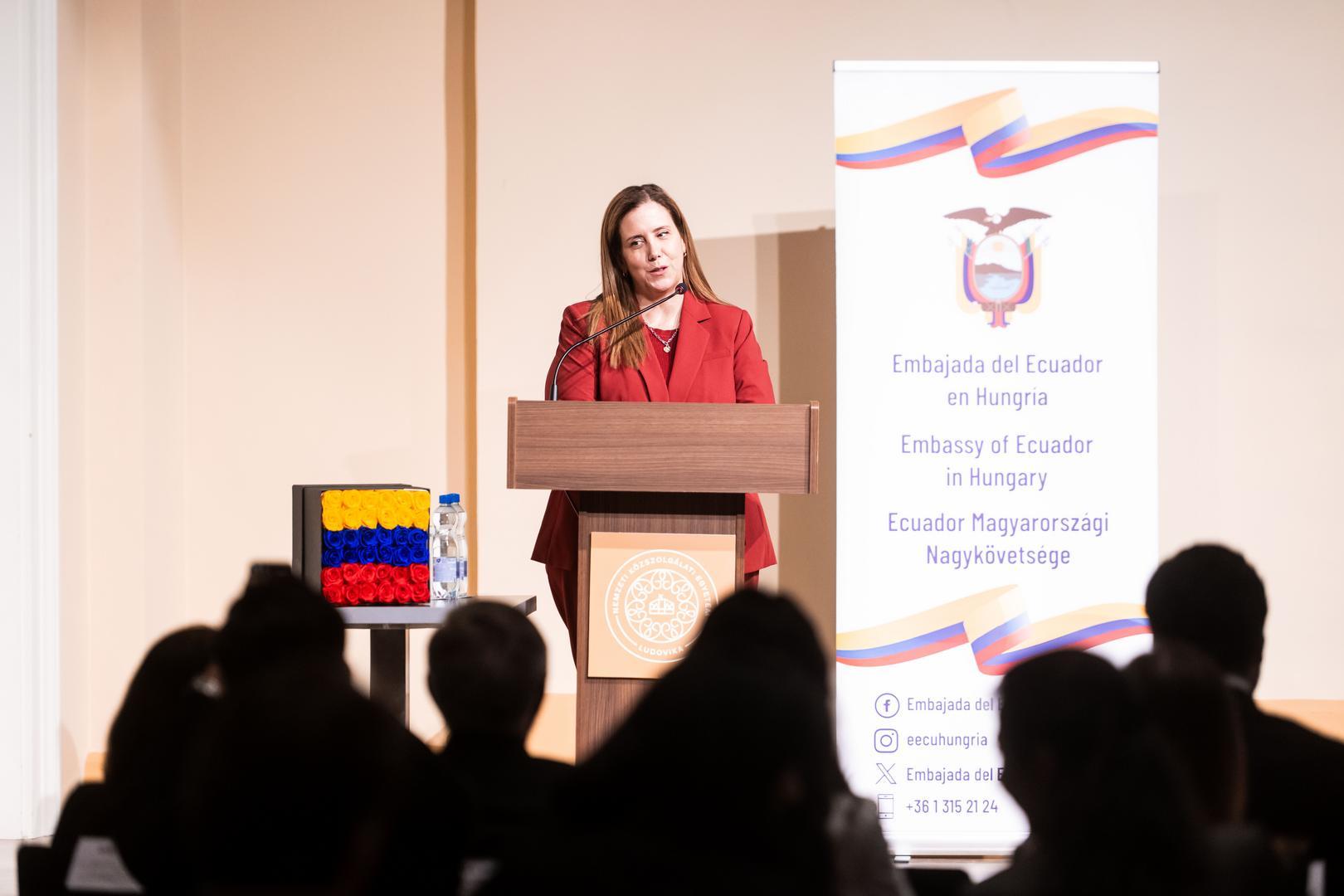
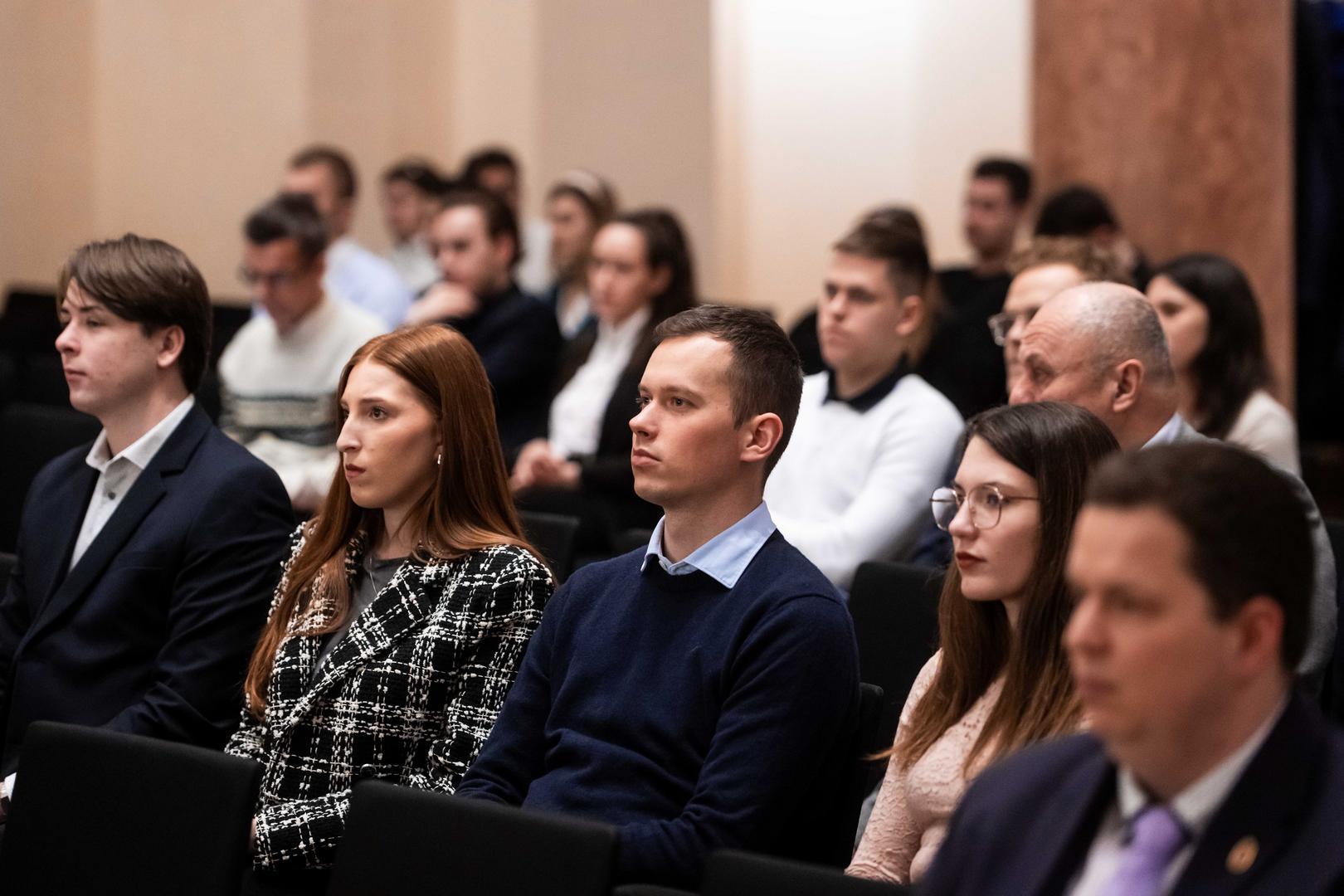
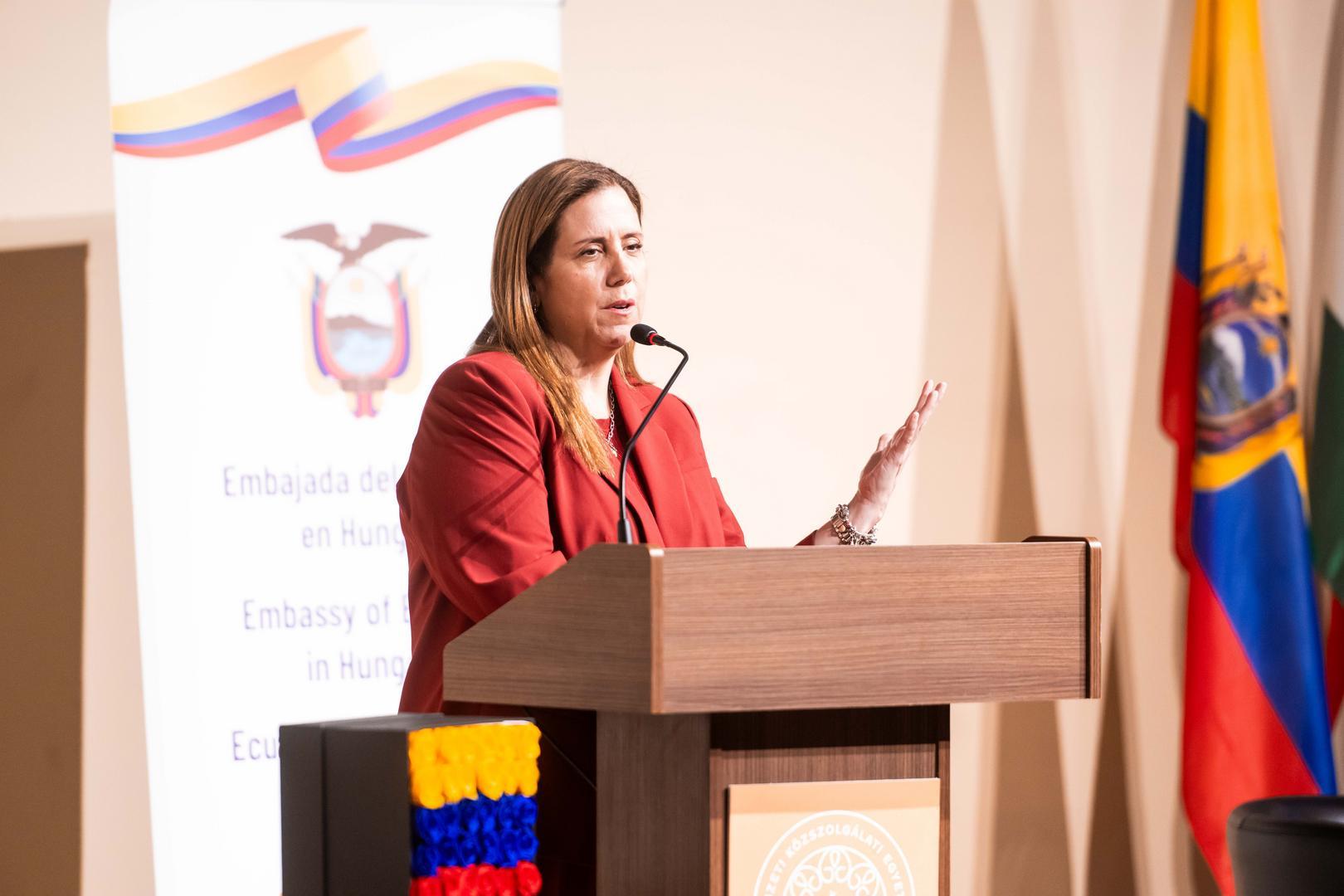
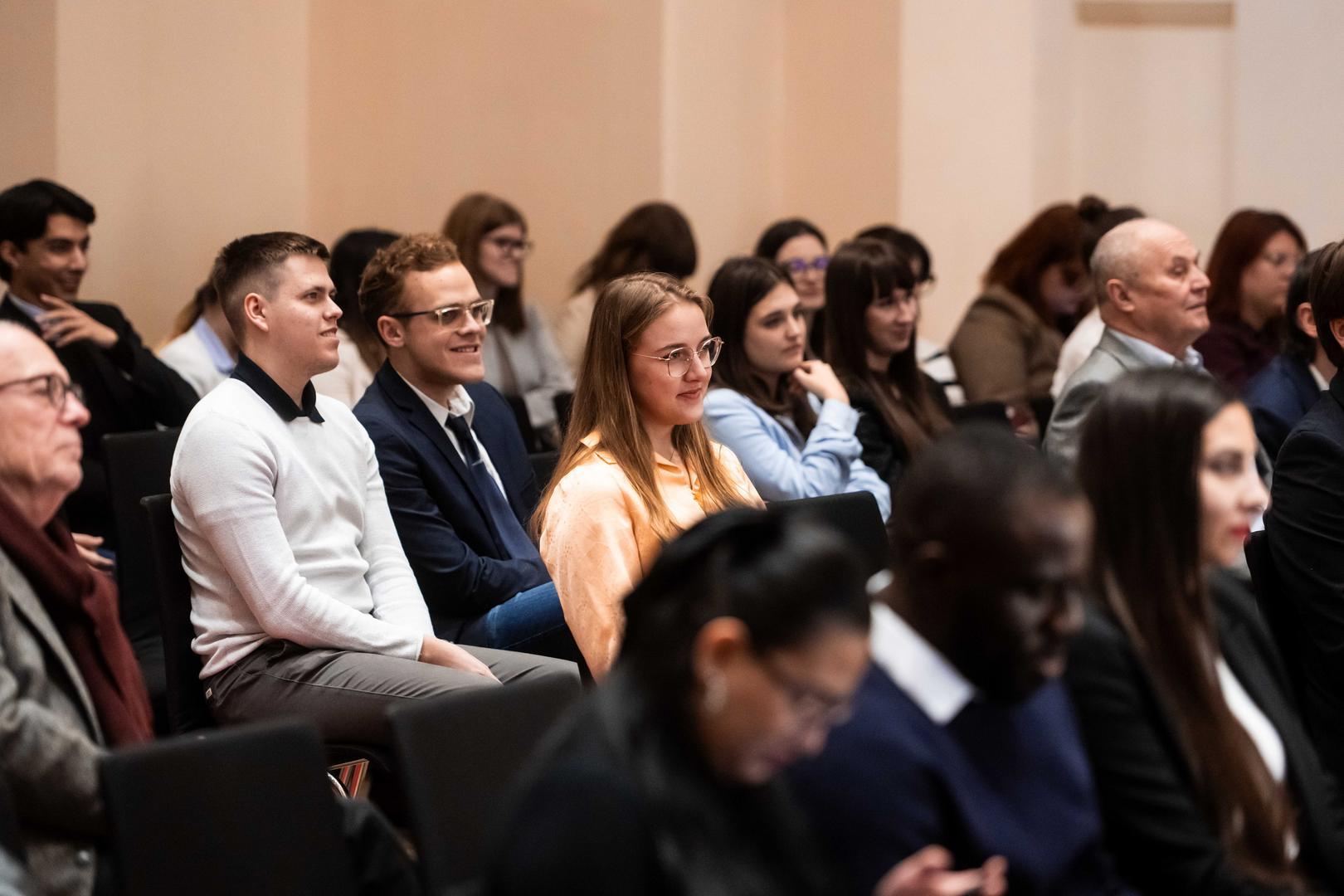
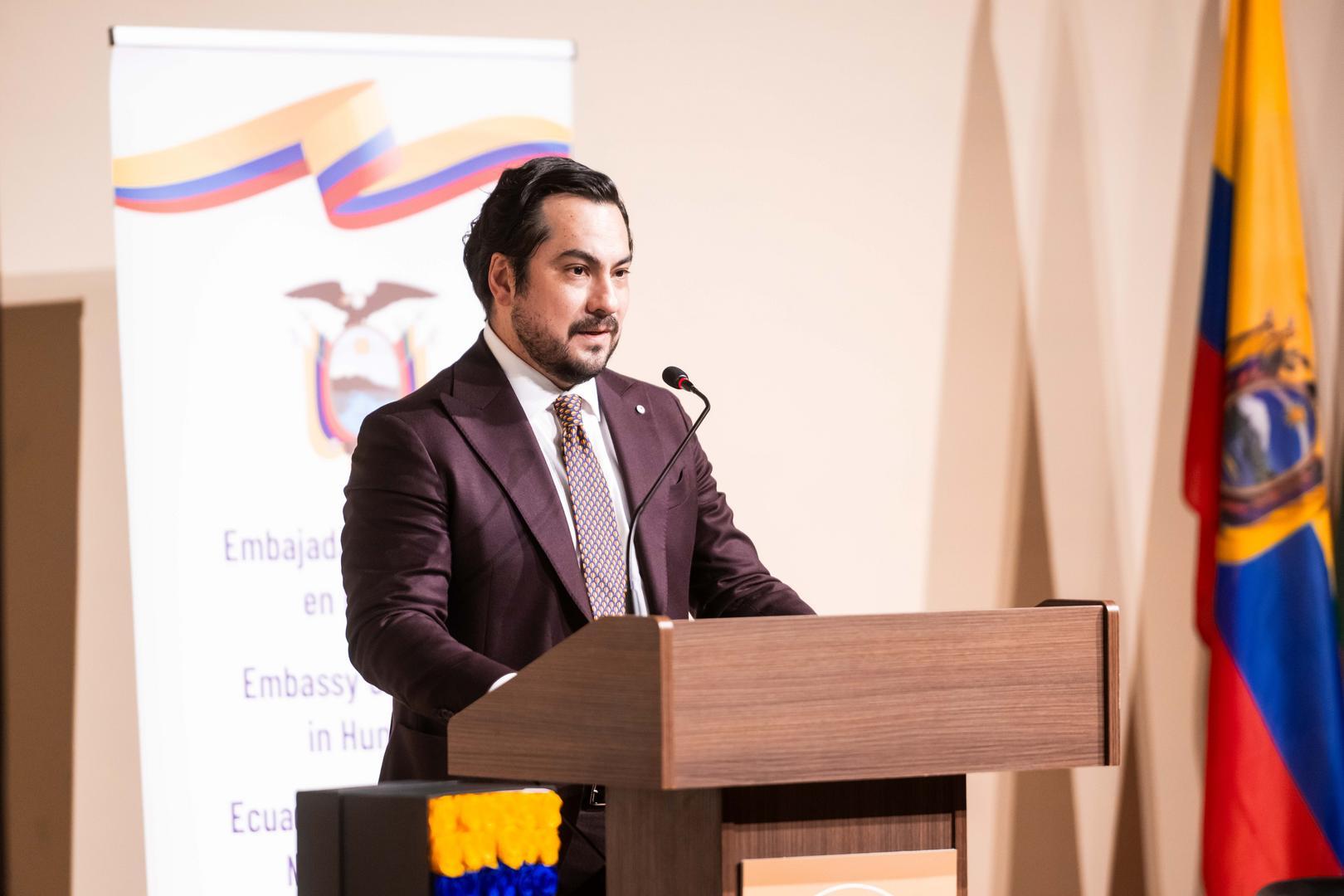
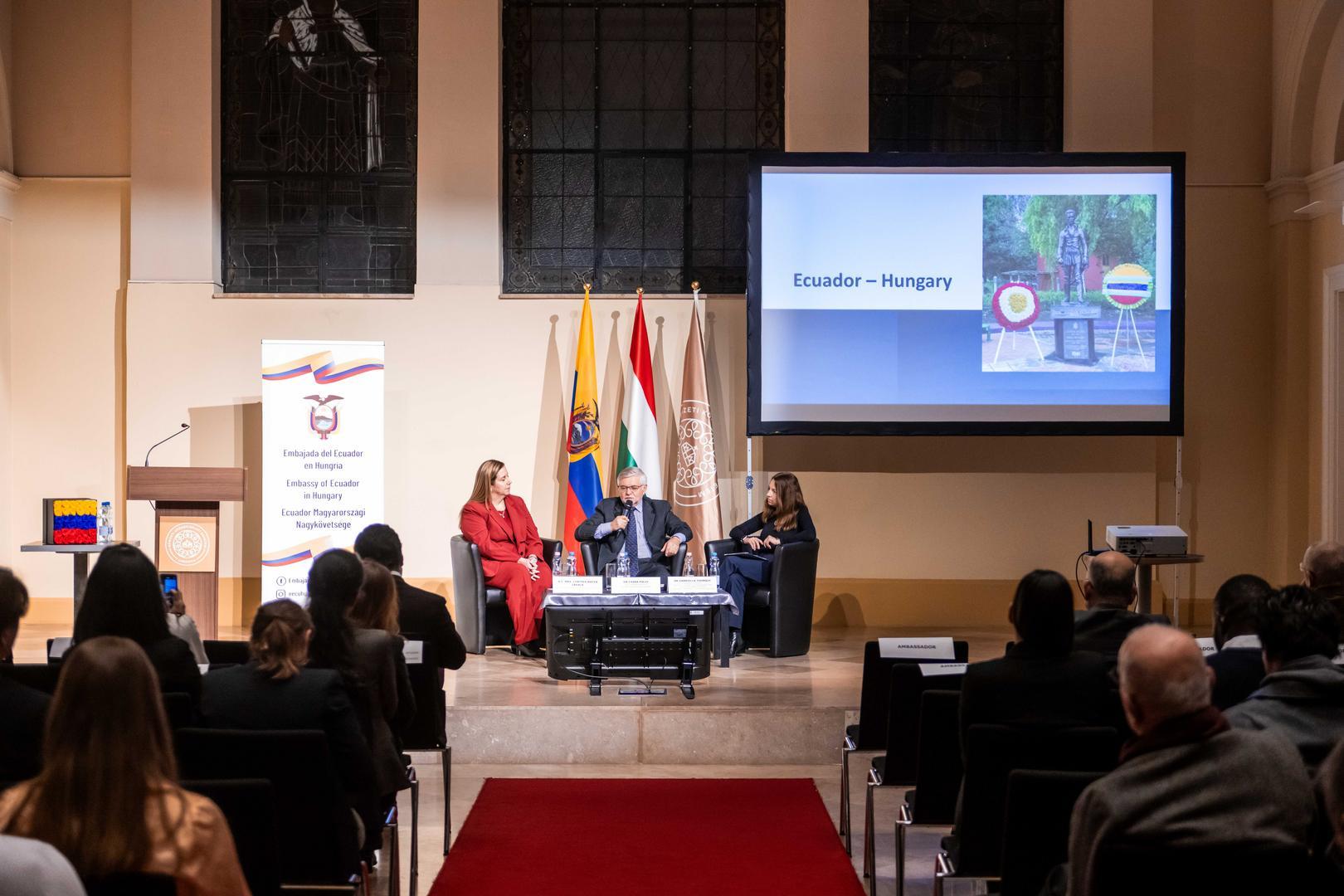
The International Office of the Ludovika University of Public Service (LUPS) organized another event of the traditional Ludovika Ambassadors' Forum on February 5 in the Saint Ladislaus Chapel of the university. The guest of the evening was Cynthia Mayer Zavala, Ambassador Extraordinary and Plenipotentiary of the Republic of Ecuador to Hungary.
“In this year, Hungary and Ecuador are celebrating the 80th anniversary of their diplomatic relations,” highlighted Pier Paolo Pigozzi, Vice-Rector for International Affairs of LUPS, in his welcoming remarks. As he noted, the anniversary is not only a historical milestone but also an opportunity to rethink cooperation. The Vice-Rector also addressed global security challenges, while emphasizing the role of education, science, and personal relations. He pointed out that Ecuador occupies a prominent place in LUPS' network of international relations, among others through Erasmus programs and cooperation with Latin American universities.
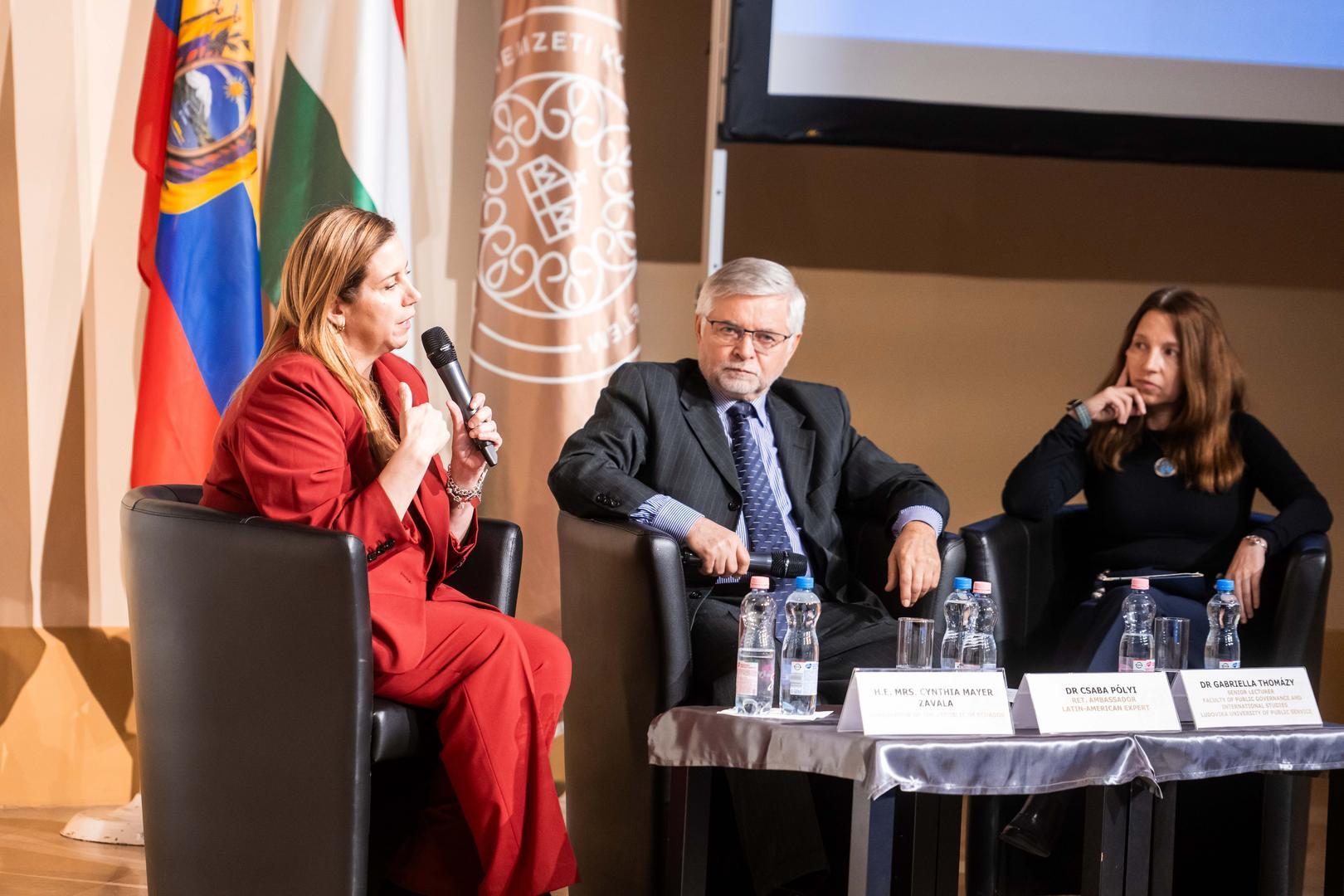
In her presentation, Ambassador Cynthia Mayer Zavala reviewed the past, present, and future opportunities of diplomatic relations between Ecuador and Hungary. She recalled that the diplomatic relationship between the two countries became official through an exchange of notes in Washington on January 3, 1946. As she explained, Ecuador at that time sought to strengthen its sovereignty, while Hungary focused on diversifying its system of international alliances. The Ambassador emphasized that the main pillars of her country’s foreign policy include sovereignty, international cooperation, peace and security, sustainable development, human rights, and the promotion of trade and investment. In her presentation, she spoke in detail about possible areas of cooperation between Ecuador and Hungary, including agricultural innovation, energy, water management, defense and international security, as well as education and scientific research.
She highlighted the significance of the 2017 EU–Ecuador Multilateral Trade Agreement, as well as the Sustainable Investment Facilitation Agreement (SIFA) concluded by the European Commission in January 2026. “Our economies complement each other and are not competitors,” the Ambassador stated, emphasizing the foundations of stable economic cooperation. The Ambassador also addressed Ecuador’s achievements in tourism: according to data from the United Nations World Tourism Organization (UN Tourism), the country achieved a 20 percent increase in the number of international tourists in 2025 and ranked among the fifteen best-performing destinations in the world. World-famous destinations such as the Galápagos Islands, the capital city Quito, as well as Cuenca and the Amazon region played a key role in this success.
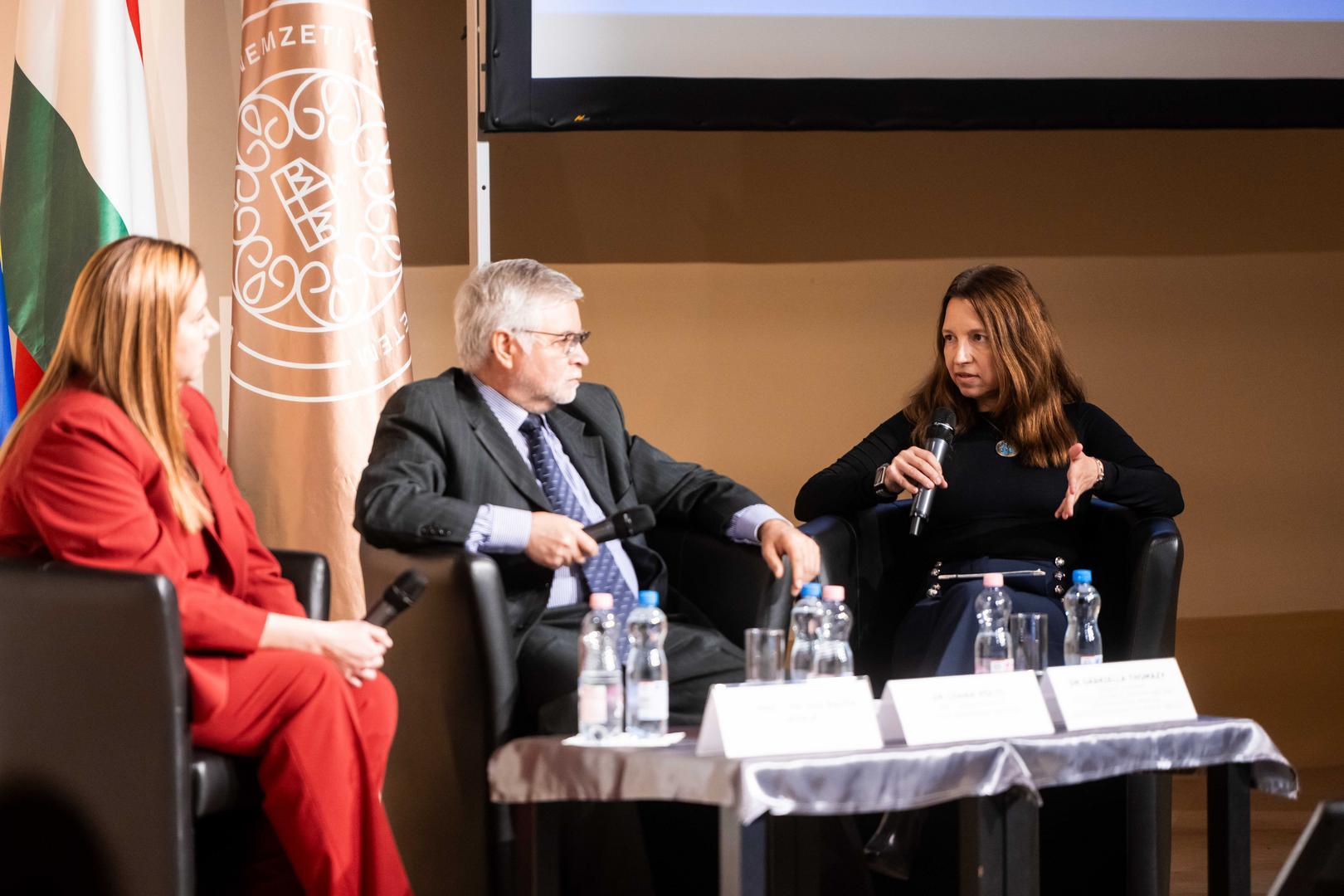
The lecture was followed by a roundtable discussion, in which, alongside the Ambassador, Gabriella Thomázy, Assistant Professor at the Department of International Relations and Diplomacy of the Faculty of Public Governance and International Studies (FPGIS) at LUPS, also took part, moderated by former Ambassador and Latin America expert Csaba Pólyi. The participants discussed issues related to bilateral foreign policy, economic relations, tourism, and cultural cooperation. A highlighted topic was the transformation and distribution of work, as well as its social impact, and the challenges inherent in international trade. Education and the situation of students were also discussed, with particular emphasis on the importance of teacher support. During the discussion, participants also addressed the role of Hungarian communities and diplomatic representations, with special attention to cultural diplomacy. It was noted that the Hungarian Embassy in Quito organizes an exceptionally active cultural and community life: programs include, among others, film screenings, concerts, exhibitions (such as events dedicated to Olga Fisch, the Hungarian painter and textile artist and researcher of Ecuadorian folk art), as well as events related to Hungarian national holidays, which attract an increasingly broad audience year after year. The speakers agreed that a presence built on personal encounters and shared cultural experiences strengthens the partnership between Ecuador and Hungary in the long term.
Text: Éva Harangozó
Photo: Dénes Szilágyi