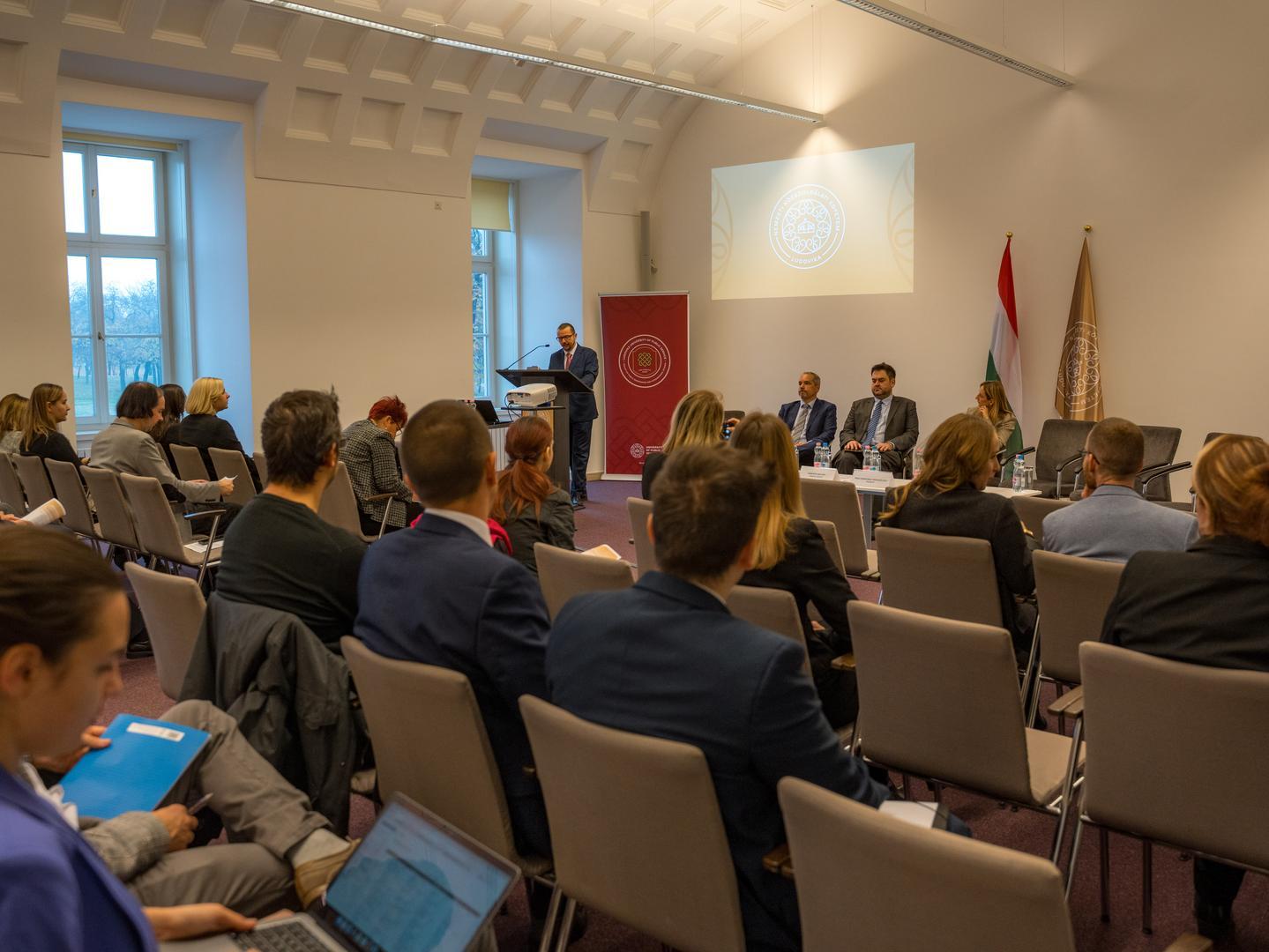
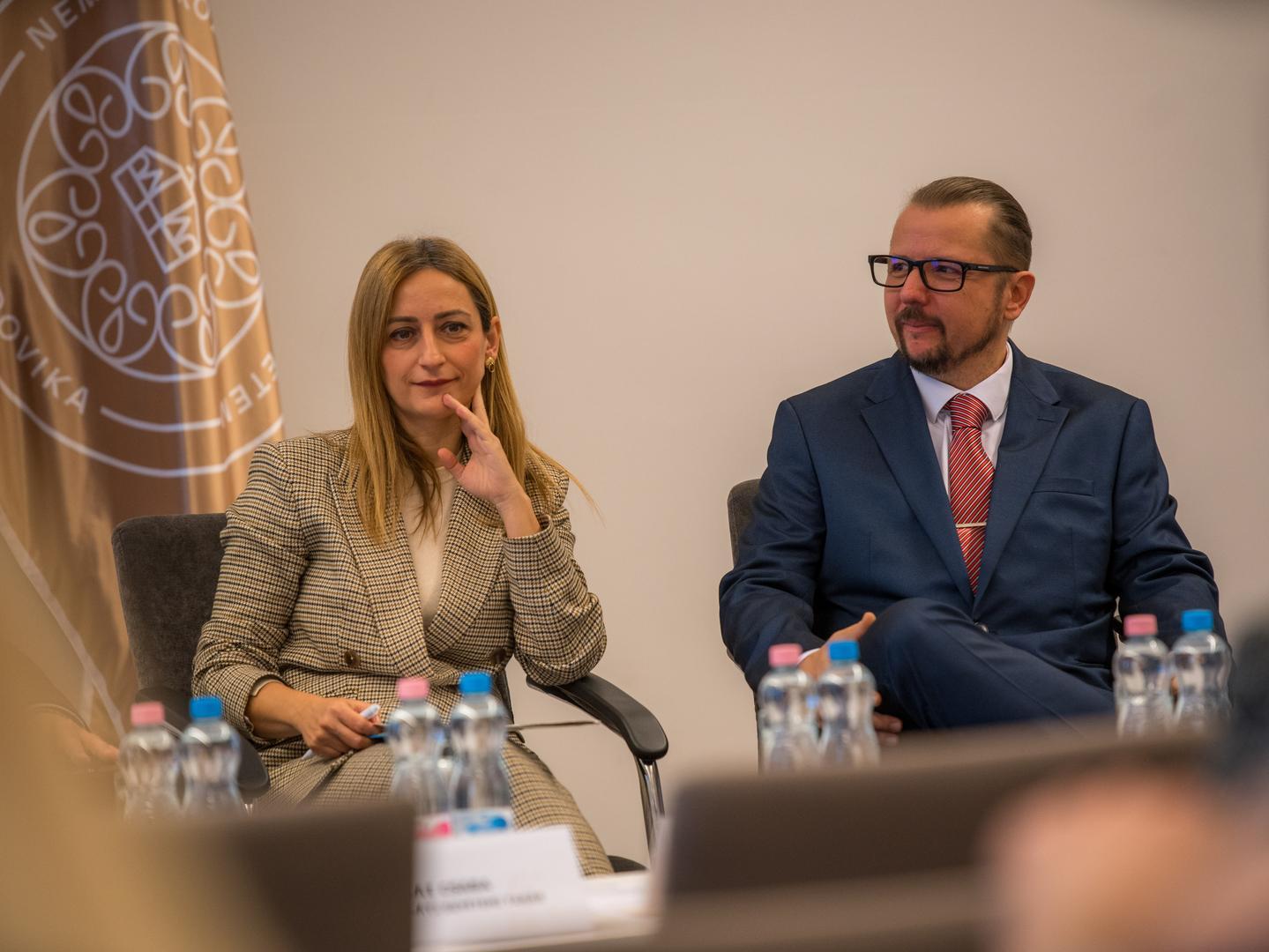
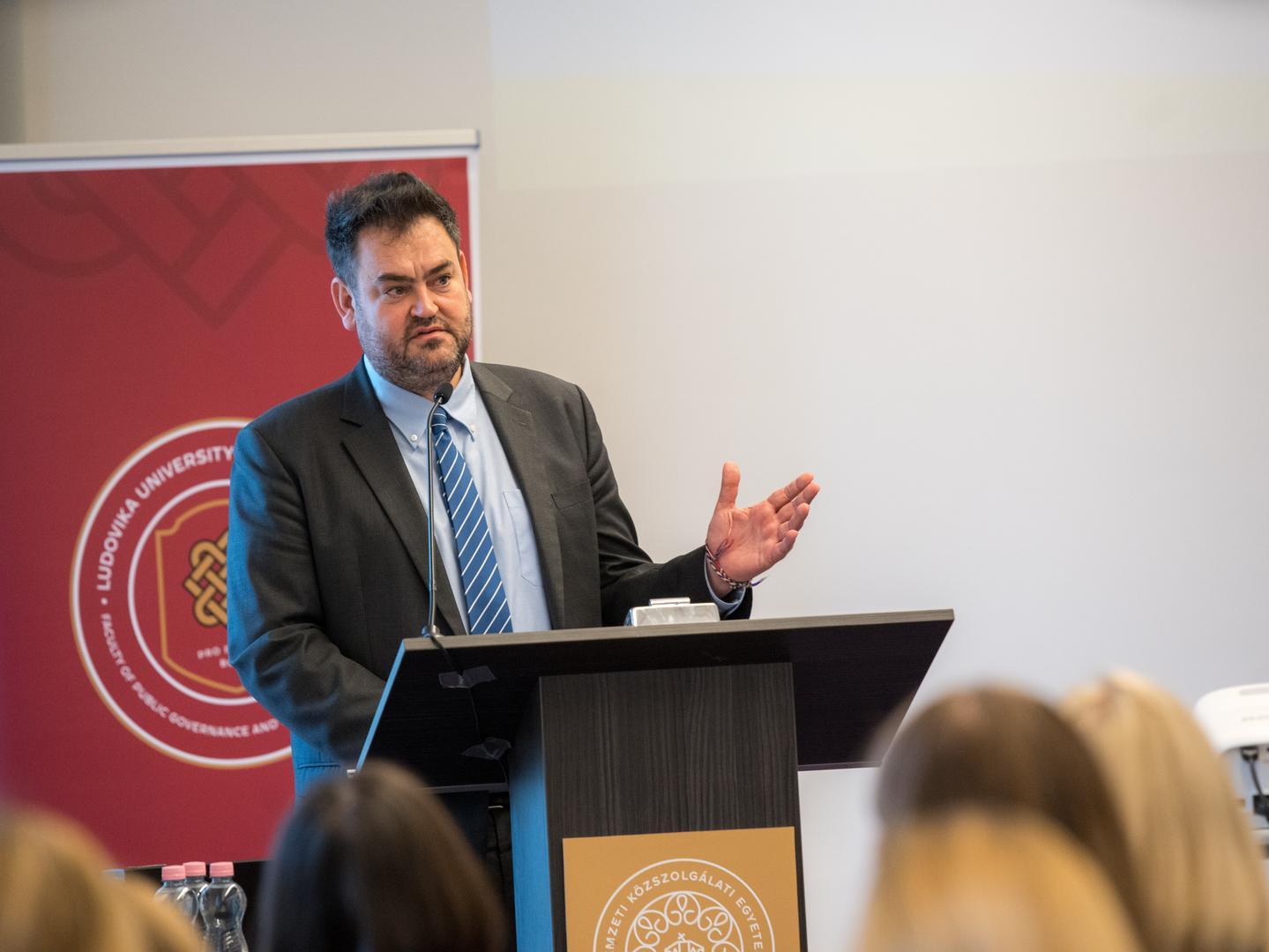
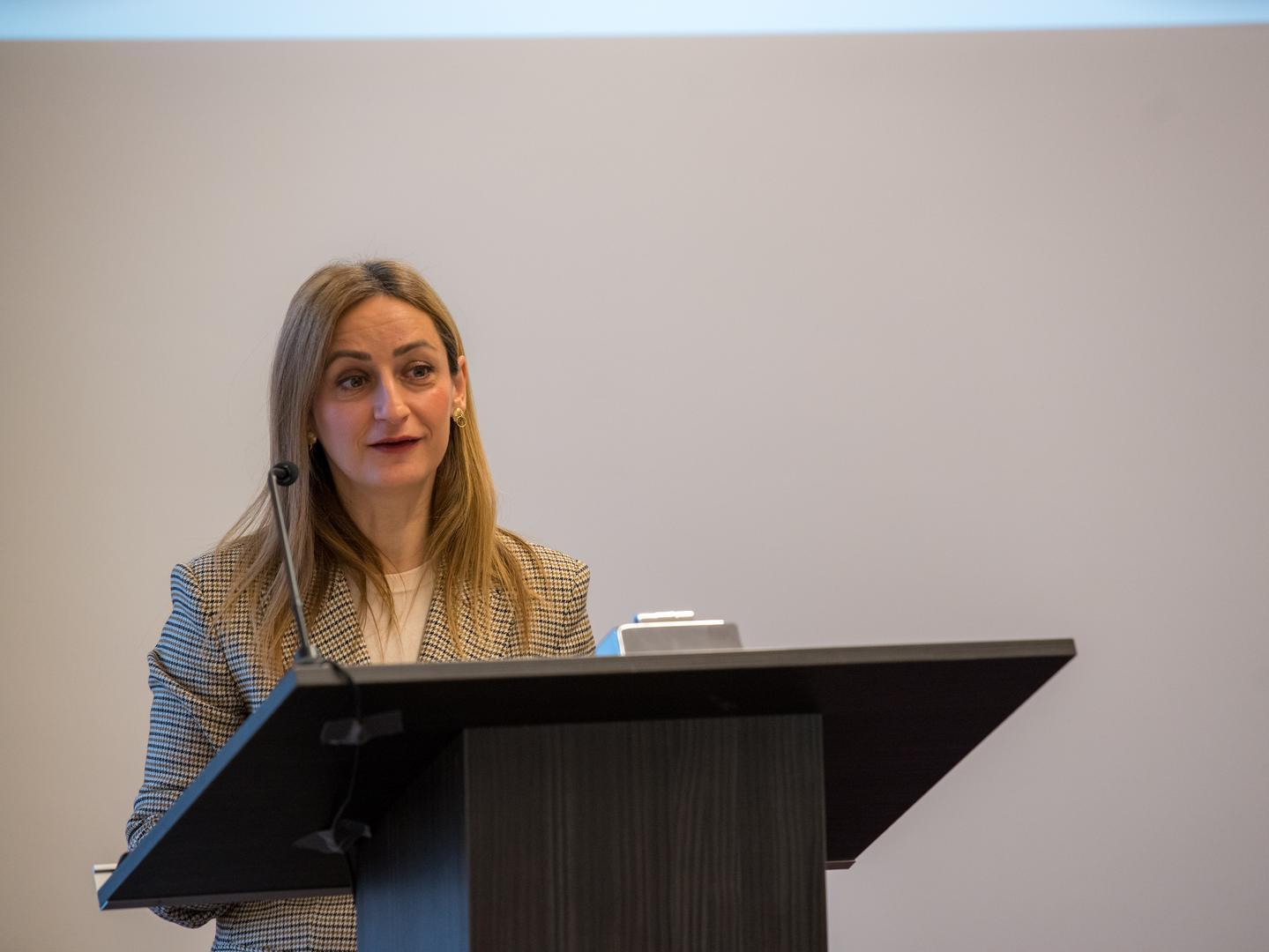
The Balkan Conference was held for the seventh time, organized by the Department of European Studies of the Ludovika University of Public Service on November 14 in the Zrínyi Hall.
In his welcoming speech, Péter Krisztián Zachar, the International Vice-Dean of FPGIS, said: the exchange of ideas, organized for the seventh time, has stood the test of time, while remaining true to its initial mission. It serves as a bridge between theoretical research, education and policy-making, and provides a scientific platform that allows the people living there, studying there and those shaping the region to discuss issues related to the Balkans together. The Vice-Dean highlighted the cooperation agreement signed a day earlier between the representatives of the Ludovika University of Public Service and the Regional School of Public Administration (ReSPA) based in Montenegro, which marks the beginning of a new chapter in the history of the two institutions.
Maja Handjiska-Trendafilova, Director of ReSPA, in her presentation on the enlargement process in the Western Balkans, said: the region is developing dynamically in the areas of digitalization and e-government, but there are still shortcomings in the areas of professionalization of public administration and professional recruitment.
In the continuation, Gellért Horváth, Head of the EU Common Foreign and Security Policy and Enlargement Department of the Ministry of Foreign Affairs and Trade, gave a presentation on the status of the EU integration of the Western Balkans and the related geopolitical, security and economic issues. She highlighted that the Russian-Ukrainian war gave new impetus to the EU enlargement policy, while the Western Balkans have been waiting for decades, which has resulted in an unjust situation. The EU's successful enlargement policy can only remain credible if it remains consistent, balanced and predictable - all the more so because the security, stability and economic convergence of this region are not only in the region's but also in the EU's strategic interest.
In the first section of the event, Boglárka Koller, head of the department at the LUPS and head of the Jean Monnet Centre of Excellence, gave a presentation entitled The Western Balkans and EU enlargement: experiences of the Visegrad Group, followed by Dániel Harangozó, Balkan researcher, reporting on Serbia's defense and military policy dilemmas in his presentation entitled Where to next, neutrality?. Tímea Zsivity, doctoral student at the LUPS, presented Montenegro's accession prospects and the obstacles to them. The rest of the professional forum also discussed, among other things, border problems in the Balkans, crisis management, ethnic and national issues, and breakaway regions.
Text: Lilla Kovács
Photo: Katinka Halápi