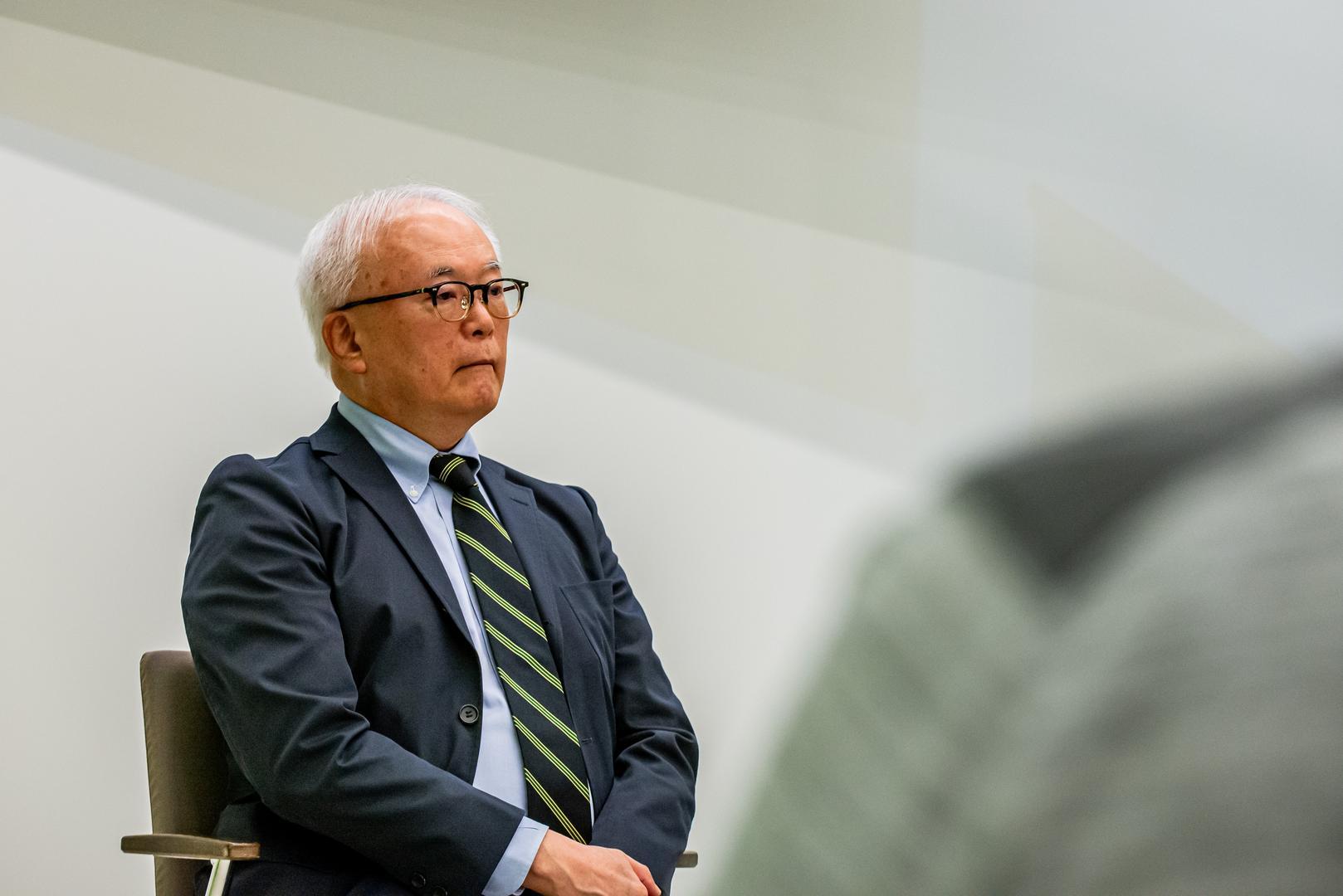
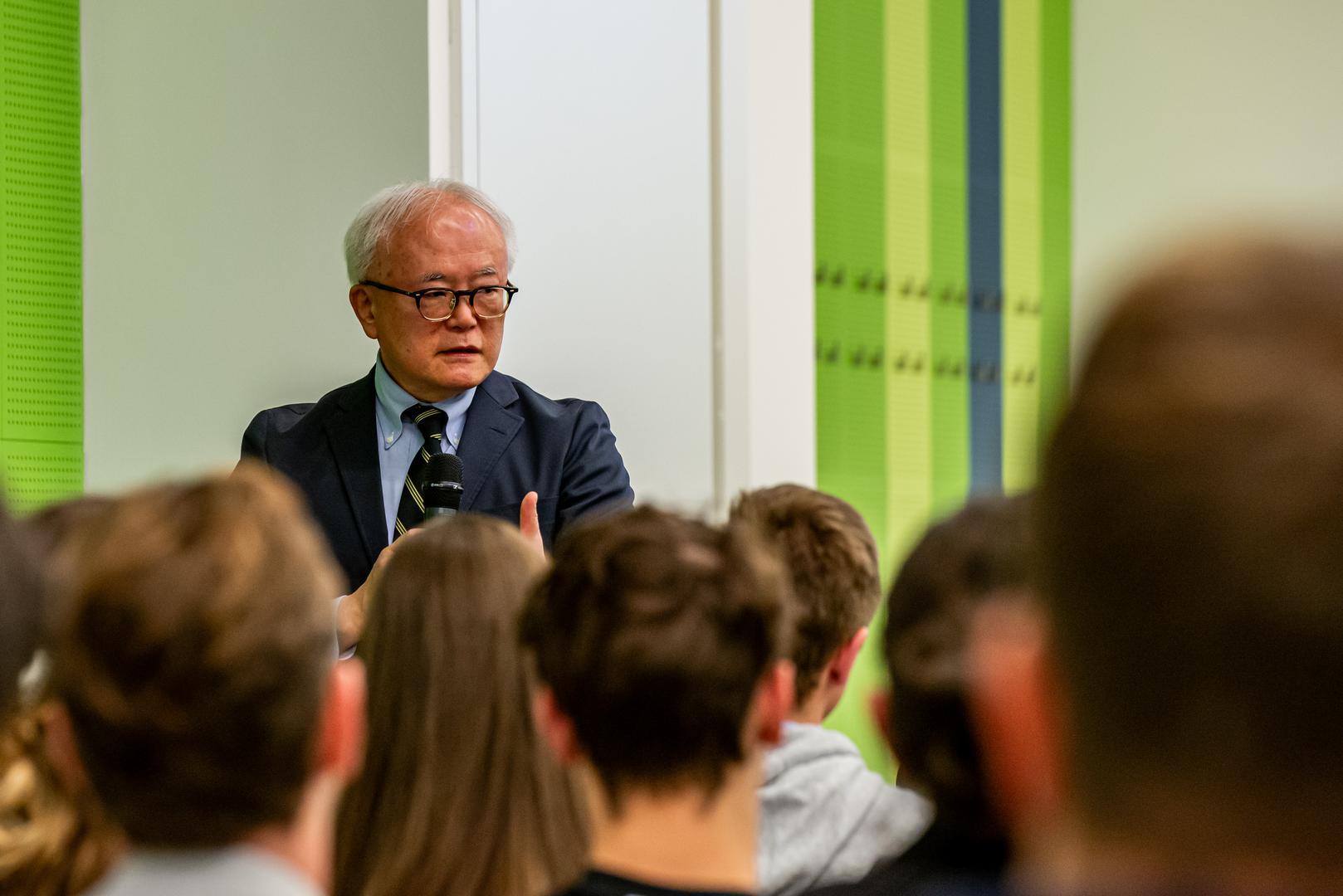
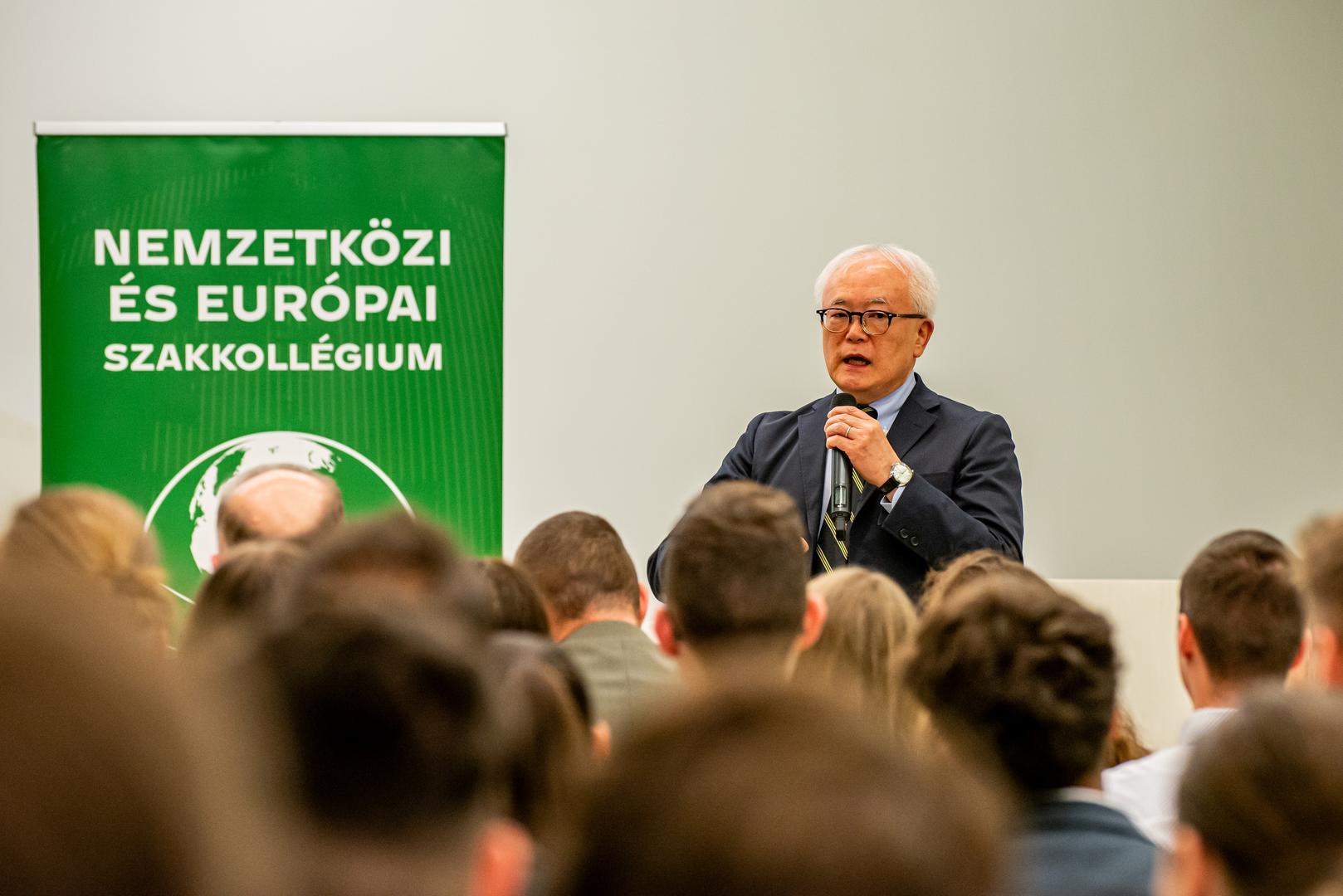
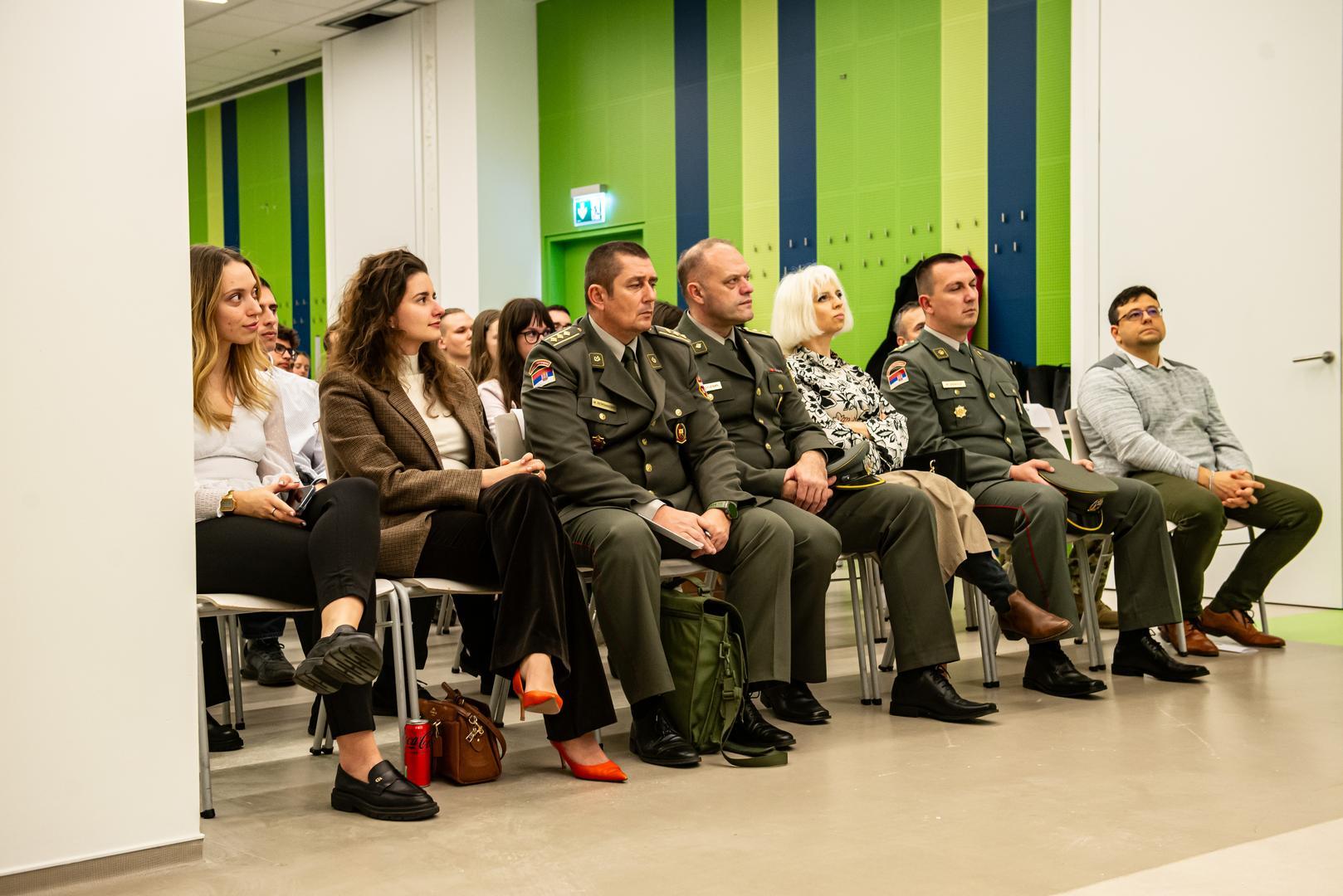
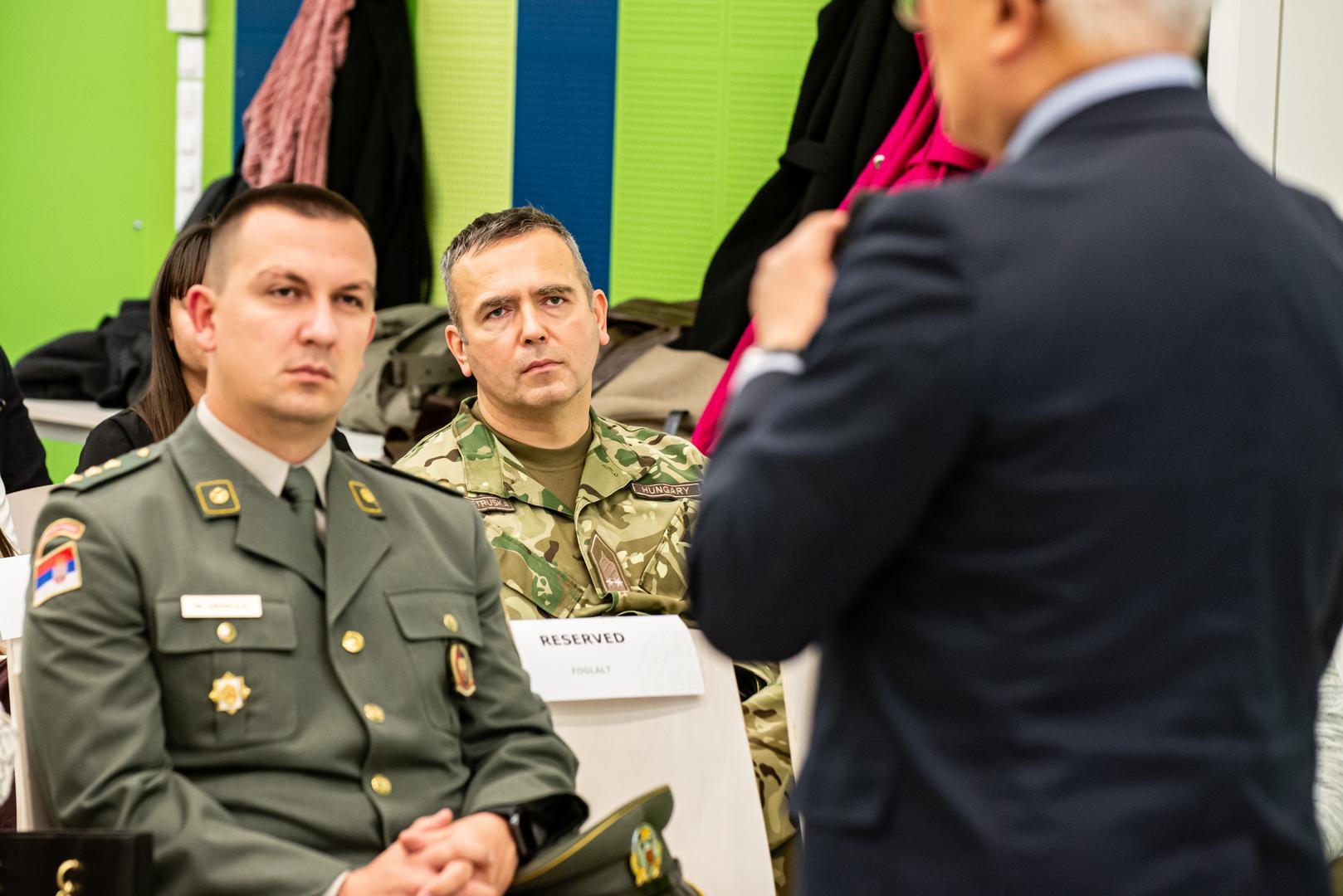
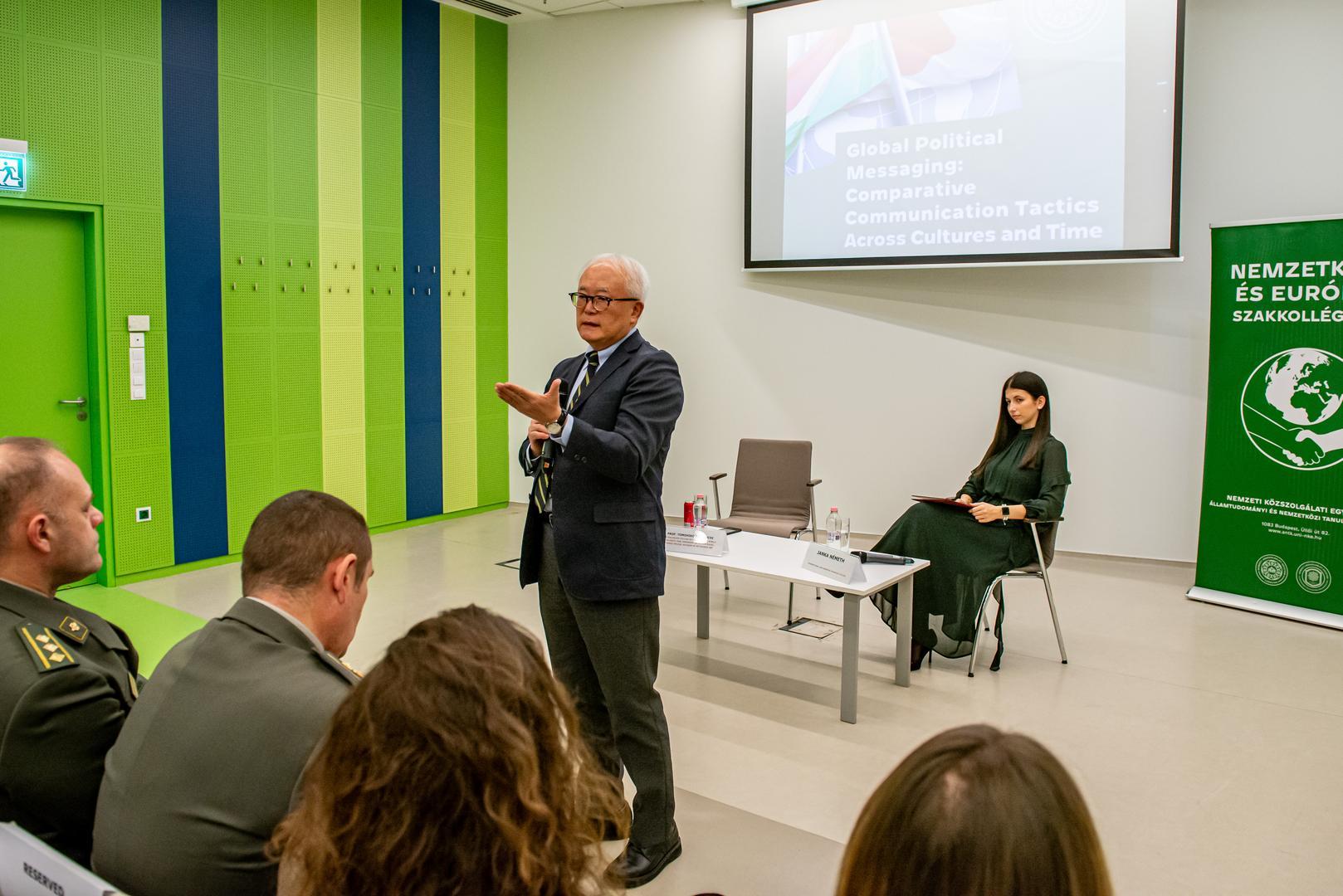
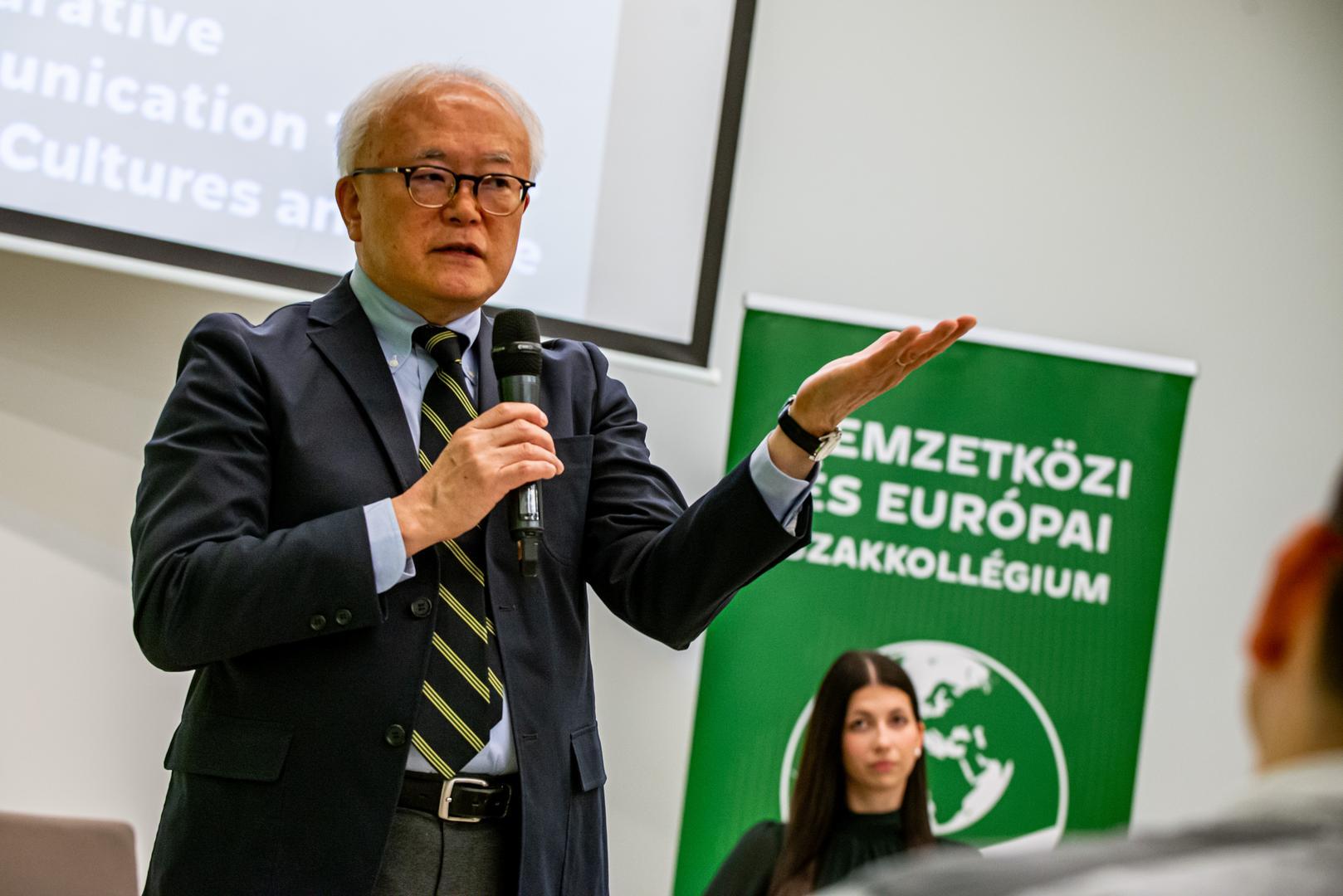
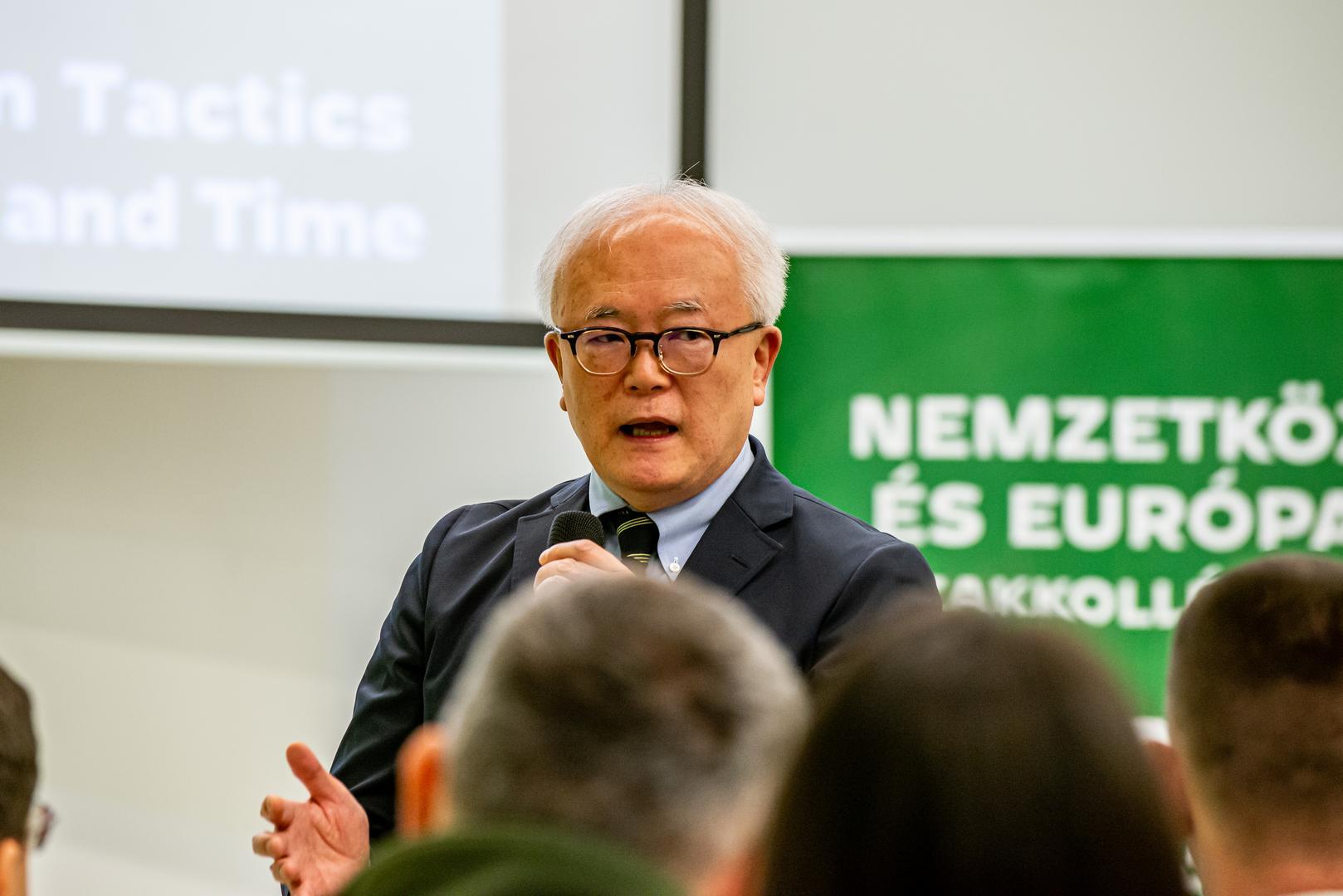
Tomohiko Taniguchi, distinguished visiting researcher of the Ludovika Public Diplomacy Hub (LPDH), gave a lecture titled Global-Scale Political Messaging: Comparing Communication Tactics Across Cultures and Eras on November 12 at the university’s Orczy Road Dormitory.
Through the support of LPDH, students of our university now have the opportunity to connect personally with a Japanese professor who has experience at the highest level of diplomatic relations — emphasized Liliana Śmiech, the International Director-General of Ludovika University of Public Service (LUPS), as she welcomed the President of the conservative movement Nippon Kaigi and former special advisor to Prime Minister Shinzo Abe.
Who actually needs political communication? — asked Tomohiko Taniguchi in the opening of his lecture. According to him, it would be easy to say no one does, yet all of us use it. Even in a conversation with our parents, a communication strategy is essential; simply exchanging messages between sender and receiver is not enough if we want to reach our goals. It is no coincidence that NATO also considers finding a successful political communication strategy to be one of its greatest challenges. Not long ago, ordinary civilians — even children — used destructive weapons against trained soldiers in Iraq and Afghanistan. This phenomenon imposes strategic and communication expectations on the military: it can be life-saving if their messages reach civilians who do not speak foreign languages.
According to the Japanese professor, strategic communication also includes how Hungary’s prime minister speaks domestically or with European leaders — while aware that his words will receive global attention, even from former US President Donald Trump.
When is political communication most important? — raised the next question the professor. When a decision concerns life and death, war, or economic matters. The essence of politics is constant change in which leaders must make decisions. These decisions, however, may divide the nation. A welfare society such as Japan focuses more on the elderly. The country has built an extensive welfare system, which in size already exceeds the United States’ defense budget. However, the elderly constitute an increasingly large and active voting population, and because of the additional attention and resources directed toward them, the next generation may fall victim to this imbalance.
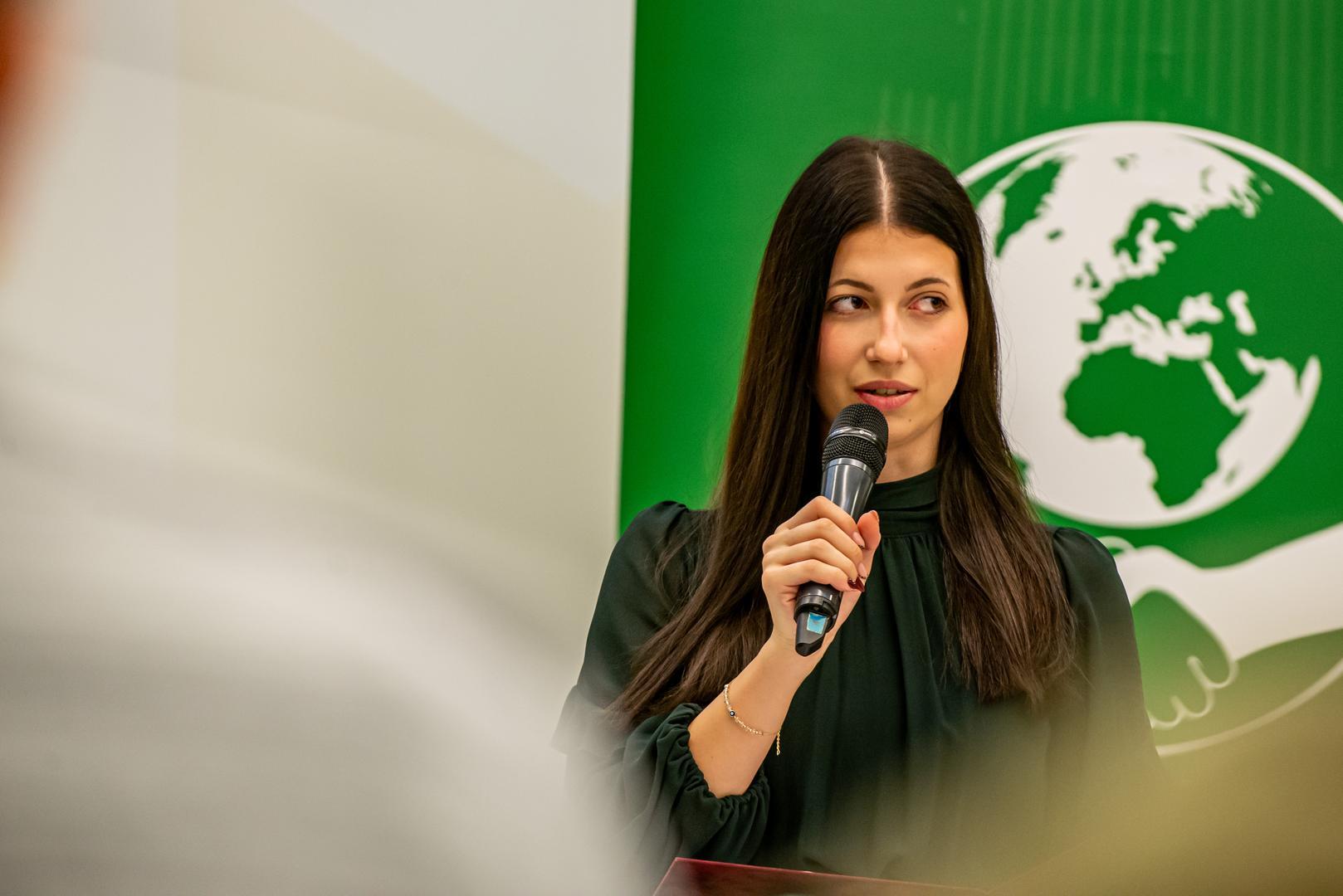
In the second part of the event, Tomohiko Taniguchi answered student questions in a discussion moderated by Janka Németh, student of the International and European College for Advanced Studies (NESZK) within the Faculty of Public Governance and International Studies (FPGIS). The professor spoke, among other things, about the serious challenge that social media — which knows no publication deadlines — poses for politics and civil servants. The artificial influencing of public opinion in this way has become an increasingly serious battlefield in the world. He also noted that politicians and opinion-shapers once relied on language barriers, allowing them to communicate differently in their native language than in English. Today, however, texts can be translated instantly, and artificial intelligence plays a significant role in this.
The professor believes that today it is more worthwhile to invest effort in deeply mastering one’s own language and culture rather than learning new languages. He advised university students to remain continually curious and to pay attention not only to domestic events but also to what is happening in the world. In his view, everything before our eyes should always be placed in historical context, which requires constant learning. Finally, he spoke about how the major umbrella party that long governed Japan has now lost its majority in both houses of parliament, making the most important task of the new prime minister to form temporary coalitions based on concrete decisions. If this is not achieved, new elections will be necessary in Japan.
Text: Tibor Sarnyai
Photo: Márk Benjámin Mészáros