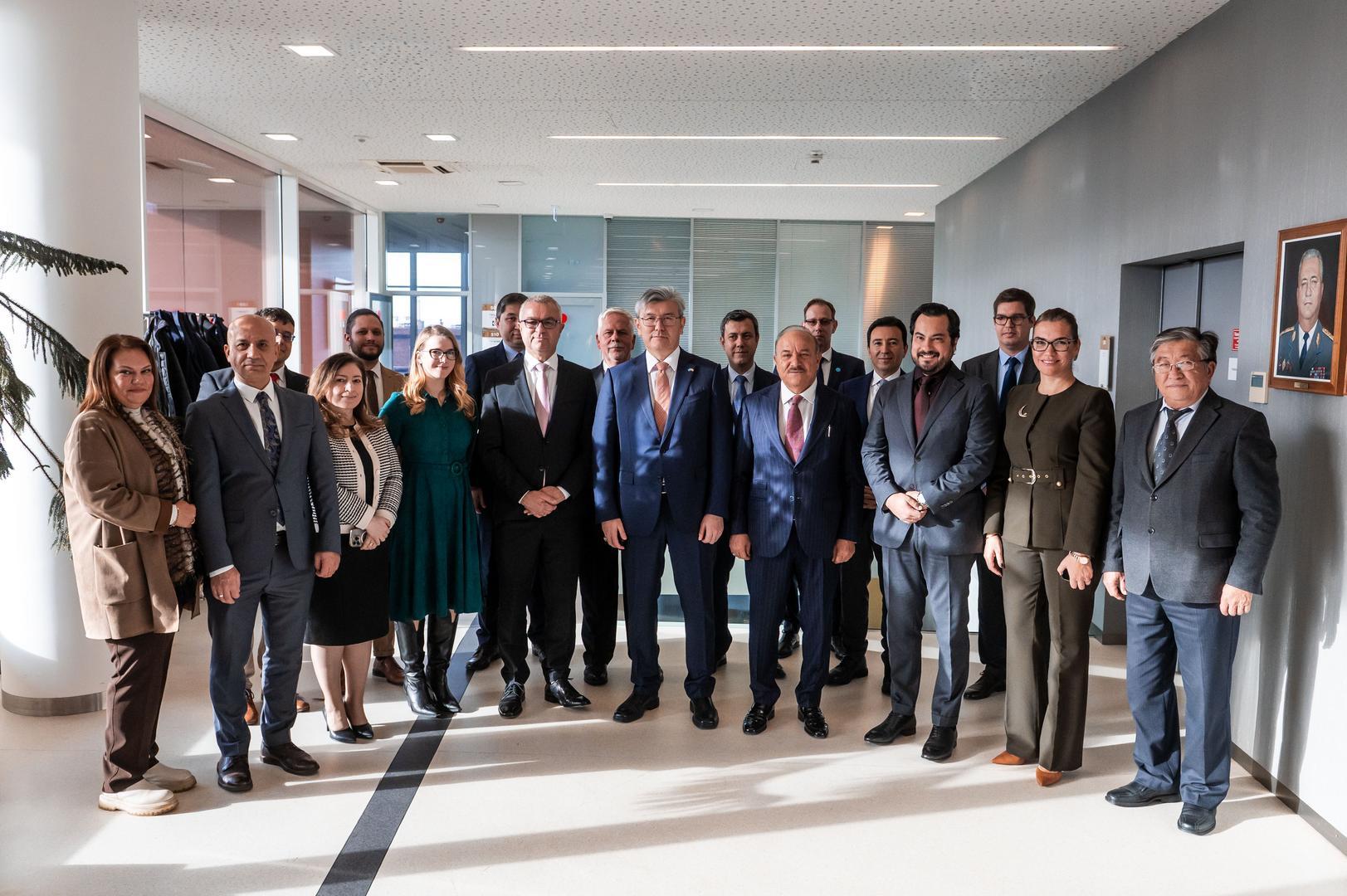
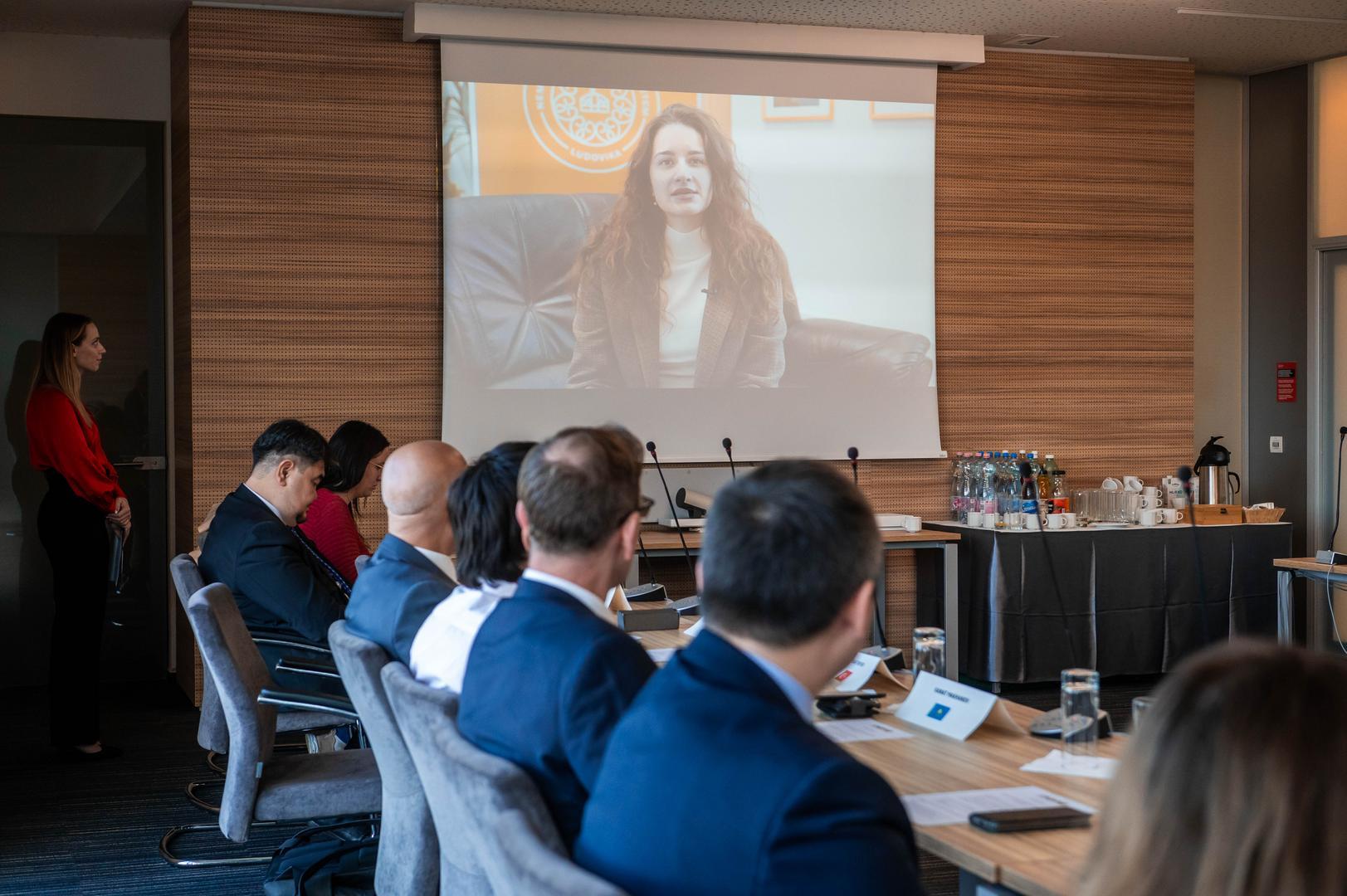
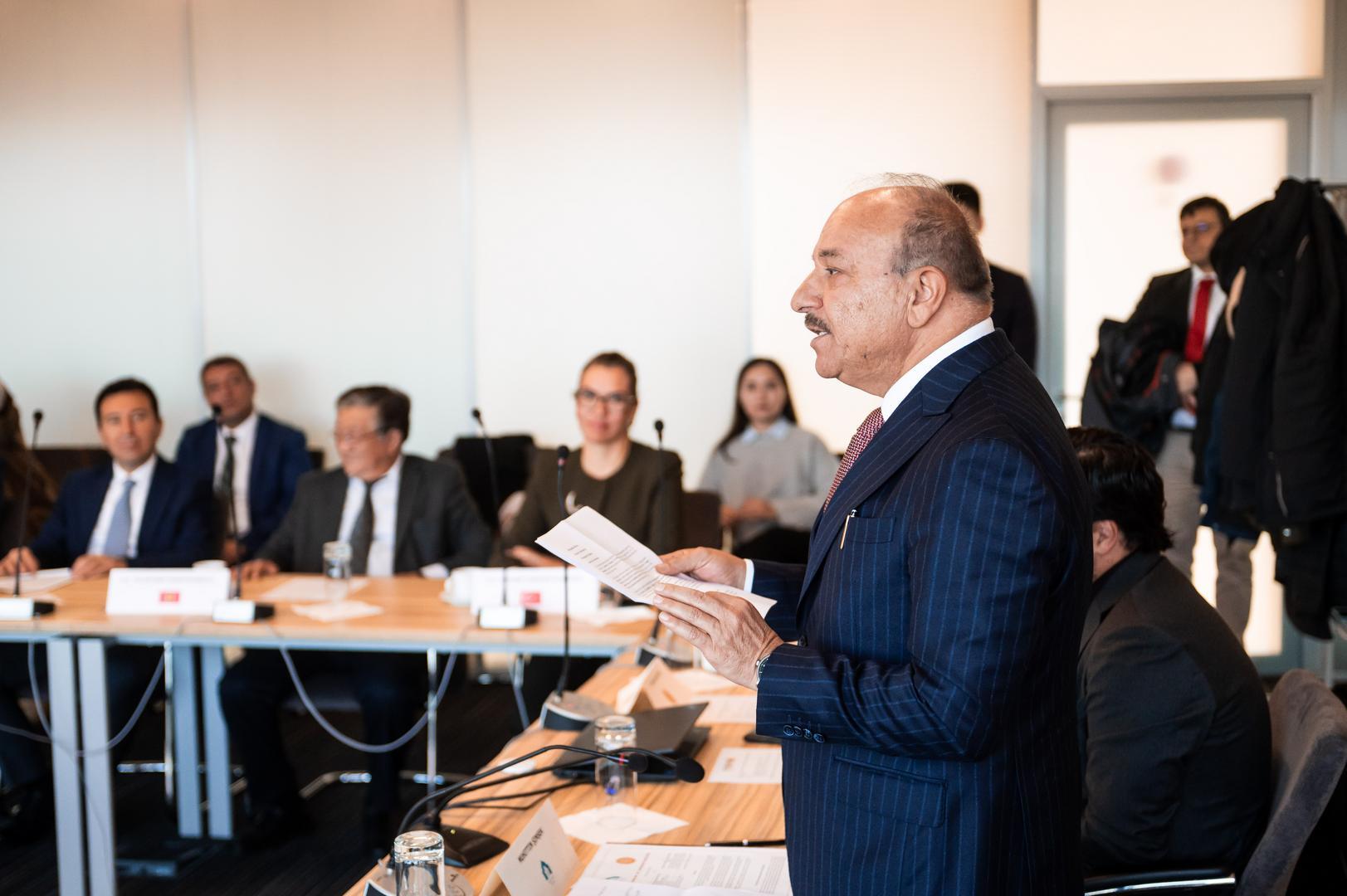
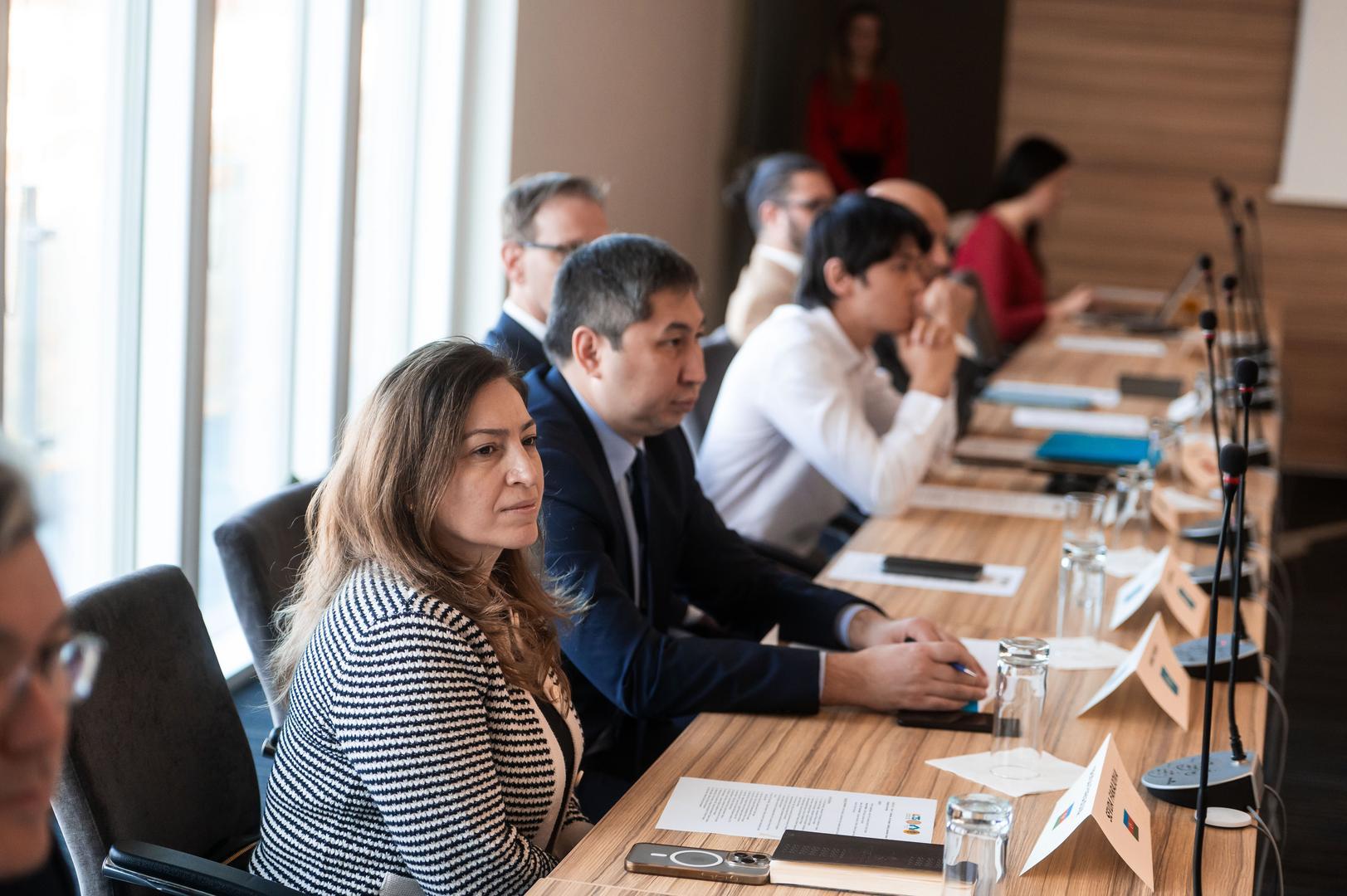
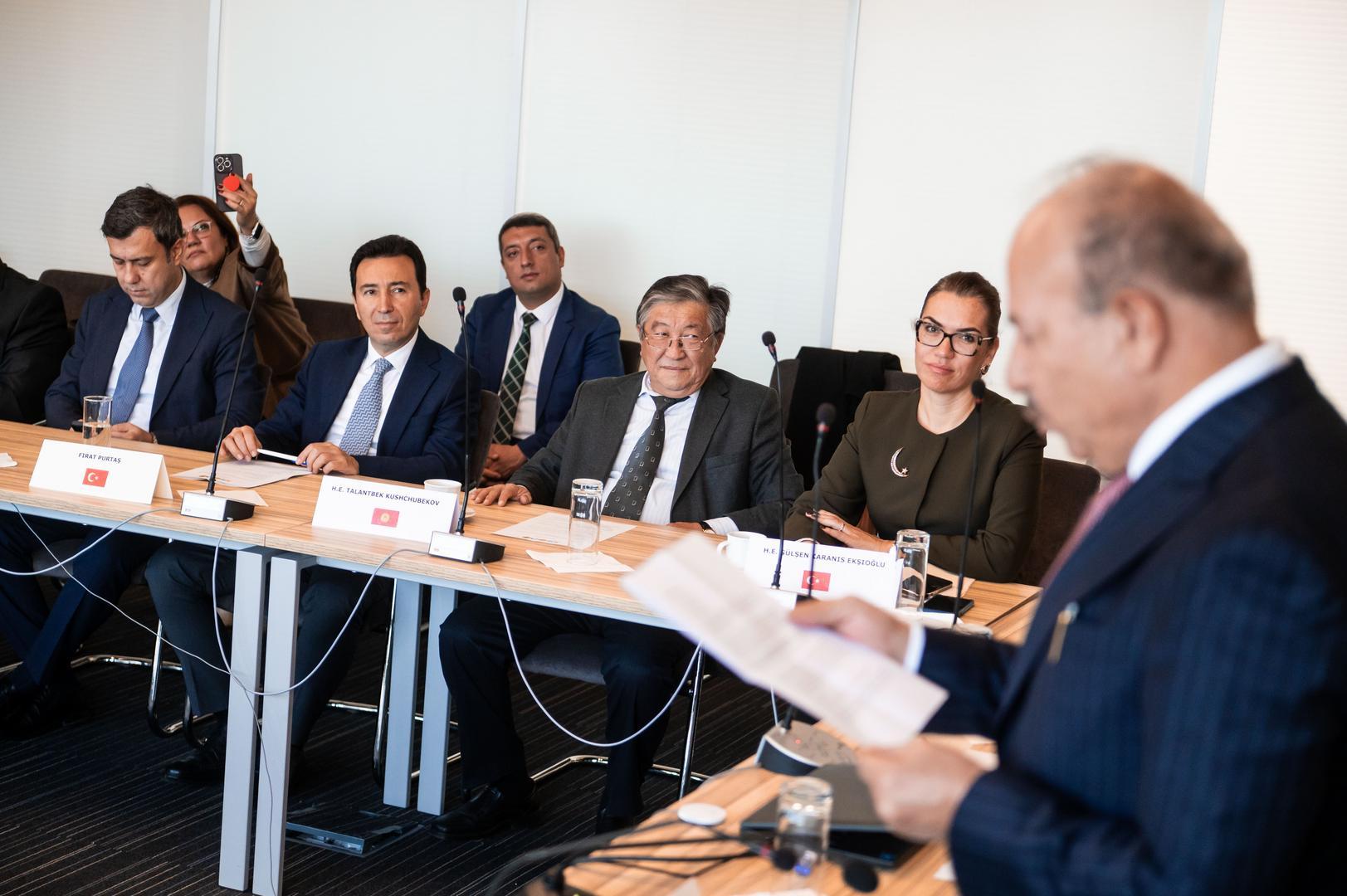
The event titled From Budapest to Astana: Building Bridges in the Turkic World. Relations and Cooperation – Hungary’s Strategic Commitment to the Turkic World was organized by the International Directorate (ID) of Ludovika University of Public Service (LUPS) on November 18 at the university’s Education Centre.
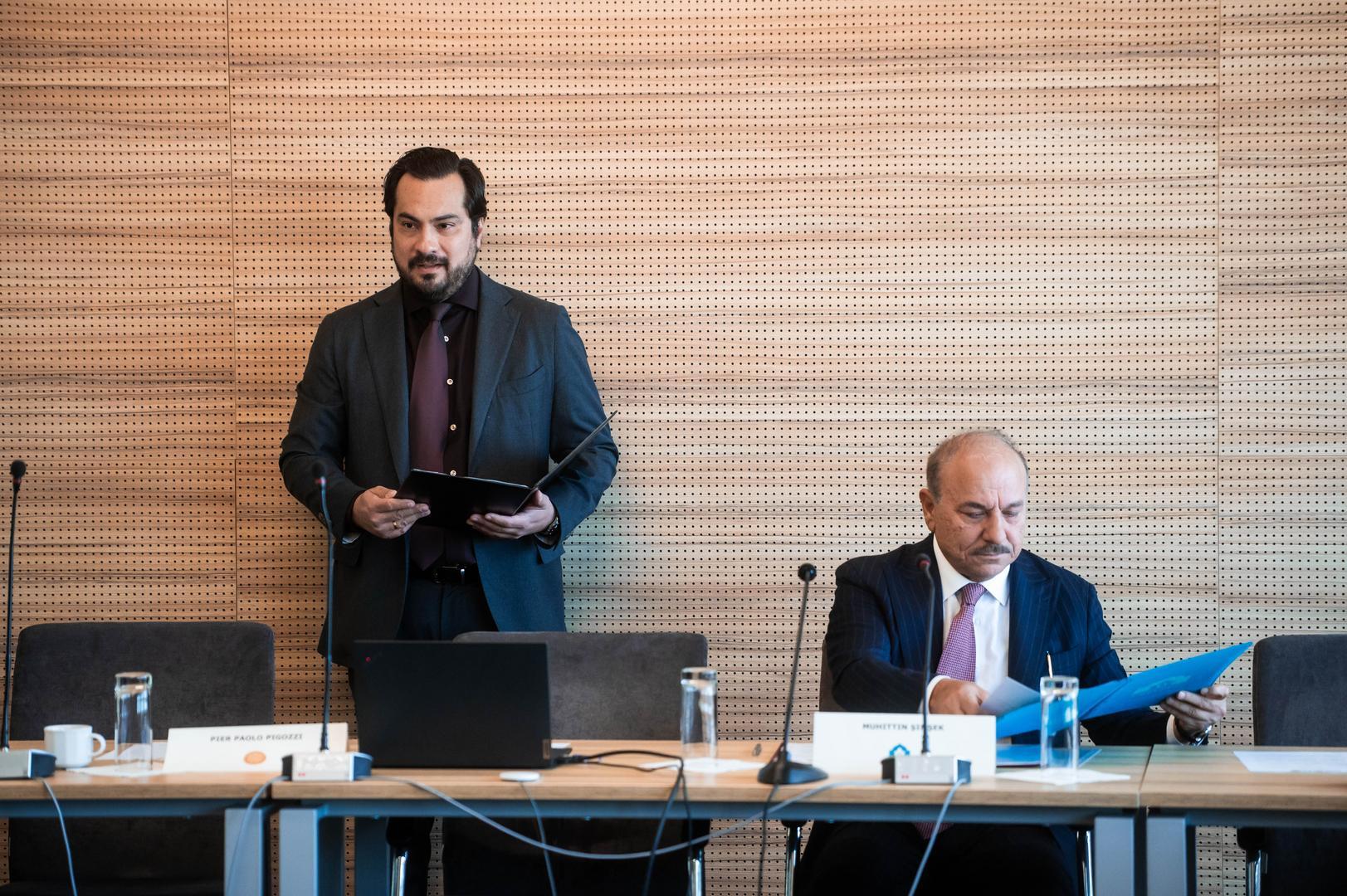
In his opening speech, Pier Paolo Pigozzi, Vice-Rector for International Affairs at LUPS, emphasized that the aim of the conference was to explore the strategic aspects of Hungarian–Turkic cooperation. He also conveyed greetings from the university’s Rector, highlighting that it was both a pleasure and an honor for Ludovika to host an event attended by representatives of the Embassy of the Republic of Kazakhstan in Hungary, the Ludovika Research Workshop on Turkic Studies (LRTS), and the Akhmet Yassawi International Kazakh–Turkish University.
The Vice-Rector underlined that relations between Hungary and the Turkic world are not only rooted in history but remain a living, dynamically developing partnership today. “Ludovika seeks to build intellectual bridges that will, in the long term, support scientific, political, economic, and cultural cooperation,” he said, presenting the Ludovika Research Workshop on Turkic Studies as one of the key professional pillars of Hungarian–Turkic relations, fostering research collaboration, student mobility, and joint projects.
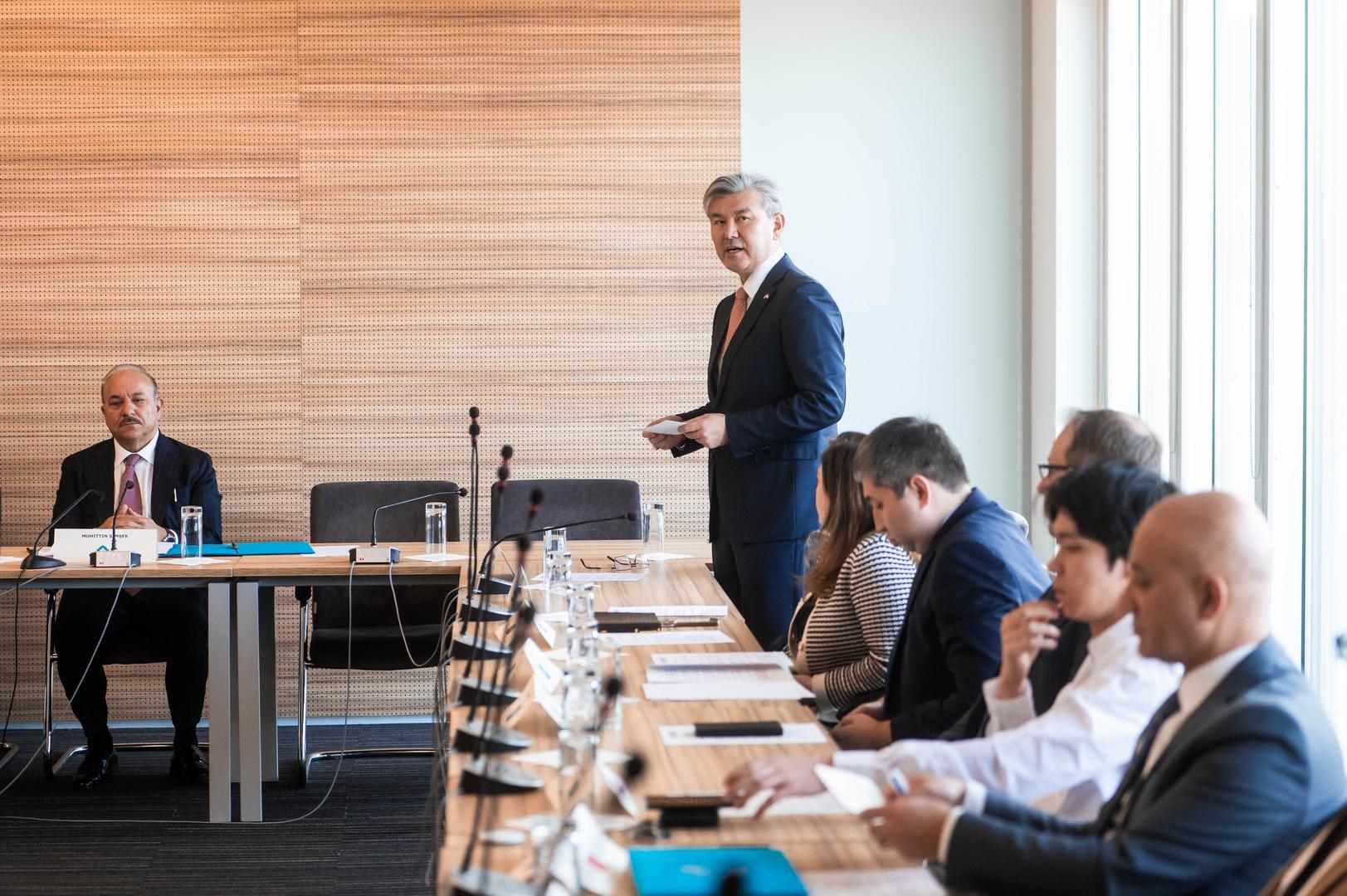
Abzal Saparbekuly, Ambassador of the Republic of Kazakhstan to Hungary, emphasized in his speech that relations between Hungary and the Turkic world have developed dynamically and continuously in recent years, evolving into a strategic partnership. He noted that at first glance it might seem unusual for an EU member state to maintain such close cooperation with the Turkic world, but in Hungary’s case this relationship is deeply rooted in historical and cultural ties. The ambassador highlighted that Hungarian identity embodies both Finno-Ugric heritage and elements related to Eurasian nomadic cultures, forming a natural bridge between Hungary and Turkic, Kazakh, Azeri, Uzbek, and Turkmen peoples. He added that this cultural closeness also contributed to Hungary obtaining observer status in the Organization of Turkic States (OTS) in 2018.
Hungarian–Turkic cooperation today is developing across several key areas: cultural relations, economic and industrial cooperation, transport and logistics development, educational and research partnerships, and investments in new technologies. The ambassador emphasized that relations between Kazakhstan and Hungary are particularly strong, as his country holds Hungary in high esteem. “Kazakhstan and Hungary are more than strategic partners: we are kindred nations bound by centuries-old ties,” he stated. According to the ambassador, Hungary serves as a good example of how to preserve a European identity while maintaining an active presence in the Eurasian region.
Muhittin Şimşek, Chairman of the Board of Trustees of the Akhmet Yassawi International Kazakh–Turkish University, stressed that the conference was not only a professional event but also a symbolic celebration of friendship between nations. He noted that Kazakhstan and Turkey have historically maintained close relations, still reflected today in their economic cooperation, knowledge sharing, and cultural and scientific connections. He reminded the audience that the two countries have been culturally close and mutually supportive partners for centuries and continue to work together for the development of the Turkic world.
Şimşek emphasized that the cooperation between LUPS and the Akhmet Yassawi International Kazakh–Turkish University will greatly contribute to strengthening not only Hungarian–Kazakh ties but also broader relations with the Turkic world. He called the cooperation agreement between the two institutions a milestone that paves the way for new research projects, joint programs, and long-term professional partnerships.
In a video message, Liliana Śmiech, Director General for International Affairs at LUPS, stated: “Hungary’s strategic cooperation with the Turkic world is now a visible and consciously developed process, the key to which is connectivity and cooperation.” She emphasized that the cooperation agreement represents the first concrete step in this joint endeavor. She added that it lays the foundation for future joint research, student mobility programs, and professional collaboration between universities. Śmiech highlighted that the Ludovika Research Workshop on Turkic Studies, established at LUPS, plays an important role in Hungary’s long-term strategic commitment, as it provides the framework—through language programs, research, and academic dialogue—for strengthening Hungarian–Turkic relations at both educational and cultural levels.
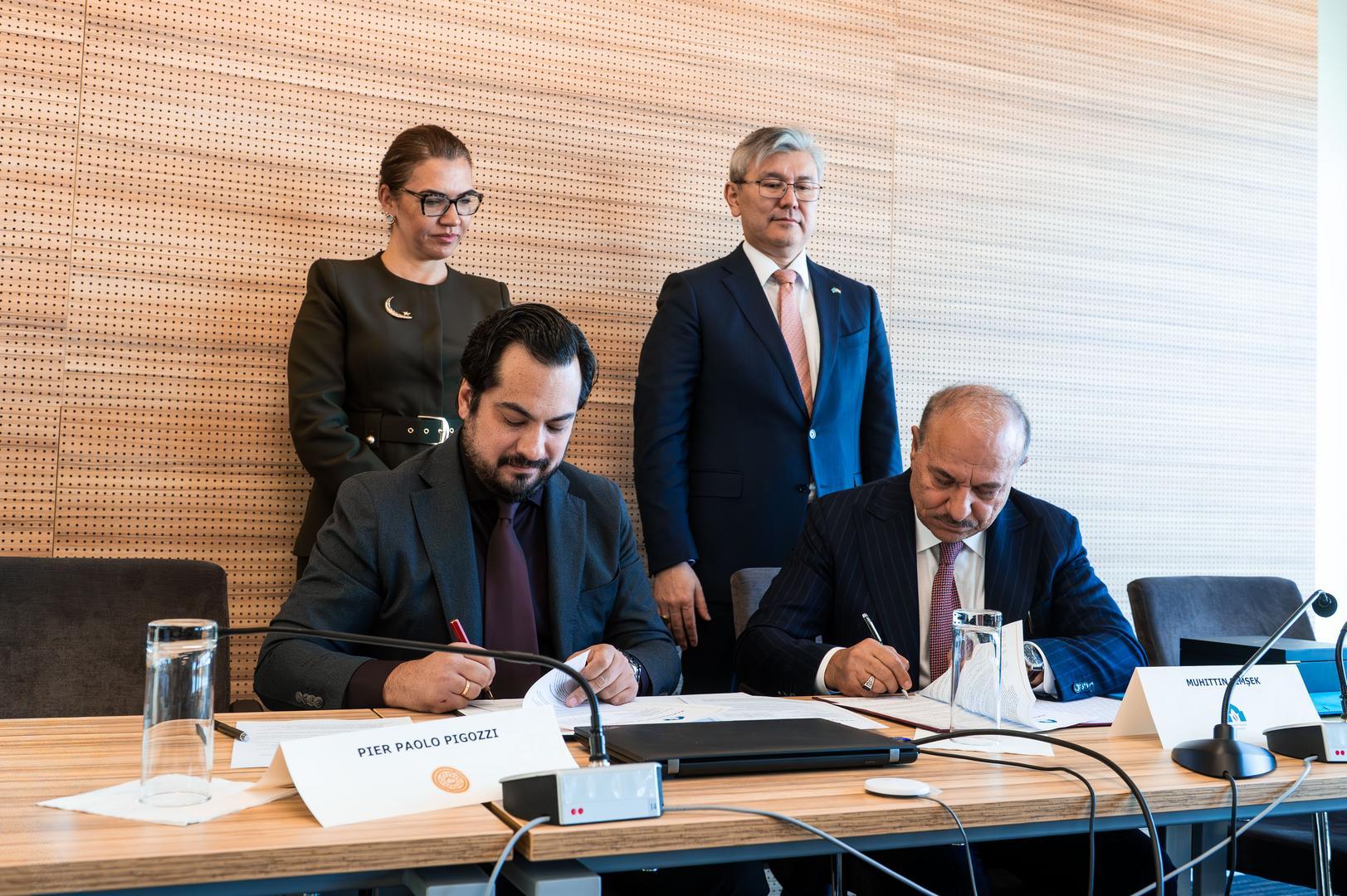
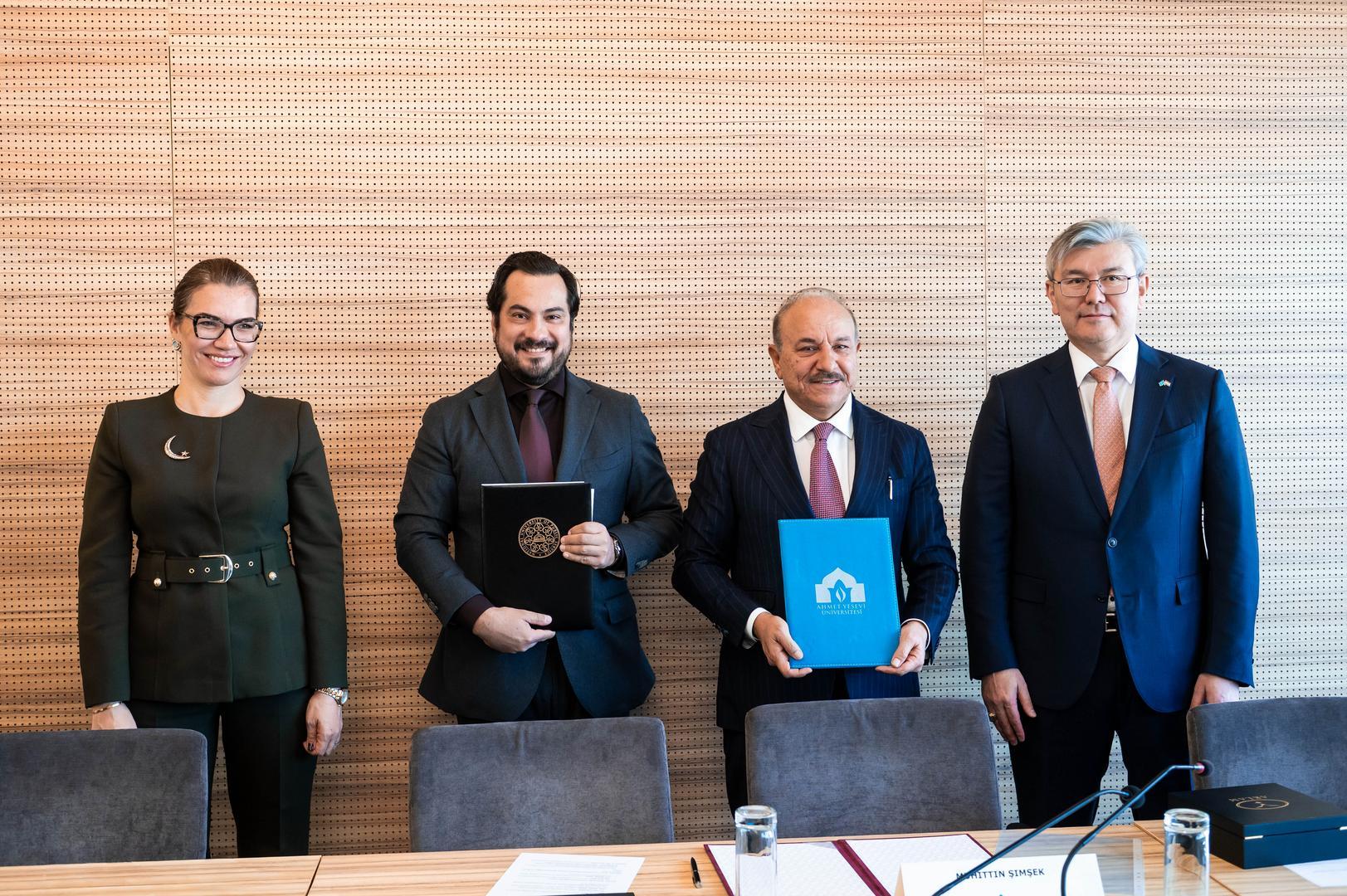
Following the opening speeches, Pier Paolo Pigozzi and Muhittin Şimşek signed the cooperation agreement.
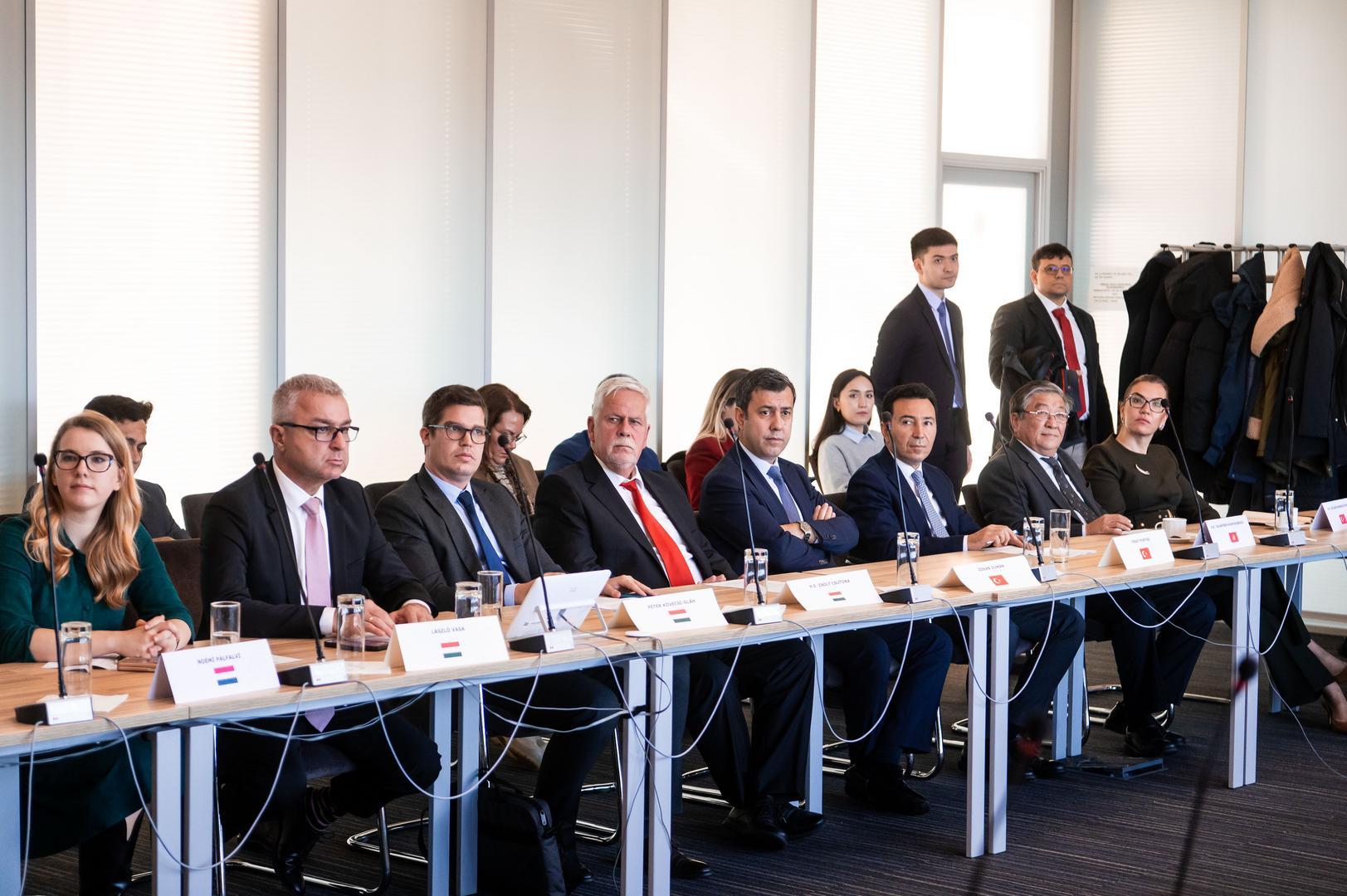
Afterward, a panel discussion titled Connectivity and Resilience: The Turkic World and Hungary in a Shared Regional Context took place. Participants included Fırat Purtaş, Dean and Professor of International Relations at the Faculty of Economics and Administrative Sciences of Ankara Hacı Bayram Veli University; Kanat Ydyrys, Project Director of the OTS Representative Office in Hungary; and Kanat Makhanov, Senior Research Fellow at the Eurasian Research Institute. The discussion was moderated by Péter Kövecsi-Oláh, Curator of the Diplomatic Academy of the Turkic World.
Topics addressed included energy security, EU–Turkic cooperation, and the post–Ukraine war situation, including Hungary’s mediating role. Fırat Purtaş emphasized that after the war in Ukraine, Europe entered an energy crisis, while Hungary had already, more than a decade ago, adopted a consciously multidirectional foreign policy that opened the way for close cooperation with the Turkic states. He noted that Hungary now regularly consults with the leaders of Turkic countries and is building increasingly significant energy relations with Azerbaijan and Kazakhstan. In his view, the EU should follow this strategic openness.
Kanat Ydyrys highlighted that since the outbreak of the war in Ukraine, the EU has rapidly reduced its dependence on Russian energy and is focusing on the green transition. The creation of green energy corridors with the Caucasus and Central Asian countries presents a significant opportunity for Europe.
From an economic and geographical perspective, Kanat Makhanov stated that Hungary’s “Eastern Opening” policy was a correct strategic decision even before the war but has become especially valuable since. He noted that the main challenges for Central Asian countries lie in the lack of infrastructure and dependence on Russian transit routes, and he suggested that Europe could play an important role in developing new routes and energy facilities.
The second panel, titled Kazakhstan and Hungary: Building a Sustainable Future Through Strategic Partnership, featured László Vasa, Head of the Ludovika Research Workshop on Turkic Studies; Noémi Pálfalvi, Senior Advisor at the Danube Institute; and Suat Beylur, Researcher at the Eurasian Research Center of the Akhmet Yassawi International Kazakh–Turkish University. The discussion was moderated by Dávid Biró, Senior Advisor and Coordinator of the Ludovika Research Workshop on Turkic Studies.
Speaking about the driving forces behind the Kazakh–Hungarian partnership, Suat Beylur noted that since gaining independence, Kazakhstan has pursued a stable and balanced foreign policy, building relations simultaneously with Russia, China, and the West. Hungary follows a similarly multi-vector, interest-based foreign policy, so their approaches align. He observed that economic relations are rapidly expanding, investments are growing, and historical–cultural parallels further strengthen the relationship.
László Vasa emphasized that relations between the two countries have been friendly since the regime change, regardless of political cycles. Hungary better understands the challenges of post-Soviet transformation, which allows for smoother communication with Kazakh partners.
Noémi Pálfalvi pointed out that while the EU often approaches issues from an ideological standpoint, Hungary builds its relations on mutual interests. This approach, she argued, could serve as a useful model for other member states seeking to strengthen their engagement in Central Asia.
The panel also discussed how the development of the Budapest–Belgrade railway could turn Hungary into a new logistics hub in Europe, while Kazakh companies are increasingly present in Hungary, mainly through logistics investments. As American interest in Central Asia grows, Hungary may play an increasingly important mediating role between the West and the Turkic world, promoting better understanding and more effective project implementation.
Text: Éva Harangozó
Photo: Dénes Szilágyi