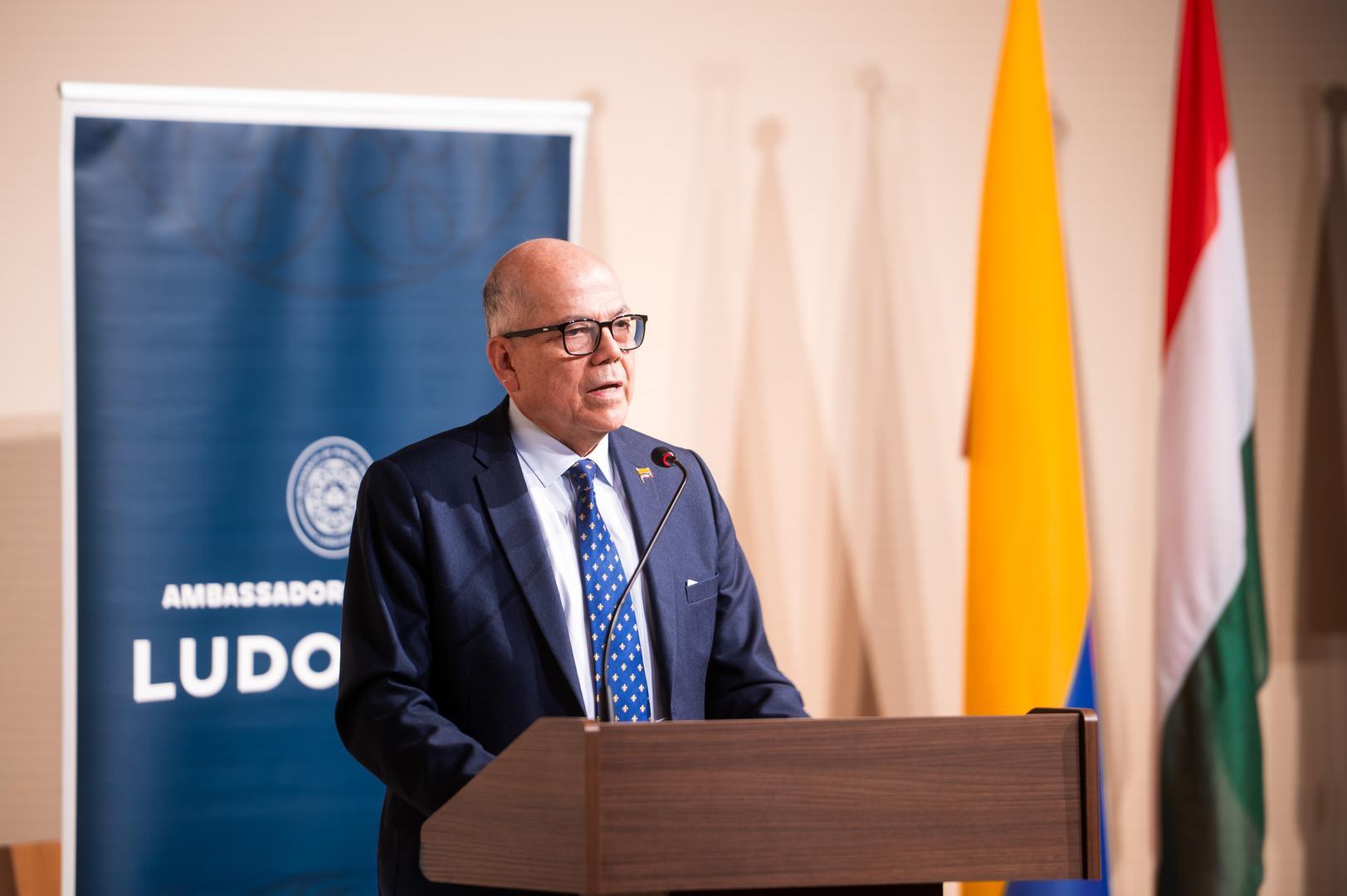
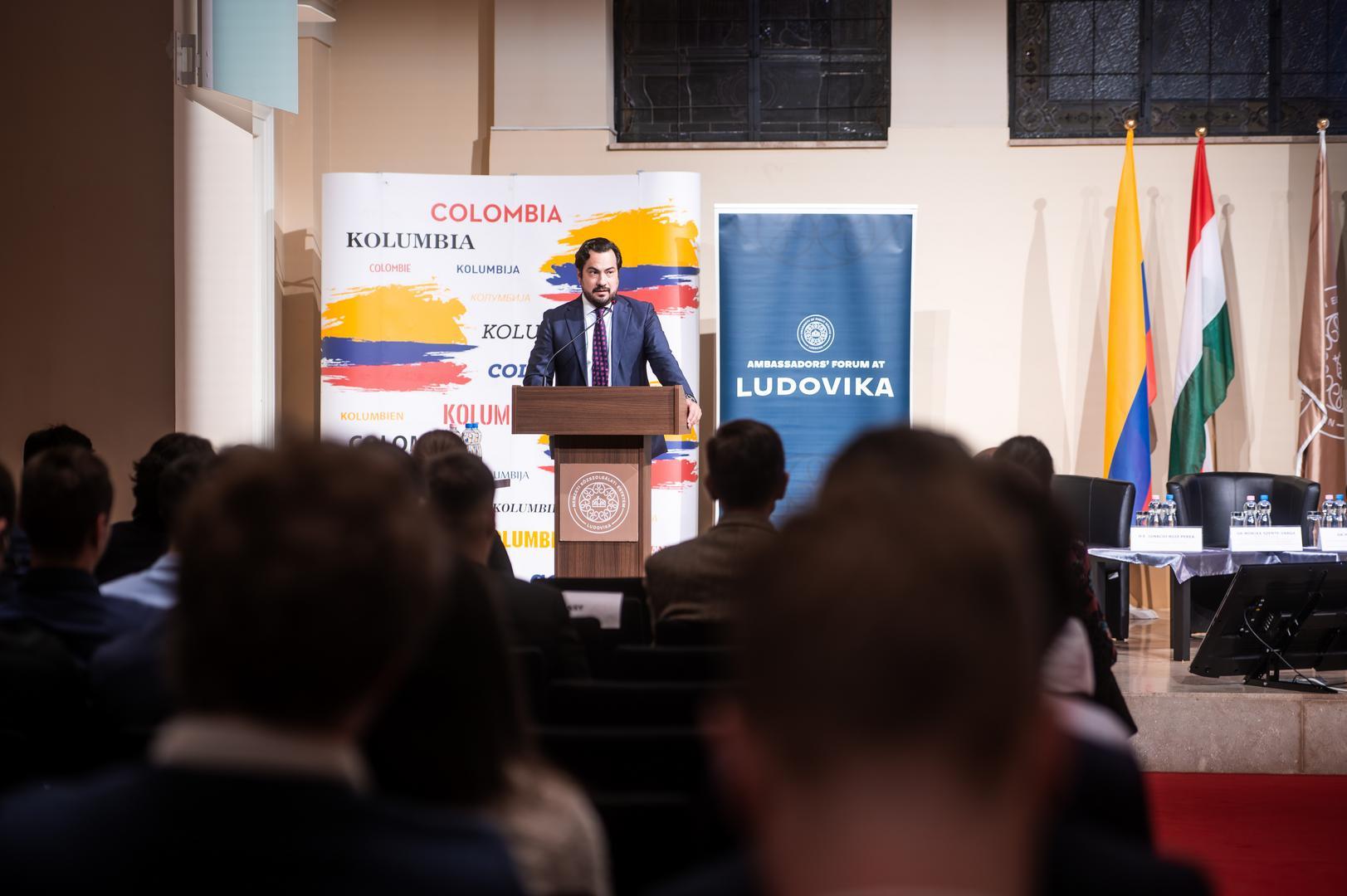
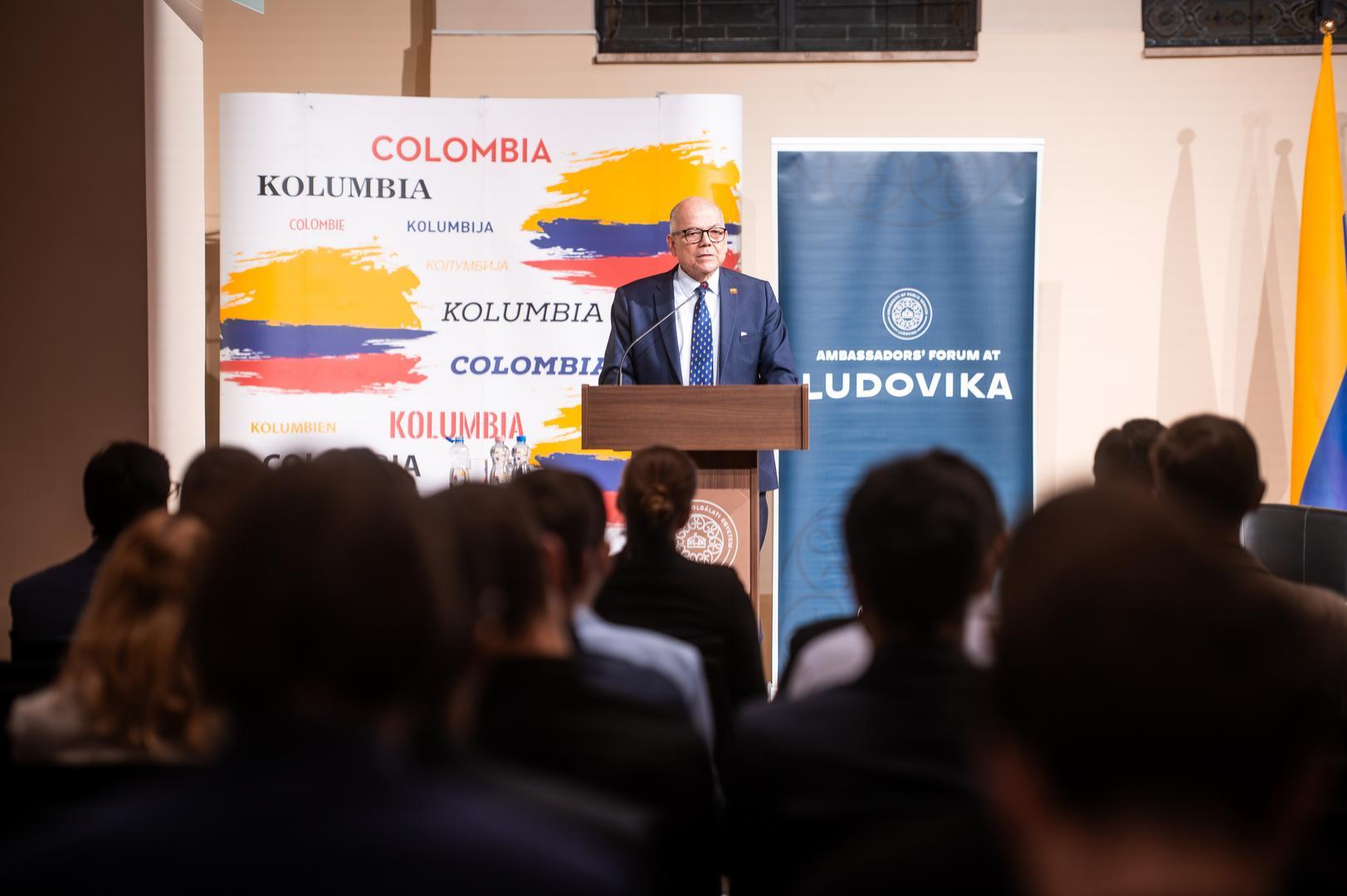

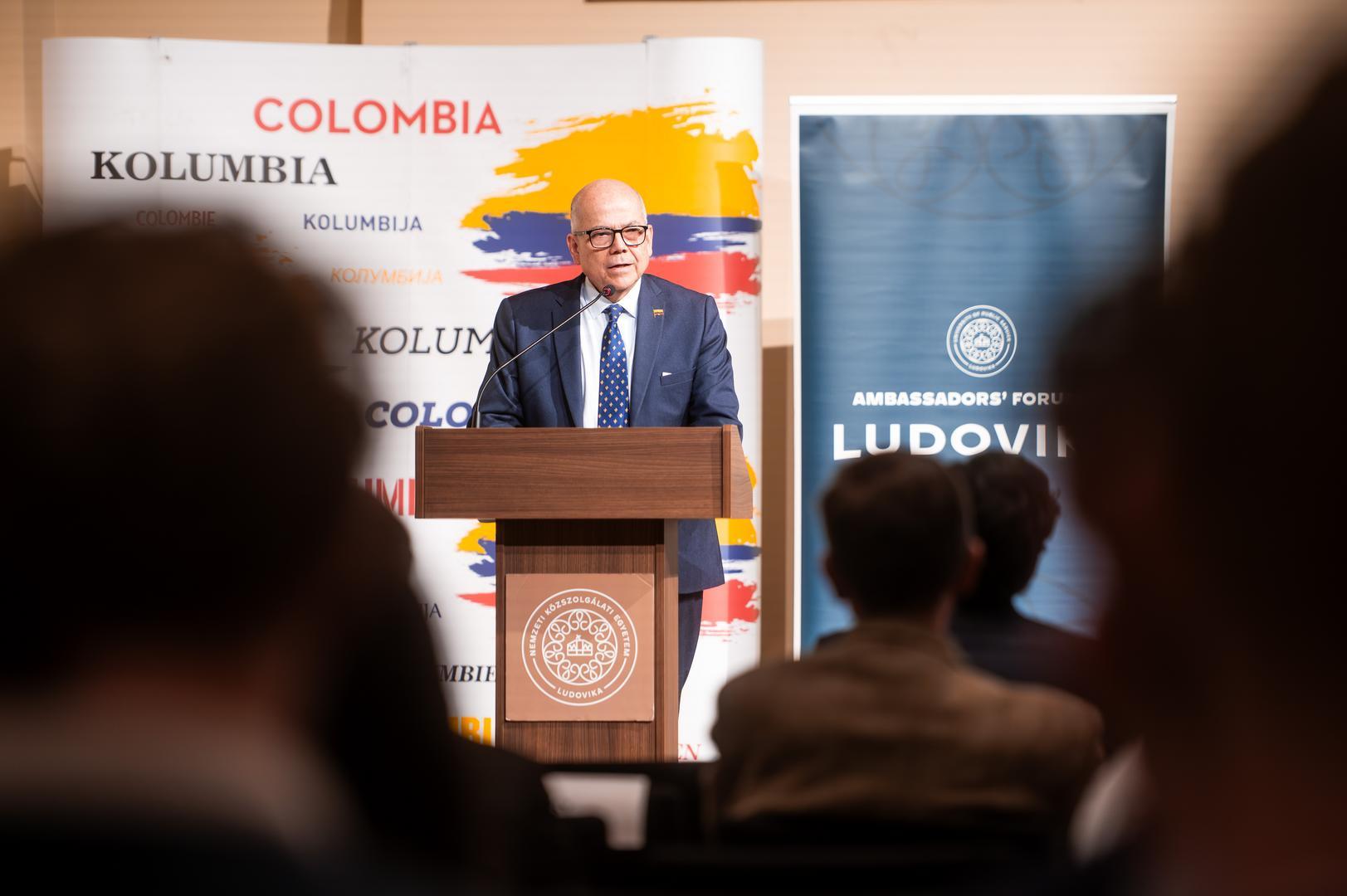
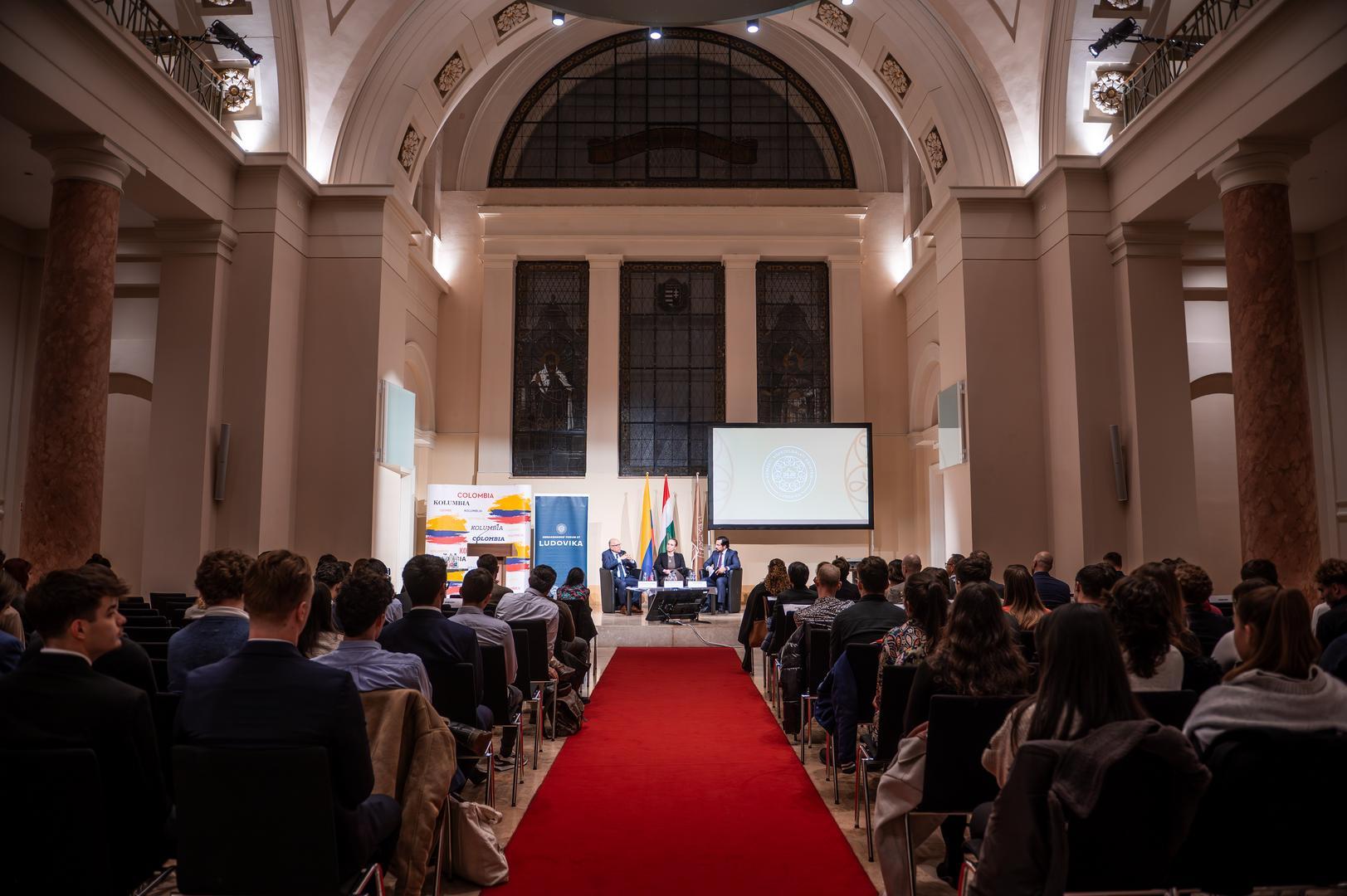
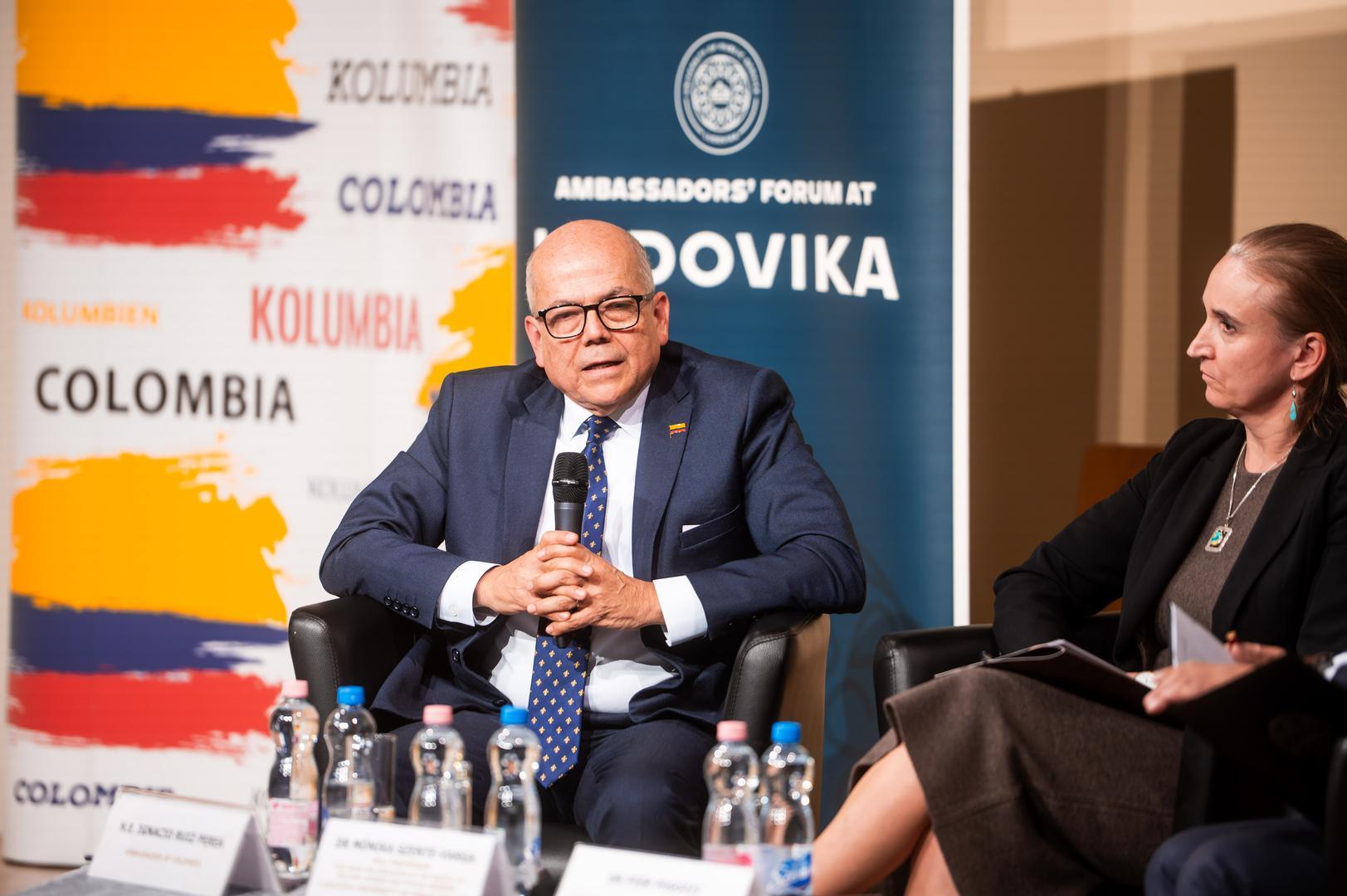
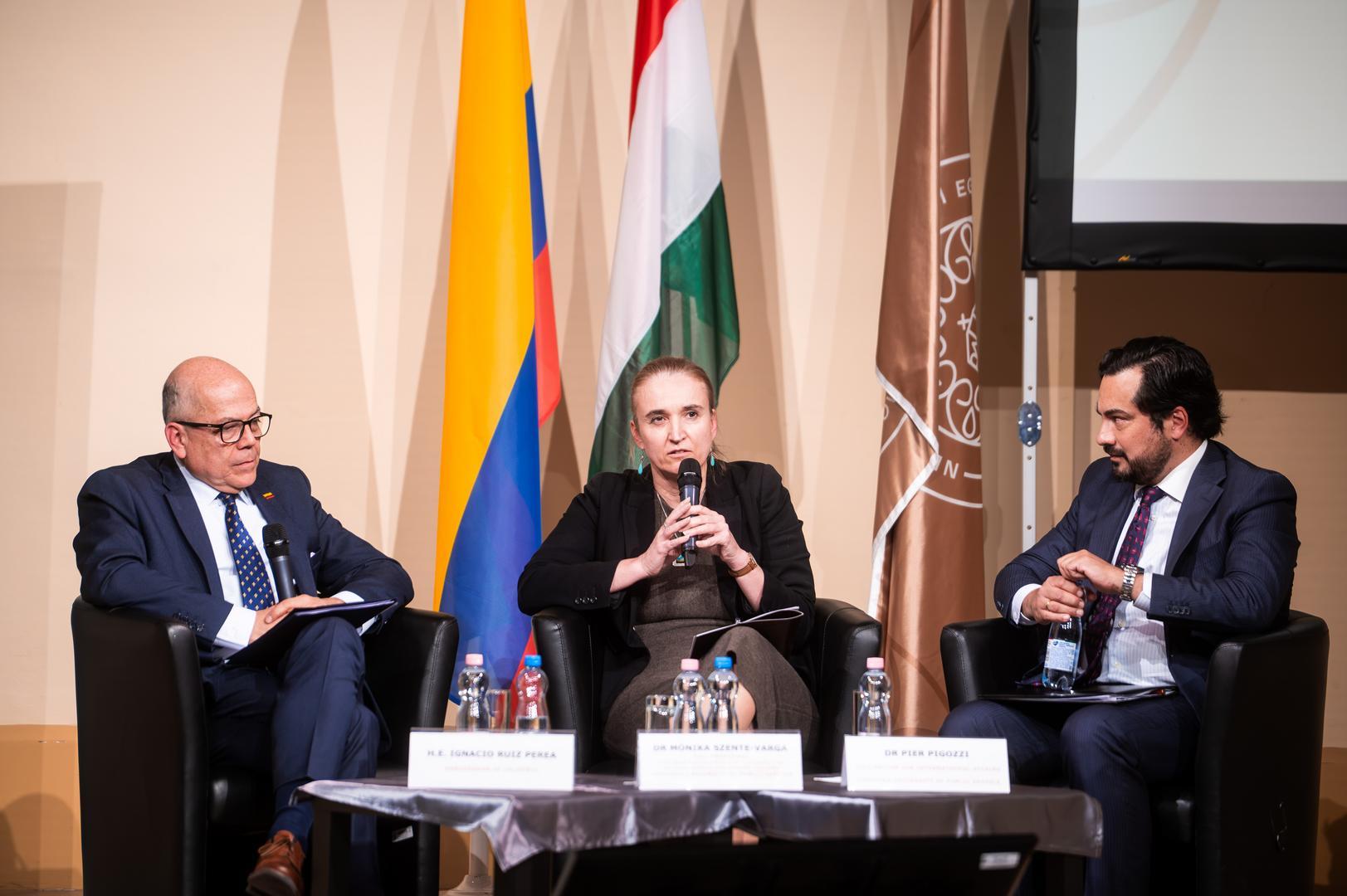
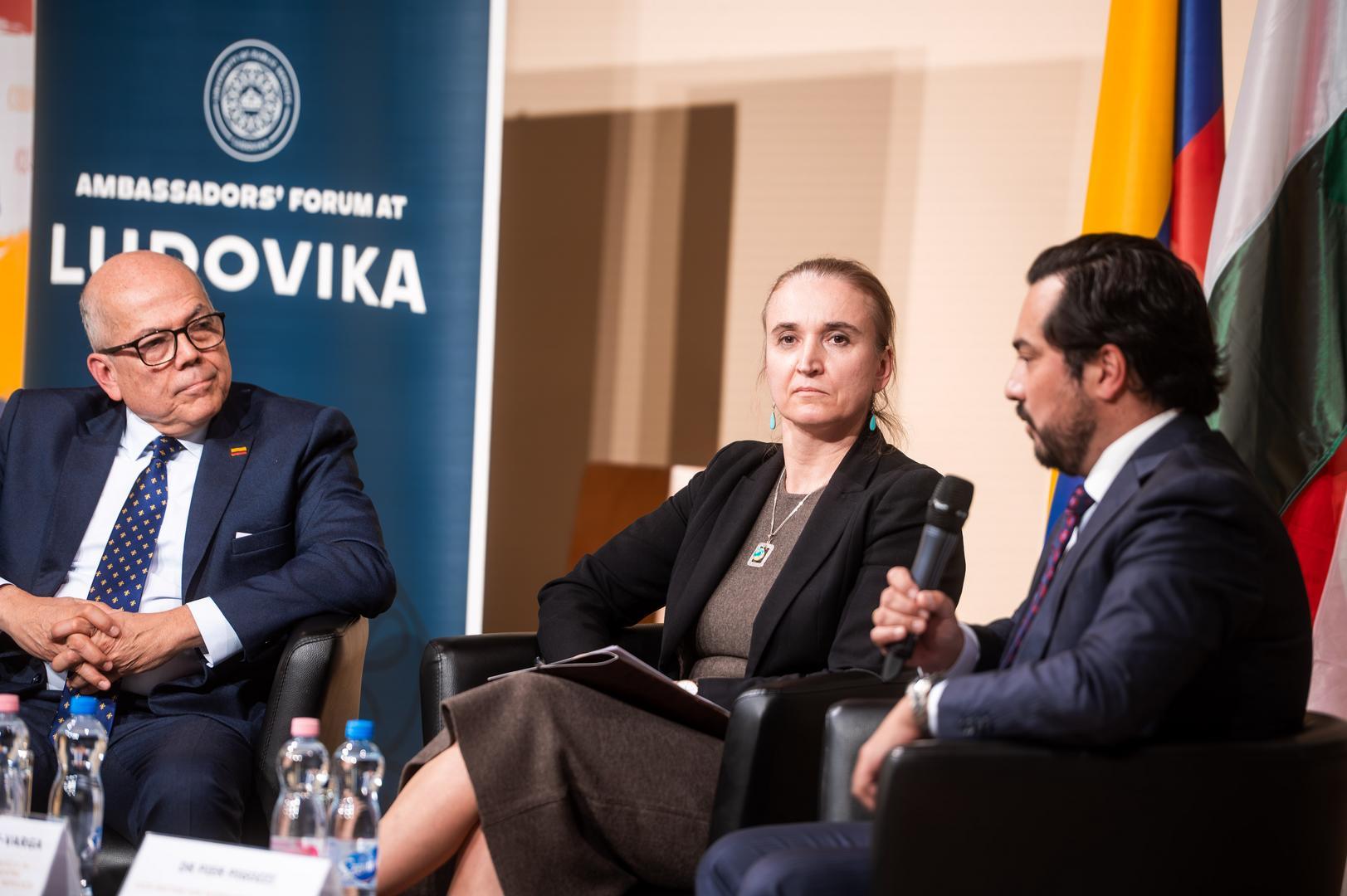
The International Office of the Ludovika University of Public Service (LUPS) organized another event of the Ludovika Ambassadors' Forum on November 10 – also an Erasmus partnership meeting – in the university’s Saint Ladislaus Chapel. The guest of the evening was Ignacio Enrique Ruiz Perea, Ambassador of Colombia to Budapest.
Pier Paolo Pigozzi, Vice Rector for International Affairs of LUPS welcomed the participants, then presented the international role and network of relations of the university. He emphasized Erasmus partnerships and the importance of Latin American collaborations, with special regard to Colombia. In his speech, the Vice Rector for International Affairs highlighted the significance of the Ludovika Scholars and the Ludovika Fellowship programs, which facilitate international student and scientific cooperation. Pier Paolo Pigozzi also spoke about the fact that Ludovika is cooperating with an increasing number of international partners. The Vice Rector emphasized that the goal of LUPS is the further strengthening of higher education cooperation, especially between European and Latin American institutions, prominently including Colombia.
The guest of the evening, Ignacio Enrique Ruiz Perea, Ambassador of Colombia to Budapest, presented his country, emphasizing the country’s cultural diversity, natural endowments, and historical background. He described in detail the social and political situation of the country, as well as the challenges Colombia faces – including security, economic, and human rights issues. He emphasized that the future of the South American country is closely linked to international cooperation and the preservation of peace. In his presentation, he addressed his country’s 2022–2026 National Development Plan, which defines Colombia’s development goals and the instruments through which it can also stand out on an international level. Among the main pillars of the plan is the human right to food, including the strengthening of nutritional security and food self-determination. Furthermore, water-based territorial planning, with a special focus on the reorganization of land use and the protection and sustainability of water resources. The next element of the plan is human security and social justice, meaning the strengthening of peace, public security, and equal opportunities. In addition, a priority area is a life-supporting, climate-conscious economy: the transformation of production for the sake of sustainability and climate protection.
The ambassador listed tax reform among the major changes, which strives for greater social justice; it introduces a special tax on ultra-processed foods and sugary beverages, and reduces corporate tax benefits. The aim of their healthcare reform is the introduction of a preventive and predictive healthcare model, the general practitioner system. Their pension reform introduces a three-pillar system (solidarity, semi-contributory, contributory) to guarantee a basic income for the elderly. “The aim of the plan is for Colombia to become an active, influential actor on the international stage, especially in the area of the climate crisis and humane migration policy,” the ambassador highlighted. Speaking about the relationship between Colombia and Hungary, the speaker emphasized that Bogotá and Budapest have concluded several bilateral agreements, including cooperation between diplomatic academies, highlighting the Working Holiday and the Beca Colombia programs. The latter is a scholarship opportunity also open to Hungarian professionals, offering the opportunity to pursue postgraduate (master’s or doctoral) studies in the South American country.
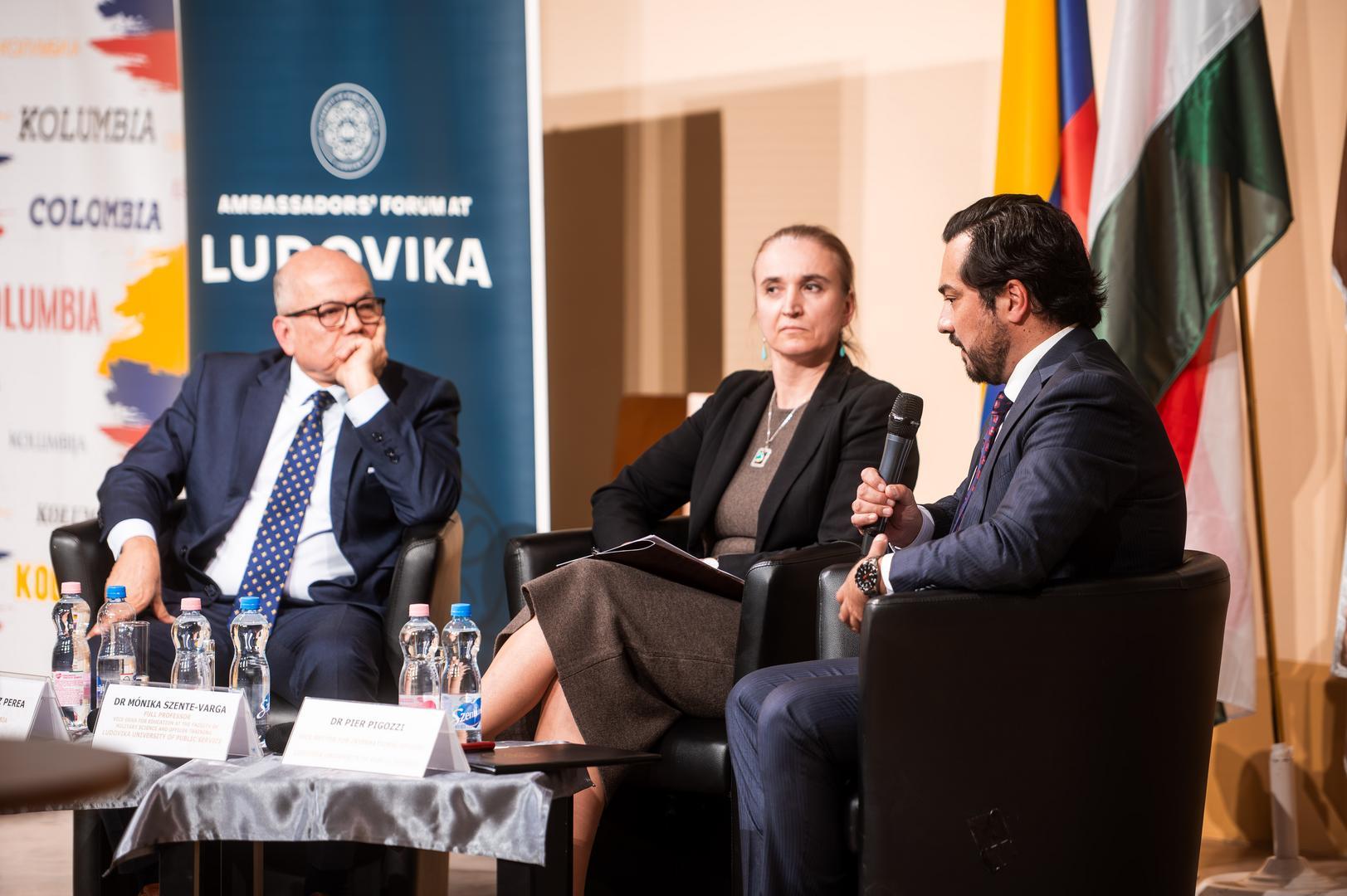
The presentation was followed by a roundtable discussion, where, alongside Ambassador Ignacio Enrique Ruiz Perea, Mónika Szente-Varga, Vice-Dean for Education of the Faculty of Military Science and Officer Training (FMSOT) of LUPS, and Vice Rector Pier Paolo Pigozzi discussed Colombia’s security policy and its Southern relations, especially its cooperation with Africa. The Vice Rector of LUPS highlighted security challenges and the lack of knowledge experienced in this field, which affects both international cooperation and regional stability. It was also raised whether there is cooperation between the Hungarian and the Colombian police in managing migration and drug trafficking – this topic received particular emphasis in relation to shared security interests.
The participants spoke about the security experiences of Latin America and Africa, especially in the field of law enforcement, training, and international cooperation. As an example, it was mentioned that in Colombia more than 26,000 police officers and soldiers have been trained in various security programs, and the country actively participates in the work of international organizations and missions. The Colombian–Venezuelan migration crisis was also discussed, which has been one of the largest humanitarian challenges in the region in recent years. Participants emphasized the importance of peace and social stability, as well as the role of the media in presenting peace processes. They see that Colombia’s goal is to appear on the international stage as a country of the future, as a state striving for peace and cooperation. At the end of the discussion, gender equality, cultural cooperation, and the sharing of experiences from Latin American and African security models were also raised, with special regard to how these can be aligned with European practices.
Text: Éva Harangozó
Photo: Dénes Szilágyi