Department of Operational Logistics
 Dear Visitor,
Welcome to the Department of Operational Logistics!
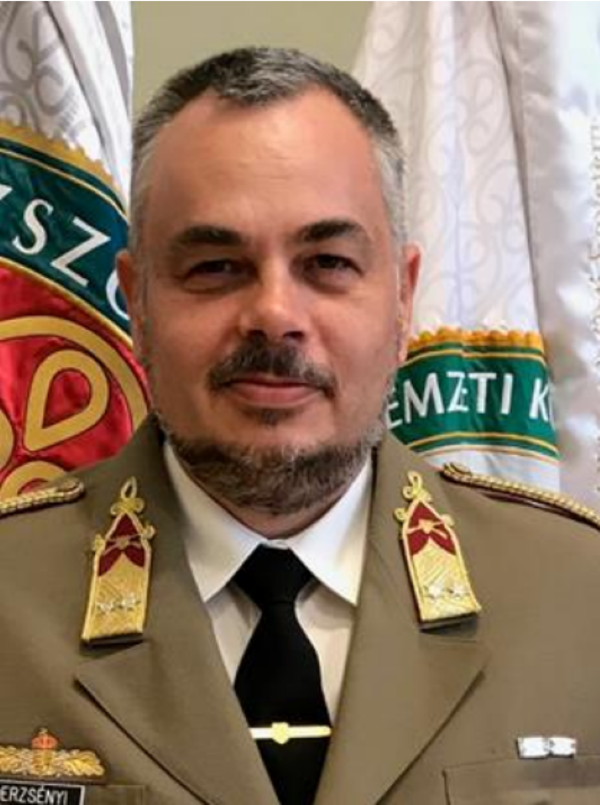
Head of Department: Lt. Col. Attila Derzsényi, PhD, Assistant Professor
Lieutenant Colonel Attila Derzsényi graduated as a mechanical engineer from the „Bolyai János” Military Technical College in 1995, specialising in armoured and vehicle technology. He began his military career as a vehicle engineer and supply company commander, then moved on to become a subject matter expert in military and public procurement at various departments of the Ministry of Defence. In 2010, he obtained a master’s degree as a Military Logistics Manager at the „Zrínyi Miklós” National Defence University. He also completed postgraduate studies in logistics management and, in 2015, qualified as an EU grant writer and project manager. He received his PhD degree from the Doctoral School of Military Engineering of the University of Public Service in 2018. Since 2013, he has been a member of the academic staff of the Department of Operational Logistics, and he has served as Head of Department since 2024. He is a member of the Public Body of the Hungarian Academy of Sciences and an accredited public procurement consultant. His research and teaching interests include military logistics, defence procurement, public procurement, supply-chain management and the logistics support of military operations.
Contacts:
Office: H-1083 Budapest, Ludovika tér 2., Main Building, Room 251,
Phone: (+36) 1 432 9000 / 29153, E-mail: derzsenyi.attila@uni-nke.hu
About the Department
The Department of Operational Logistics was established on 1 July 2012. Although it is a relatively young department in organisational terms, the education of logistics managers at the operational level has a long tradition in Hungarian military higher education. Before 2012, this training was carried out by the Department’s predecessor institutions.
The mission of the Department is to contribute to the Hungarian Defence Forces through high-quality education, research and professional development, within the organisational framework of the Faculty of Military Science and Officer Training of the Ludovika University of Public Service. The Department prepares military logistics specialists for the planning, organisation and management of logistics support to military operations, with particular emphasis on the requirements of the Hungarian Defence Forces and international operations.
The core values of the Department are freedom of thought and expression, the encouragement of a questioning and analytical approach, a broad range of academic subjects, quality and depth in teaching, and the close relationship between education and research.
Admission to the Department’s degree programme takes place within a closed enrolment system. Only military logistics specialists holding the qualifications defined in the programme’s founding documents may continue their studies at the Department. At the same time, the Department is open to the wider academic community, as its lecturers contribute to the education of students in other bachelor’s and master’s programmes of the Faculty, as well as to courses organised by the Hungarian Defence Forces.
The Department’s academic staff consists of highly experienced professionals who meet the expectations of higher education. Its lecturers participate in the training and research activities of the Doctoral School of Military Sciences and the Doctoral School of Military Engineering, as well as in Erasmus+ staff mobility programmes. Former graduates of the Department serve successfully at all organisational levels of the Hungarian Defence Forces.
The Department maintains a long-standing international cooperation with the British Defence School of Logistics and Administration. Through jointly organised exercises and training programmes, lecturers and students have the opportunity to build professional relationships and exchange experience with foreign partners.
Research areas of the Department
· Logistic support of operations
· Medical support of operations
· Military and public procurement, Life cycle management
· Military decision-making methodology
· Military supply chain management
· 21st century military industry and critical logistic infrastructure