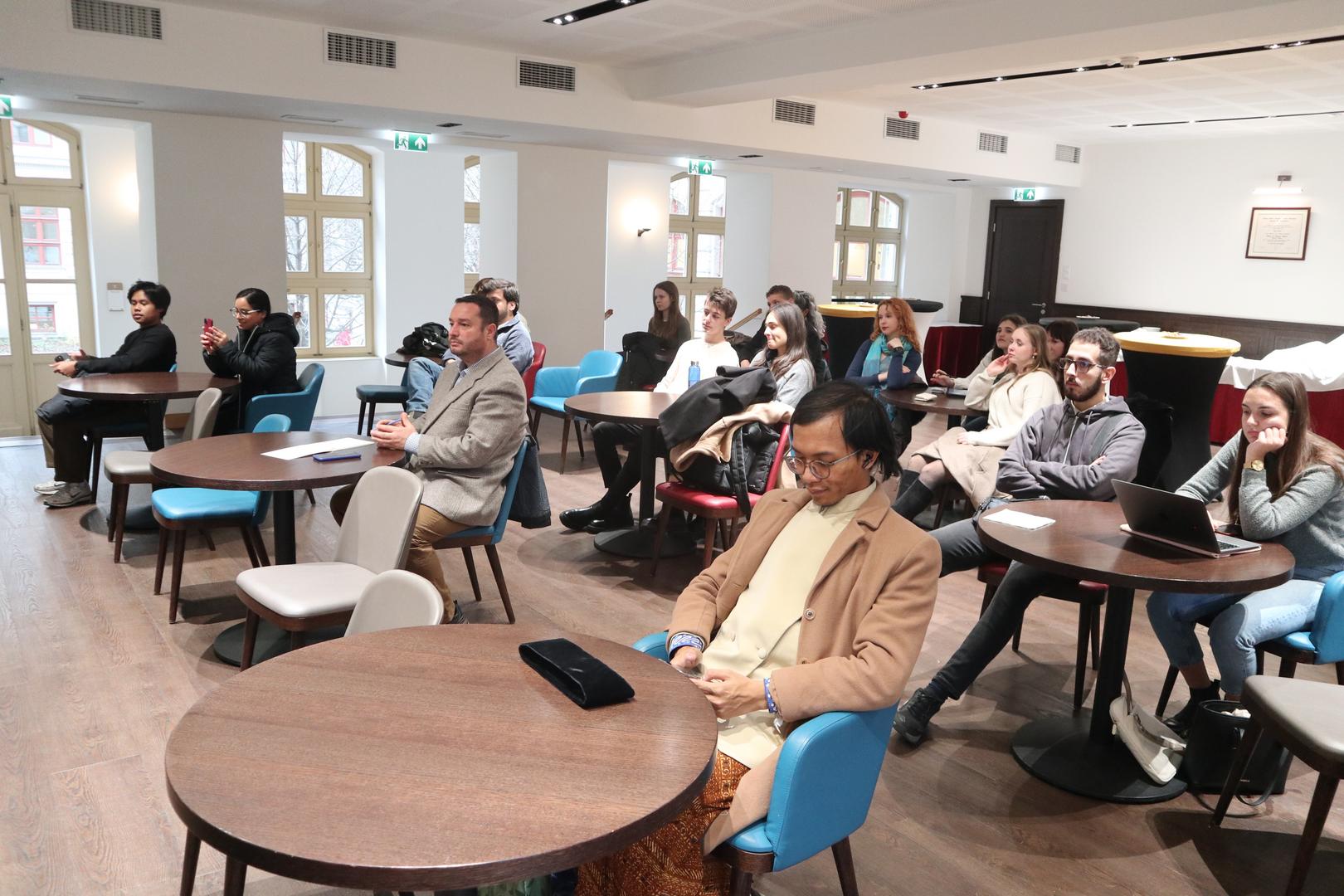
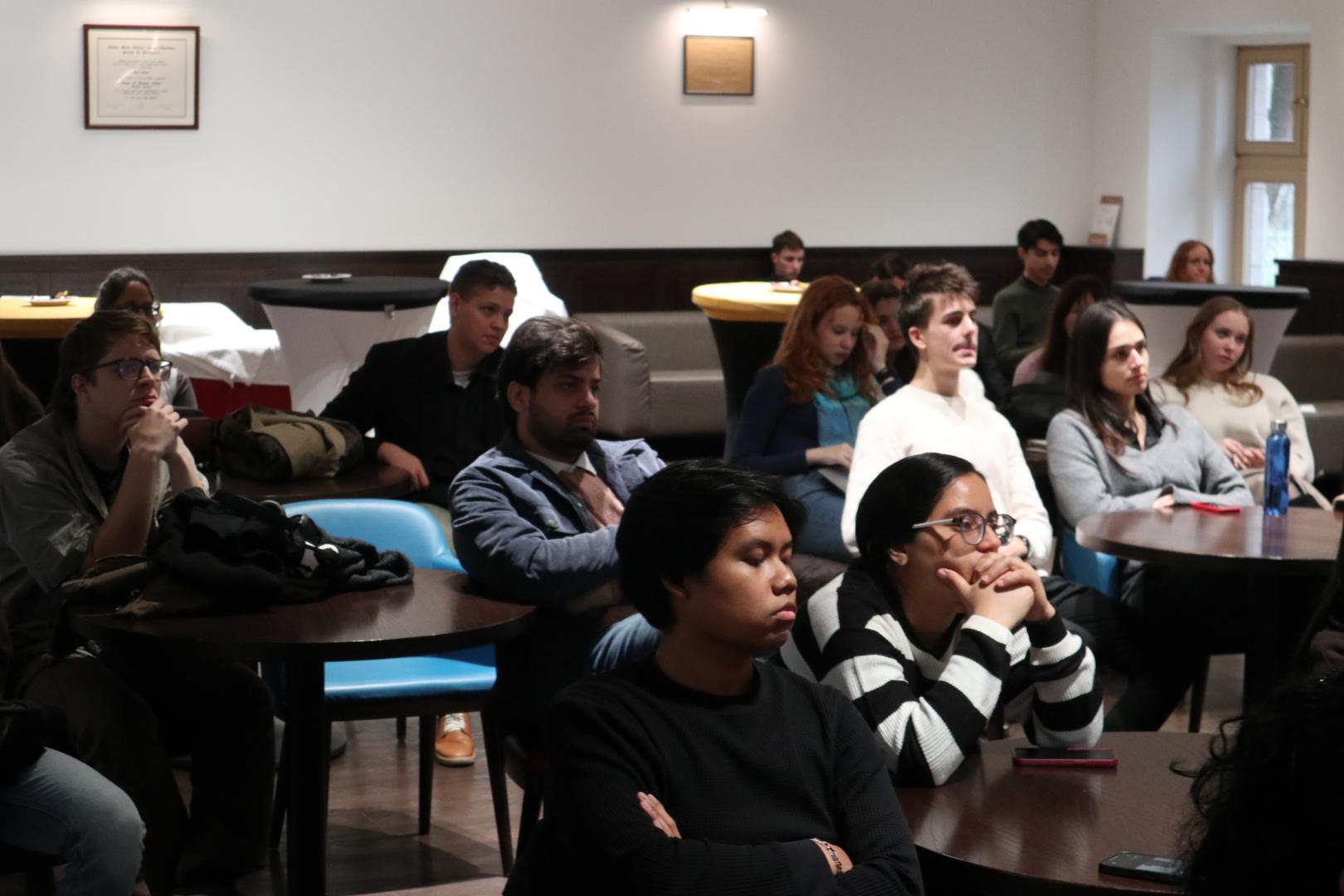
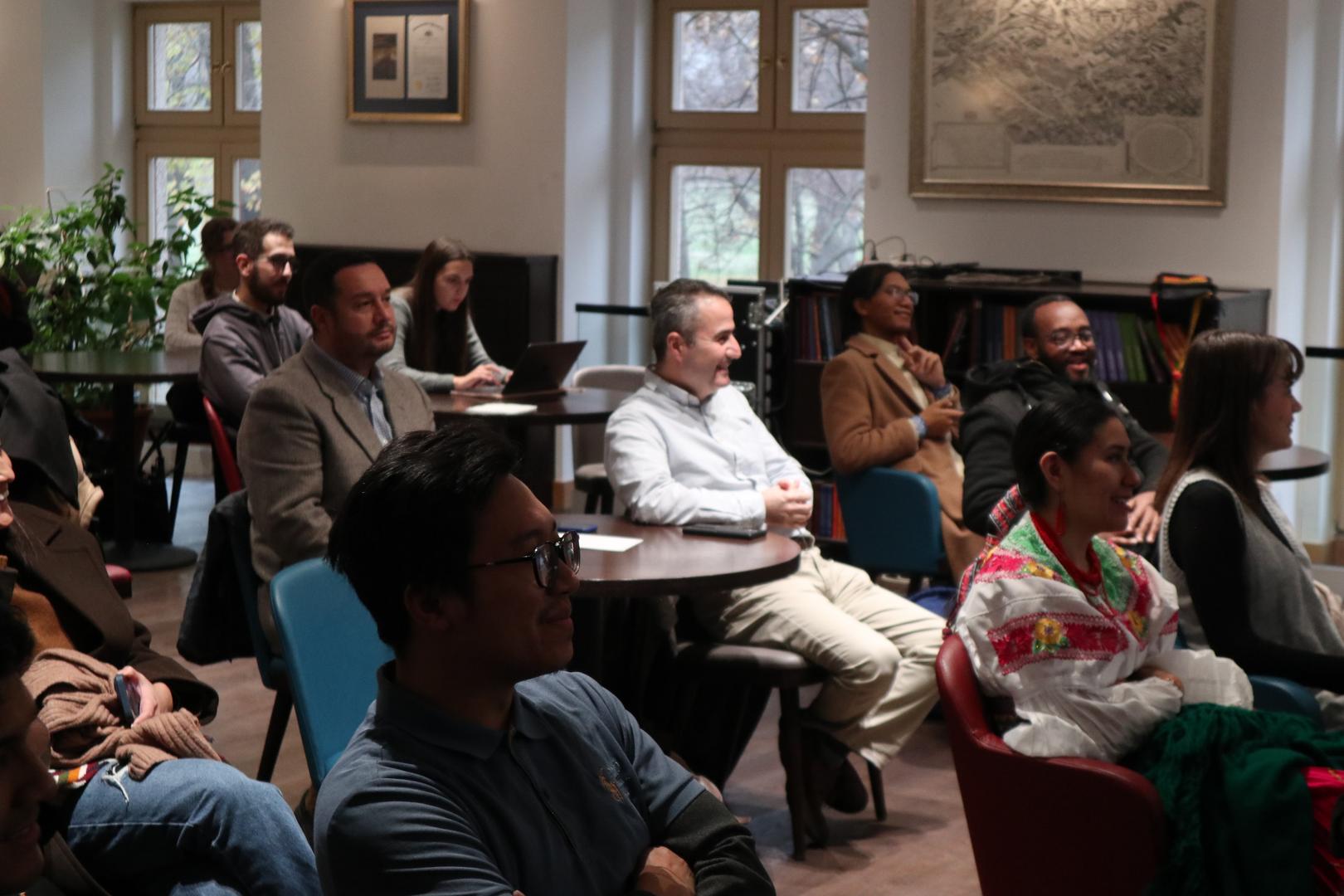
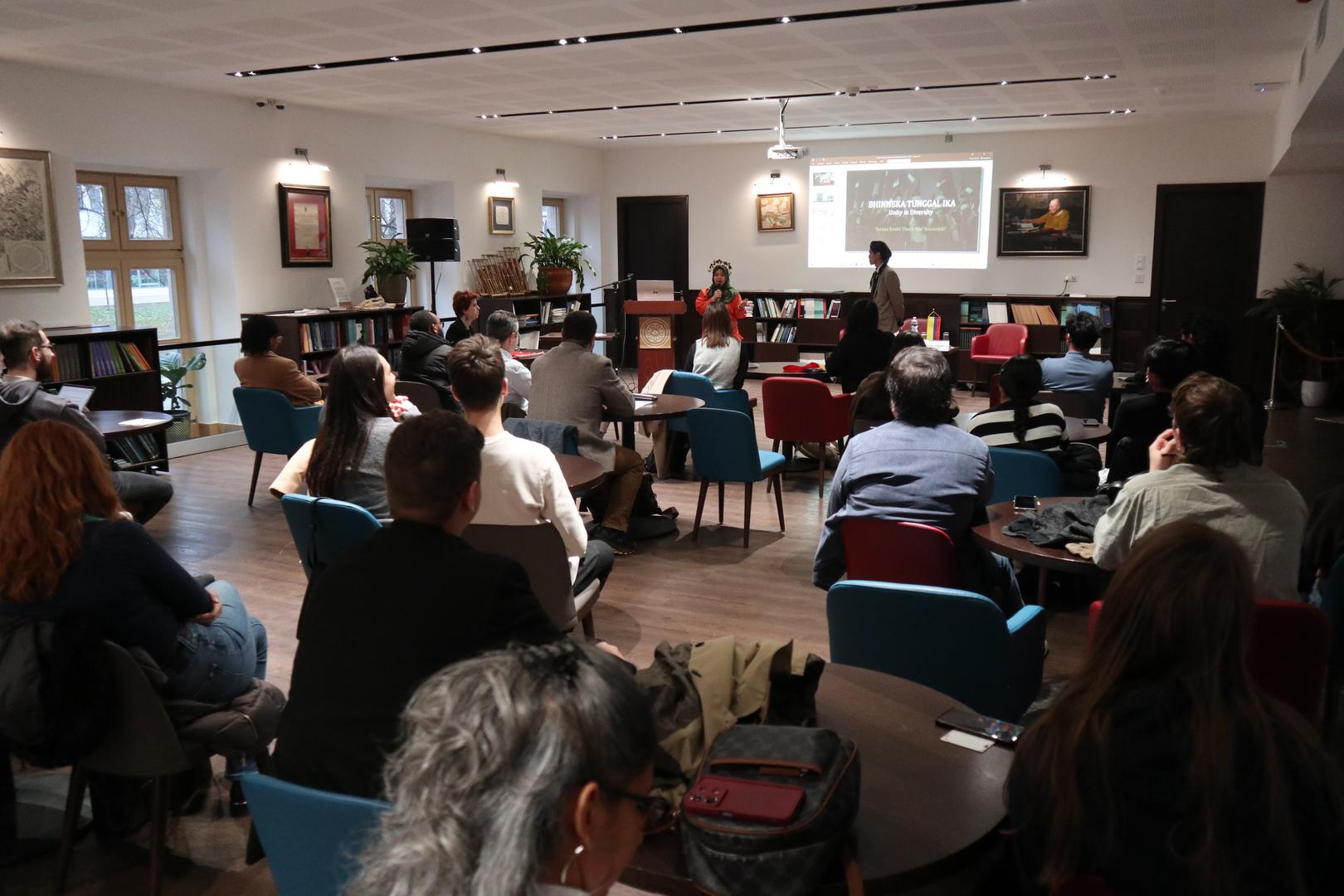
Since the 2023/2024 academic year, the International Office of the Ludovika University of Public Service (LUPS) - Ludovika Welcome Center Department - has organized two intercultural workshops each semester, presented by our international students about their home countries, always with great success and full attendance. The events form an official part of the student community-building initiatives within the Stipendium Hungaricum Scholarship Program and serve to promote the scholarship program.
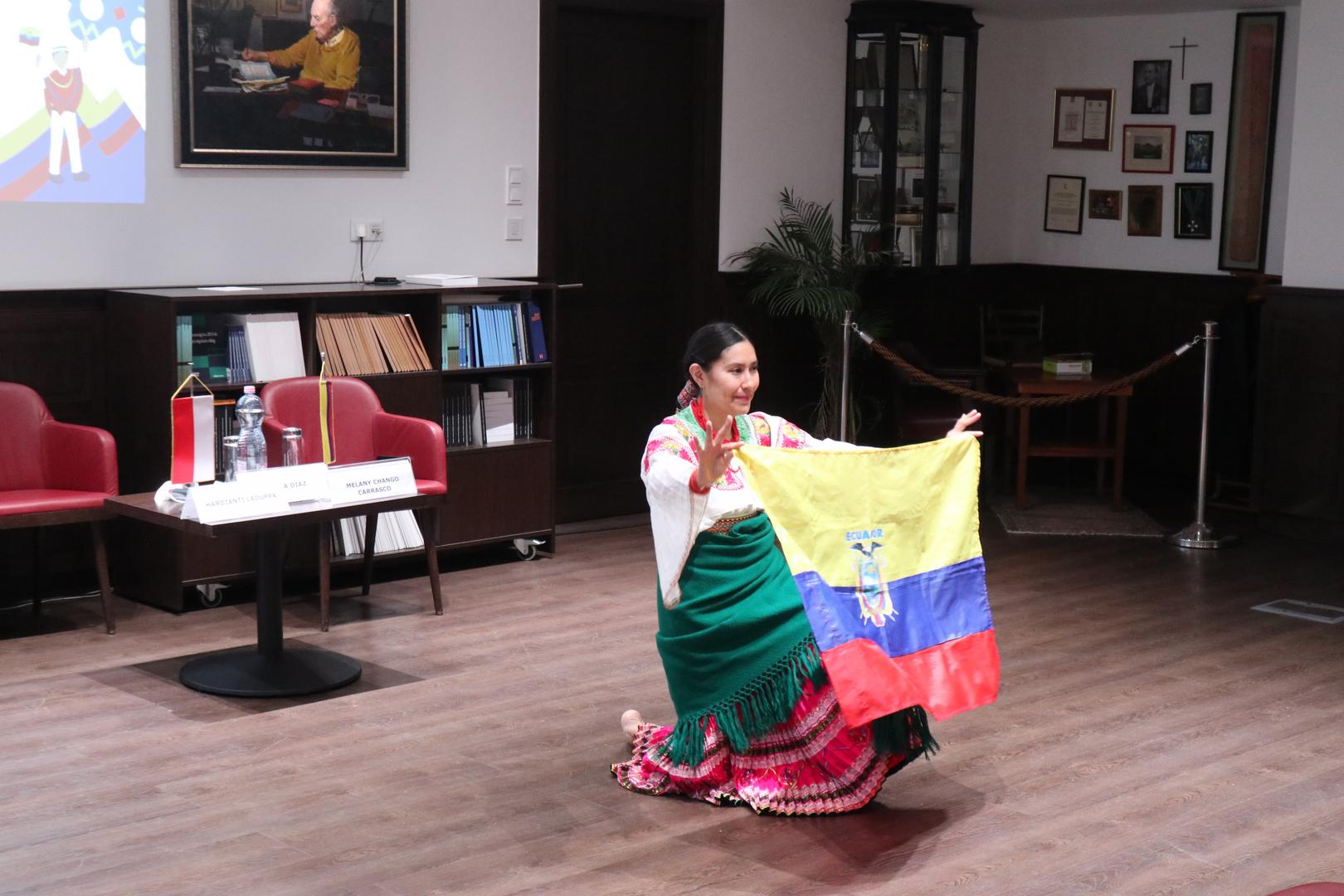
Melany Jhadira Chango Carrasco, a first-year student in the International Water Policy and Water Diplomacy master’s program, spoke about Ecuador. She noted that the country is located in the second-highest region in the world. Attendees also learned about a myth regarding Ecuador’s formation: according to the story, the mountains—considered natural treasures—originated from a love story and help with geographic orientation in the country. Participants were introduced to numerous indigenous animal and plant species and learned that Ecuador is the country of orchids, as well as home to several volcanic lakes, mountains, and waterfalls. Famous Ecuadorian athletes and musicians were mentioned, along with the fact that insects in the Amazon are significantly larger than those in Europe, and insect-eating is becoming trendy. On the highlands, cuy (roasted guinea pig) is a popular dish, alongside plantains. Regarding the local language, Kichwa, it was explained that compliments are used in place of greetings. The presentation concluded with a dance performance in traditional national costume.
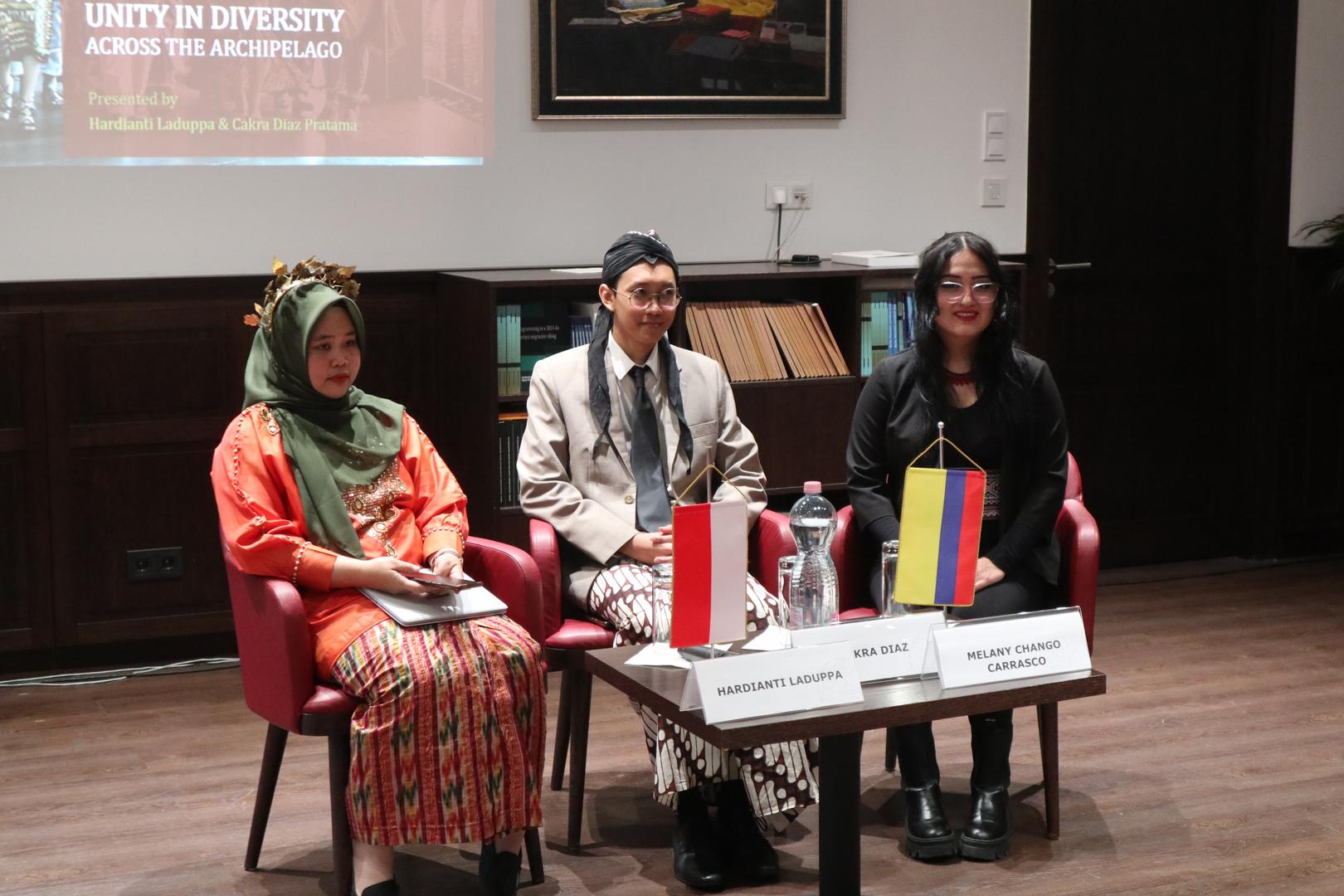
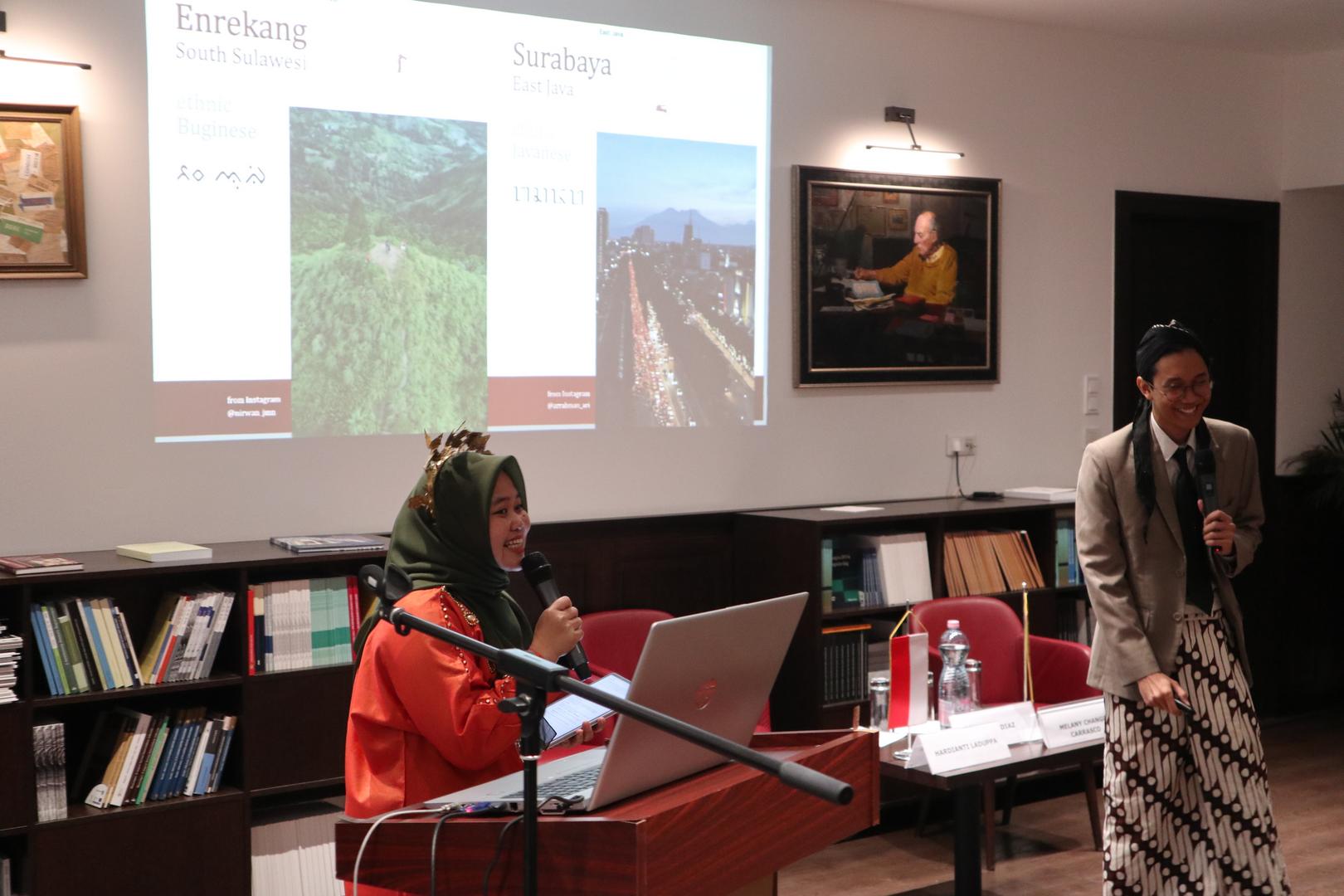
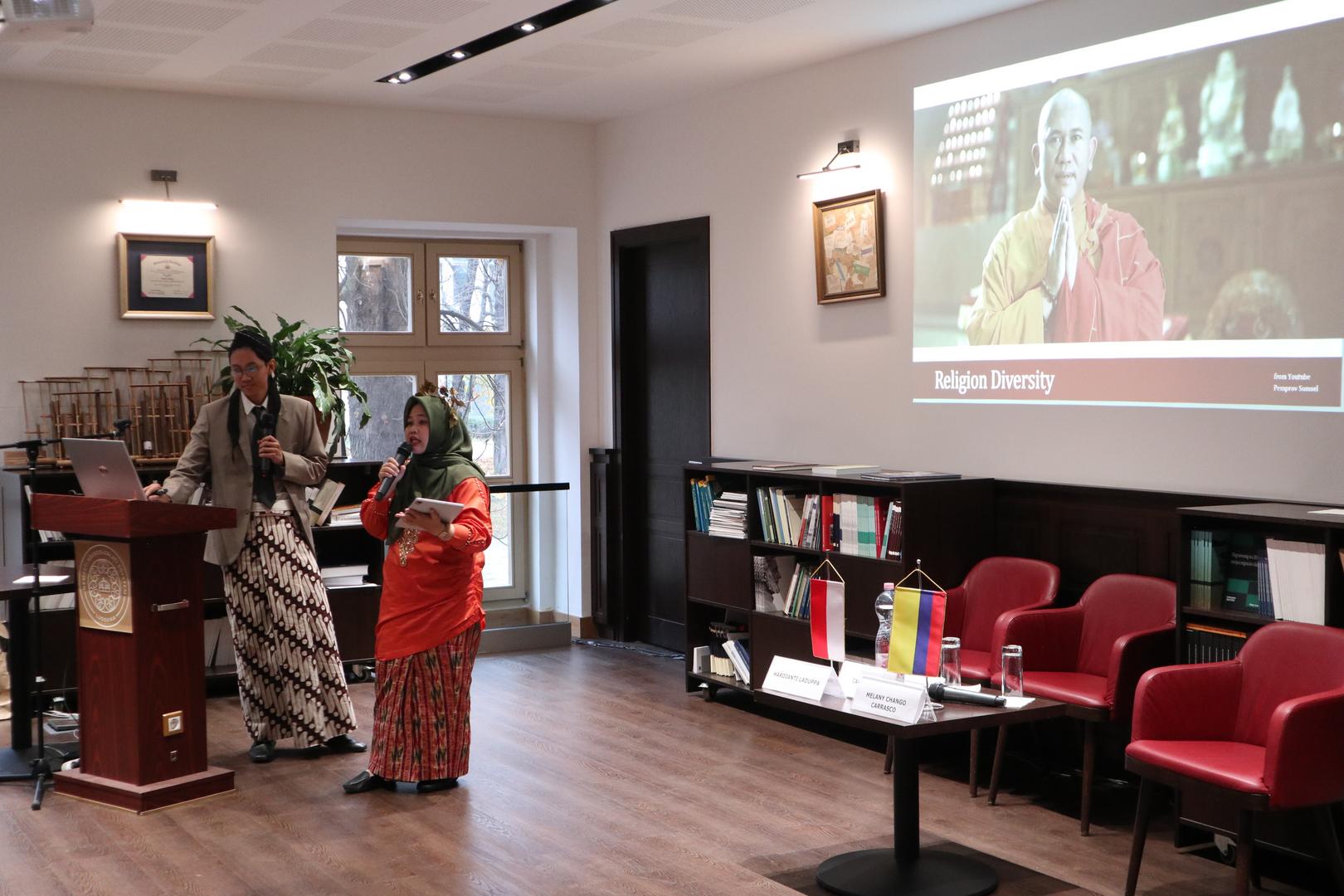
Hardianti Laduppa, a first-year student in the LUPS Doctoral School of Public Administration, and Pratama Cakra Diaz, a second-year student in the International Relations master’s program, introduced Indonesia. The presenters, dressed in traditional national attire, alternated to showcase their local cultures and social customs. Despite having hundreds of ethnic groups, six official languages, and regional autonomy, Indonesia has been a unified country since 1928, with local communities still supporting each other today. The students highlighted two Indonesian cultural traits: sungkan and legawara. The first means showing maximum respect by not embarrassing others or holding them accountable. The second can be described as a lack of ability to say no—Indonesians often respond positively even during difficult times. The presentation ended with a musical performance, featuring a rendition of the well-known folk song “Tavaszi szél” on the angklung, which the audience could try out themselves.
The lecture series will continue in the spring. The Ludovika Welcome Center Department continuously welcomes students who would like to present their home countries to our community. Interested participants can find information at the Welcome Center office or through the university’s official channels.
Text: Eszter Szkárosi, Agapé
Photos: Katalin Judit Marton-Andrássy